
Treatment modalities Vestibular schwannoma Microsurgical resection Radiosurgical treatment
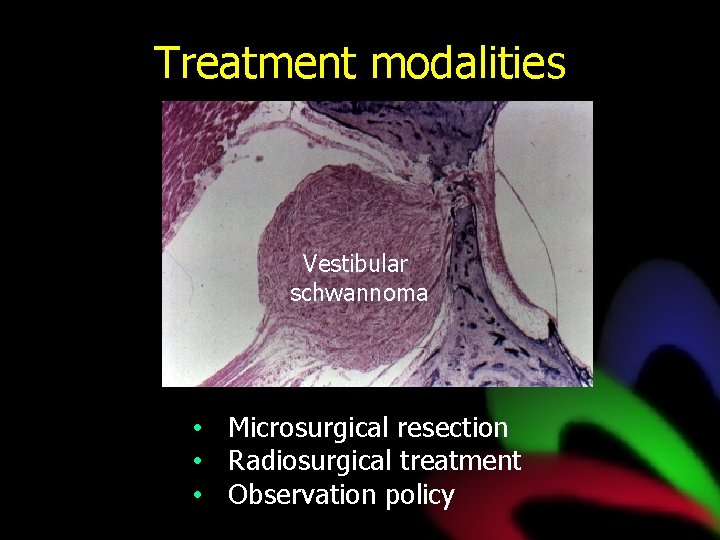
Treatment modalities Vestibular schwannoma • Microsurgical resection • Radiosurgical treatment • Observation policy
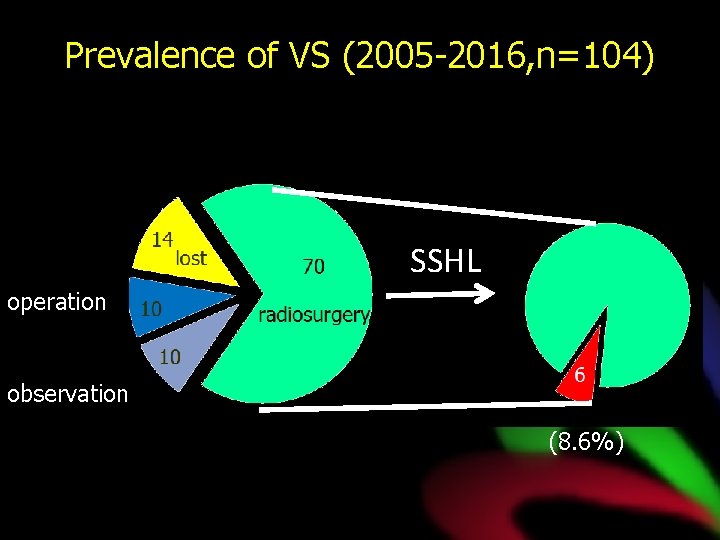
Prevalence of VS (2005 -2016, n=104) SSHL operation observation (8. 6%)
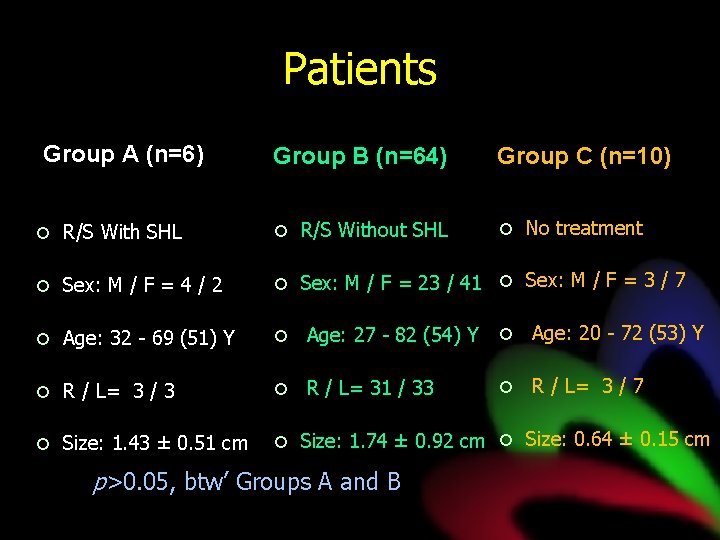
Patients Group A (n=6) Group B (n=64) Group C (n=10) ¡ R/S With SHL ¡ R/S Without SHL ¡ No treatment ¡ Sex: M / F = 4 / 2 ¡ Sex: M / F = 23 / 41 ¡ Sex: M / F = 3 / 7 ¡ Age: 32 - 69 (51) Y ¡ Age: 27 - 82 (54) Y ¡ Age: 20 - 72 (53) Y ¡ R / L= 3 / 3 ¡ R / L= 31 / 33 ¡ R / L= 3 / 7 ¡ Size: 1. 43 ± 0. 51 cm ¡ Size: 1. 74 ± 0. 92 cm ¡ Size: 0. 64 ± 0. 15 cm p>0. 05, btw’ Groups A and B
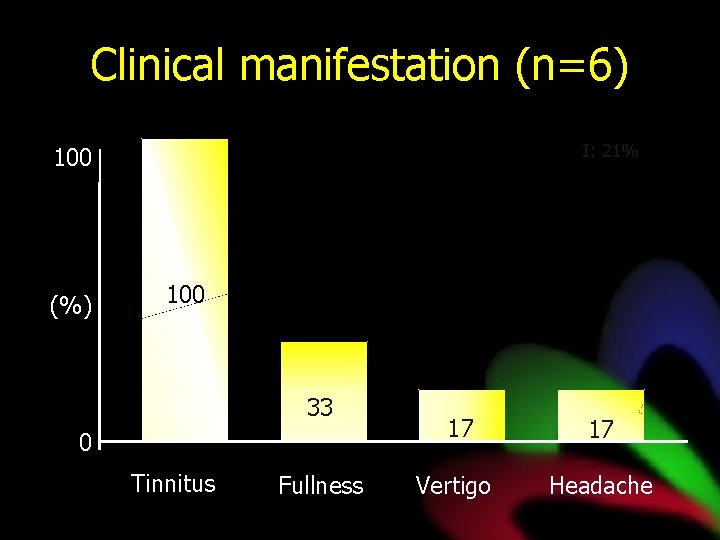
Clinical manifestation (n=6) 71 I: 21% 100 (%) 100 33 0 Tinnitus Fullness 17 17 Vertigo Headache
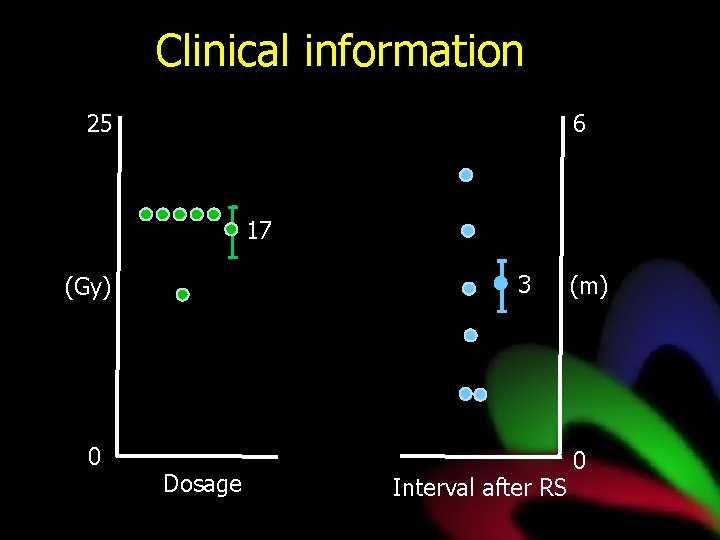
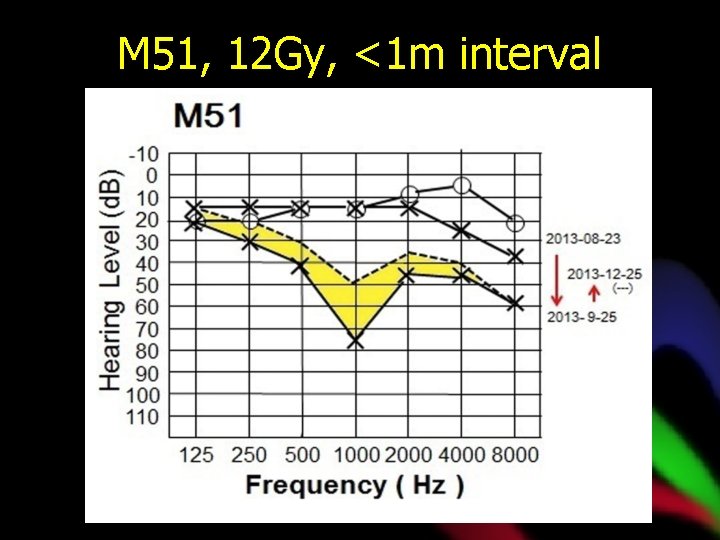
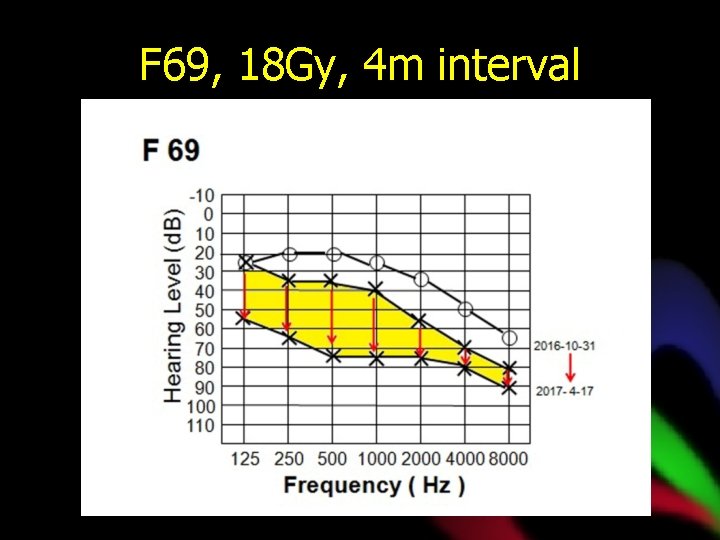
Clinical information 6 25 17 3 (Gy) 0 Dosage Interval after RS (m) 0
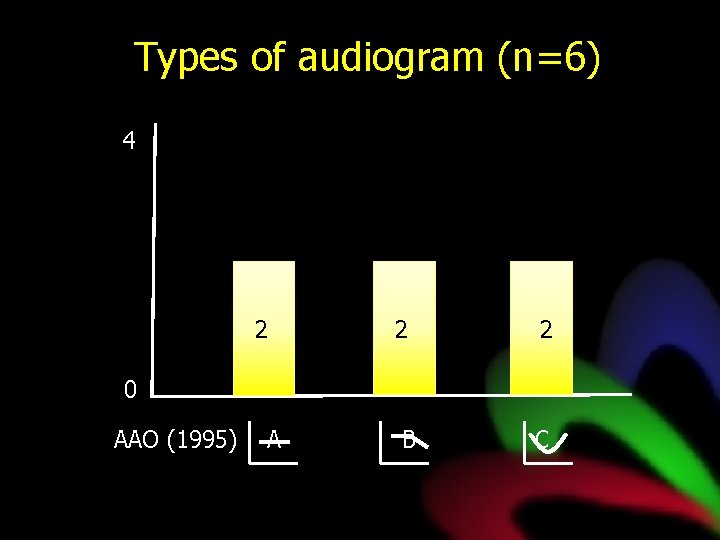
Types of audiogram (n=6) 4 2 2 2 B C 0 AAO (1995) A
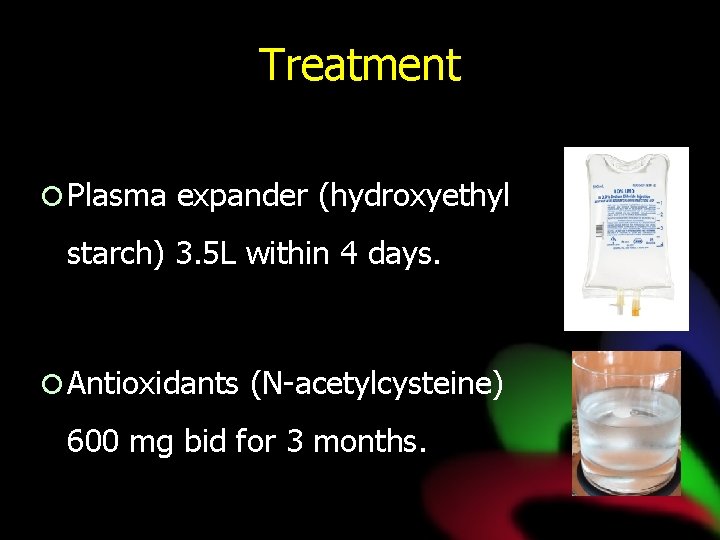
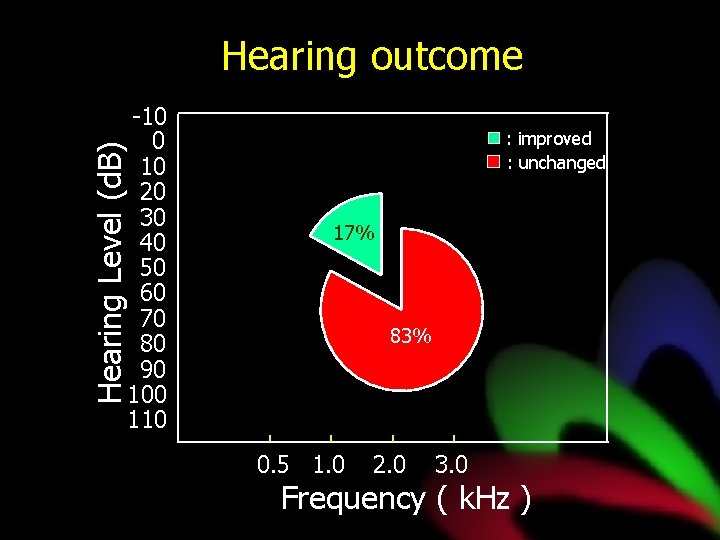
Treatment ¡ Plasma expander (hydroxyethyl starch) 3. 5 L within 4 days. ¡ Antioxidants (N-acetylcysteine) 600 mg bid for 3 months.
M 51, 12 Gy, <1 m interval
F 69, 18 Gy, 4 m interval
Hearing outcome Hearing Level (d. B) -10 0 10 20 30 40 50 60 70 80 90 100 110 : improved : unchanged 17% 83% 0. 5 1. 0 2. 0 3. 0 Frequency ( k. Hz )
Vestibular test battery (pre-R/S) o. VEMP Caloric 83% : normal : abnormal SVN c. VEMP 100% IVN
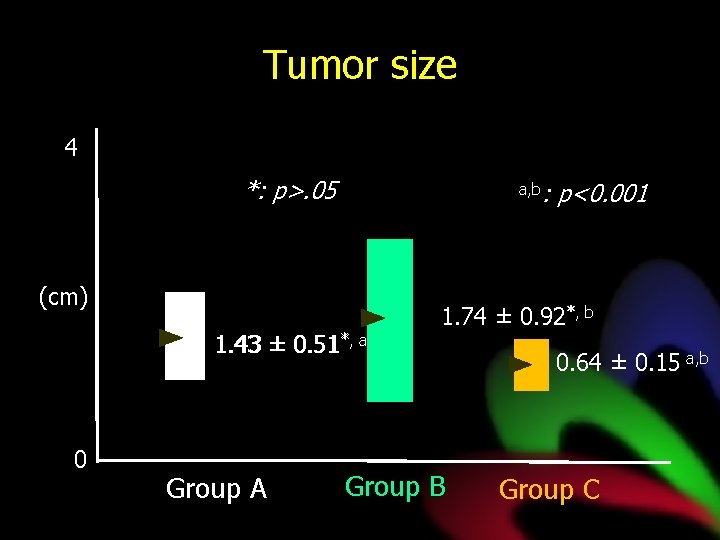
Tumor size 4 *: p>. 05 a, b (cm) 1. 43 ± 0. 51**, a 0 Group A : p<0. 001 1. 74 ± 0. 92**, b Group B 0. 64 ± 0. 15 a, b Group C
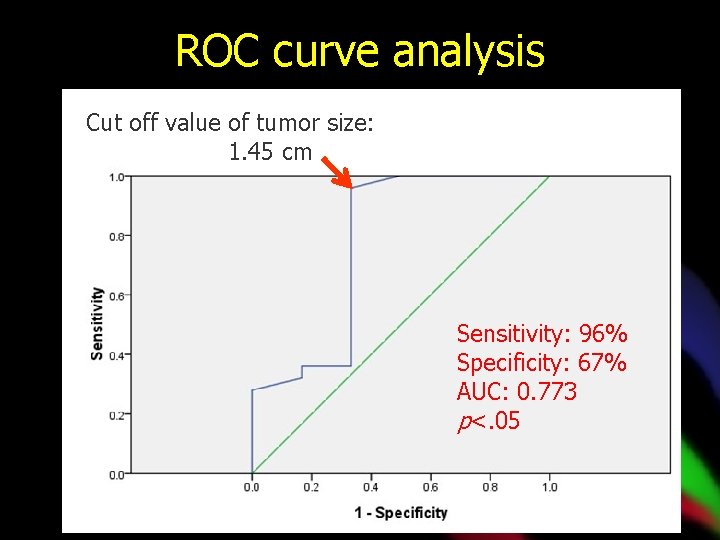
ROC curve analysis Cut off value of tumor size: 1. 45 cm Sensitivity: 96% Specificity: 67% AUC: 0. 773 p<. 05
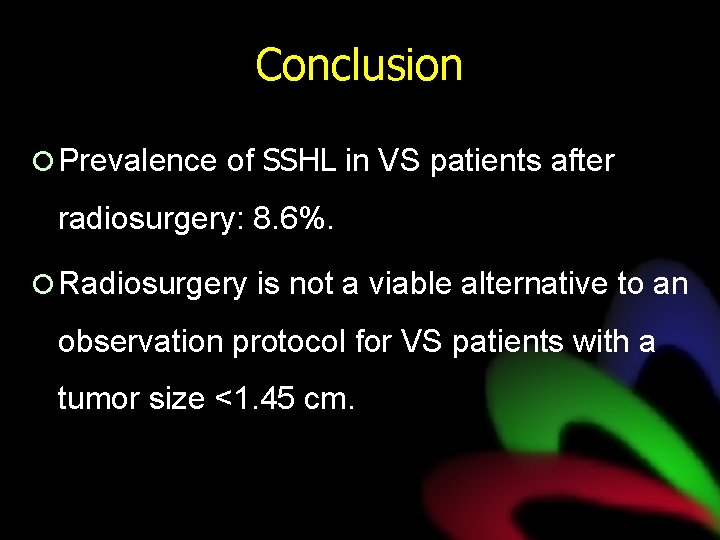
Conclusion ¡ Prevalence of SSHL in VS patients after radiosurgery: 8. 6%. ¡ Radiosurgery is not a viable alternative to an observation protocol for VS patients with a tumor size <1. 45 cm.
- Slides: 16