
Treatment Modalities From research to practice effective treatment

- Slides: 34
Treatment Modalities From research to practice, effective treatment models for RSAT programs
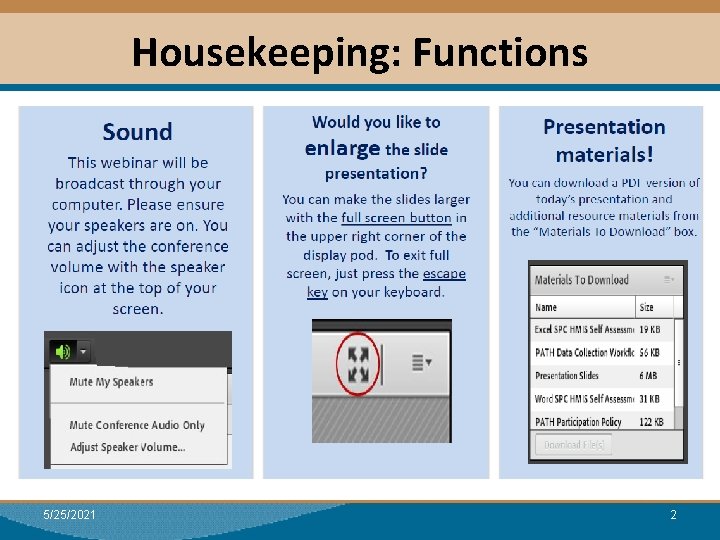
Housekeeping: Functions 5/25/2021 2
Housekeeping: Communication 5/25/2021 3
Treatment Modalities From research to practice, effective treatment models for RSAT programs Moderator Stephen Keller Training/TA Coordinator, RSAT-TTA March 15, 2017 4
Phil Barbour, CHJ Master Trainer PBarbour@tasc-il. org Center for Health and Justice at TASC http: //www 2. tasc. org/ 5/25/2021 5
Treatment Modalities The following research-based treatment modalities are practiced in individual and group therapy sessions and daily psychoeducational/didactic groups. American Addiction Centers
Learning Objectives Participants will be able to: • Describe the most popular evidence-based treatment modalities for SUD and mental health disorders • Understand why certain modalities are more effective than others for the criminal justice population • Identify the main characteristics of cognitive behavior therapy
Treatment Modality or Curriculum? This webinar looks at the foundational principles of several popular interventions, not the tools or materials used to deliver the intervention. • Modality: Medicine/Medical. the application of a therapeutic agent, usually a physical therapeutic agent. • Curriculum: a set of courses constituting an area of specialization. Merriam-Webster Dictionary
Motivational Interviewing (MI) • MI is a collaborative, therapeutic conversation between licensed clinicians and clients that addresses the common problem of ambivalence for change. • As defined by William Miller, the creator of MI, its purpose is to strengthen the client’s own motivation for and commitment to change in a manner that is consistent with said client’s values.
Motivational Interviewing (MI) Motivational interviewing is a counseling style based on the following assumptions: • Ambivalence about substance use (and change) is normal and constitutes an important motivational obstacle in recovery. • Ambivalence can be resolved by working with your client's intrinsic motivations and values. • The alliance between you and your client is a collaborative partnership to which you each bring important expertise. • An empathic, supportive, yet directive, counseling style provides conditions under which change can occur. (Direct argument and aggressive confrontation may tend to increase client defensiveness and reduce the likelihood of behavioral change. )
Cognitive Behavioral Therapy (CBT) • Those who suffer from addiction are often driven by destructive thought patterns. • CBT encourages clients to question and examine recurring thoughts in order to phase out those that are negative and unhealthy. • Scientific studies have shown that CBT is an effective form of treatment for addiction, mental health conditions, and criminality. (US National Library of Medicine)
Cognitive Behavioral Therapy (CBT) Principles • Brief and Time Limited • Present Centered • Thought Focused • Practice and Homework • Sound Therapeutic Relationship
Cognitive Behavioral Therapy (CBT) Critical Tasks • Foster motivation for abstinence. • Teach coping skills. • Change reinforcers • Foster management of painful feelings • Improve interpersonal relationships and social supports
Therapeutic Communities (TC) A participative, group-based approach to long-term mental illness, personality disorders and drug addiction. The approach was usually residential, with the clients and therapists living together, but increasingly residential units have been superseded by day units. It is based on milieu therapy principles, and includes group psychotherapy as well as practical activities.
Therapeutic Communities (TC) Principles • Patients' participation in decision-making • Collective responsibility for ward events • A multidisciplinary staff • A belief in the rehabilitative potential of the environment
Rational Emotive Behavior Therapy (REBT) Similar to CBT, Rational Emotive Behavior Therapy (REBT) helps clients identify, challenge, and replace their destructive thoughts and convictions with healthier, adaptive thoughts. Empirical studies demonstrate that this process incites emotional well-being and goal achievement. The Encyclopedia of Clinical Psychology
Rational Emotive Behavior Therapy (REBT) Model According to the ABC model of REBT: The impact of various activating events (e. g. , the death of a close relative; A) on various psychological consequences (C) is mediated by cognitive processes (cognitions/beliefs; B). REBT focuses on specific cognitions, namely rational and irrational beliefs. The Encyclopedia of Clinical Psychology
Dialectical Behavioral Therapy (DBT) Dialectical behavior therapy (DBT) treatment is a cognitive-behavioral approach that emphasizes the psychosocial aspects of treatment. The theory behind the approach is that some people are prone to react in a more intense and out-ofthe-ordinary manner toward certain emotional situations, primarily those found in romantic, family and friend relationships.
Dialectical Behavioral Therapy (DBT) DBT teaches clients how to regulate their emotions to reduce the selfdestructive behaviors that derive from extreme, intense emotions. An effective treatment for substance conditions, eating disorders, anger-related issues, selfinjury, and Borderline Personality Disorder, DBT is easily customizable to address a variety of needs.
Dialectical Behavioral Therapy (DBT) Primarily a skill-building approach, DBT focuses on the development of four key skill sets: 1. Distress tolerance 2. Emotion regulation 3. Mindfulness (to live in the moment and fully experience emotions) 4. Interpersonal effectiveness
Eye Movement Desensitization and Reprocessing (EMDR) Offered at select facilities, EMDR helps clients recover from traumatic experiences that result in symptoms and distress. Utilizing “dual stimulation” exercises to discuss past trauma while simultaneously engaging other parts of the brain through bilateral eye movements, tones, or taps, EMDR helps heal the brain’s information processing system and promotes emotional stability and symptom reduction.
Eye Movement Desensitization and Reprocessing (EMDR) EMDR’s benefits are so empirically effective that it has been officially approved by the American Psychological Association as a treatment for post-traumatic stress disorder (PTSD) and other trauma conditions. In fact, several studies have shown that 77 percent of combat veterans and those struggling with other forms of trauma no longer exhibited and reported PTSD symptoms after 6 to 12, 50 -minute EMDR therapy sessions. California’s Mental Research Institute has also found EMDR to be “an important addition to the treatment of substance abuse. ”
Seeking Safety (And Other Trauma Focused Therapies) Developed under a grant from the National Institute of Drug Abuse (NIDA) by Lisa M. Najavits, Ph. D. , Seeking Safety is a present-focused therapy that helps clients attain safety from trauma (including PTSD) and substance abuse by emphasizing coping skills, grounding techniques and education. This highly effective, research-based therapy has several key principles which, to name a few, include: • Helping clients attain safety in their thinking, emotions, behaviors and relationships • Integrated treatment of substance conditions and trauma and • Focusing on ideals to counteract the loss of ideals that is experienced in both trauma and substance abuse.
Trauma-Focused Cognitive Behavioral Therapy (TF-CBT) is a componentsbased model of psychotherapy that addresses the unique needs of children with PTSD symptoms, depression, behavior problems, and other difficulties related to traumatic life experiences.
Trauma-Focused Cognitive Behavioral Therapy (TF-CBT) • Psychoeducation is provided to children and their caregivers about the impact of trauma and common childhood reactions. • Parenting skills are provided to optimize children’s emotional and behavioral adjustment. • Relaxation and stress management skills are individualized for each child and parent. • Affective expression and modulation are taught to help children and parents identify and cope with a range of emotions
Trauma-Focused Cognitive Behavioral Therapy (TF-CBT) • Cognitive coping and processing are enhanced by illustrating the relationships among thoughts, feelings and behaviors. This helps children and parents modify inaccurate or unhelpful thoughts about the trauma. • Trauma narration, in which children describe their personal traumatic experiences
Trauma-Focused Cognitive Behavioral Therapy (TF-CBT) • In vivo mastery of trauma reminders is used to help children overcome their avoidance of situations that are no longer dangerous, but which remind them of the original trauma. • Conjoint child-parent sessions help the child and parent talk to each other about the child’s trauma. • The final phase of the treatment, Enhancing future safety and development, addresses safety, helps the child to regain developmental momentum, and covers any other skills the child needs to end treatment.
The Seven Challenges In The Seven Challenges, young people address their drug problems, their cooccurring life skill deficits, and their situational and psychological problems. Although counselors in the program provide a structure for groups and a framework for individual sessions, the content of each session is exceptionally flexible, in response to the immediate needs of youth. It is not pre-scripted.
Resources and other materials • SAMHSA's National Registry of Evidence-based Programs and Practices (NREPP) is a searchable database of more than 330 interventions for the prevention and treatment of mental and substance use disorders. • The National Institute on Drug Abuse (NIDA) is a United States federalgovernment research institute whose mission is to "lead the Nation in bringing the power of science to bear on drug abuse and addiction. "
Questions? Type your question in the Q&A box on your computer screen Speaker Contact Info Phil Barbour, PBarbour@tasc-il. org 5/25/2021 30
Always Happy to Hear From You Thank you all for the great work you do! We know your job is not easy, but we aim to make it a bit easier & are always happy to hear how we can do so… Contact me anytime with inquiries about the topics we have covered: PBarbour@tasc-il. org Also appreciate hearing about your experiences & innovations… Thank you for your participation … 5/25/2021 31
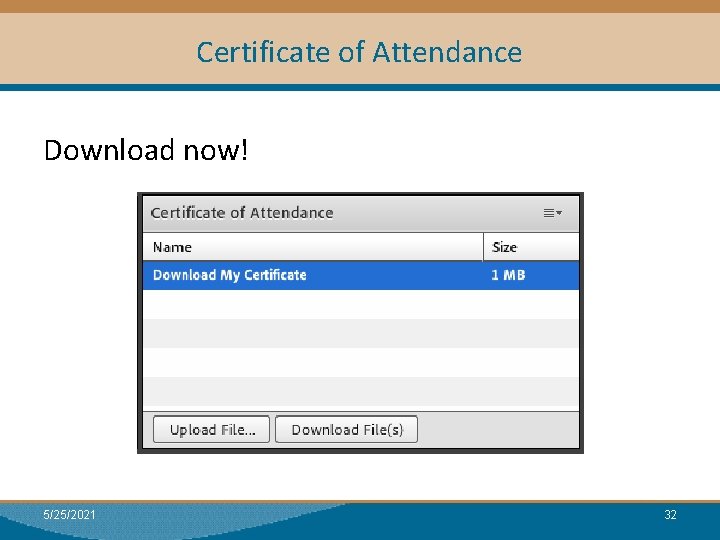
Certificate of Attendance Download now! 5/25/2021 32
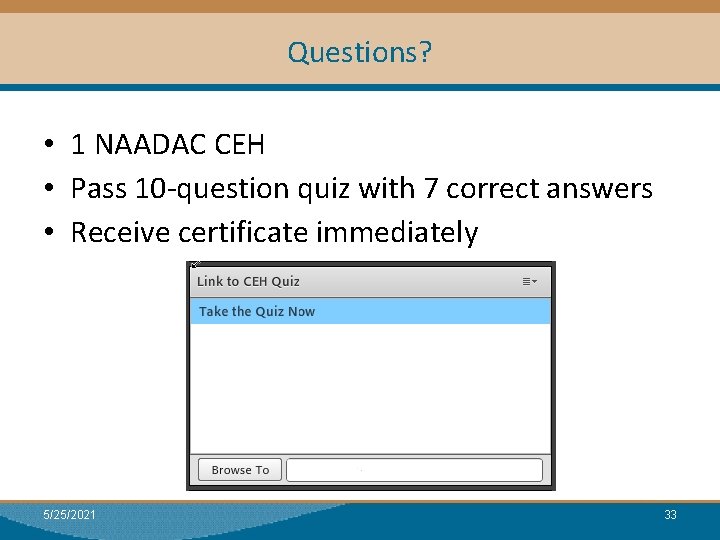
Questions? • 1 NAADAC CEH • Pass 10 -question quiz with 7 correct answers • Receive certificate immediately 5/25/2021 33
RSAT Technical Assistance and Training Center For more information on RSAT training and technical assistance visit: http: //www. rsat-tta. com/Home or email Stephen Keller, RSAT TA Coordinator at skeller@ahpnet. com 5/25/2021 34