
TREATING LYMPHOEDEMA WITH LOW LEVEL LASER THERAPY ALOHA

![Clinical Trial published: [ #2 slightly scrambled by Cancer (J)] 1. Carati CJ, Anderson](https://slidetodoc.com/presentation_image_h/d96bfcbd3f4597748154c959e205edb3/image-30.jpg "Clinical Trial published: [ #2 slightly scrambled by Cancer (J)] 1. Carati CJ, Anderson")
- Slides: 30
TREATING LYMPHOEDEMA WITH LOW LEVEL LASER THERAPY ALOHA Sandy Anderson 1, Neil Piller 1, Colin Carati 2, Bren Gannon 2 and Ann Angel* 1 Lymphoedema Assessment Clinic, Flinders Surgical Oncology Unit, Flinders Medical Centre 2 Microcirculation & Lymphology lab. , Department of Anatomy, School of Medicine, Flinders University, South Australia and *RIAN Corp. , Adelaide, South Australia.
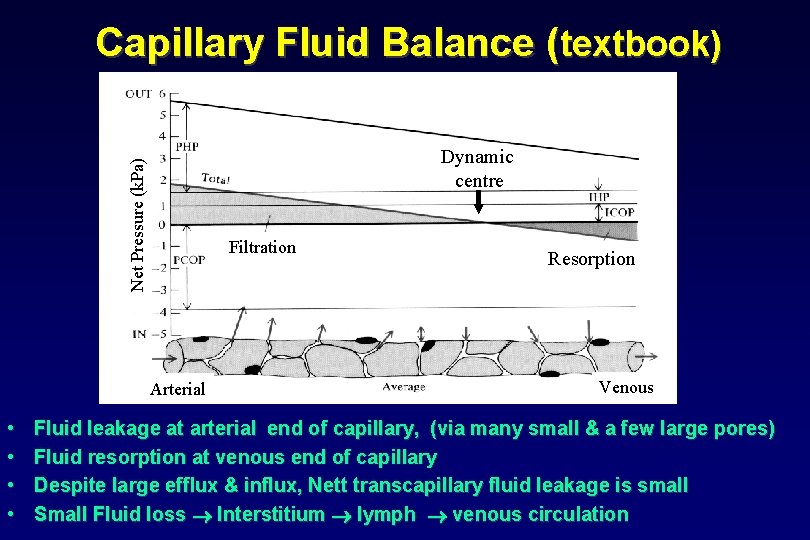
Capillary Fluid Balance (textbook) Net Pressure (k. Pa) Dynamic centre Filtration Arterial • • Resorption Venous Fluid leakage at arterial end of capillary, (via many small & a few large pores) Fluid resorption at venous end of capillary Despite large efflux & influx, Nett transcapillary fluid leakage is small Small Fluid loss lnterstitium lymph venous circulation
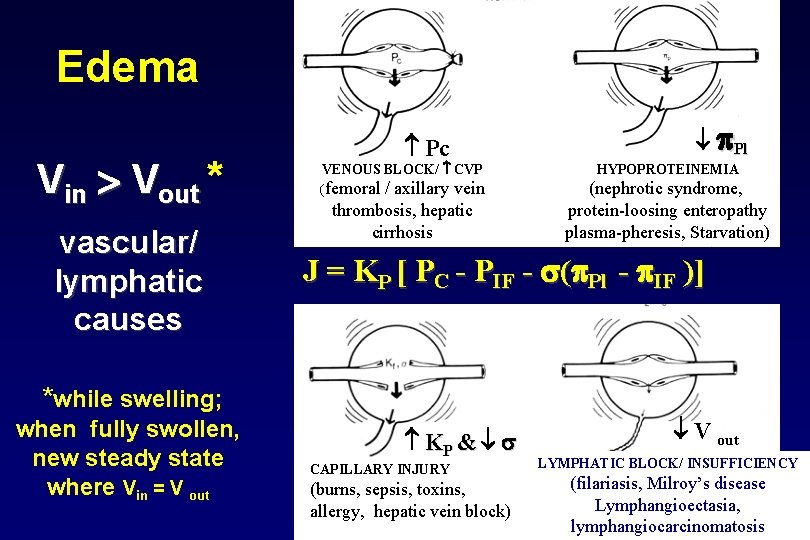
Edema Vin Vout * vascular/ lymphatic causes Pc VENOUS BLOCK/ CVP (femoral / axillary vein thrombosis, hepatic cirrhosis Pl HYPOPROTEINEMIA (nephrotic syndrome, protein-loosing enteropathy plasma-pheresis, Starvation) J = KP [ PC - PIF - ( Pl - IF )] *while swelling; when fully swollen, new steady state where Vin = V out KP & CAPILLARY INJURY (burns, sepsis, toxins, allergy, hepatic vein block) V out LYMPHATIC BLOCK/ INSUFFICIENCY (filariasis, Milroy’s disease Lymphangioectasia, lymphangiocarcinomatosis
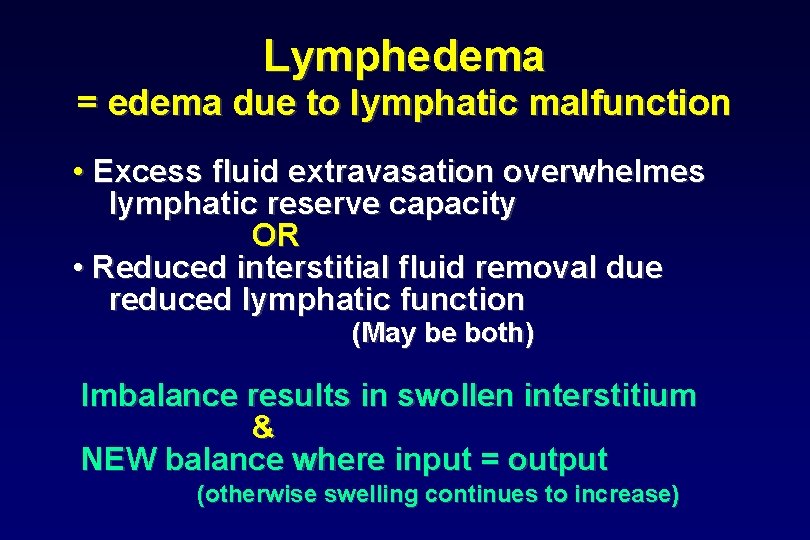
Lymphedema = edema due to lymphatic malfunction • Excess fluid extravasation overwhelmes lymphatic reserve capacity OR • Reduced interstitial fluid removal due reduced lymphatic function (May be both) Imbalance results in swollen interstitium & NEW balance where input = output (otherwise swelling continues to increase)
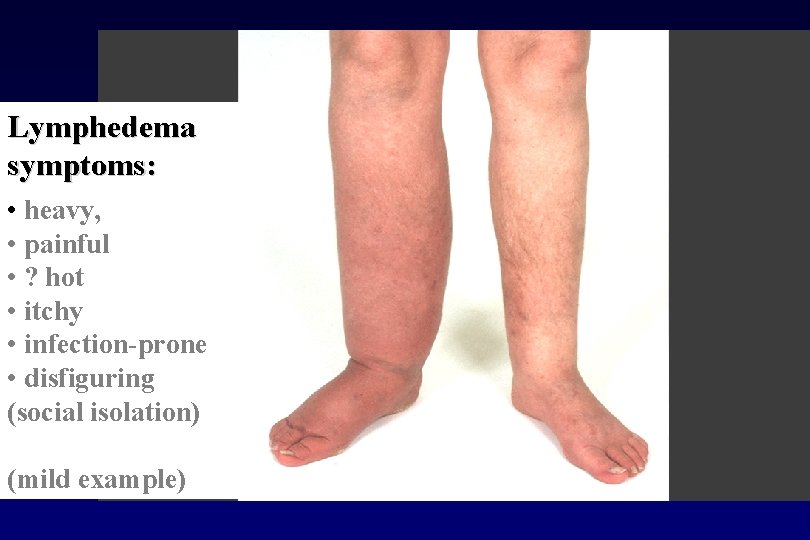
Lymphedema symptoms: • heavy, • painful • ? hot • itchy • infection-prone • disfiguring (social isolation) (mild example)
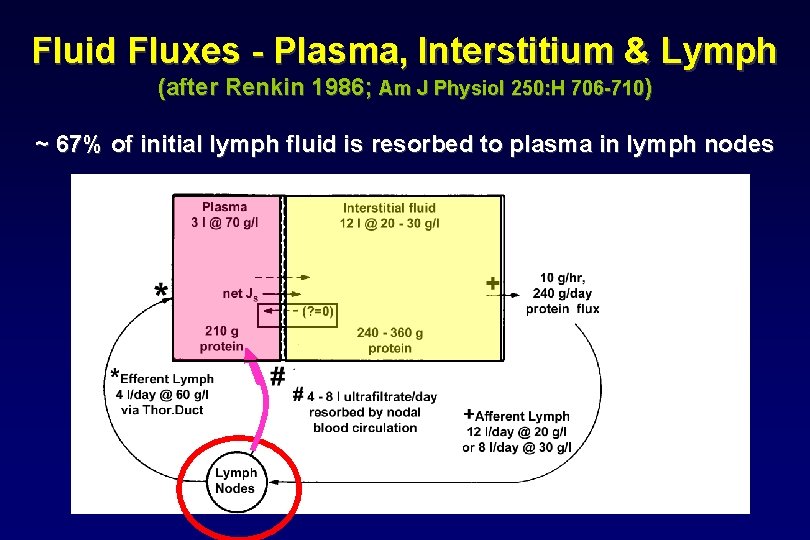
Fluid Fluxes - Plasma, Interstitium & Lymph (after Renkin 1986; Am J Physiol 250: H 706 -710) ~ 67% of initial lymph fluid is resorbed to plasma in lymph nodes
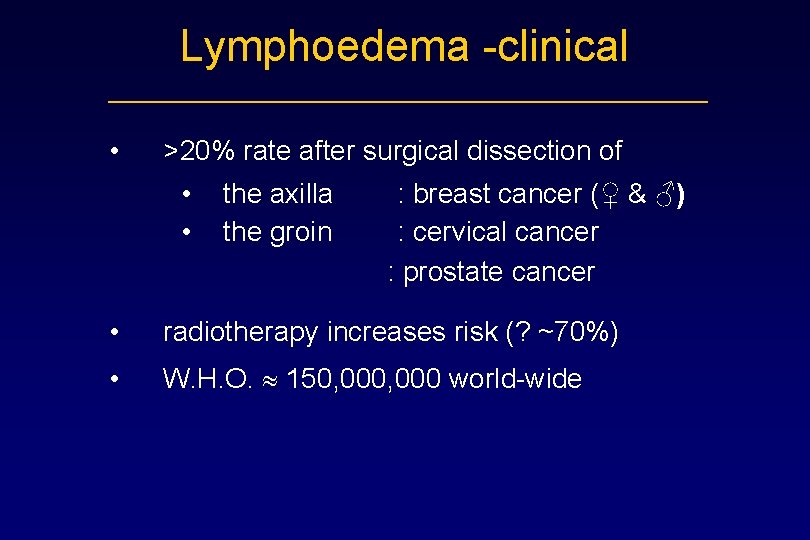
Lymphoedema -clinical • >20% rate after surgical dissection of • • the axilla the groin : breast cancer (♀ & ♂) : cervical cancer : prostate cancer • radiotherapy increases risk (? ~70%) • W. H. O. 150, 000 world-wide
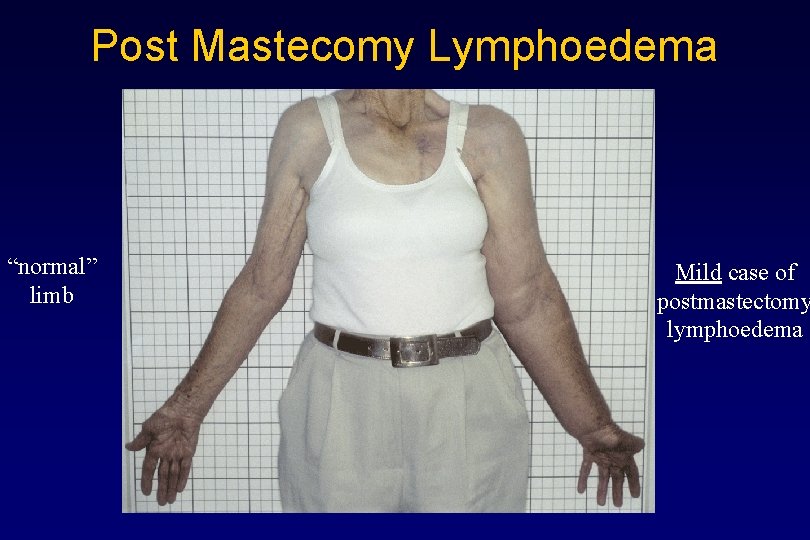
Post Mastecomy Lymphoedema “normal” limb Mild case of postmastectomy lymphoedema
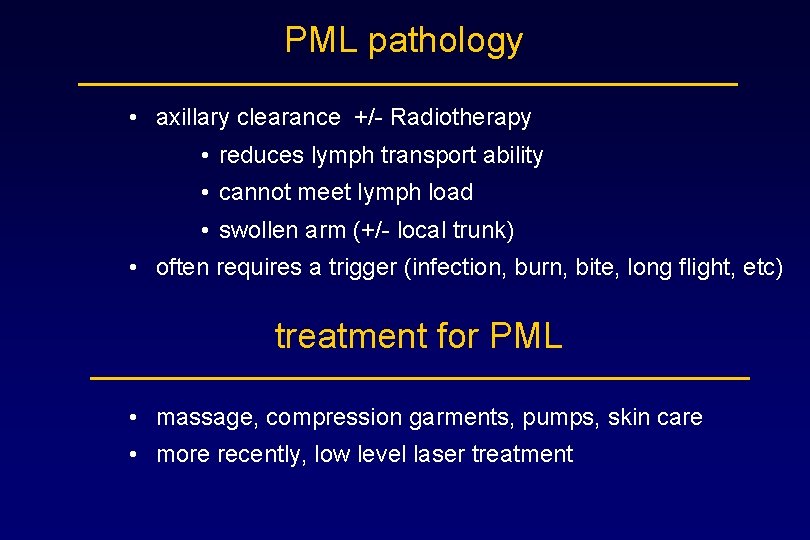
PML pathology • axillary clearance +/- Radiotherapy • reduces lymph transport ability • cannot meet lymph load • swollen arm (+/- local trunk) • often requires a trigger (infection, burn, bite, long flight, etc) treatment for PML • massage, compression garments, pumps, skin care • more recently, low level laser treatment
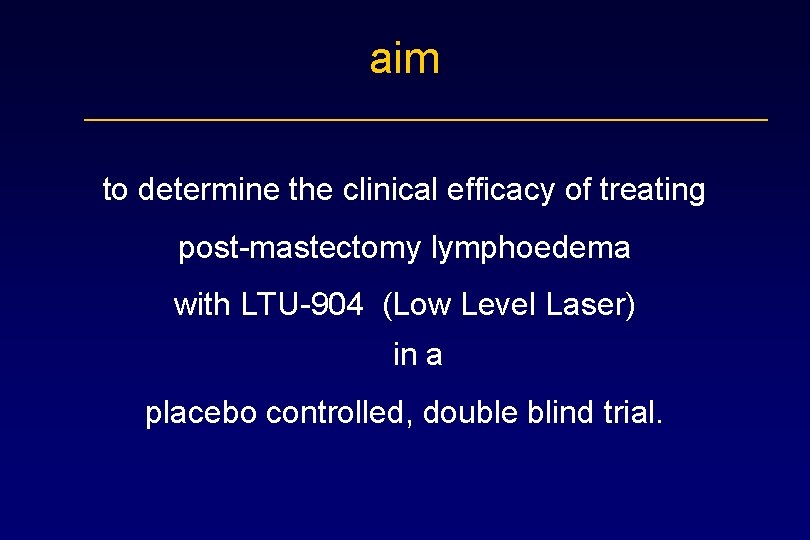
aim to determine the clinical efficacy of treating post-mastectomy lymphoedema with LTU-904 (Low Level Laser) in a placebo controlled, double blind trial.
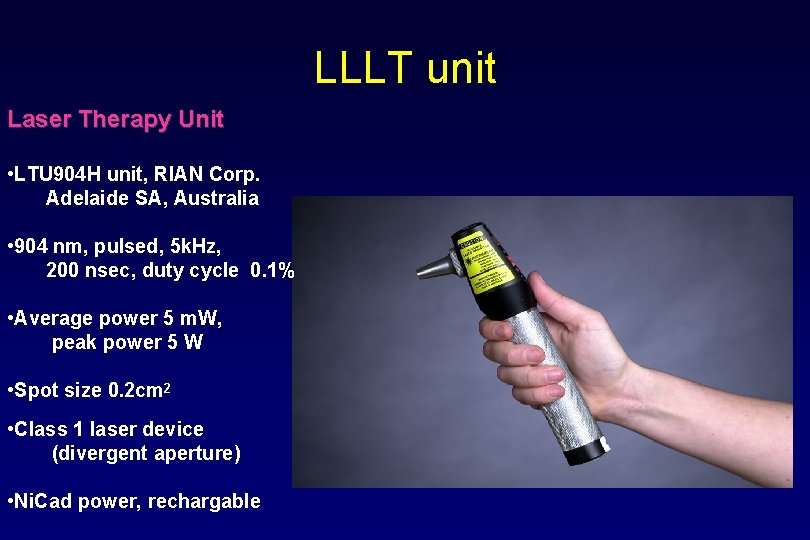
LLLT unit Laser Therapy Unit • LTU 904 H unit, RIAN Corp. Adelaide SA, Australia • 904 nm, pulsed, 5 k. Hz, 200 nsec, duty cycle 0. 1% • Average power 5 m. W, peak power 5 W • Spot size 0. 2 cm 2 • Class 1 laser device (divergent aperture) • Ni. Cad power, rechargable
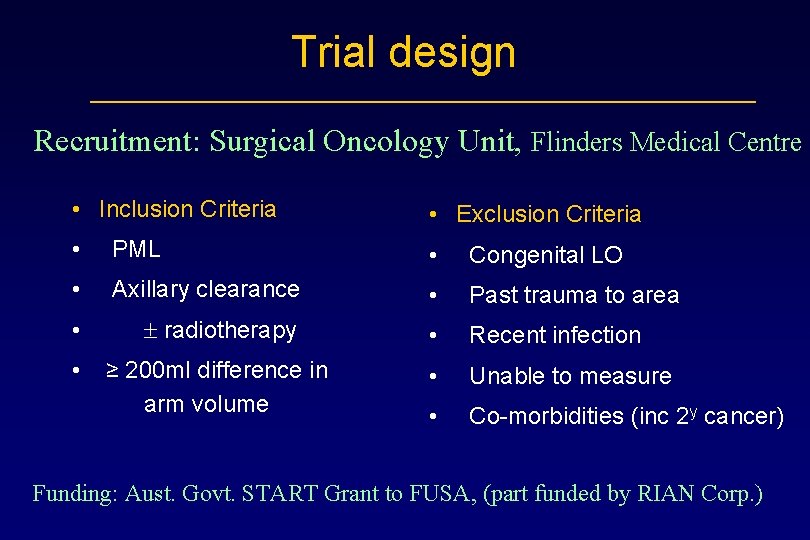
Trial design Recruitment: Surgical Oncology Unit, Flinders Medical Centre • Inclusion Criteria • Exclusion Criteria • PML • Congenital LO • Axillary clearance • Past trauma to area • radiotherapy • Recent infection • ≥ 200 ml difference in arm volume • Unable to measure • Co-morbidities (inc 2 y cancer) Funding: Aust. Govt. START Grant to FUSA, (part funded by RIAN Corp. )
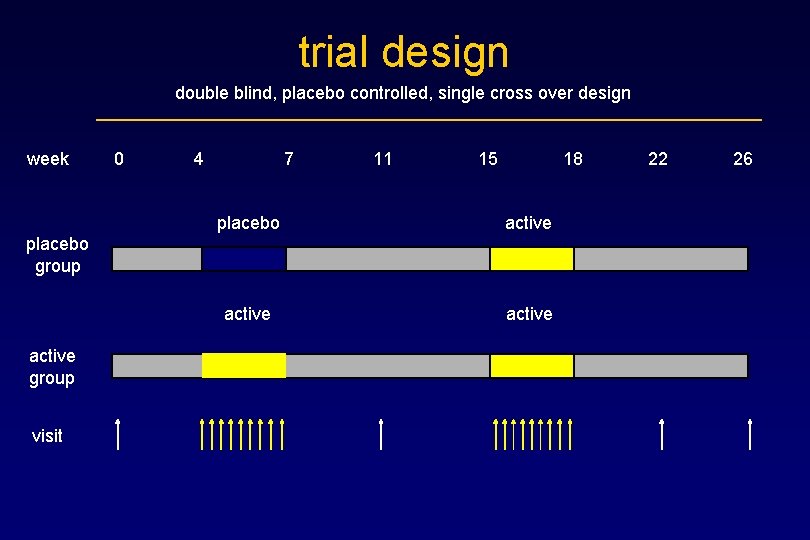
trial design double blind, placebo controlled, single cross over design week 0 4 7 11 15 18 placebo active placebo group active group visit 22 26
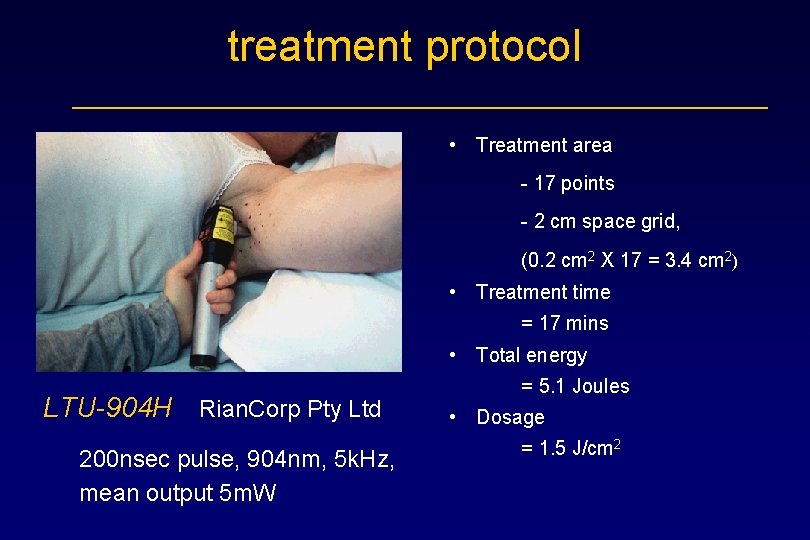
treatment protocol • Treatment area - 17 points - 2 cm space grid, (0. 2 cm 2 X 17 = 3. 4 cm 2) • Treatment time = 17 mins • Total energy LTU-904 H Rian. Corp Pty Ltd 200 nsec pulse, 904 nm, 5 k. Hz, mean output 5 m. W = 5. 1 Joules • Dosage = 1. 5 J/cm 2
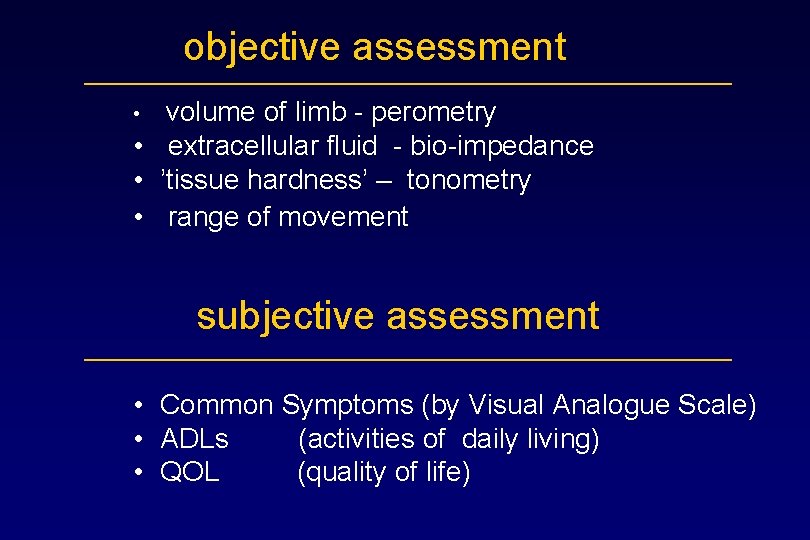
objective assessment volume of limb - perometry • extracellular fluid - bio-impedance • ’tissue hardness’ – tonometry • range of movement • subjective assessment • Common Symptoms (by Visual Analogue Scale) • ADLs (activities of daily living) • QOL (quality of life)
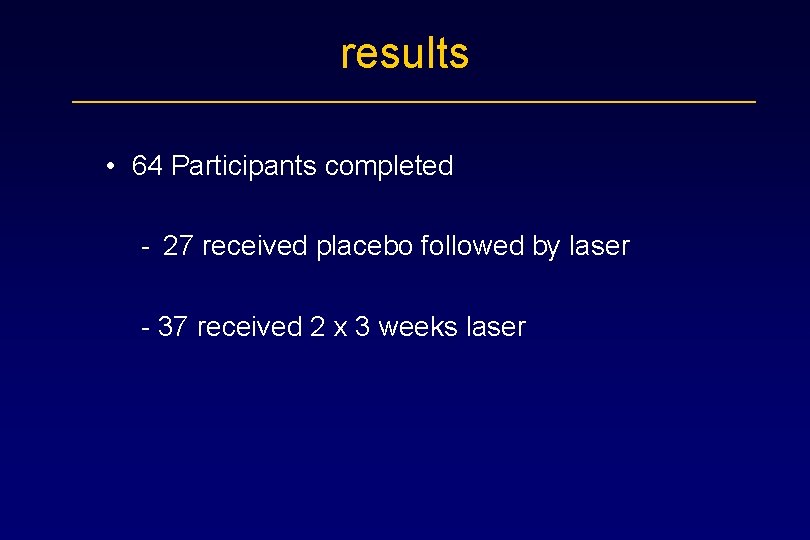
results • 64 Participants completed - 27 received placebo followed by laser - 37 received 2 x 3 weeks laser
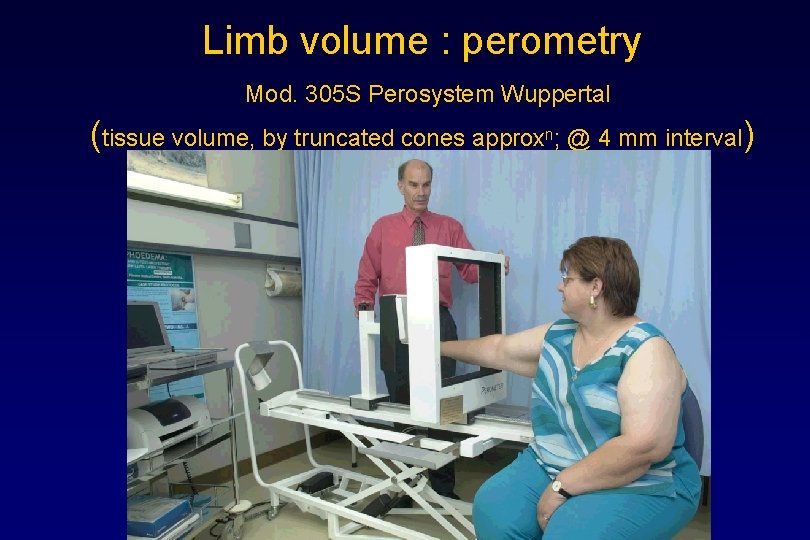
Limb volume : perometry Mod. 305 S Perosystem Wuppertal (tissue volume, by truncated cones approxn; @ 4 mm interval)
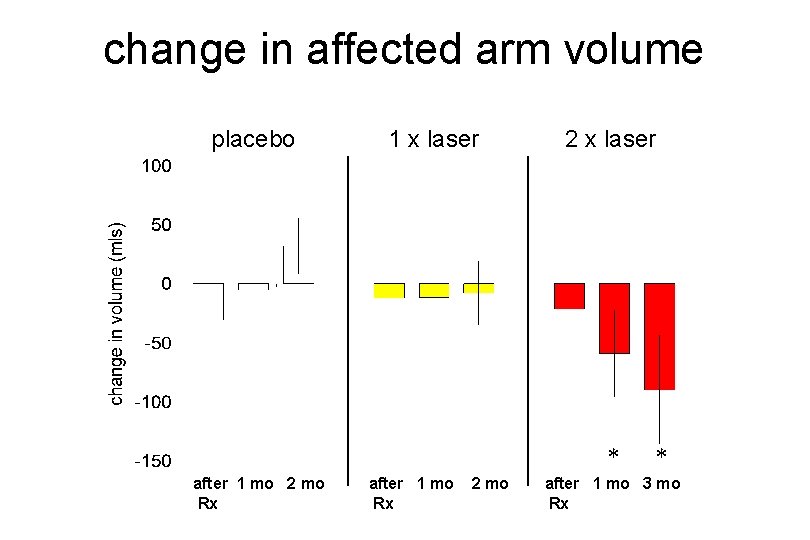
change in affected arm volume placebo 1 x laser 2 x laser * after 1 mo 2 mo Rx after 1 mo Rx 2 mo * after 1 mo 3 mo Rx
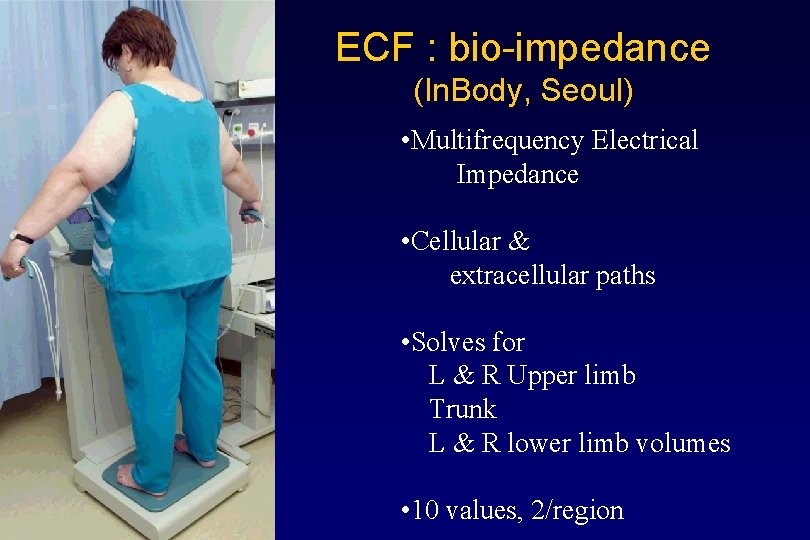
ECF : bio-impedance (In. Body, Seoul) • Multifrequency Electrical Impedance • Cellular & extracellular paths • Solves for L & R Upper limb Trunk L & R lower limb volumes • 10 values, 2/region
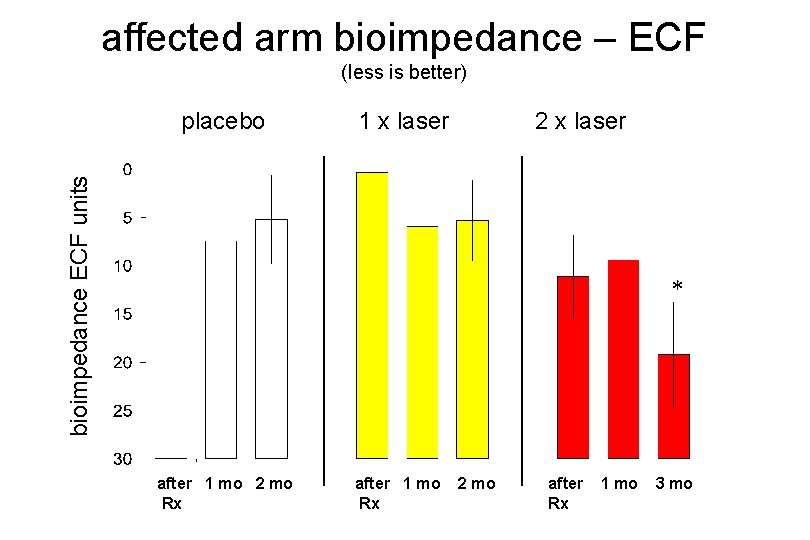
ECF - bioimpedance • significant improvements after 2 x laser in • affected arm (maintained at 1 - 3 months) • trunk (maintained at 1 - 3 months) • unaffected arm
affected arm bioimpedance – ECF (less is better) 1 x laser 2 x laser bioimpedance ECF units placebo * after 1 mo 2 mo Rx after 1 mo Rx 2 mo after Rx 1 mo 3 mo
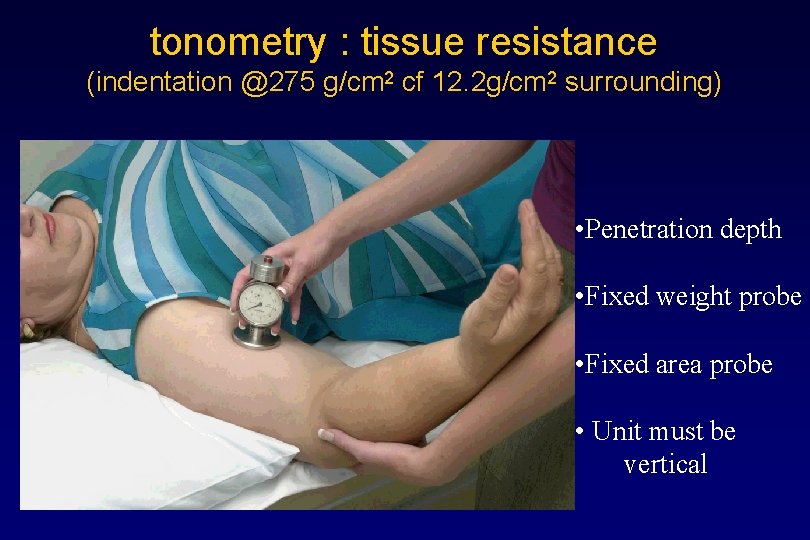
tonometry : tissue resistance (indentation @275 g/cm 2 cf 12. 2 g/cm 2 surrounding) • Penetration depth • Fixed weight probe • Fixed area probe • Unit must be vertical
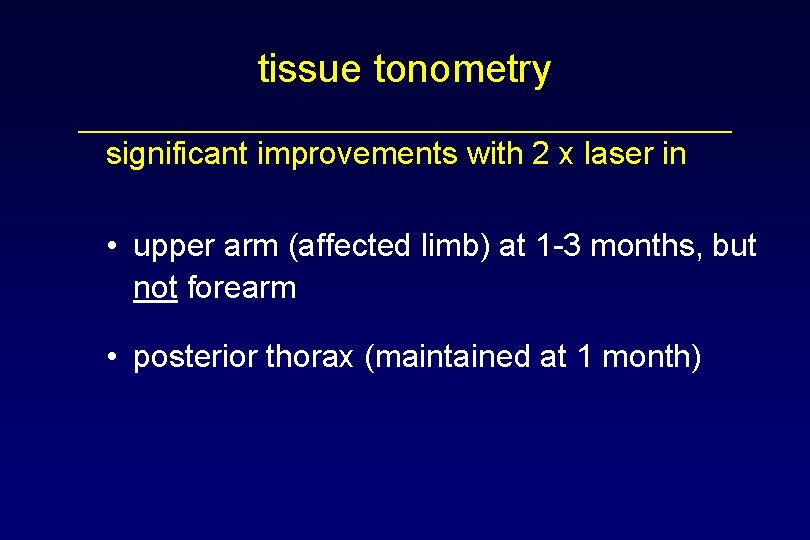
tissue tonometry significant improvements with 2 x laser in • upper arm (affected limb) at 1 -3 months, but not forearm • posterior thorax (maintained at 1 month)
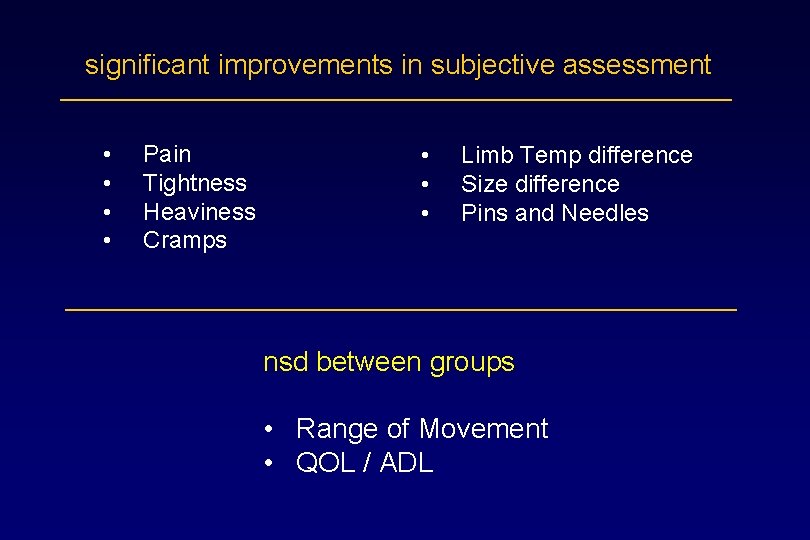
significant improvements in subjective assessment • • Pain Tightness Heaviness Cramps • • • Limb Temp difference Size difference Pins and Needles nsd between groups • Range of Movement • QOL / ADL
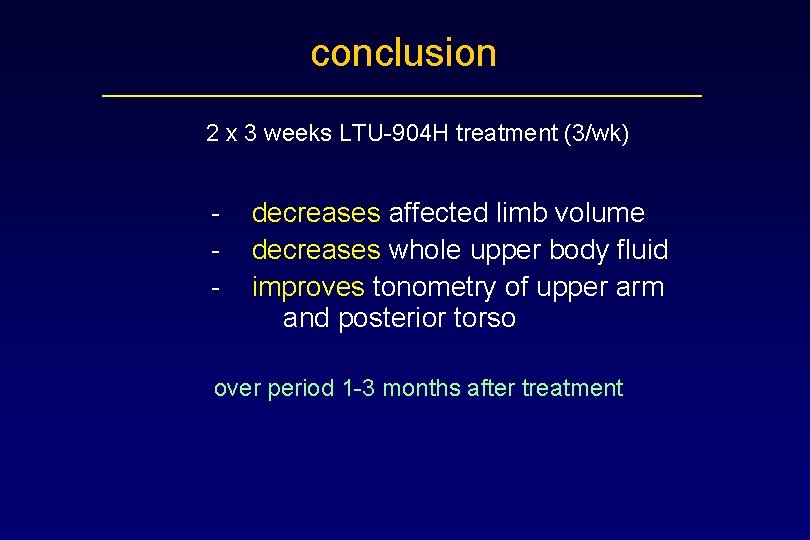
conclusion 2 x 3 weeks LTU-904 H treatment (3/wk) - decreases affected limb volume decreases whole upper body fluid improves tonometry of upper arm and posterior torso over period 1 -3 months after treatment
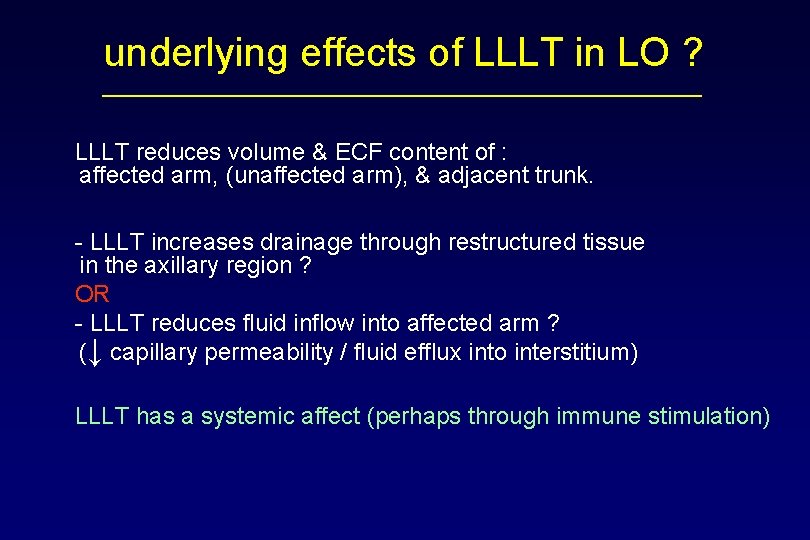
underlying effects of LLLT in LO ? LLLT reduces volume & ECF content of : affected arm, (unaffected arm), & adjacent trunk. - LLLT increases drainage through restructured tissue in the axillary region ? OR - LLLT reduces fluid inflow into affected arm ? (↓ capillary permeability / fluid efflux into interstitium) LLLT has a systemic affect (perhaps through immune stimulation)
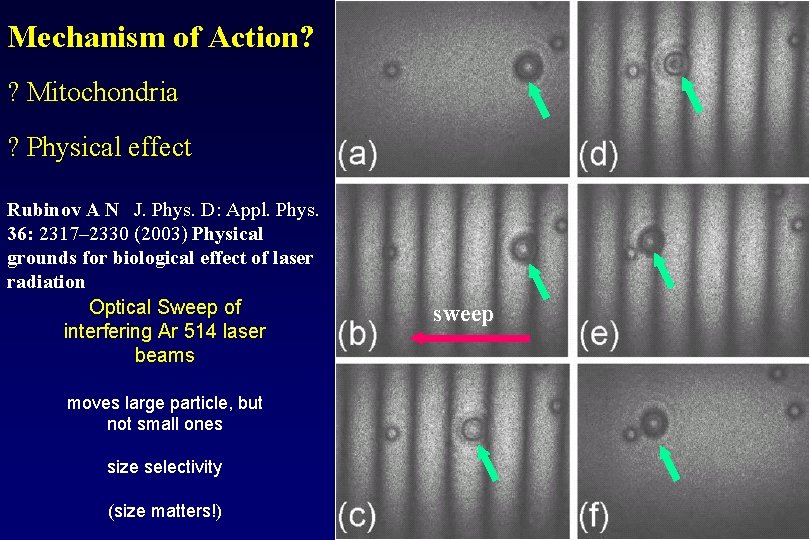
Mechanism of Action? ? Mitochondria ? Physical effect Rubinov A N J. Phys. D: Appl. Phys. 36: 2317– 2330 (2003) Physical grounds for biological effect of laser radiation Optical Sweep of interfering Ar 514 laser beams moves large particle, but not small ones size selectivity (size matters!) sweep
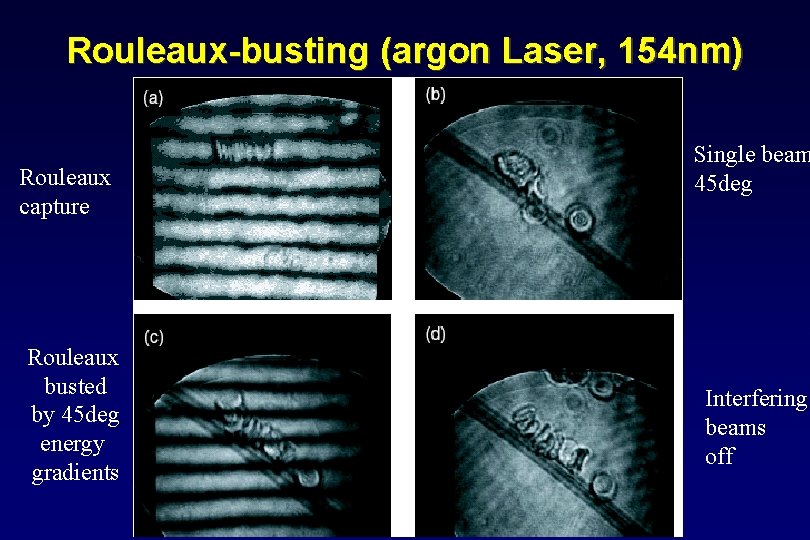
Rouleaux-busting (argon Laser, 154 nm) Rouleaux capture Rouleaux busted by 45 deg energy gradients Single beam 45 deg Interfering beams off
Fin. Mahalo
Clinical Trial published: [ #2 slightly scrambled by Cancer (J)] 1. Carati CJ, Anderson SN, Gannon BJ, and Piller NB (2004). Low Level Laser as Treatment for Post-Mastectomy Lymphedema. Am J Oncology Review 3: 255 -60 (invited Review article). 2. Carati CJ, Anderson SN, Gannon BJ & Piller NB (2003). Treatment of Post-Mastectomy lymphedema with low level laser therapy: a double blind, placebo-controlled trial. Cancer, 98: 1114 -22.