
Treating Cystic Fibrosis Using SNitrosothiol Compounds Objective This
Treating Cystic Fibrosis Using SNitrosothiol Compounds
Objective This study was designed to test the hypothesis that physiological concentrations of naturally occurring S-Nitrosothiol compounds increase the expression and maturation of the cystic fibrosis transmembrane conductance regulator (CFTR) protein in cystic fibrosis and non-cystic fibrosis cells.
Abstract Cystic fibrosis (CF) is a genetic disorder caused by a mutation in the protein called CF Transmembrane Conductance Regulator (CFTR), which regulates chloride transport in epithelial cells. The most common mutation, ΔF 508 CFTR results in a deletion of the amino acid phenylalanine (F), at position 508, which causes the protein to fold incorrectly. Wrongly folded CFTR proteins cannot pass through the endoplasmic reticulum, are degraded by enzymes, and are unable to regulate chloride transport in the cell membrane. This leads to poor salt regulation in epithelial cells, which causes germ accumulation in the lungs and disrupts the pancreas. S-Nitrosothiol compounds which naturally occur in the body are hypothesized to aid CFTR maturation in cells. CF patients have lower levels of these compounds due to having more enzymes called S-nitrosoglutathione reductase. This experiment tested whether S-Nitrosothiols increase CFTR maturation in human epithelial cells by using Western Blot analysis and immunohistochemistry techniques. The results showed that the cells treated with SNitrosothiols had more expression and maturation of the CFTR protein than those without S-Nitrosothiols. When the cell membranes were examined, it was seen that the cells treated with S-nitrosoglutathione diethyl ester (GNODE), one class of S– Nitrosothiols, had more maturation of the CFTR protein than those treated with Snitrosoglutathione (GSNO), another S–Nitrosothiol, which is likely due to the greater membrane permeability of GNODE. Further testing will focus on the discovery of the optimal dose of S-Nitrosothiols that can be given to patients with cystic fibrosis to treat them.

17 th Century German Saying “” “Woe to that child which when kissed on the forehead tastes salty. He is bewitched and soon must die”
Background v Cystic fibrosis affects more than 30, 000 kids and young adults in the United States and 70, 000 worldwide. Kids who have it are more vulnerable to repeated lung infections, which disturb the normal function of epithelial cells. When the CFTR protein is defective, epithelial cells can not regulate the way that chloride ions pass across cell membranes. This disrupts the essential balance of salt and water. Because of that, mucus in the lung airways becomes very thick, sticky, and hard to move. Also, cilia can not move properly and germs start to collect on the cells, which leads to life-threatening lung infections. The mucus also blocks the pancreas and stops enzymes from assisting the body with breaking down and absorbing food (Figure 1).
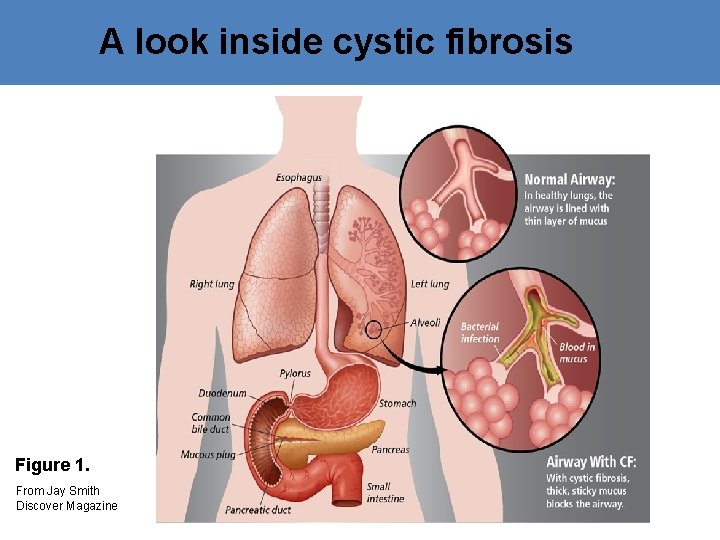
A look inside cystic fibrosis Figure 1. From Jay Smith Discover Magazine
Background v It has recently been discovered that there are some small naturally occurring compounds that are normally present in the human airway. These compounds are capable of increasing the maturation of the commonly identified mutated form of the cystic fibrosis transmembrane conductance regulatory (ΔF 508 CFTR) protein. These are known as S-Nitrosothiols and are formed in the human airways from a reaction between nitric oxide and intracellular glutathione. These compounds appear to cause chemical reactions that allow CFTR to mature and become active on the cystic fibrosis cell surface. Remarkably, researchers have found that these compounds are reduced in the CF airways. v Researchers have previously shown that replacement therapy with low doses of inhaled S-Nitrosothiols are well-tolerated and improve oxygen levels in patients with cystic fibrosis. However, evidence also suggests that excess concentrations of these compounds in the CF airway could have unwanted effects, perhaps even inhibiting CFTR maturation and function. Further, the mechanisms by which SNitrosothiols exert beneficial effects are not clear. Reseachers hope to identify both the ideal level of S-niyrosothiols and lowest effective dose, suitable for clinical trials for cystic fibrosis.

Overview: Cystic Fibrosis heterozygous mutant mother “carrier” CF CF WT WT normal phenotype homozygous CF heterozygous mutant father “carrier” heterozygous “carrier” normal phenotype heterozygous “carrier” homozygous normal CF CF CF WT WT WT CF phenotype Figure 2. normal phenotype

Overview: Cystic Fibrosis v Human CFTR gene was first identified in 1989 and is located on the long arm of chromosome 7 v There almost 2000 mutations but the most common mutation is known as ΔF 508 CFTR v This mutation occurs due to the deletion of the three nucleotides which produce the amino acid phenylalanine at position 508 v Figure 3 shows a model of the CFTR protein structure. The CFTR protein is made up of 5 domains v Two nucleotide binding domains (NBD 1/NBD 2), that bind and hydrolyze ATP to get energy v Two dual sets of membrane-spanning domains (MSD 1/MSD 2) that form the chloride ion channels v A central regulatory domain (R) that regulates the CFTR function v In normal cells, the CFTR protein allows the release of chloride ions from the cell. If CFTR doesn’t function, chloride ions cannot leave the cell
v Without the balance of chloride ions, water does not exit the cell and without water, mucus thickens outside the cell v Cilia also cannot beat properly and bacteria starts to collect on the cells which leads to infection v Presently, there is no cure for CF and current treatment only keeps it under control
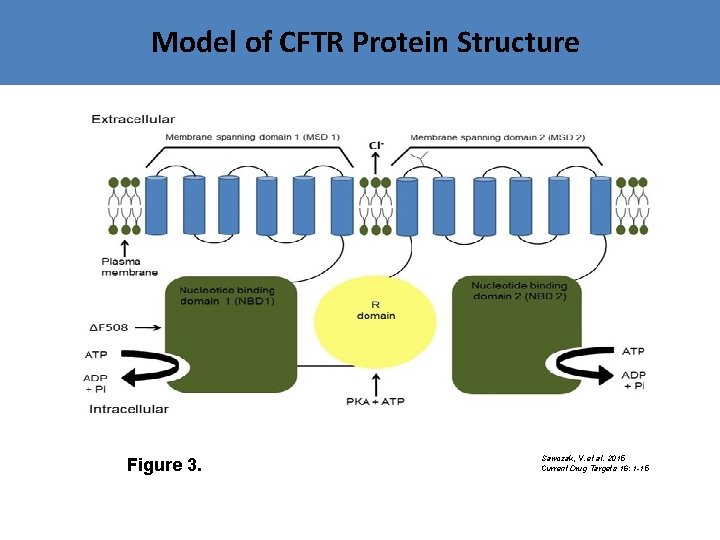
Model of CFTR Protein Structure Figure 3. Sawczak, V. et al. 2015 Current Drug Targets 16: 1 -15
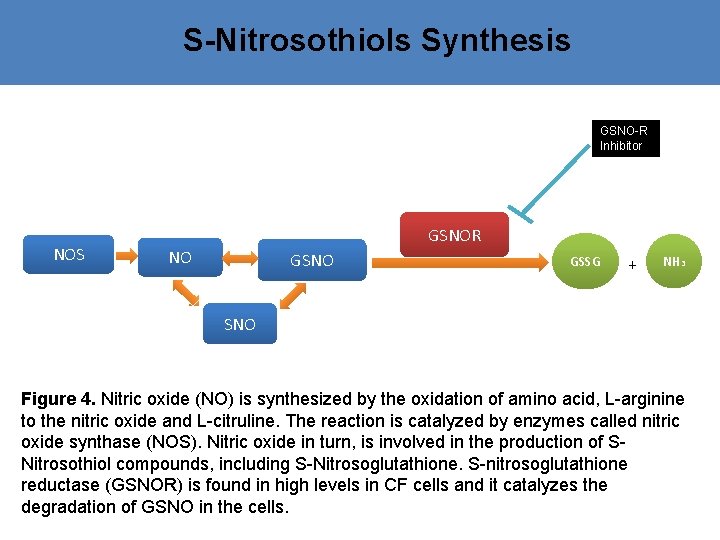
S-Nitrosothiols Synthesis GSNO-R Inhibitor NOS GSNOR NO GSSG + NH 3 SNO Figure 4. Nitric oxide (NO) is synthesized by the oxidation of amino acid, L-arginine to the nitric oxide and L-citruline. The reaction is catalyzed by enzymes called nitric oxide synthase (NOS). Nitric oxide in turn, is involved in the production of SNitrosothiol compounds, including S-Nitrosoglutathione. S-nitrosoglutathione reductase (GSNOR) is found in high levels in CF cells and it catalyzes the degradation of GSNO in the cells.
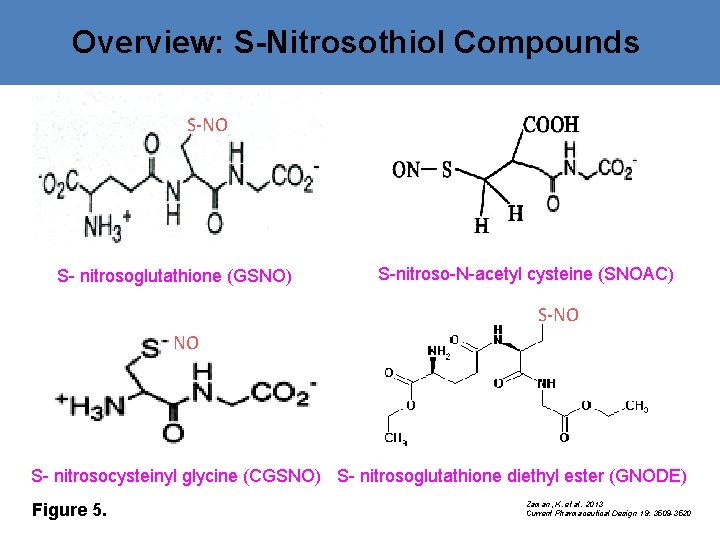
Overview: S-Nitrosothiol Compounds S-NO S- nitrosoglutathione (GSNO) S-nitroso-N-acetyl cysteine (SNOAC) S-NO NO S- nitrosocysteinyl glycine (CGSNO) S- nitrosoglutathione diethyl ester (GNODE) Figure 5. Zaman, K. et al. 2013 Current Pharmaceutical Design 19: 3509 -3520
Materials Cell lines v Normal Human Bronchial Airway Epithelial cells v Mutant ΔF 508 CFTR Human Bronchial Airway Epithelial cells (provided by Dr. Eric Sorscher from the University of Alabama) v HBAE cells were grown in DMEM (Dulbecco’s Modified Eagle Medium). v Medium contained 10% FCS (fetal calf serum) and 1% penicillin/streptomycin. v Cells were maintained at 370 C in a humidified atmosphere of 5% CO 2 (carbon dioxide) and air.
Procedure Western blot analysis. 1. Whole cell extracts were prepared in 1% NP-40 lysis buffer (50 m. M Tris-HCl. p. H 8. 0, 1% NP-40, 150 m. M Na. Cl, 2 µM leupeptin, 1 µM aprotinin, and 1 µM pepstatin, 1 m. M DTT, 1 µM PMFS, and 2 µM Na 3 VO 4). 2. Insoluble material from NP-40 was recovered and sheared by passage through a 25 -gauge needle. 3. Protein was quantitated by the Lowry assay by using a protein assay kit (Sigma Chemical Co. , St. Louis, MO). 4. One hundred micrograms of protein were fractionated on a 6% SDS polyacrylamide gel in 1 X Electrode Buffer (25 m. M Tris, 192 m. M glycine, 0. 1% SDS at p. H 8. 3). 5. The fractionated proteins were transferred to nitrocellulose membranes (Bio-Rad, Hercules, CA) using an electrophoretic transfer cell with Tobin Transfer Buffer (25 m. M Tris, 192 m. M glycine, 20% methanol at p. H 8. 3). 6. Blots were blocked in Tris buffered saline-Tween 20 (TBS-T) (TBS-T = 10 m. M Tris. HCl, p. H 8. 0, 150 m. M Na. Cl, 0. 05% Tween 20) containing 5% nonfat dried milk. 7. Blots were probed with a 1: 1000 dilution in TBS-T containing 5% nonfat dried milk for 45 min at room temperature.
Procedure 8. Blots were washed several times in TBS-T, incubated for 30 min with a 1: 2000 dilution of (HRP)-conjugated anti-mouse antibody (Bio-Rad, Hercules, CA) in TBS-T containing 5% nonfat dried milk for 30 min. 9. Blots were washed as previously described and CFTR proteins were visualized by enhanced chemiluminescence (ECL, Amersham) using Hyperfilm (Amersham Pharmacia Biotech). Cell surface biotinylation. 1. HBAE cells were treated for 4 h without or with different concentrations of SNOs. 2. The cells were washed (x 3) with ice-cold phosphate buffered saline (p. H 7. 4) containing 0. 1 m. M Ca. Cl 2 and 1 m. M Mg. Cl 2 (PBSCM) and then treated in the dark with PBSCM buffer containing 10 m. M sodium periodate for 30 min at 20 o. C 3. The cells were washed (x 3) with PBSCM and biotinylated by treating with sodium acetate buffer (100 m. M sodium acetate buffer, p. H 5. 5; 0. 1 m. M Ca. Cl 2 and 1 m. M Mg. Cl 2) containing 2 m. M biotin-LC hydrazide (Pierce, Rockford, IL) for 30 min at 20 o. C in the dark. The cells were then washed (x 3) with sodium acetate buffer and solubilized with lysis buffer containing Triton X 100 and protease inhibitors. 4. CFTR was Iimmunoprecipitated and subjected to SDS-PAGE on 6% gels; biotinylated CFTR was detected with streptavidin-conjugated horseradish peroxidase.
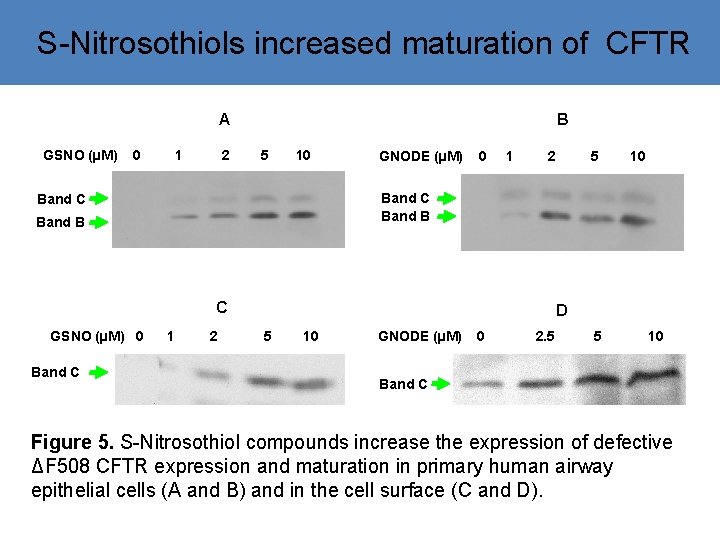
S-Nitrosothiols increased maturation of CFTR B A GSNO (µM) 0 1 2 5 10 GNODE (µM) 0 1 2 Band B C Band C 10 Band C Band B Band C GSNO (µM) 0 5 1 2 D 5 10 GNODE (µM) 0 2. 5 5 10 Band C Figure 5. S-Nitrosothiol compounds increase the expression of defective ΔF 508 CFTR expression and maturation in primary human airway epithelial cells (A and B) and in the cell surface (C and D).
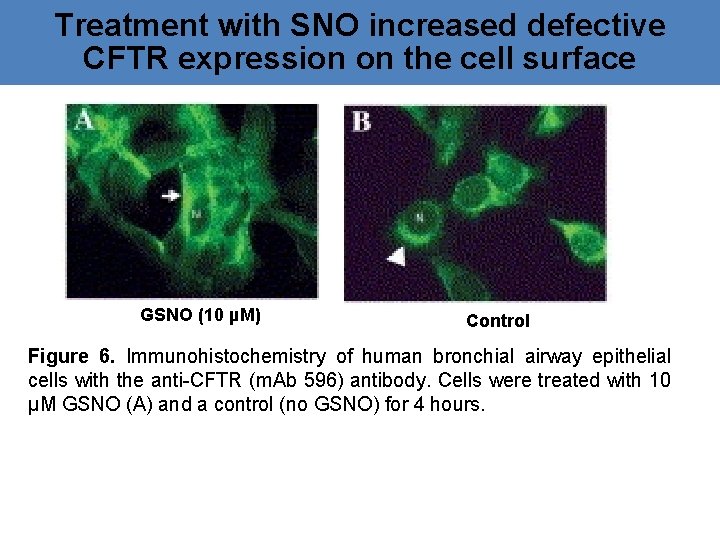
Treatment with SNO increased defective CFTR expression on the cell surface GSNO (10 µM) Control Figure 6. Immunohistochemistry of human bronchial airway epithelial cells with the anti-CFTR (m. Ab 596) antibody. Cells were treated with 10 µM GSNO (A) and a control (no GSNO) for 4 hours.
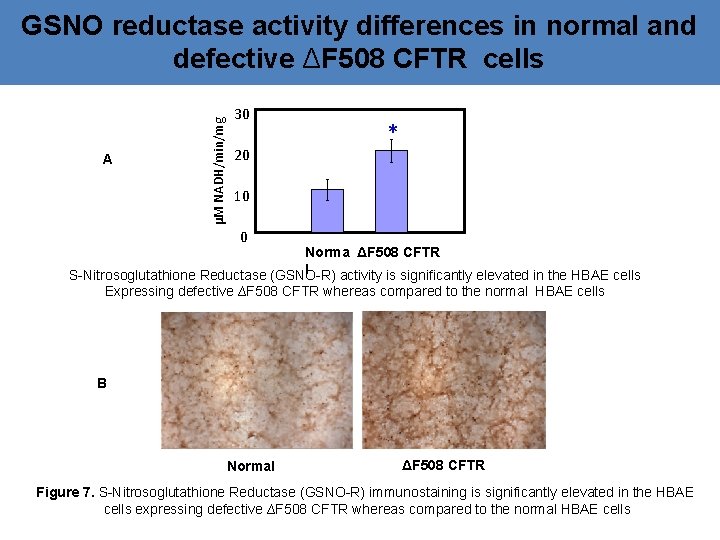
A µM NADH/min/mg GSNO reductase activity differences in normal and defective ΔF 508 CFTR cells 30 20 * 10 0 Norma ΔF 508 CFTR l S-Nitrosoglutathione Reductase (GSNO-R) activity is significantly elevated in the HBAE cells Expressing defective ∆F 508 CFTR whereas compared to the normal HBAE cells B Normal ΔF 508 CFTR Figure 7. S-Nitrosoglutathione Reductase (GSNO-R) immunostaining is significantly elevated in the HBAE cells expressing defective ∆F 508 CFTR whereas compared to the normal HBAE cells
Results v Here, it was found that both forms of immature and mature defective ΔF 508 CFTR protein were markedly induced by SNO compounds in human bronchial airway epithelial cells v S-Nitrosothiols increased defective ΔF 508 CFTR expression on the cell membrane of primary human bronchial airway epithelial cells v In addition, it was shown that GSNO reductase activity and expression is significantly elevated in the defective ΔF 508 CFTR human bronchial airway epithelial cells when compared to the normal human bronchial airway epithelial cells
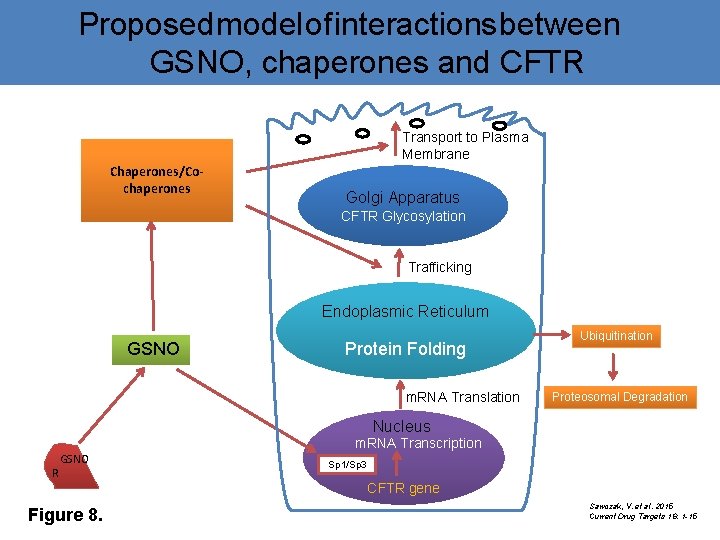
Proposed model of interactions between GSNO, chaperones and CFTR Transport to Plasma Membrane Chaperones/Cochaperones Golgi Apparatus CFTR Glycosylation Trafficking Endoplasmic Reticulum GSNO Protein Folding m. RNA Translation Ubiquitination Proteosomal Degradation Nucleus m. RNA Transcription R GSNO Figure 8. Sp 1/Sp 3 CFTR gene Sawczak, V. et al. 2015 Current Drug Targets 16: 1 -15
Conclusions v The present data suggests that S-Nitrosothiols at physiological concentrations increase CF and non-CF CFTR expression and maturation v It is speculated that these novel observations will be critical to optimizing the dosing of SNOs that might be used to improve management of CF patients
References Zaman, K. , Mc. Pherson, M. , Vaughan, J. , Hunt, J. F. , Mendes, F. , Gaston, B. and Palmer, L. A. (2001). S-Nitrosoglutathione increases cystic fibrosis transmembrane regulator maturation. Biochem. Biophys. Res. Commun. 284: 65 -70. Snyder, A. , Mc. Pherson, M. , Hunt, J. F. , Johnson, M. , Stamler, J. S. and Gaston, B. (2002). Acute effects of areosolized S-Nitrosoglutathione in cystic fibrosis. Am. J. Respir. Crit. Care Med. 165: 1 -5. Howard, M. , Fischer. H. , Roux, J. , Santos, B. , Gullans, S. , Yancey, P. and Welch, W. (2003). Mammalian osmolytes and S-Nitrosoglutathione promote F 508 CFTR maturation and function. J. Biol. Chem. 278: 35159 -35167. Chen, L. , Patel, R. P. , Teng, X. , Bosworth, C. A. , Lancaster, J. R. and Matalon, S. (2006). Mechanisms of cystic fibrosis transmembrane conductance regulator activation by S-Nitrosoglutathione. J. Biol. Chem. 281: 9190 -9199. Zaman, K. , Carraro, S. , Doherty, J. , Henderson, E. , Lendermon, E. , Liu, L. , Verghese, G. , Zigler, M. , Ross, M. , Park, E. , Palmer, L. , Doctor, A. , Stamler, J. and Gaston, B. (2006). S-Nitosylating agents: A novel class of compounds that increase cystic fibrosis transmembrane conductance regulator expression and maturation in epithelial cells. Mol. Pharmacol. 70: 1435 -1442. Marozkina, N. , Yemen, S. , Borowitz, M. , Liu, L. , Plapp, M. , Sun, F. , Islam, R. , Erdmann-Gilmore, P. , Townsend, R. , Lichti, C. , Mantri, S. , Clapp, P. , Randell, S. , Gaston, B. and Zaman, K. (2010). Hsp 70/Hsp 90 organizing protein as a nitrosylation target in cystic fibrosis therapy. Proc Natl Acad Sci USA 107: 11393 -11398. Sawczak, V. , Gesty, P. , Zaidi, A. , Sun, F. , Zaman, K. (2015). Novel approaches for potential therapy of cystic fibrosis. Current Drug Targets 16: 1 -15.
- Slides: 23