
Treating Complex Childhood Trauma in Primary Schools Targeting



- Slides: 64
Treating Complex Childhood Trauma in Primary Schools: Targeting the Building Blocks of Resilience Presentation by Kati Taunt For Islington Education Service September 2017 Day 2 part 2 ARC Developed By: Margaret E. Blaustein, Ph. D. Kristine M. Kinniburgh, LICSW The Trauma Center at JRI
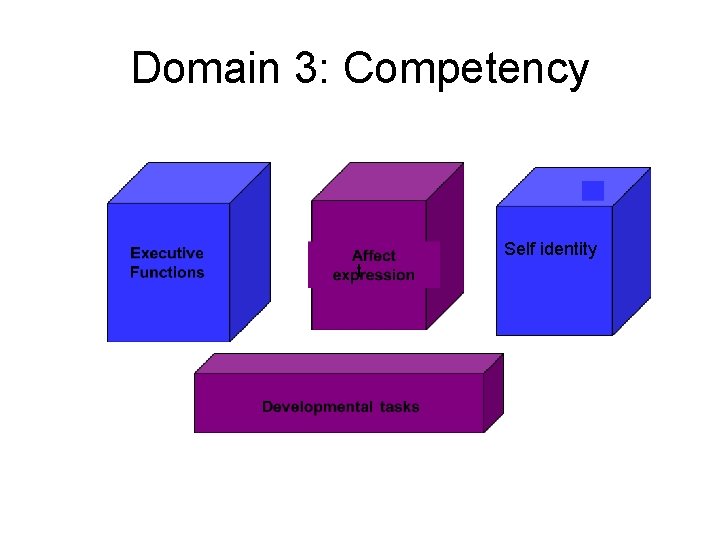
Domain 3: Competency Self identity t
Domain 3: Competency • Overarching Goal: Build the foundational skills needed for healthy ongoing development and resiliency, by supporting key reflective capacitates, including ability to set goals and make active choices and developmentally- appropriate sense of self.
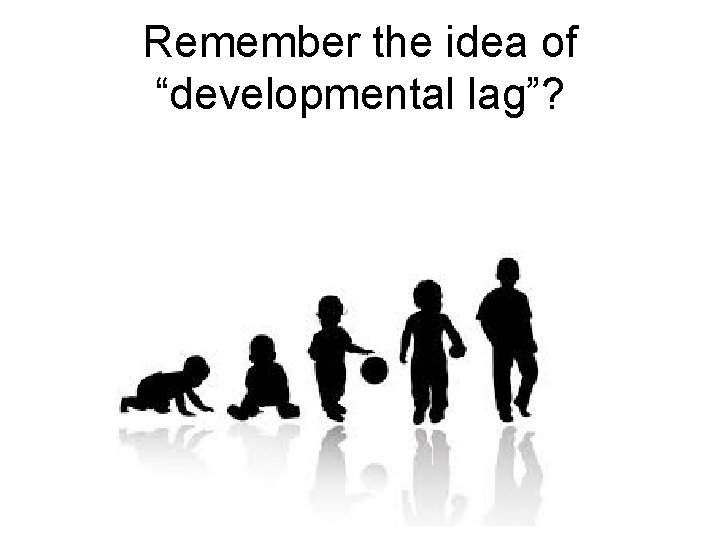
Remember the idea of “developmental lag”?
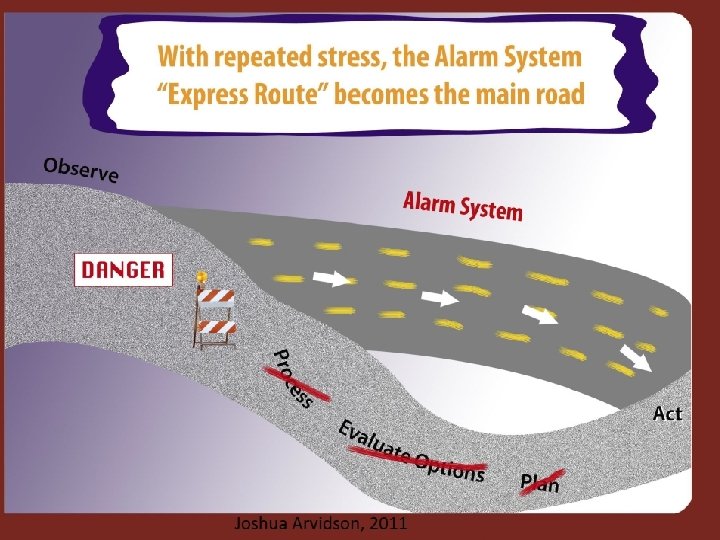
Executive Functions • The Main Idea: Work with children to act, instead of react, by using higherorder cognitive processes to solve problems and make active choices in service of reaching identified goals Executive Functions
• Executive functions are the “captain of the cognitive ship”; they provide the tools that help children navigate their world in an active, goal-directed way
• Executive functions are primarily held in the prefrontal cortex; children who experience chronic/ongoing trauma often have overactive limbic system response, and fail to develop adequate pre-frontal controls….
Supporting Executive Functions • Support the child in actively recognizing his or her own ability to make choices and have power (agency) • Support active evaluation of situations (affect identification / attunement) • Support and build the client’s capacity to inhibit response (modulation) • Support the client in generating alternative solutions / decision-making skills (problemsolving) Blaustein & Kinniburgh, 2010; Kinniburgh & Blaustein, 2005
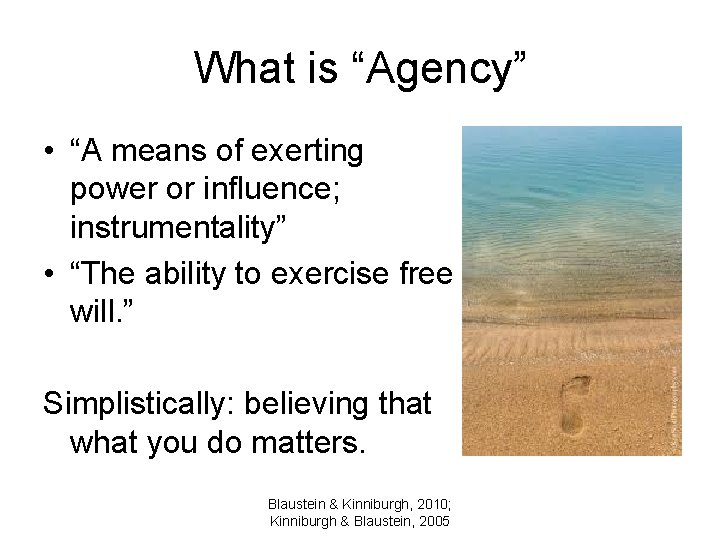
What is “Agency” • “A means of exerting power or influence; instrumentality” • “The ability to exercise free will. ” Simplistically: believing that what you do matters. Blaustein & Kinniburgh, 2010; Kinniburgh & Blaustein, 2005
Problem solving • 1. Noticing there is a problem 2. Identify and understand the problem • 3. Thought shower all options • 4. Evaluate all consequences and make a choice • 5. Implement and evaluate solutions.
Trauma- Problem Solving • 1. Notice and realize that your alarm is being set off (Affect Identification / attunement). • 2. Identify the trigger and appraise for actual danger versus false alarm. (Affect Identification / attunement) • 3. Use regulation skills to establish internal safety by inhibiting fight / flight / freeze response (modulation).
Trauma problem solving (cont) • 4. Understand the actual current problem, and identify goals: what is it that you want? • 5. Thought shower all the ideas you have for reaching your goal. • 6. Evaluate the possible consequences of each idea, and then make a choice. • 7. Implement and evaluate solutions. Revise as needed.
Entry points…. . get in there!!! • Problem solving skills are often best applied “in – the- moment”: It is important to listen for opportunities to use and apply this skill. • Any recent examples…. of the following….
Entry Points: “I don’t know why everyone’s so angry. ” – Help children concretely define the situation they are confused about (i. e. , “suddenly everyone was mad”). – Track backward: what was happening five minutes before “everyone was mad”? Assess: situation, body state, feelings, thoughts, etc. – Continue to move backward to the earliest cues available. Help children notice clues that there is “a problem”, i. e. , that their own feelings were getting out of control, or that other people were upset. Tie in to Affect Identification skills.
“But I had to. . . ” • Entry point: Listen for moments when children identify a situation, either past or future, in which they did not or do not feel as if they have a choice. • Goal: Increase awareness of choices “I’m gonna…[insert bad choice here]” Entry point: Listen for moments when children name a potentially negative choice that they plan on making. Ø Goal: Increase understanding of consequences Ø for actions. Ø
“It’s all (my mother’s, my friend’s, the teacher’s, my dog’s, etc. ) fault!” • Entry point: Listen for moments when children externalise responsibility for a choice they have made. • Goal: Increase understanding of consequences for actions.
Teach Problem Solving to young children through play and modeling Blaustein & Kinniburgh, 2010; Kinniburgh & Blaustein, 2005
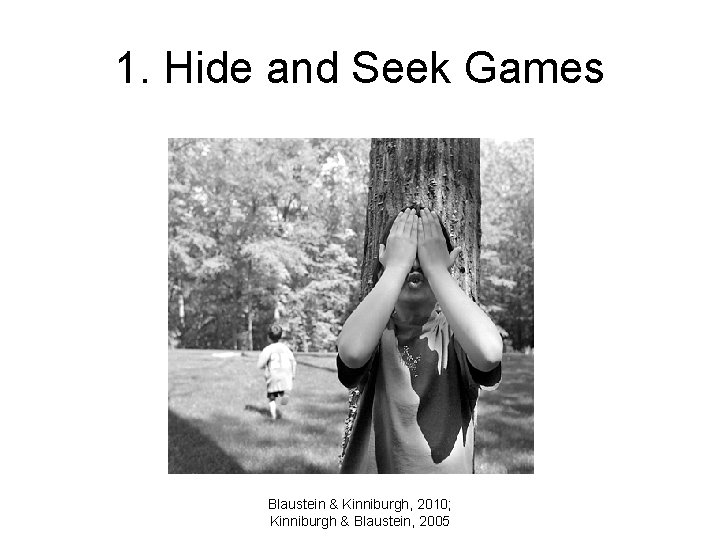
1. Hide and Seek Games Blaustein & Kinniburgh, 2010; Kinniburgh & Blaustein, 2005
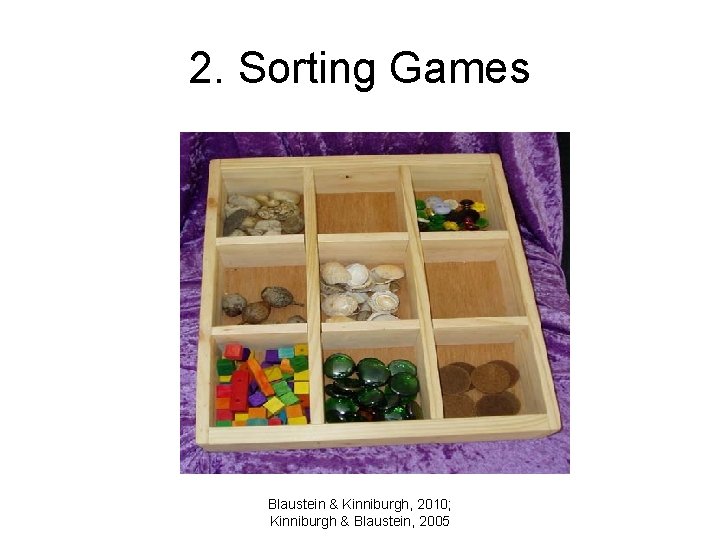
2. Sorting Games Blaustein & Kinniburgh, 2010; Kinniburgh & Blaustein, 2005
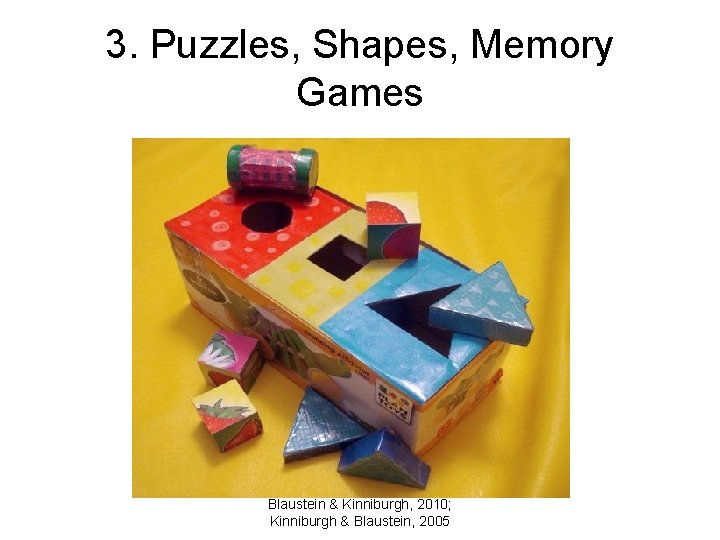
3. Puzzles, Shapes, Memory Games Blaustein & Kinniburgh, 2010; Kinniburgh & Blaustein, 2005
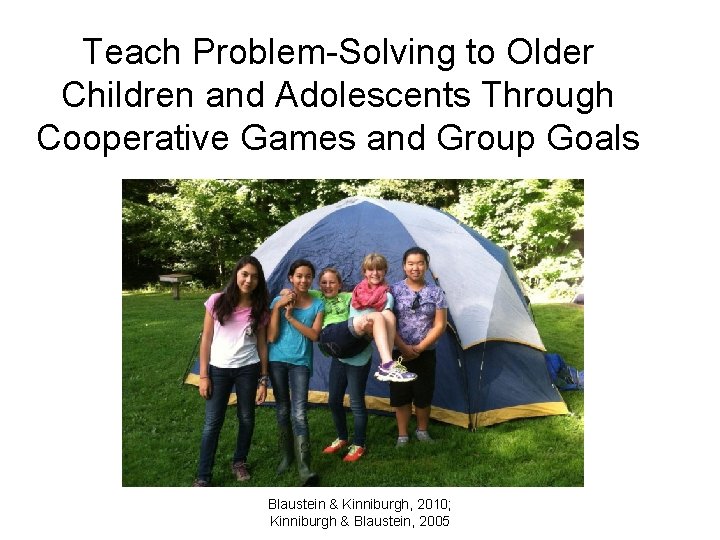
Teach Problem-Solving to Older Children and Adolescents Through Cooperative Games and Group Goals Blaustein & Kinniburgh, 2010; Kinniburgh & Blaustein, 2005
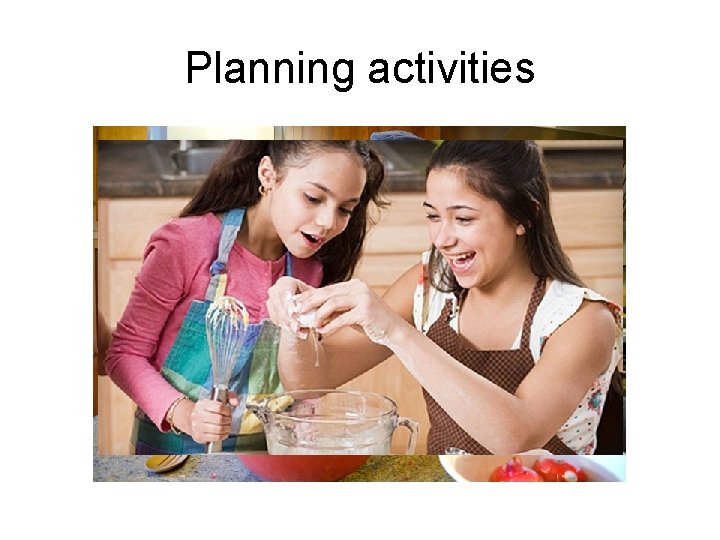
Planning activities
Sophie and executive functions • Sophie was given the opportunity to help out in younger classes, even on occasions in primary school. • Sophie was encourage to play board games with a TA at lunchtimes and supported with cooking club at lunch time. • She was given responsibilty for small tasks that she needed to problem
Any ideas for improving executive functions?
Small group review of executive functions? • So what resources do you as an individual / a school have that already work well in helping children develop executive functions ? • What more might you need? • Who might you need support from? • “Yes Buts” and Next Steps?
Self Development and Identity
Self and Identity • The Main Idea: Helping children towards an understanding of self and personal identity, including: • Helping them notice the positive and unique things about themselves • building of coherence across time and experience, • helping them to imagine and work towards future possibilities.
Self Development and Identity: Key Concepts • Growth of a coherent sense of self and personal identity normally develops over the course of childhood.
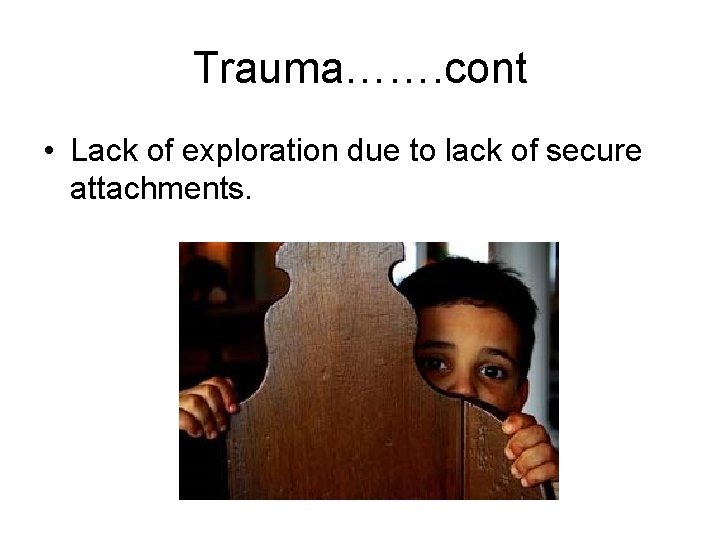
Trauma……. cont • Lack of exploration due to lack of secure attachments.
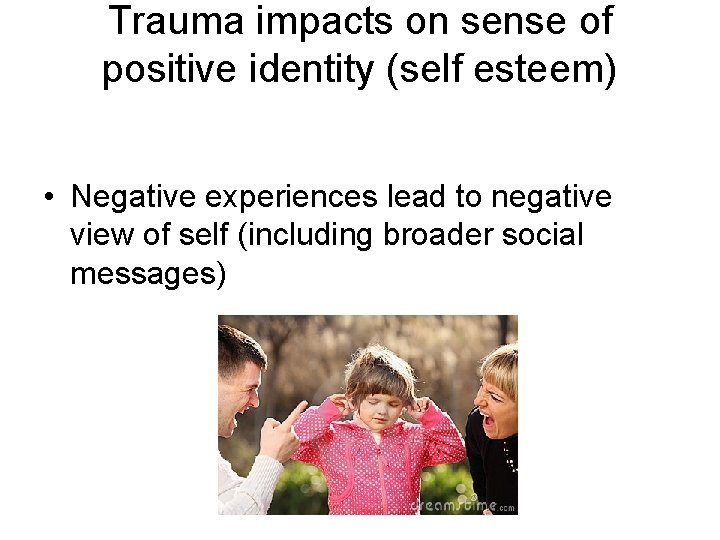
Trauma impacts on sense of positive identity (self esteem) • Negative experiences lead to negative view of self (including broader social messages)
Treatment Targets: Aspects of Identity • Unique Self • Positive Self • Cohesive Self • Future Self
Unique Self: Individuality • Goal: Help child identify personal attributes (likes, dislikes, values, talents, opinions, culture etc. ) • Example Activities: – All About Me Books – Personal collage (general/specific) – Group collage around single theme, with individual child sections – Artistic self-expression – Bulletin boards with space dedicated to each resident – Activities celebrating individual diversity (i. e. , culturespecific meals, holiday celebrations, etc. )
My coat of arms…
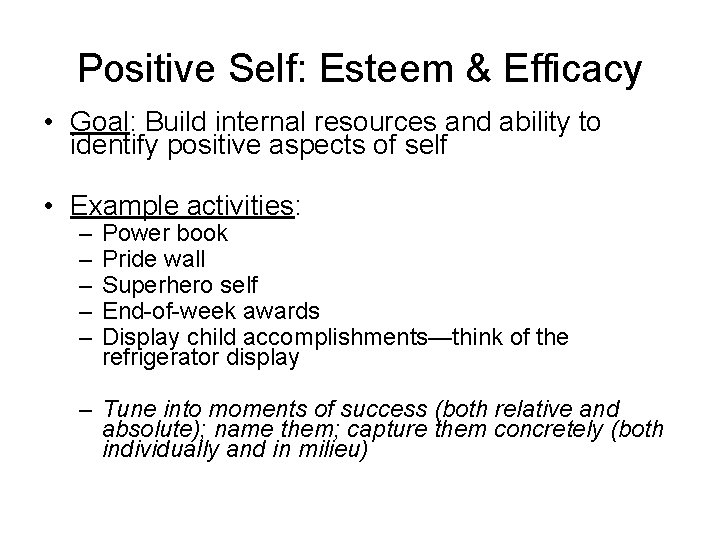
Positive Self: Esteem & Efficacy • Goal: Build internal resources and ability to identify positive aspects of self • Example activities: – – – Power book Pride wall Superhero self End-of-week awards Display child accomplishments—think of the refrigerator display – Tune into moments of success (both relative and absolute); name them; capture them concretely (both individually and in milieu)
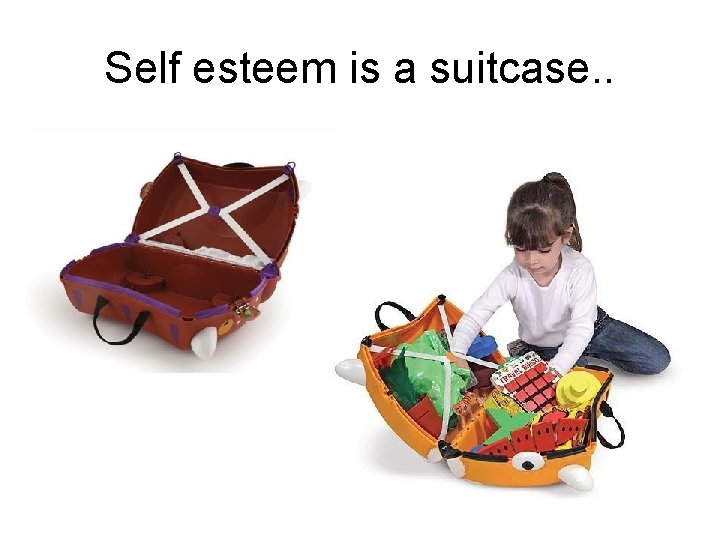
Self esteem is a suitcase. .
Cohesive Self: Self Across Time and Context • Goal: Help child build sense of self which integrates multiple aspects of experience • Working with the child to help them explore the ways in which all of their experiences have contributed to who they are and how they see themselves
Future self: Future orientation • Goal: Build child’s ability to imagine self in future; build connections between current activities and future outcomes • Example activities: – – Future self drawing 5 -10 -20 years Life book addendum Goal setting, future-planning: help kids develop goals (i. e. , beyond primary school, )---help explore possibility • Connect it: In conversation, pay attention to how current actions/ experiences connect to future goals
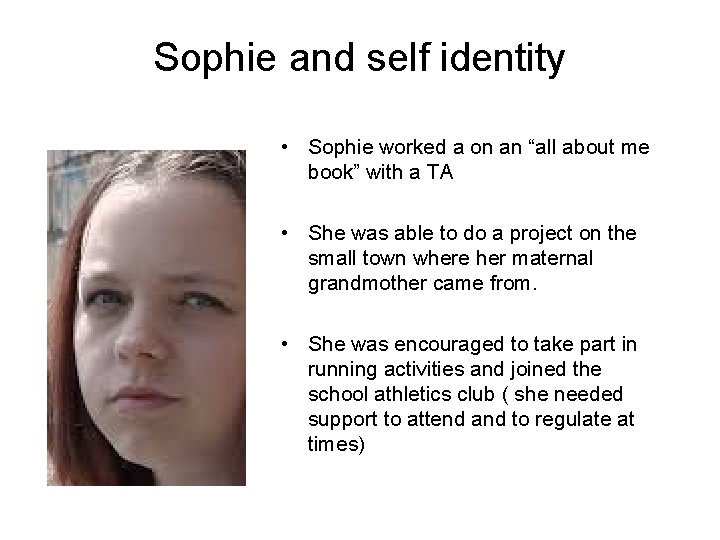
Sophie and self identity • Sophie worked a on an “all about me book” with a TA • She was able to do a project on the small town where her maternal grandmother came from. • She was encouraged to take part in running activities and joined the school athletics club ( she needed support to attend and to regulate at times)
Any ideas for improving Self Identity?
Small group review of selfidentity? • So what resources do you as an individual / a school have that already work well in helping children learn to build a sense of self identity? • What more might you need? • Who might you need support from? • “Yes Buts” and Next Steps?
Key Concepts • Historical experiences often interfere with children’s capacity to effectively navigate current life – Present moments may elicit fragmented selfstates (feelings, thoughts, actions/ inaction, relational styles, etc. ) which originally arose to serve some function for the child (like survival) – Children may be impacted by specific memories of or thoughts about historical events
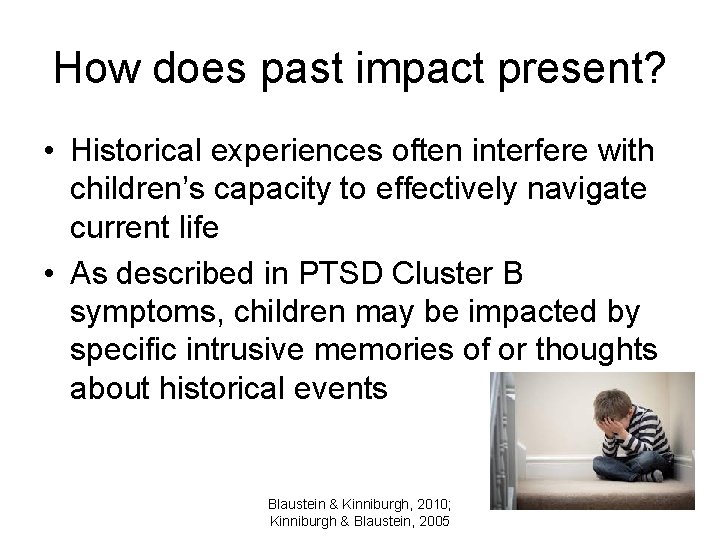
How does past impact present? • Historical experiences often interfere with children’s capacity to effectively navigate current life • As described in PTSD Cluster B symptoms, children may be impacted by specific intrusive memories of or thoughts about historical events Blaustein & Kinniburgh, 2010; Kinniburgh & Blaustein, 2005
General Considerations: • Reflection and attunement play a key role; TEI is embedded within the attachment / caregiving system – Integration of traumatic experiences requires the capacity to observe and be curious about the range of self-experiences – The holder of the reflective lens (the “curious observer”) is likely to shift over time, from external to internal • Caregiver affect management and self-care is crucial • TEI is a process that takes place over time
Where do I go from here? Considerations for building ARC into your practice or system Blaustein & Kinniburgh, 2010; Kinniburgh & Blaustein, 2005
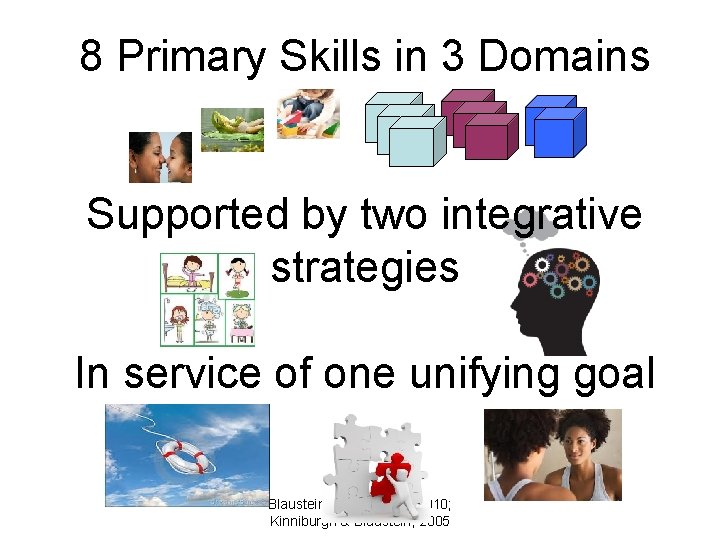
8 Primary Skills in 3 Domains Supported by two integrative strategies In service of one unifying goal Blaustein & Kinniburgh, 2010; Kinniburgh & Blaustein, 2005
Supporting Integration and Sustainability • Build understanding in layers; deepen over time • Integrate key language and concepts (into Luke had an idea ta t therepastoral Luke” and a care plans, discussion, into forms, into Luke”. Worked with Luke to see these into goals“bad and action steps, etc. ) as both being him. • Build structures that support the intervention plan/pastoral care plan • Pay attention to the details, but keep sight of the “big picture” Blaustein & Kinniburgh, 2010; Kinniburgh & Blaustein, 2005
And the big picture is?
Some of the Key components of a trauma informed school • Establishing a shared definition of a ‘Trauma informed school’ • Enhancing trauma- awareness throughout the school community • Conducting a thorough assessment of the school climate – Inclusiveness – Specific risk and protective factors for each individual school community – Senior leadership ‘buy in’ – Knowing there will be skeptics • Developing trauma informed behavioural policies • Awareness of the prevalence and impact of secondary traumatic stress of teachers and staff Islington CAMHS 2017
Trauma informed schools • Not a whole new approach, or new lesson plans • Catching the moments as they arise as we look through a trauma lens.
Take home slides (stuff to remember if nothing else…)
While kids are getting really good at survival, what are they not getting? Curriculum - Blaustein
Trauma’s Dual Influence on Development • Prioritization of those domains of skill / competency / adaptation which help the child survive their environment and meet physical, emotional, and relational needs • De-emphasis of domains of development which are less immediately relevant to survival Blaustein & Kinniburgh, 2010; Kinniburgh & Blaustein, 2005
Addressing the experience of the adult system is essential • Three reasons: – 1) Because YOU matter – 2) Because the more regulated you are, the more effective you are – 3) Because how you are doing, and how you are reacting, will ultimately impact the students you are working with Blaustein & Kinniburgh, 2010; Kinniburgh & Blaustein, 2005
It starts with curiosity • No matter how many students you have had, none of them come with an instruction manual • Every child is different: no matter how many you have taught, there is a process of learning THIS child (you know, that one in the back of the room making you crazy). Blaustein & Kinniburgh, 2010; Kinniburgh & Blaustein, 2005
Attunement skills support youth regulation • OBSERVE: Yourself (caregiver): notice your own cues of distress, support needs, or loss of control • MODULATE: Yourself: If you can only stay in control of one thing, make it you. Use your in-thepocket strategies of other resources. • OBSERVE: Your child: pick up on those “clues” of need / distress as early as possible. Increasingly, try to anticipate (get in front of) these by observing and anticipating patterns. Blaustein & Kinniburgh, 2010; Kinniburgh & Blaustein, 2005
Attunement skills support youth regulation • (CO-)MODULATE: Your child: mirror what you see (simply), and cue, support, and reinforce use of regulation strategies. Pay attention to opportunities for control. • DO: After everyone is calm: reflect, process, limitset, problem-solve. Don’t waste the “do” on the limbic system (yours or the child’s). Blaustein & Kinniburgh, 2010; Kinniburgh & Blaustein, 2005
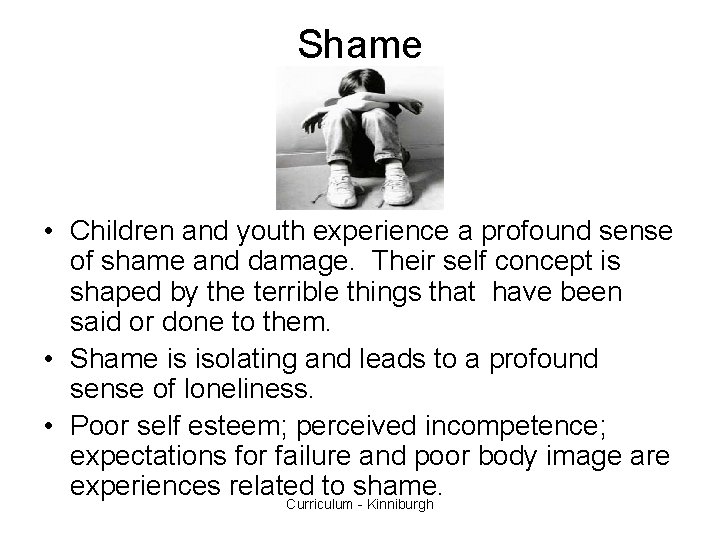
Shame • Children and youth experience a profound sense of shame and damage. Their self concept is shaped by the terrible things that have been said or done to them. • Shame is isolating and leads to a profound sense of loneliness. • Poor self esteem; perceived incompetence; expectations for failure and poor body image are experiences related to shame. Curriculum - Kinniburgh
Blaustein & Kinniburgh, 2010; Kinniburgh & Blaustein, 2005
Children are not simply a composite of their deficits, but are whole beings, with strengths, vulnerabilities, challenges, and resources. ARC provides a framework that seeks to recognize factors that derail normative development, and to work with children, families, and systems to build or re-build healthy developmental pathways. Blaustein & Kinniburgh, 2010; Kinniburgh & Blaustein, 2005
Blaustein & Kinniburgh, 2010; Kinniburgh & Blaustein, 2005
So what next? • • • Surprises Satisfactions Learnings Discoveries Dis-satisfactions Next steps Blaustein & Kinniburgh, 2010; Kinniburgh & Blaustein, 2005