
Treating Childhood Anxiety Preview of Programming Prevalence of





- Slides: 24
Treating Childhood Anxiety
Preview of Programming Prevalence of anxiety in pediatric population Risks of unmitigated anxiety among CATAY Quick review of the CBT Model of pathology versus adaptive functioning FEAR model and Coping Cat manual Integrated treatment planning
Nature & Prevalence of Anxiety Disorders among CATAY Difference between stress and anxiety? Syndrome Characteristics: disproportionate fear anticipation of future threat related behavioral disturbances that affect the developmental course approximately 25% of children and adolescents experience clinically relevant symptoms of an anxiety disorder within a 12 -month period (Kessler et al. , 2012)
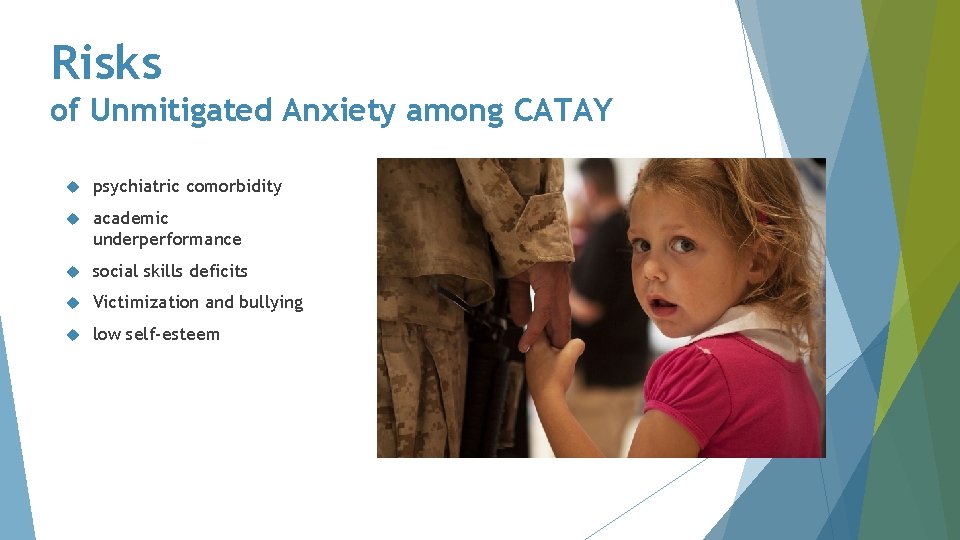
Risks of Unmitigated Anxiety among CATAY psychiatric comorbidity academic underperformance social skills deficits Victimization and bullying low self-esteem
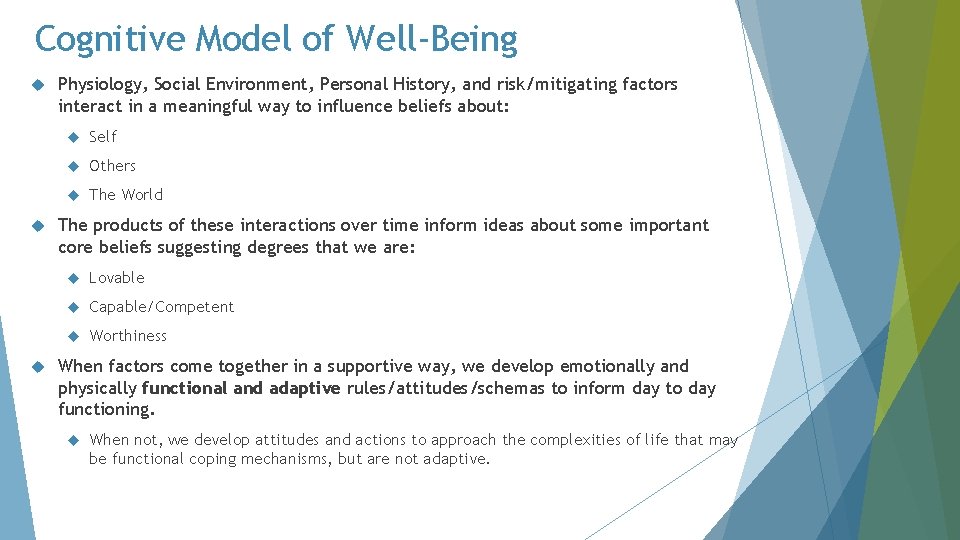
Cognitive Model of Well-Being Physiology, Social Environment, Personal History, and risk/mitigating factors interact in a meaningful way to influence beliefs about: Self Others The World The products of these interactions over time inform ideas about some important core beliefs suggesting degrees that we are: Lovable Capable/Competent Worthiness When factors come together in a supportive way, we develop emotionally and physically functional and adaptive rules/attitudes/schemas to inform day to day functioning. When not, we develop attitudes and actions to approach the complexities of life that may be functional coping mechanisms, but are not adaptive.
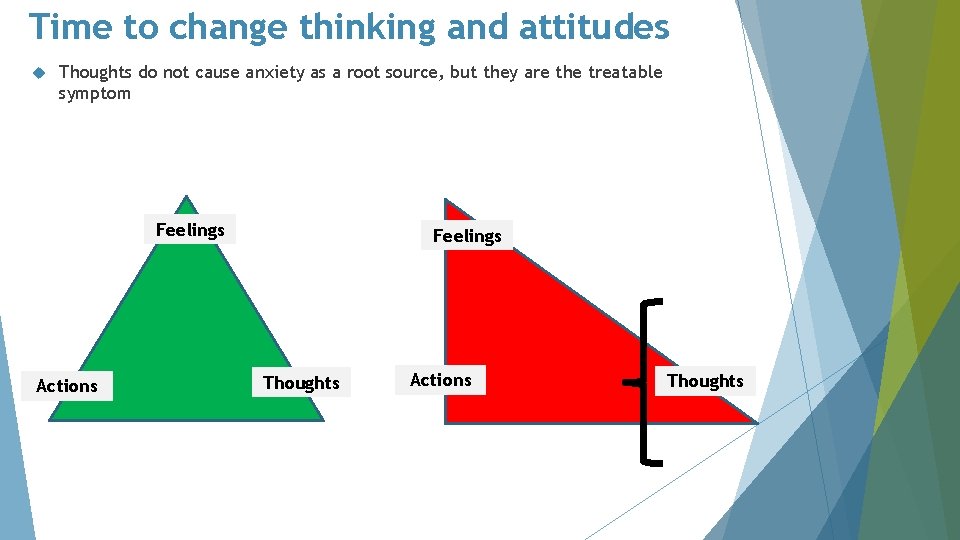
Time to change thinking and attitudes Thoughts do not cause anxiety as a root source, but they are the treatable symptom Feelings Actions Feelings Thoughts Actions Thoughts
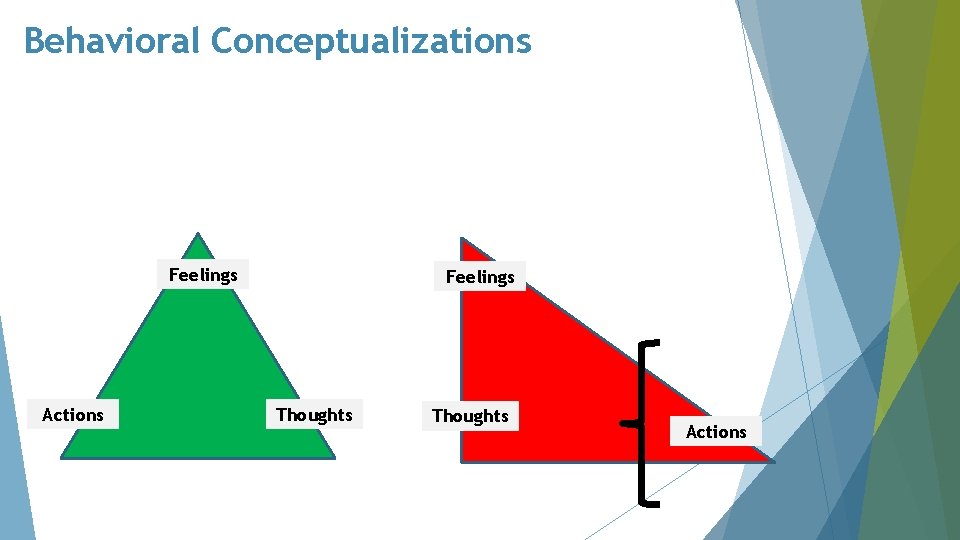
Behavioral Conceptualizations Feelings Actions Feelings Thoughts Actions
Integrated Treatment Planning
Treatment Planning for Anxiety Presenting Problem Goals Objectives Interventions Strengths • Personal resources • Family resources • Community resources Physical Health • Substance use • Medications • Medical issues Referrals Discharge Plan
Coping Cat Program
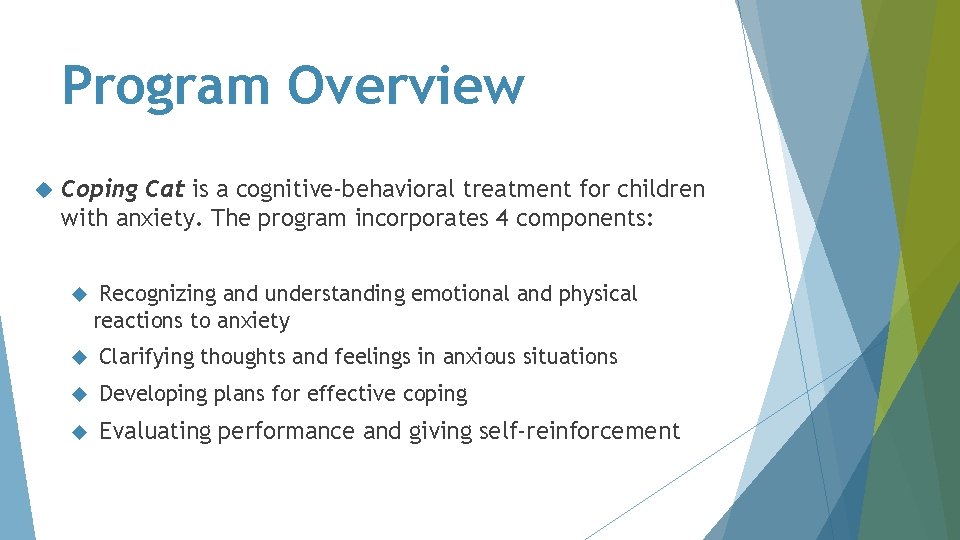
Program Overview Coping Cat is a cognitive-behavioral treatment for children with anxiety. The program incorporates 4 components: Recognizing and understanding emotional and physical reactions to anxiety Clarifying thoughts and feelings in anxious situations Developing plans for effective coping Evaluating performance and giving self-reinforcement
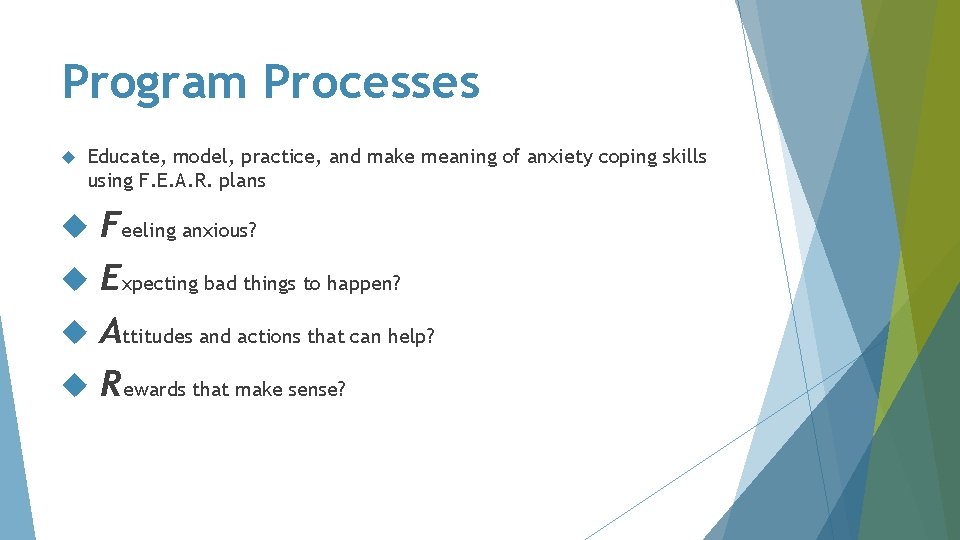
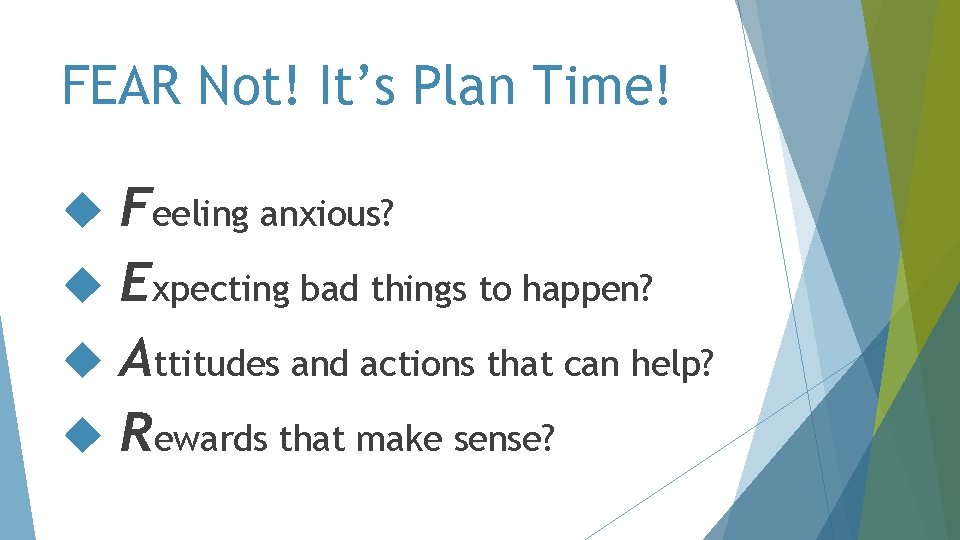
Program Processes Educate, model, practice, and make meaning of anxiety coping skills using F. E. A. R. plans Feeling anxious? Expecting bad things to happen? Attitudes and actions that can help? Rewards that make sense?
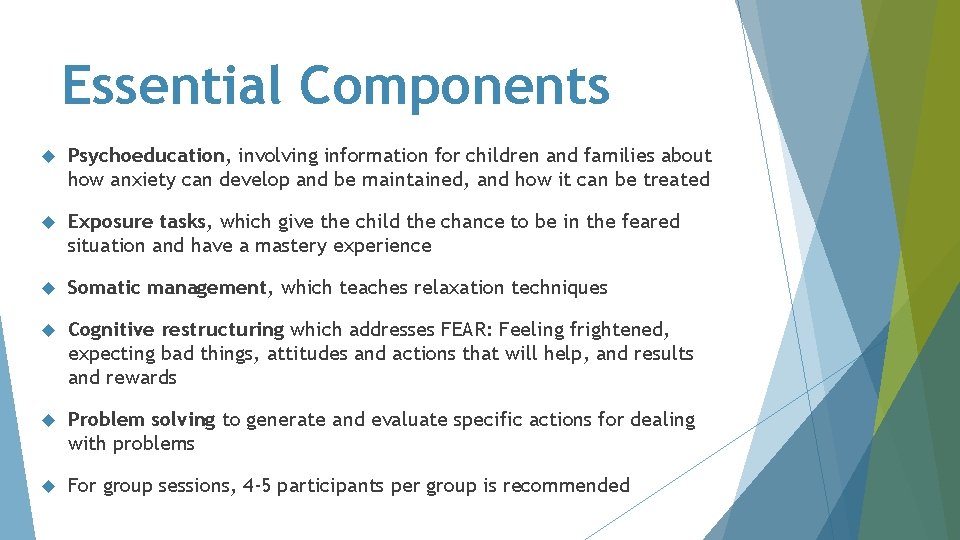
Essential Components Psychoeducation, involving information for children and families about how anxiety can develop and be maintained, and how it can be treated Exposure tasks, which give the child the chance to be in the feared situation and have a mastery experience Somatic management, which teaches relaxation techniques Cognitive restructuring which addresses FEAR: Feeling frightened, expecting bad things, attitudes and actions that will help, and results and rewards Problem solving to generate and evaluate specific actions for dealing with problems For group sessions, 4 -5 participants per group is recommended
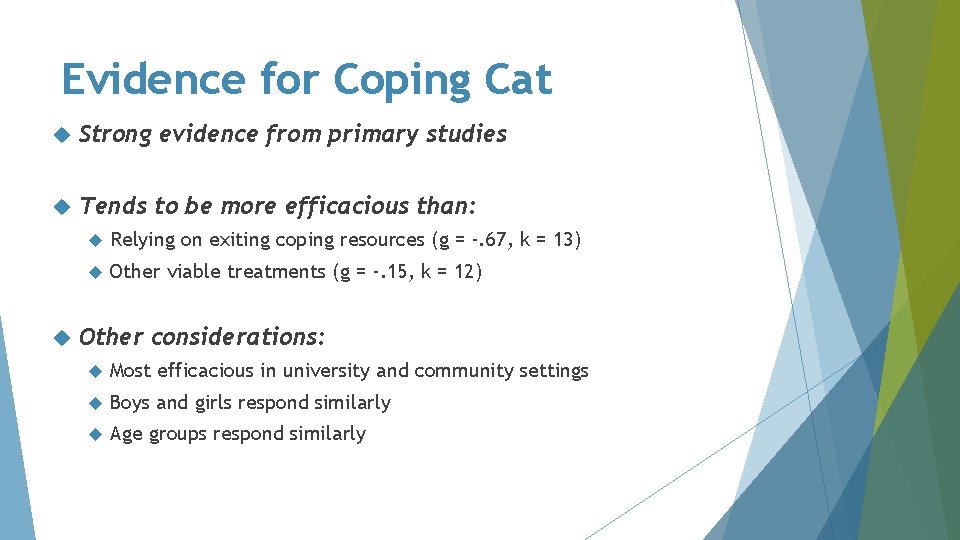
Evidence for Coping Cat Strong evidence from primary studies Tends to be more efficacious than: Relying on exiting coping resources (g = -. 67, k = 13) Other viable treatments (g = -. 15, k = 12) Other considerations: Most efficacious in university and community settings Boys and girls respond similarly Age groups respond similarly
Activity One Explaining the Cognitive Model
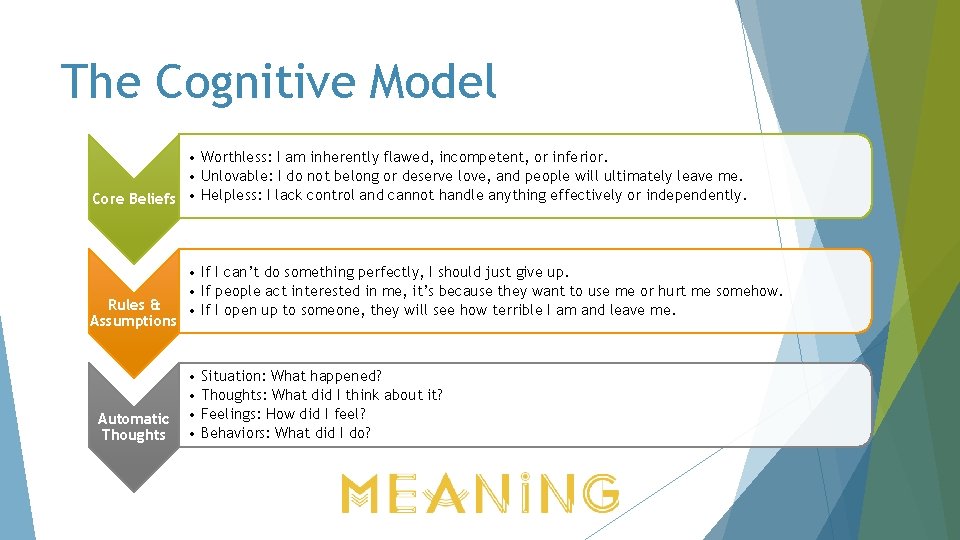
The Cognitive Model • Worthless: I am inherently flawed, incompetent, or inferior. • Unlovable: I do not belong or deserve love, and people will ultimately leave me. Core Beliefs • Helpless: I lack control and cannot handle anything effectively or independently. Rules & Assumptions Automatic Thoughts • If I can’t do something perfectly, I should just give up. • If people act interested in me, it’s because they want to use me or hurt me somehow. • If I open up to someone, they will see how terrible I am and leave me. • • Situation: What happened? Thoughts: What did I think about it? Feelings: How did I feel? Behaviors: What did I do?
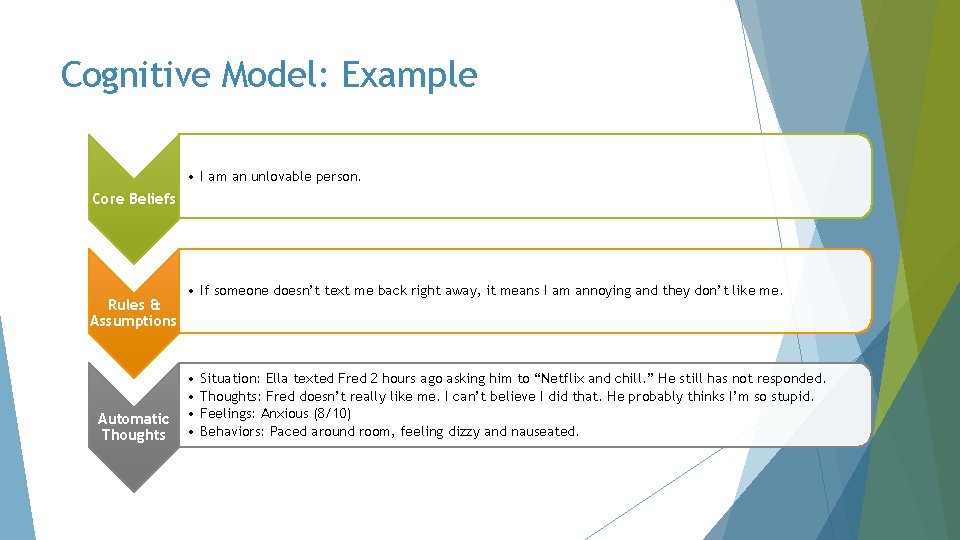
Cognitive Model: Example • I am an unlovable person. Core Beliefs Rules & Assumptions Automatic Thoughts • If someone doesn’t text me back right away, it means I am annoying and they don’t like me. • • Situation: Ella texted Fred 2 hours ago asking him to “Netflix and chill. ” He still has not responded. Thoughts: Fred doesn’t really like me. I can’t believe I did that. He probably thinks I’m so stupid. Feelings: Anxious (8/10) Behaviors: Paced around room, feeling dizzy and nauseated.
Activity Two Developing your Thinking Trap Lingo
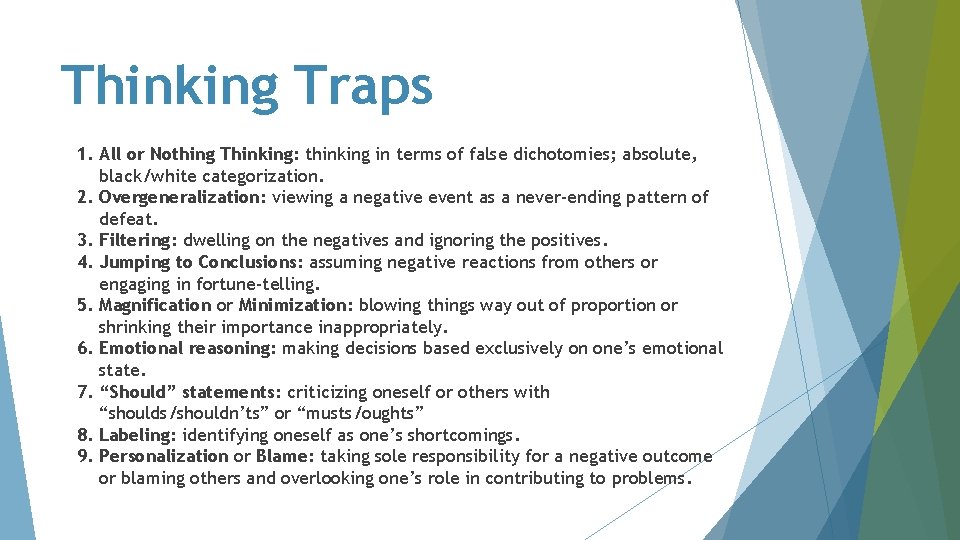
Thinking Traps 1. All or Nothing Thinking: thinking in terms of false dichotomies; absolute, black/white categorization. 2. Overgeneralization: viewing a negative event as a never-ending pattern of defeat. 3. Filtering: dwelling on the negatives and ignoring the positives. 4. Jumping to Conclusions: assuming negative reactions from others or engaging in fortune-telling. 5. Magnification or Minimization: blowing things way out of proportion or shrinking their importance inappropriately. 6. Emotional reasoning: making decisions based exclusively on one’s emotional state. 7. “Should” statements: criticizing oneself or others with “shoulds/shouldn’ts” or “musts/oughts” 8. Labeling: identifying oneself as one’s shortcomings. 9. Personalization or Blame: taking sole responsibility for a negative outcome or blaming others and overlooking one’s role in contributing to problems.
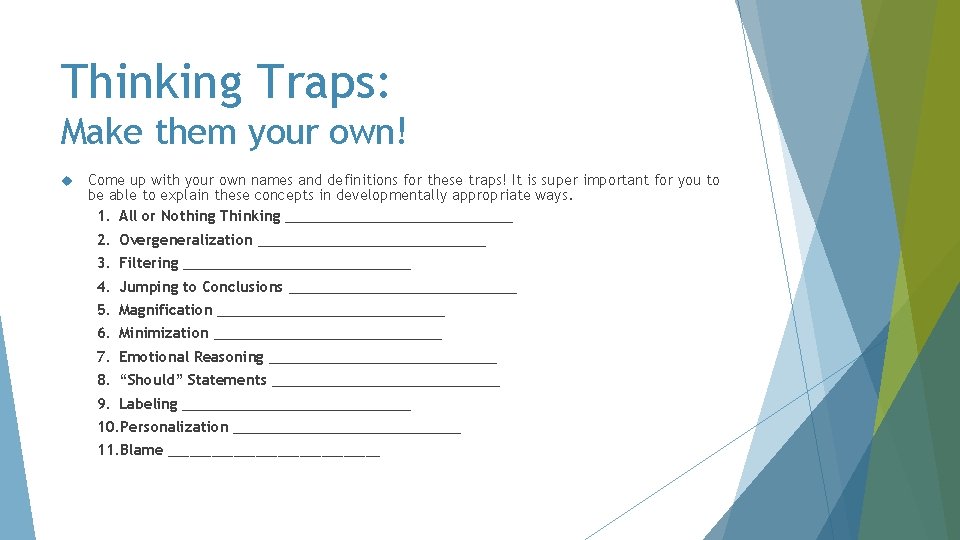
Thinking Traps: Make them your own! Come up with your own names and definitions for these traps! It is super important for you to be able to explain these concepts in developmentally appropriate ways. 1. All or Nothing Thinking _______________ 2. Overgeneralization _______________ 3. Filtering _______________ 4. Jumping to Conclusions _______________ 5. Magnification _______________ 6. Minimization _______________ 7. Emotional Reasoning _______________ 8. “Should” Statements _______________ 9. Labeling _______________ 10. Personalization _______________ 11. Blame _______________
Activity Three Working through a FEAR plan
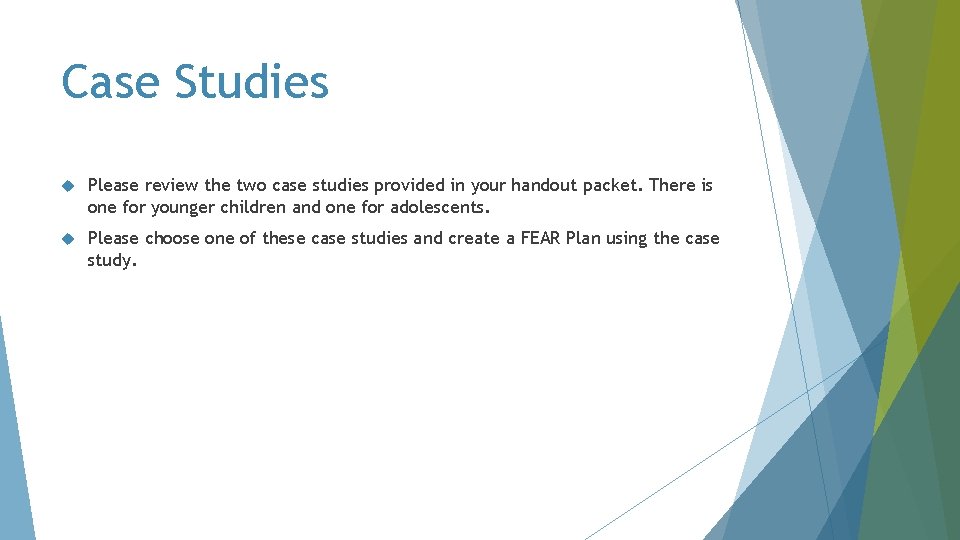
Case Studies Please review the two case studies provided in your handout packet. There is one for younger children and one for adolescents. Please choose one of these case studies and create a FEAR Plan using the case study.
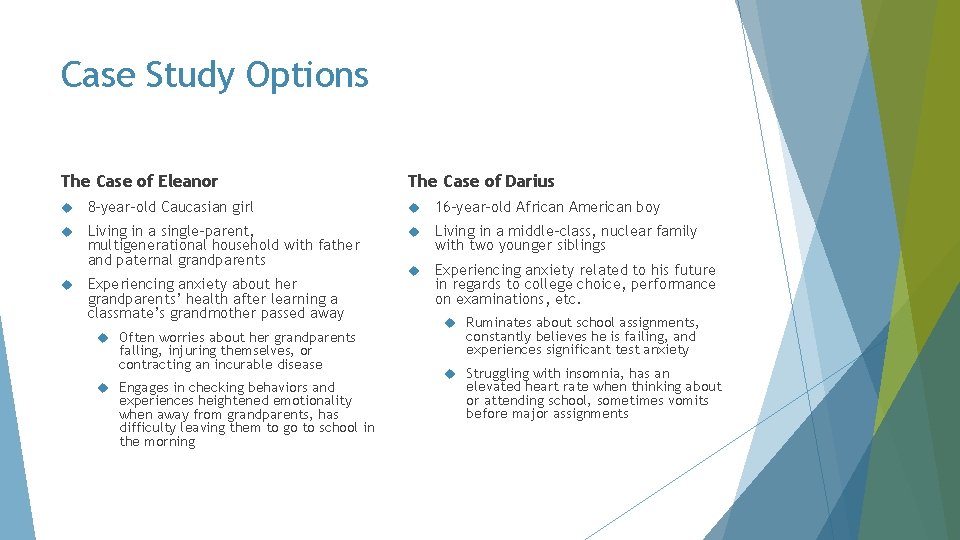
Case Study Options The Case of Eleanor The Case of Darius 8 -year-old Caucasian girl 16 -year-old African American boy Living in a single-parent, multigenerational household with father and paternal grandparents Living in a middle-class, nuclear family with two younger siblings Experiencing anxiety related to his future in regards to college choice, performance on examinations, etc. Experiencing anxiety about her grandparents’ health after learning a classmate’s grandmother passed away Often worries about her grandparents falling, injuring themselves, or contracting an incurable disease Engages in checking behaviors and experiences heightened emotionality when away from grandparents, has difficulty leaving them to go to school in the morning Ruminates about school assignments, constantly believes he is failing, and experiences significant test anxiety Struggling with insomnia, has an elevated heart rate when thinking about or attending school, sometimes vomits before major assignments
FEAR Not! It’s Plan Time! Feeling anxious? Expecting bad things to happen? Attitudes and actions that can help? Rewards that make sense?