
Travel Time and Sustainable Travel Behaviour David Metz
Travel Time and Sustainable Travel Behaviour David Metz Centre for Transport Studies University College London Feb 2009 1
National Travel Survey • 7 -day travel diaries recording personal travel • Annual sample of 20, 000 • Since 1972 • Longest time series; high quality • Excludes international air travel • Measures ‘daily travel’ Feb 2009 2
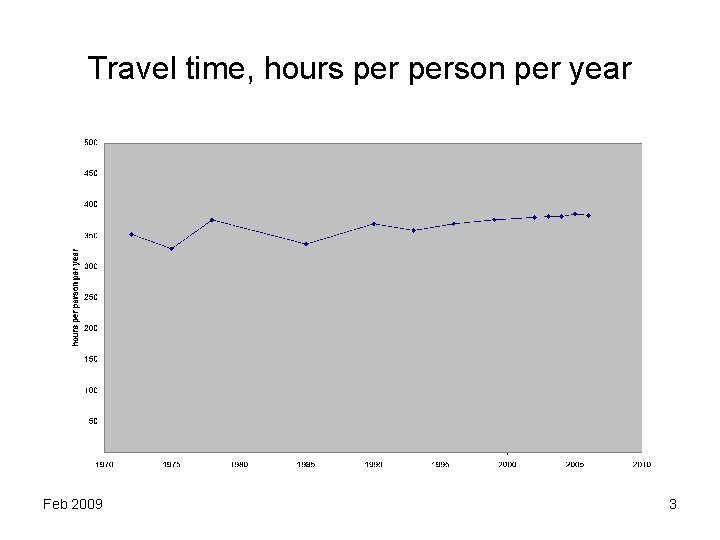
Travel time, hours person per year Feb 2009 3
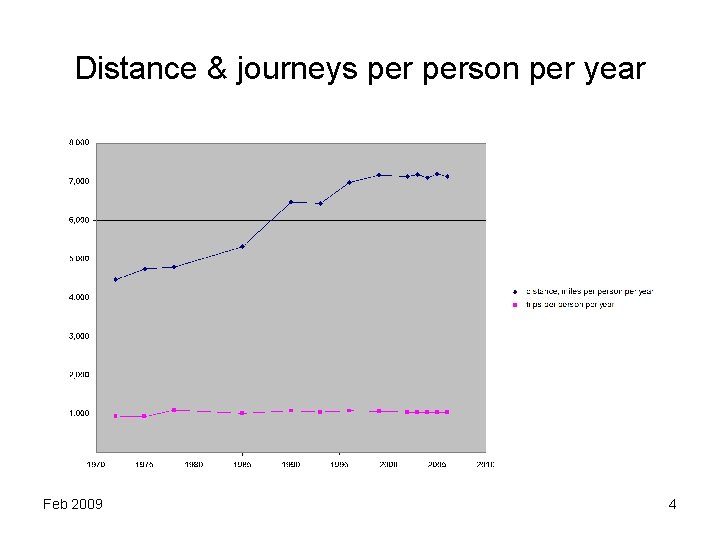
Distance & journeys person per year Feb 2009 4
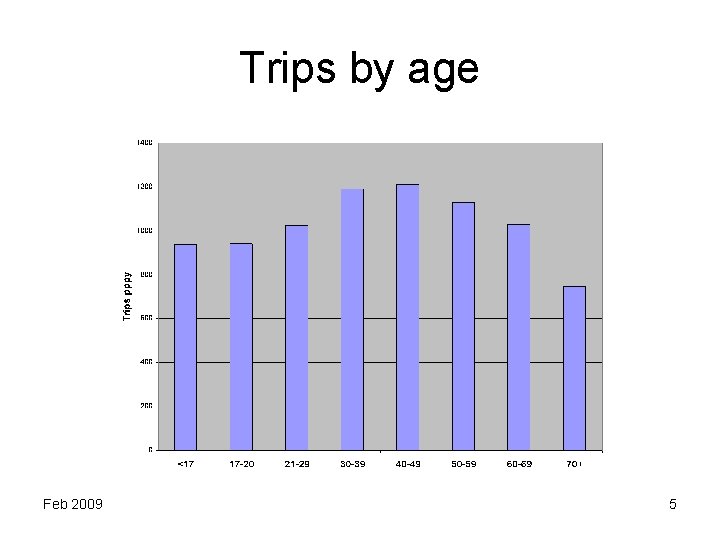
Trips by age Feb 2009 5
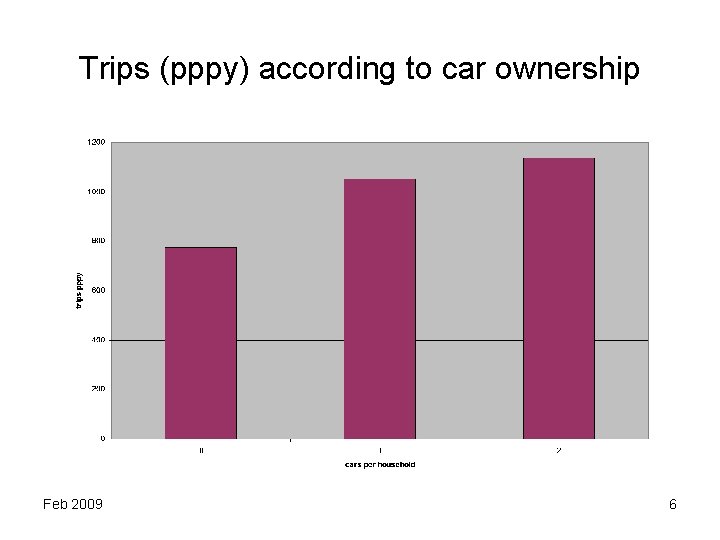
Trips (pppy) according to car ownership Feb 2009 6
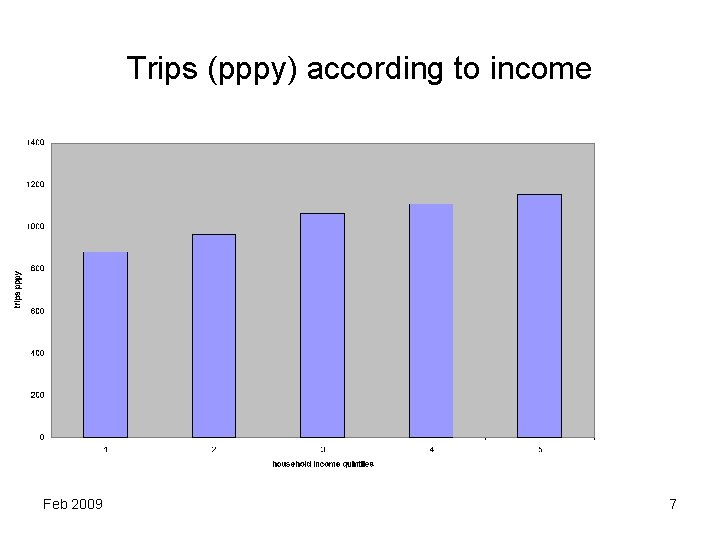
Trips (pppy) according to income Feb 2009 7
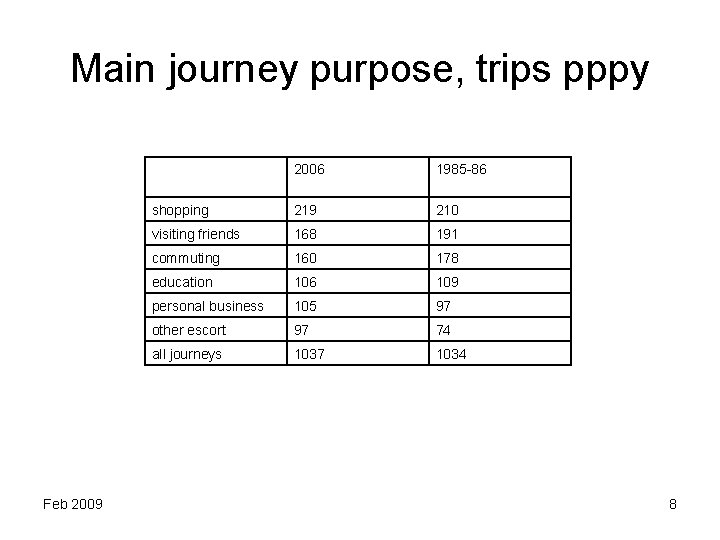
Main journey purpose, trips pppy Feb 2009 2006 1985 -86 shopping 219 210 visiting friends 168 191 commuting 160 178 education 106 109 personal business 105 97 other escort 97 74 all journeys 1037 1034 8
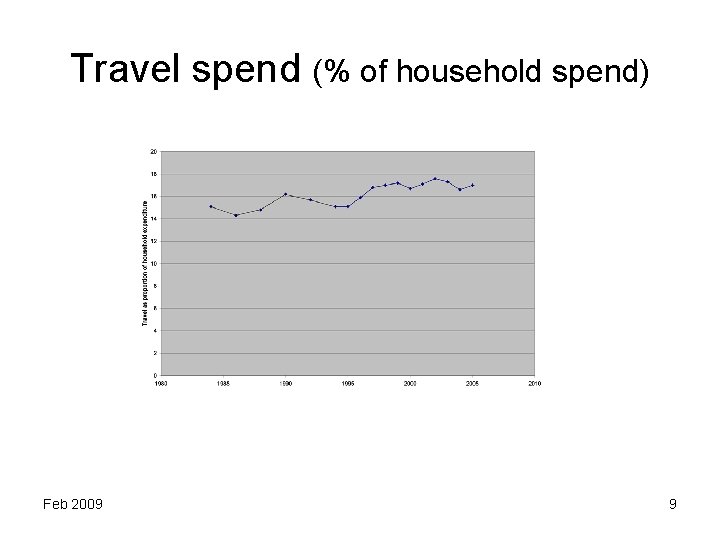
Travel spend (% of household spend) Feb 2009 9
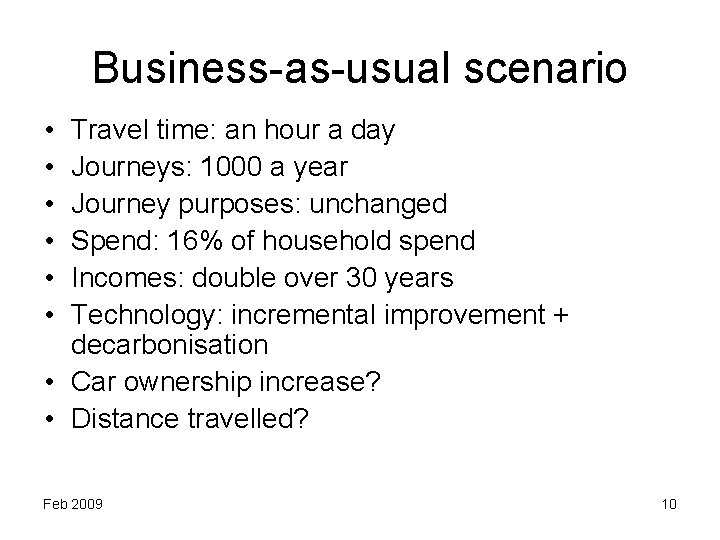
Business-as-usual scenario • • • Travel time: an hour a day Journeys: 1000 a year Journey purposes: unchanged Spend: 16% of household spend Incomes: double over 30 years Technology: incremental improvement + decarbonisation • Car ownership increase? • Distance travelled? Feb 2009 10
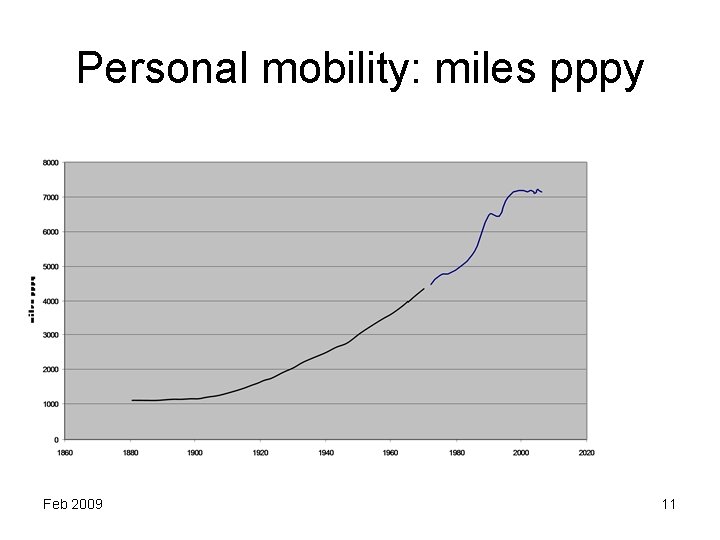
Personal mobility: miles pppy Feb 2009 11
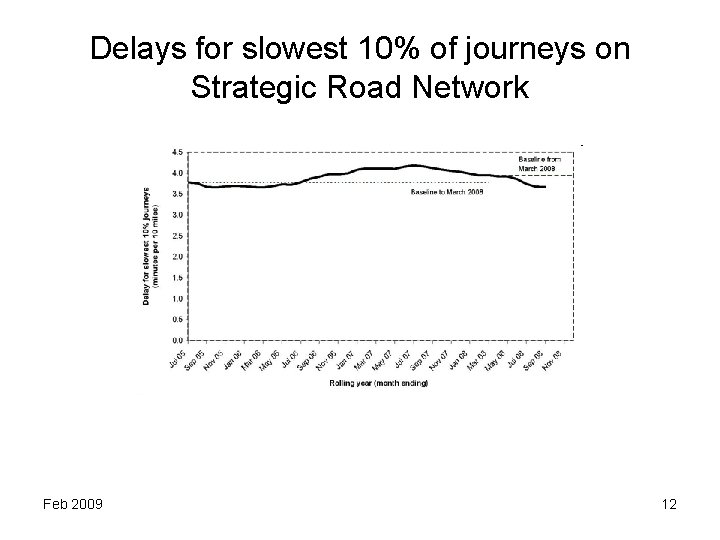
Delays for slowest 10% of journeys on Strategic Road Network Feb 2009 12
Hypothesis: daily travel demand has saturated • Access and choice increase with square of speed • Value of additional choice characterised by diminishing marginal utility • Prediction: sufficient choice experienced through mobility Feb 2009 13
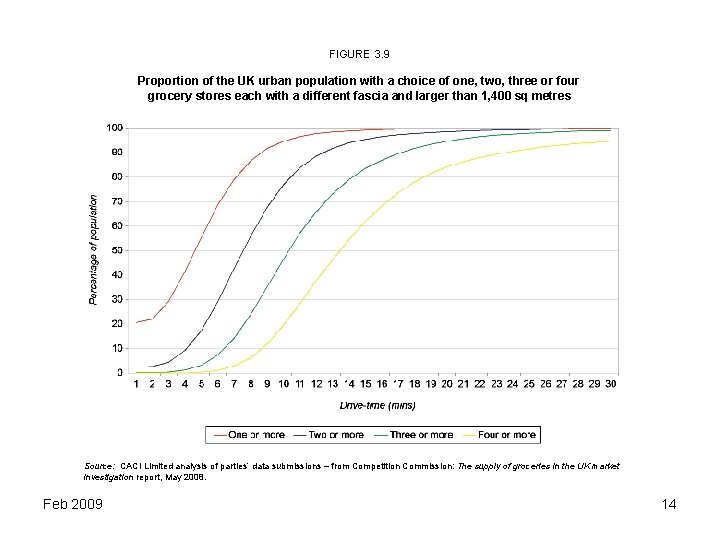
FIGURE 3. 9 Proportion of the UK urban population with a choice of one, two, three or four grocery stores each with a different fascia and larger than 1, 400 sq metres Source: CACI Limited analysis of parties’ data submissions – from Competition Commission: The supply of groceries in the UK market investigation report, May 2008. Feb 2009 14
Choice of schools and hospitals • Over 80% of pupils have at least 3 secondary schools within 5 km of home • Secondary schools have 6 others within 10 min drive time • 40% of population have up to 2 hospitals within 15 min drive time; 90% within 60 min Feb 2009 15
Business-as-usual scenario (2) • Stable behaviour in aggregate: – 7100 miles – 1000 trips – 380 hours a year on average • But road traffic continues to grow…. Feb 2009 16
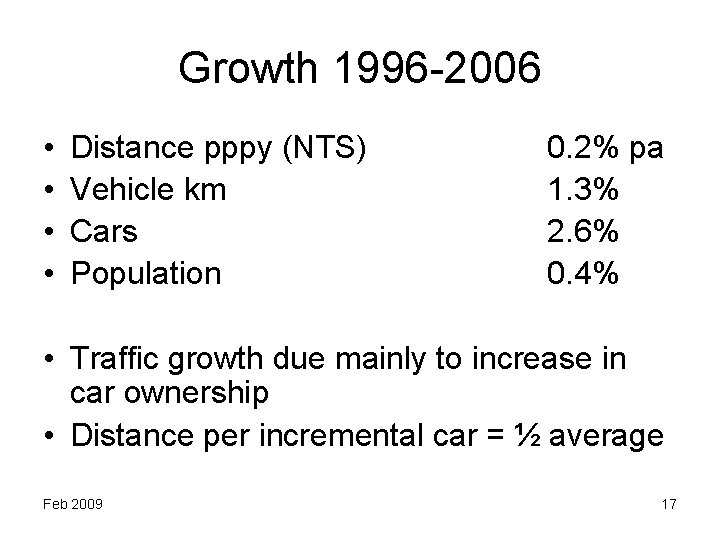
Growth 1996 -2006 • • Distance pppy (NTS) Vehicle km Cars Population 0. 2% pa 1. 3% 2. 6% 0. 4% • Traffic growth due mainly to increase in car ownership • Distance per incremental car = ½ average Feb 2009 17
Sustainable travel • Stable personal travel – travel demand saturated. • Some car ownership increase by ‘late adopters’, as car use approaches saturation. Some mode switch to cars. • Decarbonise transport system. • Manage congestion. Feb 2009 18
Transport policy and operations • Interventions which have the effect of increasing speed lead to increased access • Interventions which have the effect of reducing speed tend to reduce access and choice • ‘Smart choices’ tend to involve speed reduction • Decarbonisation will need to rely mainly on technology Feb 2009 19
Managing congestion • Can’t build our way out of congestion • Road pricing redistributes road space in favour of those who can afford to pay – Improved access for payers (induced traffic) – Reduced access and choice for non-payers – Likely to be unpopular • Main problem is journey time uncertainty Feb 2009 20
Conventional transport economics • • • Main benefit is ‘travel time saving’ Underestimates ‘induced traffic’…. …. and carbon, accidents and other detriments Travel a ‘derived demand’ Agglomeration benefits Modelling assumes minimisation of ‘generalised costs’ • Neglects behavioural economics Feb 2009 21
References • The Myth of Travel Time Saving, Transport Reviews 28(3), 321 -336, 2008 • Responses to ‘Myth’ in November issue • The Limits to Travel, Earthscan, 2008 • www. limitstotravel. org. uk • National road pricing: a critique and an alternative, Proc Inst Civil Eng: Transport 161(TR 3), 167 -174, 2008 • Sustainable Travel Behaviour, UTSG January 2009 • Papers from david. metz@transport. ucl. ac. uk Feb 2009 22
- Slides: 22