
Travel Medicine Dengue and Malaria Review for Deployers


- Slides: 63
Travel Medicine: Dengue and Malaria Review for Deployers Col Jim Fike, USAF, MC, FS jim. fike@ang. af. mil
Outline • Clinical Manifestations • Pathogen and Pathogenesis • Epidemiology • Management: Diagnosis and Therapy • Prevention and Control
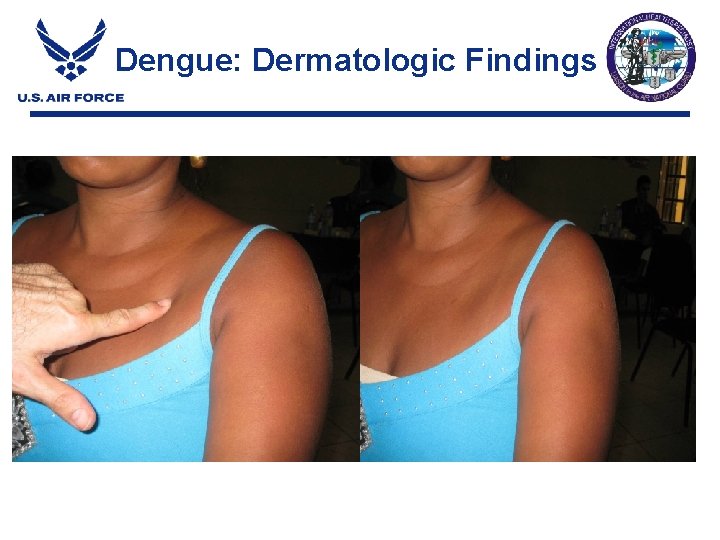
Case Study • 38 y. o. returned home (to US) after supporting a NGO building a community center in El Salvador • Four days of intermittent fever associated with: – – Abdominal pain Retro-orbital headache General flushing of the skin Myalgias/arthralgias • No sig PMH/PSH • PE – only remarkable for centrifugal maculopapular rash with + tourniquet test
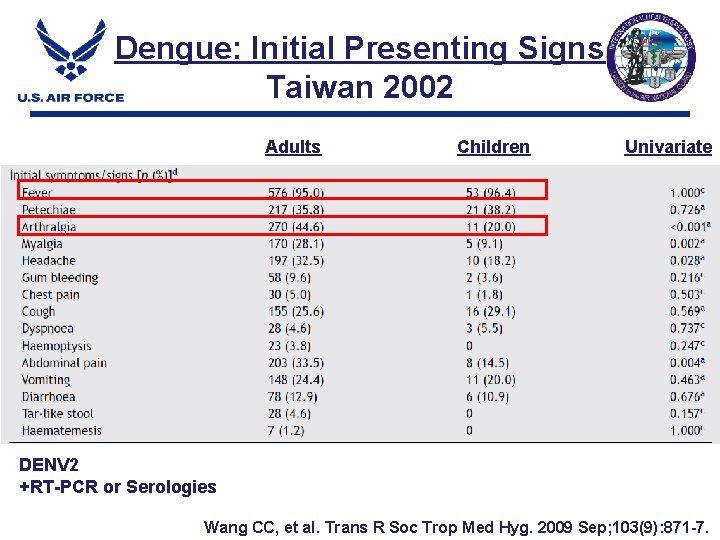
Dengue: Initial Presenting Signs Taiwan 2002 Adults Children Univariate DENV 2 +RT-PCR or Serologies Wang CC, et al. Trans R Soc Trop Med Hyg. 2009 Sep; 103(9): 871 -7.
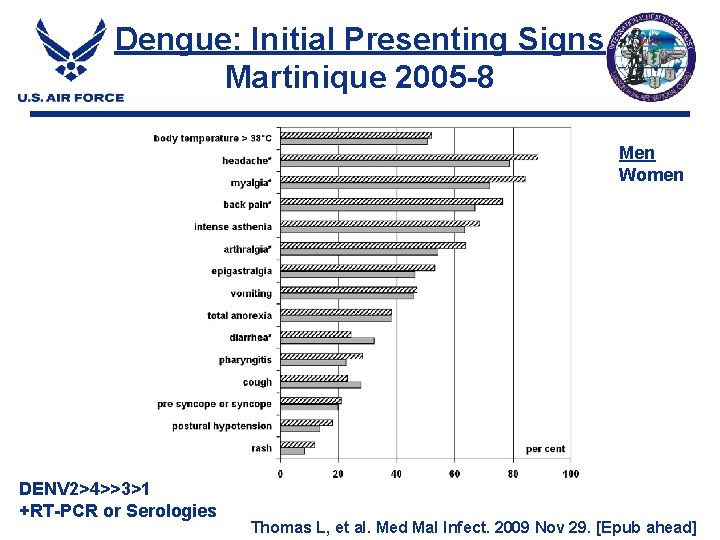
Dengue: Initial Presenting Signs Martinique 2005 -8 Men Women DENV 2>4>>3>1 +RT-PCR or Serologies Thomas L, et al. Med Mal Infect. 2009 Nov 29. [Epub ahead]
Dengue: Dermatologic Findings
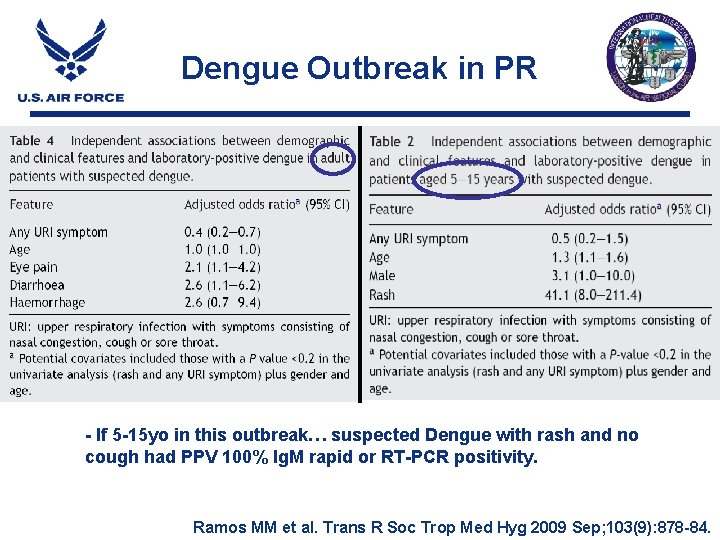
Dengue Outbreak in PR - If 5 -15 yo in this outbreak… suspected Dengue with rash and no cough had PPV 100% Ig. M rapid or RT-PCR positivity. Ramos MM et al. Trans R Soc Trop Med Hyg 2009 Sep; 103(9): 878 -84.
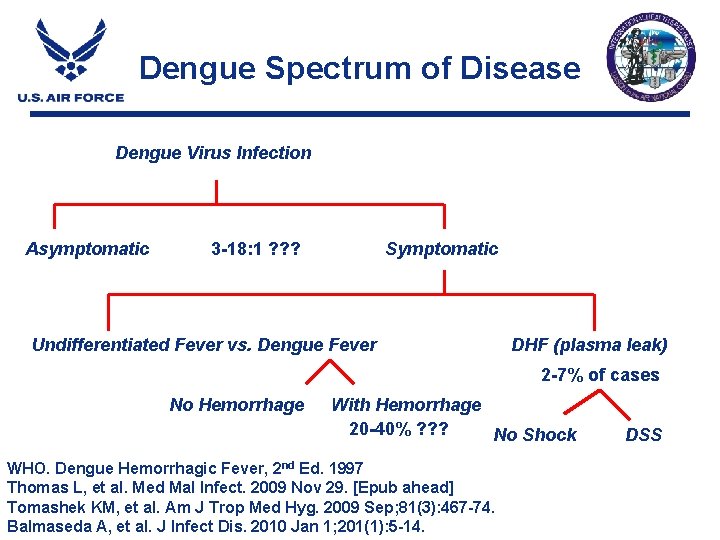
Dengue Spectrum of Disease Dengue Virus Infection Asymptomatic 3 -18: 1 ? ? ? Symptomatic Undifferentiated Fever vs. Dengue Fever DHF (plasma leak) 2 -7% of cases No Hemorrhage With Hemorrhage 20 -40% ? ? ? No Shock WHO. Dengue Hemorrhagic Fever, 2 nd Ed. 1997 Thomas L, et al. Med Mal Infect. 2009 Nov 29. [Epub ahead] Tomashek KM, et al. Am J Trop Med Hyg. 2009 Sep; 81(3): 467 -74. Balmaseda A, et al. J Infect Dis. 2010 Jan 1; 201(1): 5 -14. DSS
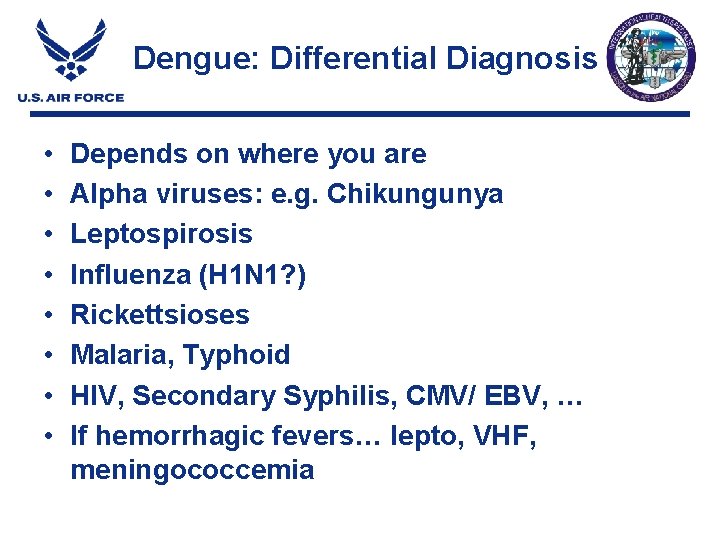
Dengue: Differential Diagnosis • • Depends on where you are Alpha viruses: e. g. Chikungunya Leptospirosis Influenza (H 1 N 1? ) Rickettsioses Malaria, Typhoid HIV, Secondary Syphilis, CMV/ EBV, … If hemorrhagic fevers… lepto, VHF, meningococcemia
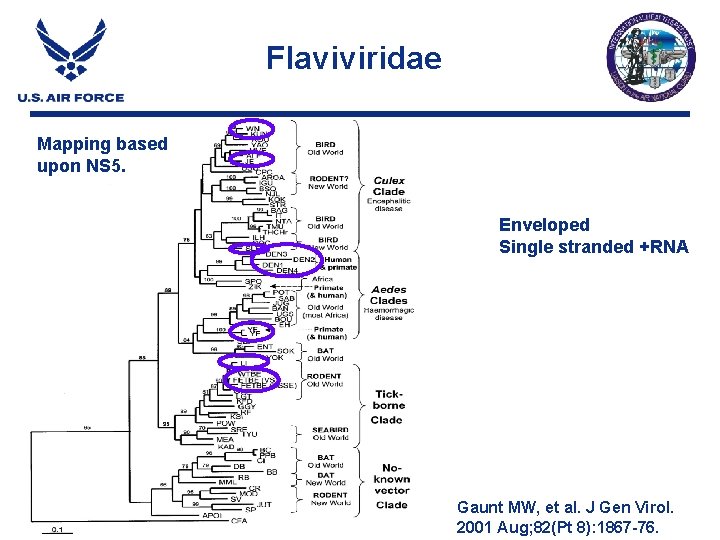
Flaviviridae Mapping based upon NS 5. Enveloped Single stranded +RNA Gaunt MW, et al. J Gen Virol. 2001 Aug; 82(Pt 8): 1867 -76.
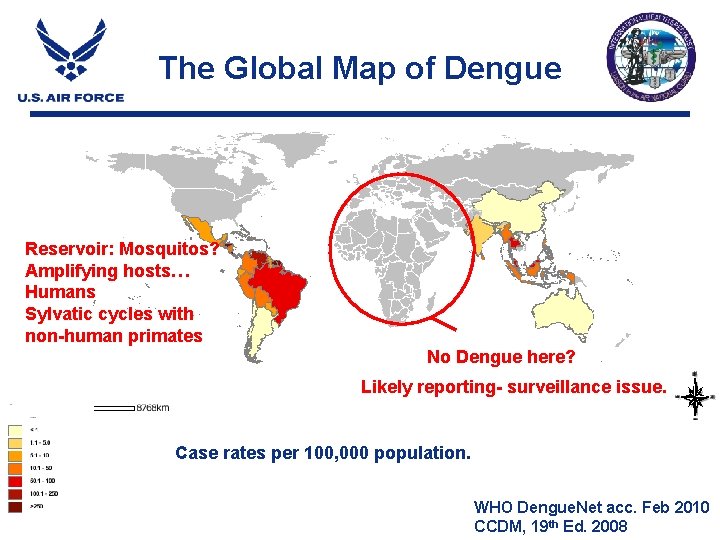
The Global Map of Dengue Reservoir: Mosquitos? Amplifying hosts… Humans Sylvatic cycles with non-human primates No Dengue here? Likely reporting- surveillance issue. Case rates per 100, 000 population. WHO Dengue. Net acc. Feb 2010 CCDM, 19 th Ed. 2008
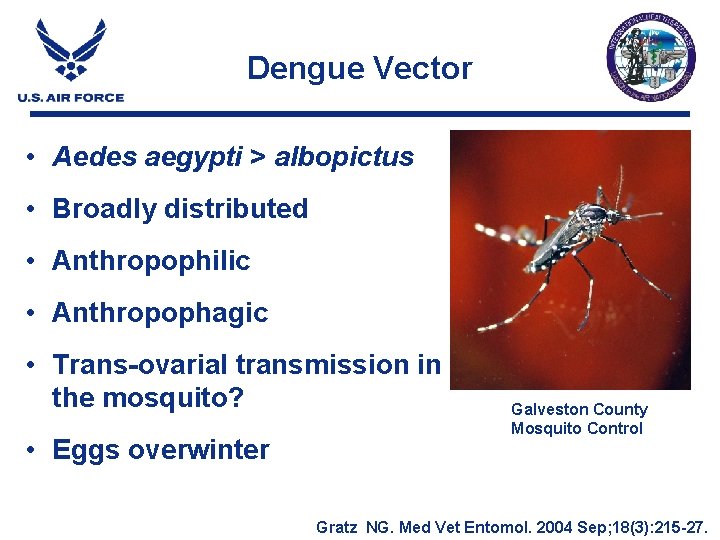
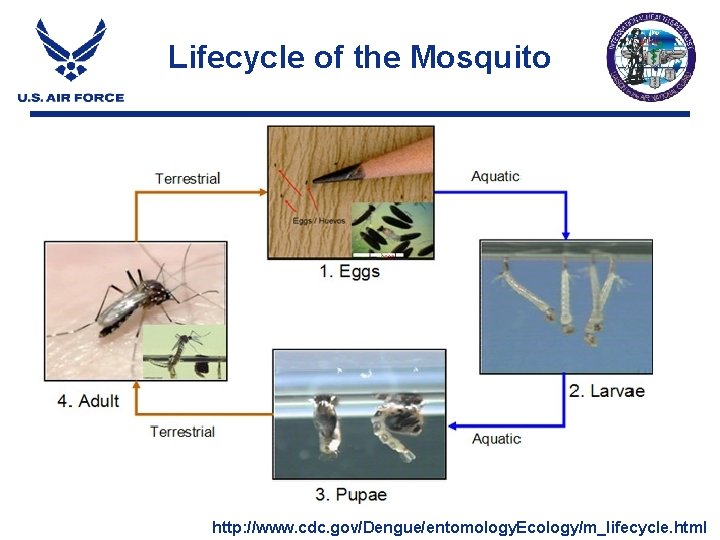
Dengue Vector • Aedes aegypti > albopictus • Broadly distributed • Anthropophilic • Anthropophagic • Trans-ovarial transmission in the mosquito? • Eggs overwinter Galveston County Mosquito Control Gratz NG. Med Vet Entomol. 2004 Sep; 18(3): 215 -27.
Lifecycle of the Mosquito http: //www. cdc. gov/Dengue/entomology. Ecology/m_lifecycle. html
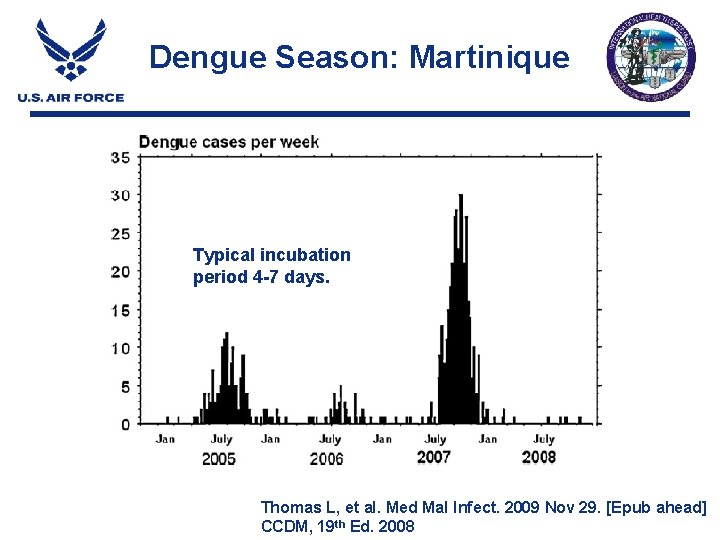
Dengue Season: Martinique Typical incubation period 4 -7 days. Thomas L, et al. Med Mal Infect. 2009 Nov 29. [Epub ahead] CCDM, 19 th Ed. 2008
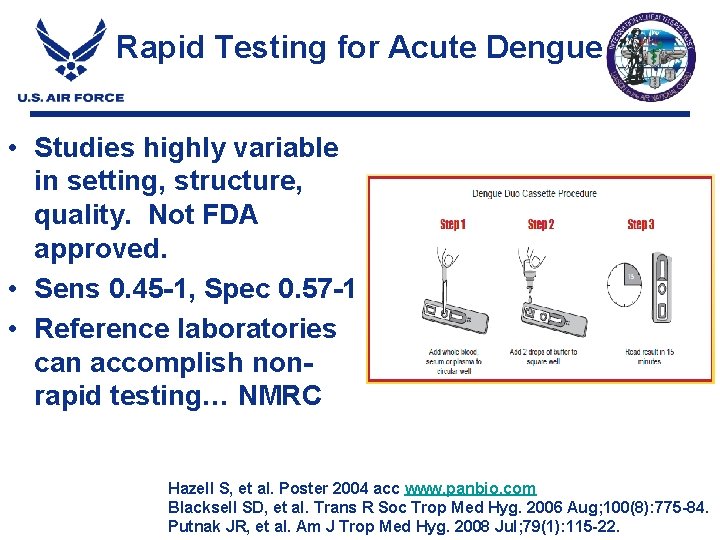
Rapid Testing for Acute Dengue • Studies highly variable in setting, structure, quality. Not FDA approved. • Sens 0. 45 -1, Spec 0. 57 -1 • Reference laboratories can accomplish nonrapid testing… NMRC Hazell S, et al. Poster 2004 acc www. panbio. com Blacksell SD, et al. Trans R Soc Trop Med Hyg. 2006 Aug; 100(8): 775 -84. Putnak JR, et al. Am J Trop Med Hyg. 2008 Jul; 79(1): 115 -22.
Real time diagnosis is clinical
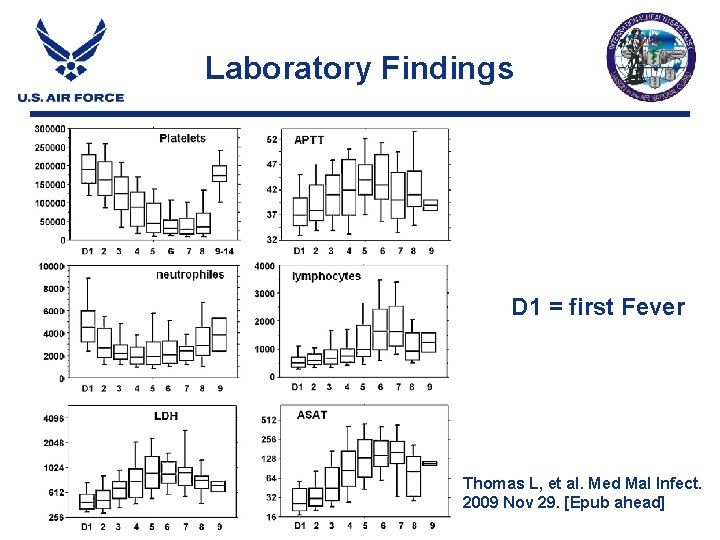
Laboratory Findings D 1 = first Fever Thomas L, et al. Med Mal Infect. 2009 Nov 29. [Epub ahead]
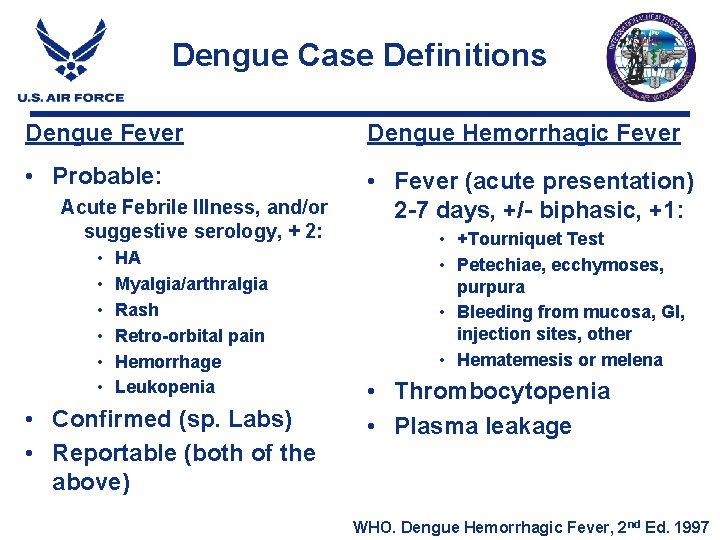
Dengue Case Definitions Dengue Fever Dengue Hemorrhagic Fever • Probable: • Fever (acute presentation) 2 -7 days, +/- biphasic, +1: Acute Febrile Illness, and/or suggestive serology, + 2: • • • HA Myalgia/arthralgia Rash Retro-orbital pain Hemorrhage Leukopenia • Confirmed (sp. Labs) • Reportable (both of the above) • +Tourniquet Test • Petechiae, ecchymoses, purpura • Bleeding from mucosa, GI, injection sites, other • Hematemesis or melena • Thrombocytopenia • Plasma leakage WHO. Dengue Hemorrhagic Fever, 2 nd Ed. 1997
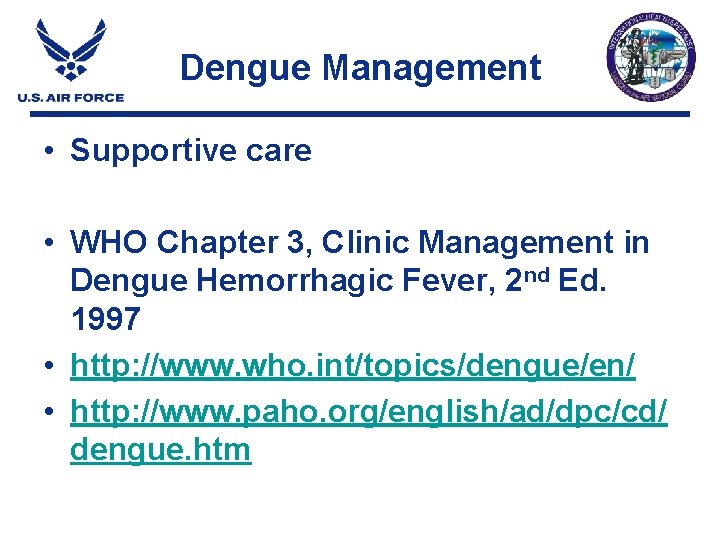
Dengue Management • Supportive care • WHO Chapter 3, Clinic Management in Dengue Hemorrhagic Fever, 2 nd Ed. 1997 • http: //www. who. int/topics/dengue/en/ • http: //www. paho. org/english/ad/dpc/cd/ dengue. htm
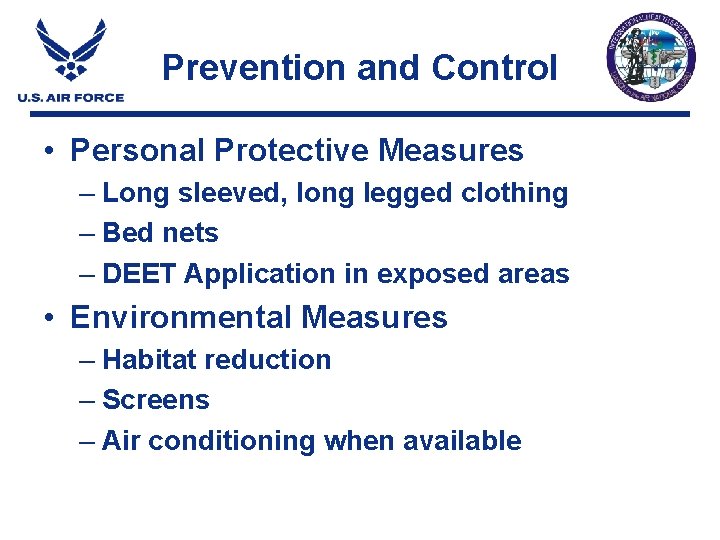
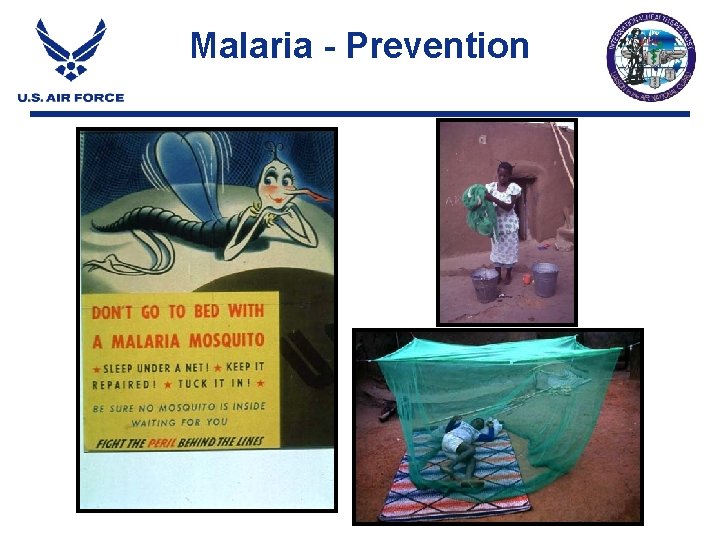
Prevention and Control • Personal Protective Measures – Long sleeved, long legged clothing – Bed nets – DEET Application in exposed areas • Environmental Measures – Habitat reduction – Screens – Air conditioning when available
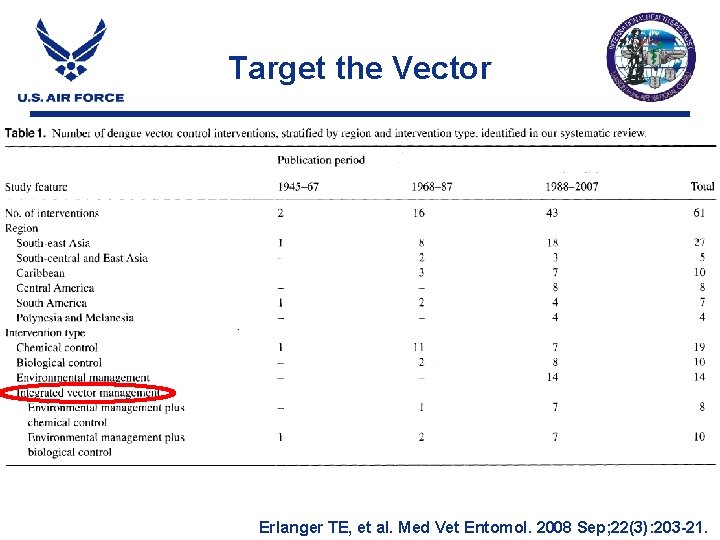
Target the Vector Erlanger TE, et al. Med Vet Entomol. 2008 Sep; 22(3): 203 -21.
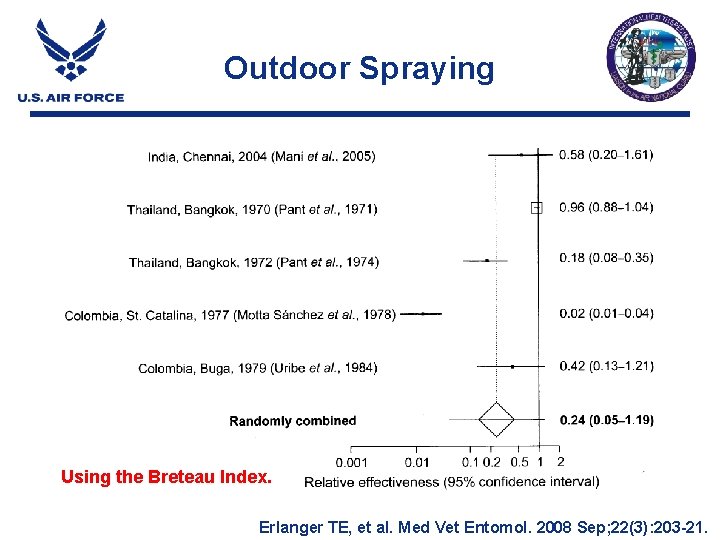
Outdoor Spraying Using the Breteau Index. Erlanger TE, et al. Med Vet Entomol. 2008 Sep; 22(3): 203 -21.
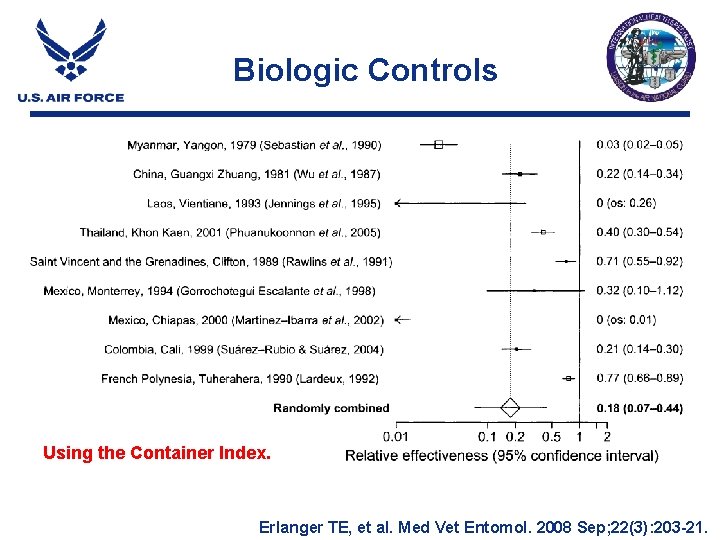
Biologic Controls Using the Container Index. Erlanger TE, et al. Med Vet Entomol. 2008 Sep; 22(3): 203 -21.
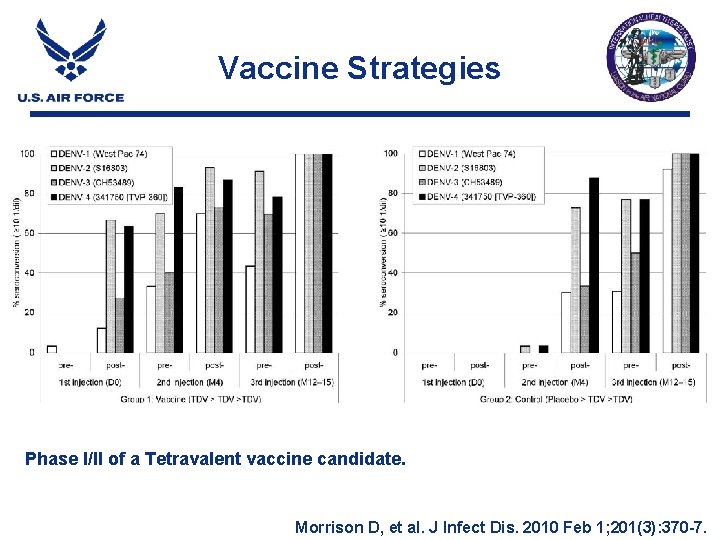
Vaccine Strategies Phase I/II of a Tetravalent vaccine candidate. Morrison D, et al. J Infect Dis. 2010 Feb 1; 201(3): 370 -7.
Malaria Case #1 • 24 year old woman from Washington, DC – Previously healthy • 3 day visit to Costa Rica – Visited rain forest – No malaria chemoprophylaxis • One day after returning home, developed severe weakness, high fever – No respiratory, GI, or GU symptoms • Exam: Normal except orthostatic hypotension
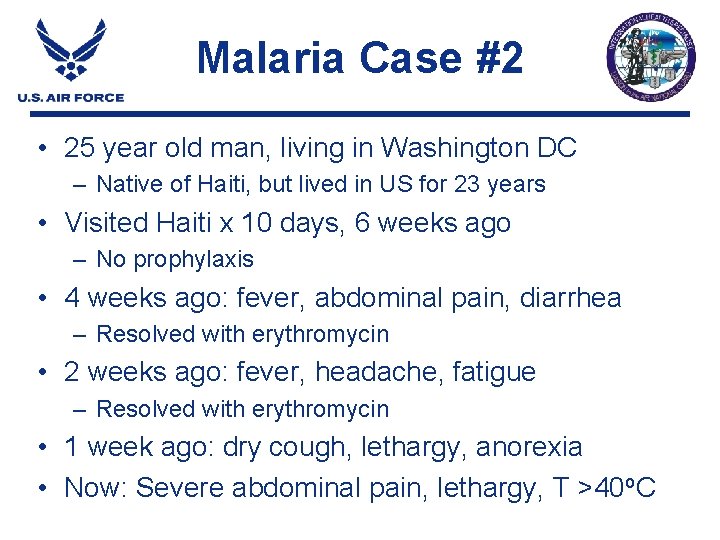
Malaria Case #2 • 25 year old man, living in Washington DC – Native of Haiti, but lived in US for 23 years • Visited Haiti x 10 days, 6 weeks ago – No prophylaxis • 4 weeks ago: fever, abdominal pain, diarrhea – Resolved with erythromycin • 2 weeks ago: fever, headache, fatigue – Resolved with erythromycin • 1 week ago: dry cough, lethargy, anorexia • Now: Severe abdominal pain, lethargy, T >40 o. C
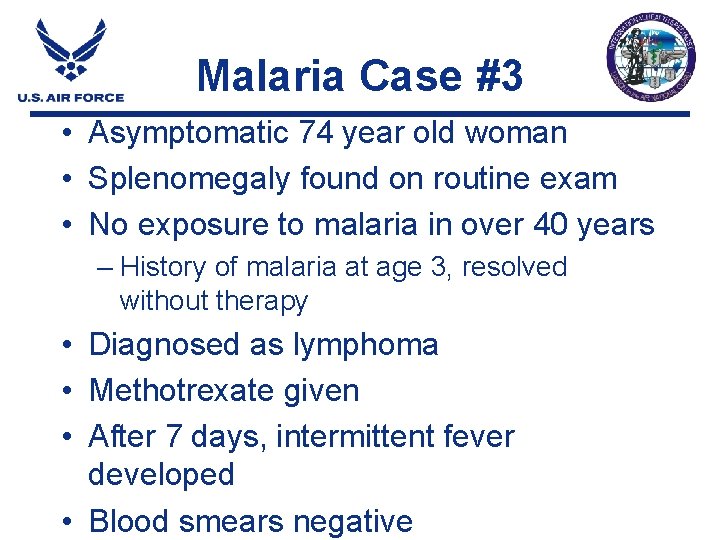
Malaria Case #3 • Asymptomatic 74 year old woman • Splenomegaly found on routine exam • No exposure to malaria in over 40 years – History of malaria at age 3, resolved without therapy • Diagnosed as lymphoma • Methotrexate given • After 7 days, intermittent fever developed • Blood smears negative
Malaria Case #4 • 18 year old American serviceman deployed to Sub-Saharan Africa – Taking malaria chemoprophylaxis • 2 days Prior to Admission: – Dyspnea – Chills & fever to 104 o. F
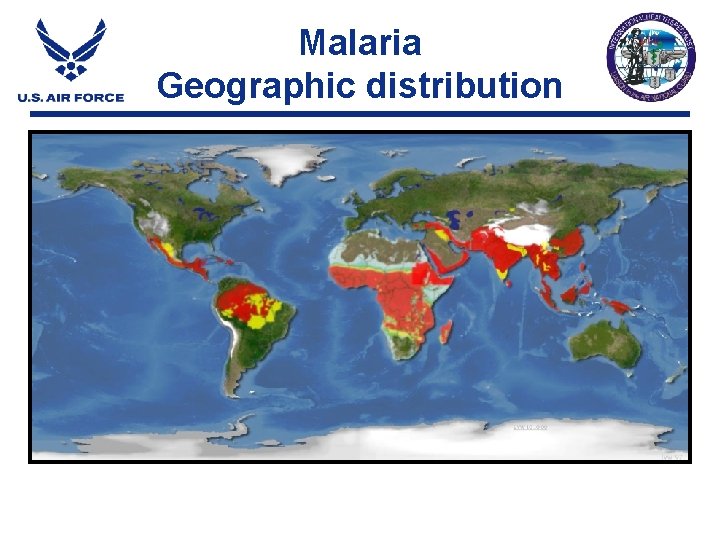
Malaria Geographic distribution
Clinical Presentation: Uncomplicated Malaria • Symptoms: fever, chills, headache, body pains, diarrhea, vomiting, cough • Prodrome of other sxs can occur 1 -2 d prior to fever onset • Signs: anemia, thrombocytopenia • Symptoms may be very nonspecific • Classical patterns (48 hr or 72 hr periodicity) seen more in P. vivax
Clinical Presentation: Serious/Complicated Malaria • Decrease in conscious level, neurological signs or fits • Splenomegaly • Severe anemia – Hematocrit < 15% • Hyperpyrexia • Hyperparasitemia > 5% • Hypoglycemia (glucose < 2. 2 mmol/L) • Renal impairment or oliguria • Pulmonary edema, hypoxia, acidosis • Circulatory collapse or shock • Hemostasis abnormalities – hemolysis, DIC
Diagnosis: Microscopy • Benchmark diagnostic standard for over 100 years • In expert hands: Highly sensitive, specific – 10 -50 parasites/mcl reliably detectable • Single assay provides wealth of clinically important data • Stained slide serves as permanent record
Microscopy • Giemsa stain or Field’s stain • Thick smear to identify parasitemia – Read > 200 oil/HPF fields before calling negative • Thin smear to identify species • Quantify low parasitemias against WBCs: (# parasites counted/200 WBCs counted) x WBCs/mcl • Quantify high parasitemias against RBCs: # parasites counted/1000 RBCs counted) x RBCs/mcl
Microscopy • Negative blood smear in suspected malaria? – ? P. falciparum, sequestered phase of RBC cycle – ? Low parasitemia – ? Quality of slide, microscopist • Mandatory: – Recheck smears every 8 (6 -12) hours for 48 hours
Diagnosis • Thick and thin blood smears are gold standard – Identify species and quantify density – If can not identify species, treat for P. f. • Re-examine smears or use alternative diagnostic tool • Suspect P. falcipurum – If critically ill, suspect P. f. – If returned from Sub-Saharan Africa, > 95 % chance of P. f. pure or mixed infection – Parasitemia > 1% – Doubly infected cells
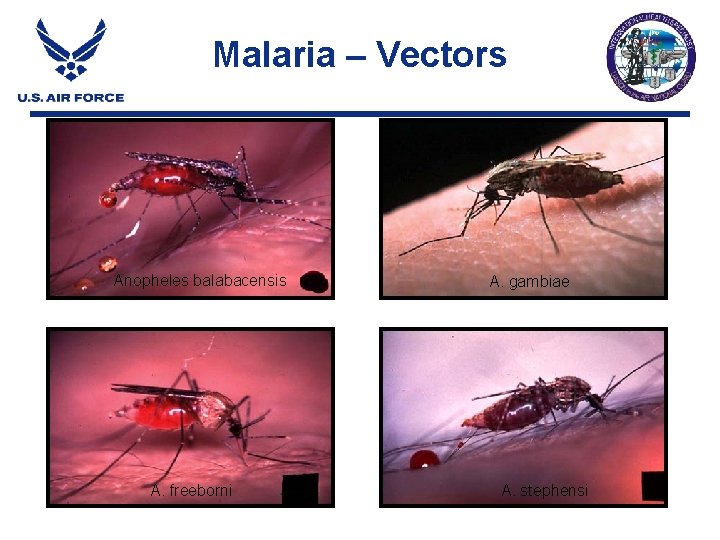
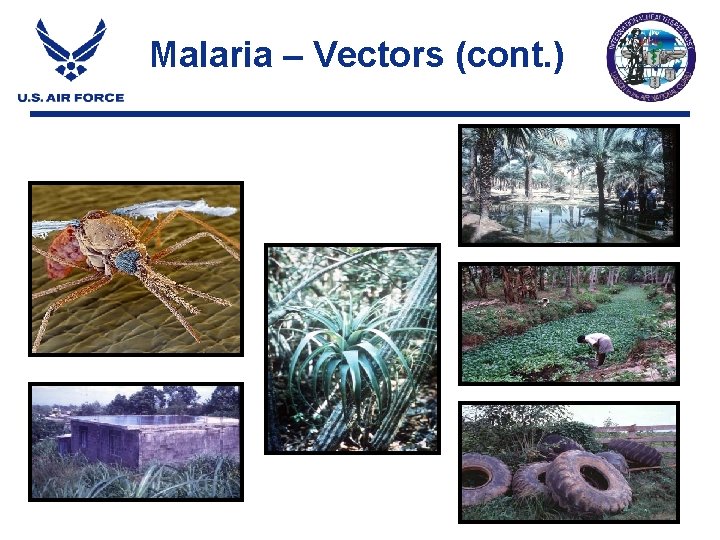
Malaria – Vectors Anopheles balabacensis A. freeborni A. gambiae A. stephensi
Malaria – Vectors (cont. )
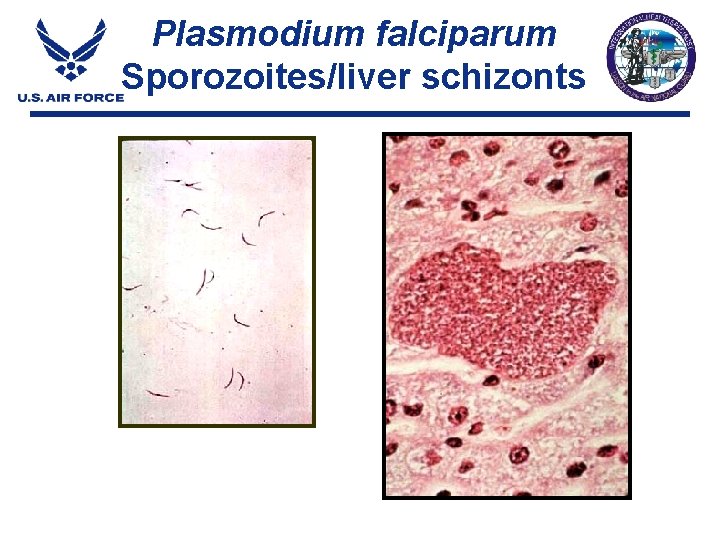
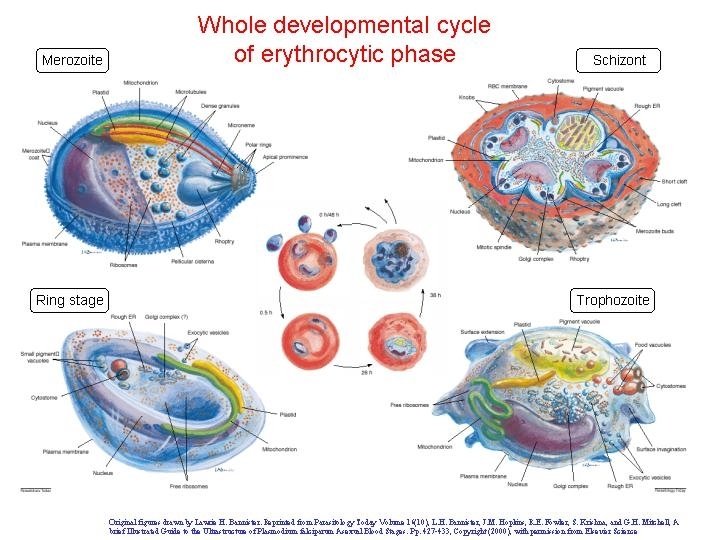
Malaria Transmission Cycle Exo-erythrocytic (hepatic) Cycle: Sporozoites infect liver cells and develop into schizonts, which release merozoites into the blood Sporozoites injected into human host during blood meal Parasites mature in mosquito midgut and migrate to salivary glands MOSQUITO Parasite undergoes sexual reproduction in the mosquito HUMAN Some merozoites differentiate into male or female gametocyctes Dormant liver stages (hypnozoites) of P. vivax and P. ovale Erythrocytic Cycle: Merozoites infect red blood cells to form schizonts
Plasmodium falciparum Sporozoites/liver schizonts
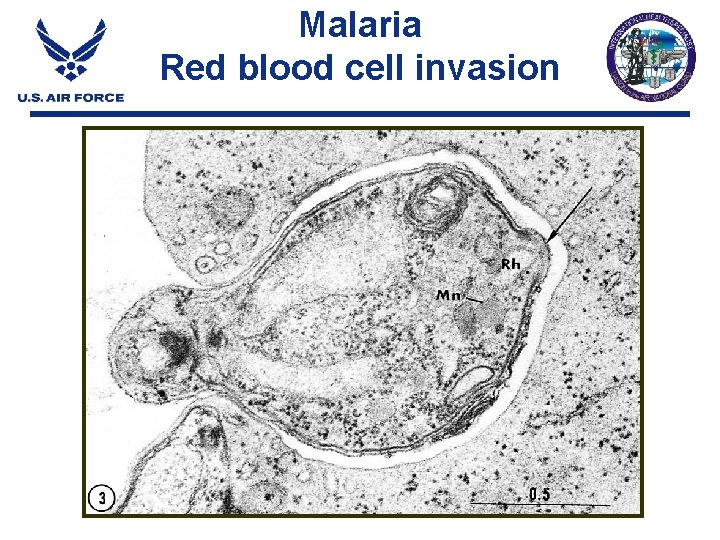
Malaria Red blood cell invasion
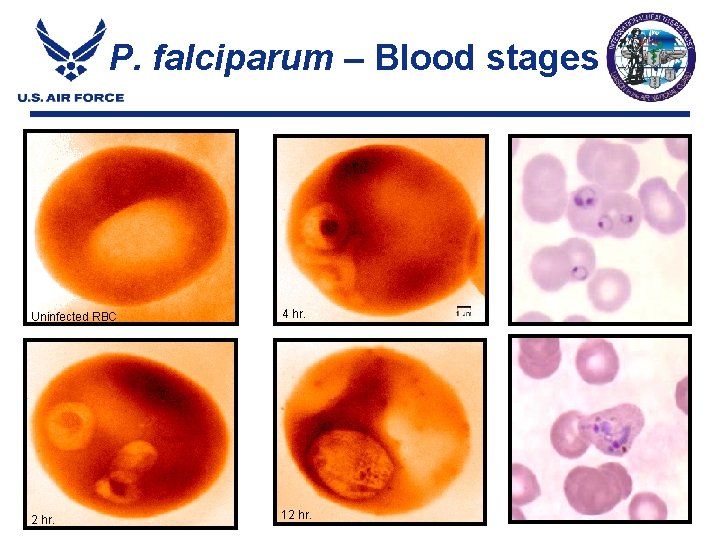
P. falciparum – Blood stages Uninfected RBC 4 hr. 2 hr. 12 hr.
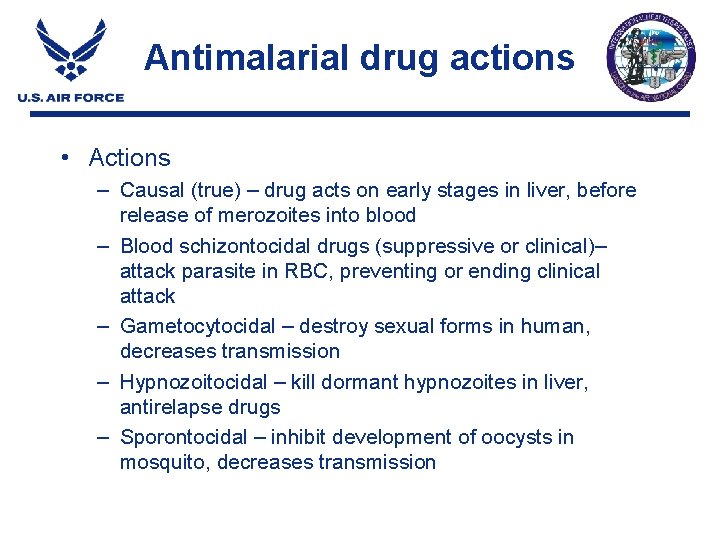
Antimalarial drug actions • Actions – Causal (true) – drug acts on early stages in liver, before release of merozoites into blood – Blood schizontocidal drugs (suppressive or clinical)– attack parasite in RBC, preventing or ending clinical attack – Gametocytocidal – destroy sexual forms in human, decreases transmission – Hypnozoitocidal – kill dormant hypnozoites in liver, antirelapse drugs – Sporontocidal – inhibit development of oocysts in mosquito, decreases transmission
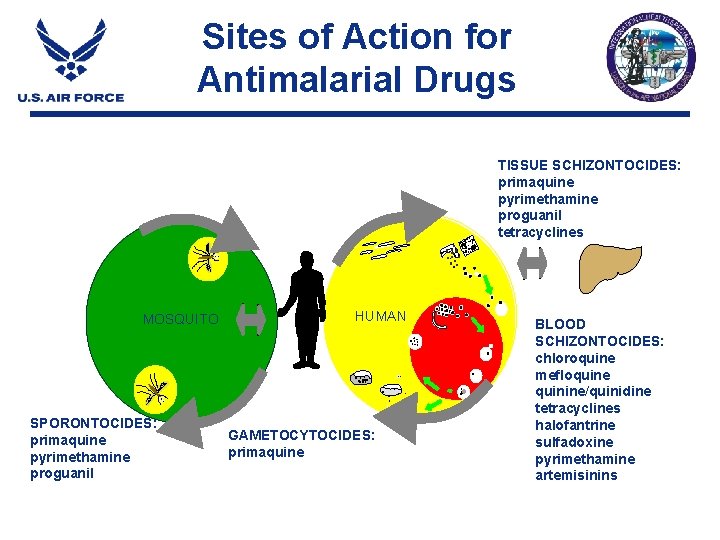
Sites of Action for Antimalarial Drugs TISSUE SCHIZONTOCIDES: primaquine pyrimethamine proguanil tetracyclines MOSQUITO SPORONTOCIDES: primaquine pyrimethamine proguanil HUMAN GAMETOCYTOCIDES: primaquine BLOOD SCHIZONTOCIDES: chloroquine mefloquine quinine/quinidine tetracyclines halofantrine sulfadoxine pyrimethamine artemisinins
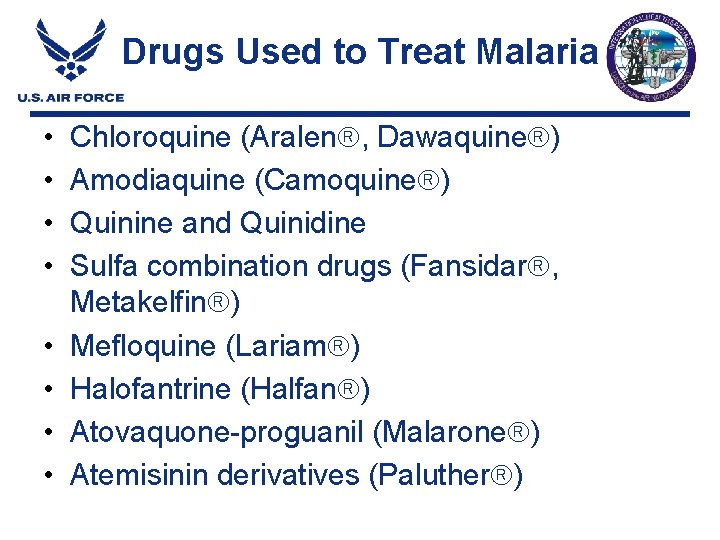
Drugs Used to Treat Malaria • • Chloroquine (Aralen , Dawaquine ) Amodiaquine (Camoquine ) Quinine and Quinidine Sulfa combination drugs (Fansidar , Metakelfin ) Mefloquine (Lariam ) Halofantrine (Halfan ) Atovaquone-proguanil (Malarone ) Atemisinin derivatives (Paluther )
Considerations for managing P. falciparum infections l Can underestimate severity l l l Significant damage occurs at certain times during repeated cycles of development and reproduction Patient can deteriorate quickly Low parasite density does not mean infection is trivial Complications can arise after parasites clear peripheral blood, parasites can sequester in tissues Monitor for neurological changes and hypoglycemia l l Severe malaria and antimalarials can cause hypoglycemia Pregnant women are at particular risk
Adjunct Treatment of Uncomplicated Malaria • Fever – Acetominophen, paracetamol • Avoid aspirin in kids due to risk of Reyes Syndrome – Sponge baths • Anemia – Transfusion of RBCs may be needed – Iron, folic acid • Rehydration – Solutions with extra glucose
Malaria - Treatment Artemisinin
Malaria Case #1 • 24 year old woman from Washington, DC – Previously healthy • 3 day visit to Costa Rica – Visited rain forest – No malaria chemoprophylaxis • One day after returning home, developed severe weakness, high fever – No respiratory, GI, or GU symptoms • Exam: Normal except orthostatic hypotension
Malaria Case #1 • Clinical course – Progressed to overt septic shock – Multiple blood cultures positive for Shigella – Recovered completely to fluids, antibiotics • Teaching points: – Clinical presentation of malaria overlaps widely with other infections: Specific diagnosis essential – Incubation period probably too brief for malaria
Malaria Case #2 • 25 year old man, living in Washington DC – Native of Haiti, but lived in US for 23 years • Visited Haiti x 10 days, 6 weeks ago – No prophylaxis • 4 weeks ago: fever, abdominal pain, diarrhea – Resolved with erythromycin • 2 weeks ago: fever, headache, fatigue – Resolved with erythromycin • 1 week ago: dry cough, lethargy, anorexia • Now: Severe abdominal pain, lethargy, T >40 o. C
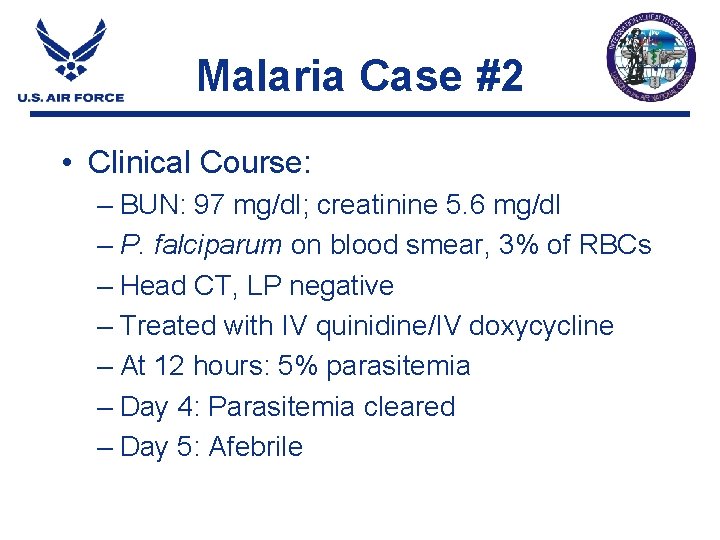
Malaria Case #2 • Clinical Course: – BUN: 97 mg/dl; creatinine 5. 6 mg/dl – P. falciparum on blood smear, 3% of RBCs – Head CT, LP negative – Treated with IV quinidine/IV doxycycline – At 12 hours: 5% parasitemia – Day 4: Parasitemia cleared – Day 5: Afebrile
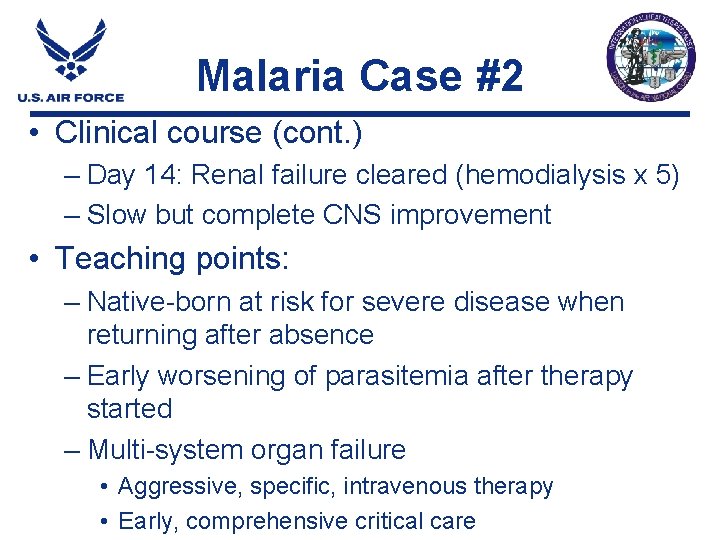
Malaria Case #2 • Clinical course (cont. ) – Day 14: Renal failure cleared (hemodialysis x 5) – Slow but complete CNS improvement • Teaching points: – Native-born at risk for severe disease when returning after absence – Early worsening of parasitemia after therapy started – Multi-system organ failure • Aggressive, specific, intravenous therapy • Early, comprehensive critical care
Malaria Case #3 • Asymptomatic 74 year old woman • Splenomegaly found on routine exam • No exposure to malaria in over 40 years – History of malaria at age 3, resolved without therapy • Diagnosed as lymphoma • Methotrexate given • After 7 days, intermittent fever developed • Blood smears negative
Malaria Case #3 • Clinical course: – Patient given empirical therapy with chloroquine – Symptoms & splenomegaly completely resolved – PCR analysis of pre-treatment blood showed presence of P. malariae r. RNA • Teaching points: – Microscopy may miss low-level parasitemia – P. malariae may last decades without symptoms – Altered immune status may allow disease breakthrough
Malaria Case #4 • 18 year old American serviceman deployed to Sub-Saharan Africa – Taking malaria chemoprophylaxis • 2 days Prior to Admission: – Dyspnea – Chills & fever to 104 o. F
Malaria Case #4 • Admission: P. falciparum diagnosed – Transferred without therapy • Hospital day 2, on arrival at 2 nd hospital: – Afebrile, RR: 24; CXR negative; smears (+) P. f. – Therapy started • Course: – HD #3: T = 105 o. F; RR = 30 – HD #4: Afebrile, blood smears negative; RR = 40, cyanotic; CVP = 5 cm
Malaria Case #4 • Course (cont. ): – HD #5: • • • Net negative fluid balance RR = 60 -70 CXR c/w pulmonary edema Blood smears negative; T = 102. 6 o. F Antibiotics added – HD #6: Death
Malaria Case #4 • Teaching points: – Respiratory presentation – Progression of ARDS despite parasite clearance – No volume overload – ? role of delay in therapy • Probably not decisive
Malaria - Prevention
Antimalarial Chemoprophylaxis • Prevents disease, not infection • Appropriate for non-immune travelers • Practical only for some populations in endemic areas • Consider: • • immune status intensity/duration of exposure parasite drug resistance resources for diagnosis and treatment
Personal Protection • • • Protective clothing Insect repellants Household insecticide products Window and door screens Bed nets
Links to Malaria Support • WHO malaria guidelines (2010) • http: //www. who. int/malaria/publications/ato z/9789241547925/en/index. html • CDC Malaria Home Page • http: //www. cdc. gov/malaria/ • Malaria interactive map: • http: //cdc-malaria. ncsa. uiuc. edu/