
Travel and Tourism curriculum overview 1 year course
- Slides: 2
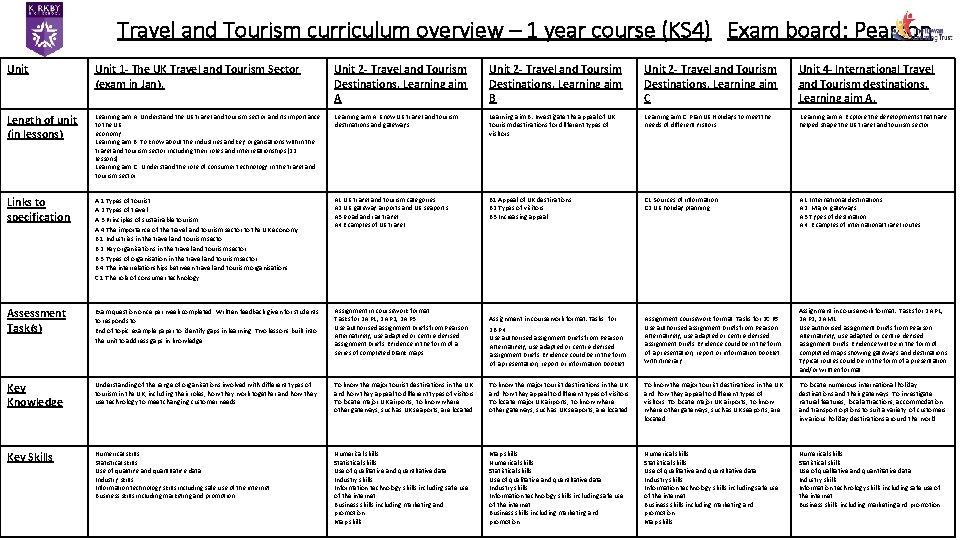
Travel and Tourism curriculum overview – 1 year course (KS 4) Exam board: Pearson Unit 1 - The UK Travel and Tourism Sector (exam in Jan). Unit 2 - Travel and Tourism Destinations. Learning aim A Unit 2 - Travel and Toursim Destinations. Learning aim B Unit 2 - Travel and Tourism Destinations. Learning aim C Unit 4 - International Travel and Tourism destinations. Learning aim A. Length of unit (in lessons) Learning aim A: Understand the UK travel and tourism sector and its importance to the UK economy Learning aim B: To know about the industries and key organisations within the travel and tourism sector including their roles and interrelationships (22 lessons). Learning aim C: Understand the role of consumer technology in the travel and tourism sector Learning aim A: Know UK travel and tourism destinations and gateways. Learning aim B: Investigate the appeal of UK tourism destinations for different types of visitors. Learning aim C: Plan UK Holidays to meet the needs of different visitors Learning aim A: Explore the developments that have helped shape the UK travel and tourism sector. Links to specification A. 1 Types of tourist A. 2 Types of travel A. 3 Principles of sustainable tourism A. 4 The importance of the travel and tourism sector to the UK economy B. 1 Industries in the travel and tourism secto B. 2 Key organisations in the travel and tourism sector B. 3 Types of organisation in the travel and tourism sector B. 4 The interrelationships between travel and tourism organisations C. 1 The role of consumer technology A 1 UK travel and tourism categories A 2 UK gateway airports and UK seaports A 3 Road and rail travel A 4 Examples of UK travel B 1 Appeal of UK destinations B 2 Types of visitors B 3 Increasing appeal C 1 Sources of information C 2 UK holiday planning A. 1 International destinations A. 2 Major gateways A. 3 Types of destination A. 4: Examples of international travel routes Assessment Task(s) Exam question once per week completed. Written feedback given for students to responds to. End of topic example paper to identify gaps in learning. Two lessons built into the unit to address gaps in knowledge. Assignment in coursework format: Tasks for 2 A. P 1, 2 A. P 2, 2 A. P 3 Use authorised assignment briefs from Pearson. Alternatively, use adapted or centre-devised assignment briefs. Evidence in the form of a series of completed blank maps. Assignment in coursework format: Tasks for Assignment coursework format: Tasks for 2 C. P 5. Use authorised assignment briefs from Pearson. Alternatively, use adapted or centre-devised assignment briefs. Evidence could be in the form of a presentation, report or information booklet with itinerary. Assignment in coursework format: Tasks for 2 A. P 1, 2 A. P 2, 2 A. M 1 Use authorised assignment briefs from Pearson. Alternatively, use adapted or centre-devised assignment briefs. Evidence will be in the form of completed maps showing gateways and destinations. Typical routes could be in the form of a presentation and/or written format. Key Knowledge Understanding of the range of organisations involved with different types of tourism in the UK, including their roles, how they work together and how they use technology to meet changing customer needs. To know the major tourist destinations in the UK and how they appeal to different types of visitors. To locate major UK airports, to know where other gateways, such as UK seaports, are located. To locate numerous international holiday destinations and their gateways. To investigate natural features, local attractions, accommodation and transport options to suit a variety of customers in various holiday destinations around the world. Key Skills Numerical skills Statistical skills Use of qualitive and quantitative data Industry skills Information technology skills including safe use of the internet Business skills including marketing and promotion Numerical skills Statistical skills Use of qualitative and quantitative data Industry skills Information technology skills including safe use of the internet Business skills including marketing and promotion. Map skills Numerical skills Statistical skills Use of qualitative and quantitative data Industry skills Information technology skills including safe use of the internet Business skills including marketing and promotion 2 B. P 4 Use authorised assignment briefs from Pearson. Alternatively, use adapted or centre-devised assignment briefs. Evidence could be in the form of a presentation, report or information booklet.
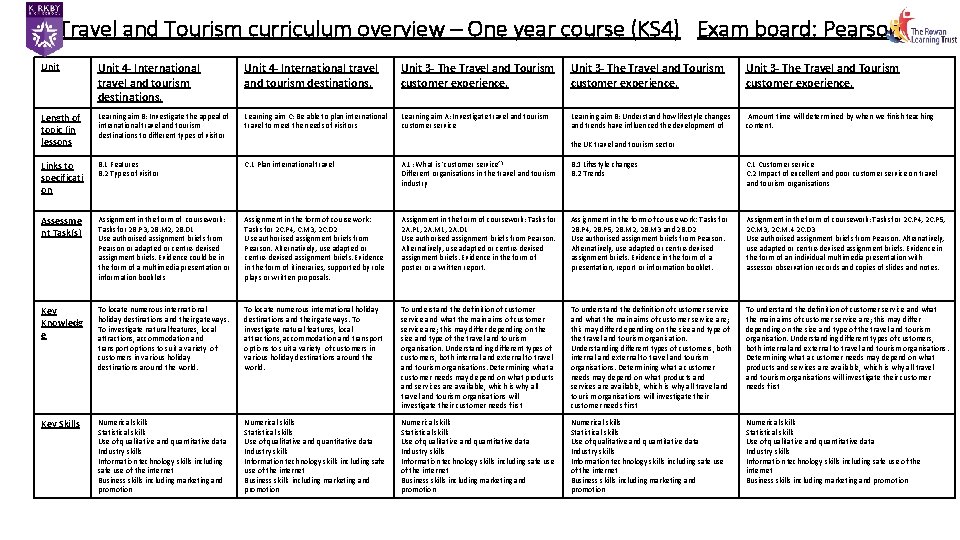
Travel and Tourism curriculum overview – One year course (KS 4) Exam board: Pearson Unit 4 - International travel and tourism destinations. Unit 3 - The Travel and Tourism customer experience. Length of topic (in lessons Learning aim B: Investigate the appeal of international travel and tourism destinations to different types of visitor Learning aim C: Be able to plan international travel to meet the needs of visitors Learning aim A: Investigate travel and tourism customer service Learning aim B: Understand how lifestyle changes and trends have influenced the development of Amount time will determined by when we finish teaching content. Links to specificati on B. 1 Features B. 2 Types of visitor C. 1 Plan international travel A. 1: What is ‘customer service’? Different organisations in the travel and tourism industry B. 1 Lifestyle changes B. 2 Trends C. 1 Customer service C. 2 Impact of excellent and poor customer service on travel and tourism organisations Assessme nt Task(s) Assignment in the form of coursework: Tasks for 2 B. P 3, 2 B. M 2, 2 B. D 1 Use authorised assignment briefs from Pearson or adapted or centre-devised assignment briefs. Evidence could be in the form of a multimedia presentation or information booklets Assignment in the form of coursework: Tasks for 2 C. P 4, C. M 3, 2 C. D 2 Use authorised assignment briefs from Pearson. Alternatively, use adapted or centre-devised assignment briefs. Evidence in the form of itineraries, supported by role plays or written proposals. Assignment in the form of coursework: Tasks for 2 A. P 1, 2 A. M 1, 2 A. D 1 Use authorised assignment briefs from Pearson. Alternatively, use adapted or centre-devised assignment briefs. Evidence in the form of poster or a written report. Assignment in the form of coursework: Tasks for 2 B. P 4, 2 B. P 5, 2 B. M 2, 2 B. M 3 and 2 B. D 2 Use authorised assignment briefs from Pearson. Alternatively, use adapted or centre-devised assignment briefs. Evidence in the form of a presentation, report or information booklet. Assignment in the form of coursework: Tasks for 2 C. P 4, 2 C. P 5, 2 C. M 3, 2 C. M. 4 2 C. D 3 Use authorised assignment briefs from Pearson. Alternatively, use adapted or centre-devised assignment briefs. Evidence in the form of an individual multimedia presentation with assessor observation records and copies of slides and notes. Key Knowledg e To locate numerous international holiday destinations and their gateways. To investigate natural features, local attractions, accommodation and transport options to suit a variety of customers in various holiday destinations around the world. To understand the definition of customer service and what the main aims of customer service are; this may differ depending on the size and type of the travel and tourism organisation. Understanding different types of customers, both internal and external to travel and tourism organisations. Determining what a customer needs may depend on what products and services are available, which is why all travel and tourism organisations will investigate their customer needs first Key Skills Numerical skills Statistical skills Use of qualitative and quantitative data Industry skills Information technology skills including safe use of the internet Business skills including marketing and promotion Numerical skills Statistical skills Use of qualitative and quantitative data Industry skills Information technology skills including safe use of the internet Business skills including marketing and promotion the UK travel and tourism sector