
Traumatic Brain Injury Causes and Consequences Presenter Information
Traumatic Brain Injury: Causes and Consequences Presenter Information and/or Additional Information Supported in part by ALH 21 MC 06738 from the Department of Health and Human Services Health Resources and Services Administration, Maternal and Child Health Bureau. The contents are the sole responsibility of the authors and do not necessarily represent the official views of DHHS.
Traumatic Brain Injury (TBI) Defined 4 TBI: “an alteration in brain function, or other evidence of brain pathology, caused by an external force” (Strokes, aneurisms, etc. are examples of internal trauma) Closed TBI : brain is damaged without penetrating skull (Most common & results from falls, car accidents, assault, etc. ) Open TBI : skull penetrated by an external object (i. e. gun shot wound)
Traumatic Brain Injury is… • Injury to the head from a blunt or penetrating object • Injury from rapid movement of the head that causes back and forth movement inside the skull
Traumatic Brain Injury Is Not. . . a new onset of a mental disorder. • just emotional stress. • an acquired mental retardation. • the effects of prolonged drug/alcohol abuse. • a gradual change in cognitive function. •
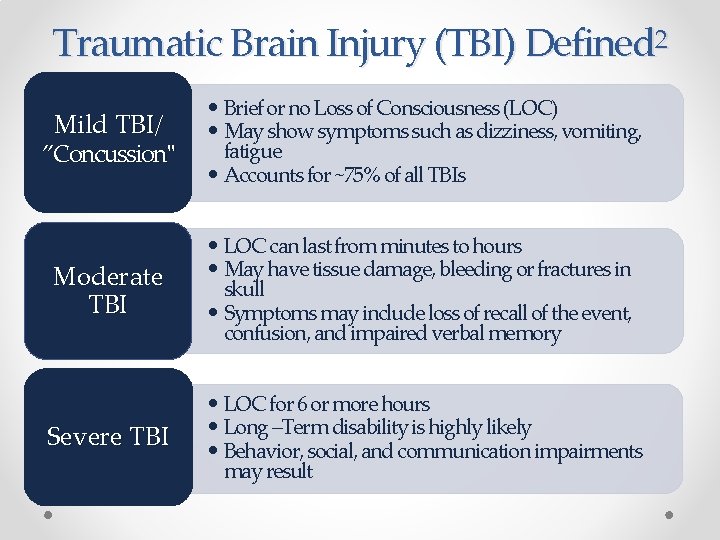
Traumatic Brain Injury (TBI) Defined 2 Mild TBI/ ”Concussion" • Brief or no Loss of Consciousness (LOC) • May show symptoms such as dizziness, vomiting, fatigue • Accounts for ~75% of all TBIs Moderate TBI • LOC can last from minutes to hours • May have tissue damage, bleeding or fractures in skull • Symptoms may include loss of recall of the event, confusion, and impaired verbal memory Severe TBI • LOC for 6 or more hours • Long –Term disability is highly likely • Behavior, social, and communication impairments may result
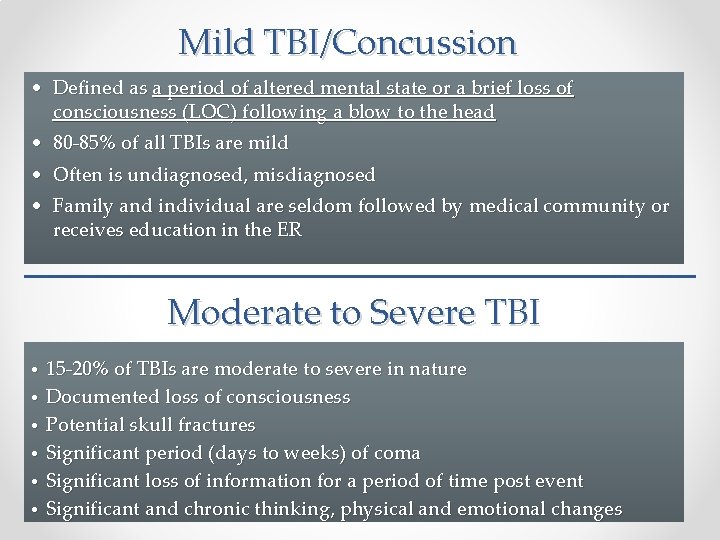
Mild TBI/Concussion • Defined as a period of altered mental state or a brief loss of consciousness (LOC) following a blow to the head • 80 -85% of all TBIs are mild • Often is undiagnosed, misdiagnosed • Family and individual are seldom followed by medical community or receives education in the ER Moderate to Severe TBI • 15 -20% of TBIs are moderate to severe in nature • Documented loss of consciousness • Potential skull fractures • Significant period (days to weeks) of coma • Significant loss of information for a period of time post event • Significant and chronic thinking, physical and emotional changes
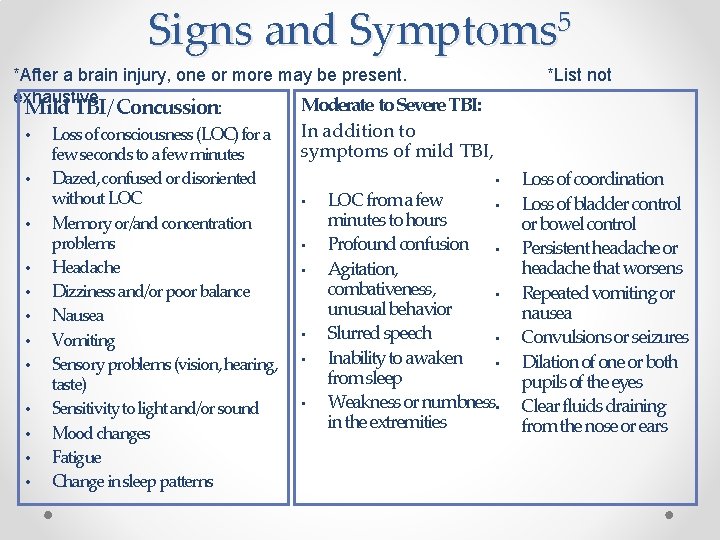
Signs and Symptoms 5 *After a brain injury, one or more may be present. exhaustive Moderate to Severe TBI: Mild TBI/ Concussion: • • • Loss of consciousness (LOC) for a few seconds to a few minutes Dazed, confused or disoriented without LOC Memory or/and concentration problems Headache Dizziness and/or poor balance Nausea Vomiting Sensory problems (vision, hearing, taste) Sensitivity to light and/or sound Mood changes Fatigue Change in sleep patterns *List not In addition to symptoms of mild TBI, • • LOC from a few • minutes to hours Profound confusion • Agitation, combativeness, • unusual behavior Slurred speech • Inability to awaken • from sleep Weakness or numbness • in the extremities Loss of coordination Loss of bladder control or bowel control Persistent headache or headache that worsens Repeated vomiting or nausea Convulsions or seizures Dilation of one or both pupils of the eyes Clear fluids draining from the nose or ears
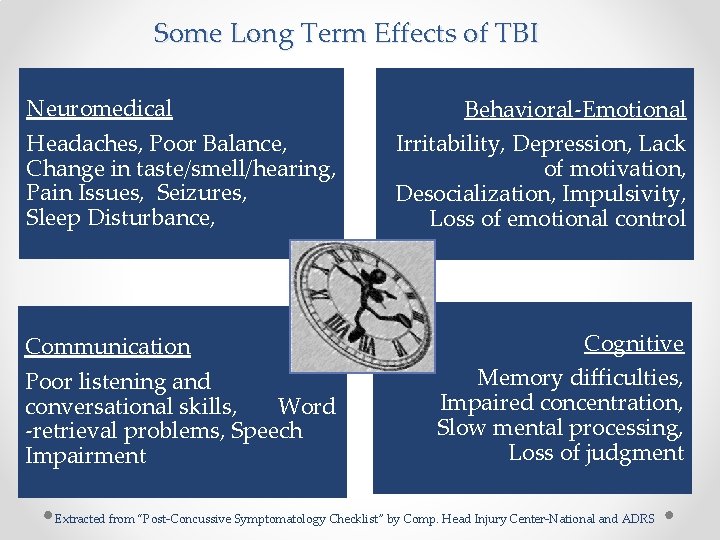
Some Long Term Effects of TBI Neuromedical Headaches, Poor Balance, Change in taste/smell/hearing, Pain Issues, Seizures, Sleep Disturbance, Communication Poor listening and conversational skills, Word -retrieval problems, Speech Impairment Behavioral-Emotional Irritability, Depression, Lack of motivation, Desocialization, Impulsivity, Loss of emotional control Cognitive Memory difficulties, Impaired concentration, Slow mental processing, Loss of judgment Extracted from “Post-Concussive Symptomatology Checklist” by Comp. Head Injury Center-National and ADRS
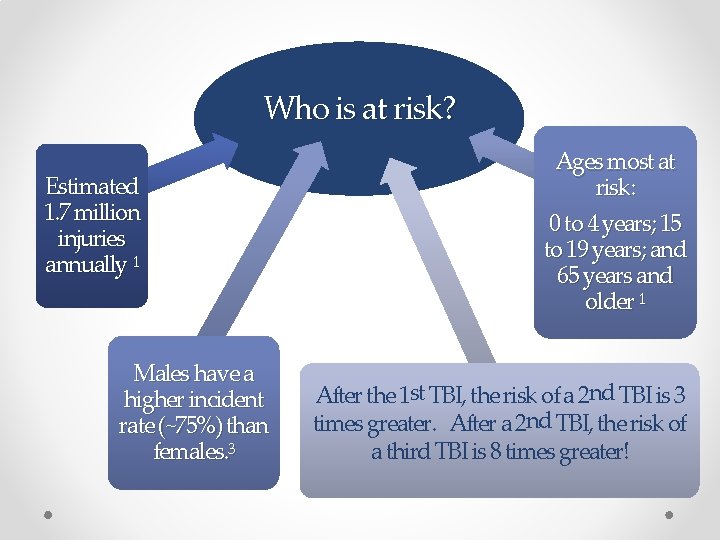
Who is at risk? Estimated 1. 7 million injuries annually 1 Males have a higher incident rate (~75%) than females. 3 Ages most at risk: 0 to 4 years; 15 to 19 years; and 65 years and older 1 After the 1 st TBI, the risk of a 2 nd TBI is 3 times greater. After a 2 nd TBI, the risk of a third TBI is 8 times greater!
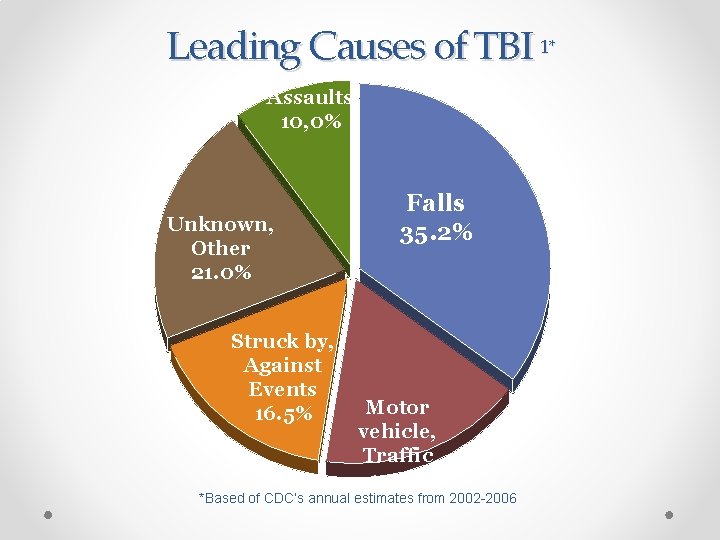
Leading Causes of TBI 1* Assaults 10, 0% Unknown, Other 21. 0% Struck by, Against Events 16. 5% Falls 35. 2% Motor vehicle, Traffic 17. 3% *Based of CDC’s annual estimates from 2002 -2006
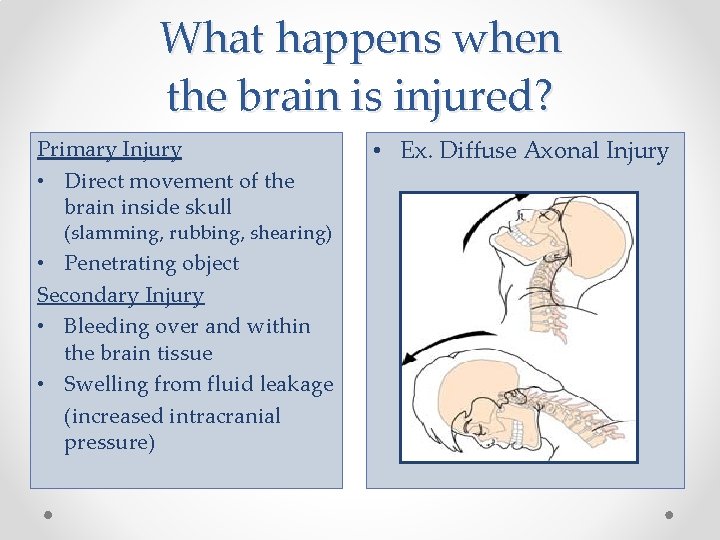
What happens when the brain is injured? Primary Injury • Direct movement of the brain inside skull (slamming, rubbing, shearing) • Penetrating object Secondary Injury • Bleeding over and within the brain tissue • Swelling from fluid leakage (increased intracranial pressure) • Ex. Diffuse Axonal Injury
Mechanism of Damage • Brain = Consistency of “jello” • Bruising of the brain due to forward/backward movement against skull • Twisting of nerve fibers due to twisting of brain within skull • Nerve fibers are broken or stretched = temporary or permanent brain damage
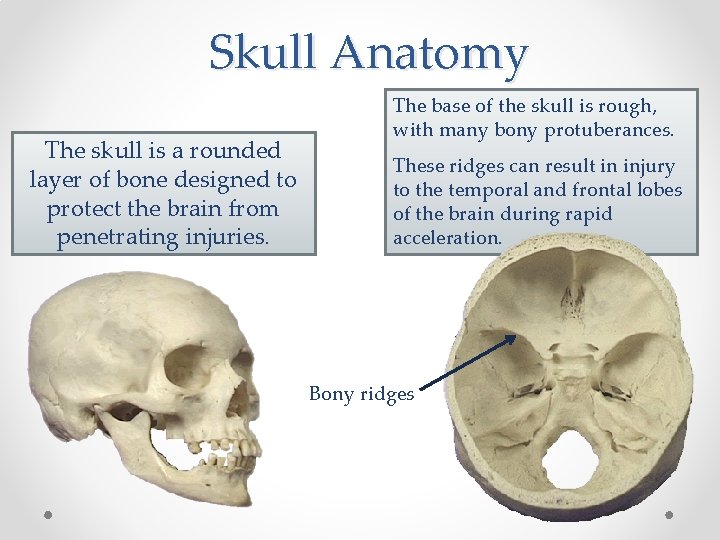
Skull Anatomy The skull is a rounded layer of bone designed to protect the brain from penetrating injuries. The base of the skull is rough, with many bony protuberances. These ridges can result in injury to the temporal and frontal lobes of the brain during rapid acceleration. Bony ridges
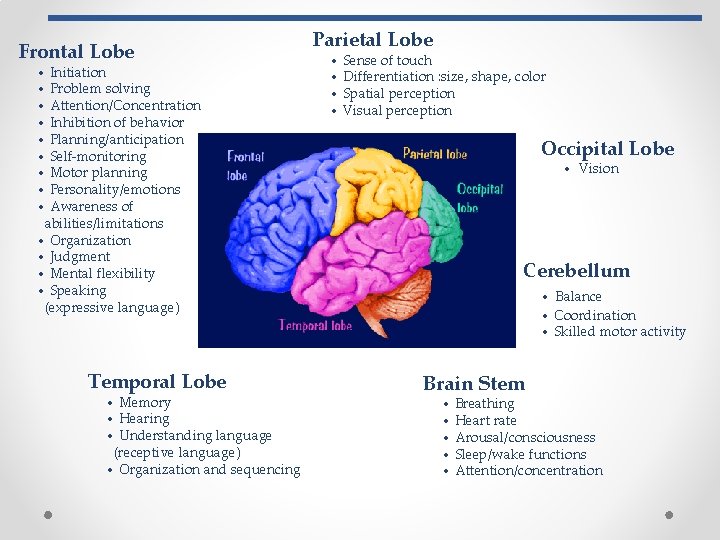
Frontal Lobe • Initiation • Problem solving • Attention/Concentration • Inhibition of behavior • Planning/anticipation • Self-monitoring • Motor planning • Personality/emotions • Awareness of abilities/limitations • Organization • Judgment • Mental flexibility • Speaking (expressive language) Temporal Lobe • Memory • Hearing • Understanding language (receptive language) • Organization and sequencing Parietal Lobe • Sense of touch • Differentiation : size, shape, color • Spatial perception • Visual perception Occipital Lobe • Vision Cerebellum • Balance • Coordination • Skilled motor activity Brain Stem • Breathing • Heart rate • Arousal/consciousness • Sleep/wake functions • Attention/concentration
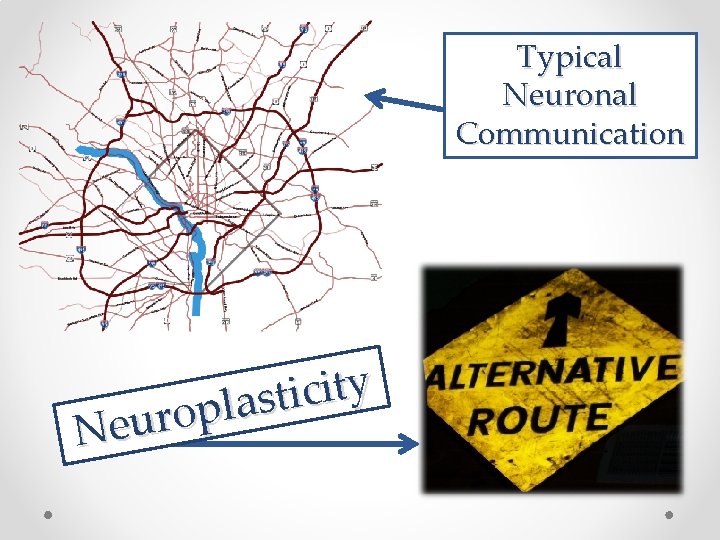
Typical Neuronal Communication y t i c i t s a l p o r u e N
Physical Changes • • • Headaches Changes in sleep patterns Fatigue Seizures Mobility – full body or partial Speech impairment Hearing (i. e. partial loss) Vision (i. e. blurred, loss of, light sensitivity, “double vision”, ) Taste/Smell Poor Balance Impaired coordination
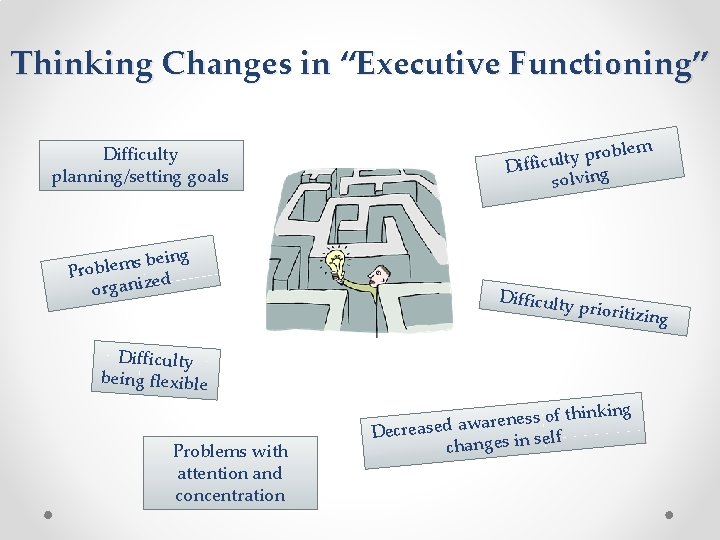
Thinking Changes in “Executive Functioning” Difficulty planning/setting goals being s m e l b o Pr ed organiz roblem p y t l u c Diffi solving Difficulty prioritizi ng Difficulty being flexible Problems with attention and concentration thinking f o s s e n e r a Decreased aw lf changes in se
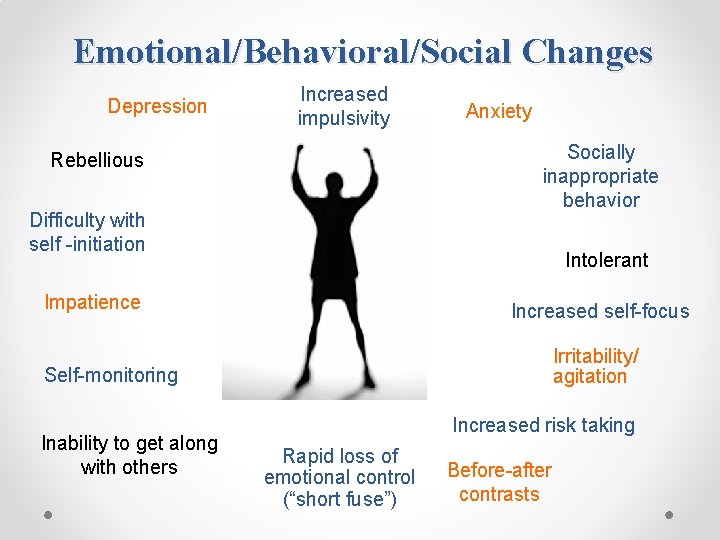
Emotional/Behavioral/Social Changes Depression Increased impulsivity Anxiety Socially inappropriate behavior Rebellious Difficulty with self -initiation Intolerant Impatience Increased self-focus Irritability/ agitation Self-monitoring Inability to get along with others Increased risk taking Rapid loss of emotional control (“short fuse”) Before-after contrasts
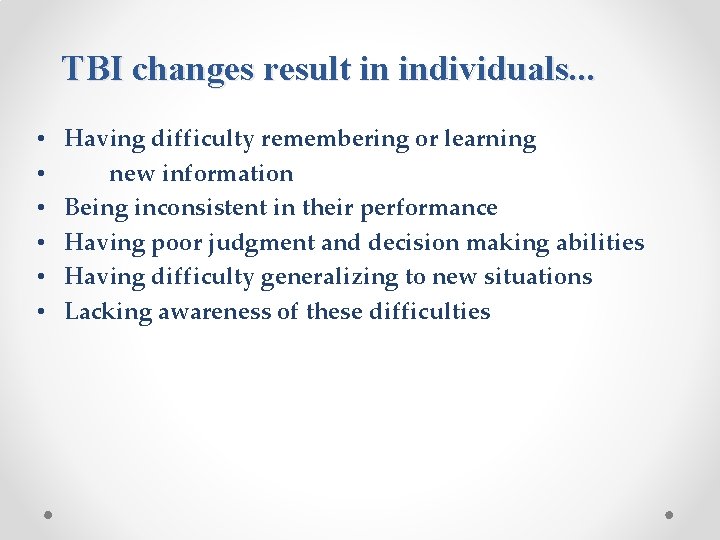
TBI changes result in individuals. . . • • • Having difficulty remembering or learning new information Being inconsistent in their performance Having poor judgment and decision making abilities Having difficulty generalizing to new situations Lacking awareness of these difficulties
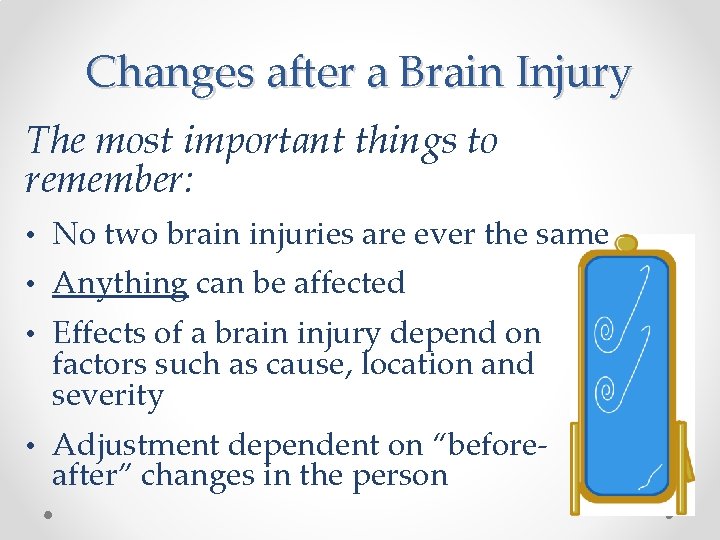
Changes after a Brain Injury The most important things to remember: • No two brain injuries are ever the same • Anything can be affected • Effects of a brain injury depend on factors such as cause, location and severity • Adjustment dependent on “before- after” changes in the person
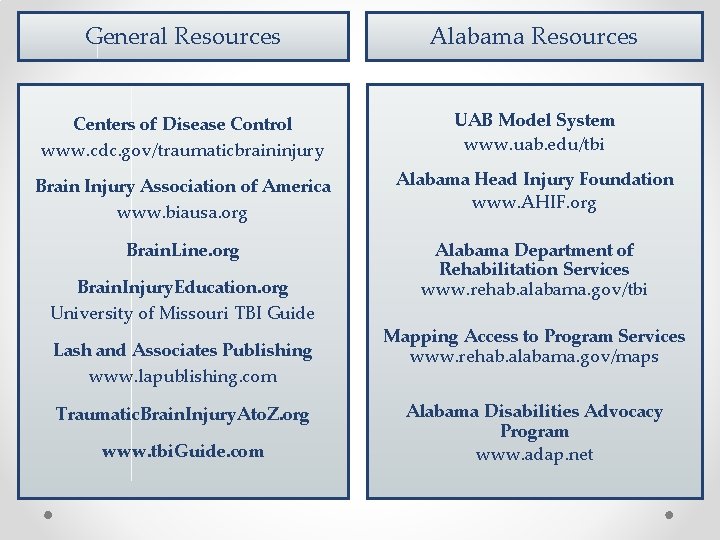
General Resources Alabama Resources Centers of Disease Control www. cdc. gov/traumaticbraininjury UAB Model System www. uab. edu/tbi Brain Injury Association of America www. biausa. org Alabama Head Injury Foundation www. AHIF. org Brain. Line. org Alabama Department of Rehabilitation Services www. rehab. alabama. gov/tbi Brain. Injury. Education. org University of Missouri TBI Guide Lash and Associates Publishing www. lapublishing. com Traumatic. Brain. Injury. Ato. Z. org www. tbi. Guide. com Mapping Access to Program Services www. rehab. alabama. gov/maps Alabama Disabilities Advocacy Program www. adap. net
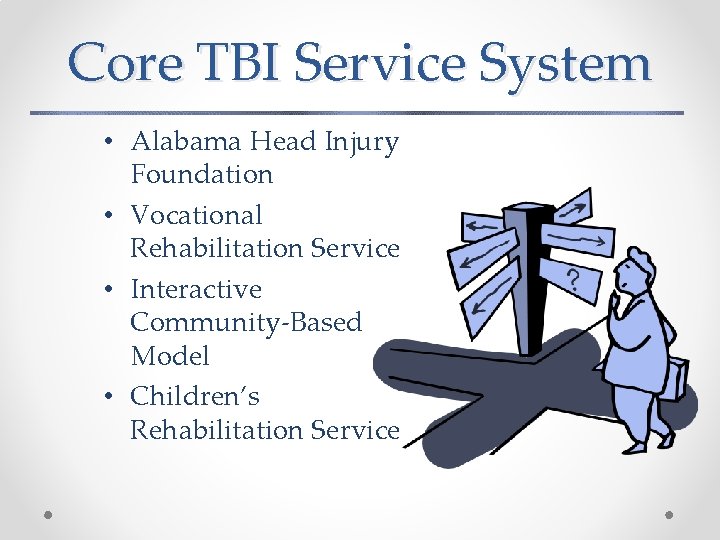
Core TBI Service System • Alabama Head Injury Foundation • Vocational Rehabilitation Service • Interactive Community-Based Model • Children’s Rehabilitation Service
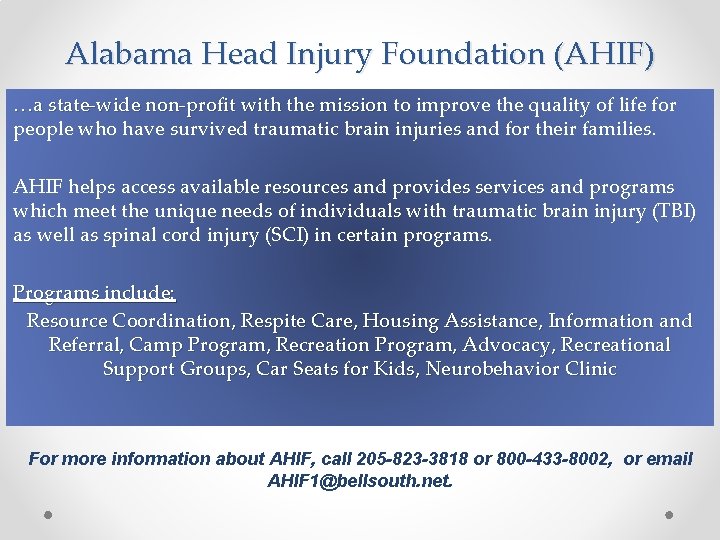
Alabama Head Injury Foundation (AHIF) …a state-wide non-profit with the mission to improve the quality of life for people who have survived traumatic brain injuries and for their families. AHIF helps access available resources and provides services and programs which meet the unique needs of individuals with traumatic brain injury (TBI) as well as spinal cord injury (SCI) in certain programs. Programs include: Resource Coordination, Respite Care, Housing Assistance, Information and Referral, Camp Program, Recreation Program, Advocacy, Recreational Support Groups, Car Seats for Kids, Neurobehavior Clinic For more information about AHIF, call 205 -823 -3818 or 800 -433 -8002, or email AHIF 1@bellsouth. net.
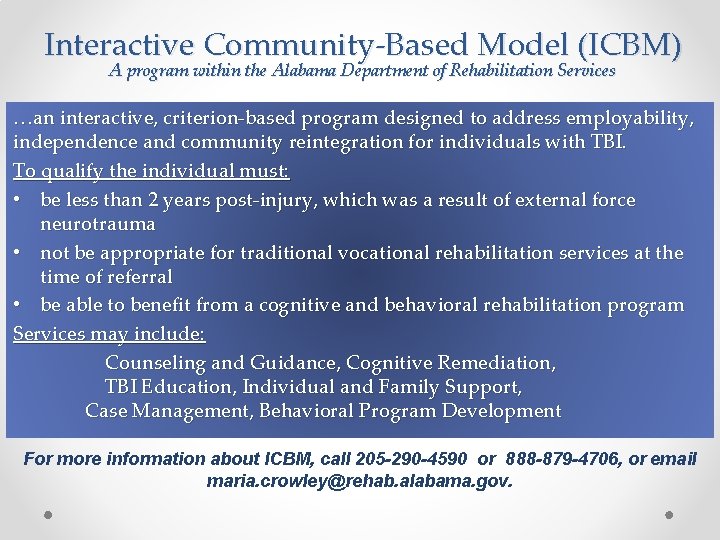
Interactive Community-Based Model (ICBM) A program within the Alabama Department of Rehabilitation Services …an interactive, criterion-based program designed to address employability, independence and community reintegration for individuals with TBI. To qualify the individual must: • be less than 2 years post-injury, which was a result of external force neurotrauma • not be appropriate for traditional vocational rehabilitation services at the time of referral • be able to benefit from a cognitive and behavioral rehabilitation program Services may include: Counseling and Guidance, Cognitive Remediation, TBI Education, Individual and Family Support, Case Management, Behavioral Program Development For more information about ICBM, call 205 -290 -4590 or 888 -879 -4706, or email maria. crowley@rehab. alabama. gov.
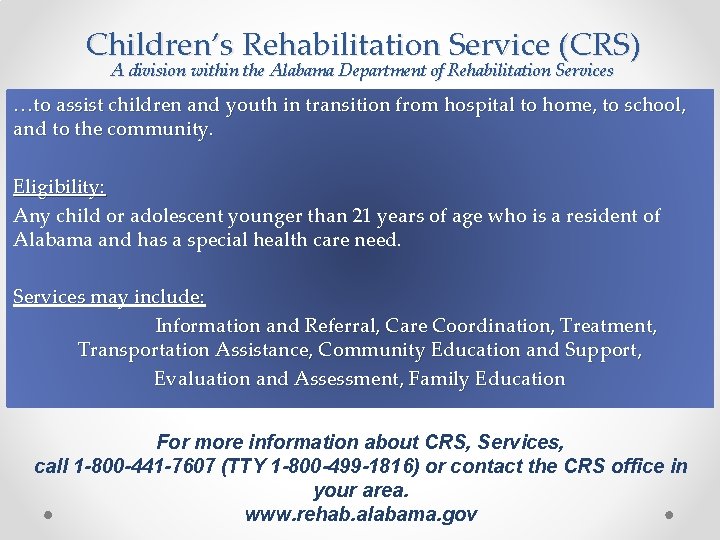
Children’s Rehabilitation Service (CRS) A division within the Alabama Department of Rehabilitation Services …to assist children and youth in transition from hospital to home, to school, and to the community. Eligibility: Any child or adolescent younger than 21 years of age who is a resident of Alabama and has a special health care need. Services may include: Information and Referral, Care Coordination, Treatment, Transportation Assistance, Community Education and Support, Evaluation and Assessment, Family Education For more information about CRS, Services, call 1 -800 -441 -7607 (TTY 1 -800 -499 -1816) or contact the CRS office in your area. www. rehab. alabama. gov
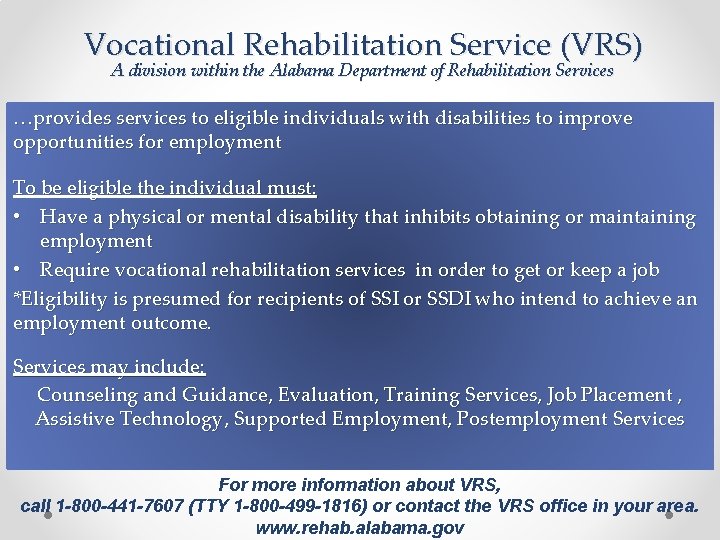
Vocational Rehabilitation Service (VRS) A division within the Alabama Department of Rehabilitation Services …provides services to eligible individuals with disabilities to improve opportunities for employment To be eligible the individual must: • Have a physical or mental disability that inhibits obtaining or maintaining employment • Require vocational rehabilitation services in order to get or keep a job *Eligibility is presumed for recipients of SSI or SSDI who intend to achieve an employment outcome. Services may include: Counseling and Guidance, Evaluation, Training Services, Job Placement , Assistive Technology, Supported Employment, Postemployment Services For more information about VRS, call 1 -800 -441 -7607 (TTY 1 -800 -499 -1816) or contact the VRS office in your area. www. rehab. alabama. gov
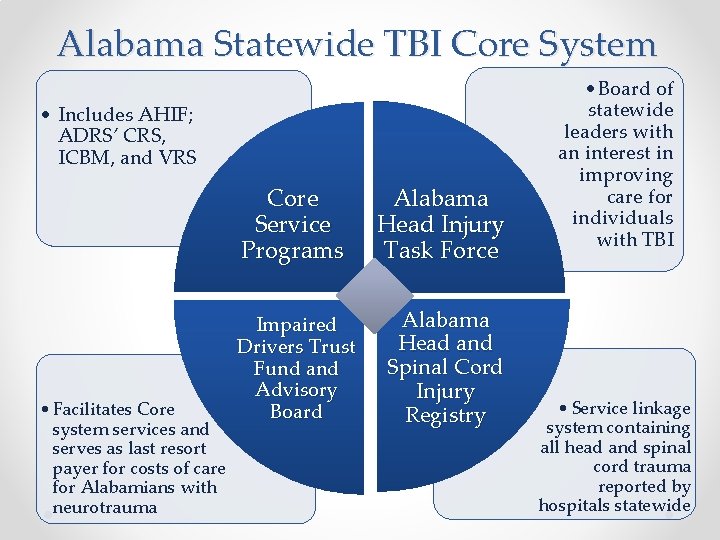
Alabama Statewide TBI Core System • Includes AHIF; ADRS’ CRS, ICBM, and VRS • Facilitates Core system services and serves as last resort payer for costs of care for Alabamians with neurotrauma Core Service Programs Alabama Head Injury Task Force Impaired Drivers Trust Fund and Advisory Board Alabama Head and Spinal Cord Injury Registry • Board of statewide leaders with an interest in improving care for individuals with TBI • Service linkage system containing all head and spinal cord trauma reported by hospitals statewide
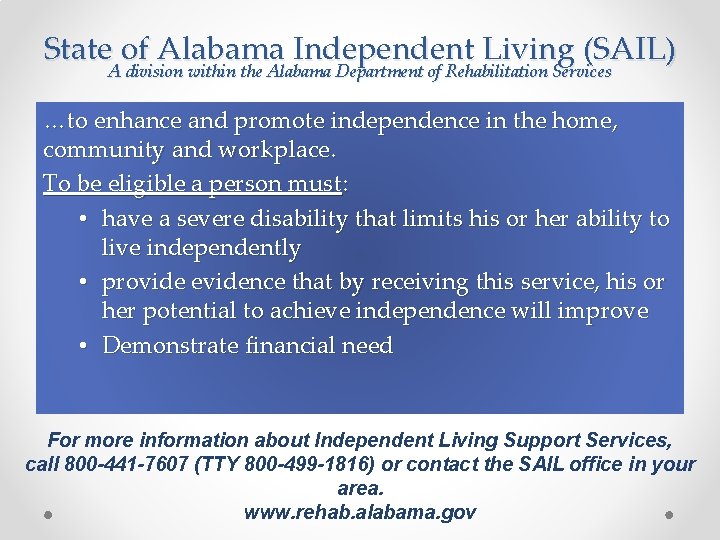
State of Alabama Independent Living (SAIL) A division within the Alabama Department of Rehabilitation Services …to enhance and promote independence in the home, community and workplace. To be eligible a person must: • have a severe disability that limits his or her ability to live independently • provide evidence that by receiving this service, his or her potential to achieve independence will improve • Demonstrate financial need For more information about Independent Living Support Services, call 800 -441 -7607 (TTY 800 -499 -1816) or contact the SAIL office in your area. www. rehab. alabama. gov
Core System Contacts Maria Crowley State Head Injury Coordinator 205 -290 -4590 or 888 -879 -4706 maria. crowley@rehab. alabama. gov www. rehab. alabama. gov/tbi Alabama Head Injury Foundation 205 -823 -3818 or 800 -433 -8002 ahif 1@bellsouth. net www. ahif. org
Supported in part by ALH 21 MC 06738 from the Department of Health and Human Services Health Resources and Services Administration, Maternal and Child Health Bureau. The contents are the sole responsibility of the authors and do not necessarily represent the official views of DHHS.
References 1 Faul M, Xu L, Wald MM, Coronado VG. Traumatic brain injury in the United States: emergency department visits, hospitalizations, and deaths. Atlanta (GA): Centers for Disease Control and Prevention, National Center for Injury Prevention and Control; 2010 ; www. cdc. gov/Traumatic. Brain. Injury 2 “Traumatic Brain Injury Provider Training Manual”. TBI Project. Michigan Department of Community Health. 2005. 3 "Traumatic Brain Injury Model Systems National Database Update". Traumatic Brain Injury Model Systems National Data and Statistical Center. www. tbindsc. org. 2011. 4 “BIAA Adopts New TBI Definition. ” www. biausa. org. Feb 6 2011. 5 "Traumatic brain injury. " Mayo Clinic Staff. www. Mayo. Clinic. com. Mayo Foundation for Medical Education and Research. Sep 16, 2010. 6 "Injury Prevention & Control: Traumatic Brain Injury. " Centers for Disease Control and Prevention. www. cdc. gov. Sep 21, 2011. 7 National Institute on Disability and Rehabilitation Research; www 2. ed. gov.
- Slides: 31