
Traumatic Brain Injury and the Geriatric Patient Christine

Traumatic Brain Injury and the Geriatric Patient Christine Toevs, MD Trauma Medical Director
NOTHING TO DISCLOSE
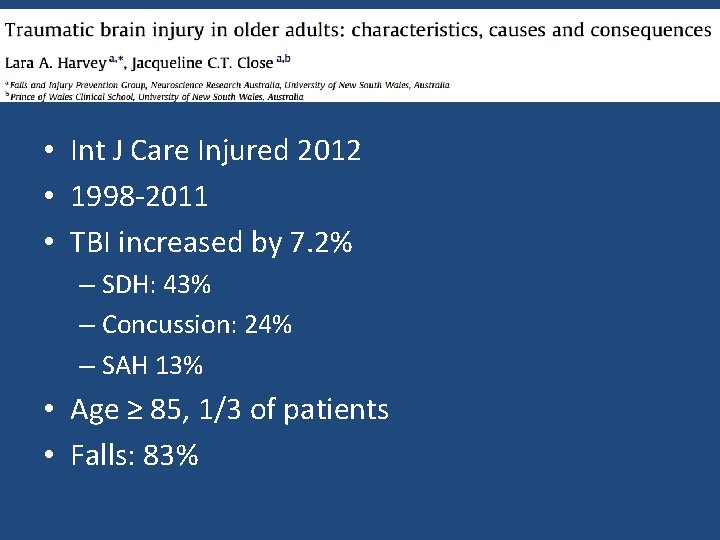
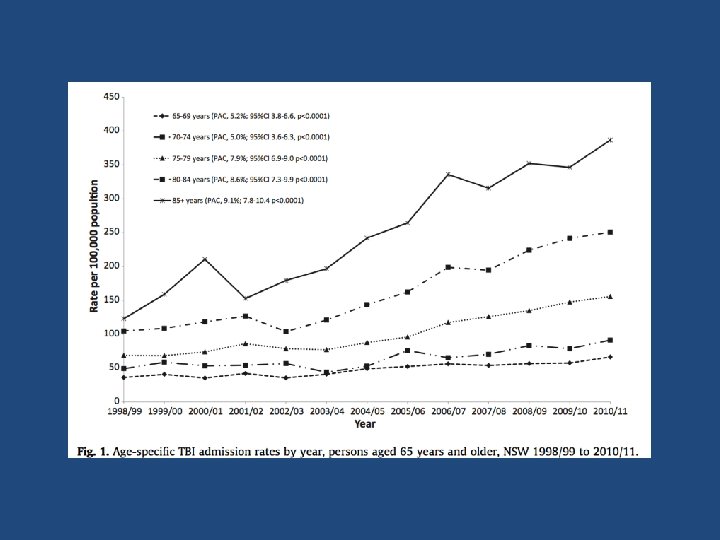
• Int J Care Injured 2012 • 1998 -2011 • TBI increased by 7. 2% – SDH: 43% – Concussion: 24% – SAH 13% • Age ≥ 85, 1/3 of patients • Falls: 83%
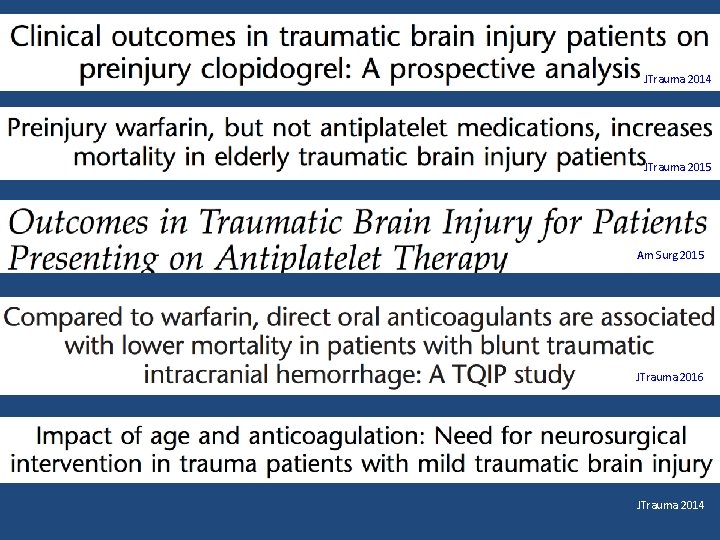
JTrauma 2014 JTrauma 2015 Am Surg 2015 JTrauma 2016 JTrauma 2014
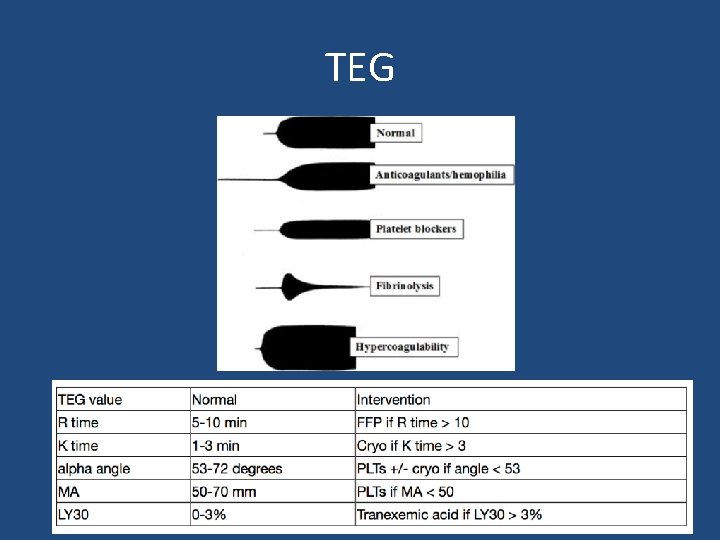
TEG
• • J Head Trauma Rehab 2014 2006 -2009: 16, 936 patients with TBI 6 fold increase in hemorrhagic stroke Smaller increase in ischemic stroke • Other studies have suggested 6 -10 fold higher risk for a year following TBI
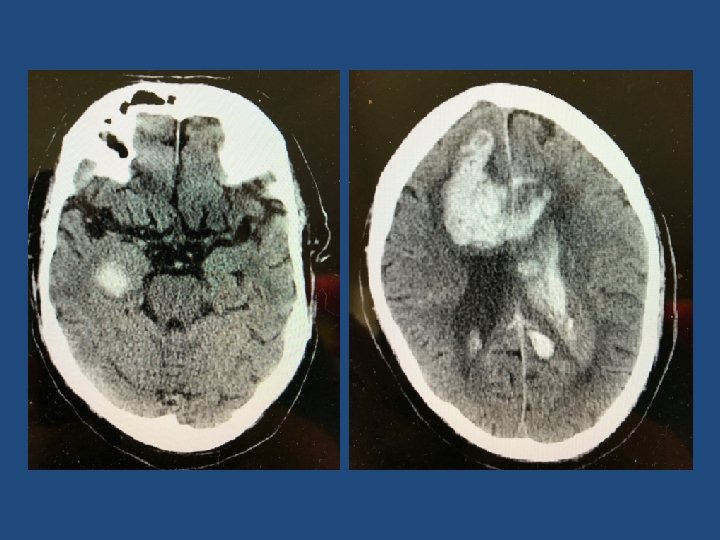
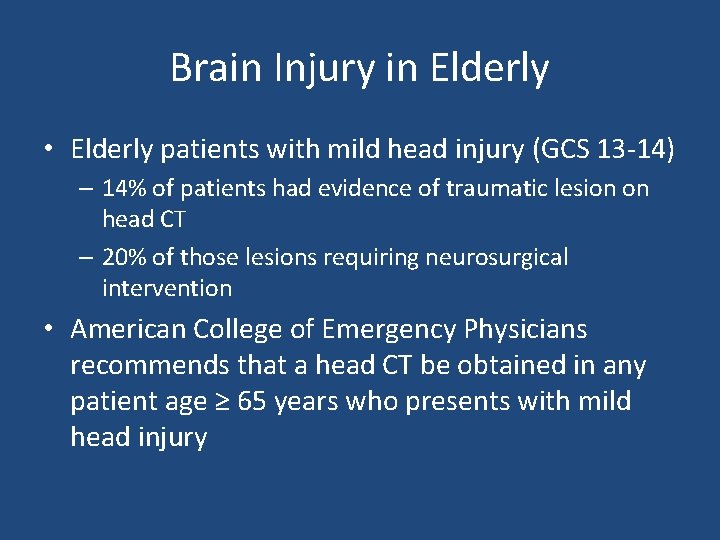
Brain Injury in Elderly • Elderly patients with mild head injury (GCS 13 -14) – 14% of patients had evidence of traumatic lesion on head CT – 20% of those lesions requiring neurosurgical intervention • American College of Emergency Physicians recommends that a head CT be obtained in any patient age ≥ 65 years who presents with mild head injury
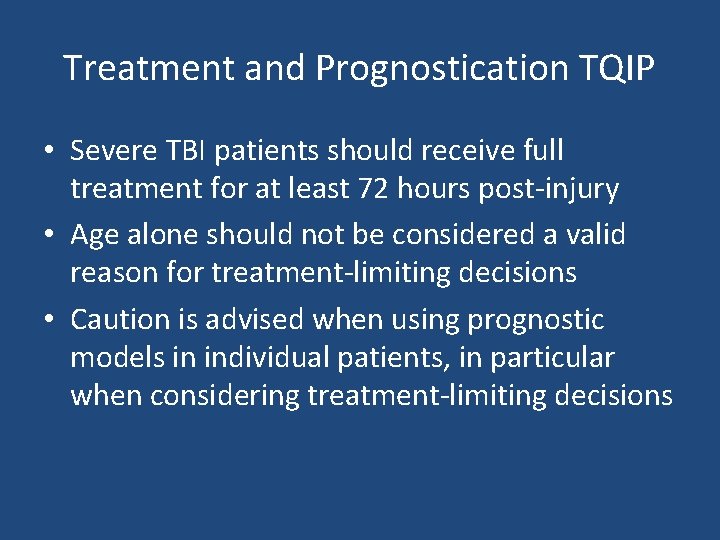
Treatment and Prognostication TQIP • Severe TBI patients should receive full treatment for at least 72 hours post-injury • Age alone should not be considered a valid reason for treatment-limiting decisions • Caution is advised when using prognostic models in individual patients, in particular when considering treatment-limiting decisions
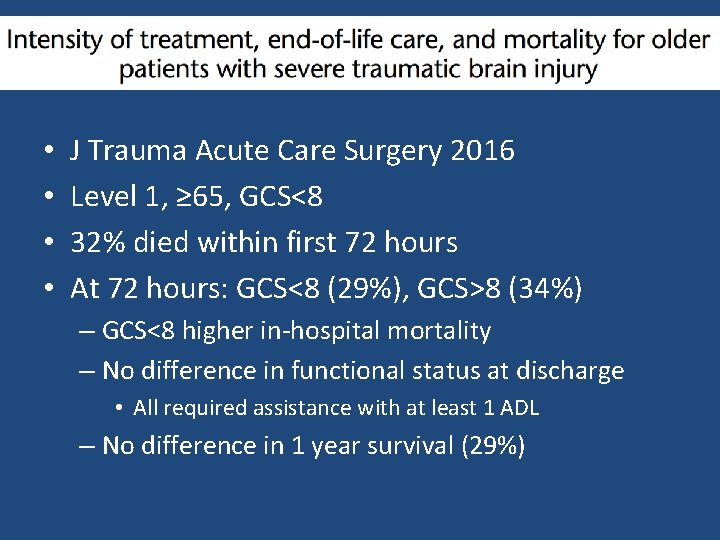
• • J Trauma Acute Care Surgery 2016 Level 1, ≥ 65, GCS<8 32% died within first 72 hours At 72 hours: GCS<8 (29%), GCS>8 (34%) – GCS<8 higher in-hospital mortality – No difference in functional status at discharge • All required assistance with at least 1 ADL – No difference in 1 year survival (29%)
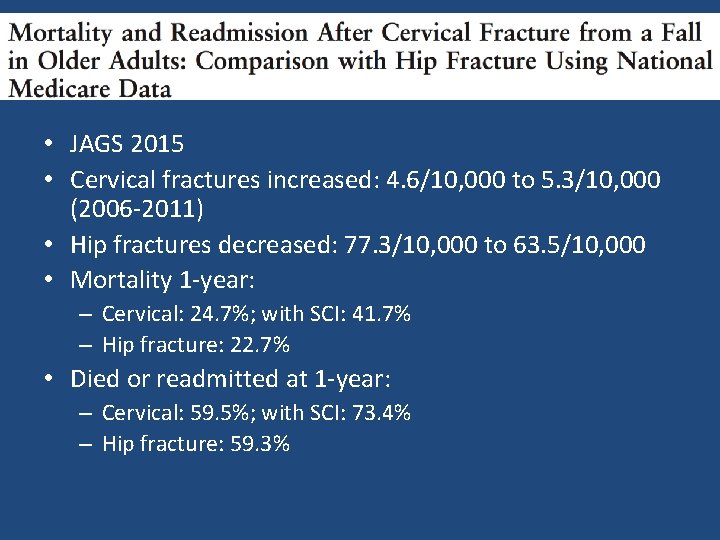
• JAGS 2015 • Cervical fractures increased: 4. 6/10, 000 to 5. 3/10, 000 (2006 -2011) • Hip fractures decreased: 77. 3/10, 000 to 63. 5/10, 000 • Mortality 1 -year: – Cervical: 24. 7%; with SCI: 41. 7% – Hip fracture: 22. 7% • Died or readmitted at 1 -year: – Cervical: 59. 5%; with SCI: 73. 4% – Hip fracture: 59. 3%
- Slides: 14