
TraumaResponsive Practices in Schools Group Norms Share what

- Slides: 61
Trauma-Responsive Practices in Schools
Group Norms ● Share what feels comfortable ● Be mindful of the impact of our words or stories on others ● Pay attention to yourself – color, use fidgets, stretch, stand up ● Take a break if needed ● Feel free to reach out in chat with reflections or questions ● Remember that we enter this space with varying levels of knowledge and understanding ● Personal experiences influence how we internalize information ● What else?
Share a reflection with the group of something that resonated with you from the training yesterday.
Key Learning Points • Introduction to Cultural Humility as a main tenet of trauma-informed practices • Challenge deficit mindset when implementing trauma-informed practices • Discuss strategies for deepening relationships that are compassionate and attuned to engage trauma-affected youth • Learn practices to foster a trauma-informed classroom (virtually or in-person) and school environment • Discuss trauma-informed strategies for supporting youth when schools re-open
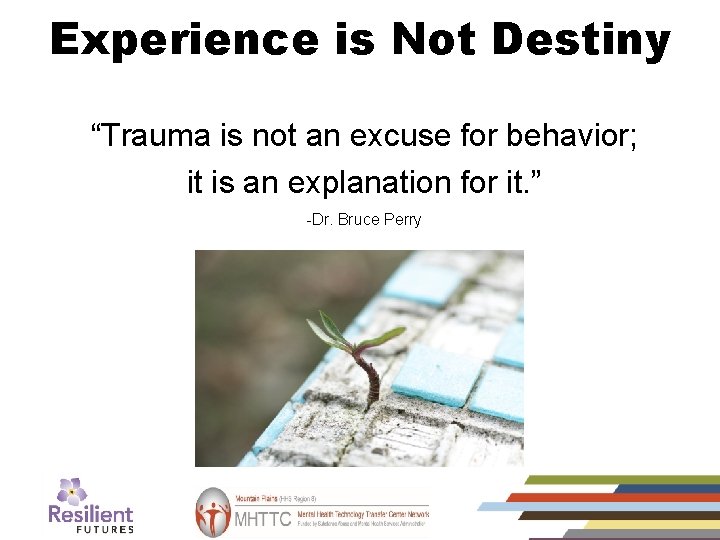
Experience is Not Destiny “Trauma is not an excuse for behavior; it is an explanation for it. ” -Dr. Bruce Perry
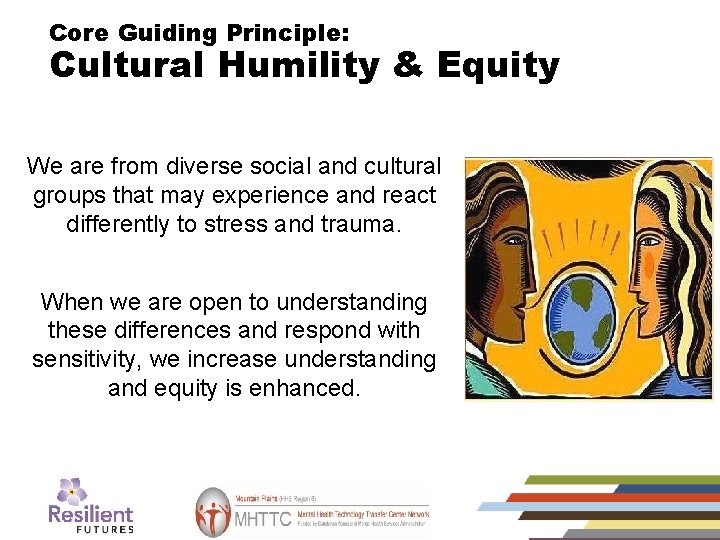
Core Guiding Principle: Cultural Humility & Equity We are from diverse social and cultural groups that may experience and react differently to stress and trauma. When we are open to understanding these differences and respond with sensitivity, we increase understanding and equity is enhanced.
Cultural Humility Video Credit: Vivian Chavez (2012), edited by W. B. Jordan (2015)
Cultural Humility Video Response Reflect and journal about the following questions: • Head – What did I learn? • Heart – What am I feeling? • Feet – What am I taking away? • Hand – What would I do different?
Dyadic Listening Guidelines 1. 2. 3. 4. The listener does not speak to interpret, paraphrase, analyze, give advice, or break in with a personal story. Confidentiality is maintained. The talker is not to criticize or complain about the listener or mutual acquaintances. Honor silence.
Dyad Share What resonated with you in this video?
Cultural Humility (2) “More than a concept, Cultural Humility is a process of communal reflection to analyze the root causes of suffering and create a broader, more inclusive view of the world. ” -Tervalon & Murray-Garcia, 1998
Cultural Humility (3) • Lifelong learning and critical self-reflection • Recognizing and changing power imbalances • Developing institutional accountability
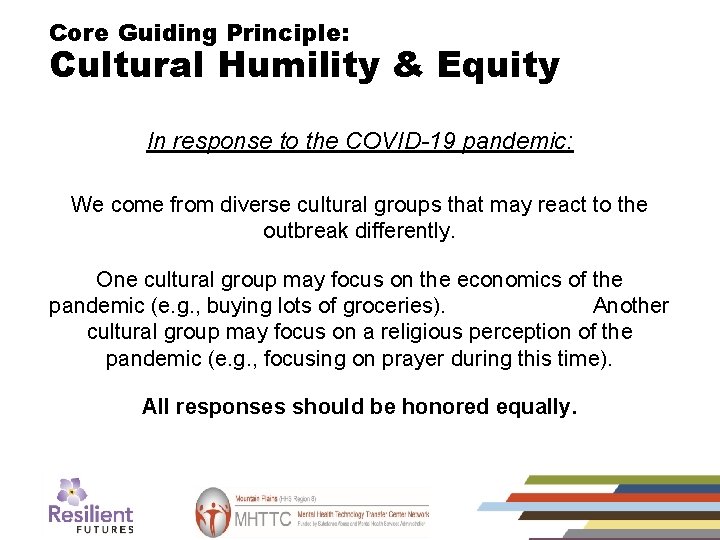
Core Guiding Principle: Cultural Humility & Equity (2) In response to the COVID-19 pandemic: We come from diverse cultural groups that may react to the outbreak differently. One cultural group may focus on the economics of the pandemic (e. g. , buying lots of groceries). Another cultural group may focus on a religious perception of the pandemic (e. g. , focusing on prayer during this time). All responses should be honored equally.
The Power of Story
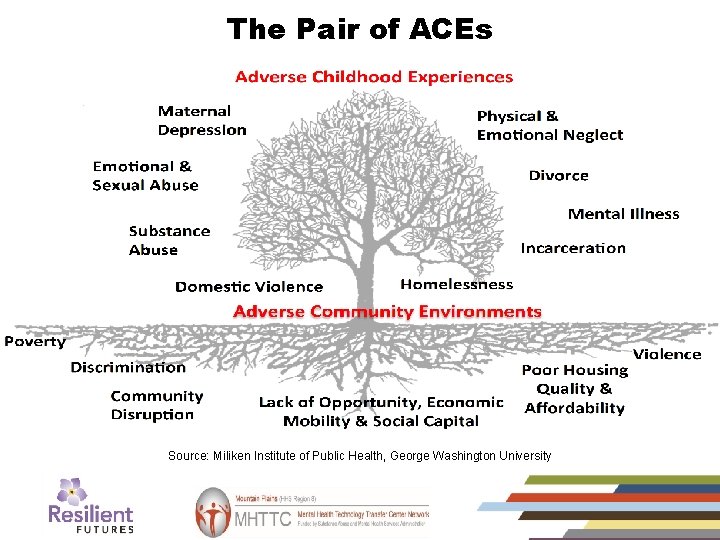
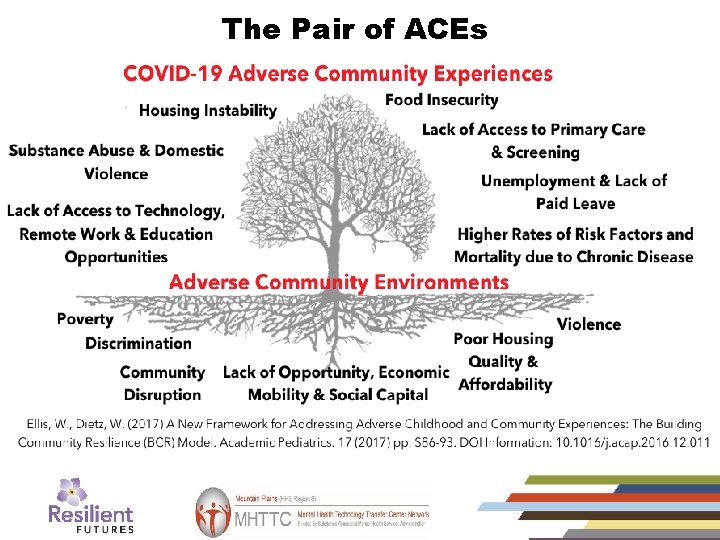
The Pair of ACEs Source: Miliken Institute of Public Health, George Washington University
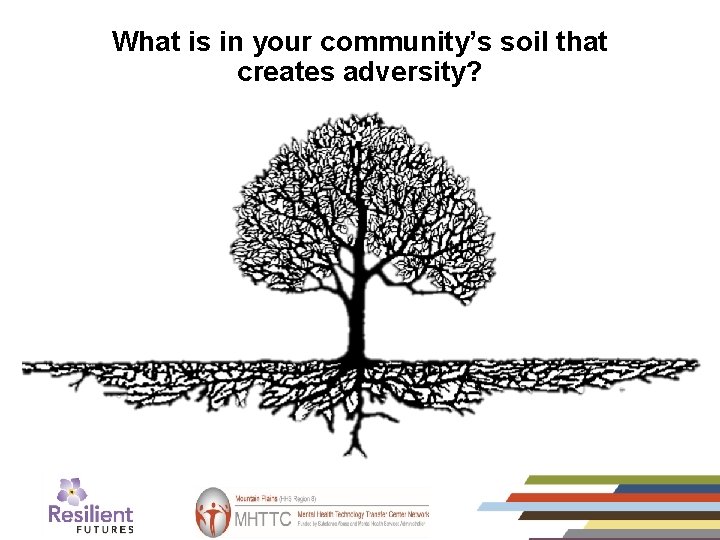
What is in your community’s soil that creates adversity?
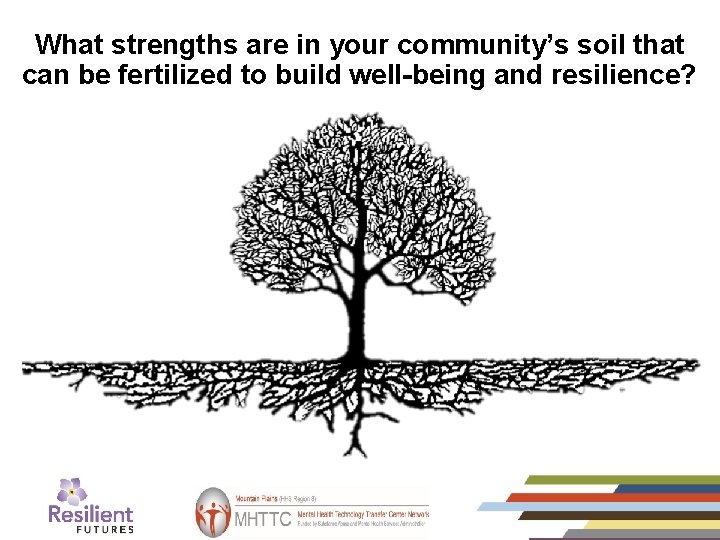
What strengths are in your community’s soil that can be fertilized to build well-being and resilience?
The Pair of ACEs.
Let’s Take a Break
Deficit Thinking Model • • Belief that students fail in school because of their own deficiencies Often attributed to parents/caregivers that do not value education (Garcia & Guerra, 2004)
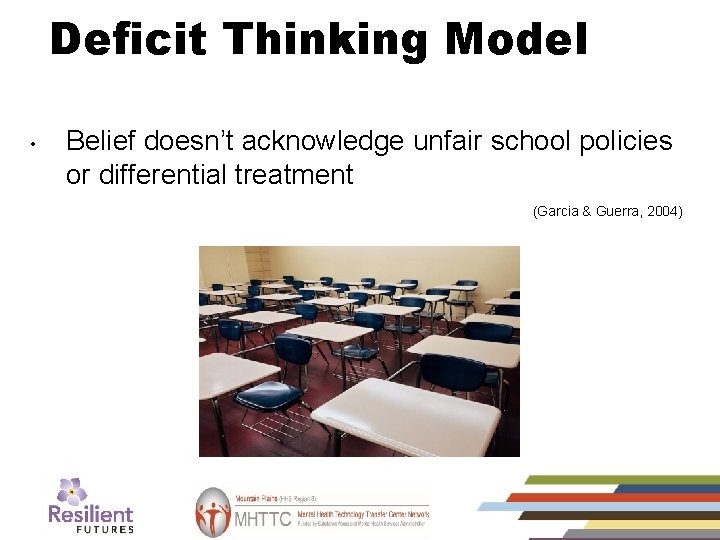
Deficit Thinking Model (2) • Belief doesn’t acknowledge unfair school policies or differential treatment (Garcia & Guerra, 2004)
The Power of Language
The Power of Language: Our Internal Dialogue
Classroom/School Application • Consistently engage in culturally responsive teaching practices • Know what pushes your buttons • Continually examine the role of bias a. Self-reflection b. Enlist an accountability partner
Critical Self-Reflection & Lifelong Learning Ongoing reflection is a cornerstone of learning. We know that when students, or any of us for that matter, are given time to reflect about what they’re doing or what they’re learning, they understand more fully why something is the way it is, not simply that it is.
Activity: Journal What pushes your buttons in a physical classroom? What pushes your buttons in a virtual classroom?
Let’s Take a Break.
Core Guiding Principle: Compassion & Dependability Trauma can leave us feeling isolated or betrayed, making it difficult to trust others. When we experience compassionate and dependable relationships, we re-establish trusting connections with others.
Core Guiding Principle: Compassion & Dependability (2) In response to the COVID-19 pandemic: The coronavirus outbreak can cause us to feel uncertainty and panic; social distancing can leave us feeling isolated and overwhelmed. These factors may make it difficult for us to feel like we can trust or depend on others. But without a sense of trust, we cannot feel compassion, and compassion is a key component to building connection and addressing trauma.
What is Compassion? In the classroom, it is the way you understand interact with your students to build strong connections. Fostering strong connections with students, between students, and in the school community builds resilience and readiness to learn!
What do we know about attachment? • Close personal bond between infant and caregiver that endures across time • Involved in modulating the stress-response system and emotional regulatory system • Fosters exploration and mastery, feelings of self-confidence, empathy, language development, reasoning processing, and the ability to manage and resolve conflict • Forms our foundations for relationships: it shapes the expectations (template) of what to expect of ourselves, and how to perceive the world
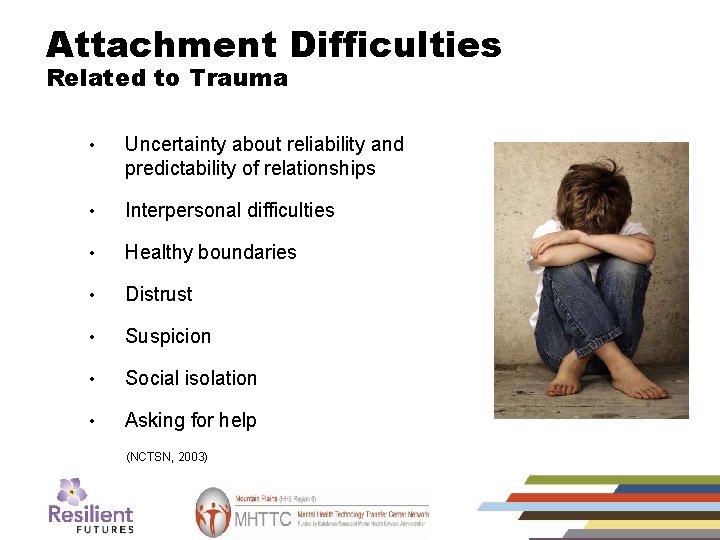
Attachment Difficulties Related to Trauma • Uncertainty about reliability and predictability of relationships • Interpersonal difficulties • Healthy boundaries • Distrust • Suspicion • Social isolation • Asking for help (NCTSN, 2003)
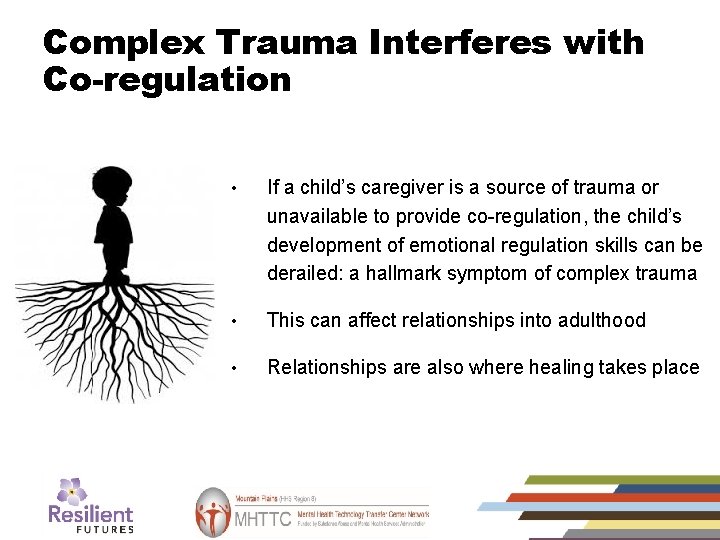
Complex Trauma Interferes with Co-regulation • If a child’s caregiver is a source of trauma or unavailable to provide co-regulation, the child’s development of emotional regulation skills can be derailed: a hallmark symptom of complex trauma • This can affect relationships into adulthood • Relationships are also where healing takes place
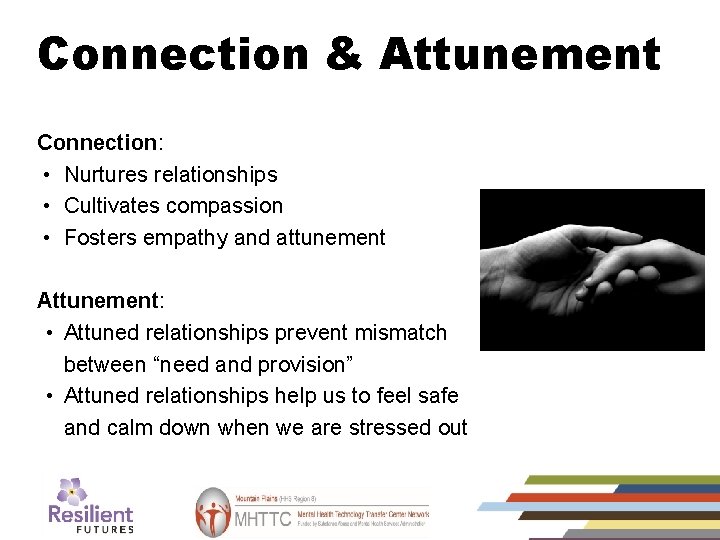
Connection & Attunement Connection: • Nurtures relationships • Cultivates compassion • Fosters empathy and attunement Attunement: • Attuned relationships prevent mismatch between “need and provision” • Attuned relationships help us to feel safe and calm down when we are stressed out
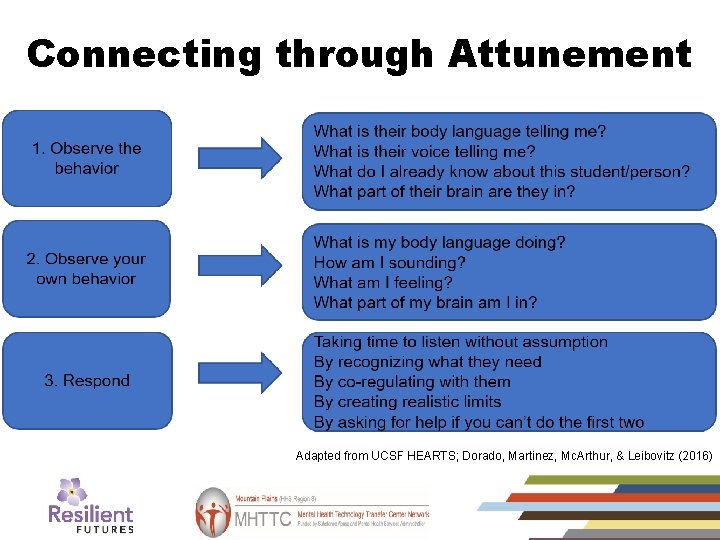
Connecting through Attunement Adapted from UCSF HEARTS; Dorado, Martinez, Mc. Arthur, & Leibovitz (2016)
Activity (2) In small groups, read the vignette and answer the questions on the handout.
Let’s Take a Break. .
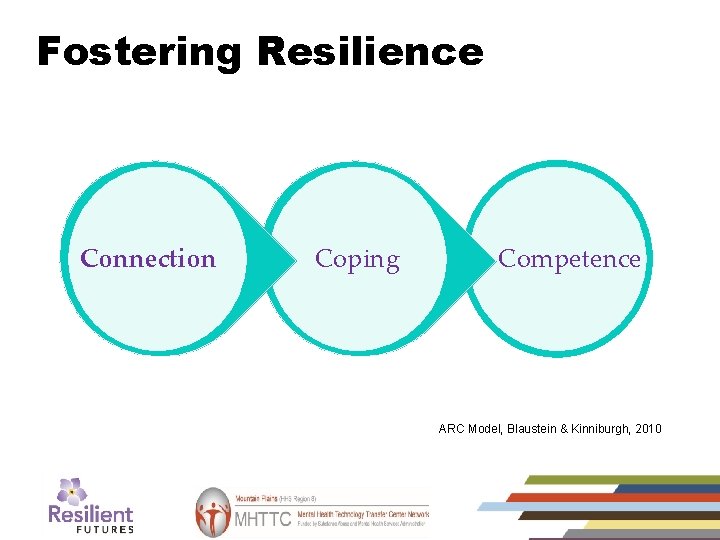
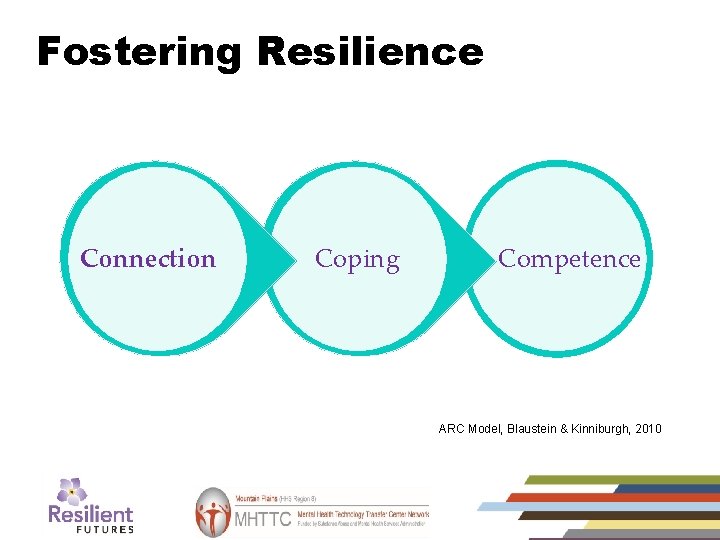
Fostering Resilience Connection Coping Competence ARC Model, Blaustein & Kinniburgh, 2010
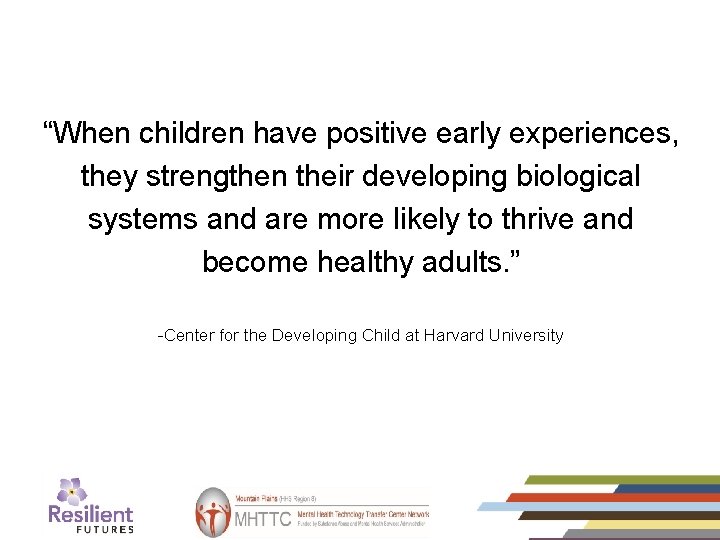
“When children have positive early experiences, they strengthen their developing biological systems and are more likely to thrive and become healthy adults. ” -Center for the Developing Child at Harvard University
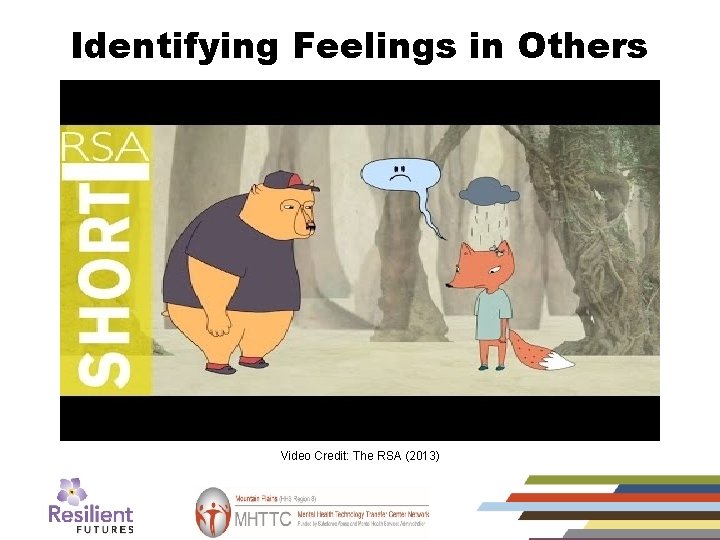
Identifying Feelings in Others Video Credit: The RSA (2013)
Connection Circles A relationship-building process to promote safety through predictability and sharing of experiences Connection Circle Leader: • Introduce the circle • Uphold co-created group norms • Ask a question to the group • Actively listen and model group norms • Allow a pass – go back around • Close circle and thank everyone for their participation
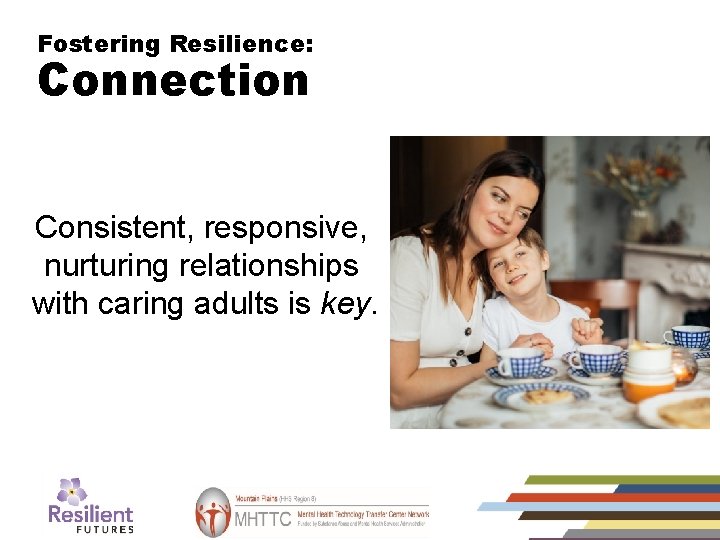
Fostering Resilience: Connection Consistent, responsive, nurturing relationships with caring adults is key.
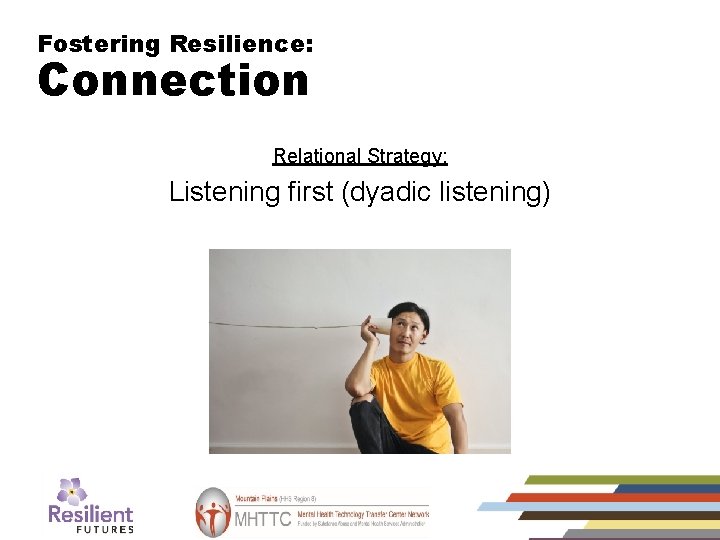
Fostering Resilience: Connection (2) Relational Strategy: Listening first (dyadic listening)
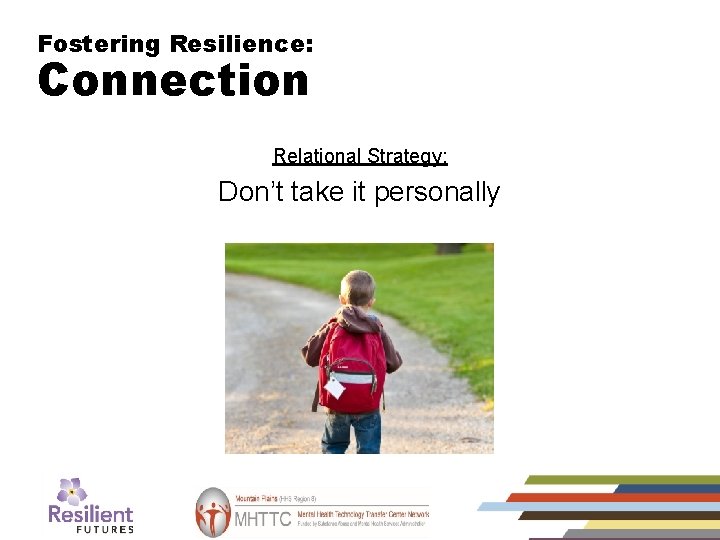
Fostering Resilience: Connection (3) Relational Strategy: Don’t take it personally
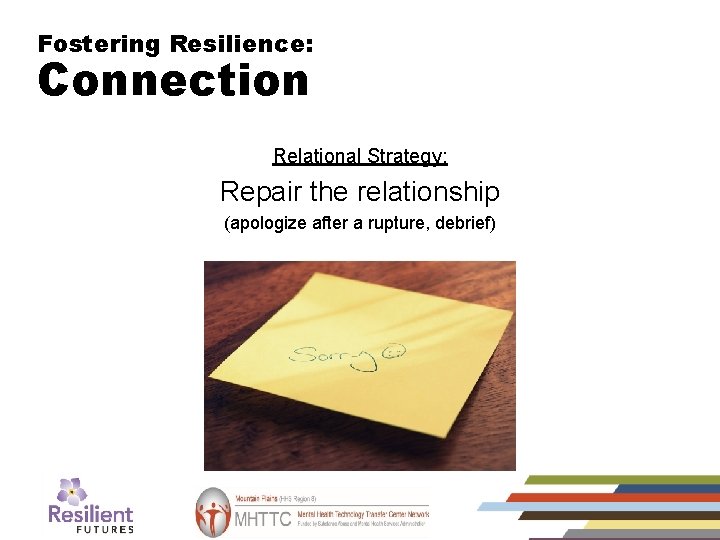
Fostering Resilience: Connection (4) Relational Strategy: Repair the relationship (apologize after a rupture, debrief)
Cultural Humility & Connection • Authentic connection requires a lens of cultural humility • Being curious
Let’s Take a Break…
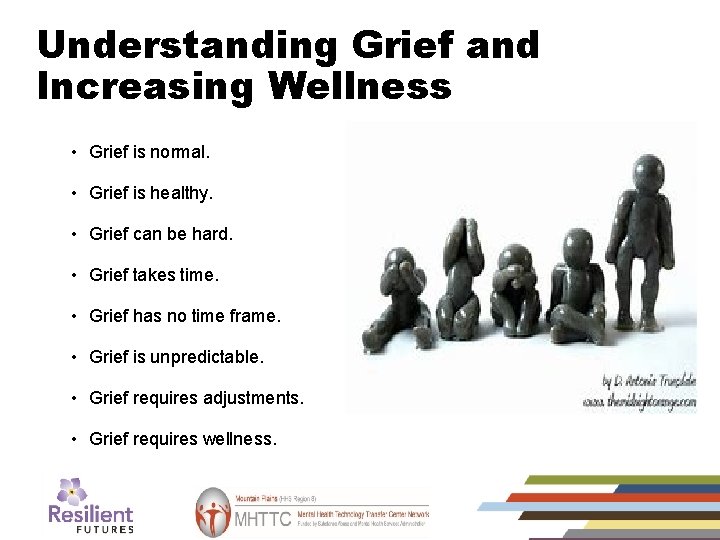
Understanding Grief and Increasing Wellness • Grief is normal. • Grief is healthy. • Grief can be hard. • Grief takes time. • Grief has no time frame. • Grief is unpredictable. • Grief requires adjustments. • Grief requires wellness.
What is Grief? Grief is the psychological-emotional experience following a loss of any kind (death, relationship, status, job, house, game, income, future, etc. ) - Psychology Today (2012)
How might grief show up? • Physical: trouble sleeping, feeling shaky, becoming dizzy or lightheaded, lack of air, experiencing exhaustion, lack of appetite or increased appetite • Emotional: feelings of guilt, anger, anxiety, or resentment, feeling helpless, being afraid, experiencing numbness • Behavioral: sudden or continuous crying, being withdrawn, experiencing panic attacks, substance use • Cognitive: vivid or realistic dreams, feeling confused, lacking the ability to concentrate, lacking sustained attention
Activity: Journal How is grief showing up for you?
The HEART of Trauma-Informed Teaching “…children (and adults) absorb and learn through observation, mirroring, and modeling. Educators who embody a trauma-informed, equity focused lens embody the qualities they wish to cultivate in youth – through their curious listening, caring words, and un-reactive actions. It’s not just what we teach, but how we teach it. ” And remember teaching and learning is FUN!!
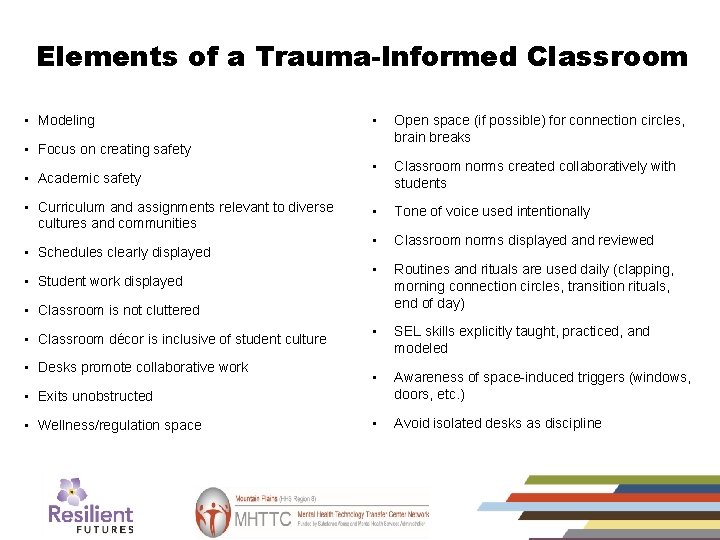
Elements of a Trauma-Informed Classroom • Modeling • Open space (if possible) for connection circles, brain breaks • Classroom norms created collaboratively with students • Tone of voice used intentionally • Classroom norms displayed and reviewed • Routines and rituals are used daily (clapping, morning connection circles, transition rituals, end of day) • SEL skills explicitly taught, practiced, and modeled • Awareness of space-induced triggers (windows, doors, etc. ) • Avoid isolated desks as discipline • Focus on creating safety • Academic safety • Curriculum and assignments relevant to diverse cultures and communities • Schedules clearly displayed • Student work displayed • Classroom is not cluttered • Classroom décor is inclusive of student culture • Desks promote collaborative work • Exits unobstructed • Wellness/regulation space
What are adaptations for a Virtual Trauma-Informed Classroom?
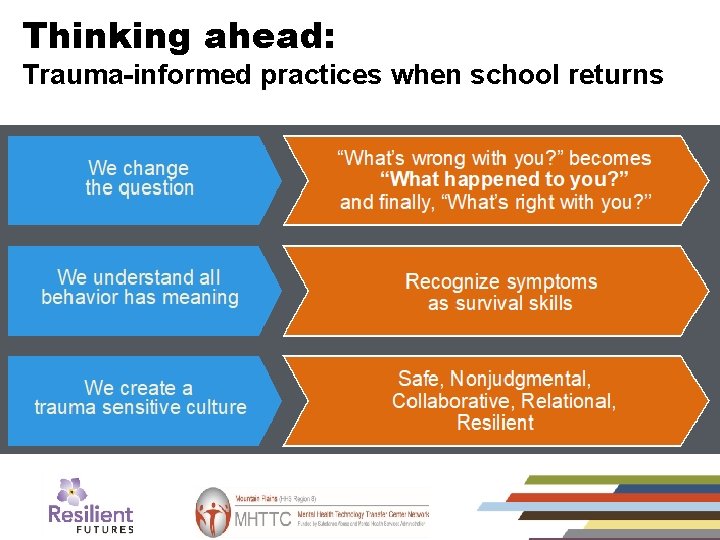
Thinking ahead: Trauma-informed practices when school returns
Fostering Resilience. Connection Coping Competence ARC Model, Blaustein & Kinniburgh, 2010
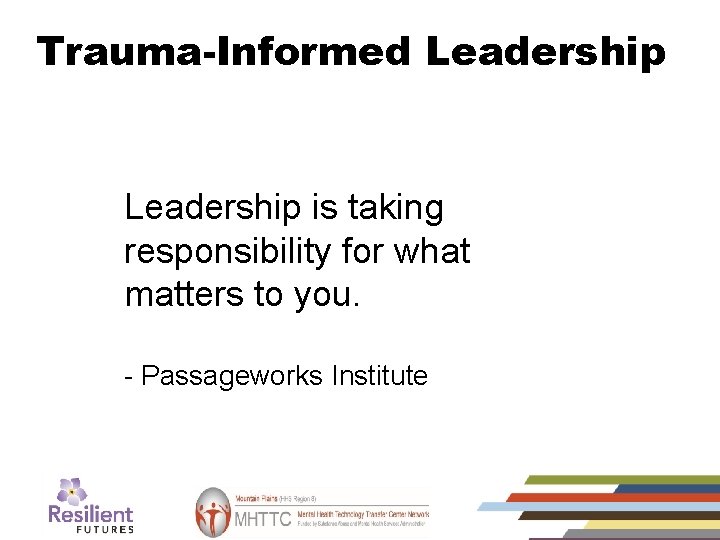
Trauma-Informed Leadership is taking responsibility for what matters to you. - Passageworks Institute
Panyee FC—Short Film Video Credit: Produced by Revolver Film (2011) for TMB Bank Public Company Ltd. , Thailand, Read Aloud by Lora Hodges
Megan Brennan, Psy. D megan. brennan@resilientfutures. us Laura Mc. Arthur, Ph. D laura. mcarthur@resilientfutures. us Visit us at resilientfutures. us