
Trauma StressorRelated Disorders Introduction to Trauma and Stressor
- Slides: 32
Trauma & Stressor-Related Disorders
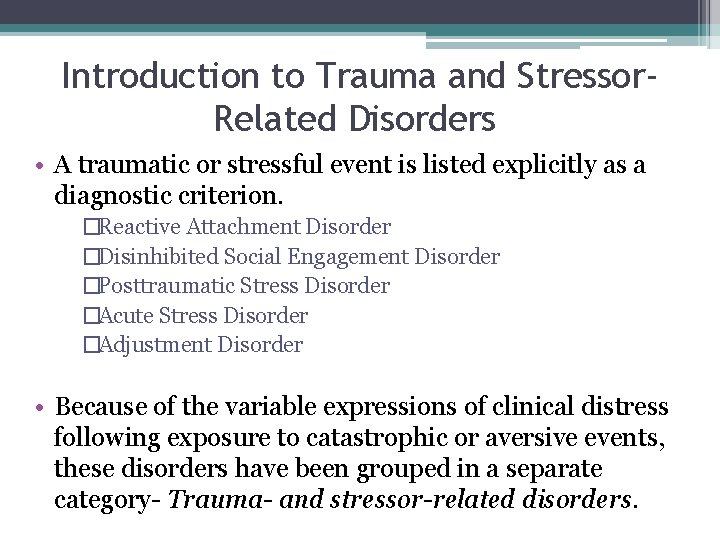
Introduction to Trauma and Stressor. Related Disorders • A traumatic or stressful event is listed explicitly as a diagnostic criterion. �Reactive Attachment Disorder �Disinhibited Social Engagement Disorder �Posttraumatic Stress Disorder �Acute Stress Disorder �Adjustment Disorder • Because of the variable expressions of clinical distress following exposure to catastrophic or aversive events, these disorders have been grouped in a separate category- Trauma- and stressor-related disorders.
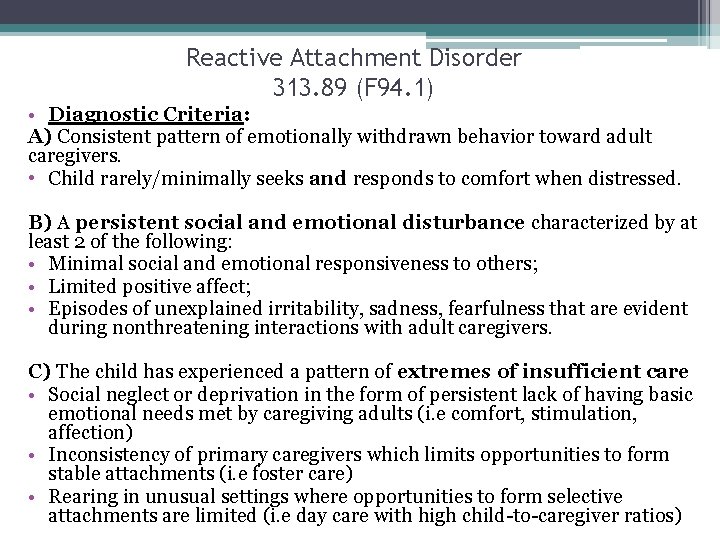
Reactive Attachment Disorder 313. 89 (F 94. 1) • Diagnostic Criteria: A) Consistent pattern of emotionally withdrawn behavior toward adult caregivers. • Child rarely/minimally seeks and responds to comfort when distressed. B) A persistent social and emotional disturbance characterized by at least 2 of the following: • Minimal social and emotional responsiveness to others; • Limited positive affect; • Episodes of unexplained irritability, sadness, fearfulness that are evident during nonthreatening interactions with adult caregivers. C) The child has experienced a pattern of extremes of insufficient care • Social neglect or deprivation in the form of persistent lack of having basic emotional needs met by caregiving adults (i. e comfort, stimulation, affection) • Inconsistency of primary caregivers which limits opportunities to form stable attachments (i. e foster care) • Rearing in unusual settings where opportunities to form selective attachments are limited (i. e day care with high child-to-caregiver ratios)
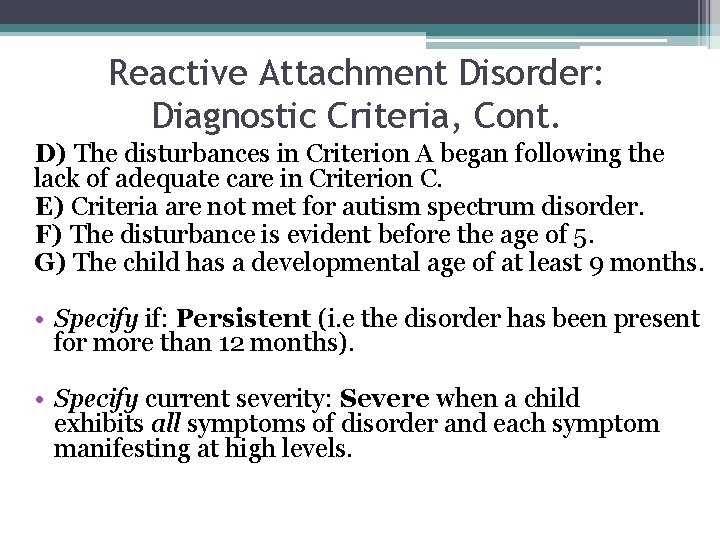
Reactive Attachment Disorder: Diagnostic Criteria, Cont. D) The disturbances in Criterion A began following the lack of adequate care in Criterion C. E) Criteria are not met for autism spectrum disorder. F) The disturbance is evident before the age of 5. G) The child has a developmental age of at least 9 months. • Specify if: Persistent (i. e the disorder has been present for more than 12 months). • Specify current severity: Severe when a child exhibits all symptoms of disorder and each symptom manifesting at high levels.
RAD, Continued. • Prevalence: • Unknown • Development and Course: • Conditions of social neglect �Seen rarely in clinical are often present in the first settings months of life in children with �Even in populations of RAD. severely neglected children, • Symptoms manifest between it occurs less than 10% ages of 9 months and 5 years. • Unclear whether RAD can occur in older children and how it's different from presentation in young children.
RAD: Risk and Prognostic Factors • Environmental: • Serious social neglect is a diagnostic requirement for RAD and is only known risk factor for the disorder. • *Majority of severely neglected children don't develop RAD. • Prognosis appears to depend on the quality of the caregiving environment following serious neglect.
RAD, CONTINUED. • Differential Diagnosis: • Autism Spectrum Disorder: Can be distinguished based on history of neglect: children with RAD will have severe social neglect & children with ASD rarely have a history of social neglect. • Intellectual Disability: often accompany RAD but shouldn't be confused with disorder. • Depressive Disorders: young children with depressive disorders still should seek and respond to comforting efforts by caregivers, which is a difficulty for children with RAD. • Comorbidity: • Conditions associated with neglect, (cognitive delays, language delays, and stereotypies) often co-occur with RAD. • Medical conditions (severe malnutrition) may co-occur with RAD. • Depressive symptoms also may co-occur with RAD.
Disinhibited Social Engagement Disorder 313. 89 (F 94. 2) • Diagnostic Criteria Includes: -A pattern of behavior in which a child actively approaches and interacts with unfamiliar adults and exhibits behaviors such as willingness to go off with unfamiliar adults and reduced reticence in approaching or interacting with unfamiliar adults. -The child has experienced a pattern of extremes of insufficient care as evidence by at least one of the following: social neglect, repeated changes of primary caregivers, or rearing in unusual settings (which results in the patterns of behavior explained above). -Child has a developmental age of at least 9 months. Specify: Severity. (Severe if child exhibits all symptoms of disorder, with each symptom manifesting at relatively high levels).
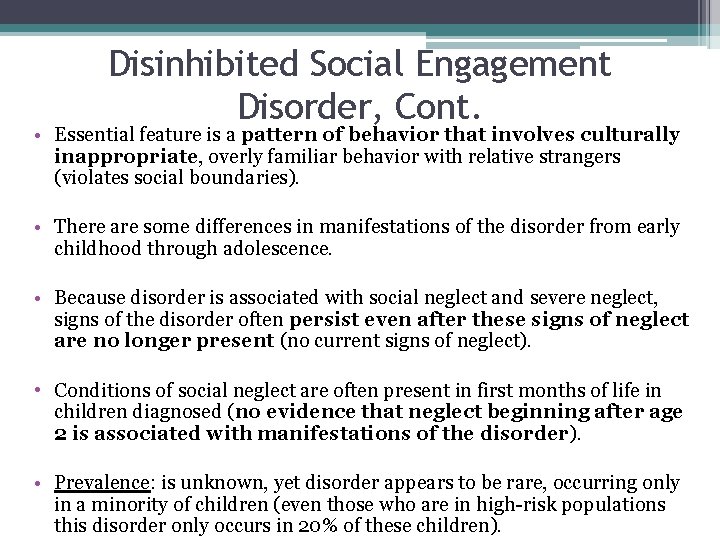
Disinhibited Social Engagement Disorder, Cont. • Essential feature is a pattern of behavior that involves culturally inappropriate, overly familiar behavior with relative strangers (violates social boundaries). • There are some differences in manifestations of the disorder from early childhood through adolescence. • Because disorder is associated with social neglect and severe neglect, signs of the disorder often persist even after these signs of neglect are no longer present (no current signs of neglect). • Conditions of social neglect are often present in first months of life in children diagnosed (no evidence that neglect beginning after age 2 is associated with manifestations of the disorder). • Prevalence: is unknown, yet disorder appears to be rare, occurring only in a minority of children (even those who are in high-risk populations this disorder only occurs in 20% of these children).
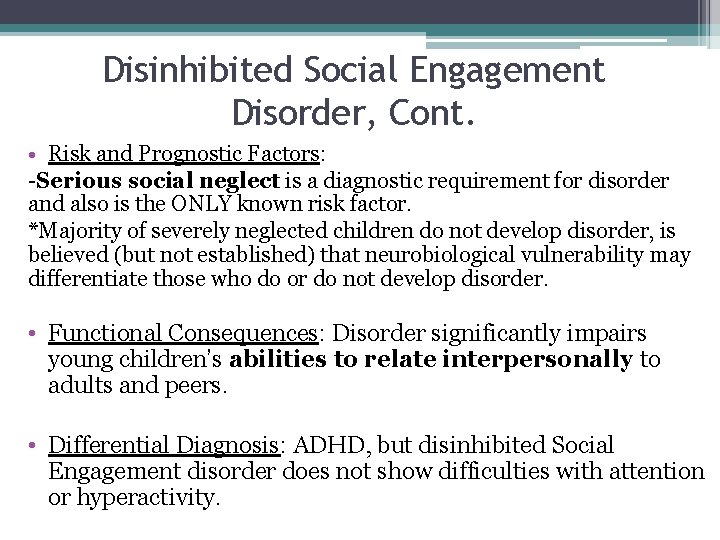
Disinhibited Social Engagement Disorder, Cont. • Risk and Prognostic Factors: -Serious social neglect is a diagnostic requirement for disorder and also is the ONLY known risk factor. *Majority of severely neglected children do not develop disorder, is believed (but not established) that neurobiological vulnerability may differentiate those who do or do not develop disorder. • Functional Consequences: Disorder significantly impairs young children’s abilities to relate interpersonally to adults and peers. • Differential Diagnosis: ADHD, but disinhibited Social Engagement disorder does not show difficulties with attention or hyperactivity.
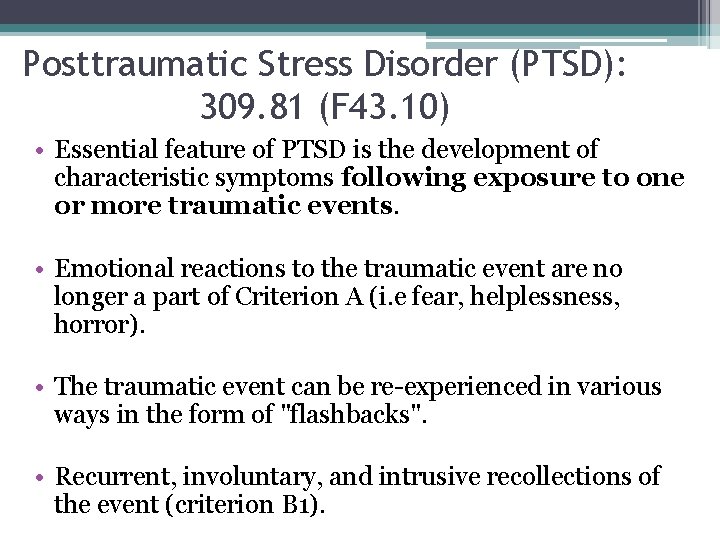
Posttraumatic Stress Disorder (PTSD): 309. 81 (F 43. 10) • Essential feature of PTSD is the development of characteristic symptoms following exposure to one or more traumatic events. • Emotional reactions to the traumatic event are no longer a part of Criterion A (i. e fear, helplessness, horror). • The traumatic event can be re-experienced in various ways in the form of "flashbacks". • Recurrent, involuntary, and intrusive recollections of the event (criterion B 1).
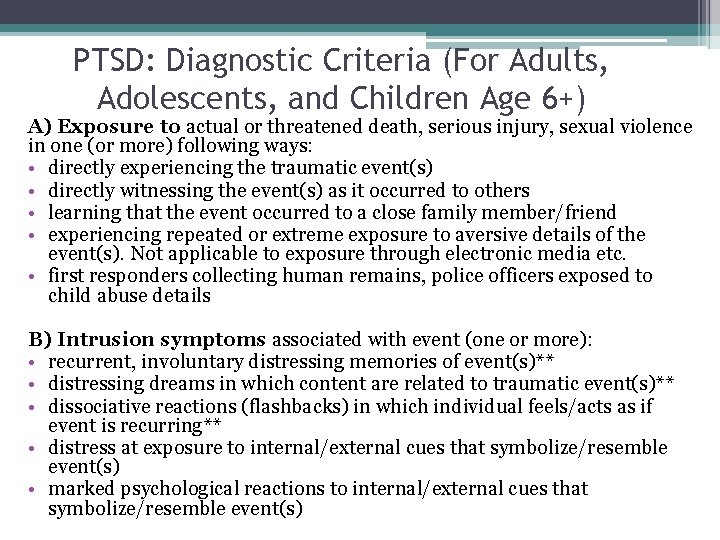
PTSD: Diagnostic Criteria (For Adults, Adolescents, and Children Age 6+) A) Exposure to actual or threatened death, serious injury, sexual violence in one (or more) following ways: • directly experiencing the traumatic event(s) • directly witnessing the event(s) as it occurred to others • learning that the event occurred to a close family member/friend • experiencing repeated or extreme exposure to aversive details of the event(s). Not applicable to exposure through electronic media etc. • first responders collecting human remains, police officers exposed to child abuse details B) Intrusion symptoms associated with event (one or more): • recurrent, involuntary distressing memories of event(s)** • distressing dreams in which content are related to traumatic event(s)** • dissociative reactions (flashbacks) in which individual feels/acts as if event is recurring** • distress at exposure to internal/external cues that symbolize/resemble event(s) • marked psychological reactions to internal/external cues that symbolize/resemble event(s)
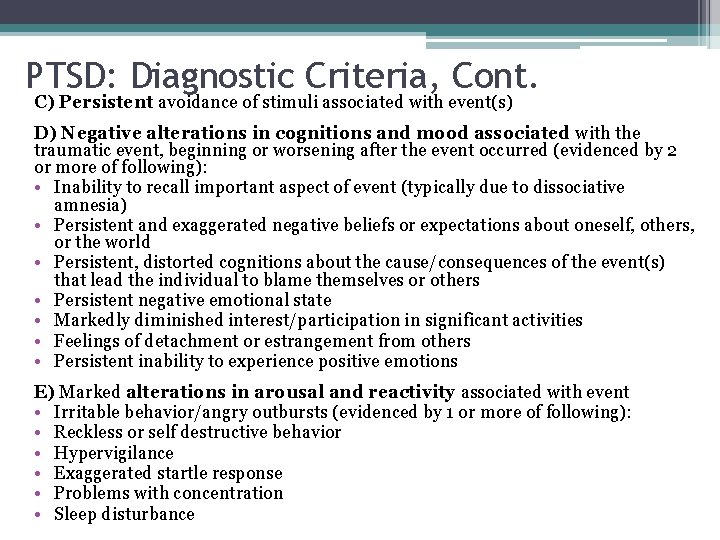
PTSD: Diagnostic Criteria, Cont. C) Persistent avoidance of stimuli associated with event(s) D) Negative alterations in cognitions and mood associated with the traumatic event, beginning or worsening after the event occurred (evidenced by 2 or more of following): • Inability to recall important aspect of event (typically due to dissociative amnesia) • Persistent and exaggerated negative beliefs or expectations about oneself, others, or the world • Persistent, distorted cognitions about the cause/consequences of the event(s) that lead the individual to blame themselves or others • Persistent negative emotional state • Markedly diminished interest/participation in significant activities • Feelings of detachment or estrangement from others • Persistent inability to experience positive emotions E) Marked alterations in arousal and reactivity associated with event • Irritable behavior/angry outbursts (evidenced by 1 or more of following): • Reckless or self destructive behavior • Hypervigilance • Exaggerated startle response • Problems with concentration • Sleep disturbance
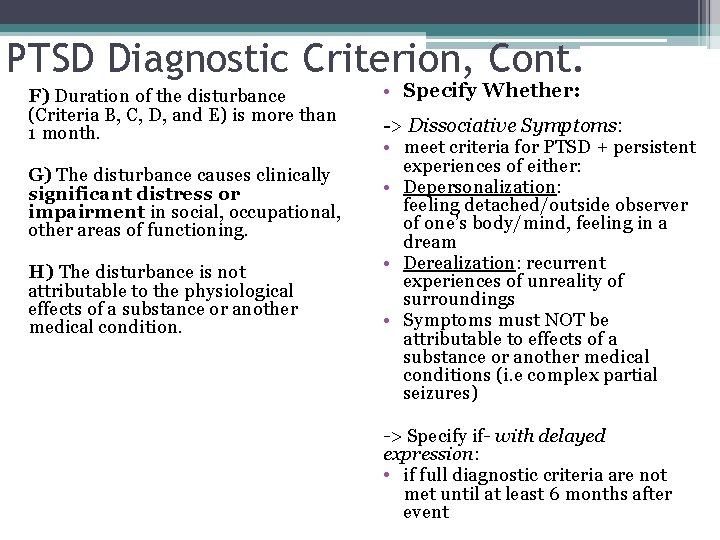
PTSD Diagnostic Criterion, Cont. F) Duration of the disturbance (Criteria B, C, D, and E) is more than 1 month. G) The disturbance causes clinically significant distress or impairment in social, occupational, other areas of functioning. H) The disturbance is not attributable to the physiological effects of a substance or another medical condition. • Specify Whether: -> Dissociative Symptoms: • meet criteria for PTSD + persistent experiences of either: • Depersonalization: feeling detached/outside observer of one’s body/mind, feeling in a dream • Derealization: recurrent experiences of unreality of surroundings • Symptoms must NOT be attributable to effects of a substance or another medical conditions (i. e complex partial seizures) -> Specify if- with delayed expression: • if full diagnostic criteria are not met until at least 6 months after event
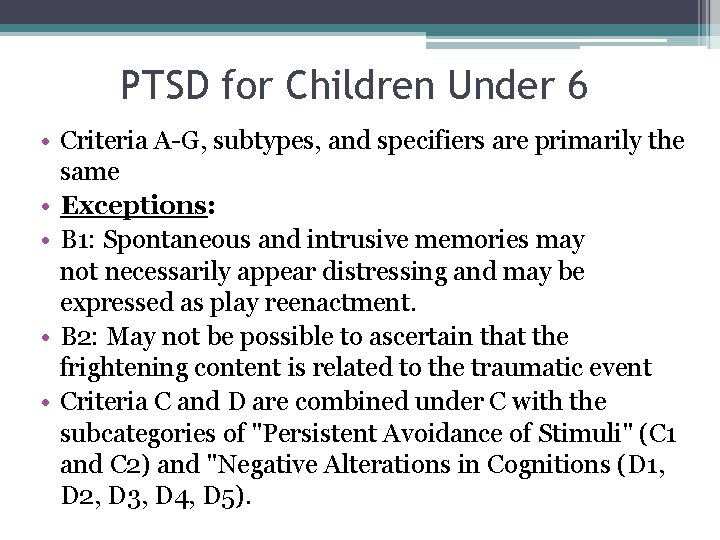
PTSD for Children Under 6 • Criteria A-G, subtypes, and specifiers are primarily the same • Exceptions: • B 1: Spontaneous and intrusive memories may not necessarily appear distressing and may be expressed as play reenactment. • B 2: May not be possible to ascertain that the frightening content is related to the traumatic event • Criteria C and D are combined under C with the subcategories of "Persistent Avoidance of Stimuli" (C 1 and C 2) and "Negative Alterations in Cognitions (D 1, D 2, D 3, D 4, D 5).
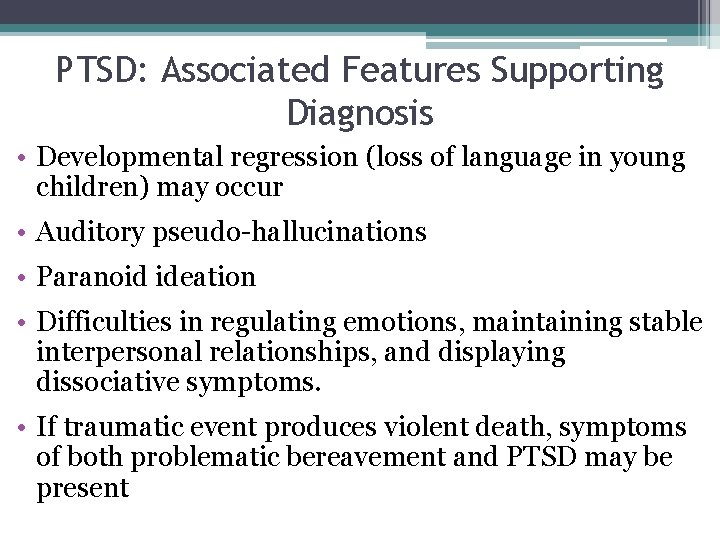
PTSD: Associated Features Supporting Diagnosis • Developmental regression (loss of language in young children) may occur • Auditory pseudo-hallucinations • Paranoid ideation • Difficulties in regulating emotions, maintaining stable interpersonal relationships, and displaying dissociative symptoms. • If traumatic event produces violent death, symptoms of both problematic bereavement and PTSD may be present
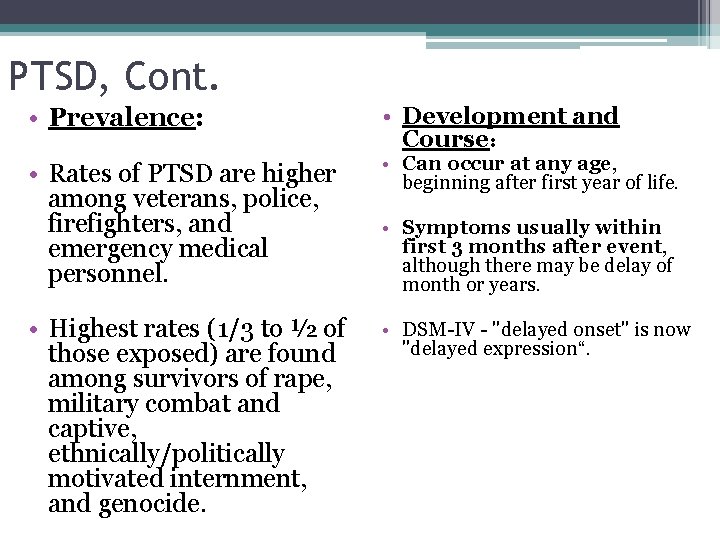
PTSD, Cont. • Prevalence: • Development and Course: • Rates of PTSD are higher among veterans, police, firefighters, and emergency medical personnel. • Can occur at any age, beginning after first year of life. • Highest rates (1/3 to ½ of those exposed) are found among survivors of rape, military combat and captive, ethnically/politically motivated internment, and genocide. • DSM-IV - "delayed onset" is now "delayed expression“. • Symptoms usually within first 3 months after event, although there may be delay of month or years.
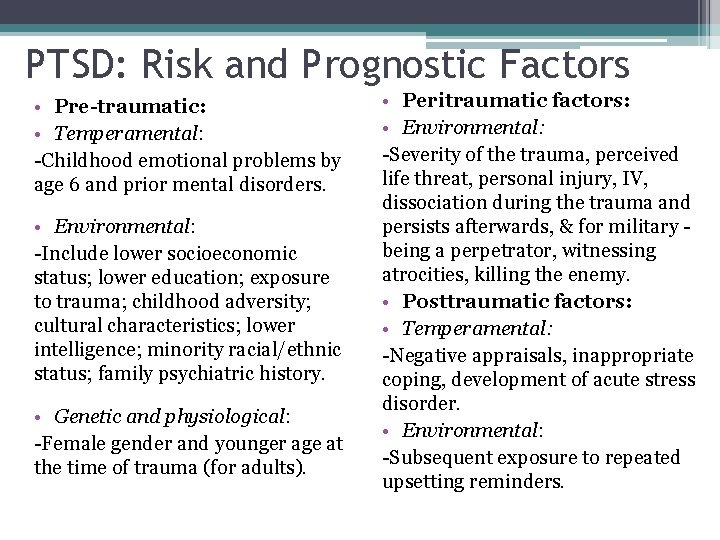
PTSD: Risk and Prognostic Factors • Pre-traumatic: • Temperamental: -Childhood emotional problems by age 6 and prior mental disorders. • Environmental: -Include lower socioeconomic status; lower education; exposure to trauma; childhood adversity; cultural characteristics; lower intelligence; minority racial/ethnic status; family psychiatric history. • Genetic and physiological: -Female gender and younger age at the time of trauma (for adults). • Peritraumatic factors: • Environmental: -Severity of the trauma, perceived life threat, personal injury, IV, dissociation during the trauma and persists afterwards, & for military being a perpetrator, witnessing atrocities, killing the enemy. • Posttraumatic factors: • Temperamental: -Negative appraisals, inappropriate coping, development of acute stress disorder. • Environmental: -Subsequent exposure to repeated upsetting reminders.
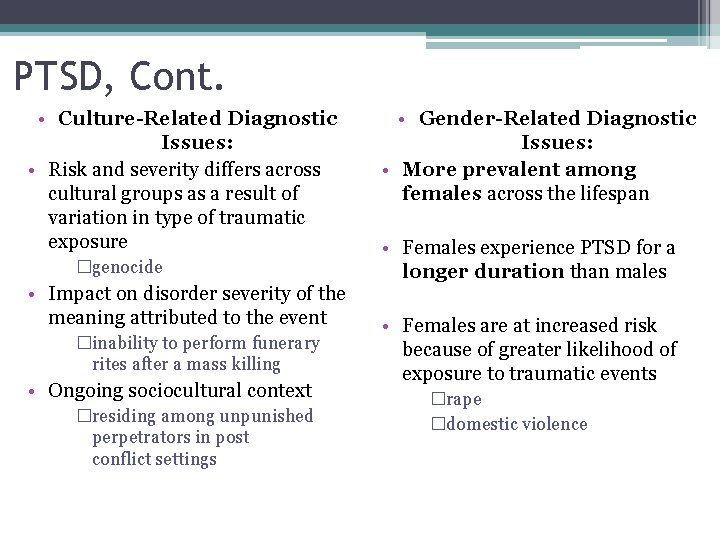
PTSD, Cont. • Culture-Related Diagnostic Issues: • Risk and severity differs across cultural groups as a result of variation in type of traumatic exposure �genocide • Impact on disorder severity of the meaning attributed to the event �inability to perform funerary rites after a mass killing • Ongoing sociocultural context �residing among unpunished perpetrators in post conflict settings • Gender-Related Diagnostic Issues: • More prevalent among females across the lifespan • Females experience PTSD for a longer duration than males • Females are at increased risk because of greater likelihood of exposure to traumatic events �rape �domestic violence
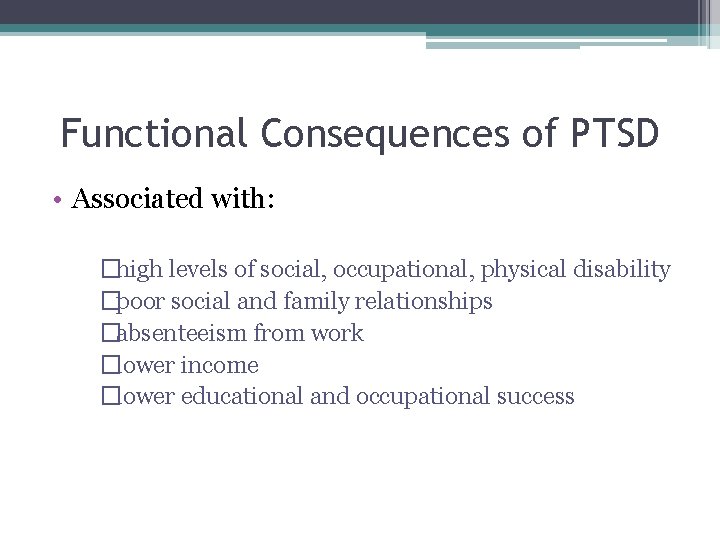
Functional Consequences of PTSD • Associated with: �high levels of social, occupational, physical disability �poor social and family relationships �absenteeism from work �lower income �lower educational and occupational success
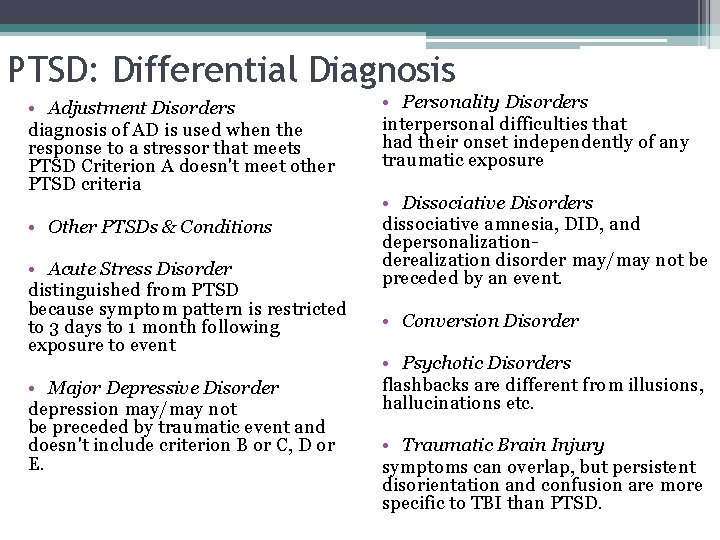
PTSD: Differential Diagnosis • Adjustment Disorders diagnosis of AD is used when the response to a stressor that meets PTSD Criterion A doesn't meet other PTSD criteria • Other PTSDs & Conditions • Acute Stress Disorder distinguished from PTSD because symptom pattern is restricted to 3 days to 1 month following exposure to event • Major Depressive Disorder depression may/may not be preceded by traumatic event and doesn't include criterion B or C, D or E. • Personality Disorders interpersonal difficulties that had their onset independently of any traumatic exposure • Dissociative Disorders dissociative amnesia, DID, and depersonalizationderealization disorder may/may not be preceded by an event. • Conversion Disorder • Psychotic Disorders flashbacks are different from illusions, hallucinations etc. • Traumatic Brain Injury symptoms can overlap, but persistent disorientation and confusion are more specific to TBI than PTSD.
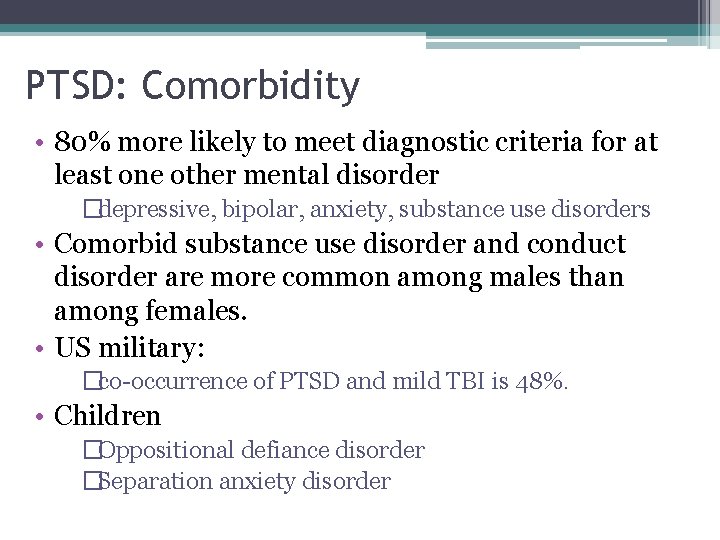
PTSD: Comorbidity • 80% more likely to meet diagnostic criteria for at least one other mental disorder �depressive, bipolar, anxiety, substance use disorders • Comorbid substance use disorder and conduct disorder are more common among males than among females. • US military: �co-occurrence of PTSD and mild TBI is 48%. • Children �Oppositional defiance disorder �Separation anxiety disorder
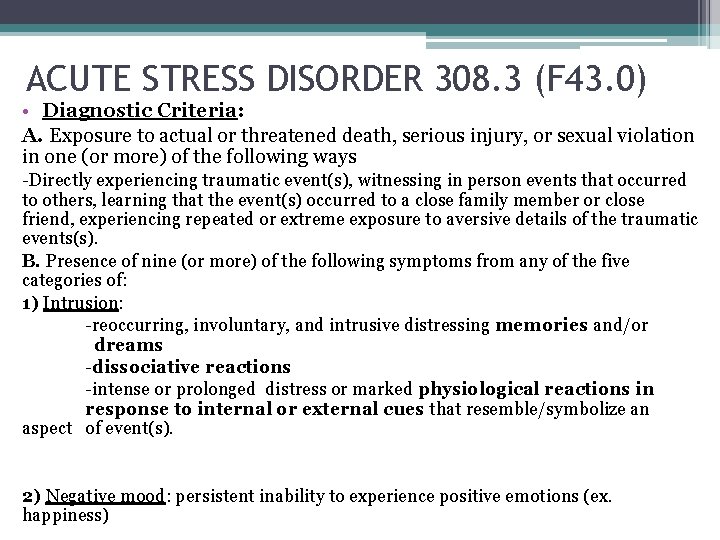
ACUTE STRESS DISORDER 308. 3 (F 43. 0) • Diagnostic Criteria: A. Exposure to actual or threatened death, serious injury, or sexual violation in one (or more) of the following ways -Directly experiencing traumatic event(s), witnessing in person events that occurred to others, learning that the event(s) occurred to a close family member or close friend, experiencing repeated or extreme exposure to aversive details of the traumatic events(s). B. Presence of nine (or more) of the following symptoms from any of the five categories of: 1) Intrusion: -reoccurring, involuntary, and intrusive distressing memories and/or dreams -dissociative reactions -intense or prolonged distress or marked physiological reactions in response to internal or external cues that resemble/symbolize an aspect of event(s). 2) Negative mood: persistent inability to experience positive emotions (ex. happiness)
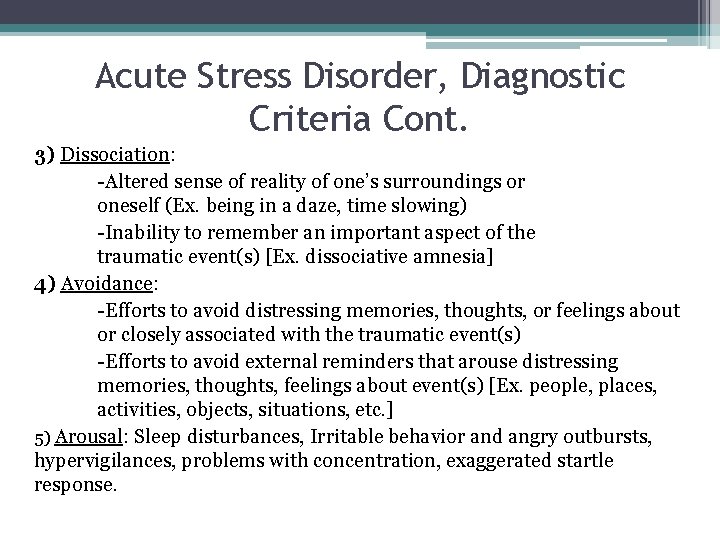
Acute Stress Disorder, Diagnostic Criteria Cont. 3) Dissociation: -Altered sense of reality of one’s surroundings or oneself (Ex. being in a daze, time slowing) -Inability to remember an important aspect of the traumatic event(s) [Ex. dissociative amnesia] 4) Avoidance: -Efforts to avoid distressing memories, thoughts, or feelings about or closely associated with the traumatic event(s) -Efforts to avoid external reminders that arouse distressing memories, thoughts, feelings about event(s) [Ex. people, places, activities, objects, situations, etc. ] 5) Arousal: Sleep disturbances, Irritable behavior and angry outbursts, hypervigilances, problems with concentration, exaggerated startle response.
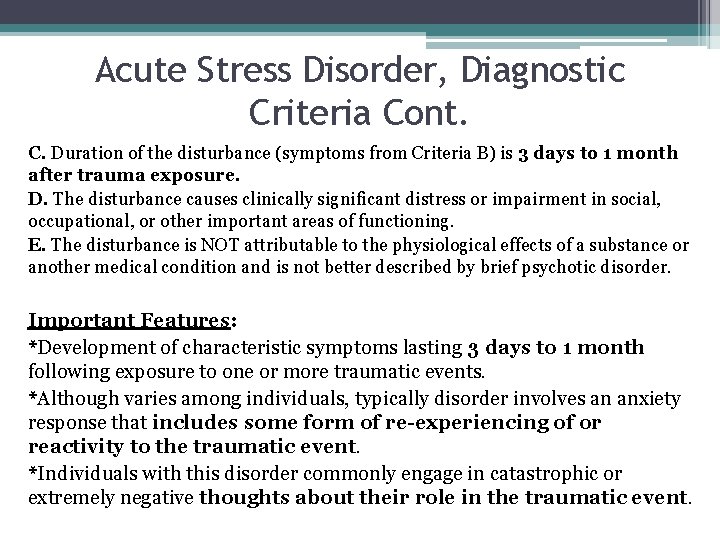
Acute Stress Disorder, Diagnostic Criteria Cont. C. Duration of the disturbance (symptoms from Criteria B) is 3 days to 1 month after trauma exposure. D. The disturbance causes clinically significant distress or impairment in social, occupational, or other important areas of functioning. E. The disturbance is NOT attributable to the physiological effects of a substance or another medical condition and is not better described by brief psychotic disorder. Important Features: *Development of characteristic symptoms lasting 3 days to 1 month following exposure to one or more traumatic events. *Although varies among individuals, typically disorder involves an anxiety response that includes some form of re-experiencing of or reactivity to the traumatic event. *Individuals with this disorder commonly engage in catastrophic or extremely negative thoughts about their role in the traumatic event.
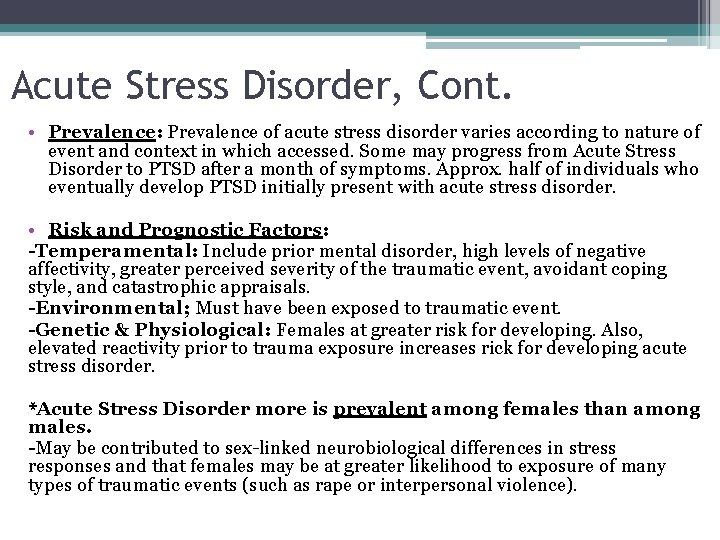
Acute Stress Disorder, Cont. • Prevalence: Prevalence of acute stress disorder varies according to nature of event and context in which accessed. Some may progress from Acute Stress Disorder to PTSD after a month of symptoms. Approx. half of individuals who eventually develop PTSD initially present with acute stress disorder. • Risk and Prognostic Factors: -Temperamental: Include prior mental disorder, high levels of negative affectivity, greater perceived severity of the traumatic event, avoidant coping style, and catastrophic appraisals. -Environmental; Must have been exposed to traumatic event. -Genetic & Physiological: Females at greater risk for developing. Also, elevated reactivity prior to trauma exposure increases rick for developing acute stress disorder. *Acute Stress Disorder more is prevalent among females than among males. -May be contributed to sex-linked neurobiological differences in stress responses and that females may be at greater likelihood to exposure of many types of traumatic events (such as rape or interpersonal violence).
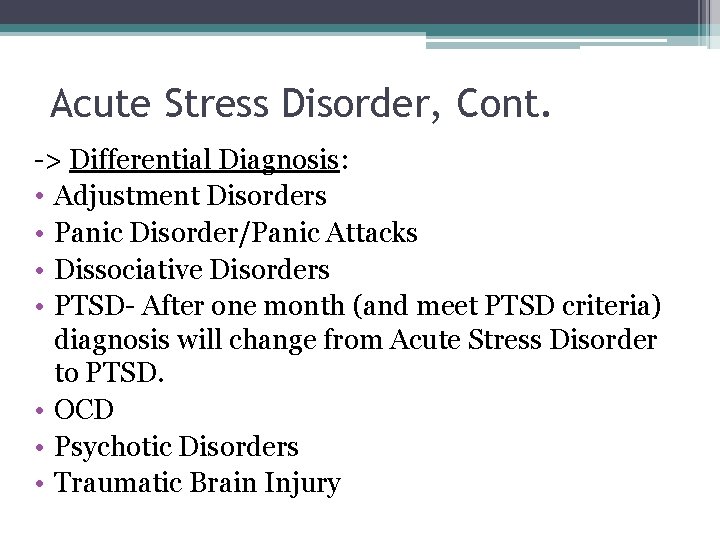
Acute Stress Disorder, Cont. -> Differential Diagnosis: • Adjustment Disorders • Panic Disorder/Panic Attacks • Dissociative Disorders • PTSD- After one month (and meet PTSD criteria) diagnosis will change from Acute Stress Disorder to PTSD. • OCD • Psychotic Disorders • Traumatic Brain Injury
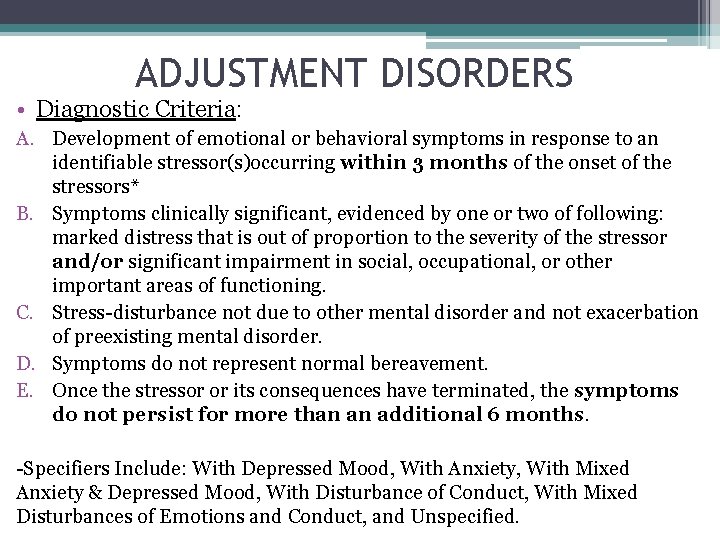
ADJUSTMENT DISORDERS • Diagnostic Criteria: A. Development of emotional or behavioral symptoms in response to an identifiable stressor(s)occurring within 3 months of the onset of the stressors* B. Symptoms clinically significant, evidenced by one or two of following: marked distress that is out of proportion to the severity of the stressor and/or significant impairment in social, occupational, or other important areas of functioning. C. Stress-disturbance not due to other mental disorder and not exacerbation of preexisting mental disorder. D. Symptoms do not represent normal bereavement. E. Once the stressor or its consequences have terminated, the symptoms do not persist for more than an additional 6 months. -Specifiers Include: With Depressed Mood, With Anxiety, With Mixed Anxiety & Depressed Mood, With Disturbance of Conduct, With Mixed Disturbances of Emotions and Conduct, and Unspecified.
Adjustment Disorders, Cont. • Adjustment disorders are associated with an increased risk of suicide attempts and completed suicides. • Decreased performance at work or school and temporary changes in social relationships is associated with adjustment disorder. • Risk Factor(s): Individuals with disadvantaged life circumstances experience a high rate of stressors and may be at increased risk for adjustment disorders. • Important to consider culture when considering if individual’s response to the stressor is maladaptive or excess to what is expected.
Adjustment Disorders, Cont. • Prevalence: Adjustment disorders are common. -In outpatient mental health treatment with a principle diagnosis of adjustment disorder is approx. 5 -20%. -In hospital psychiatric consultations setting, it is often most common diagnosis (50%). • Differential Diagnosis: Major Depressive Disorder, PTSD and Acute Stress Disorder, Personality Disorders, Psychological Factors affecting other Medical Conditions, and Normative Stress Reactions. • Comorbidity: Adjustment disorder can accompany most mental disorders and any medical disorder. Adjustment disorders are common accompaniments of medical illness and may be the major psychological response to a medical disorder.
Other Specified Trauma-and Stressor. Related Disorder 309. 89 (F 43. 8) • Category that applies to presentations in which symptoms are characteristic of trauma-and stressor related disorders that cause significant impairment, but do not meet full criteria for disorders. • Used in situations in which the clinician chooses to communicate the specific reason that the presentation does not meet the criteria. • Record: “other specified Trauma-and Stressor-Related Disorder” followed by specific reason -Example: persistent complex bereavement disorder. -Example: Adjustment-like disorder with delayed onset of symptoms that occurred more than 3 months after the stressor.
Unspecified Trauma and Stressor. Related Disorder 309. 9 (F 43. 9) • Category that applies to presentations in which symptoms are characteristic of trauma-and stressor related disorders that cause significant impairment, but do not meet full criteria for disorders. • Used in situations in which the clinician chooses not to specify the reason that the criteria are not met for specific disorder(s). -Example: Setting with insufficient information (ER)