
TRAUMA RESILIENCE IN SCHOOLS CAITLIN YOUNG M S



- Slides: 21
TRAUMA & RESILIENCE IN SCHOOLS CAITLIN YOUNG, M. S. , LMFT Consultant, Therapist, Connector Caitlin@thinkfeelconnect. com
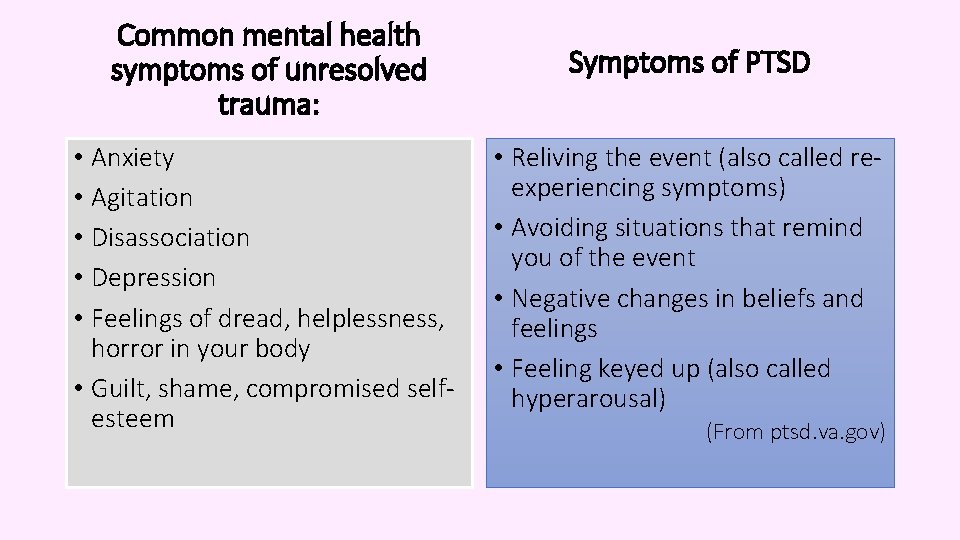
Common mental health symptoms of unresolved trauma: Symptoms of PTSD • Anxiety • Agitation • Disassociation • Depression • Feelings of dread, helplessness, horror in your body • Guilt, shame, compromised selfesteem • Reliving the event (also called reexperiencing symptoms) • Avoiding situations that remind you of the event • Negative changes in beliefs and feelings • Feeling keyed up (also called hyperarousal) (From ptsd. va. gov)
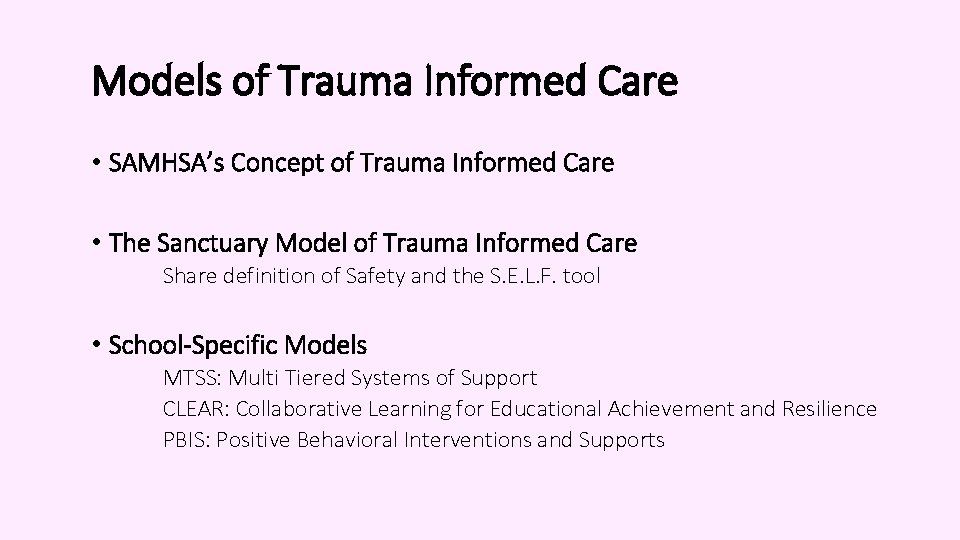
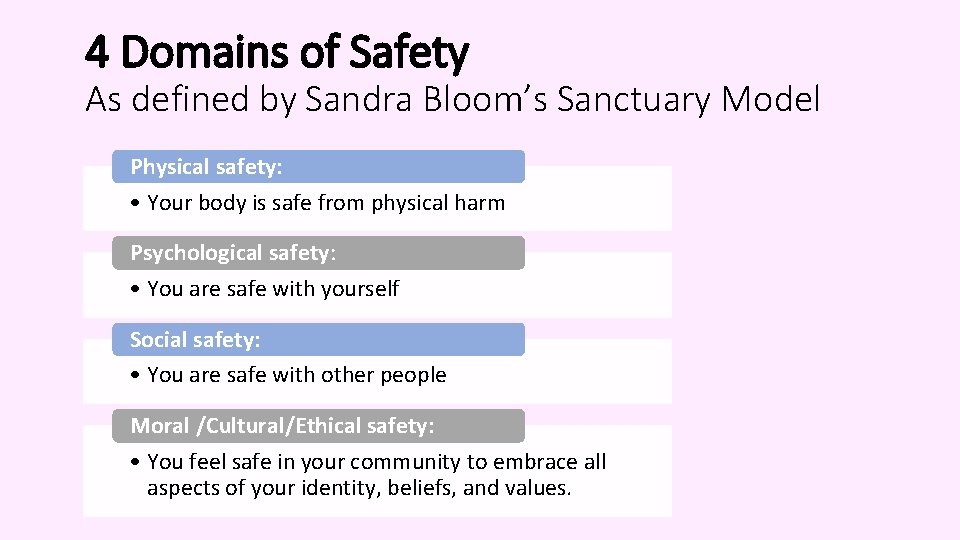
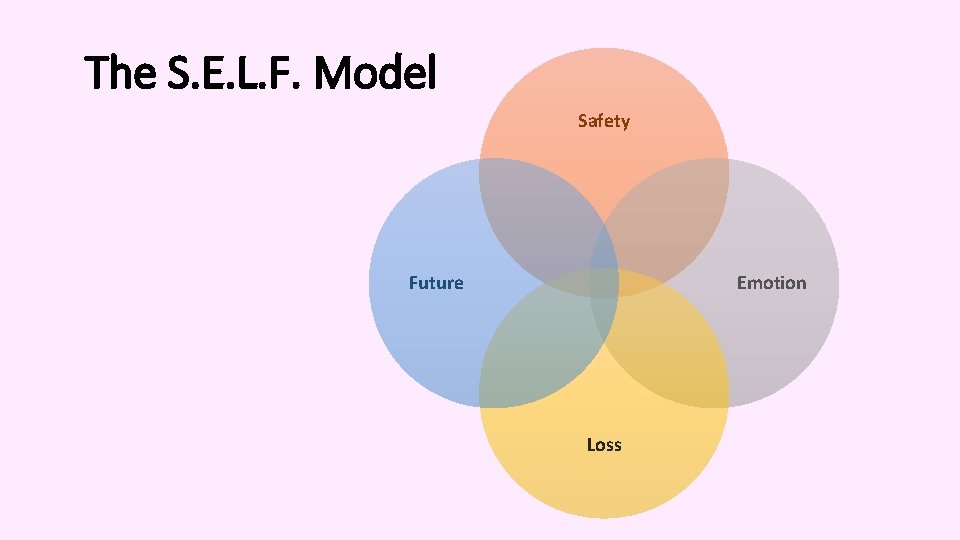
Models of Trauma Informed Care • SAMHSA’s Concept of Trauma Informed Care • The Sanctuary Model of Trauma Informed Care Share definition of Safety and the S. E. L. F. tool • School-Specific Models MTSS: Multi Tiered Systems of Support CLEAR: Collaborative Learning for Educational Achievement and Resilience PBIS: Positive Behavioral Interventions and Supports
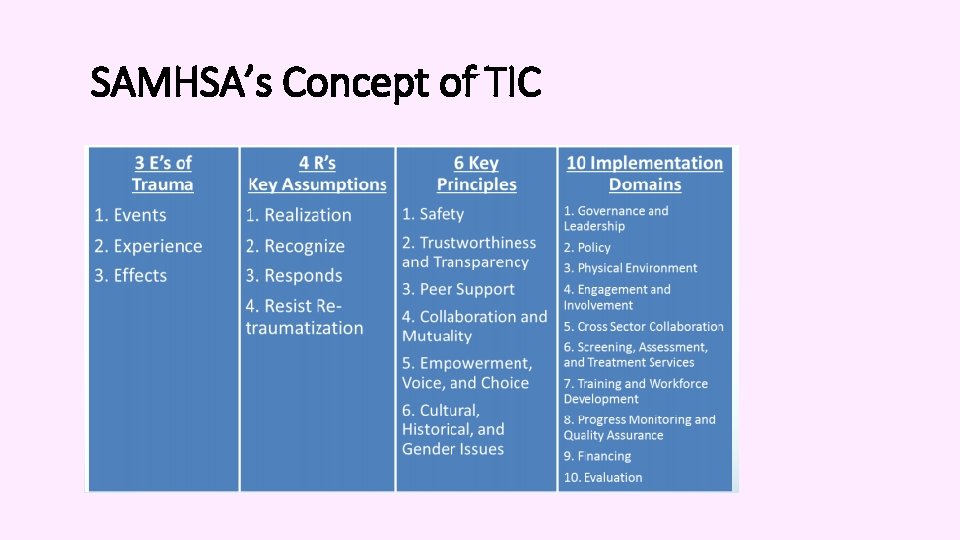
SAMHSA’s Concept of TIC
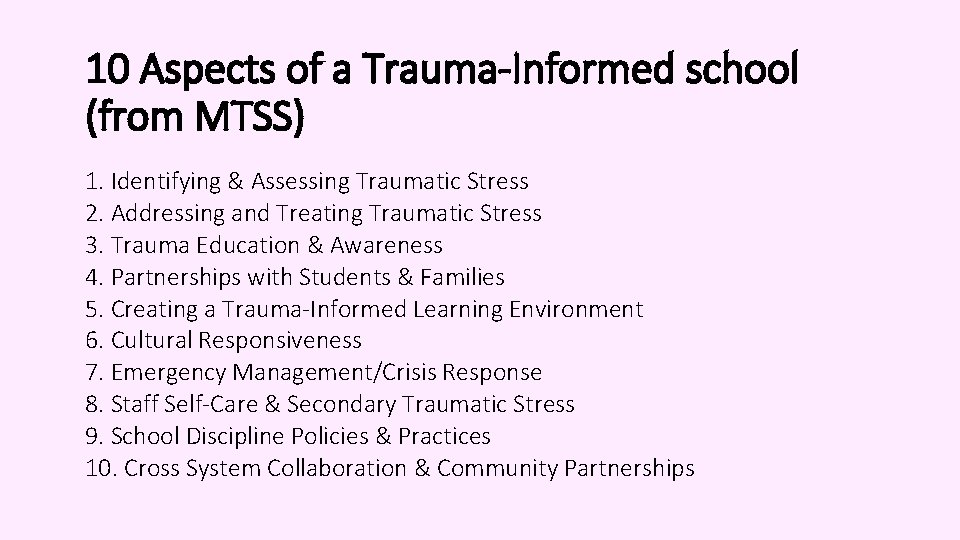
10 Aspects of a Trauma-Informed school (from MTSS) 1. Identifying & Assessing Traumatic Stress 2. Addressing and Treating Traumatic Stress 3. Trauma Education & Awareness 4. Partnerships with Students & Families 5. Creating a Trauma-Informed Learning Environment 6. Cultural Responsiveness 7. Emergency Management/Crisis Response 8. Staff Self-Care & Secondary Traumatic Stress 9. School Discipline Policies & Practices 10. Cross System Collaboration & Community Partnerships
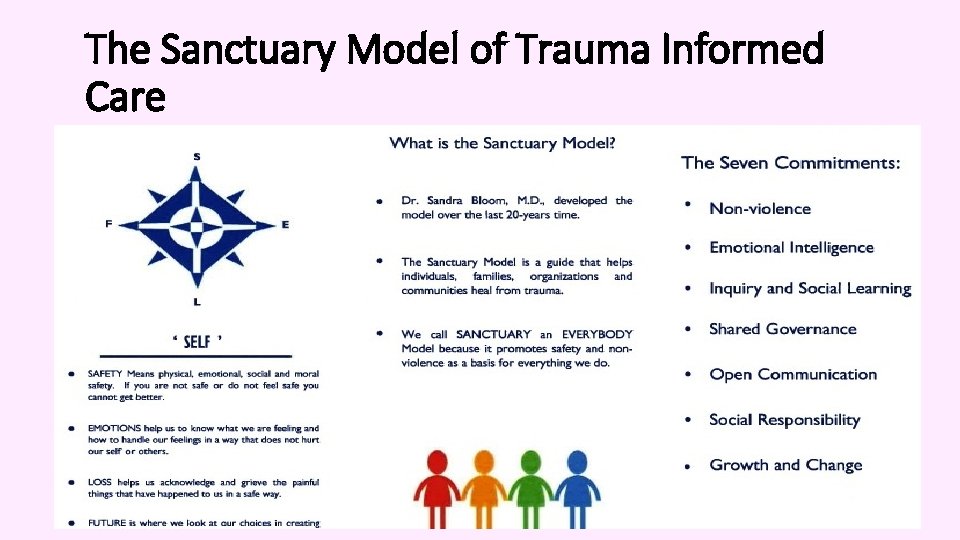
The Sanctuary Model of Trauma Informed Care
4 Domains of Safety As defined by Sandra Bloom’s Sanctuary Model Physical safety: • Your body is safe from physical harm Psychological safety: • You are safe with yourself Social safety: • You are safe with other people Moral /Cultural/Ethical safety: • You feel safe in your community to embrace all aspects of your identity, beliefs, and values.
The S. E. L. F. Model Safety Future Emotion Loss
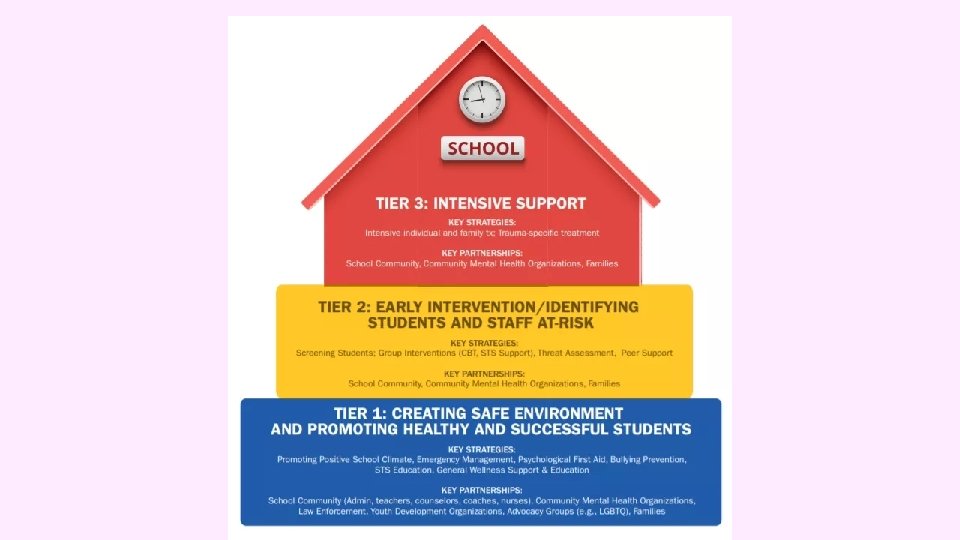
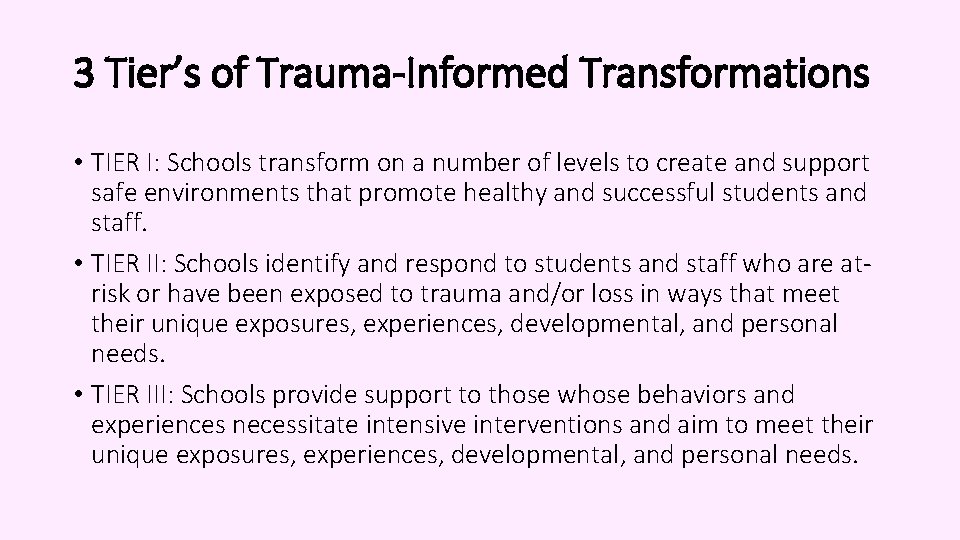
3 Tier’s of Trauma-Informed Transformations • TIER I: Schools transform on a number of levels to create and support safe environments that promote healthy and successful students and staff. • TIER II: Schools identify and respond to students and staff who are atrisk or have been exposed to trauma and/or loss in ways that meet their unique exposures, experiences, developmental, and personal needs. • TIER III: Schools provide support to those whose behaviors and experiences necessitate intensive interventions and aim to meet their unique exposures, experiences, developmental, and personal needs.
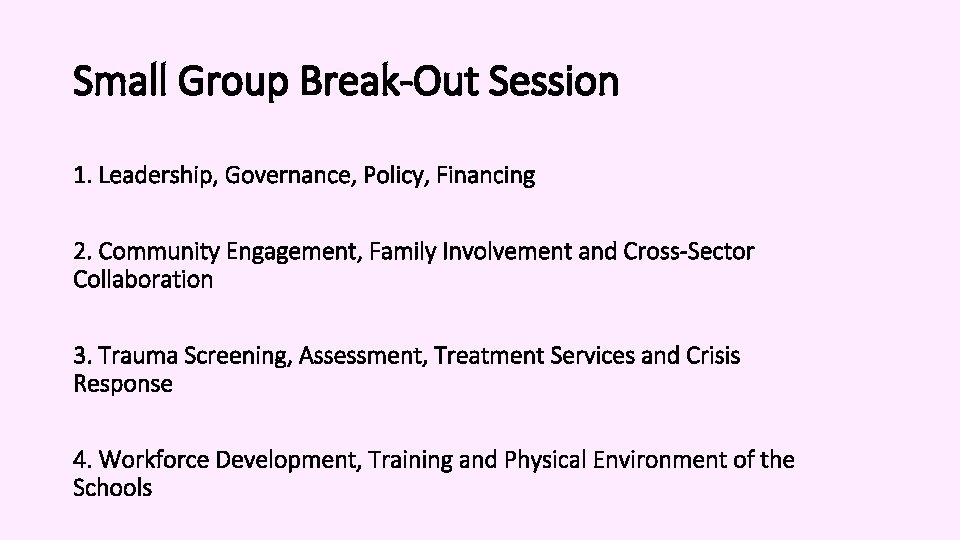
Small Group Break-Out Session 1. Leadership, Governance, Policy, Financing 2. Community Engagement, Family Involvement and Cross-Sector Collaboration 3. Trauma Screening, Assessment, Treatment Services and Crisis Response 4. Workforce Development, Training and Physical Environment of the Schools
Thank you! Caitlin Young, M. S. , LMFT Email: Caitlin@thinkfeelconnect. com Phone: (503) 470 -9582
References 3 to. Ph. D. https: //www. 3 tophd. org/ Bloom, S. Sanctuary Model of Trauma Informed Care. http: //www. sanctuaryweb. com/. 1 Copeland, W. E. , Keeler, G. , Angold, A. , & Costello, E. J. (2007). Traumatic events and posttraumatic stress in childhood. Archives of General Psychiatry, 64, 577 -584 3 De. Bellis, M. D. & Zisk, A. (2014). The biological effects of childhood trauma. Child and Adolescent Psychiatric Clinics of North America, 23(2), 185 -222. doi: 10. 1016/j. chc. 2014. 01. 002 Ellis, W. W. (2017) A New Framework for Addressing Adverse Childhood and Community Experiences. The Building Community Resilience (BCR) Model Academic Pediatrics. 17 (2017). Pp. 586 -593. DOI Information: 10. 1016. acap. 2016. 12. 011. Felitti, V. J. , Anda, R. F. , Nordenberg, D. , Williamson, D. F. , Spitz, A. M. , Edwards, V. , . . . Marks, J. S. (1998). Relationship of childhood abuse and household dysfunction to many of the leading causes of death in adults: The Adverse Childhood Experiences (ACE) Study. American Journal of Preventive Medicine, 14(4), 245 -258. United States Department of Health and Human Services. Substance Abuse and Mental Health Services Administration. Center for Behavioral Health Statistics and Quality. National Survey on Drug Use and Health. (2016). 34481 -v 3. Research Triangle Park, NC: RTI International [distributor], 2016 -04 -02. http: //doi. org/10. 3886/34481. v 3. The National Child Traumatic Stress Network Policy Brief. (2018). Trauma Informed Schools for Children in K-12: A System Framework. https: //www. nctsn. org/sites/default/files/resources/factsheet/trauma_informed_schools_for_children_in_k-12_a_systems_framework. pdf. PTSD. www. ptsd. va. gov