
Trauma Lens Paradigm Shift Faye L Hall and
- Slides: 23
Trauma Lens Paradigm Shift Faye L Hall and Jeff Merkert (C) 2017 Hall and Merkert www. earlytrauma. com
Mission Statement Our desire is to provide the tools for dedicated parents and professionals to facilitate the healing of traumatized children from a relationship perspective. (C) 2017 Hall and Merkert www. earlytrauma. com
Trauma Lens Paradigm Shift
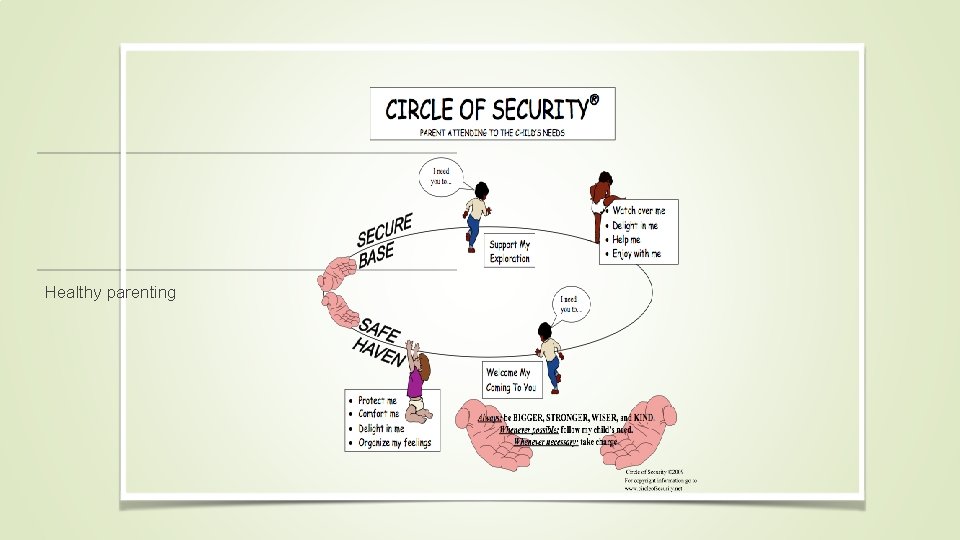
Healthy parenting
Trauma “response to a stressful experience in which a person’s ability to cope is dramatically undermined” (p. 18 Helping Traumatized Children Learn)
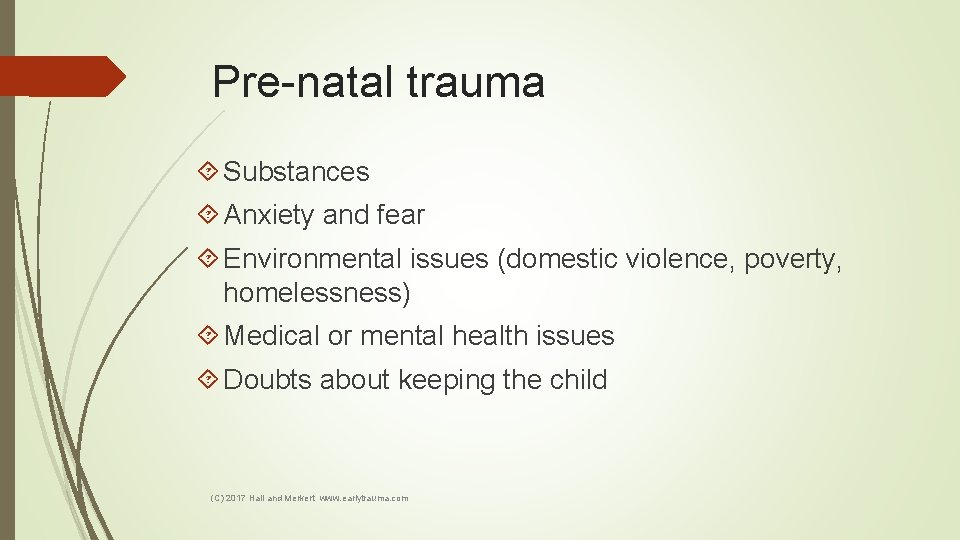
Pre-natal trauma Substances Anxiety and fear Environmental issues (domestic violence, poverty, homelessness) Medical or mental health issues Doubts about keeping the child (C) 2017 Hall and Merkert www. earlytrauma. com
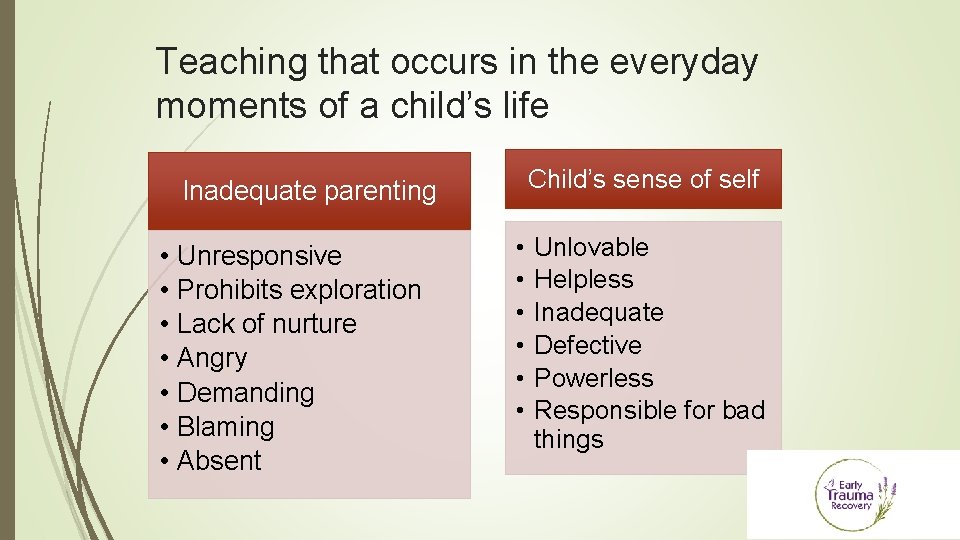
Teaching that occurs in the everyday moments of a child’s life Child’s sense of self Inadequate parenting • • Unresponsive Prohibits exploration Lack of nurture Angry Demanding Blaming Absent • • • Unlovable Helpless Inadequate Defective Powerless Responsible for bad things
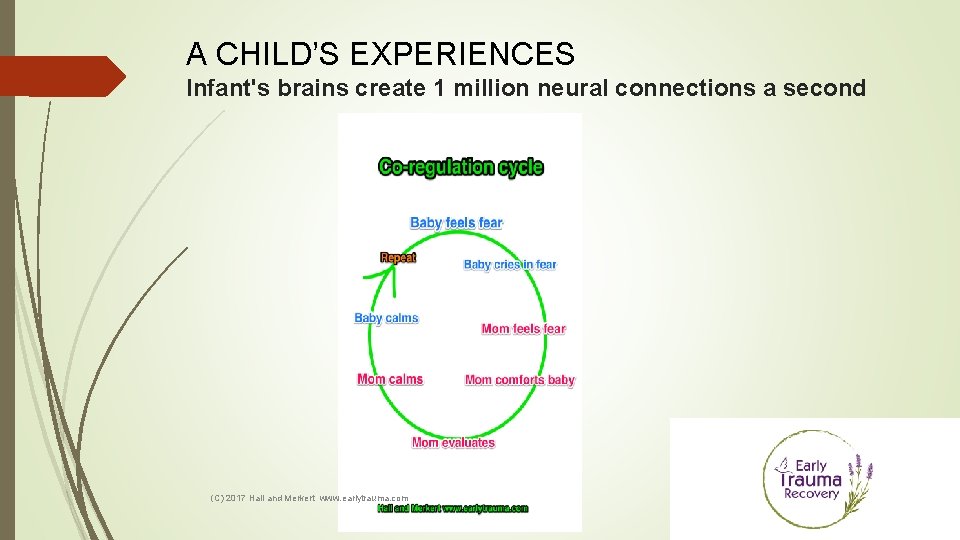
A CHILD’S EXPERIENCES Infant's brains create 1 million neural connections a second (C) 2017 Hall and Merkert www. earlytrauma. com
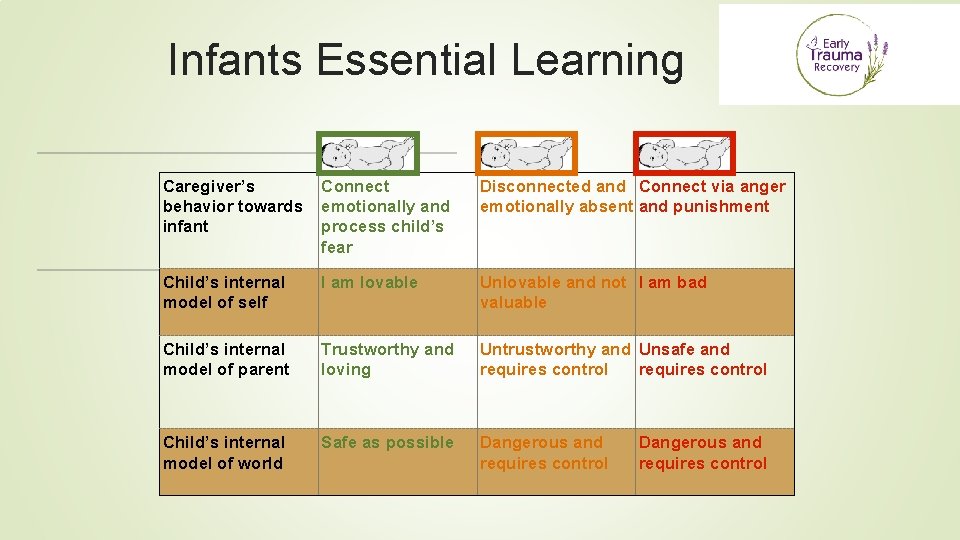
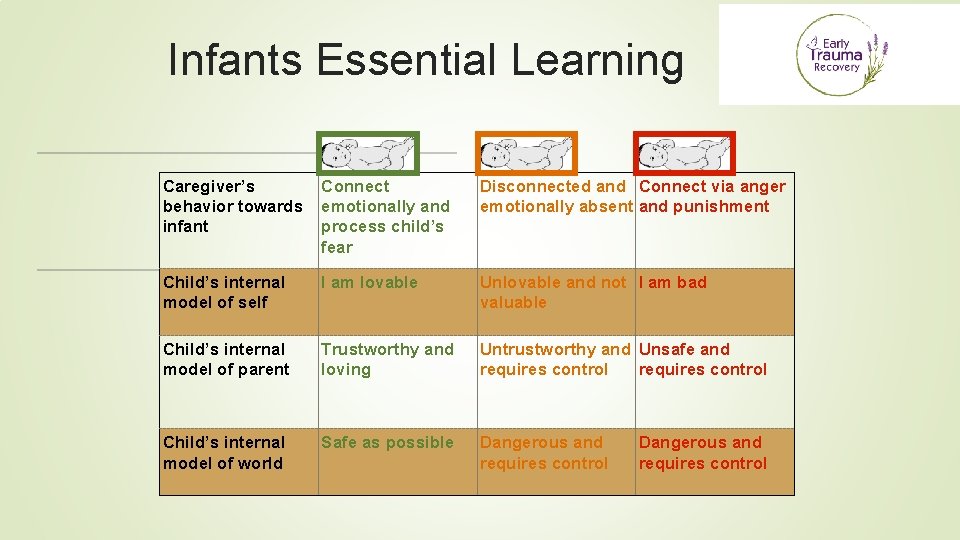
Infants Essential Learning Caregiver’s behavior towards infant Connect emotionally and process child’s fear Disconnected and Connect via anger emotionally absent and punishment Child’s internal model of self I am lovable Unlovable and not I am bad valuable Child’s internal model of parent Trustworthy and loving Untrustworthy and Unsafe and requires control Child’s internal model of world Safe as possible Dangerous and requires control
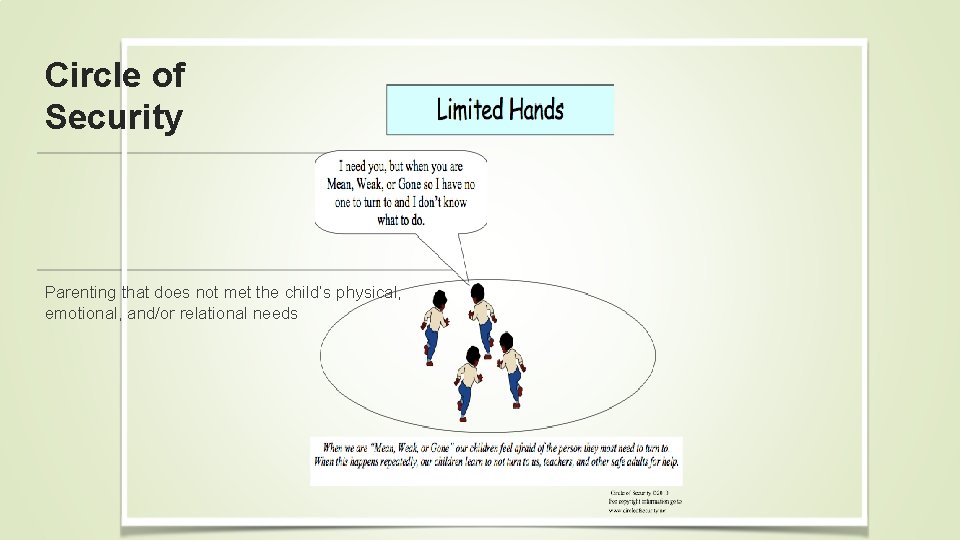
Circle of Security Parenting that does not met the child’s physical, emotional, and/or relational needs
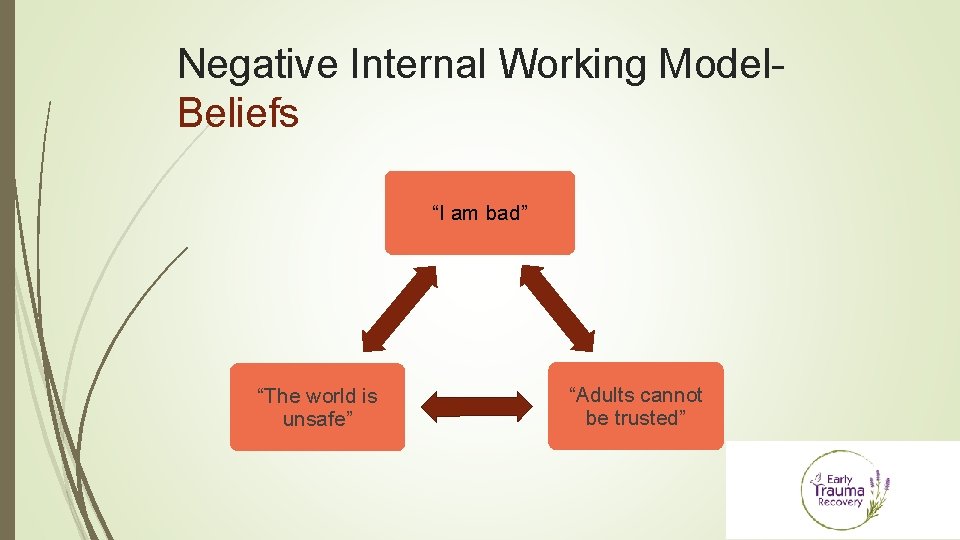
Negative Internal Working Model. Beliefs “I am bad” “The world is unsafe” “Adults cannot be trusted”
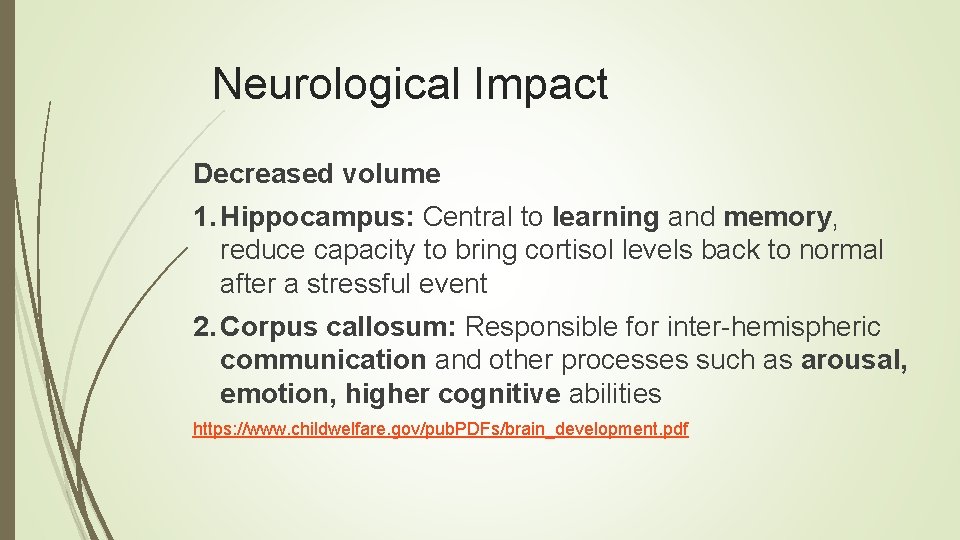
Neurological Impact Decreased volume 1. Hippocampus: Central to learning and memory, reduce capacity to bring cortisol levels back to normal after a stressful event 2. Corpus callosum: Responsible for inter-hemispheric communication and other processes such as arousal, emotion, higher cognitive abilities https: //www. childwelfare. gov/pub. PDFs/brain_development. pdf
Neurological Impact 1. Cerebellum: coordinate motor behavior and executive functioning 2. Prefrontal cortex: Smaller prefrontal cortex, behavior, cognition, and emotion regulation Physically abused children orbitofrontal cortex, a part of the prefrontal cortex that is central to emotion and social regulation https: //www. childwelfare. gov/pub. PDFs/brain_development. pdf (C) 2017 Hall and Merkert www. earlytrauma. com
Neurological Impact Amygdala: The amygdala is always scanning the environment for safety, is overactivity when determining if a stimulus is threatening, and triggers emotional responses (TDC). https: //www. childwelfare. gov/pub. PDFs/brain_development. pdf
Neurological Impact Cortisol levels: 1. Normal or higher in the morning flatter or decreased release levels throughout the day 2. Lower levels: decreased energy resources, affect learning and socialization; externalizing disorders; and increased vulnerability to autoimmune disorders 3. Higher levels: subdue immune and inflammatory reactions, or heighten the risk for affective disorders https: //www. childwelfare. gov/pub. PDFs/brain_development. pdf (C) 2017 Hall and Merkert www. earlytrauma. com
Neurological Impact 1. Increased anxiety and depression from impaired connectivity between amygdala and hippocampus 2. Decreased ability to use serotonin 3. Limited working memory (short term retention and use of information) 4. Decreased ability to filtering thoughts and impulses https: //www. childwelfare. gov/pub. PDFs/brain_development. pdf
Neurological Impact 1. Decreased cognitive or mental flexibility 2. Decreased electrical activity in their brains 3. Decreased ability to integrate complex information 4. Experience abnormal adrenaline production https: //www. childwelfare. gov/pub. PDFs/brain_development. pdf (C) 2017 Hall and Merkert www. earlytrauma. com
Impact on Education Learning is dependent of being cognitively present, emotionally regulated, behaviorally compliant, with focused attention, a belief he/she can learn, a trust in the teacher to accurately reward learning, and “knowing” it is important to learn. (C) 2017 Hall and Merkert www. earlytrauma. com
Infants Essential Learning Caregiver’s behavior towards infant Connect emotionally and process child’s fear Disconnected and Connect via anger emotionally absent and punishment Child’s internal model of self I am lovable Unlovable and not I am bad valuable Child’s internal model of parent Trustworthy and loving Untrustworthy and Unsafe and requires control Child’s internal model of world Safe as possible Dangerous and requires control
Resilience “The roots of resilience are to be found in the felt sense of being held in the mind and heart of an empathic, attuned, and self-possessed other. ” Diana Fosha (C) 2017 Hall and Merkert www. earlytrauma. com
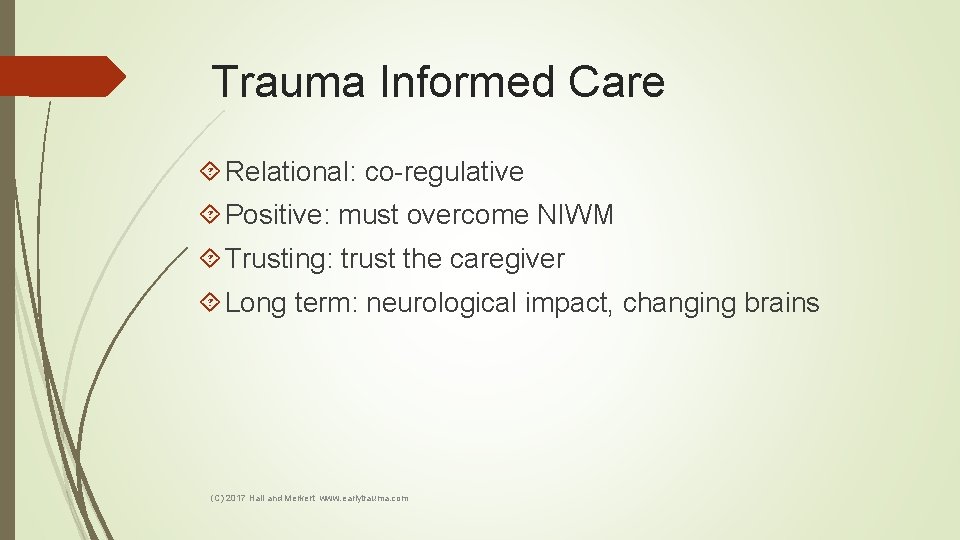
Trauma Informed Care Relational: co-regulative Positive: must overcome NIWM Trusting: trust the caregiver Long term: neurological impact, changing brains (C) 2017 Hall and Merkert www. earlytrauma. com
Trauma Informed Care Be aware of Individual treatment Cognitive/behavioral models Responsibility on the child (C) 2017 Hall and Merkert www. earlytrauma. com
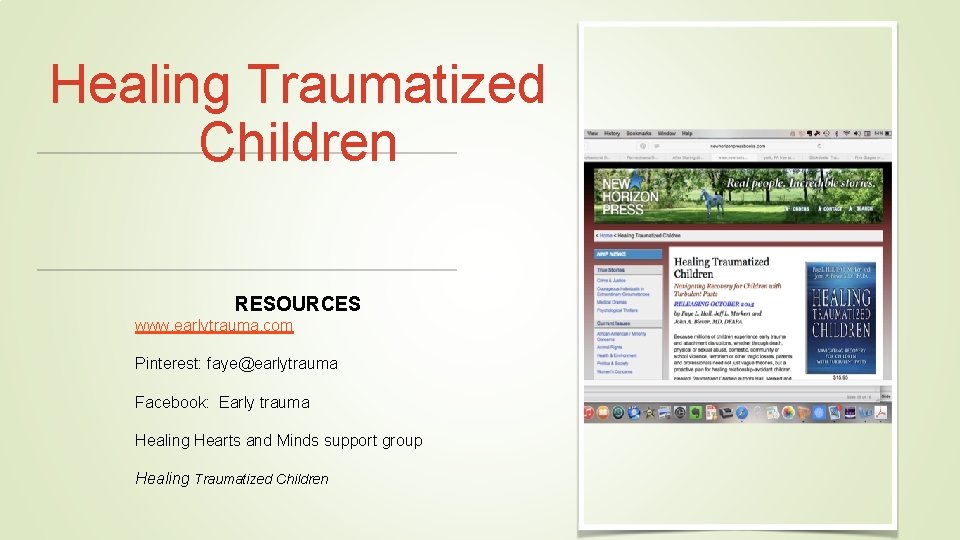
Healing Traumatized Children RESOURCES www. earlytrauma. com Pinterest: faye@earlytrauma Facebook: Early trauma Healing Hearts and Minds support group Healing Traumatized Children