
Trauma Informed Practices for Early Childhood Enhancing Resiliency

- Slides: 18
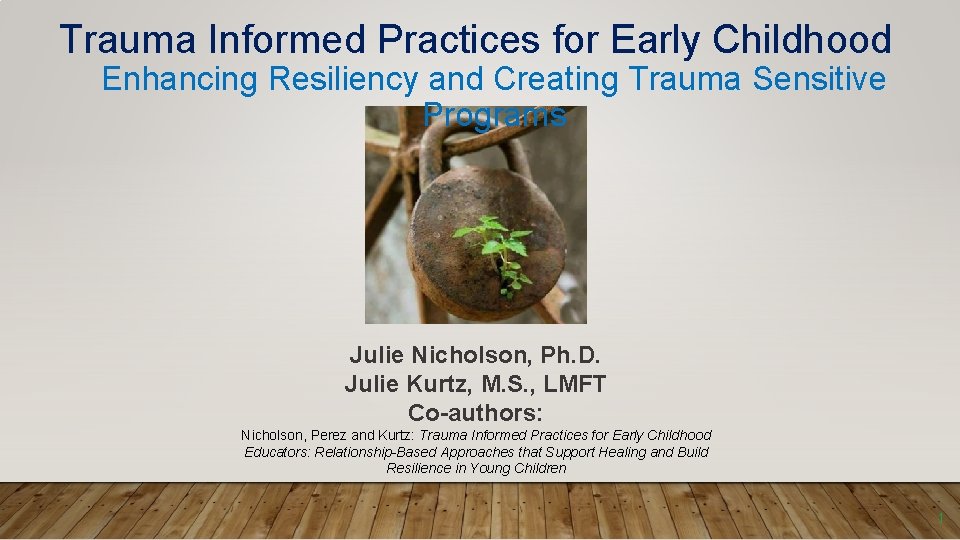
Trauma Informed Practices for Early Childhood Enhancing Resiliency and Creating Trauma Sensitive Programs Julie Nicholson, Ph. D. Julie Kurtz, M. S. , LMFT Co-authors: Nicholson, Perez and Kurtz: Trauma Informed Practices for Early Childhood Educators: Relationship-Based Approaches that Support Healing and Build Resilience in Young Children 1
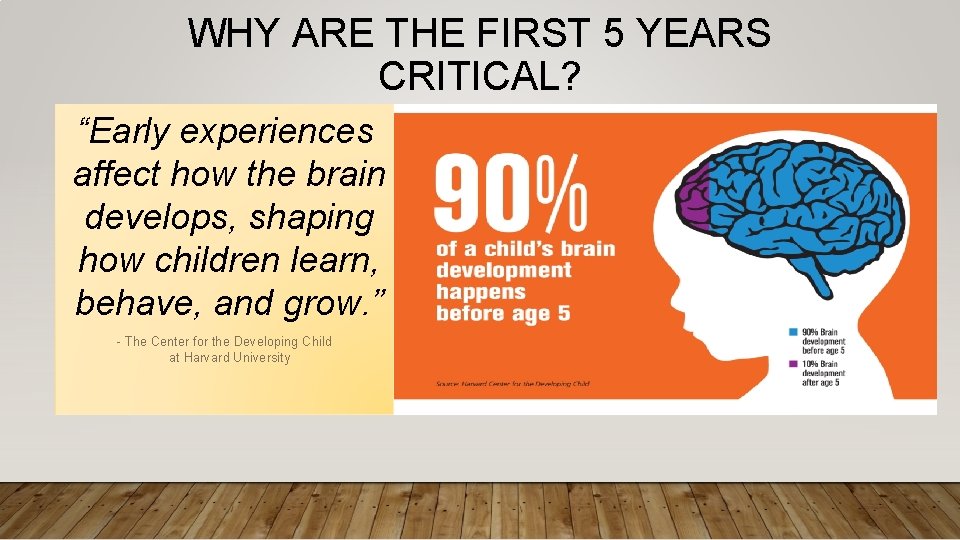
WHY ARE THE FIRST 5 YEARS CRITICAL? “Early experiences affect how the brain develops, shaping how children learn, behave, and grow. ” - The Center for the Developing Child at Harvard University
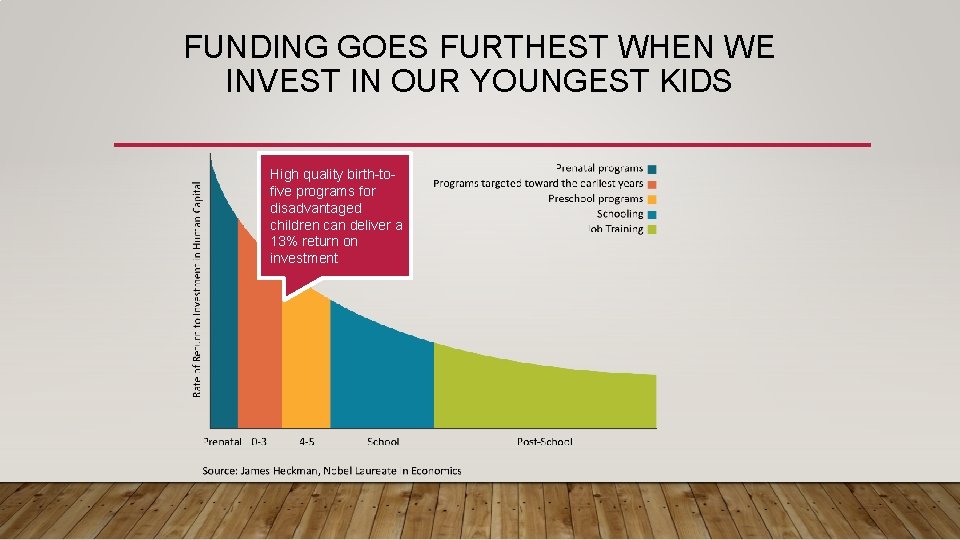
FUNDING GOES FURTHEST WHEN WE INVEST IN OUR YOUNGEST KIDS High quality birth-tofive programs for disadvantaged children can deliver a 13% return on investment
4 VOICES FROM THE FIELD… • Some kids I just can’t seem to help • I feel helpless • I must not be a good educator if I can’t reach this child • I don’t even want to work with some of these kids • They are spoiled • Behaviors are getting worse • We need to move the child to another classroom • I have tried everything • They are just trying to get attention • We should expel this child to keep the other children safe • If the family got help then the child would be • Other? What have you heard? better • What is wrong with you!? • It is the families fault
5 GIVING A CHILD A VOICE Moving from… “What is wrong with you? ” to “What has happened to you? ” to “What is your behavior communicating? ”
Sesame Street and the Today Show Video: www. today. com/video/elmo-and-his-sesame-street-pals-want-to-help-kids-cope-with-trauma 1064263235627 6
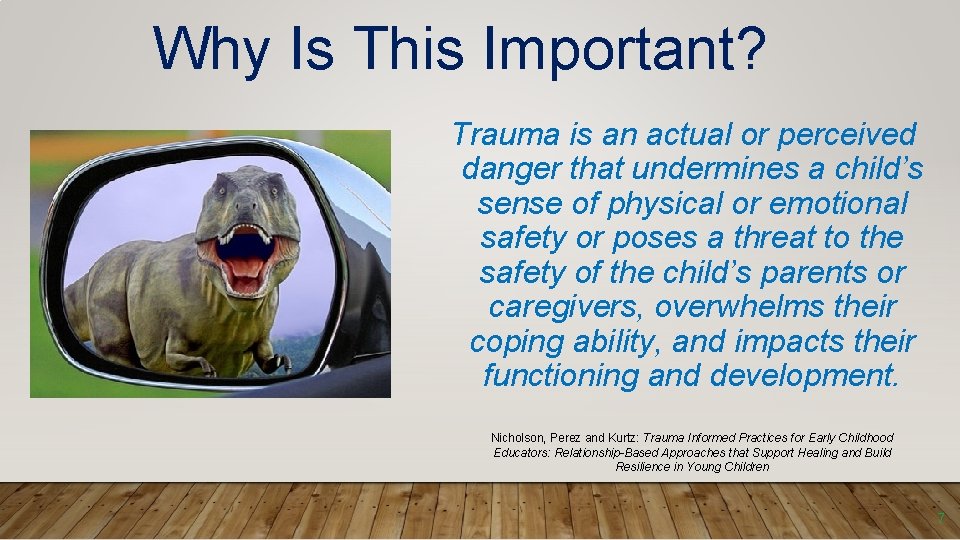
Why Is This Important? Trauma is an actual or perceived danger that undermines a child’s sense of physical or emotional safety or poses a threat to the safety of the child’s parents or caregivers, overwhelms their coping ability, and impacts their functioning and development. Nicholson, Perez and Kurtz: Trauma Informed Practices for Early Childhood Educators: Relationship-Based Approaches that Support Healing and Build Resilience in Young Children 7
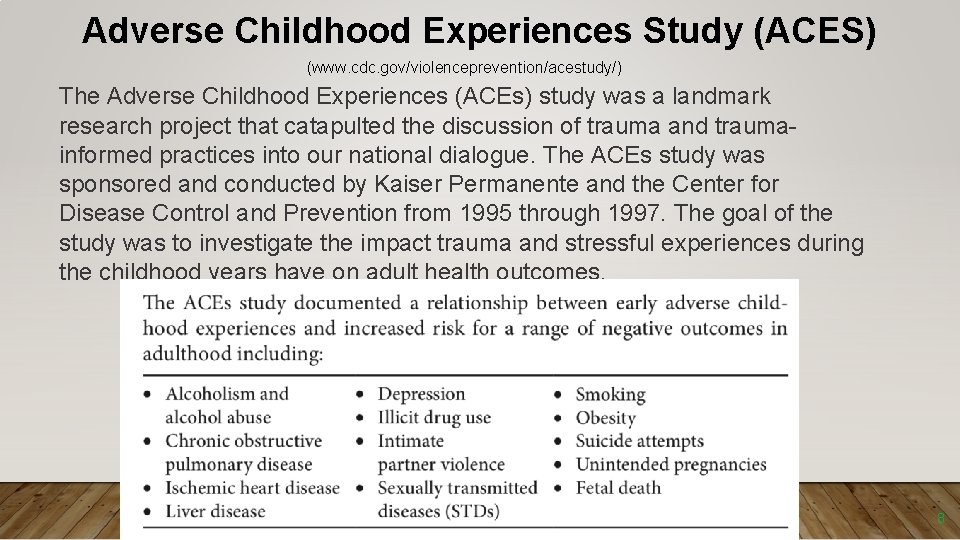
Adverse Childhood Experiences Study (ACES) (www. cdc. gov/violenceprevention/acestudy/) The Adverse Childhood Experiences (ACEs) study was a landmark research project that catapulted the discussion of trauma and traumainformed practices into our national dialogue. The ACEs study was sponsored and conducted by Kaiser Permanente and the Center for Disease Control and Prevention from 1995 through 1997. The goal of the study was to investigate the impact trauma and stressful experiences during the childhood years have on adult health outcomes. 8
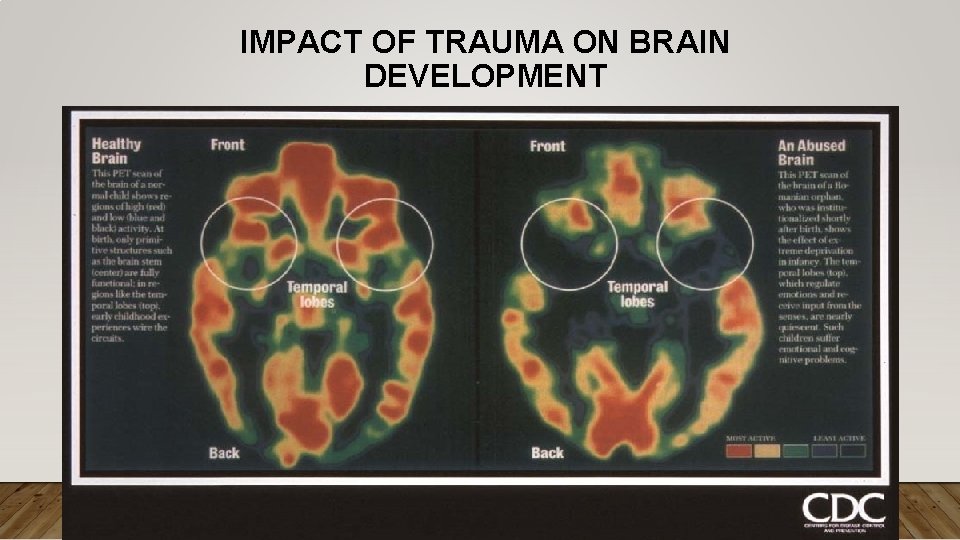
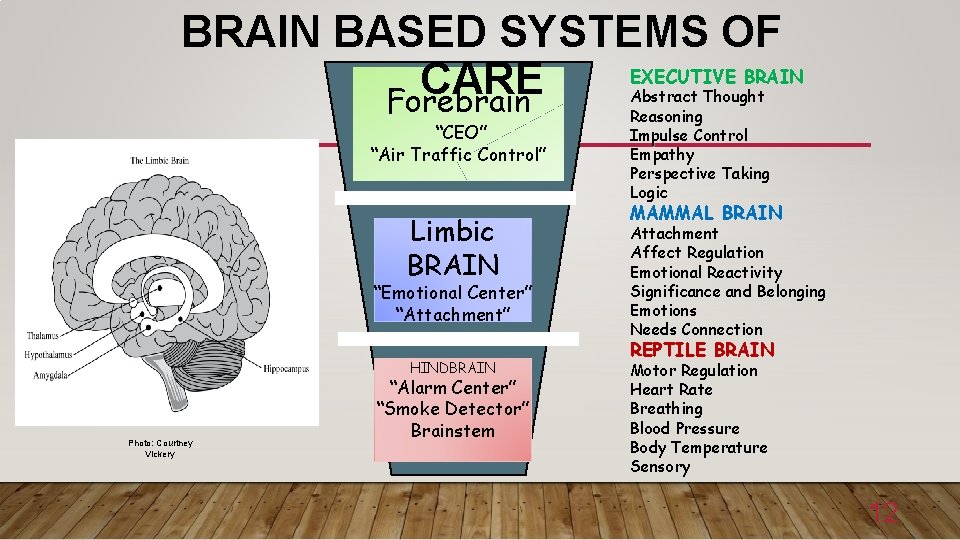
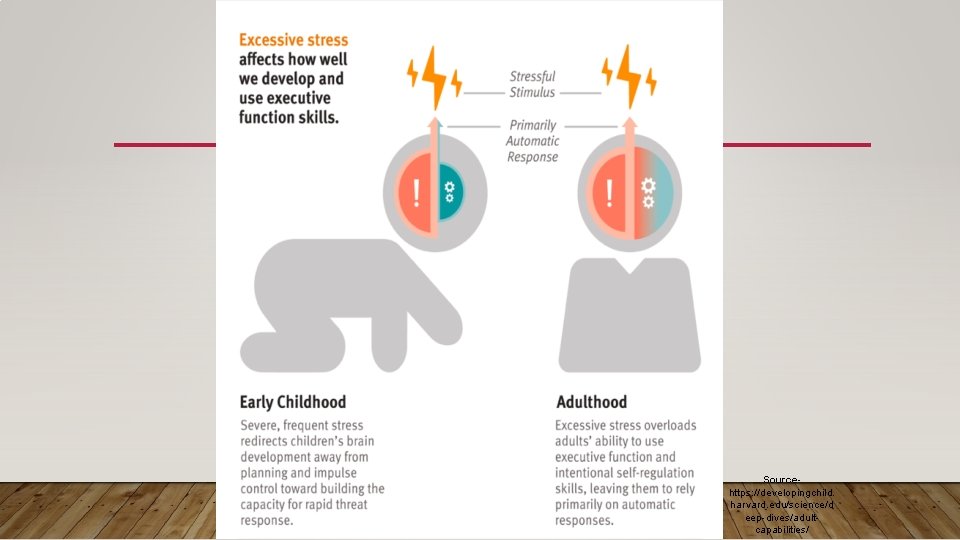
IMPACT OF TRAUMA ON BRAIN DEVELOPMENT
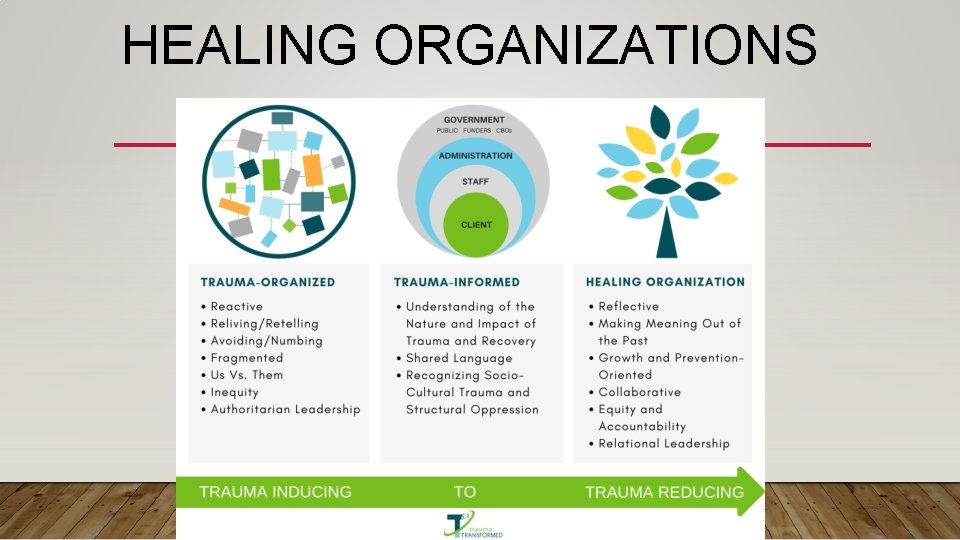
HEALING ORGANIZATIONS
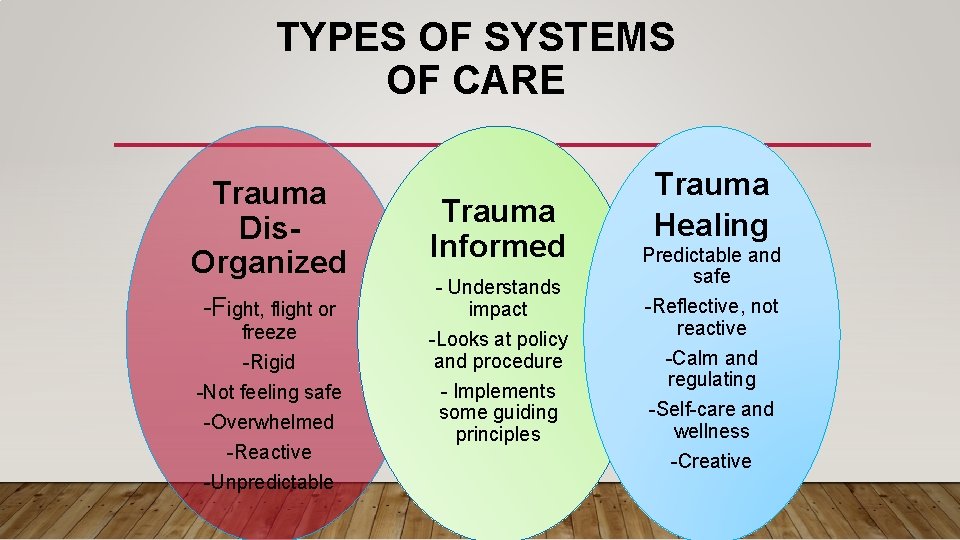
TYPES OF SYSTEMS OF CARE Trauma Dis. Organized -Fight, flight or freeze -Rigid -Not feeling safe -Overwhelmed -Reactive -Unpredictable Trauma Informed - Understands impact -Looks at policy and procedure - Implements some guiding principles Trauma Healing Predictable and safe -Reflective, not reactive -Calm and regulating -Self-care and wellness -Creative
BRAIN BASED SYSTEMS OF EXECUTIVE BRAIN CARE Forebrain “CEO” “Air Traffic Control” Limbic BRAIN “Emotional Center” “Attachment” HINDBRAIN Photo: Courtney Vickery “Alarm Center” “Smoke Detector” Brainstem Abstract Thought Reasoning Impulse Control Empathy Perspective Taking Logic MAMMAL BRAIN Attachment Affect Regulation Emotional Reactivity Significance and Belonging Emotions Needs Connection REPTILE BRAIN Motor Regulation Heart Rate Breathing Blood Pressure Body Temperature Sensory 12
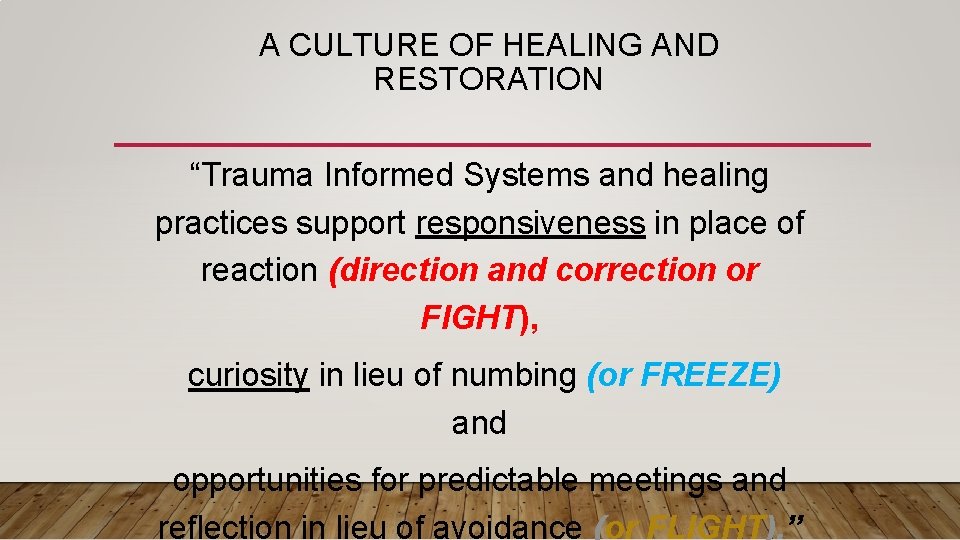
A CULTURE OF HEALING AND RESTORATION “Trauma Informed Systems and healing practices support responsiveness in place of reaction (direction and correction or FIGHT), curiosity in lieu of numbing (or FREEZE) and opportunities for predictable meetings and reflection in lieu of avoidance (or FLIGHT). ”
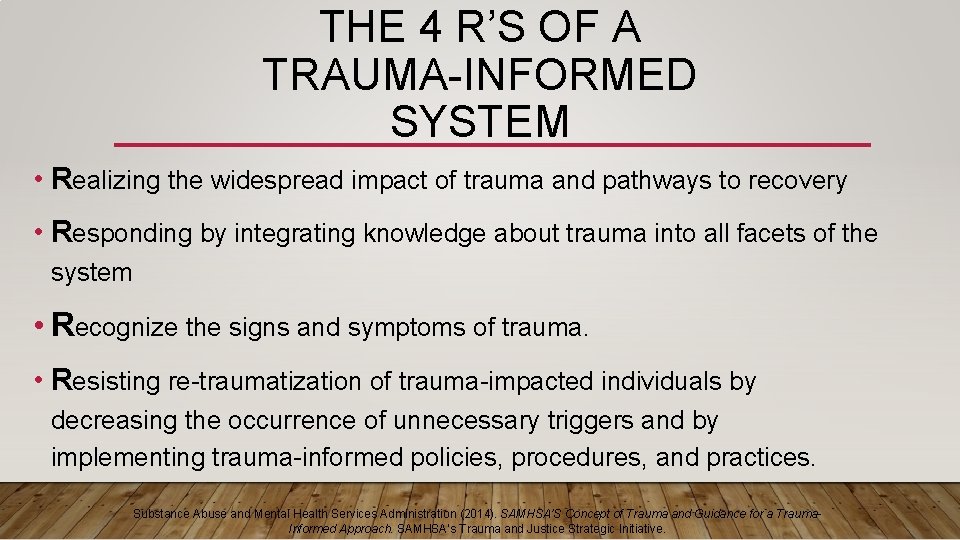
THE 4 R’S OF A TRAUMA-INFORMED SYSTEM • Realizing the widespread impact of trauma and pathways to recovery • Responding by integrating knowledge about trauma into all facets of the system • Recognize the signs and symptoms of trauma. • Resisting re-traumatization of trauma-impacted individuals by decreasing the occurrence of unnecessary triggers and by implementing trauma-informed policies, procedures, and practices. Substance Abuse and Mental Health Services Administration (2014). SAMHSA’S Concept of Trauma and Guidance for a Trauma. Informed Approach. SAMHSA’s Trauma and Justice Strategic Initiative.
WHY TRAUMA IS NOT ADDRESSED? q Lack of time q Uncomfortable q Lack of awareness q Lack of training q Misconceptions q Does not have necessary tools q OTHER?
Sourcehttps: //developingchild. harvard. edu/science/d eep-dives/adultcapabilities/
PREVENTING BURNOUT, COMPASSION FATIGUE AND SECONDARY TRAUMA • Burnout has to do with the stress and frustration caused by the workplace: poor pay, unrealistic demands, inadequate supervision etc. • Compassion Fatigue refers to the profound emotional, mental and physical adverse impact that takes place when helpers are unable to refuel and regenerate.
Thank You Julie Nicholson julie. m. Nicholson@gmail. com Julie Kurtz juliekurtzconsulting@gmail. com 18