
Trauma informed holistic approaches to supporting people with



- Slides: 63
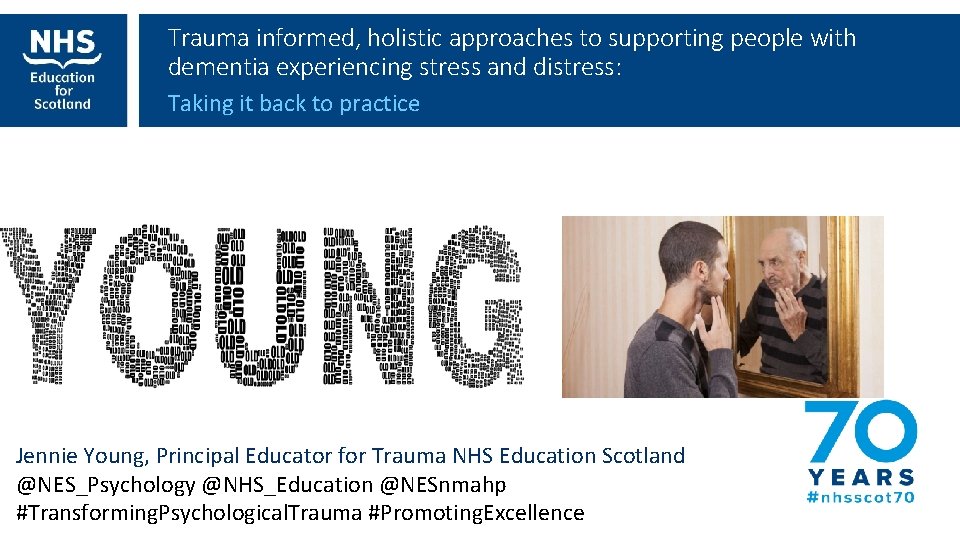
Trauma informed, holistic approaches to supporting people with dementia experiencing stress and distress: Taking it back to practice Jennie Young, Principal Educator for Trauma NHS Education Scotland @NES_Psychology @NHS_Education @NESnmahp #Transforming. Psychological. Trauma #Promoting. Excellence
NHS Education for Scotland Our hope for today…. • Increase your understanding of trauma informed care principles and how this can positively impact on care and support for older people and people with dementia • Reconsider the concepts of stress and distress in dementia • Increase your understanding and insight into the risk factors and prevention of trauma induced stress and distress • Increase your awareness and knowledge of the interrelationship between dementia, trauma, stress and distress • Explore best practice in assessment, treatment and support options for people with multiple complex conditions including dementia • Meet colleagues from a range of health and care settings, share experiences, ideas and good practices
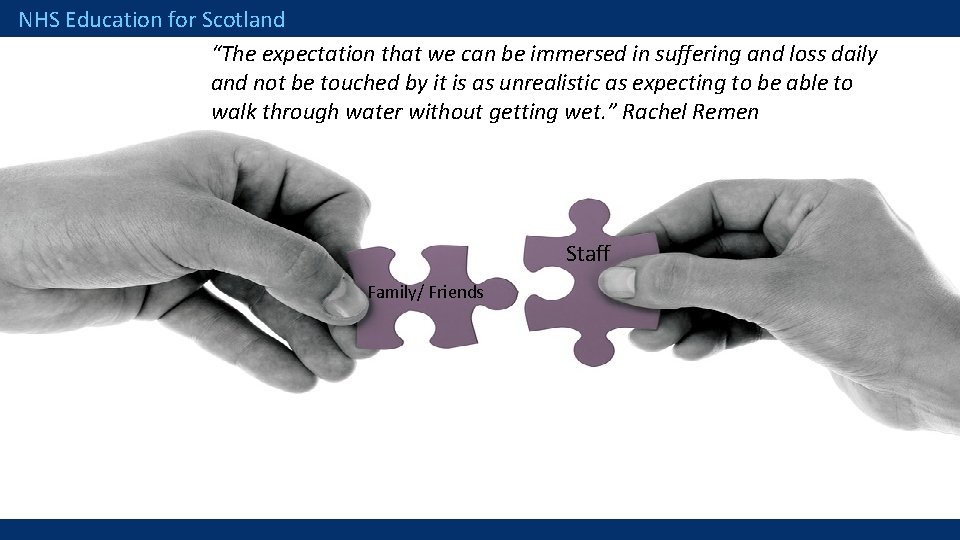
NHS Education for Scotland “The expectation that we can be immersed in suffering and loss daily and not be touched by it is as unrealistic as expecting to be able to walk through water without getting wet. ” Rachel Remen Staff Family/ Friends
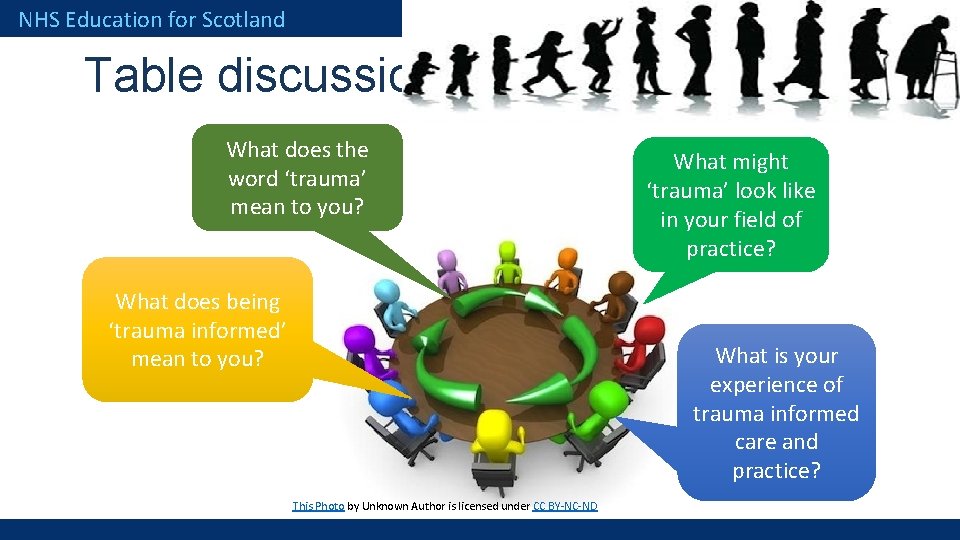
NHS Education for Scotland Table discussion What does the word ‘trauma’ mean to you? What does being ‘trauma informed’ mean to you? What might ‘trauma’ look like in your field of practice? What is your experience of trauma informed care and practice? This Photo by Unknown Author is licensed under CC BY-NC-ND
NHS Education for Scotland How we see things matters…. .
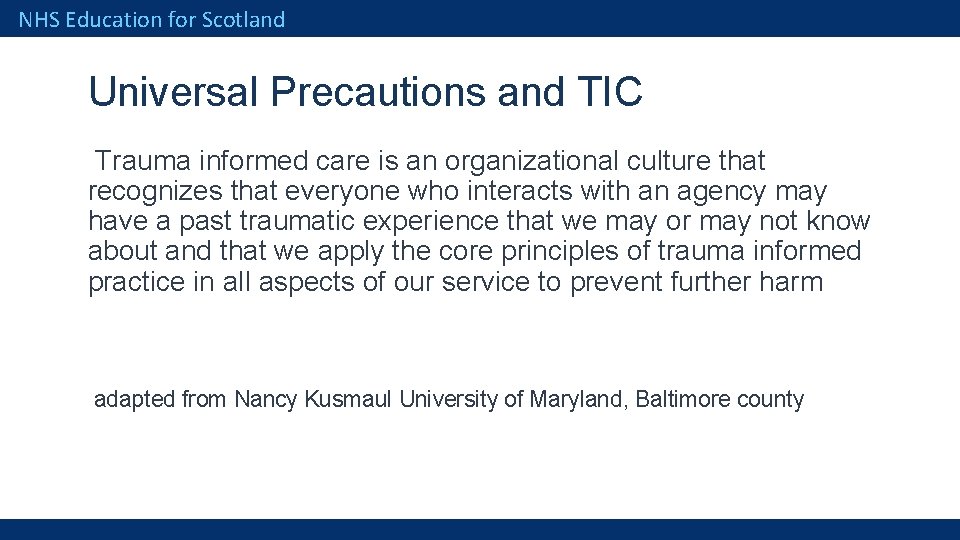
NHS Education for Scotland Universal Precautions and TIC Trauma informed care is an organizational culture that recognizes that everyone who interacts with an agency may have a past traumatic experience that we may or may not know about and that we apply the core principles of trauma informed practice in all aspects of our service to prevent further harm adapted from Nancy Kusmaul University of Maryland, Baltimore county
NHS Education for Scotland What? - What is Trauma? So What? – Why does it matter? Now What? – How can we respond?
1 What do we mean by trauma? 8
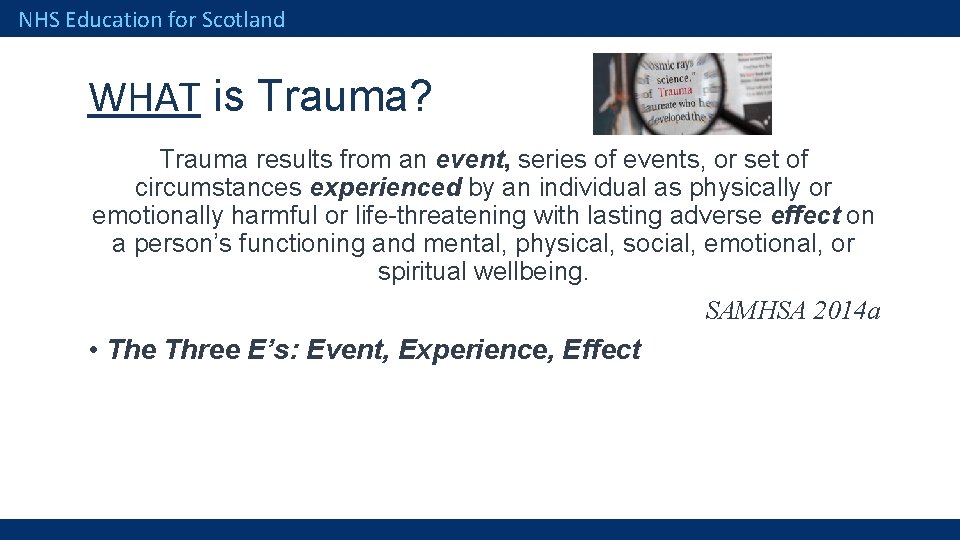
NHS Education for Scotland WHAT is Trauma? Trauma results from an event, series of events, or set of circumstances experienced by an individual as physically or emotionally harmful or life-threatening with lasting adverse effect on a person’s functioning and mental, physical, social, emotional, or spiritual wellbeing. SAMHSA 2014 a • The Three E’s: Event, Experience, Effect
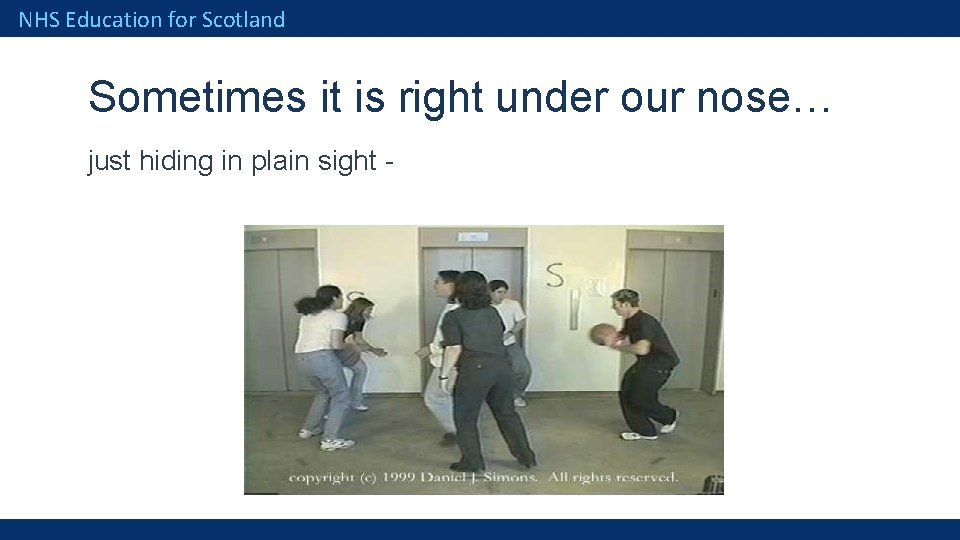
NHS Education for Scotland Sometimes it is right under our nose… just hiding in plain sight -
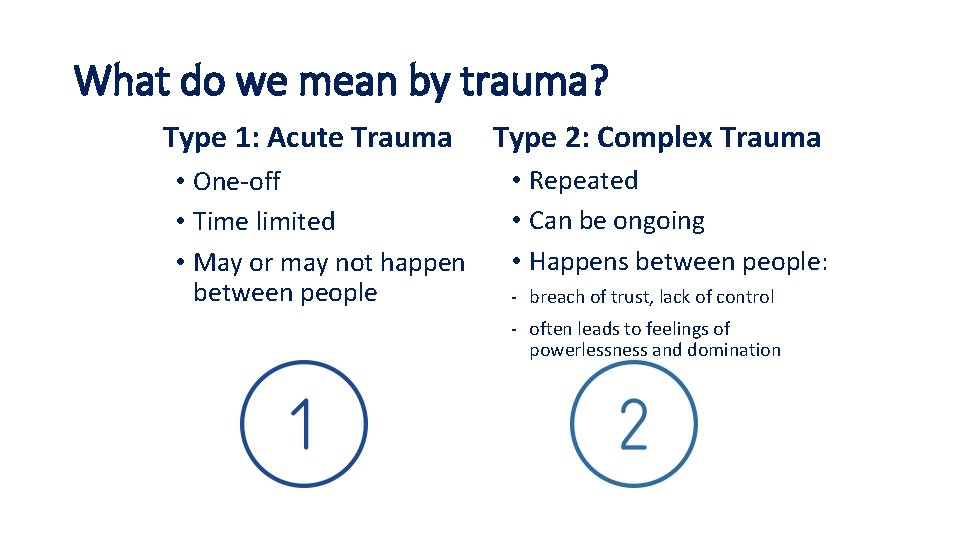
What do we mean by trauma? Type 1: Acute Trauma • One-off • Time limited • May or may not happen between people Type 2: Complex Trauma • Repeated • Can be ongoing • Happens between people: - breach of trust, lack of control - often leads to feelings of powerlessness and domination
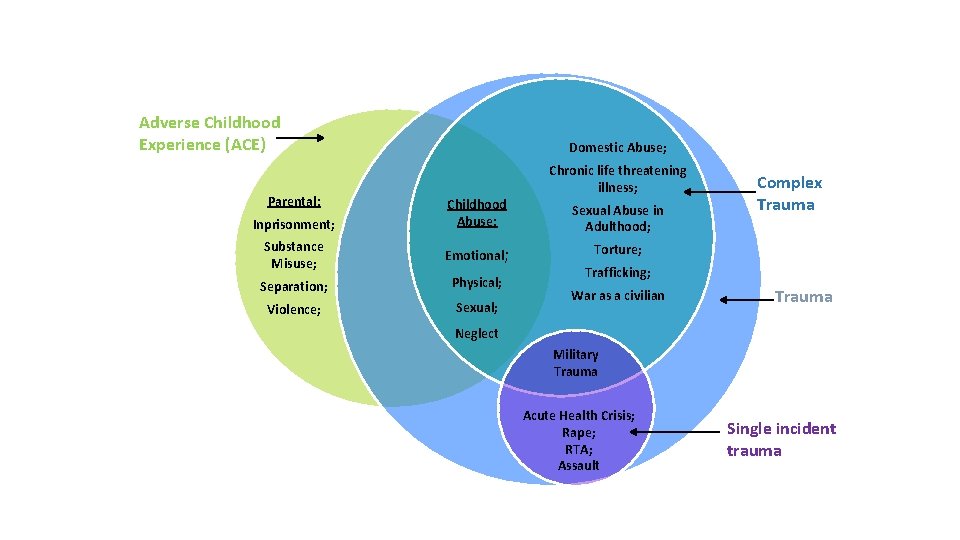
Adverse Childhood Experience (ACE) Parental: Domestic Abuse; Inprisonment; Childhood Abuse: Substance Misuse; Emotional; Separation; Physical; Violence; Sexual; Chronic life threatening illness; Sexual Abuse in Adulthood; Complex Trauma Torture; Trafficking; War as a civilian Trauma Neglect Military Trauma Acute Health Crisis; Rape; RTA; Assault Single incident trauma
NHS Education for Scotland Realising the range of impacts of trauma Group exercise Thanks to Scottish Women’s Aid for the use of this exercise
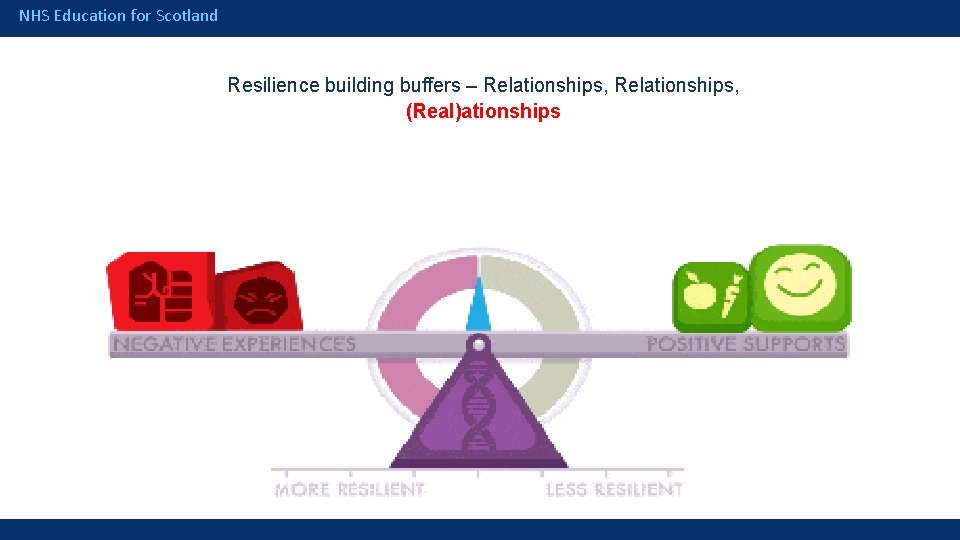
NHS Education for Scotland Resilience building buffers – Relationships, (Real)ationships
2 How common is trauma? 15
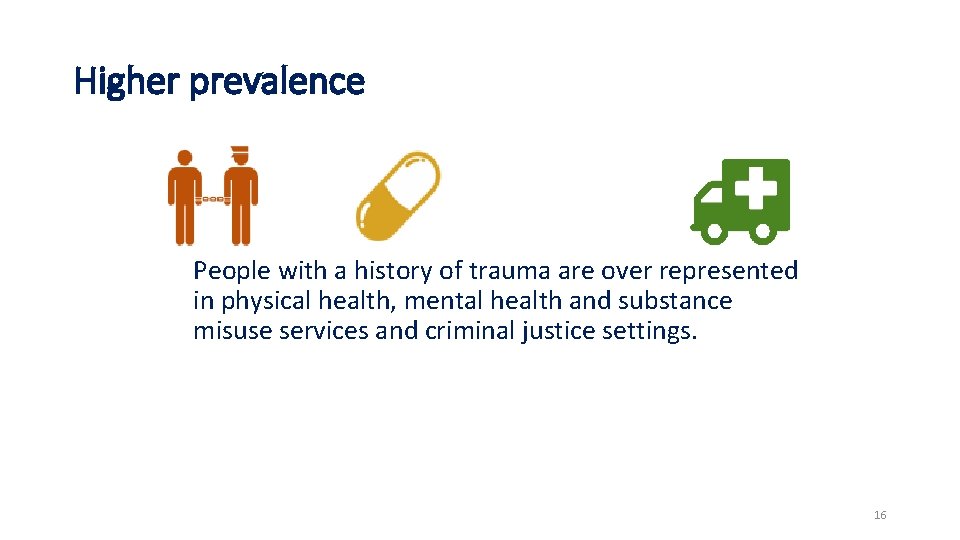
Higher prevalence People with a history of trauma are over represented in physical health, mental health and substance misuse services and criminal justice settings. 16
When we work with people, no matter what service we offer, we are likely to come in to contact with people who have experienced trauma. 17
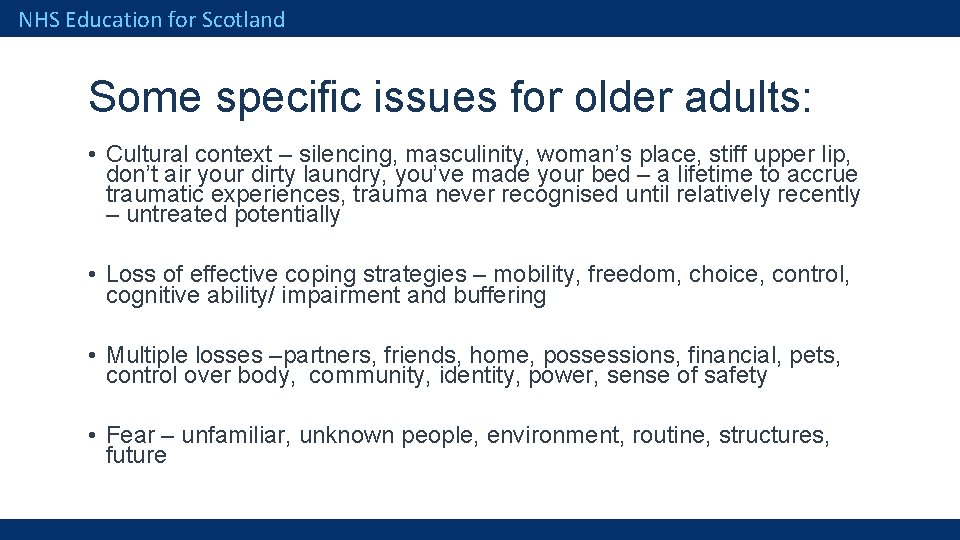
NHS Education for Scotland Some specific issues for older adults: • Cultural context – silencing, masculinity, woman’s place, stiff upper lip, don’t air your dirty laundry, you’ve made your bed – a lifetime to accrue traumatic experiences, trauma never recognised until relatively recently – untreated potentially • Loss of effective coping strategies – mobility, freedom, choice, control, cognitive ability/ impairment and buffering • Multiple losses –partners, friends, home, possessions, financial, pets, control over body, community, identity, power, sense of safety • Fear – unfamiliar, unknown people, environment, routine, structures, future
3 So what? Window of Tolerance/ Triggers and why knowing about that matters. 19
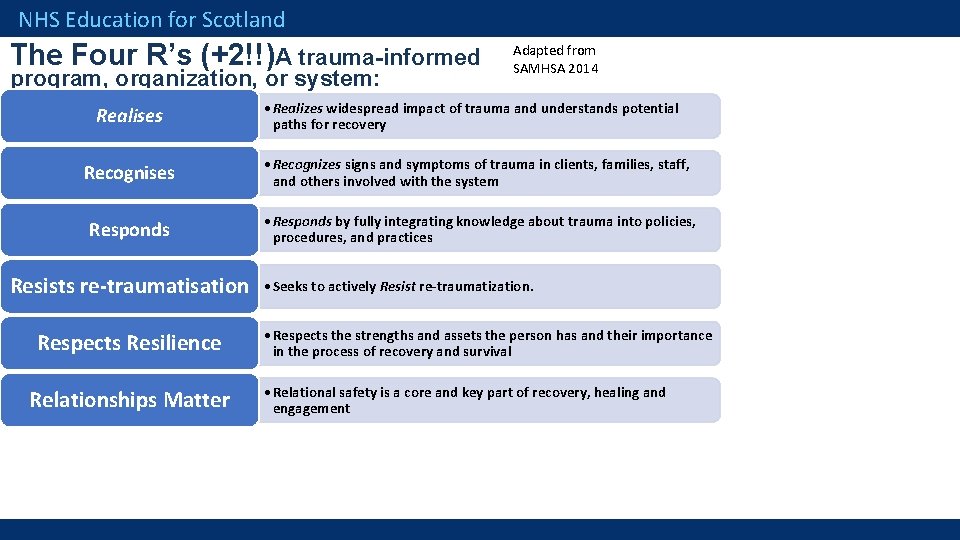
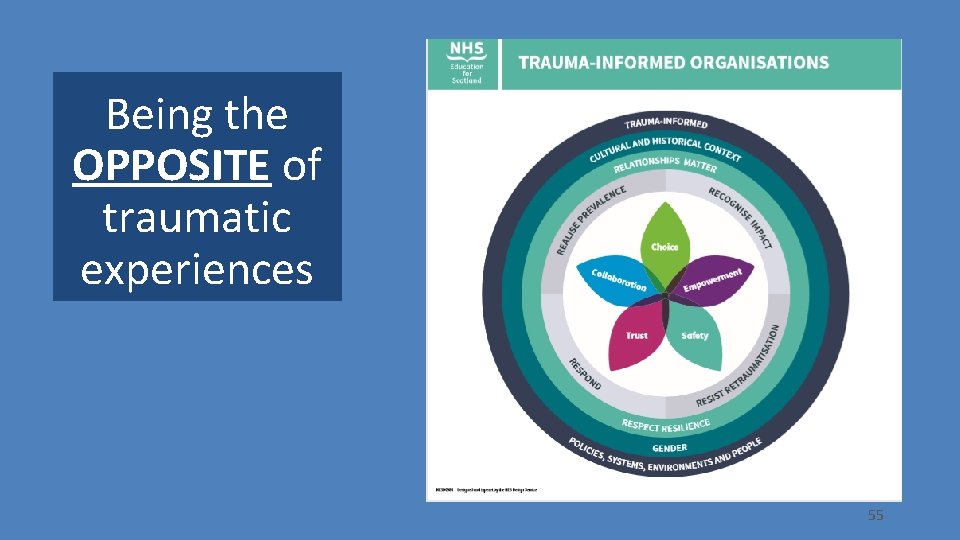
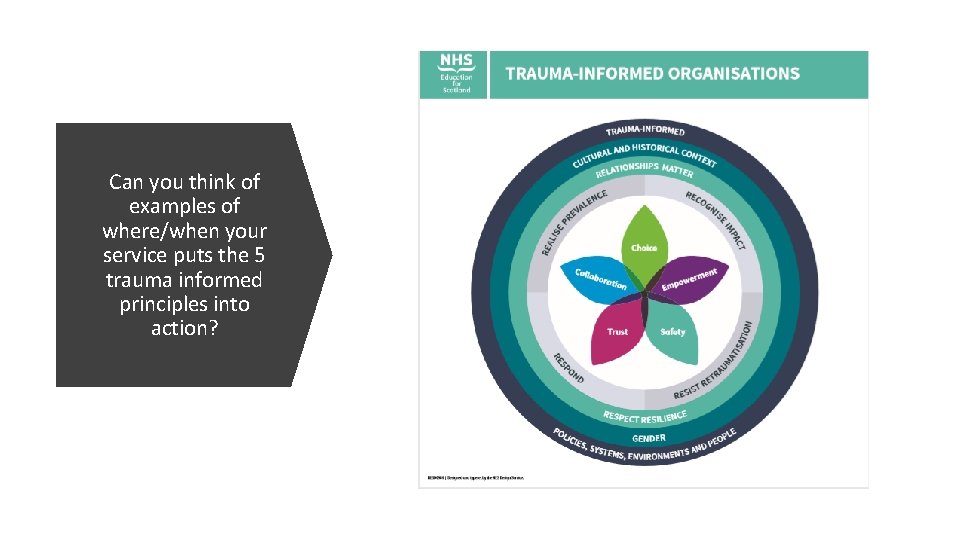
NHS Education for Scotland The Four R’s (+2!!)A trauma-informed program, organization, or system: Realises Adapted from SAMHSA 2014 • Realizes widespread impact of trauma and understands potential paths for recovery Recognises • Recognizes signs and symptoms of trauma in clients, families, staff, and others involved with the system Responds • Responds by fully integrating knowledge about trauma into policies, procedures, and practices Resists re-traumatisation Respects Resilience Relationships Matter • Seeks to actively Resist re-traumatization. • Respects the strengths and assets the person has and their importance in the process of recovery and survival • Relational safety is a core and key part of recovery, healing and engagement
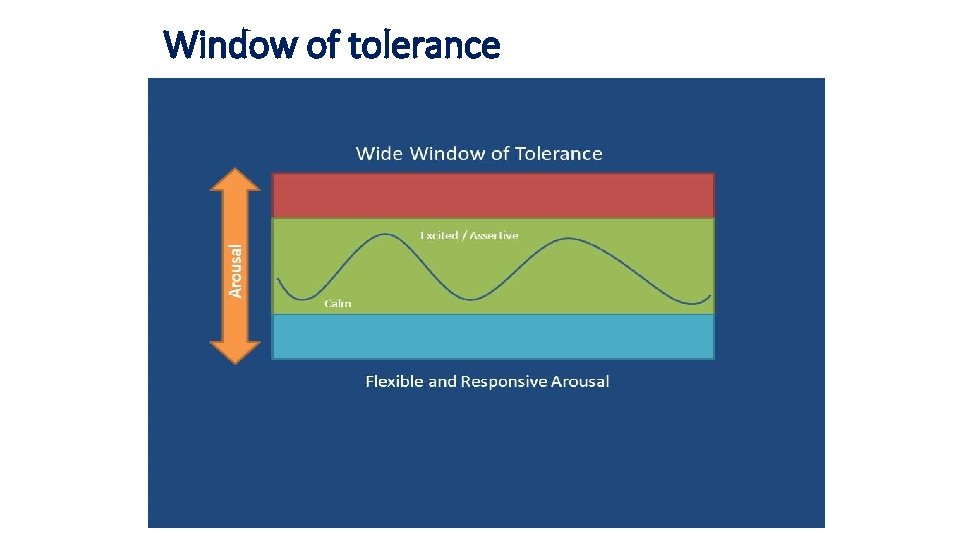
Window of tolerance
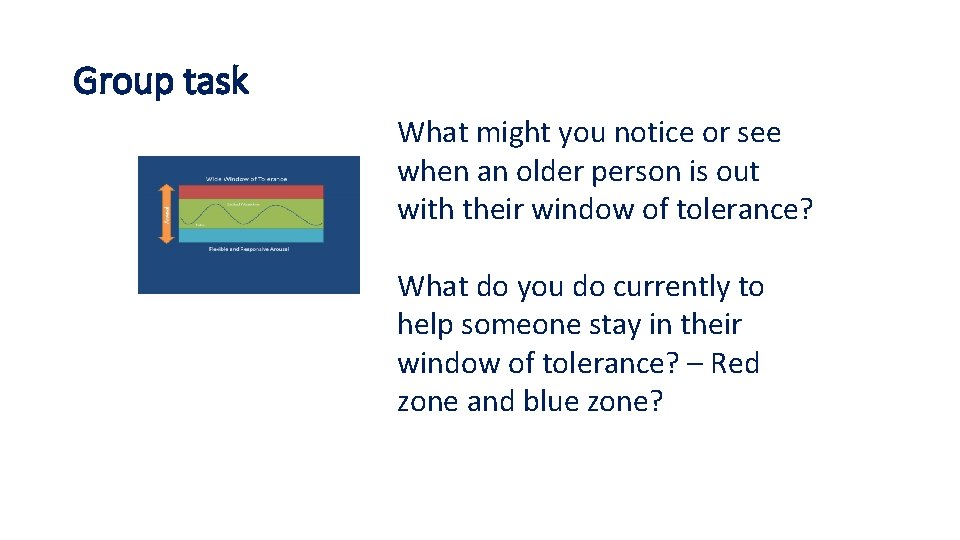
Group task What might you notice or see when an older person is out with their window of tolerance? What do you do currently to help someone stay in their window of tolerance? – Red zone and blue zone?
NHS Education for Scotland The Trouble with Triggers…. . The past is present – the language of sensation and emotion, non temporal – no relation to time. Survival brain engaged. When we get triggered, we experience sudden and overwhelming feelings, sensations, and impulses that convey the sense that • “I am in danger – RIGHT NOW!!” not • “I was in danger then” Janina Fisher, 2015
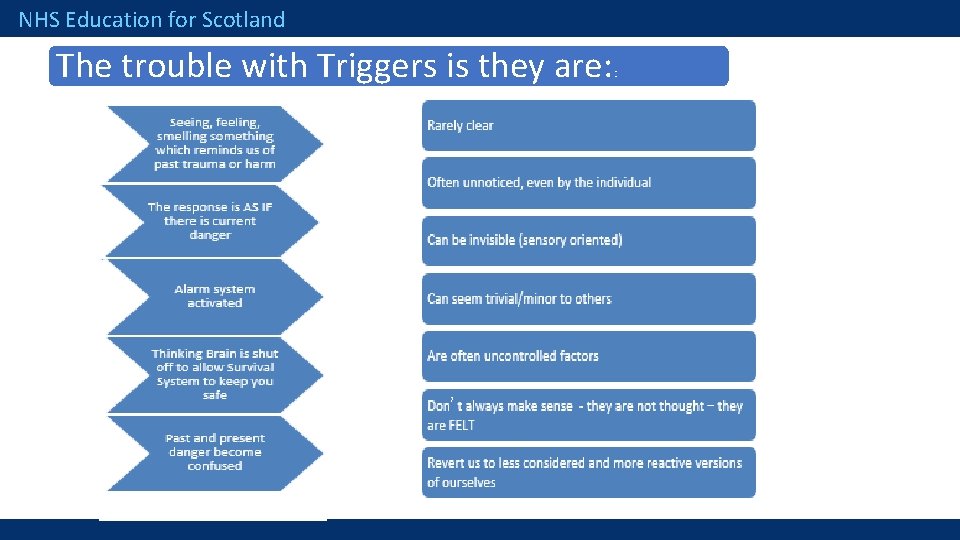
NHS Education for Scotland The trouble with Triggers is they are: :
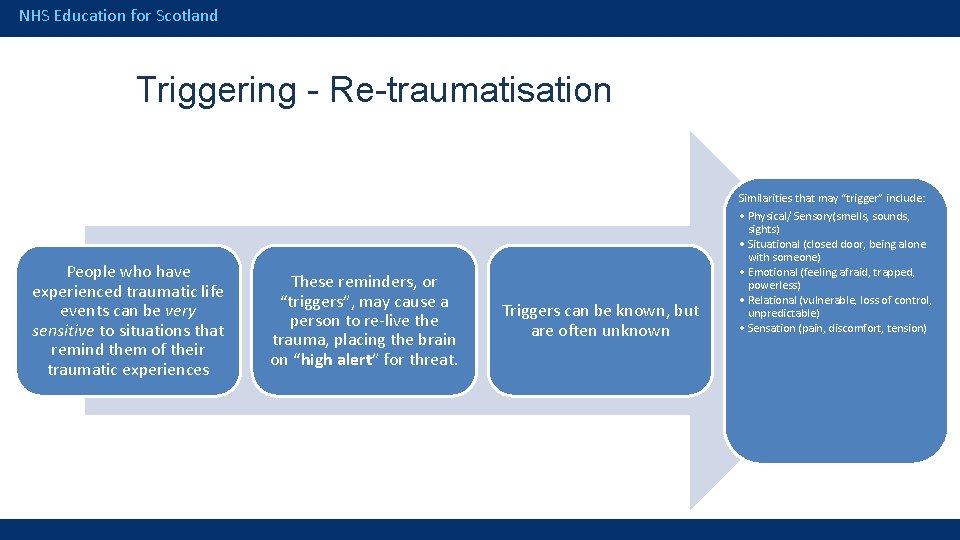
NHS Education for Scotland Triggering - Re-traumatisation People who have experienced traumatic life events can be very sensitive to situations that remind them of their traumatic experiences These reminders, or “triggers”, may cause a person to re-live the trauma, placing the brain on “high alert” for threat. Triggers can be known, but are often unknown Similarities that may “trigger” include: • Physical/ Sensory(smells, sounds, sights) • Situational (closed door, being alone with someone) • Emotional (feeling afraid, trapped, powerless) • Relational (vulnerable, loss of control, unpredictable) • Sensation (pain, discomfort, tension)
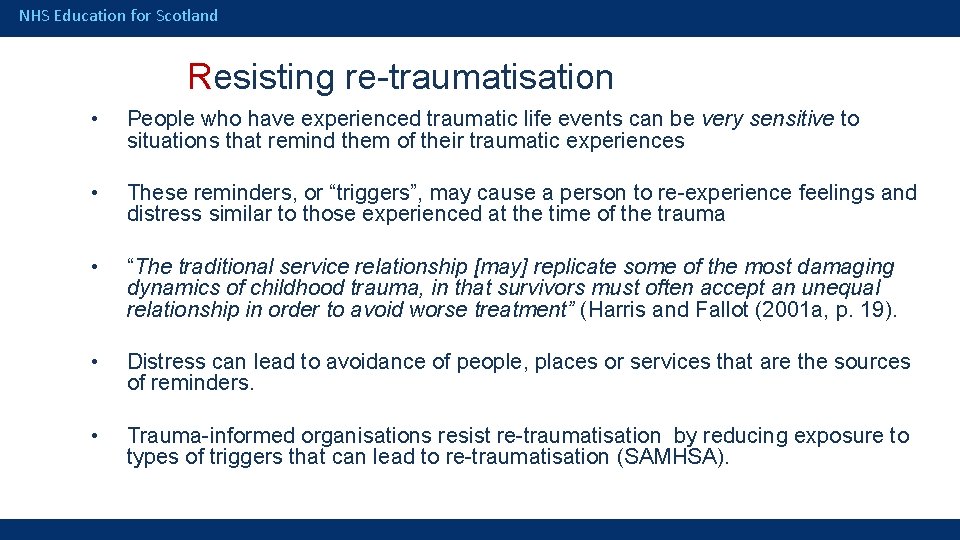
NHS Education for Scotland Resisting re-traumatisation • People who have experienced traumatic life events can be very sensitive to situations that remind them of their traumatic experiences • These reminders, or “triggers”, may cause a person to re-experience feelings and distress similar to those experienced at the time of the trauma • “The traditional service relationship [may] replicate some of the most damaging dynamics of childhood trauma, in that survivors must often accept an unequal relationship in order to avoid worse treatment” (Harris and Fallot (2001 a, p. 19). • Distress can lead to avoidance of people, places or services that are the sources of reminders. • Trauma-informed organisations resist re-traumatisation by reducing exposure to types of triggers that can lead to re-traumatisation (SAMHSA).
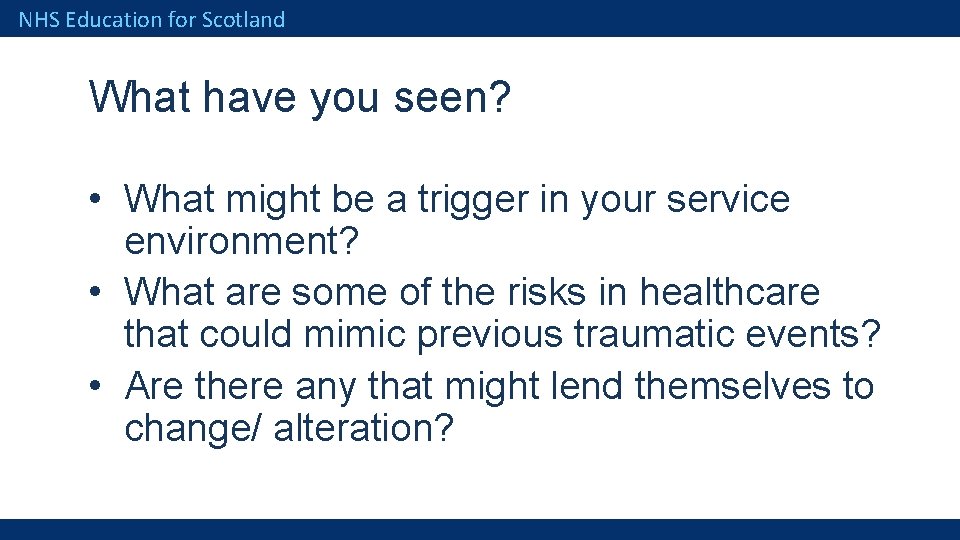
NHS Education for Scotland What have you seen? • What might be a trigger in your service environment? • What are some of the risks in healthcare that could mimic previous traumatic events? • Are there any that might lend themselves to change/ alteration?
Trauma informed care The person living with dementia
These sessions will explore • resurfacing of trauma in dementia • care that surfaces trauma • experiences in dementia that create trauma Outcomes
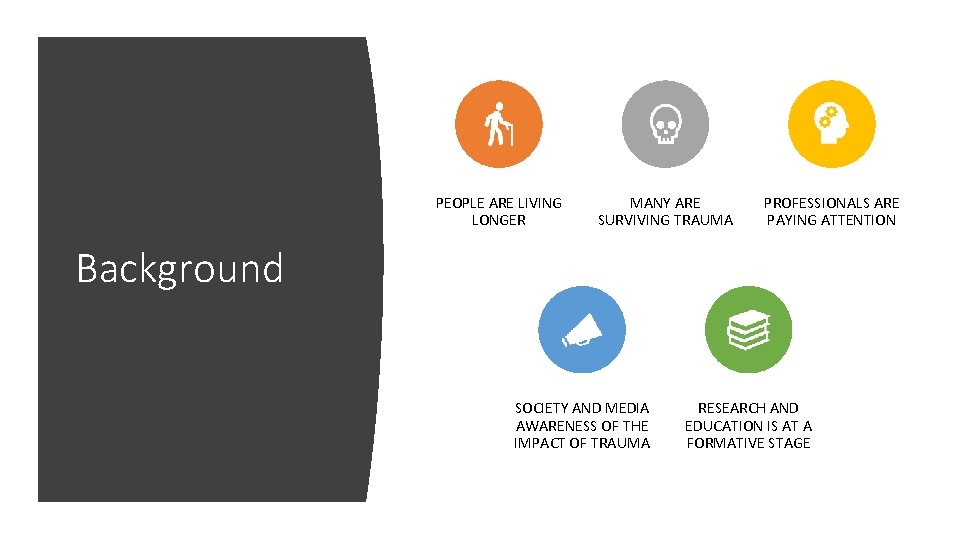
PEOPLE ARE LIVING LONGER MANY ARE SURVIVING TRAUMA PROFESSIONALS ARE PAYING ATTENTION Background SOCIETY AND MEDIA AWARENESS OF THE IMPACT OF TRAUMA RESEARCH AND EDUCATION IS AT A FORMATIVE STAGE
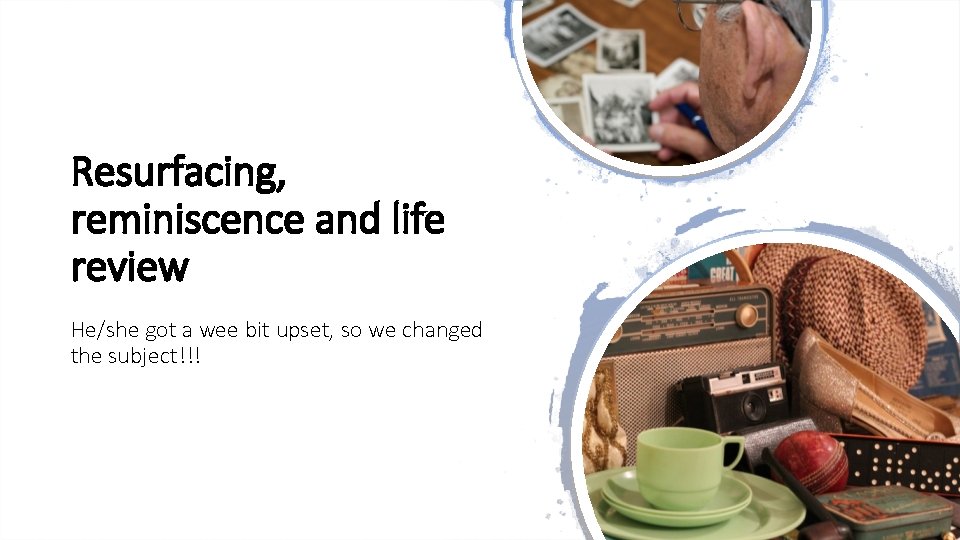
Resurfacing, reminiscence and life review He/she got a wee bit upset, so we changed the subject!!!
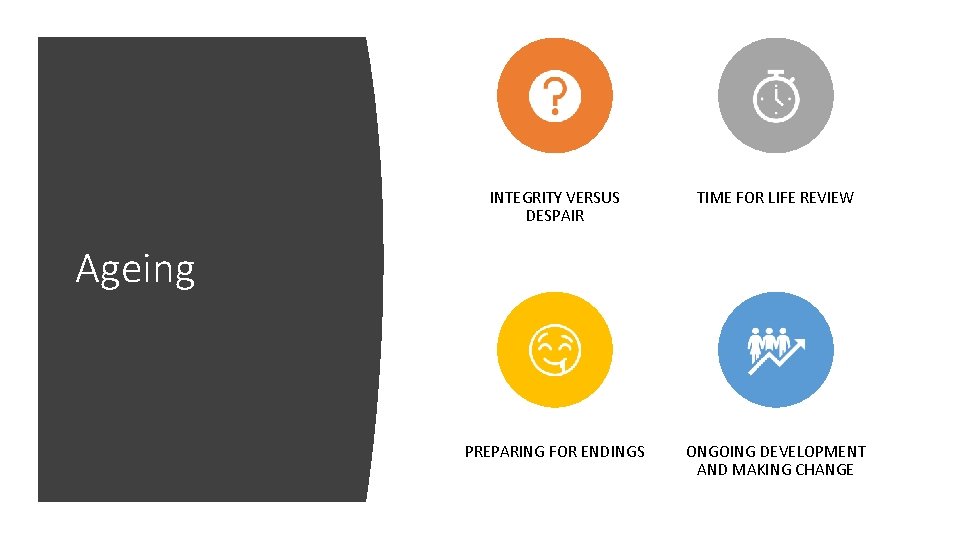
INTEGRITY VERSUS DESPAIR TIME FOR LIFE REVIEW PREPARING FOR ENDINGS ONGOING DEVELOPMENT AND MAKING CHANGE Ageing
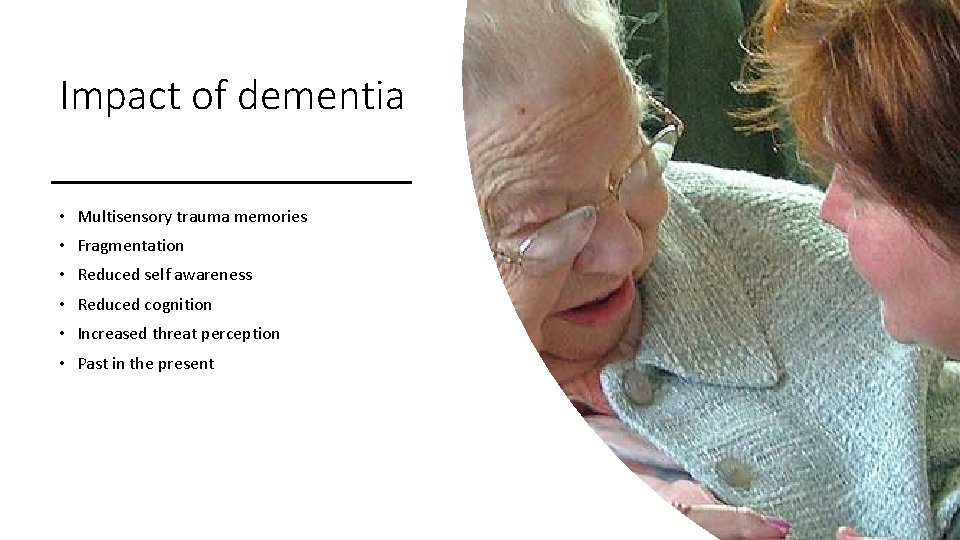
Impact of dementia • Multisensory trauma memories • Fragmentation • Reduced self awareness • Reduced cognition • Increased threat perception • Past in the present
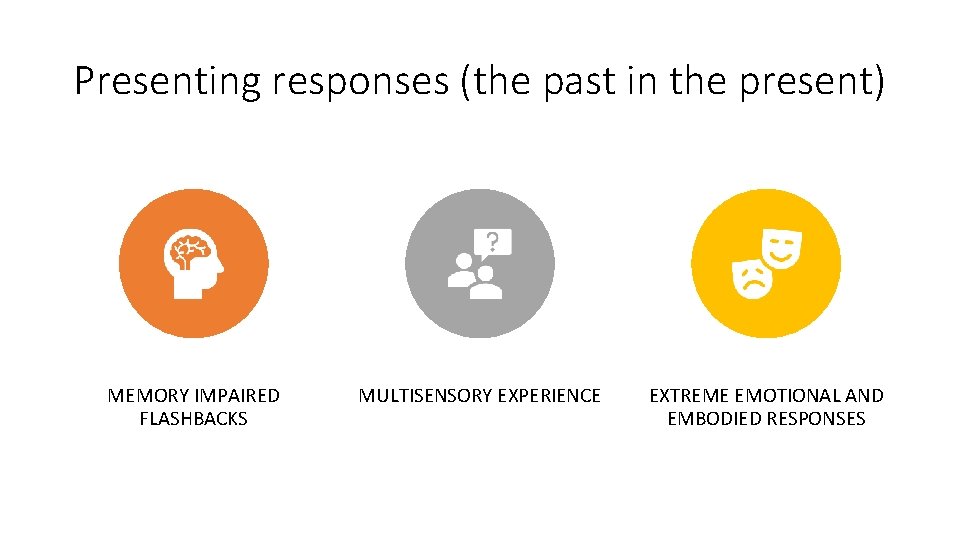
Presenting responses (the past in the present) MEMORY IMPAIRED FLASHBACKS MULTISENSORY EXPERIENCE EXTREME EMOTIONAL AND EMBODIED RESPONSES
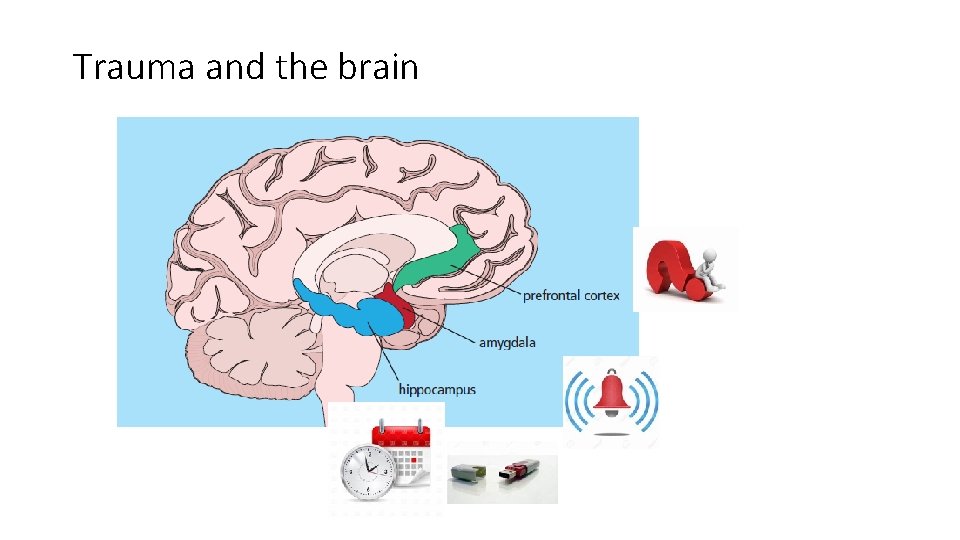
Trauma and the brain
Resurfacing of trauma in dementia Delayed onset post traumatic stress disorder Could we explore resurfacing trauma? How could we explore trauma?
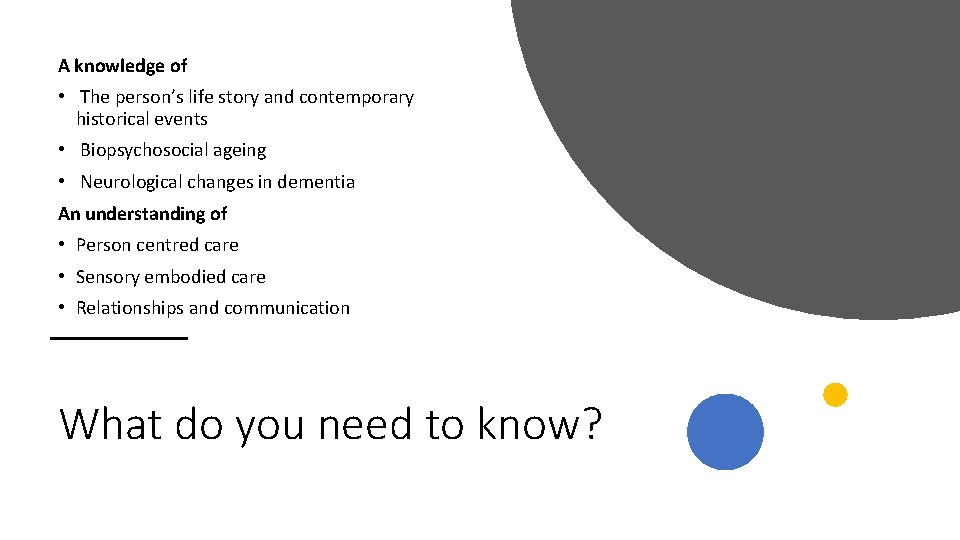
A knowledge of • The person’s life story and contemporary historical events • Biopsychosocial ageing • Neurological changes in dementia An understanding of • Person centred care • Sensory embodied care • Relationships and communication What do you need to know?
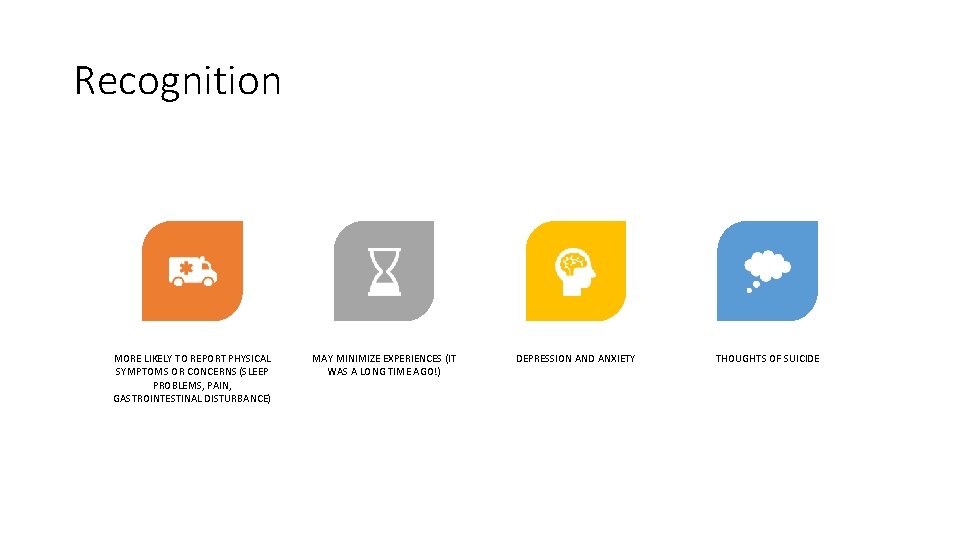
Recognition MORE LIKELY TO REPORT PHYSICAL SYMPTOMS OR CONCERNS (SLEEP PROBLEMS, PAIN, GASTROINTESTINAL DISTURBANCE) MAY MINIMIZE EXPERIENCES (IT WAS A LONG TIME AGO!) DEPRESSION AND ANXIETY THOUGHTS OF SUICIDE
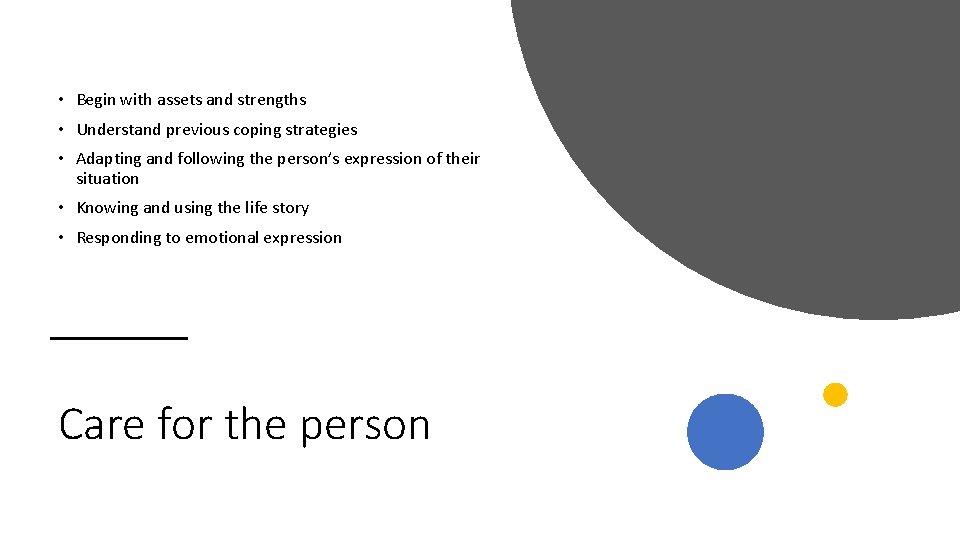
• Begin with assets and strengths • Understand previous coping strategies • Adapting and following the person’s expression of their situation • Knowing and using the life story • Responding to emotional expression Care for the person
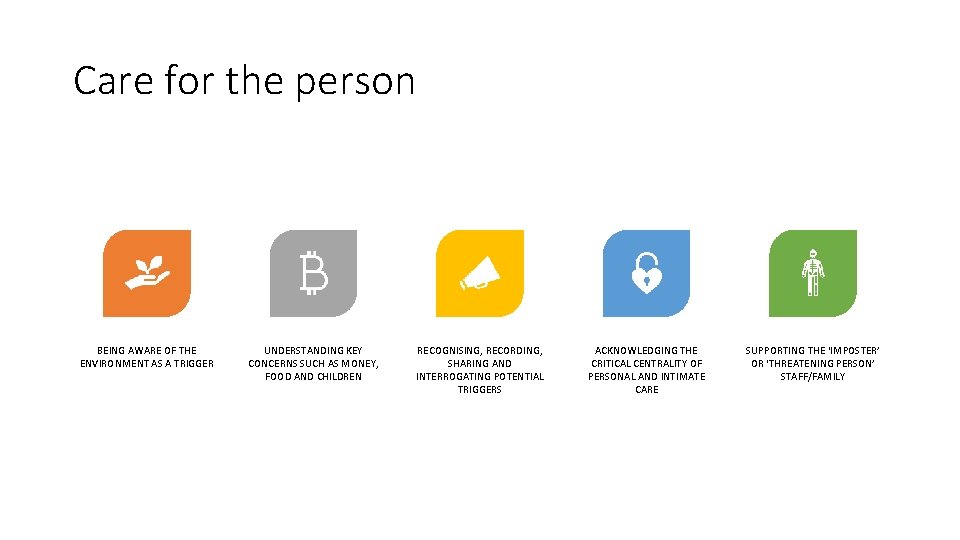
Care for the person BEING AWARE OF THE ENVIRONMENT AS A TRIGGER UNDERSTANDING KEY CONCERNS SUCH AS MONEY, FOOD AND CHILDREN RECOGNISING, RECORDING, SHARING AND INTERROGATING POTENTIAL TRIGGERS ACKNOWLEDGING THE CRITICAL CENTRALITY OF PERSONAL AND INTIMATE CARE SUPPORTING THE ‘IMPOSTER’ OR ‘THREATENING PERSON’ STAFF/FAMILY
Working with life history can: • Identify potential adverse events or situations • Identify previous coping strategies • Explore and record comforting activities and people. • Explore the person’s experience and responses to pain • Explore the person’s experience and responses to distressing events Life Stories
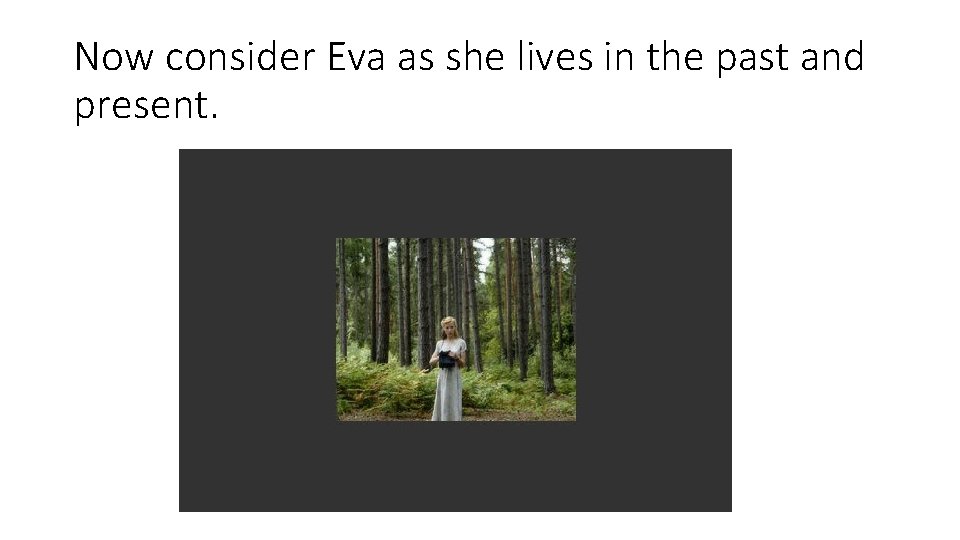
Now consider Eva as she lives in the past and present.
Trauma informed dementia care The present through a trauma informed lens
Is the experience of dementia a trauma?
Transitions https: //www. bing. com/videos/search? q=what+do+you+see+nurse+yo utube&&view=detail&mid=D 527 BBA 40 E 079 C 6 D 9305 D 527 BBA 40 E 079 C 6 D 9305&rvsmid=DFC 342 A 9 F 3 DBA 628910 D &FORM=VDQVAP
Fundamentals of care What are you doing?
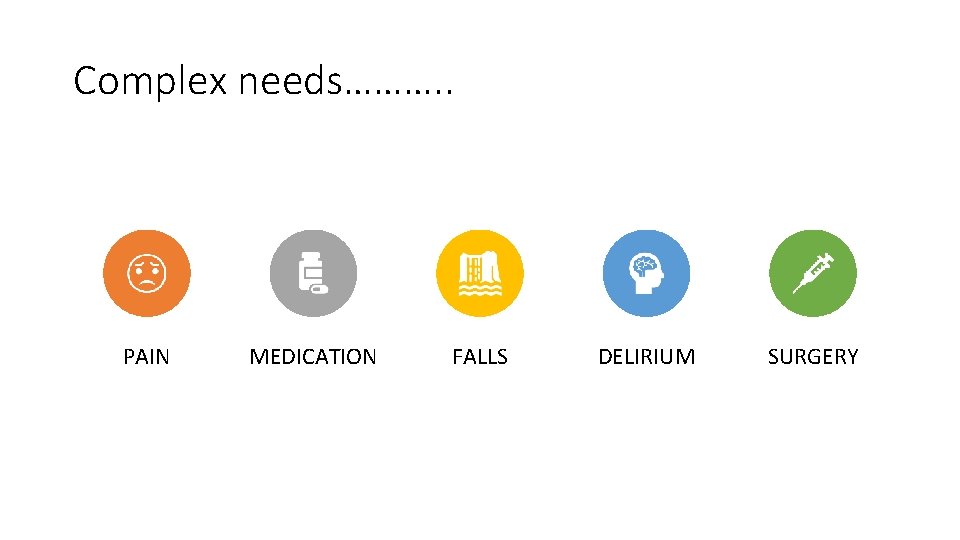
Complex needs………. . PAIN MEDICATION FALLS DELIRIUM SURGERY
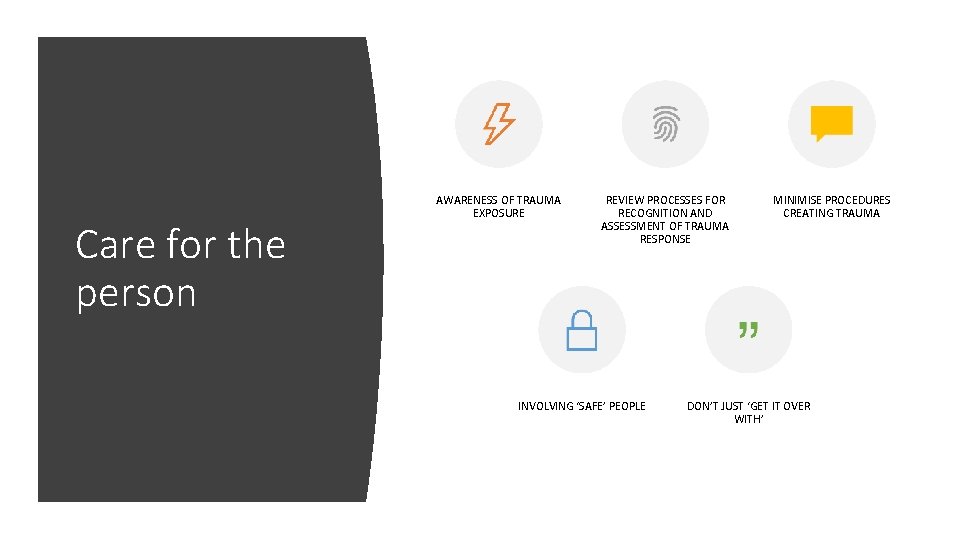
Care for the person AWARENESS OF TRAUMA EXPOSURE REVIEW PROCESSES FOR RECOGNITION AND ASSESSMENT OF TRAUMA RESPONSE INVOLVING ‘SAFE’ PEOPLE MINIMISE PROCEDURES CREATING TRAUMA DON’T JUST ‘GET IT OVER WITH’
• Ganzel, B. L. (2018) Trauma-Informed Hospice and Palliative Care The Gerontologist Vol 58(3) pp 409 -419 • Gransjon et al. , (2019) Caring for older people with dementia reliving past trauma. Nursing Ethics pp 1 -13 doi 10. 1177/0969733019864152 • Martinez-Clavera et al (2017) Delayed-onset posttraumatic stress disorder symptoms in dementia Progress in Neurology and Psychiatry Vol 21(3) pp 36 -41 Resources
46 Trauma Informed Care
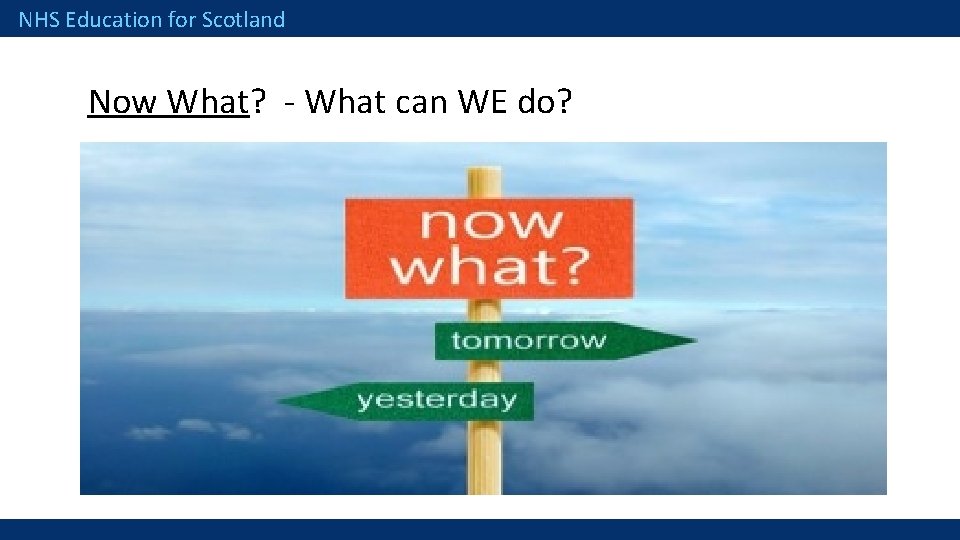
NHS Education for Scotland Now What? - What can WE do?
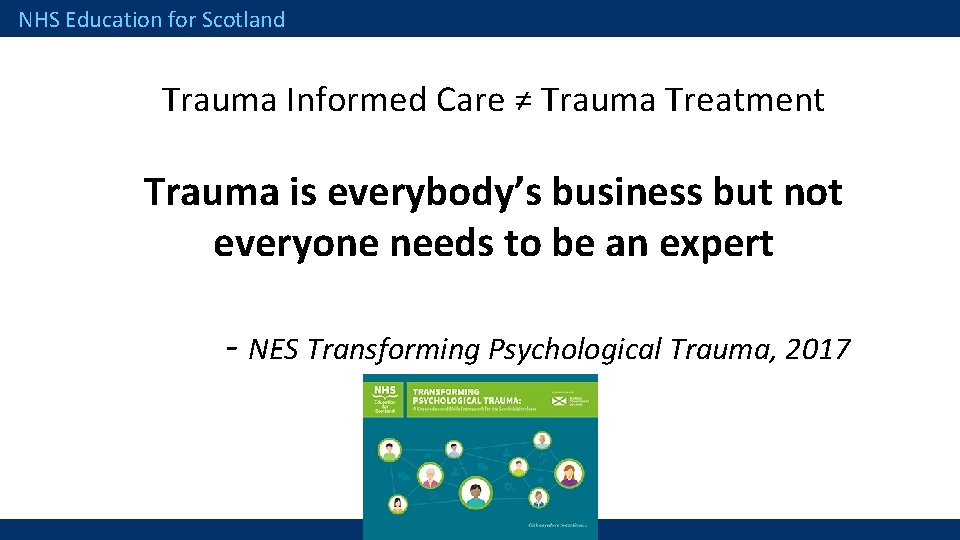
NHS Education for Scotland Trauma Informed Care ≠ Trauma Treatment Trauma is everybody’s business but not everyone needs to be an expert - NES Transforming Psychological Trauma, 2017
NHS Education for Scotland Shifting your perspective with a ‘trauma lens’ Instead of “What’s Wrong With You? ” ASK “What Happened to You? ” Provides context, fosters compassion, helps us to see strengths
Being the OPPOSITE of traumatic experiences 55
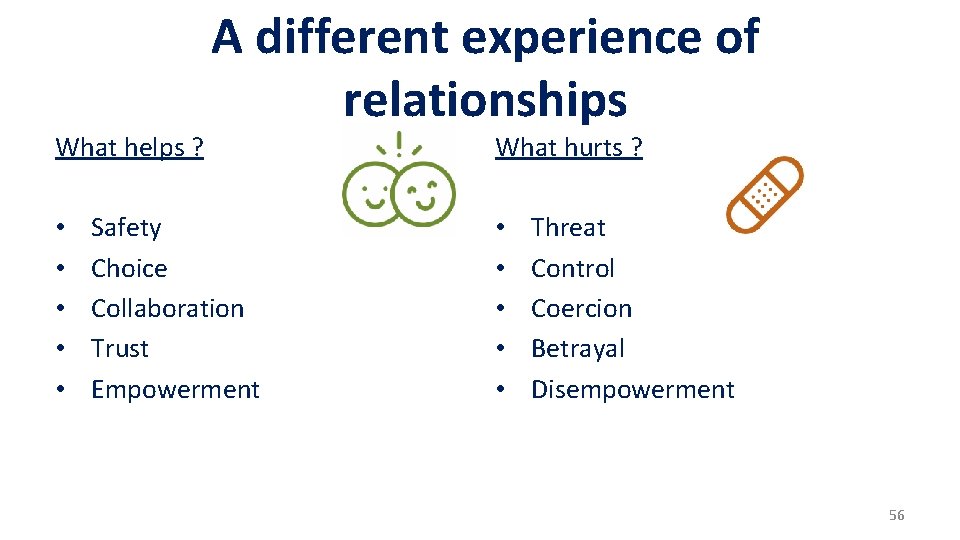
What helps ? • • • A different experience of relationships Safety Choice Collaboration Trust Empowerment What hurts ? • • • Threat Control Coercion Betrayal Disempowerment 56
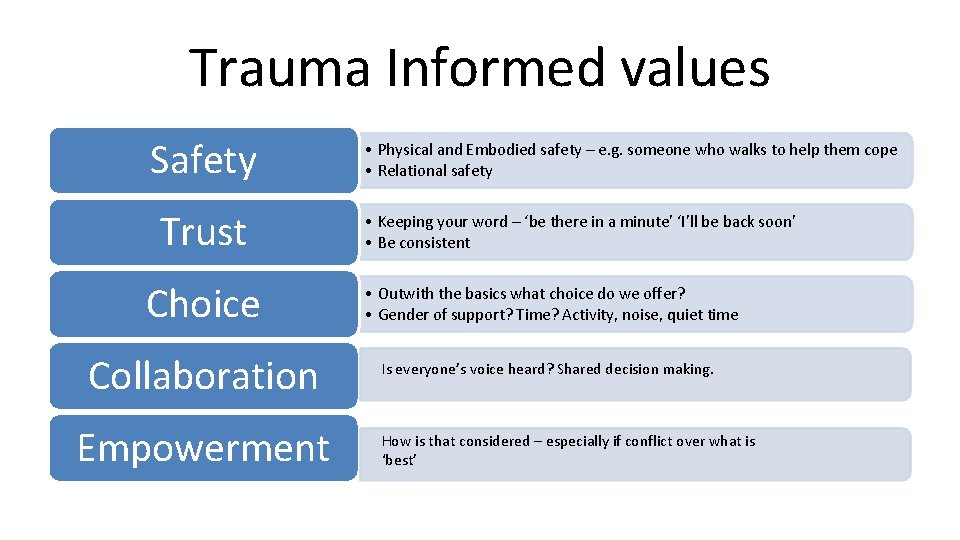
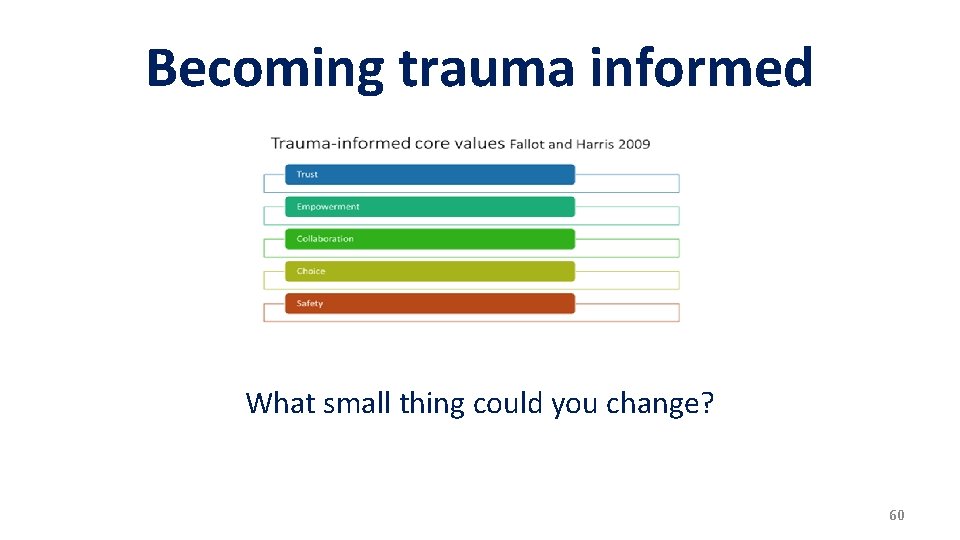
Trauma Informed values Safety Trust • Physical and Embodied safety – e. g. someone who walks to help them cope • Relational safety • Keeping your word – ‘be there in a minute’ ‘I’ll be back soon’ • Be consistent Choice • Outwith the basics what choice do we offer? • Gender of support? Time? Activity, noise, quiet time Collaboration Is everyone’s voice heard? Shared decision making. Empowerment How is that considered – especially if conflict over what is ‘best’
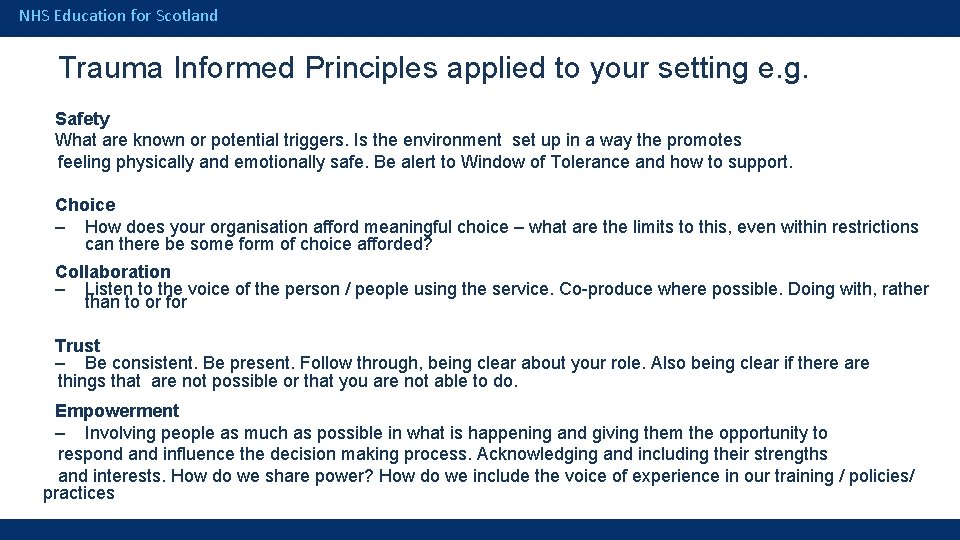
NHS Education for Scotland Trauma Informed Principles applied to your setting e. g. Safety What are known or potential triggers. Is the environment set up in a way the promotes feeling physically and emotionally safe. Be alert to Window of Tolerance and how to support. Choice – How does your organisation afford meaningful choice – what are the limits to this, even within restrictions can there be some form of choice afforded? Collaboration – Listen to the voice of the person / people using the service. Co-produce where possible. Doing with, rather than to or for Trust – Be consistent. Be present. Follow through, being clear about your role. Also being clear if there are things that are not possible or that you are not able to do. Empowerment – Involving people as much as possible in what is happening and giving them the opportunity to respond and influence the decision making process. Acknowledging and including their strengths and interests. How do we share power? How do we include the voice of experience in our training / policies/ practices
Can you think of examples of where/when your service puts the 5 trauma informed principles into action?
Becoming trauma informed What small thing could you change? 60
NHS Education for Scotland Mentimeter – go to www. menti. com and enter the code 36 73 12 • What three words or short phrases are you holding in mind following today? This Photo by Unknown Author is licensed under CC BYNC-ND
NHS Education for Scotland