
Trauma Informed Care Building Resiliency through Recreational Therapy
Trauma Informed Care: Building Resiliency through Recreational Therapy Heather Bartelt, CTRS & Michelle Robers, CTRS Gundersen Health System Inpatient Behavioral Health La Crosse, WI
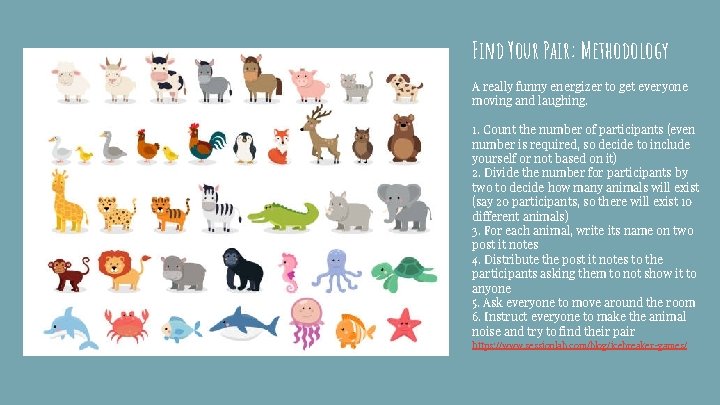
Find Your Pair: Methodology A really funny energizer to get everyone moving and laughing. 1. Count the number of participants (even number is required, so decide to include yourself or not based on it) 2. Divide the number for participants by two to decide how many animals will exist (say 20 participants, so there will exist 10 different animals) 3. For each animal, write its name on two post it notes 4. Distribute the post it notes to the participants asking them to not show it to anyone 5. Ask everyone to move around the room 6. Instruct everyone to make the animal noise and try to find their pair https: //www. sessionlab. com/blog/icebreaker-games/
Outline and Learning Outcomes Session Outline: I. ACES education: what are ACES, TIC and resiliency? Why is this important in healthcare? (30 minutes) II. How does TIC relate to our role as CTRS’? APIE process, Model of practice, Documentation, Awareness and Advocacy. (35 minutes) III. Interactive activity to demonstrate how to make programming trauma-informed. (20 minutes) IV. Questions and Final Discussion (5 minutes) Learning Outcomes: 1. Upon completion of this session, participant will demonstrate an understanding of what an ACE score is, and health outcomes related to a high score. 2. Upon completion of this session, participant will be able to verbally identify 3 ways TIC impacts the APIE process and their work as a professional. 3. Upon completion of this session, participant will be able to verbally identify 4 ways to ensure TIC programming is strengths-based, person-centered, empowering, and promotes resiliency. 4. Participant will engage in an interactive activity and verbally identify 3 Trauma-Informed aspects of the activity. 5. Participant will be able to verbally identify the impact language has on populations served.
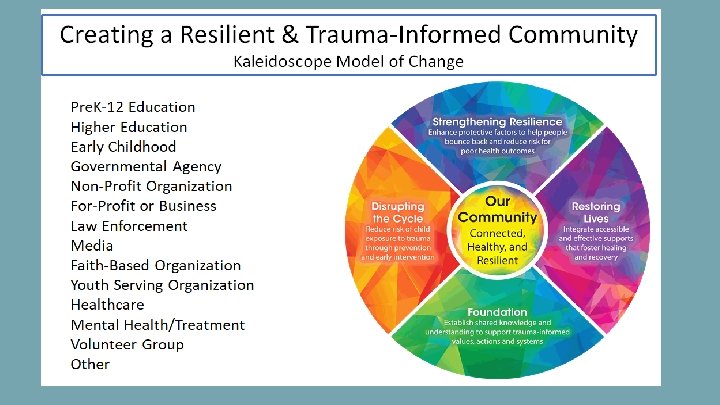
TIC: It’s not just for Behavioral Health! Everyone in the community should be informed!
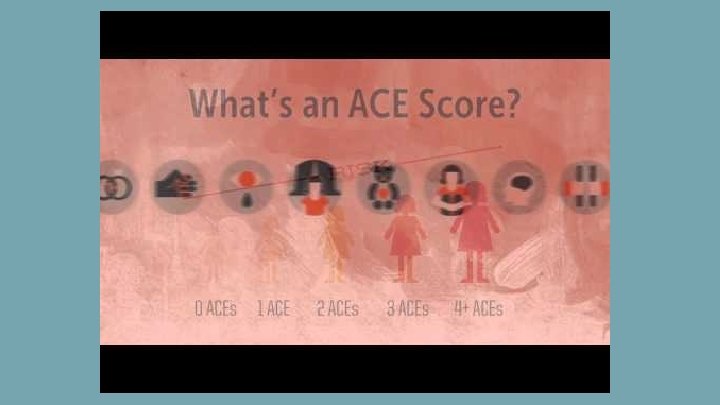

10 ACE Questions 1. Recurrent physical abuse 2. Emotional abuse 3. Sexual abuse 4. Emotional neglect 5. Physical neglect 6. An alcohol and/or drug abuser in the household 7. An incarcerated household member 8. A household member who was chronically depressed, mentally ill, institutionalized, or suicidal 9. Violence between adults in the home 10. Parental separation or divorce

ACE Score Prevalence
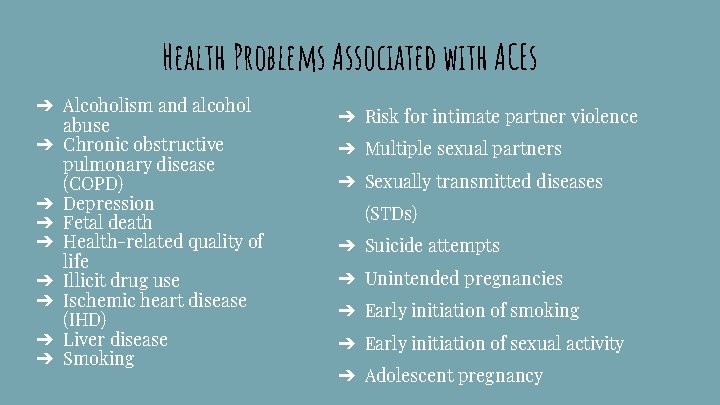
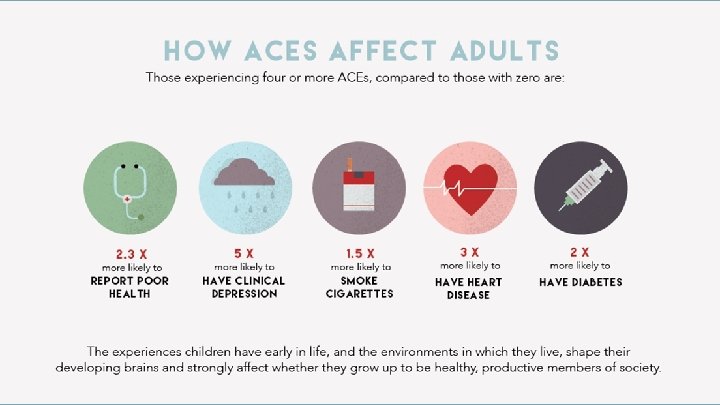
Health Problems Associated with ACEs ➔ Alcoholism and alcohol abuse ➔ Chronic obstructive pulmonary disease (COPD) ➔ Depression ➔ Fetal death ➔ Health-related quality of life ➔ Illicit drug use ➔ Ischemic heart disease (IHD) ➔ Liver disease ➔ Smoking ➔ Risk for intimate partner violence ➔ Multiple sexual partners ➔ Sexually transmitted diseases (STDs) ➔ Suicide attempts ➔ Unintended pregnancies ➔ Early initiation of smoking ➔ Early initiation of sexual activity ➔ Adolescent pregnancy
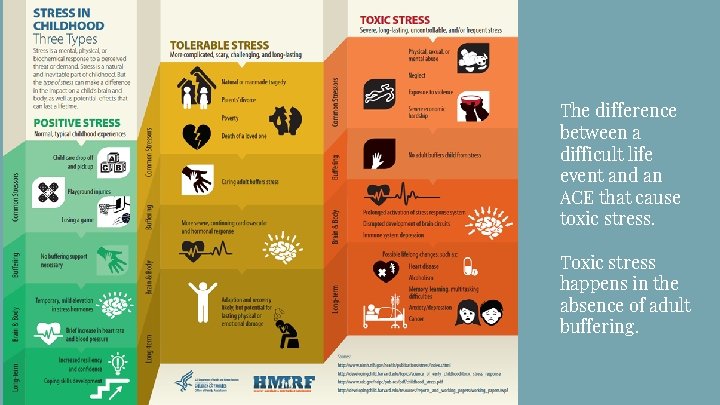
The difference between a difficult life event and an ACE that cause toxic stress. Toxic stress happens in the absence of adult buffering.
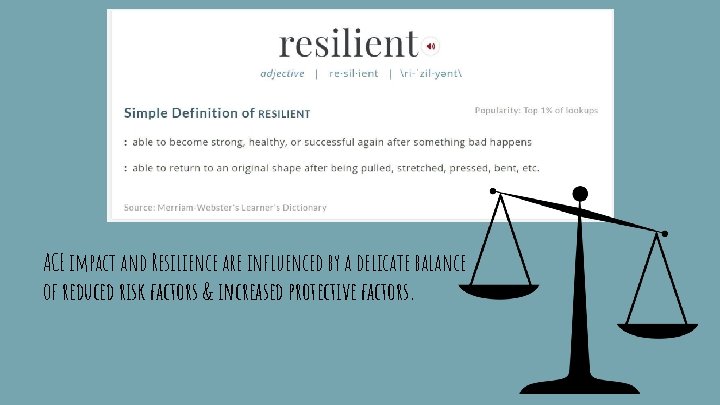
ACE impact and Resilience are influenced by a delicate balance of reduced risk factors & increased protective factors.
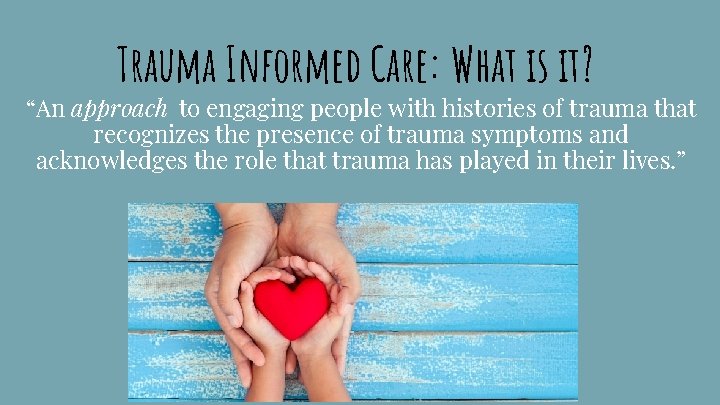
Trauma Informed Care: What is it? “An approach to engaging people with histories of trauma that recognizes the presence of trauma symptoms and acknowledges the role that trauma has played in their lives. ”
4 Elements of a Program, Organization or System that is Trauma-Informed: 1. Realizes the impact of trauma and the potential for recovery 1. Recognizes the signs and symptoms of trauma 1. Responds by integrating knowledge into policies, procedures and practices 1. Resist Re-Traumatization: Organizations actively and intentionally use best practice to avoid retraumatization
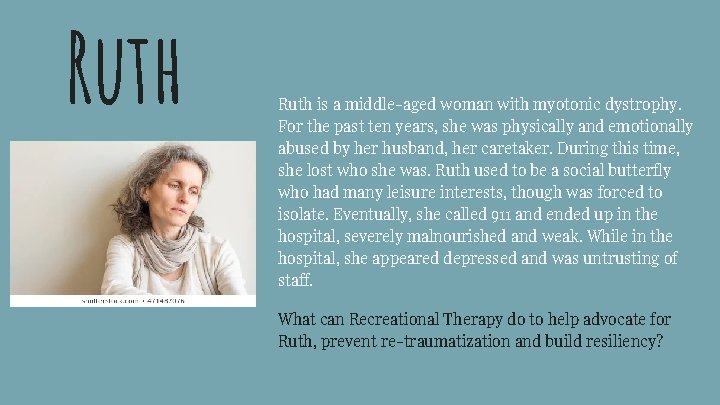
Ruth is a middle-aged woman with myotonic dystrophy. For the past ten years, she was physically and emotionally abused by her husband, her caretaker. During this time, she lost who she was. Ruth used to be a social butterfly who had many leisure interests, though was forced to isolate. Eventually, she called 911 and ended up in the hospital, severely malnourished and weak. While in the hospital, she appeared depressed and was untrusting of staff. What can Recreational Therapy do to help advocate for Ruth, prevent re-traumatization and build resiliency?
Trauma-informed care in inpatient mental health settings: A review of the literature Exposure to significant childhood trauma alters the structure and function of a developing brain. Exposure to significant negative experiences suppresses neural pathway development and integration, especially between different parts of the brain. To be successful, all staff must be confident and competent in the knowledge of the prevalence and impact of trauma on patients. They must also understand their responsibility in avoiding retraumatization. The culture of the workplace must become trauma informed. - Contributing factors to retraumatization include: staff appearing disinterested or disrespectful, preoccupied by non-interactive tasks, and not empowering clients to be masters of their own destinies. The physical environment of the unit should be welcoming and include home-like furniture, warm and inviting color schemes, art, calming auditory stimulation, soft music, and pleasant olfactory sensations. It should also provide adequate space and time-out options to enhance comfort and self-esteem, and relieve stress for patients. Providers have no way of knowing who is actually a trauma survivor. The best practice is to provide ‘universal trauma precautions. ’Nurses should routinely use practices that are growth promoting and recovery focused. They should have a “do no further harm” intent (Muskett, 2013).
Evidence on TIC and Leisure Education Related to avoidance of trauma are feelings of shame, self-hate, low self-esteem, and social isolation. Those who survived trauma typically have a patterns of solitary leisure and they do not value leisure. Often times, painful memories may be associated with leisure. Trauma is associated with deficits in awareness of self and one’s feelings, needs and interests, and emotional disconnection. This makes it difficult for people to identify what leisure is and which activities are fun, relaxing or satisfying to them. A study of a leisure education group used experiential learning activities to process stress and trauma issues associated with leisure; this includes components focused on definitions of leisure and the benefit of leisure, and experiential activities (e. g. , tug of war, group bean bag toss, dyad hand mirroring game) that enable people to process non-verbally as well as verbally. The group found positive results, including an increase in self awareness and recognizing patterns associated with their trauma and avoidance. Participants gained a deeper understanding of the role of leisure in the healing process (Arai, Griffin, Miatello, & Greig, 2008)
BRAIN BREAK

The APIE-D Process & Implications of ACE’s Health Outcomes: Childhood Trauma Comfort Zone & Group Dynamics Finding FLOW (CSÍKSZENTMIHÁLYI) Summary: Flow is an optimal psychological state that people experience when engaged in an activity that is both appropriately challenging to one’s skill level, often resulting in immersion and concentrated focus on a task. This can result in deep learning and high levels of personal and work satisfaction. https: //www. learning-theories. com/flow-csikszentmihalyi. html
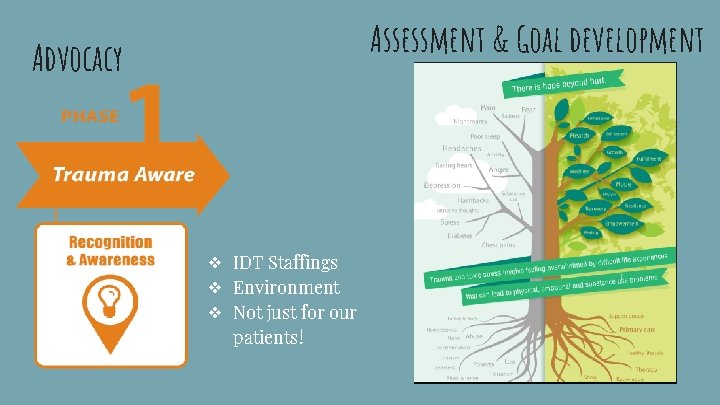
Assessment & Goal development Advocacy ❖ IDT Staffings ❖ Environment ❖ Not just for our patients!
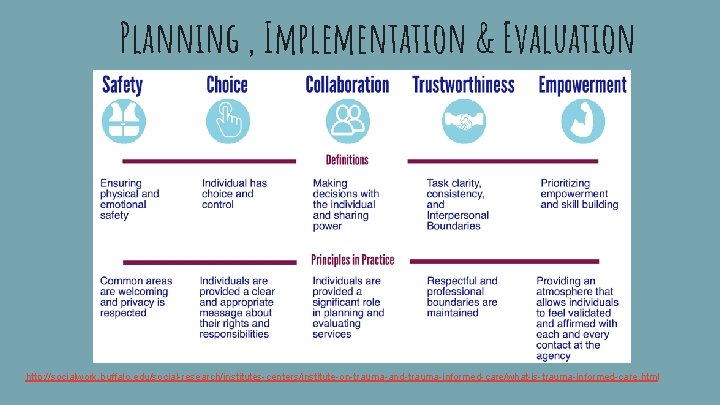
Planning , Implementation & Evaluation http: //socialwork. buffalo. edu/social-research/institutes-centers/institute-on-trauma-and-trauma-informed-care/what-is-trauma-informed-care. html
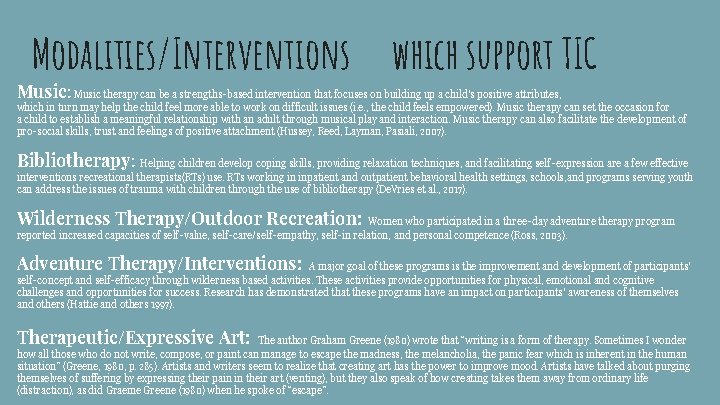
Modalities/Interventions which support TIC Music: Music therapy can be a strengths-based intervention that focuses on building up a child’s positive attributes, which in turn may help the child feel more able to work on difficult issues (i. e. , the child feels empowered). Music therapy can set the occasion for a child to establish a meaningful relationship with an adult through musical play and interaction. Music therapy can also facilitate the development of pro-social skills, trust and feelings of positive attachment (Hussey, Reed, Layman, Pasiali, 2007). Bibliotherapy: Helping children develop coping skills, providing relaxation techniques, and facilitating self-expression are a few effective interventions recreational therapists(RTs) use. RTs working in inpatient and outpatient behavioral health settings, schools, and programs serving youth can address the issues of trauma with children through the use of bibliotherapy (De. Vries et al. , 2017). Wilderness Therapy/Outdoor Recreation: Women who participated in a three-day adventure therapy program reported increased capacities of self-value, self-care/self-empathy, self-in relation, and personal competence (Ross, 2003). Adventure Therapy/Interventions: A major goal of these programs is the improvement and development of participants’ self-concept and self-efficacy through wilderness based activities. These activities provide opportunities for physical, emotional and cognitive challenges and opportunities for success. Research has demonstrated that these programs have an impact on participants’ awareness of themselves and others (Hattie and others 1997). Therapeutic/Expressive Art: The author Graham Greene (1980) wrote that “writing is a form of therapy. Sometimes I wonder how all those who do not write, compose, or paint can manage to escape the madness, the melancholia, the panic fear which is inherent in the human situation” (Greene, 1980, p. 285). Artists and writers seem to realize that creating art has the power to improve mood. Artists have talked about purging themselves of suffering by expressing their pain in their art (venting), but they also speak of how creating takes them away from ordinary life (distraction), as did Graeme Greene (1980) when he spoke of “escape”.
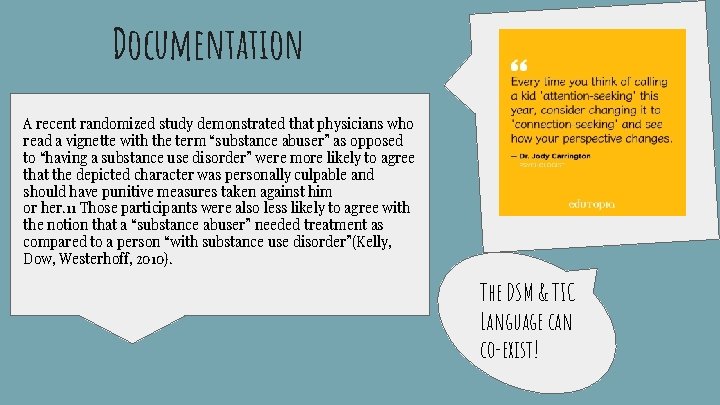
Documentation A recent randomized study demonstrated that physicians who read a vignette with the term “substance abuser” as opposed to “having a substance use disorder” were more likely to agree that the depicted character was personally culpable and should have punitive measures taken against him or her. 11 Those participants were also less likely to agree with the notion that a “substance abuser” needed treatment as compared to a person “with substance use disorder”(Kelly, Dow, Westerhoff, 2010). The DSM & TIC Language can co-exist!
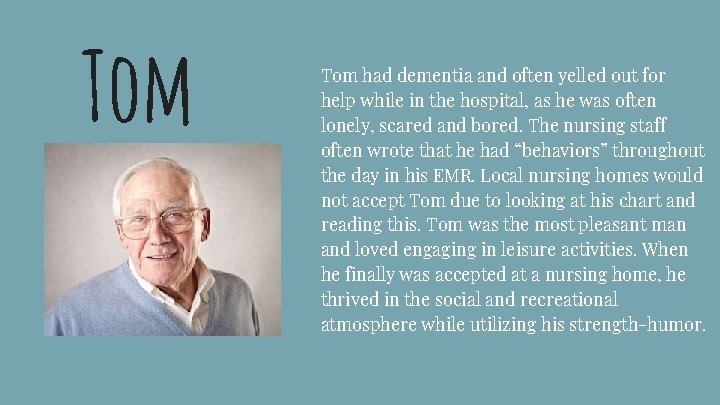
Tom had dementia and often yelled out for help while in the hospital, as he was often lonely, scared and bored. The nursing staff often wrote that he had “behaviors” throughout the day in his EMR. Local nursing homes would not accept Tom due to looking at his chart and reading this. Tom was the most pleasant man and loved engaging in leisure activities. When he finally was accepted at a nursing home, he thrived in the social and recreational atmosphere while utilizing his strength-humor.
Documentation example Pt has many bad behaviors throughout the day. He is observed to be attention seeking and needy, yelling out and pushing his call button multiple times. Pt is dramatic and non-compliant when being assisted with ADl’s. Will continue to support and monitor. Pt is observed to have a difficult shift today, requiring much support, encouragement and assistance from staff. Pt does well when given verbal cues/prompting prior to assistance with ADL’s. Pt appears to appreciate time spent sitting with peers in the Lounge, watching out the window.

Documentation example: RT Specific Pt declines session today, is rude and defiant upon invitation by this writer. Pt is confused and disoriented, is allowed to be in her room by herself. Initially pt is hesitant to attend session today however with time, proactive prompting and encouragement is able to do so. At times is observed to experience confusion within task completion however with verbal prompting is able to overcome this. Pt appears to enjoy social aspect of group environment and reminisces of past leisure experiences.
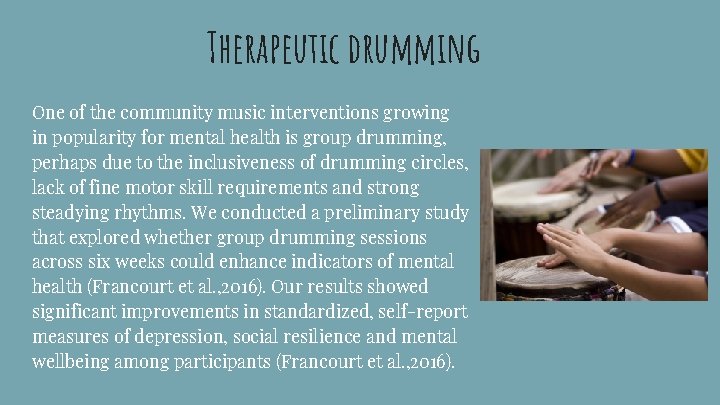
Therapeutic drumming One of the community music interventions growing in popularity for mental health is group drumming, perhaps due to the inclusiveness of drumming circles, lack of fine motor skill requirements and strong steadying rhythms. We conducted a preliminary study that explored whether group drumming sessions across six weeks could enhance indicators of mental health (Francourt et al. , 2016). Our results showed significant improvements in standardized, self-report measures of depression, social resilience and mental wellbeing among participants (Francourt et al. , 2016).
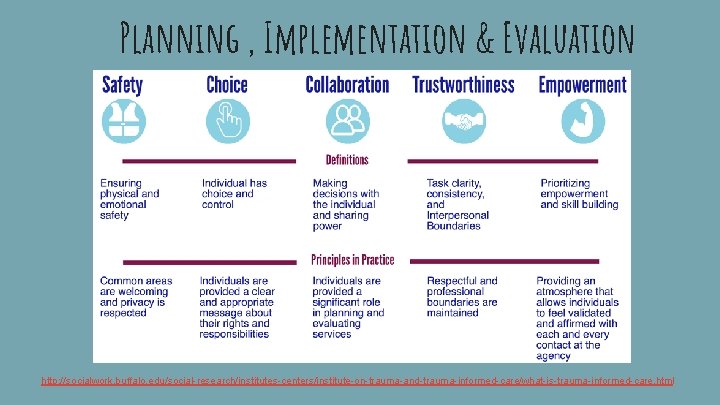
Planning , Implementation & Evaluation http: //socialwork. buffalo. edu/social-research/institutes-centers/institute-on-trauma-and-trauma-informed-care/what-is-trauma-informed-care. html
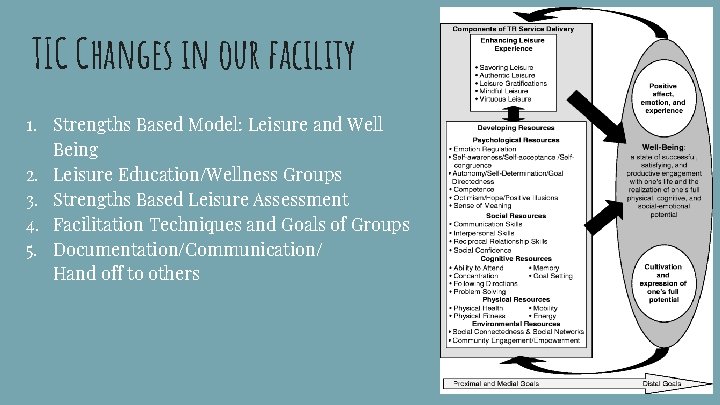
TIC Changes in our facility 1. Strengths Based Model: Leisure and Well Being 2. Leisure Education/Wellness Groups 3. Strengths Based Leisure Assessment 4. Facilitation Techniques and Goals of Groups 5. Documentation/Communication/ Hand off to others
Questions? If you have questions, or want to learn more, email Heather at hjbartel@gundersenhealth. org
references Arai, S. M. , Griffin, J. , Miatello, A. , & Greig, C. (2008). Leisure and Recreation Involvement in the Context of Healing from Trauma. Therapeutic Recreation Journal, XL 11(1), 37– 55. Greene, G. (1980). Ways of escape. New York: Simon and Schuster Hattie, J. , Marsh, H. W. , Neill, J. , & Richards, G. 1997. Adventure education and Outward Bound: Out-of-class experiences that make a lasting difference. Review of Educational Research. 76(1): 43 -87. Gundersen Health System. ACES Initial Education Primer. http: //www. resilientcommunitieswi. com/ Kelly JF, Dow SJ, Westerhoff C. (2010). Does Our Choice of Substance-Related Terms Influence Perceptions of Treatment Need? An Empirical Investigation with Two Commonly Used Terms. J Drug Issues. 40(4): 805– 818 Muskett, C. (2013). Trauma-informed care in inpatient mental health settings: A review of the literature. International Journal of Mental Health Nursing, 23(1), 51– 59. doi: 10. 1111/inm. 12012 Fancourt D, Perkins R, Ascenso S, Atkins L, Kilfeather S, Carvalho LA, et al. Group drumming modulates cytokine activity in mental health service users: a preliminary study. Psychother Psychosom. 2016; 85(1): 53– 5. 10. 1159/000431257 [Pub. Med] [Cross. Ref] [Google Scholar]
- Slides: 31