
TRAUMA INFORMED ADVOCACY Alexa Peterson Arapahoe County Case
- Slides: 24
TRAUMA INFORMED ADVOCACY Alexa Peterson Arapahoe County Case Coordinator 2/21/2020 Advocates for Children Volunteer Training. Trauma Informed Advocacy
Learning Outcomes: You will learn… • • How to engage with youth using a trauma-informed approach How to identify strengths and personal interests to decrease reported areas of concern and promote a sense of resiliency How to support older youth via self-advocacy and self-efficacy How to support youth with JD cases Advocates for Children Volunteer Training. Trauma Informed Advocacy
Introduction Activity Go back in time…… • Brainstorm struggles you remember from your teenage years. Advocates for Children Volunteer Training. Trauma Informed Advocacy
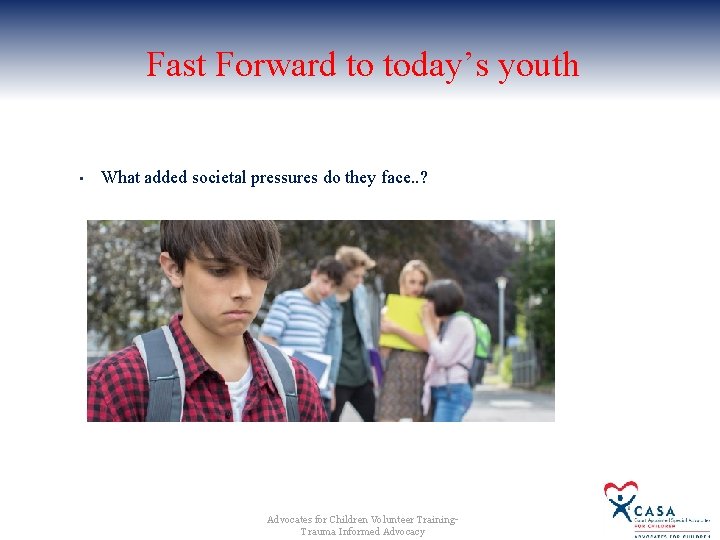
Fast Forward to today’s youth • What added societal pressures do they face. . ? Advocates for Children Volunteer Training. Trauma Informed Advocacy
Take another step forward… • Imagine what youth today experience WHILE in the system. What complicating factors disrupt permanency? • May or may not have parents in involved. • Constant disruptions from being out of the home, change in schools, change in therapeutic services, change in placement and/or facilities, new foster parents, separation from siblings. Each disruption contributes to the overall traumatic experience. Throughout this training I encourage you to come back to this thought and to imagine adolescents and teens experiencing the hardships of teenage years within the context of being system involved. Advocates for Children Volunteer Training. Trauma Informed Advocacy
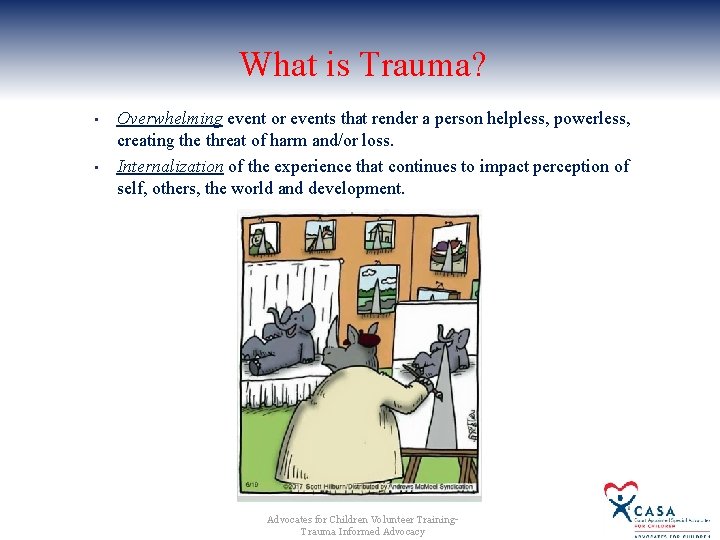
What is Trauma? • • Overwhelming event or events that render a person helpless, powerless, creating the threat of harm and/or loss. Internalization of the experience that continues to impact perception of self, others, the world and development. Advocates for Children Volunteer Training. Trauma Informed Advocacy
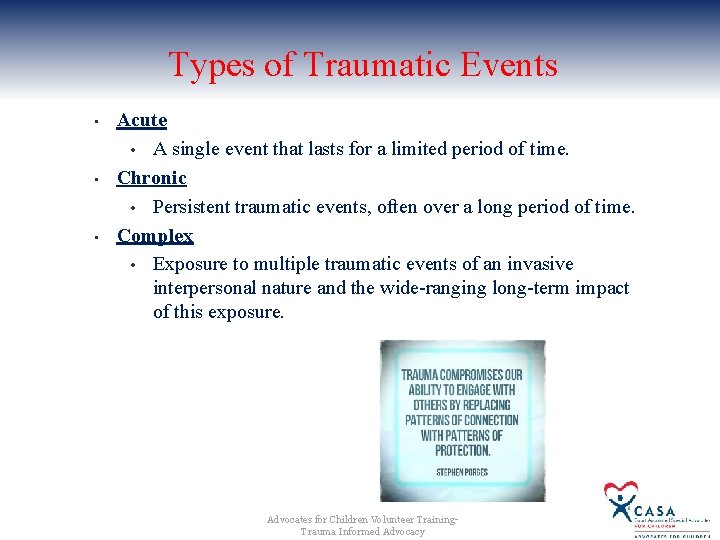
Types of Traumatic Events • • • Acute • A single event that lasts for a limited period of time. Chronic • Persistent traumatic events, often over a long period of time. Complex • Exposure to multiple traumatic events of an invasive interpersonal nature and the wide-ranging long-term impact of this exposure. Advocates for Children Volunteer Training. Trauma Informed Advocacy
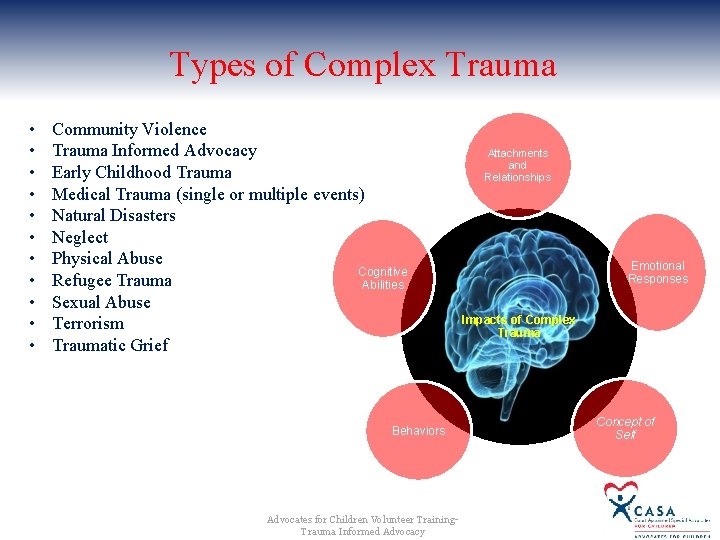
Types of Complex Trauma • • • Community Violence Trauma Informed Advocacy Early Childhood Trauma Medical Trauma (single or multiple events) Natural Disasters Neglect Physical Abuse Cognitive Refugee Trauma Abilities Sexual Abuse Terrorism Traumatic Grief Behaviors Advocates for Children Volunteer Training. Trauma Informed Advocacy Attachments and Relationships Emotional Responses Impacts of Complex Trauma Concept of Self
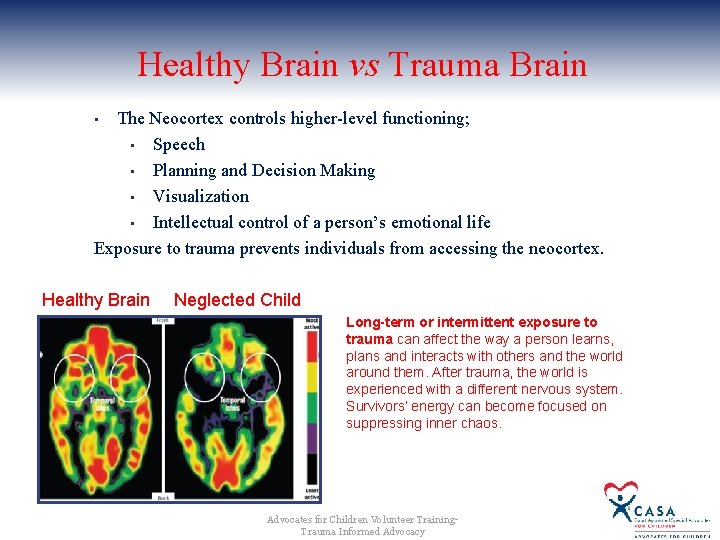
Healthy Brain vs Trauma Brain The Neocortex controls higher-level functioning; • Speech • Planning and Decision Making • Visualization • Intellectual control of a person’s emotional life Exposure to trauma prevents individuals from accessing the neocortex. • Healthy Brain Neglected Child Long-term or intermittent exposure to trauma can affect the way a person learns, plans and interacts with others and the world around them. After trauma, the world is experienced with a different nervous system. Survivors’ energy can become focused on suppressing inner chaos. Advocates for Children Volunteer Training. Trauma Informed Advocacy
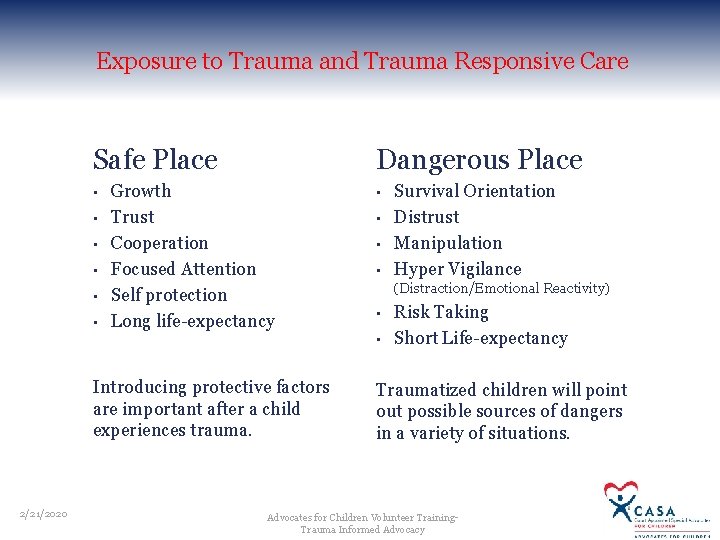
Exposure to Trauma and Trauma Responsive Care Safe Place • • • Dangerous Place Growth Trust Cooperation Focused Attention Self protection Long life-expectancy • • (Distraction/Emotional Reactivity) • • Introducing protective factors are important after a child experiences trauma. 2/21/2020 Survival Orientation Distrust Manipulation Hyper Vigilance Risk Taking Short Life-expectancy Traumatized children will point out possible sources of dangers in a variety of situations. Advocates for Children Volunteer Training. Trauma Informed Advocacy
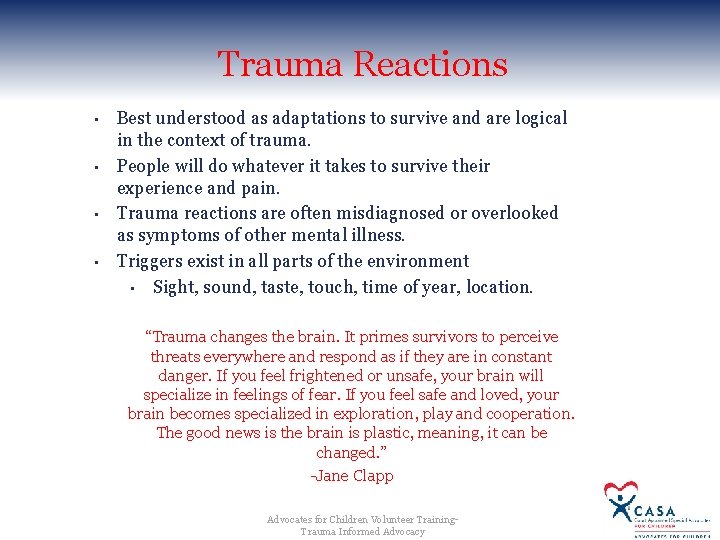
Trauma Reactions • • Best understood as adaptations to survive and are logical in the context of trauma. People will do whatever it takes to survive their experience and pain. Trauma reactions are often misdiagnosed or overlooked as symptoms of other mental illness. Triggers exist in all parts of the environment • Sight, sound, taste, touch, time of year, location. “Trauma changes the brain. It primes survivors to perceive threats everywhere and respond as if they are in constant danger. If you feel frightened or unsafe, your brain will specialize in feelings of fear. If you feel safe and loved, your brain becomes specialized in exploration, play and cooperation. The good news is the brain is plastic, meaning, it can be changed. ” -Jane Clapp Advocates for Children Volunteer Training. Trauma Informed Advocacy
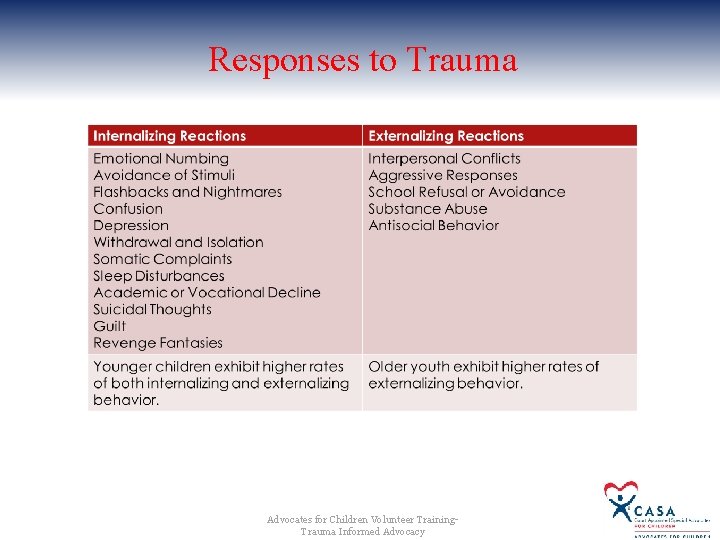
Responses to Trauma Advocates for Children Volunteer Training. Trauma Informed Advocacy
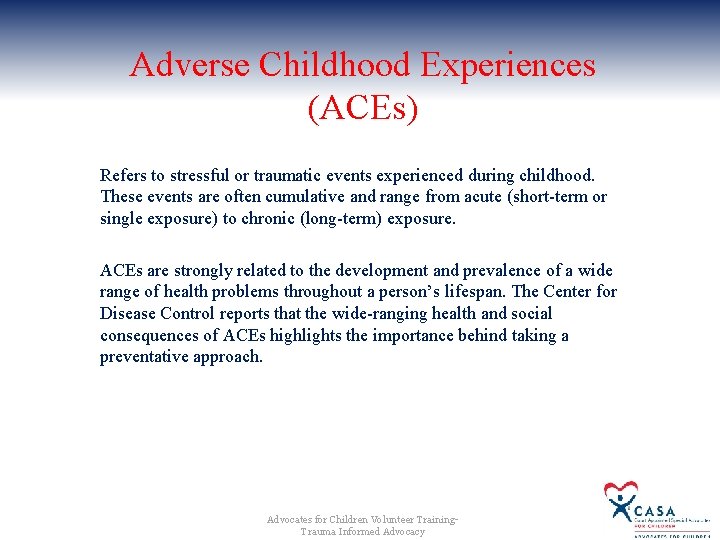
Adverse Childhood Experiences (ACEs) Refers to stressful or traumatic events experienced during childhood. These events are often cumulative and range from acute (short-term or single exposure) to chronic (long-term) exposure. ACEs are strongly related to the development and prevalence of a wide range of health problems throughout a person’s lifespan. The Center for Disease Control reports that the wide-ranging health and social consequences of ACEs highlights the importance behind taking a preventative approach. Advocates for Children Volunteer Training. Trauma Informed Advocacy
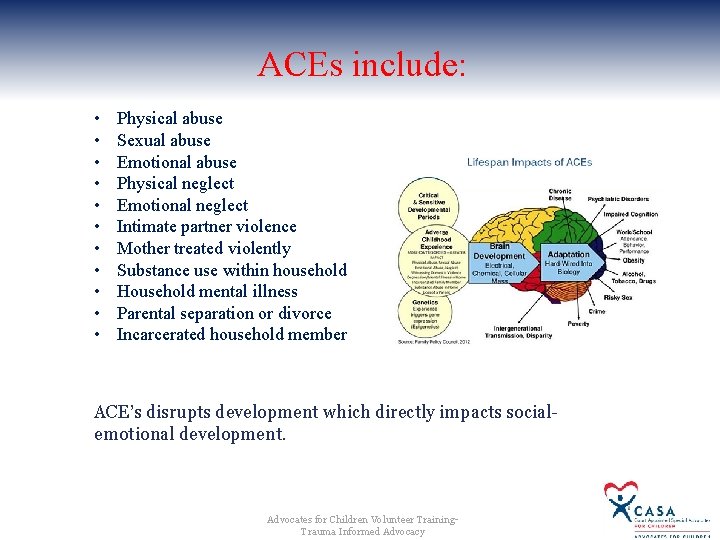
ACEs include: • • • Physical abuse Sexual abuse Emotional abuse Physical neglect Emotional neglect Intimate partner violence Mother treated violently Substance use within household Household mental illness Parental separation or divorce Incarcerated household member ACE’s disrupts development which directly impacts socialemotional development. Advocates for Children Volunteer Training. Trauma Informed Advocacy
ACEs – What Can Be Done Developing safe, stable and nurturing relationships with adults and surrounding environments can assist youth in regaining a sense of control and help them combat the broad range of health effects associated with high ACE scores. Strategies that you can do to address the needs of youth are: • Mental health and substance use treatment • Parenting training programs for young teens • Open communication with family members/placement providers • Practice patience • Assist with resource navigation specific to your youth’s needs Advocates for Children Volunteer Training. Trauma Informed Advocacy
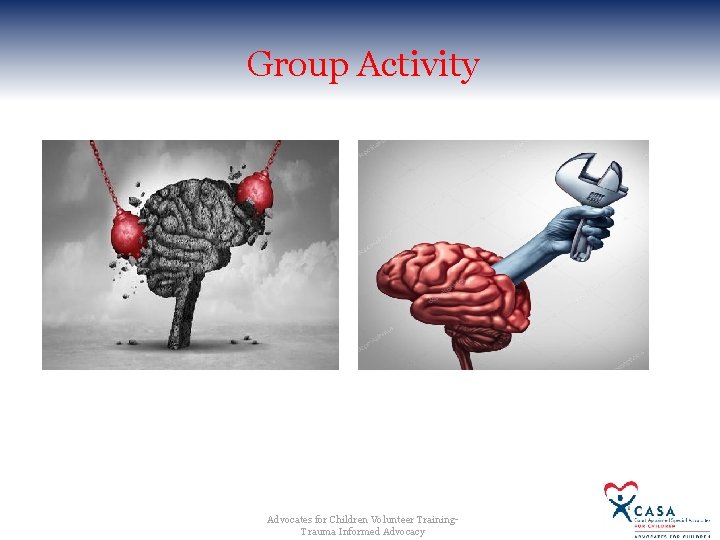
Group Activity Advocates for Children Volunteer Training. Trauma Informed Advocacy
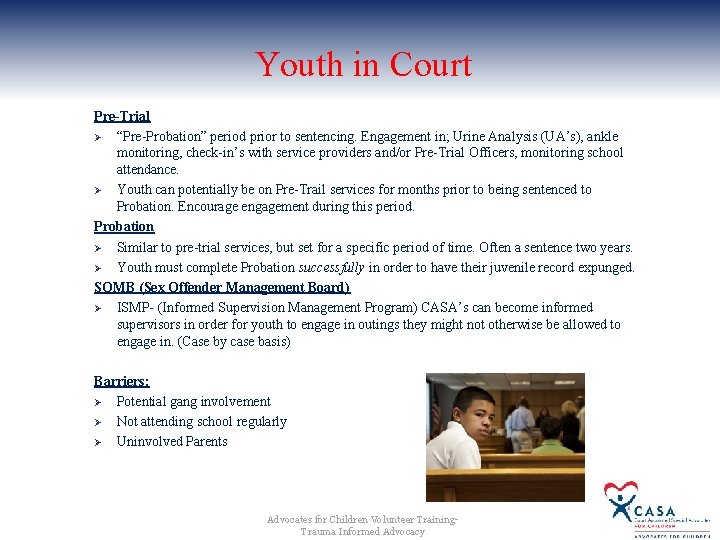
Youth in Court Pre-Trial Ø “Pre-Probation” period prior to sentencing. Engagement in; Urine Analysis (UA’s), ankle monitoring, check-in’s with service providers and/or Pre-Trial Officers, monitoring school attendance. Ø Youth can potentially be on Pre-Trail services for months prior to being sentenced to Probation. Encourage engagement during this period. Probation Ø Similar to pre-trial services, but set for a specific period of time. Often a sentence two years. Ø Youth must complete Probation successfully in order to have their juvenile record expunged. SOMB (Sex Offender Management Board) Ø ISMP- (Informed Supervision Management Program) CASA’s can become informed supervisors in order for youth to engage in outings they might not otherwise be allowed to engage in. (Case by case basis) Barriers: Ø Potential gang involvement Ø Not attending school regularly Ø Uninvolved Parents Advocates for Children Volunteer Training. Trauma Informed Advocacy
Supporting Self-Advocacy within the Juvenile Delinquency System: Ø Ø Ø Once youth define the areas they want to be a stronger self-advocate in, speak up for what your youth needs. (Professional team, Educational Professionals, Court) Support youth in sharing their thoughts and opinions in class, with their professional team, placement providers and/or service providers, as well as, the Court. Encourage youth to ask questions if they don’t understand something their teacher, advisor, medical and/or professional team relays. Support conversations with adults about case related concerns. Have youth attend their Hearings. Ask yourself… Ø How can I make this youth feel safe and/or supported. . ? Ø How can I authentically connect with this youth. . ? Advocates for Children Volunteer Training. Trauma Informed Advocacy
Tips for Working with Youth: -Long-term vs. short-term planning -Set clear, concise and consistent boundaries -Be Strength Based -Involve youth in planning and decision-making -Facilitate skill based learning -Model appropriate interaction/emotional regulation -Build capacities to facilitate self-regulation -(Regulation----Reason) -Don’t assume a behavior problem needs a behavior based solution Advocates for Children Volunteer Training. Trauma Informed Advocacy
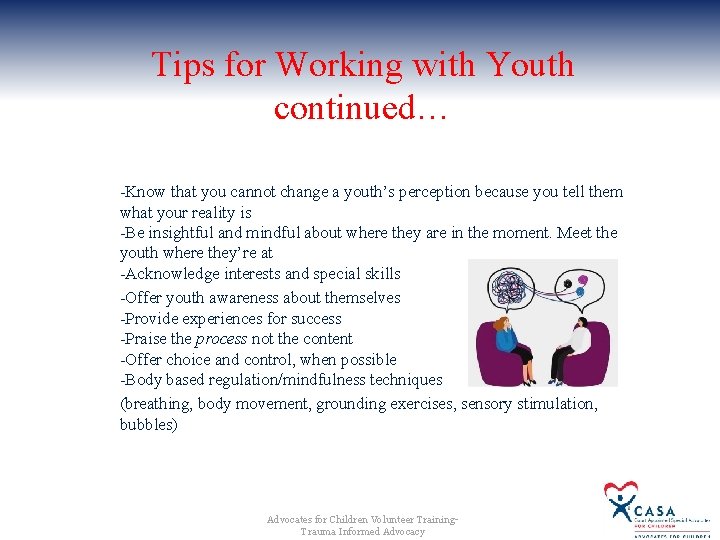
Tips for Working with Youth continued… -Know that you cannot change a youth’s perception because you tell them what your reality is -Be insightful and mindful about where they are in the moment. Meet the youth where they’re at -Acknowledge interests and special skills -Offer youth awareness about themselves -Provide experiences for success -Praise the process not the content -Offer choice and control, when possible -Body based regulation/mindfulness techniques (breathing, body movement, grounding exercises, sensory stimulation, bubbles) Advocates for Children Volunteer Training. Trauma Informed Advocacy
Supporting Self-Advocacy Get to Know your Youth. Ø Discover what self-advocacy skills the youth possesses and/or needs support with. Ø Identify areas in their life in which they are a strong self-advocate for (ex: school, friendships, identity) Ø Identify areas in which the youth want to play a larger role in decisionmaking. Ø Support their voice, the role they will play in defining their future. Ø Empathy, Attunement, Validation, Understanding Ø Emphasis on Routine Ø When challenges present themselves, ask for support. Advocates for Children Volunteer Training. Trauma Informed Advocacy
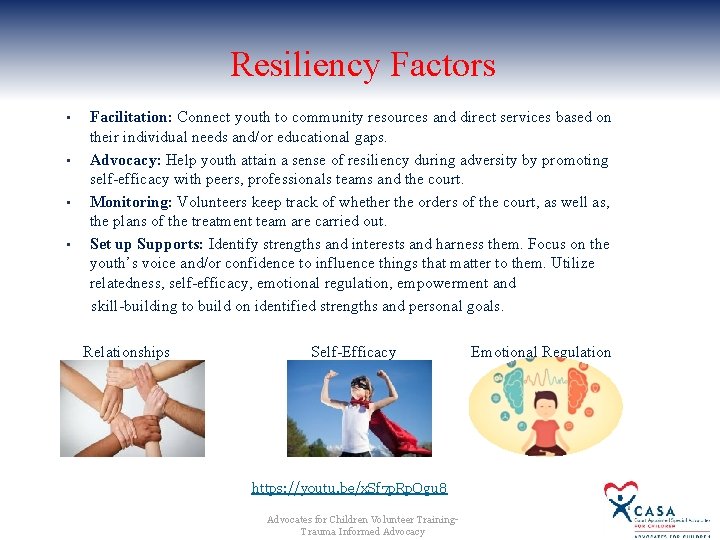
Resiliency Factors • • Facilitation: Connect youth to community resources and direct services based on their individual needs and/or educational gaps. Advocacy: Help youth attain a sense of resiliency during adversity by promoting self-efficacy with peers, professionals teams and the court. Monitoring: Volunteers keep track of whether the orders of the court, as well as, the plans of the treatment team are carried out. Set up Supports: Identify strengths and interests and harness them. Focus on the youth’s voice and/or confidence to influence things that matter to them. Utilize relatedness, self-efficacy, emotional regulation, empowerment and skill-building to build on identified strengths and personal goals. Relationships Self-Efficacy https: //youtu. be/x. Sf 7 p. Rp. Ogu 8 Advocates for Children Volunteer Training. Trauma Informed Advocacy Emotional Regulation
Volunteer Self-Care • • • Reward yourself after a tough day on your case. Get Enough Sleep. Exercise/Do what you love. Learn not to feel selfish when you need to say “no. ” Take a mental health day. Develop a relaxing evening ritual. 4 -8 -7 breathing technique. Soften your expectations of yourself and others. Create calming Glitter Jars for Relaxation and Mindfulness. Advocates for Children Volunteer Training. Trauma Informed Advocacy
Learning Outcomes Did you learn. . ? • • • How to engage with youth using a trauma-informed approach How to help youth move beyond functioning that is largely based on survival How to identify strengths and personal interests to decrease reported areas of concern How to support older youth via self-advocacy and self-efficacy The benefits of youth attending their Hearings How to support youth with JD cases Advocates for Children Volunteer Training. Trauma Informed Advocacy