
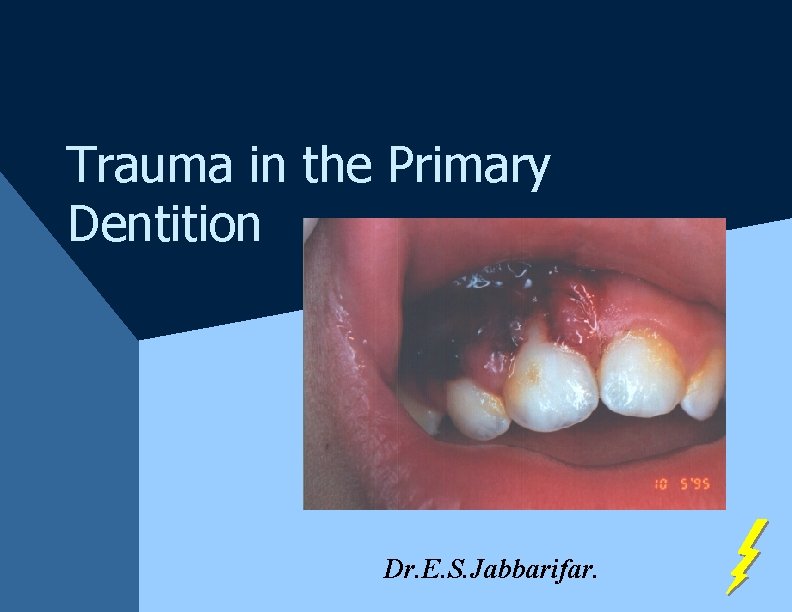
Trauma in the Primary Dentition Dr E S


- Slides: 69
Trauma in the Primary Dentition Dr. E. S. Jabbarifar.
Epidemiology (Permanent) • • • Boys > Girls 9 -11 year olds Maxillary central incisors Class I fractures Patients with increased overjet
Epidemiology (Primary) • Incidence - up to 30% • Location - anterior teeth – 71% maxillary central incisors • Sex predilection - varies according to author and age.
Incidence in Sports • Soccer players are at increased risk of an orofacial injury than football players Flanders, JADA, Vol. 126, April 1995
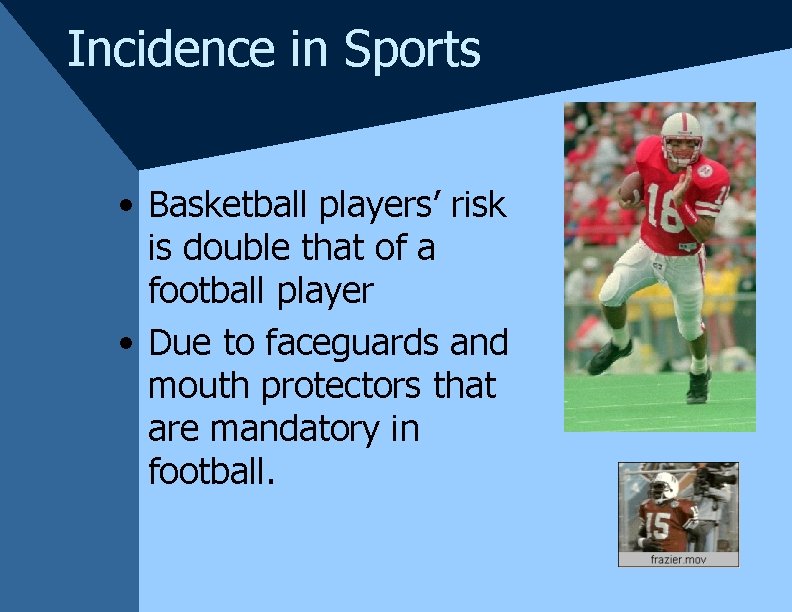
Incidence in Sports • Basketball players’ risk is double that of a football player • Due to faceguards and mouth protectors that are mandatory in football.
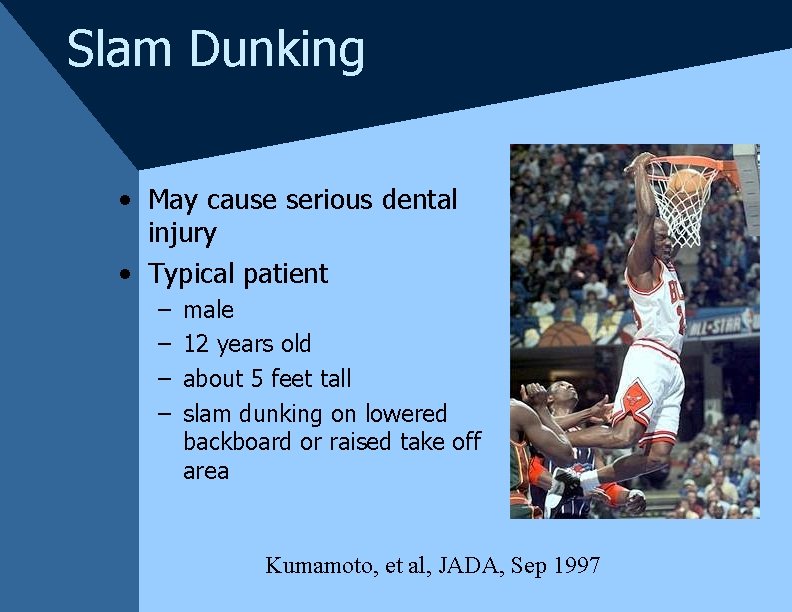
Slam Dunking • May cause serious dental injury • Typical patient – – male 12 years old about 5 feet tall slam dunking on lowered backboard or raised take off area Kumamoto, et al, JADA, Sep 1997
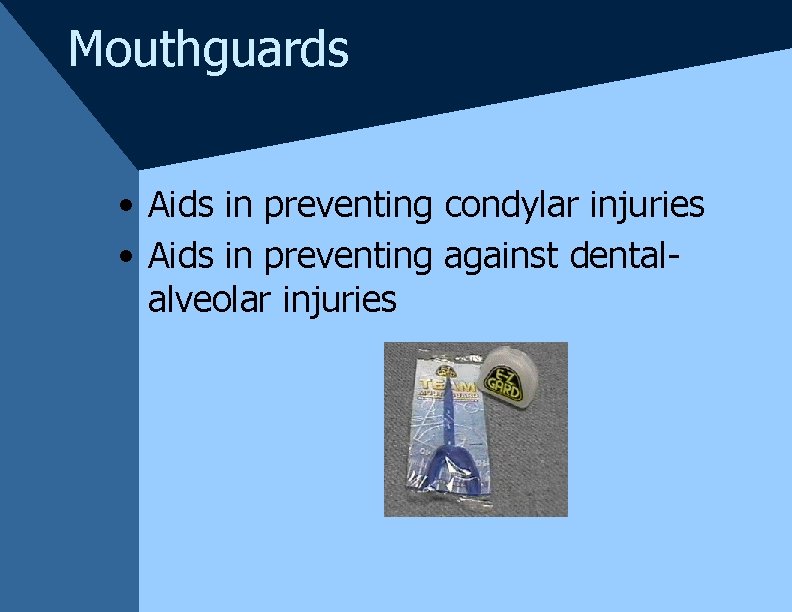
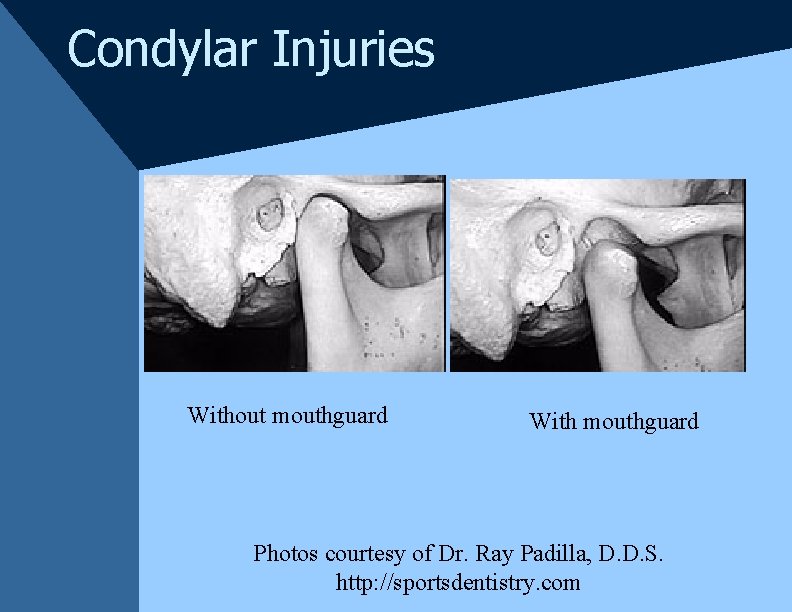
Mouthguards • Aids in preventing condylar injuries • Aids in preventing against dentalalveolar injuries
Condylar Injuries Without mouthguard With mouthguard Photos courtesy of Dr. Ray Padilla, D. D. S. http: //sportsdentistry. com
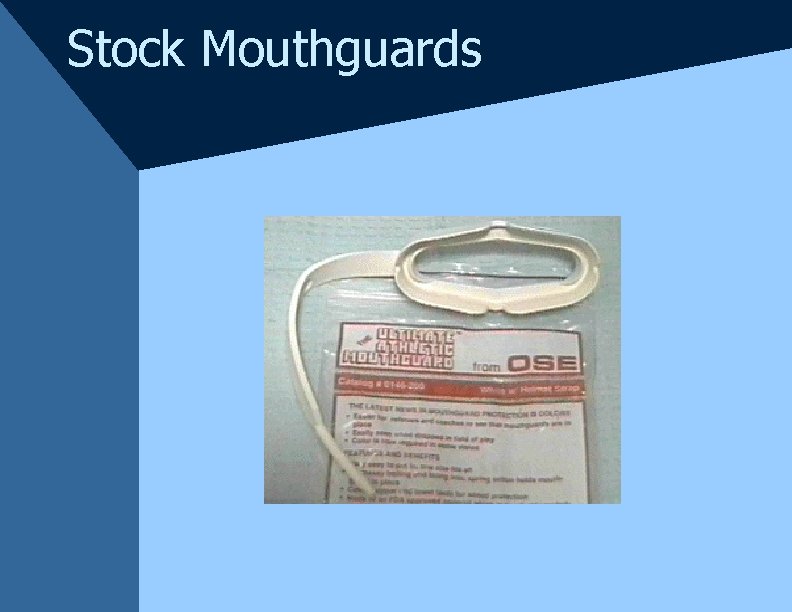
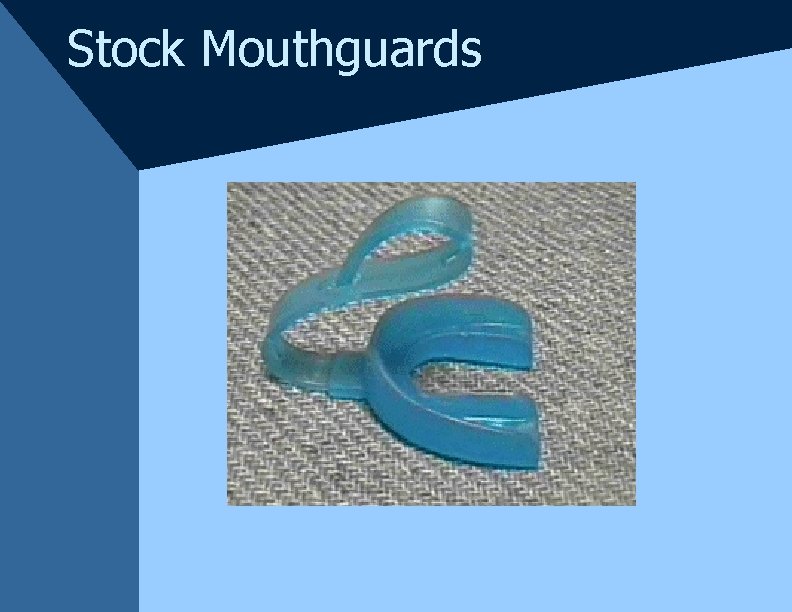
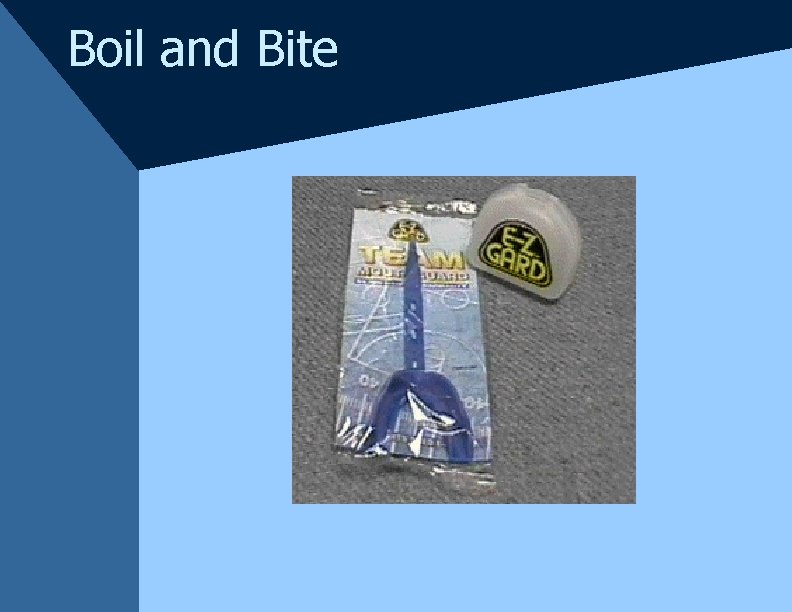
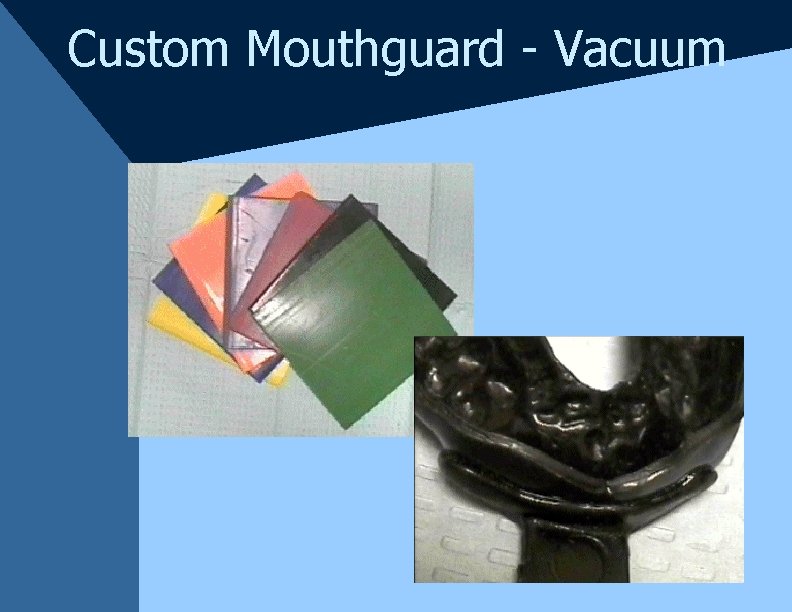
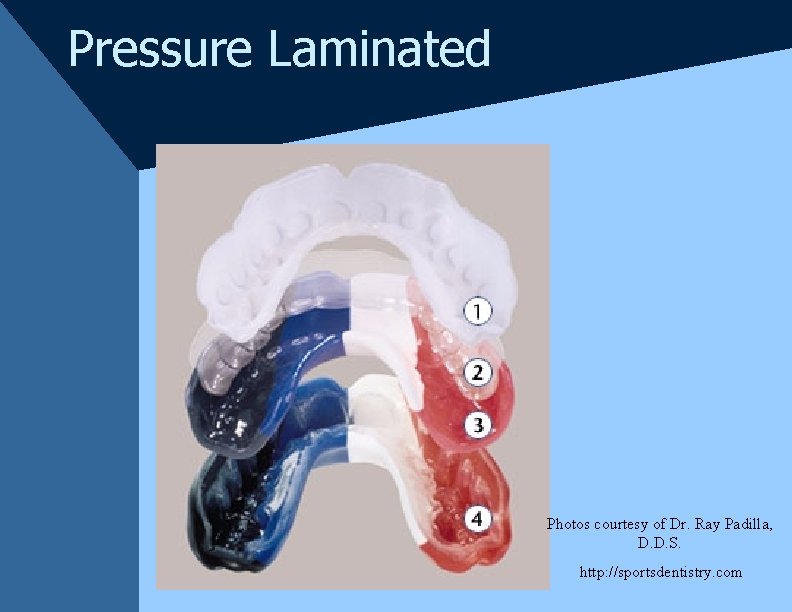
Types of Mouthguards • • Stock Boil and bite Custom vacuum formed Custom pressure laminated
Stock Mouthguards
Stock Mouthguards
Boil and Bite
Custom Mouthguard - Vacuum
Pressure Laminated Photos courtesy of Dr. Ray Padilla, D. D. S. http: //sportsdentistry. com
Domestic Violence? • 23% of patients with HNF injuries were victims of DV • 94. 4% of victimes of domestic violence had HNF injuries • Patients with HNF injuries were 11. 8 times more likely to be victims of DV • Caution: preliminary study, small sample size; age 15 and older. Ochs, et al, JADA, Vol. 127, June 1996
Medical History • Take a full medical history • Pay particular attention to: – drug sensitivities – congenital or acquired cardiac problems – coagulation disorders • Determine tetanus coverage
Neurological Assessment • Obtain information re: loss of consciousness, neck or head pain, and numbness • Ask about the event…. amnesia? • Other signs: nausea, vomiting, drowsiness, blurred vision Davis, et al; JDC, March April 1995
WHEN IN DOUBT… REFER TO ER!!!
Tetanus Coverage • Uncovered children - antitoxin (tetanus immune human globulin) • Children with previous but dated coverage - toxoid booster • Active immunization – 3 injections of DPT during 1 st year – booster at 1 1/2 and 3 years – booster at 6 YOA and every 4 -5 years
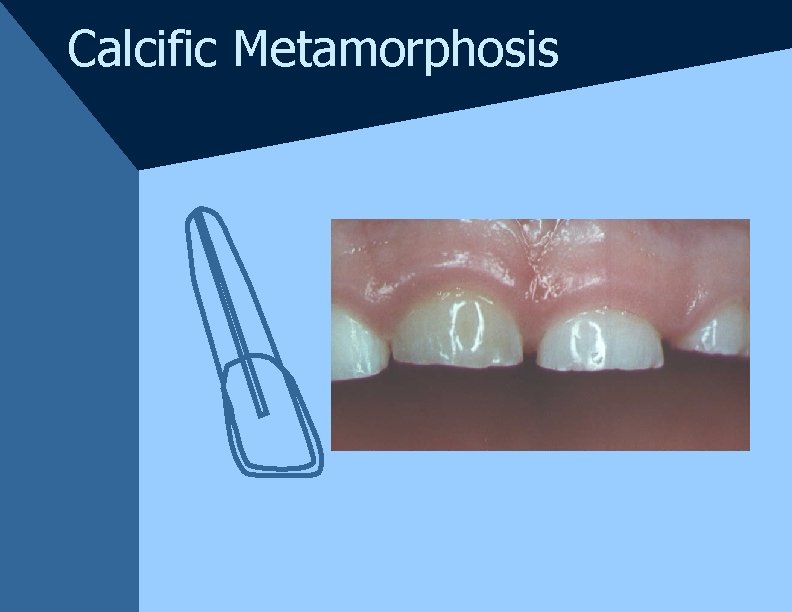
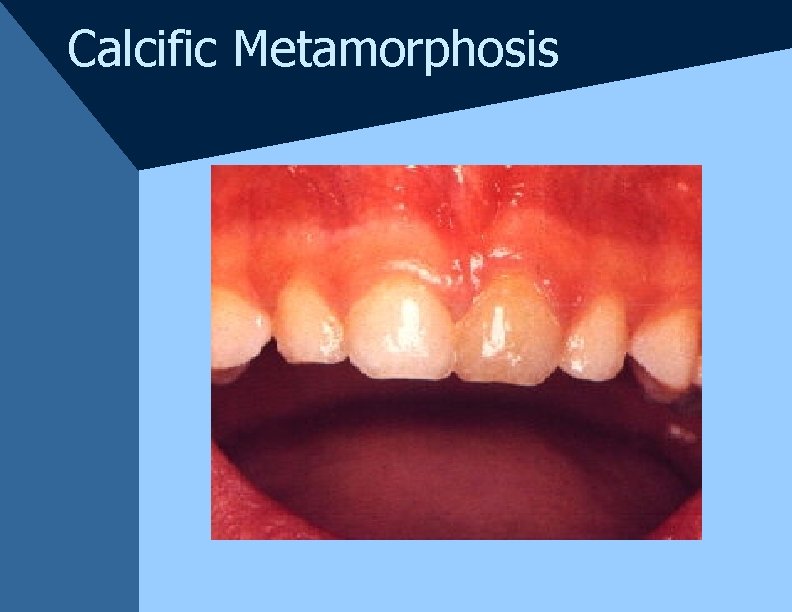
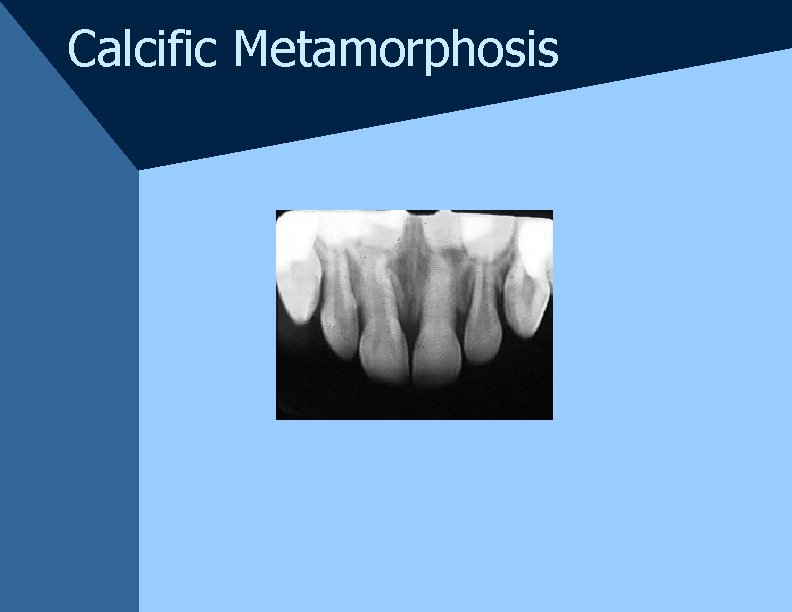
Reaction of the Tooth to Trauma • • Pulpal hyperemia Internal hemorrhage Calcific metamorphosis Internal resorption Peripheral root resorption Pulpal necrosis Ankylosis
Pulpal Hyperemia • May lead to infarction and necrosis
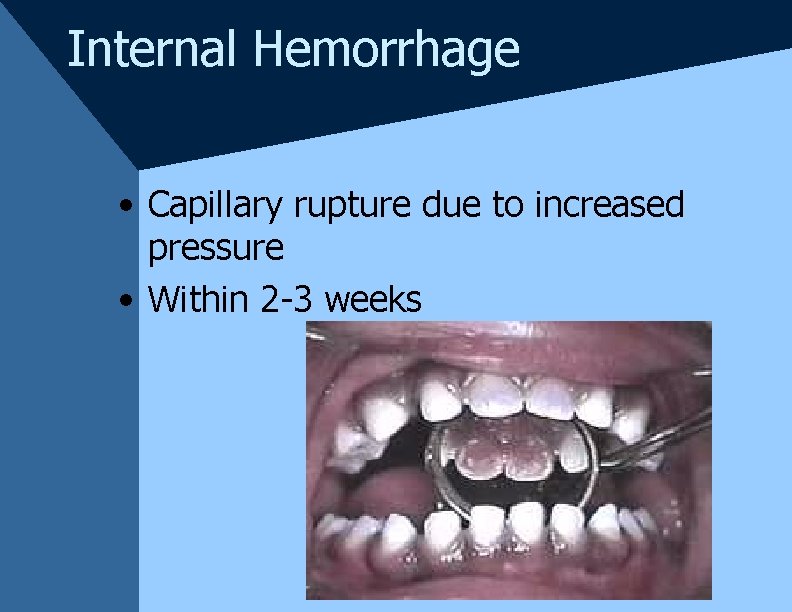
Internal Hemorrhage • Capillary rupture due to increased pressure • Within 2 -3 weeks
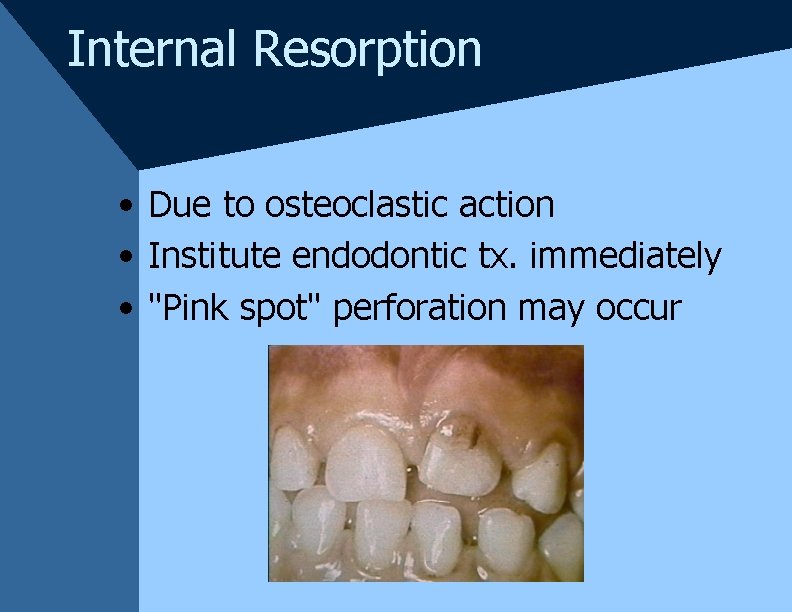
Internal Resorption • Due to osteoclastic action • Institute endodontic tx. immediately • "Pink spot" perforation may occur
Calcific Metamorphosis
Calcific Metamorphosis
Calcific Metamorphosis
Peripheral Root Resorption • Due to damage of peridontal structures • Usually in severe injuries with displacement of the tooth • Types – surface - normal PDL, small areas – replacement - ankylosis – inflammatory - granulation tissue, radiolucency
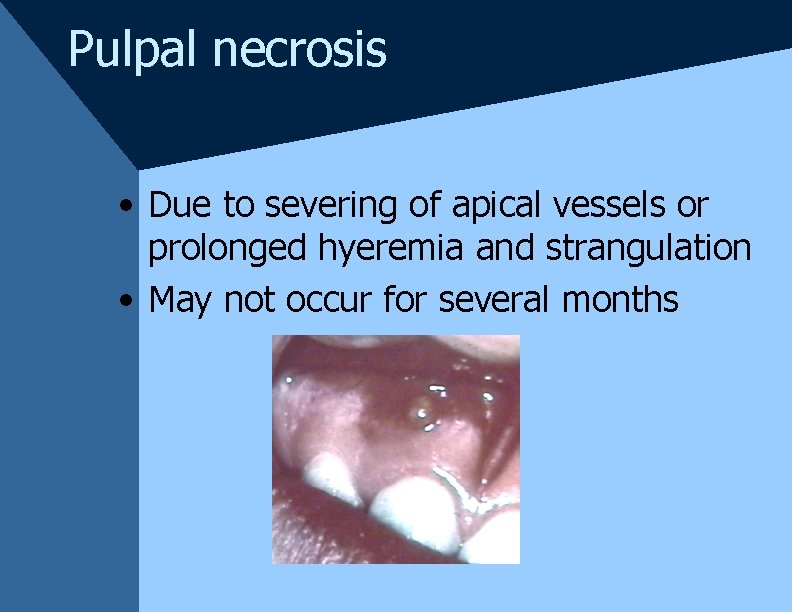
Pulpal necrosis • Due to severing of apical vessels or prolonged hyeremia and strangulation • May not occur for several months
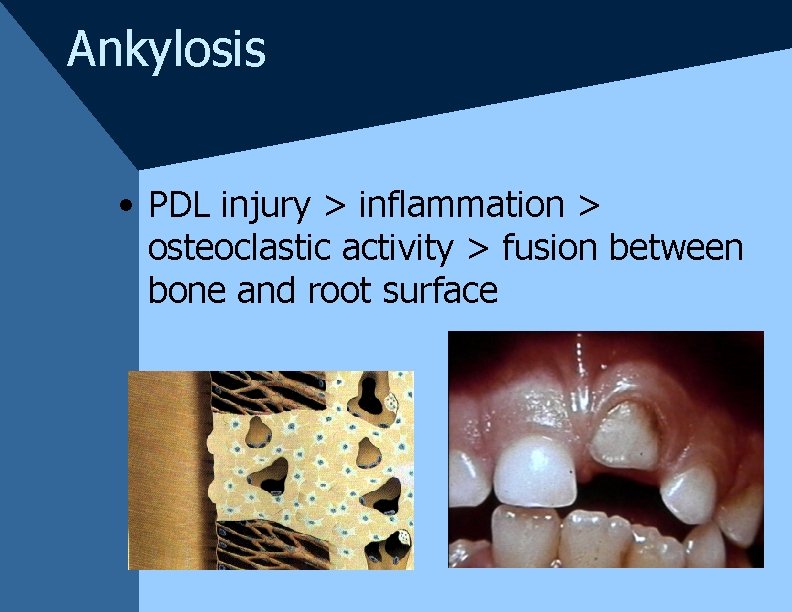
Ankylosis • PDL injury > inflammation > osteoclastic activity > fusion between bone and root surface
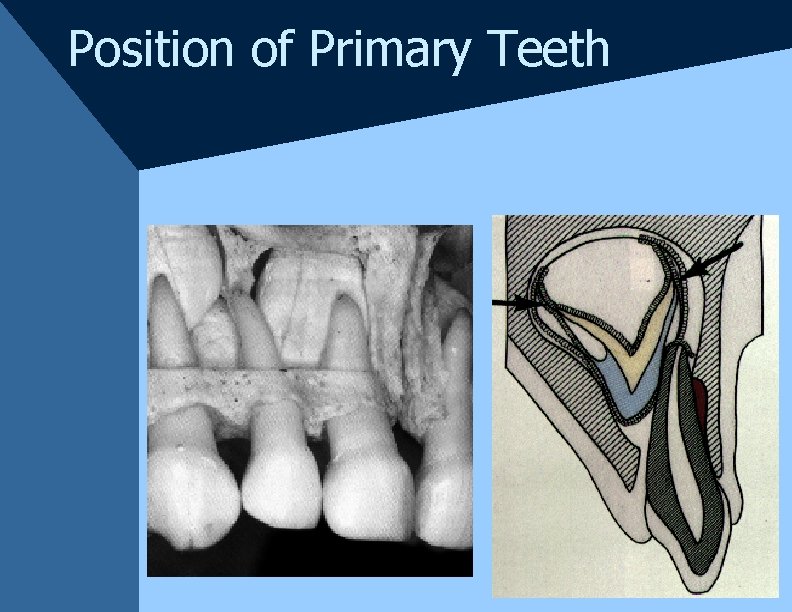
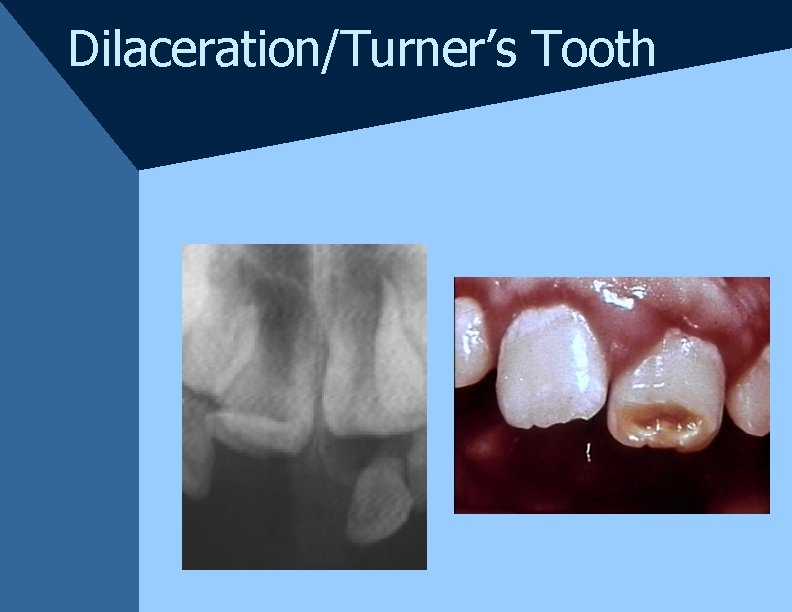
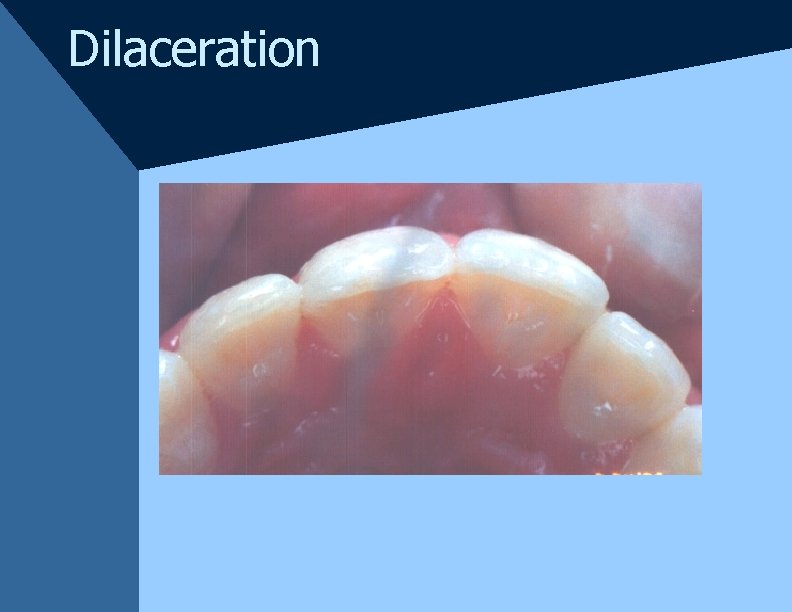
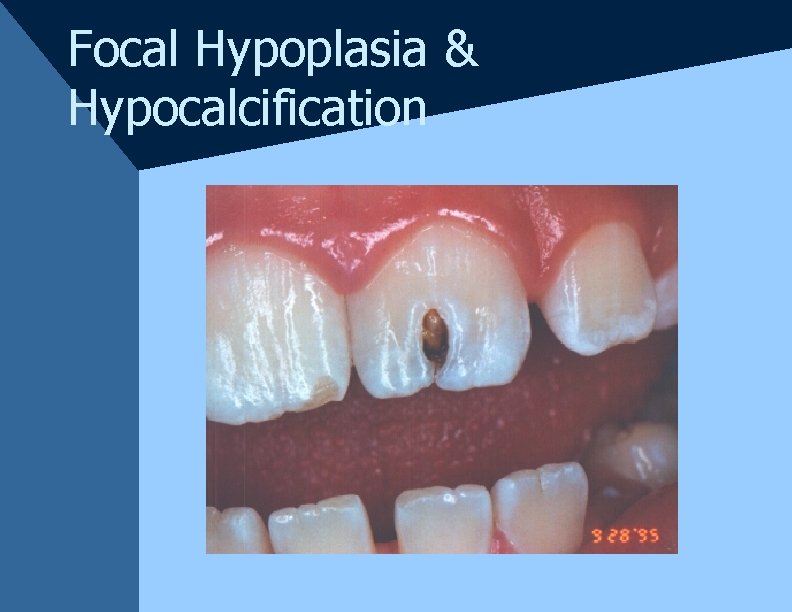
Reaction of the Permanent Tooth Buds • Hypocalcification/hypoplasia (Turner's tooth - due to trauma, infection, or both) • Reparative dentin • Dilaceration • Sequelae of chronic infection
Position of Primary Teeth
Dilaceration/Turner’s Tooth
Dilaceration
Focal Hypoplasia & Hypocalcification
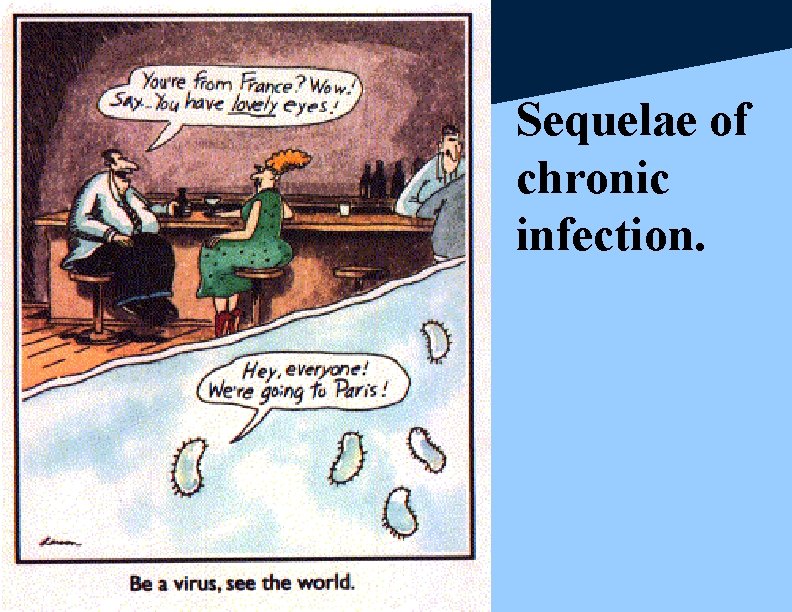
Sequelae of chronic infection.
Dental History • • • How? When? Where? Was there a previous injury to area? Was there previous treatment to area? Unconsciousness, headache, amnesia, nausia? • Bite disturbance?
Soft Tissue Injuries • Examine lacerations and contusions of the face, lips, and gingivae • Remove any tooth fragments or debris embedded in the tissue • Gently cleanse the area to aid in visual examination (topical anesthetic, soaked gauze sponges) • Develop treatment plan
Hard Tissue Injuries • • • Examine teeth and alveolar process Note extent of crown fracture, if any Check for displaced or avused teeth Note amount of mobility Check for pulp exposures Examine adjacent/opposing teeth for injury
Radiographic Examination • X-ray injured tooth, adjacent teeth, and opposing teeth • Evaluate proximity of fracture to pulp • Estimate root development • Look for root and alveolar fractures • Note any periapical pathology • Note previous treatment
Other Diagnostic Tests • Wait at leat 2 weeks • Electrical and thermal tests may be unreliable in primary teeth • If a tooth is incompletely erupted or is being orthodontically treated, the tooth may be normal even if there is little sensitivity to EPT - 20% of normals with 3/4 erupted teeth show no response to vitalometer
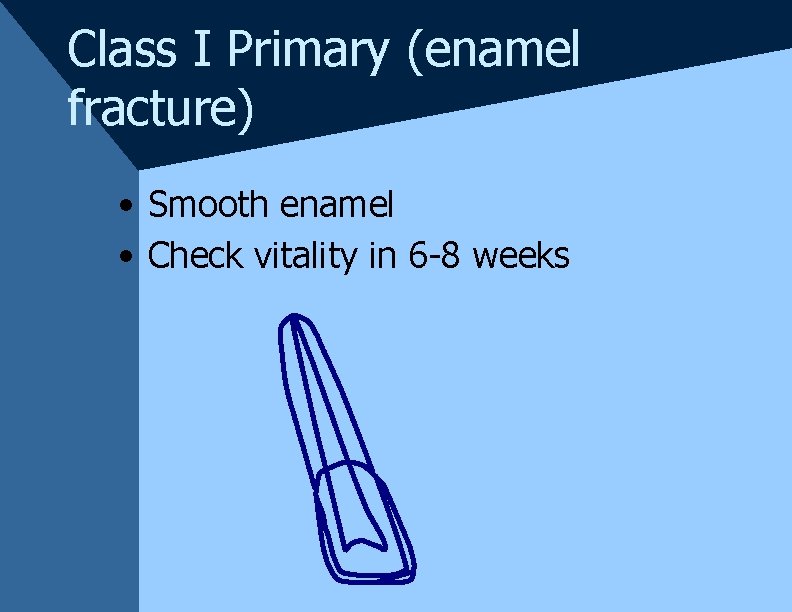
Class I Primary (enamel fracture) • Smooth enamel • Check vitality in 6 -8 weeks
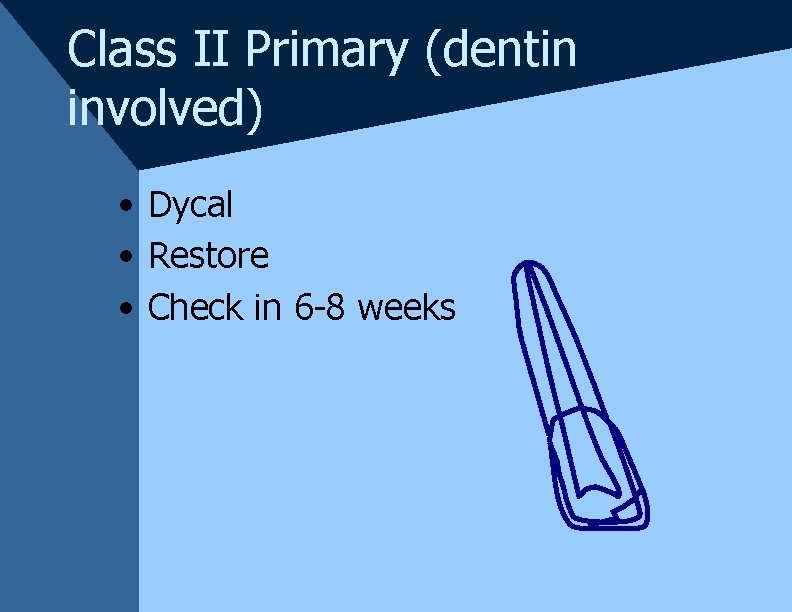
Class II Primary (dentin involved) • Dycal • Restore • Check in 6 -8 weeks
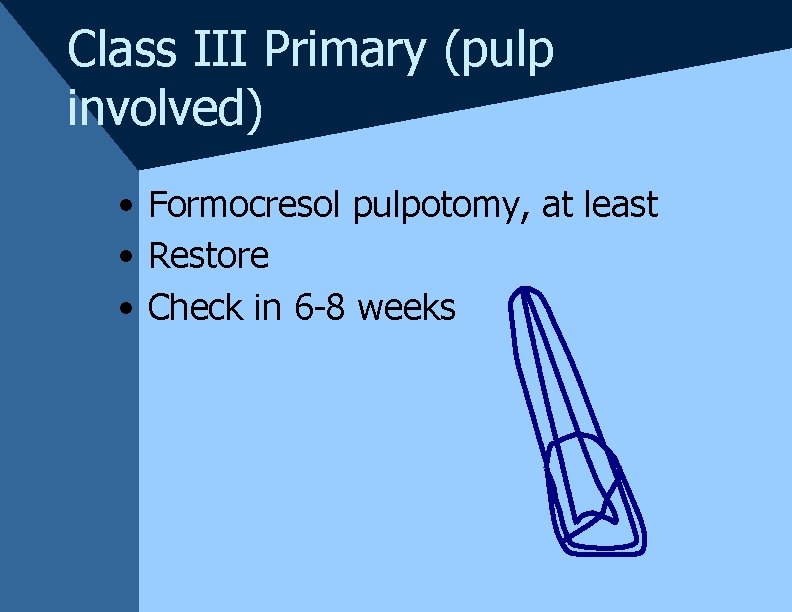
Class III Primary (pulp involved) • Formocresol pulpotomy, at least • Restore • Check in 6 -8 weeks
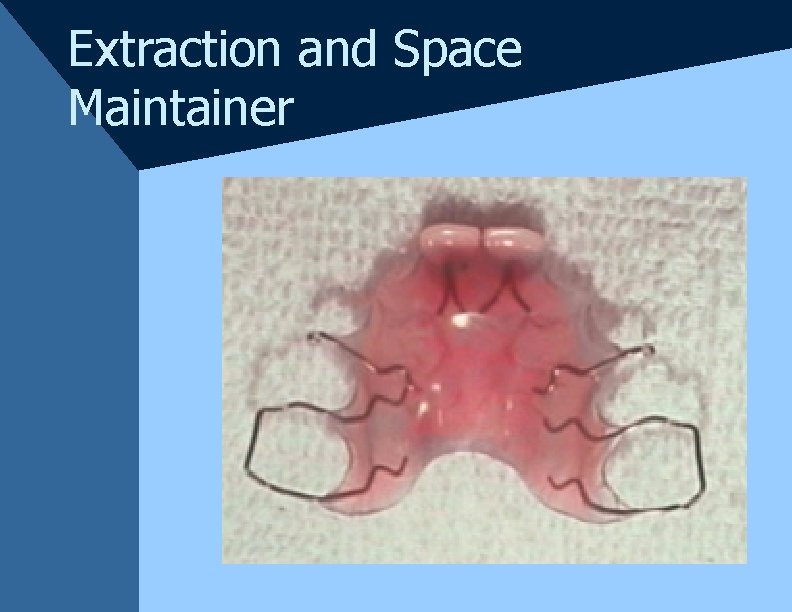
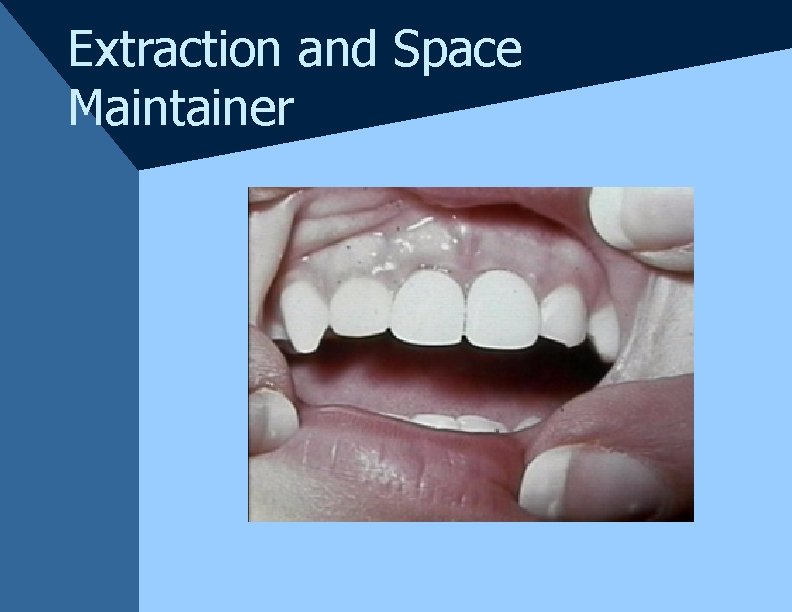
Class IV Primary (pulp necrotic) • Formocresol pulpectomy, in absence of significant internal or external root resorption • Extraction +/- space maintainer if endodontic treatment not possible
Extraction and Space Maintainer
Extraction and Space Maintainer
Extraction and Space Maintainer
Class V Primary (avulsion) • Poor prognosis • If within 30 minutes, replant, splint if necessary, soft diet, follow with primary endodontic treatment • Space maintainer if endodontic treatment not possible
Cleaning an Avulsed tooth • Saline to remove foreign bodies and bacteria • Flush alveolus with saline to remove coagulum; failure to do this increases chance of ankylosis • Avoid scraping the root surface; this removes periodontal fibers and denudes the cementum
What to Tell Parents • Clean tooth under tap water • Replant and maintain pressure for 5 -10 minutes • Bring child to office immediately • If parent can't replant, put tooth into a cup of milk
Replantation • "Periodontal Healing of Replanted Dog Teeth Stored in Viaspan, Milk, and Hank's Balanced Salt Solution" Trope, Endod Dent Traumatol, Jan-Feb, 1993. • Viaspan (a storage media used in organ transplants) and HBSS proved superior to milk for long term storage (>6 hrs) of avulsed teeth.
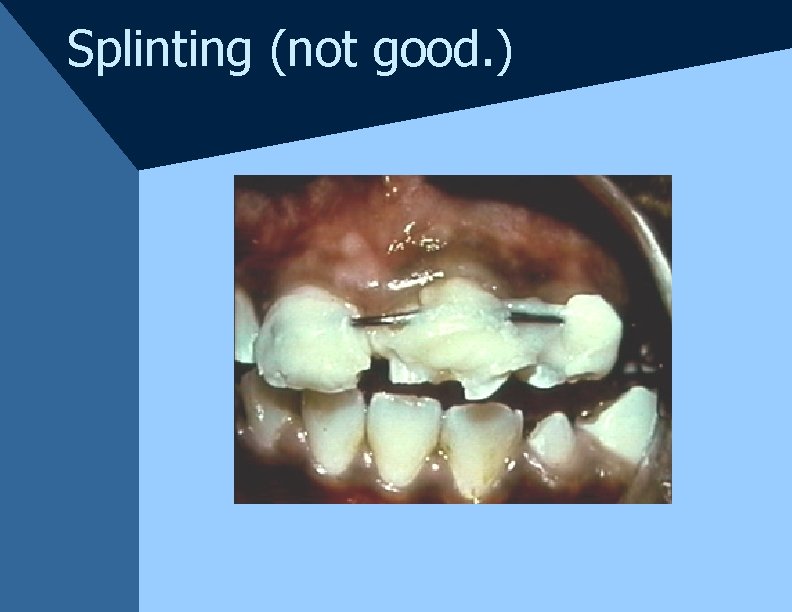
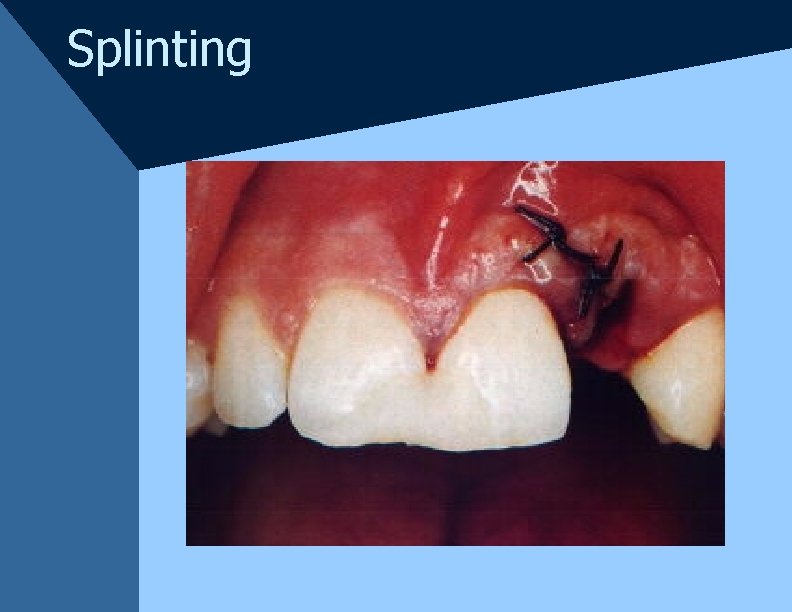
Splinting • . 030 Stainless steel wire + Composite (old) • . 0175 Twist (Wildcat) + Composite • Composite alone • Avulsion: 7 days • Root fractures: 1 -3 months
Splinting (not good. )
Splinting
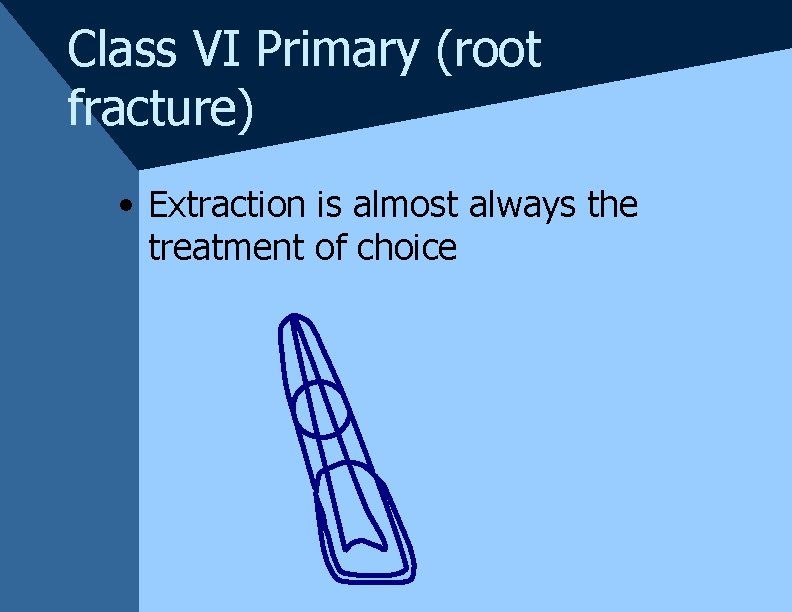
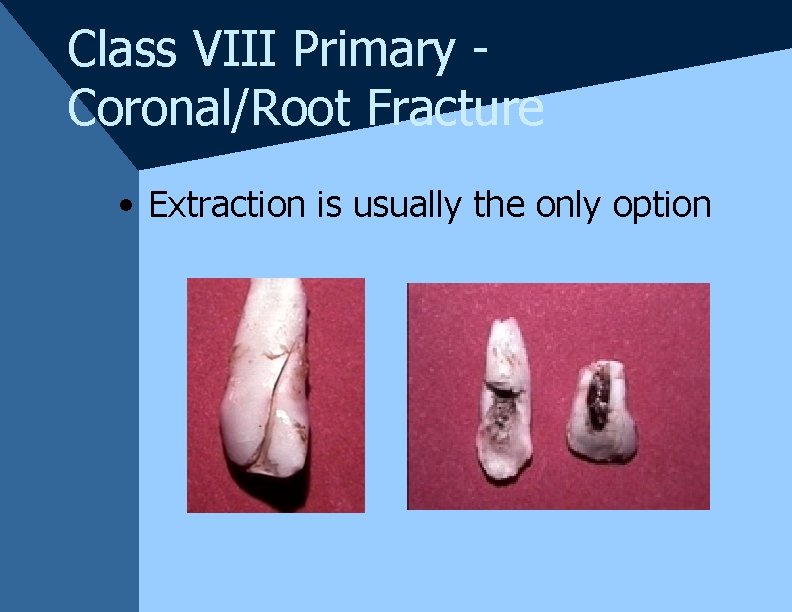
Class VI Primary (root fracture) • Extraction is almost always the treatment of choice
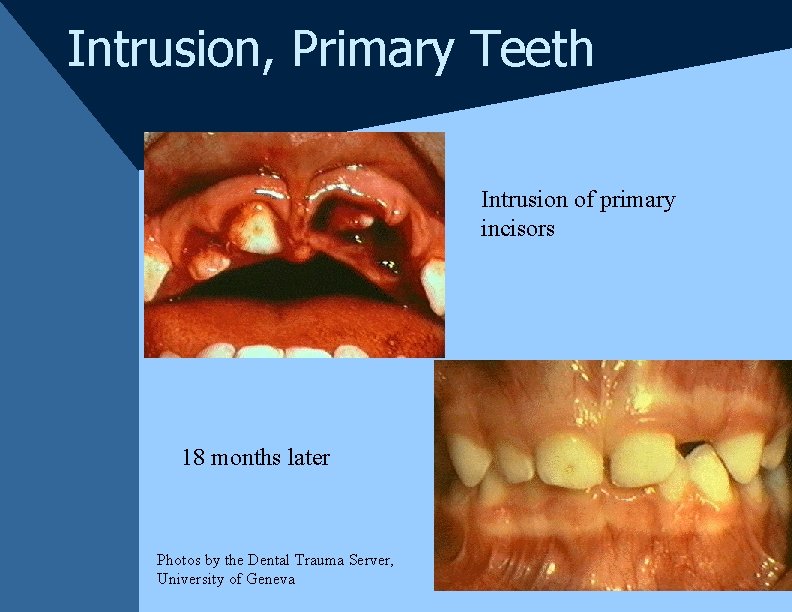
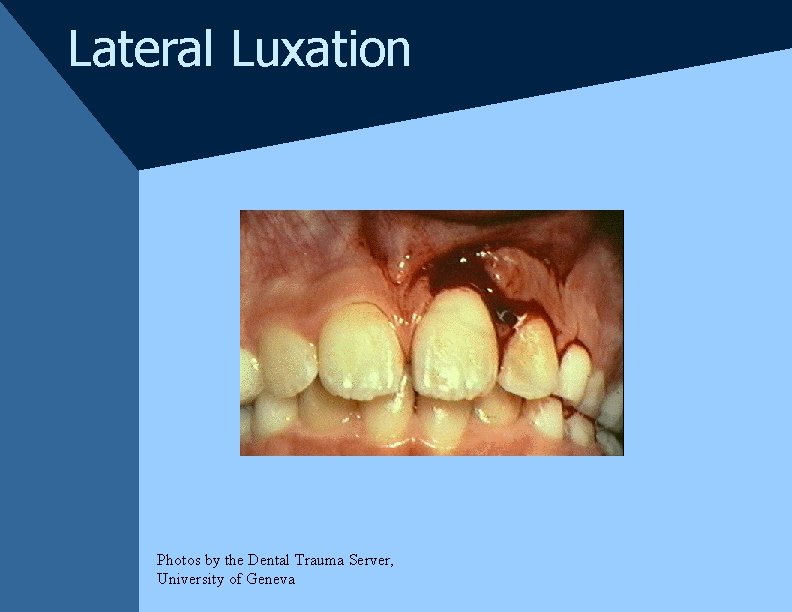
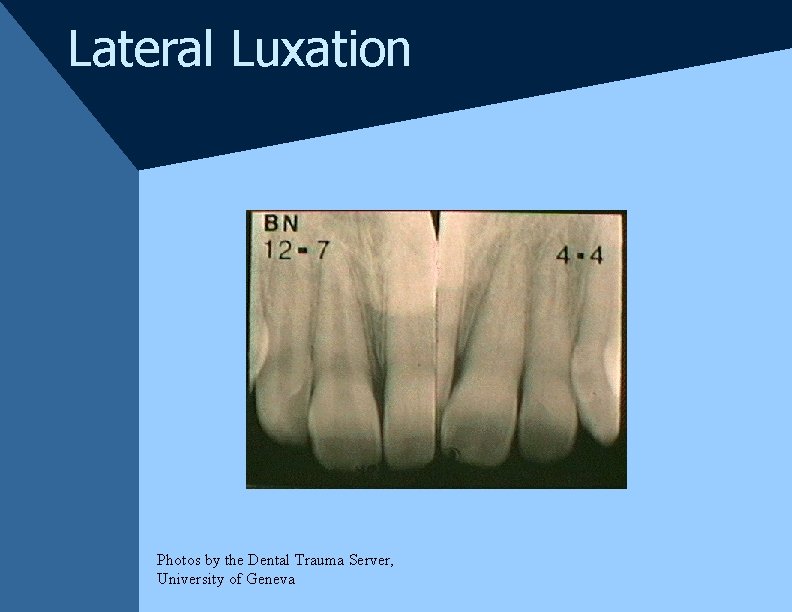
Class VII Primary (displacement) • Labial, lingual, extrusion - reposition tooth, compress alveolar bone, stabilize if necessary, check periodically • Intruded primary tooth – allow 2 -4 months for eruption – if ankylosis occurs, may luxate and check in 1 month, or remove
Intrusion, Primary Teeth Intrusion of primary incisors 18 months later Photos by the Dental Trauma Server, University of Geneva
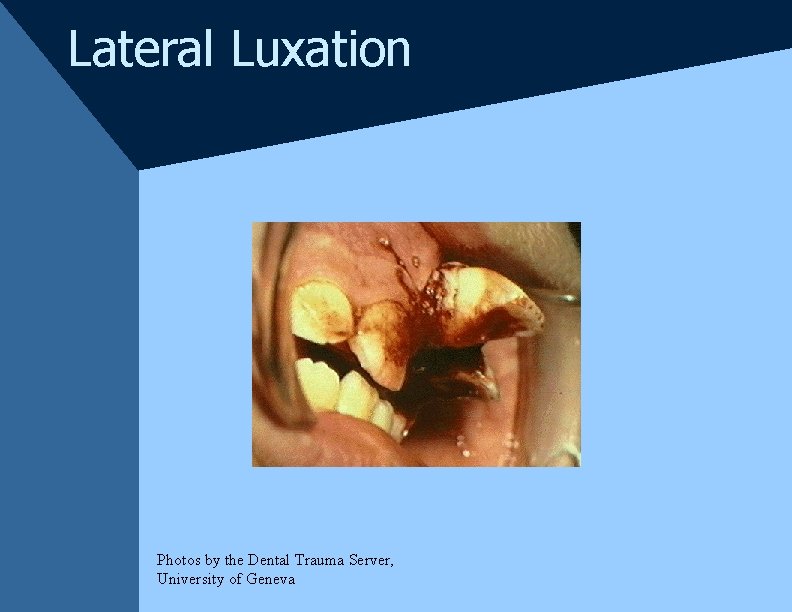
Lateral Luxation Photos by the Dental Trauma Server, University of Geneva
Lateral Luxation Photos by the Dental Trauma Server, University of Geneva
Lateral Luxation Photos by the Dental Trauma Server, University of Geneva
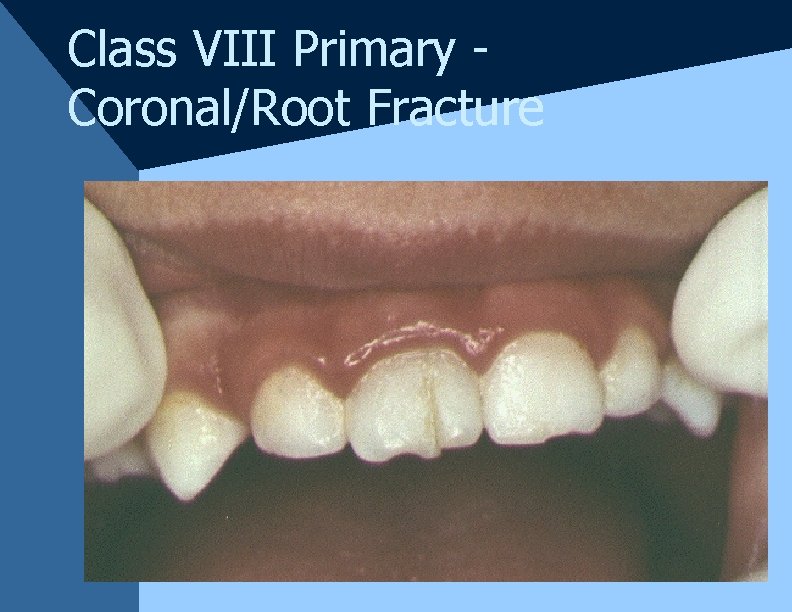
Class VIII Primary Coronal/Root Fracture • Extraction is usually the only option
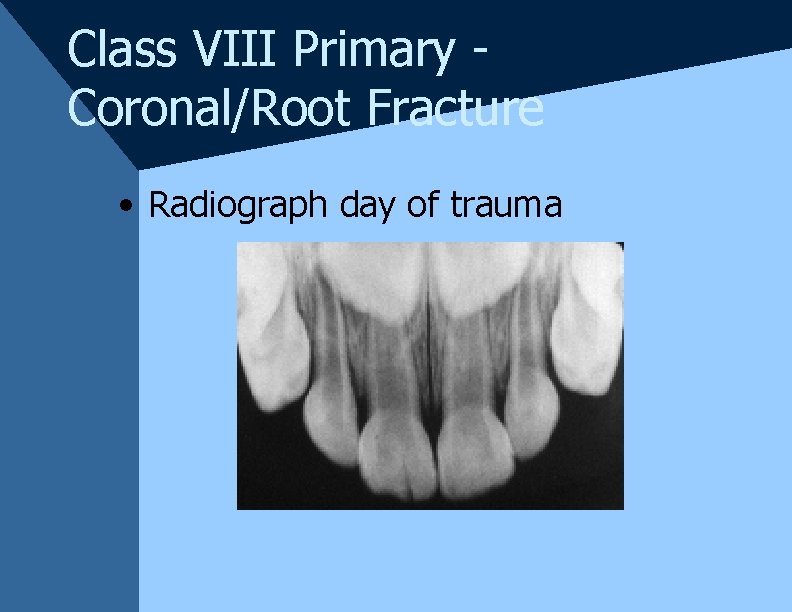
Class VIII Primary Coronal/Root Fracture • Radiograph day of trauma
Class VIII Primary Coronal/Root Fracture
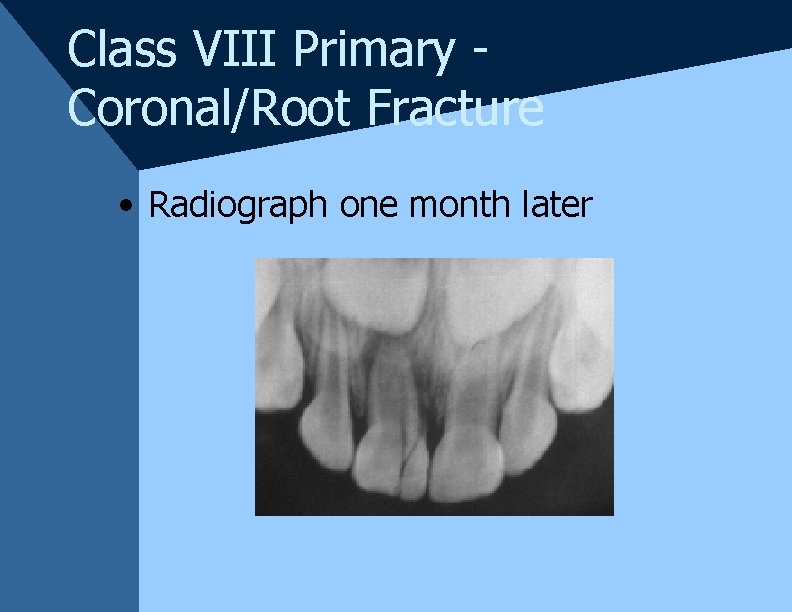
Class VIII Primary Coronal/Root Fracture • Radiograph one month later
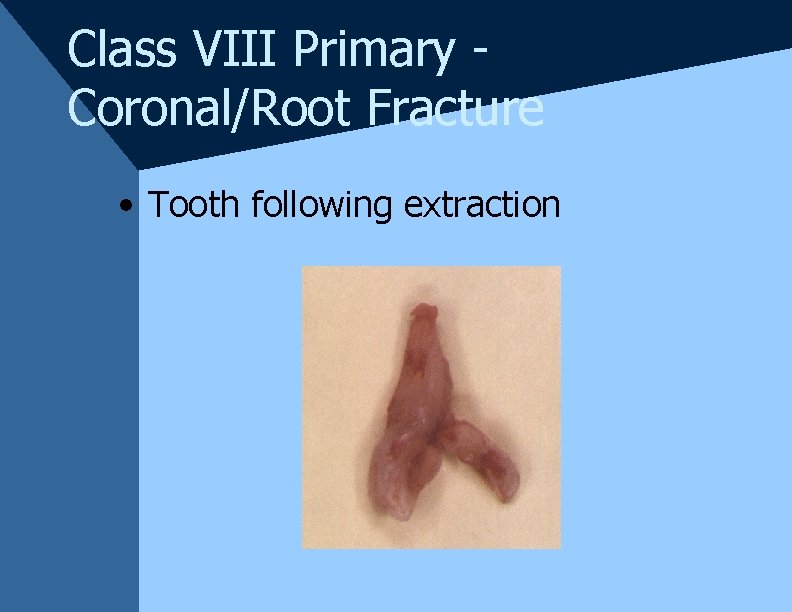
Class VIII Primary Coronal/Root Fracture • Tooth following extraction
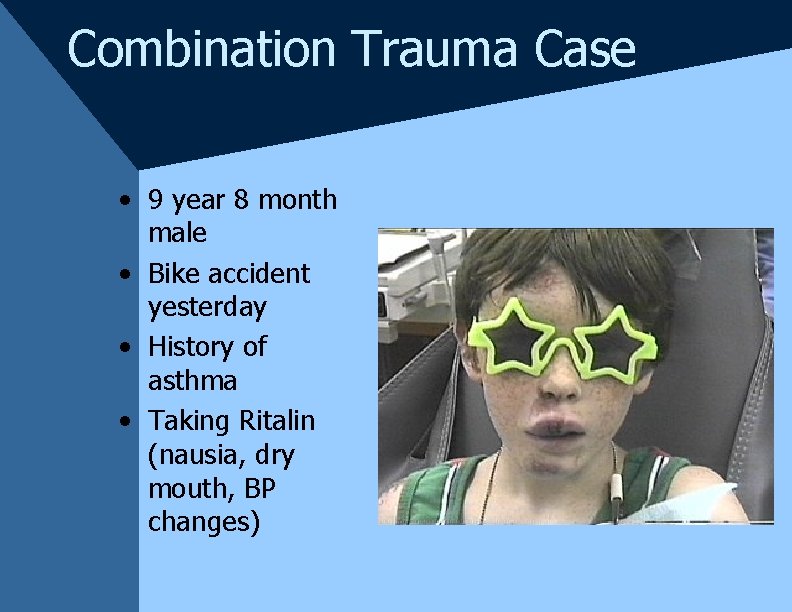
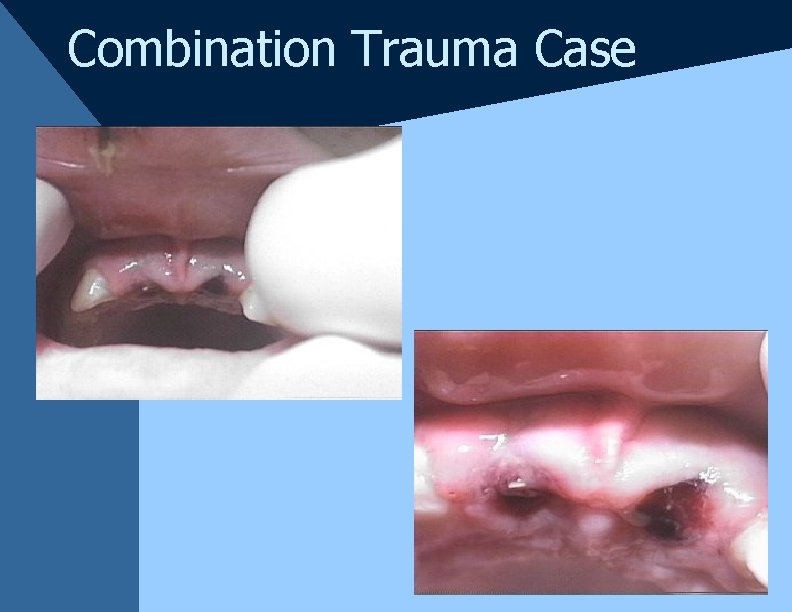
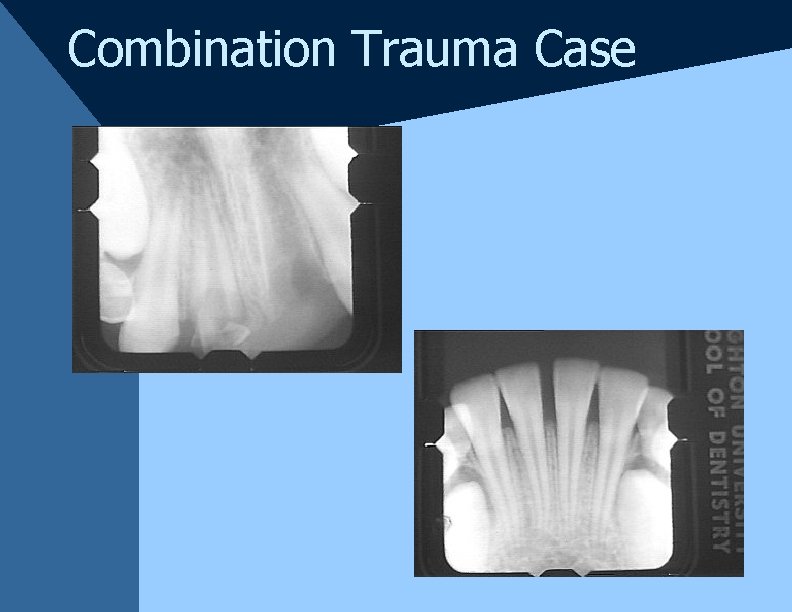
Combination Trauma Case • 9 year 8 month male • Bike accident yesterday • History of asthma • Taking Ritalin (nausia, dry mouth, BP changes)
Combination Trauma Case
Combination Trauma Case
Just for Baseball Fans “None of us, Mickey included, would want to be held to account for every moment of our lives. But how many of us could say that our best moments were as magnificent as his? ” Bob Costas