
Trauma and the Adolescent Brain Presented to Tahal
Trauma and the Adolescent Brain Presented to: Tahal 2 nd International Conference: Shedding Light on the Darkness of Abuse Wednesday, December 2, 2015 Sandi L. Isaacson, Ph. D. Midwest Neuroeducational Services Overland Park, KS
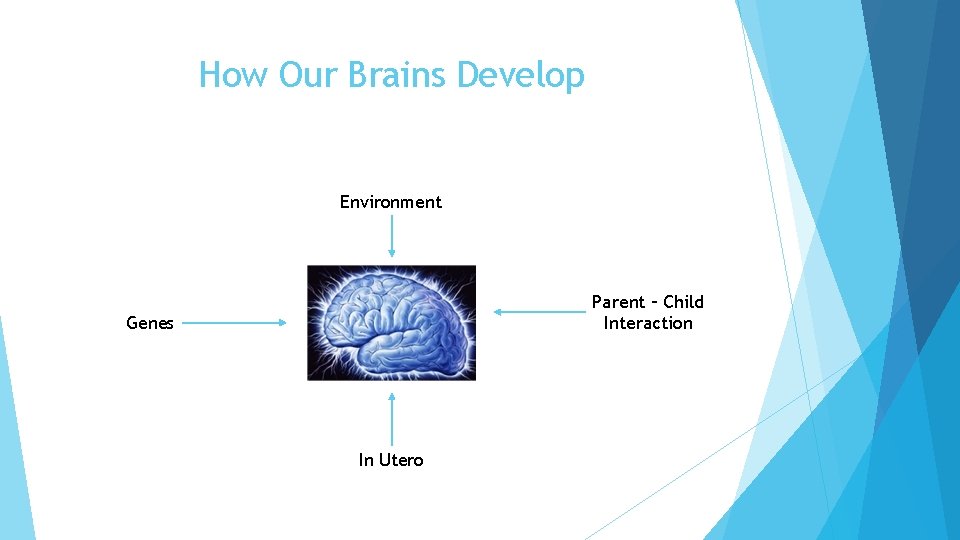
How Our Brains Develop Environment Parent – Child Interaction Genes In Utero
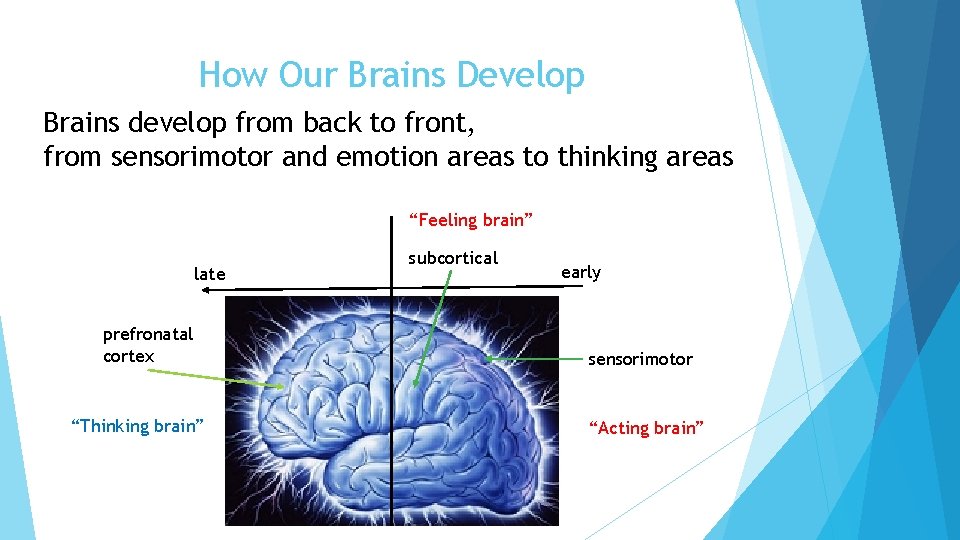
How Our Brains Develop Brains develop from back to front, from sensorimotor and emotion areas to thinking areas “Feeling brain” late prefronatal cortex “Thinking brain” subcortical early sensorimotor “Acting brain”
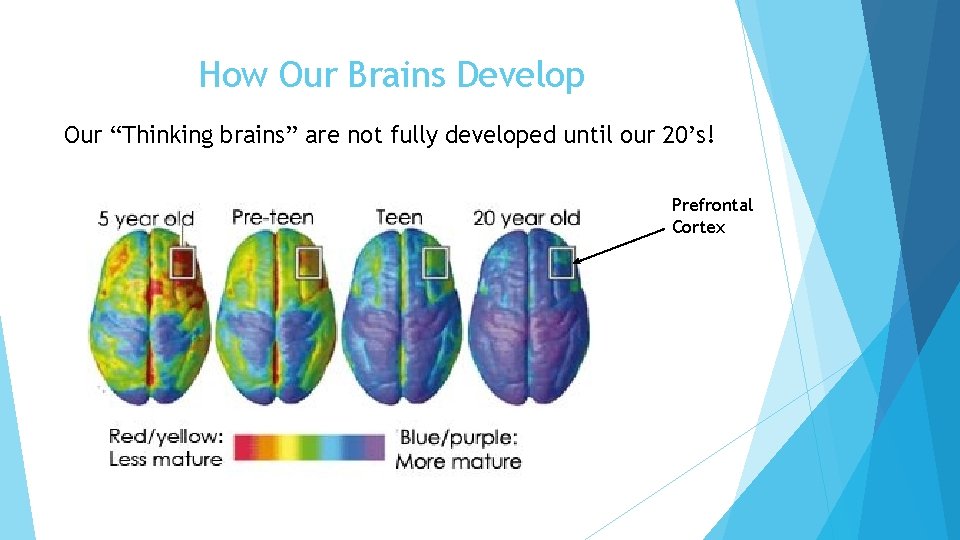
How Our Brains Develop Our “Thinking brains” are not fully developed until our 20’s! Prefrontal Cortex
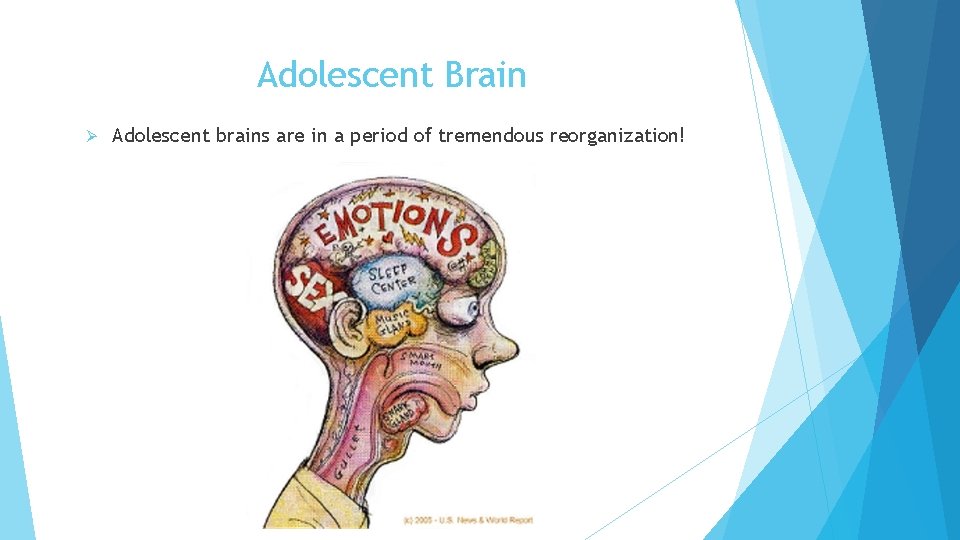
Adolescent Brain Ø Adolescent brains are in a period of tremendous reorganization!
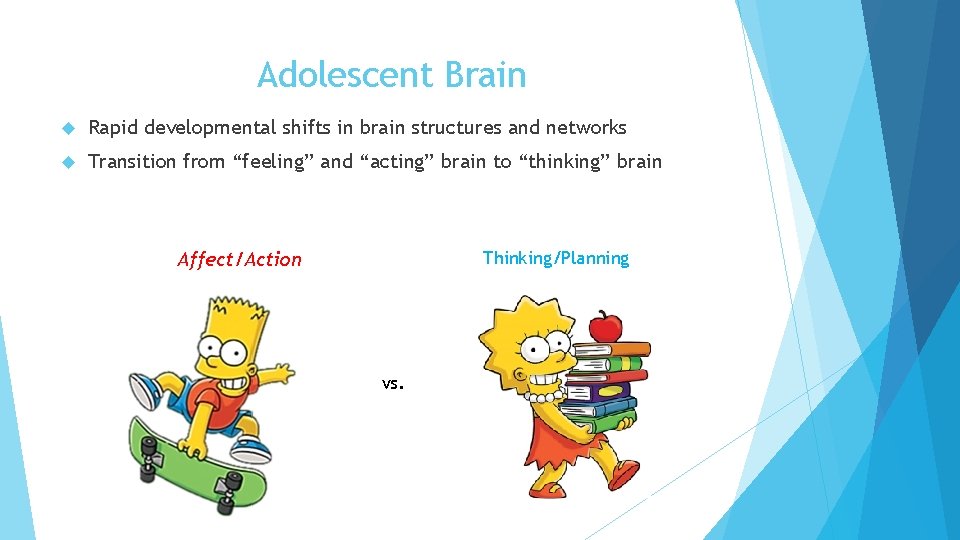
Adolescent Brain Rapid developmental shifts in brain structures and networks Transition from “feeling” and “acting” brain to “thinking” brain Thinking/Planning Affect/Action vs.
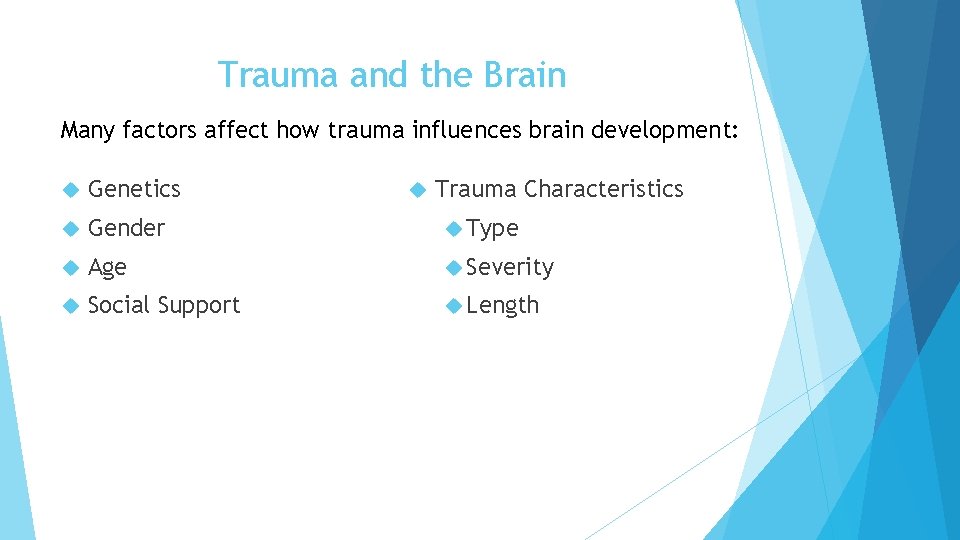
Trauma and the Brain Many factors affect how trauma influences brain development: Trauma Characteristics Genetics Gender Type Age Severity Social Support Length
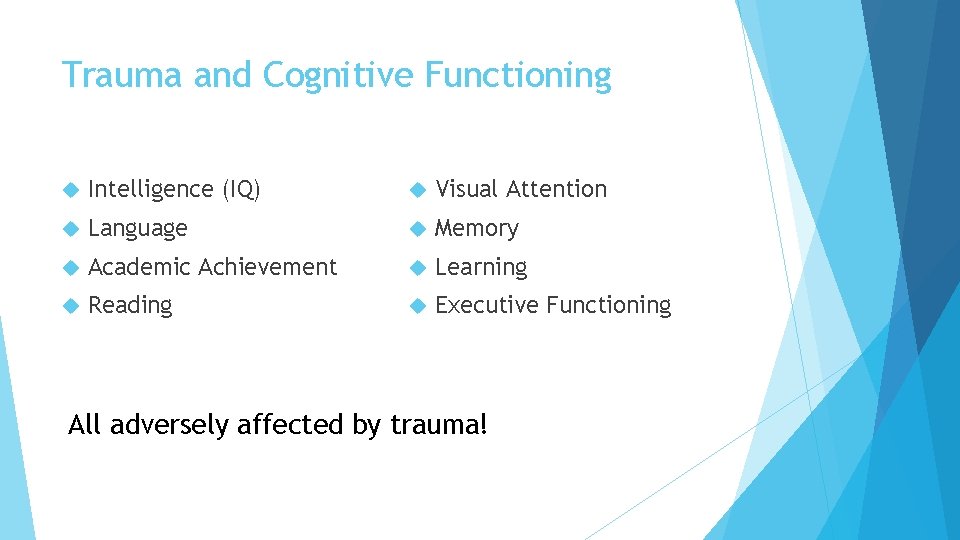
Trauma and Cognitive Functioning Intelligence (IQ) Visual Attention Language Memory Academic Achievement Learning Reading Executive Functioning All adversely affected by trauma!
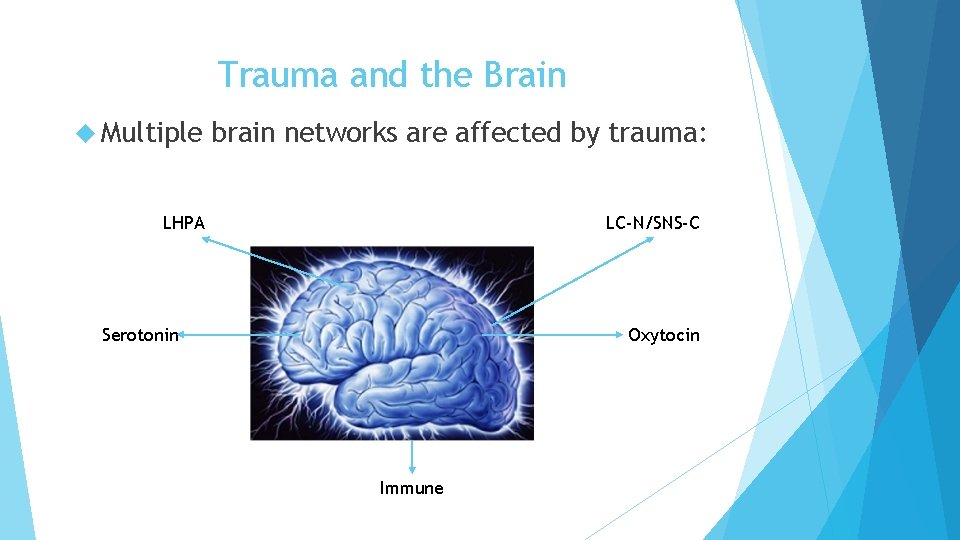
Trauma and the Brain Multiple brain networks are affected by trauma: LHPA LC-N/SNS-C Serotonin Oxytocin Immune
Brain Networks and Trauma
LHPA (Limbic-Hypothalamic-Pituitary-Adrenal Axis) Controls release of cortisol Affects immune functioning, learning, memory Priming: hyper-response to later stress Too HIGH: INTERNALIZING behaviors - depression, anxiety Too LOW: EXTERNALIZING behaviors – antisocial, aggressive, disruptive
LC-N/SNS-C Locus Coeruleus-Norepinepherine/Sympathetic Nervous System/Catecholamine Norepinepherine (adrenaline) = “fight or flight” Inhibits thinking Increases survival/alertness Increased activity – PTSD Decreased activity – Antisocial behavior, DISSOCIATION
Serotonin Operates mainly in midbrain Affects mood, behavior, cognitive functioning, motor functioning and appetite Also affects body rhythms: Cardiovascular Circadian Neuroendocrine Respiratory Sleep
Oxytocin Regulates interpersonal relationships: Sexual response Social cognition and memory Emotional recognition Empathy Attachment Particularly affected by emotional abuse Affects girls more than boys --- promiscuity
Immune/NEI Network NEI = Neuroendocrine Immune Network Stress a cytokines a inflammation a depression Long term effects seen in adulthood: Hypertension Atherosclerosis Metabolic Syndrome Increased Body Mass Index (BMI)
Is There Hope? Only 22% of those abused as children determined to be “resilient” BUT… Enriched environment Social support network Are crucial in limiting damage. Address sleep issues through medication/therapy CBT effective in decreasing fear response
- Slides: 16