
Trauma and Poverty Dimitri Topitzes Associate Professor Social
- Slides: 35
Trauma and Poverty Dimitri Topitzes Associate Professor, Social Work U. of Wisconsin-Milwaukee topitzes@uwm. edu November 19, 2015
Acknowledgements Joshua Mersky and David Pate Wisconsin Department of � Children and Families � Health Services Milwaukee Area Work Force Investment Board Funders: � Health Resources and Services Administration � Chapin Hall Center for Children � Wisconsin Partnership Program, UW-Madison, School of Medicine and Public Health
Topic outline Define trauma Intersection of poverty and trauma Implications for practice/policy
DEFINE TRAUMA
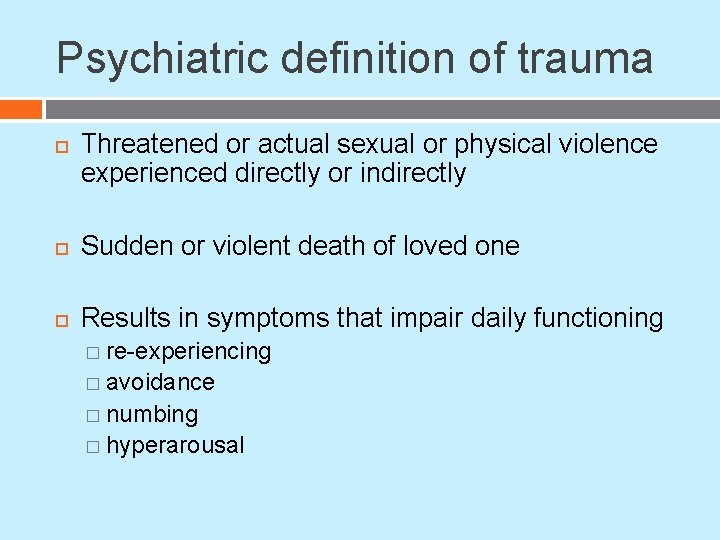
Psychiatric definition of trauma Threatened or actual sexual or physical violence experienced directly or indirectly Sudden or violent death of loved one Results in symptoms that impair daily functioning � re-experiencing � avoidance � numbing � hyperarousal
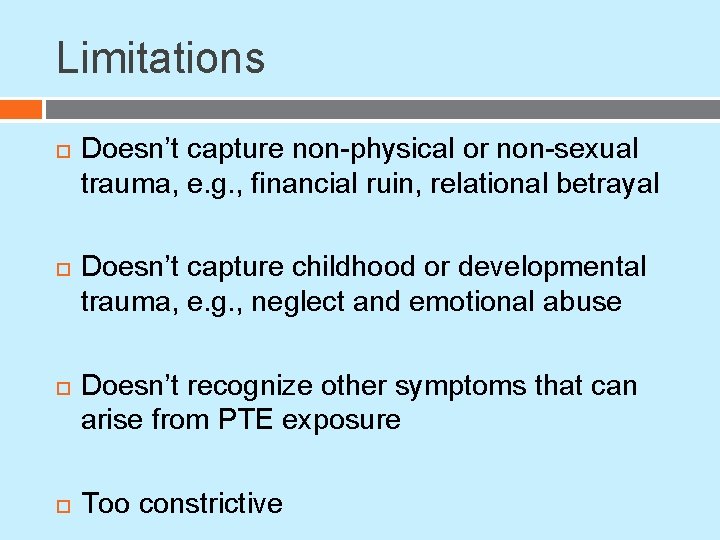
Limitations Doesn’t capture non-physical or non-sexual trauma, e. g. , financial ruin, relational betrayal Doesn’t capture childhood or developmental trauma, e. g. , neglect and emotional abuse Doesn’t recognize other symptoms that can arise from PTE exposure Too constrictive
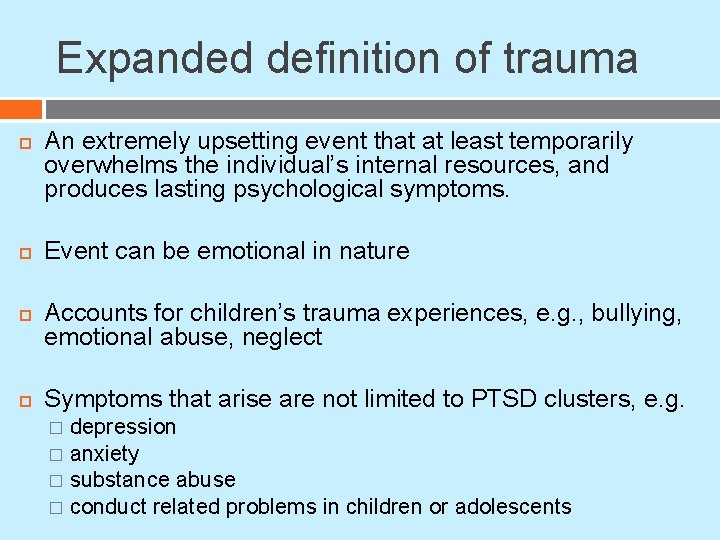
Expanded definition of trauma An extremely upsetting event that at least temporarily overwhelms the individual’s internal resources, and produces lasting psychological symptoms. Event can be emotional in nature Accounts for children’s trauma experiences, e. g. , bullying, emotional abuse, neglect Symptoms that arise are not limited to PTSD clusters, e. g. depression � anxiety � substance abuse � conduct related problems in children or adolescents �
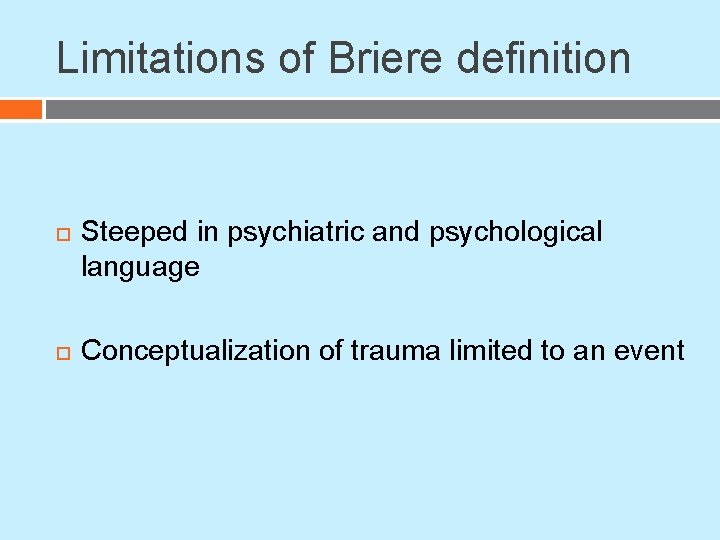
Limitations of Briere definition Steeped in psychiatric and psychological language Conceptualization of trauma limited to an event
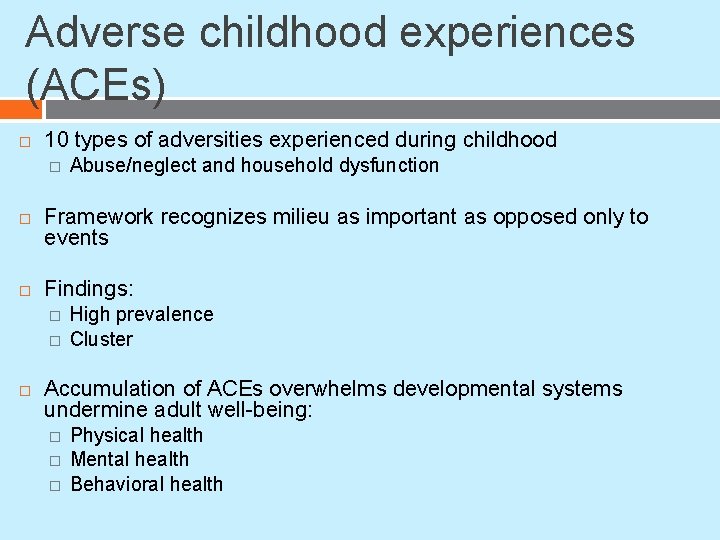
Adverse childhood experiences (ACEs) 10 types of adversities experienced during childhood � Framework recognizes milieu as important as opposed only to events Findings: � � Abuse/neglect and household dysfunction High prevalence Cluster Accumulation of ACEs overwhelms developmental systems undermine adult well-being: � � � Physical health Mental health Behavioral health
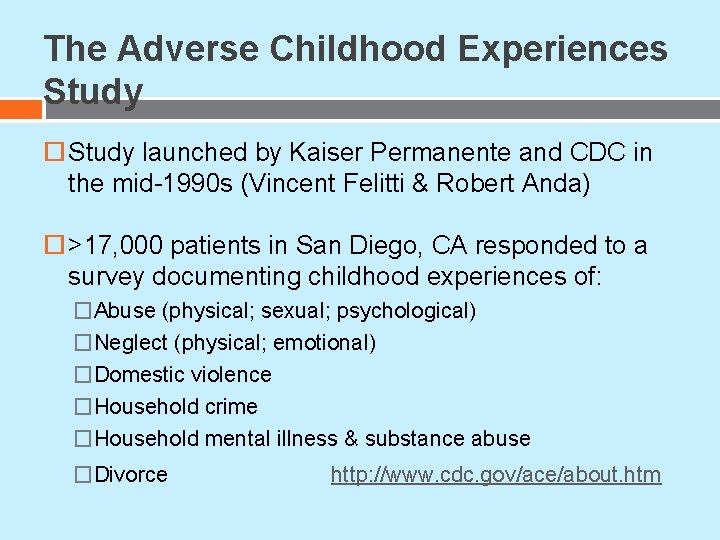
The Adverse Childhood Experiences Study launched by Kaiser Permanente and CDC in the mid-1990 s (Vincent Felitti & Robert Anda) >17, 000 patients in San Diego, CA responded to a survey documenting childhood experiences of: �Abuse (physical; sexual; psychological) �Neglect (physical; emotional) �Domestic violence �Household crime �Household mental illness & substance abuse �Divorce http: //www. cdc. gov/ace/about. htm
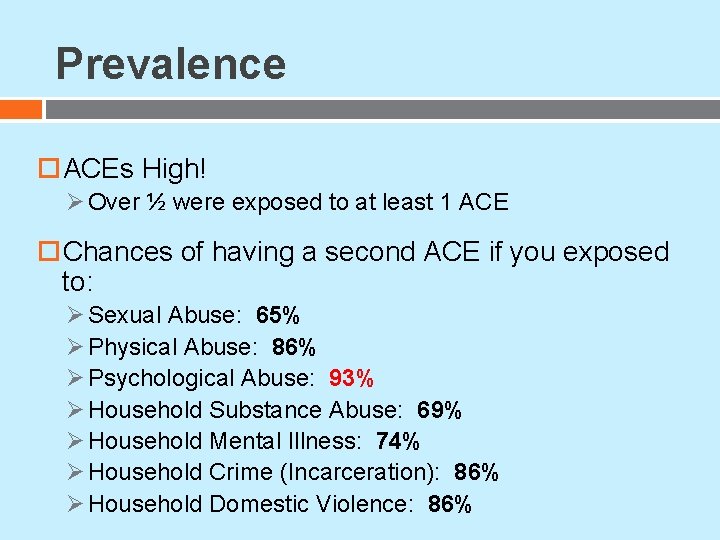
Prevalence ACEs High! Ø Over ½ were exposed to at least 1 ACE Chances of having a second ACE if you exposed to: Ø Sexual Abuse: 65% Ø Physical Abuse: 86% Ø Psychological Abuse: 93% Ø Household Substance Abuse: 69% Ø Household Mental Illness: 74% Ø Household Crime (Incarceration): 86% Ø Household Domestic Violence: 86%
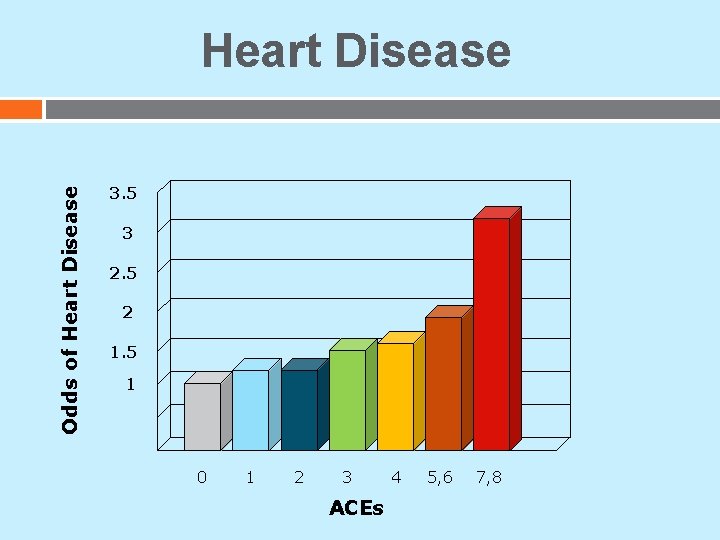
Odds of Heart Disease 3. 5 3 2. 5 2 1. 5 1 0 1 2 3 ACEs 4 5, 6 7, 8
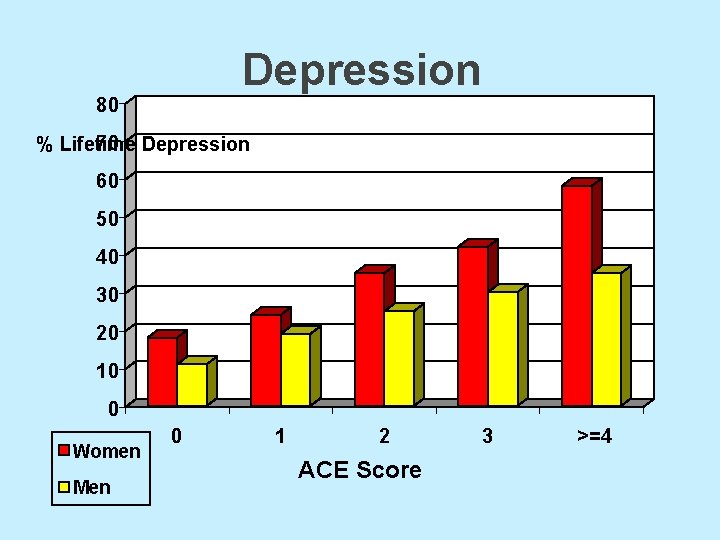
Depression 80 70 % Lifetime Depression 60 50 40 30 20 10 0 Women Men 0 1 2 ACE Score 3 >=4
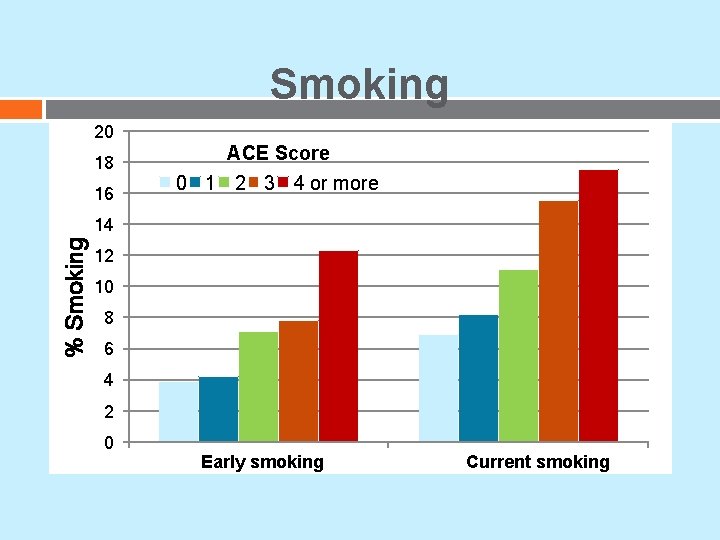
Smoking 20 18 16 ACE Score 0 1 2 3 4 or more % Smoking 14 12 10 8 6 4 2 0 Early smoking Current smoking
Limitations Normed on middle class sample Ignores severity and chronicity of adversity Doesn’t account for protective factors Doesn’t account for stressors relevant to low-income samples � Community violence � Homelessness � Food insecurity � Absence of parent
Toxic Stress Multiple adversities, e. g. , poverty, discrimination, CAN Overwhelm small number protective factors Particularly in early life Chronic toxic stress response, reflects allostatic load Result in poor lifelong health trajectories Extends ACE framework � additional stressors (poverty) and
POVERTY & TRAUMA
I. Poverty increases exposure to index trauma � Low-income/high crime communities increase likelihood of violence exposure Poverty increases chances child exposed to trauma as defined by Briere and by ACEs: � Neglect Poverty increases risk of exposure to toxic stress � Food insecurity
Home visiting study Over 800 adults receiving home visiting services in WI Completed an ACE-related survey over the last 9 months of 2014 Primarily low-income women just given birth
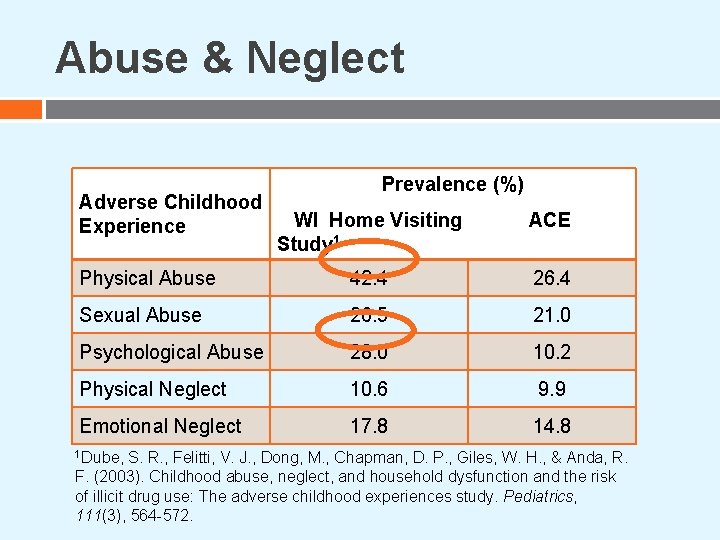
Abuse & Neglect Prevalence (%) Adverse Childhood WI Home Visiting ACE Experience Study 1 Physical Abuse 42. 4 26. 4 Sexual Abuse 26. 5 21. 0 Psychological Abuse 28. 0 10. 2 Physical Neglect 10. 6 9. 9 Emotional Neglect 17. 8 14. 8 1 Dube, S. R. , Felitti, V. J. , Dong, M. , Chapman, D. P. , Giles, W. H. , & Anda, R. F. (2003). Childhood abuse, neglect, and household dysfunction and the risk of illicit drug use: The adverse childhood experiences study. Pediatrics, 111(3), 564 -572.
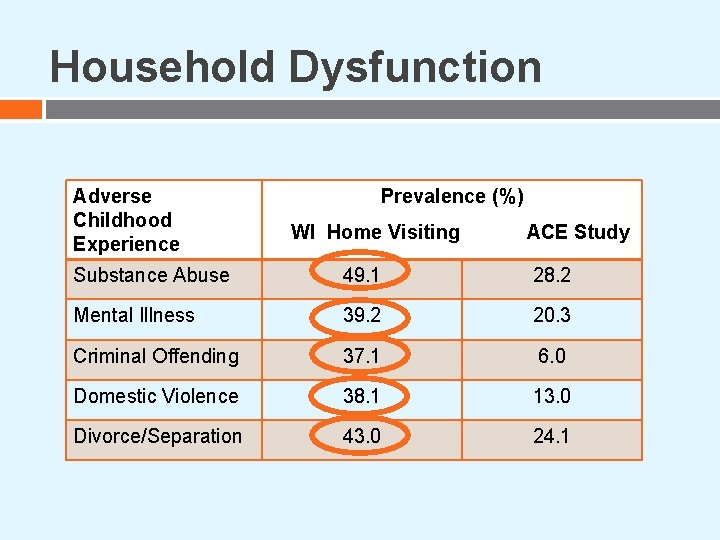
Household Dysfunction Adverse Childhood Experience Prevalence (%) WI Home Visiting ACE Study Substance Abuse 49. 1 28. 2 Mental Illness 39. 2 20. 3 Criminal Offending 37. 1 6. 0 Domestic Violence 38. 1 13. 0 Divorce/Separation 43. 0 24. 1
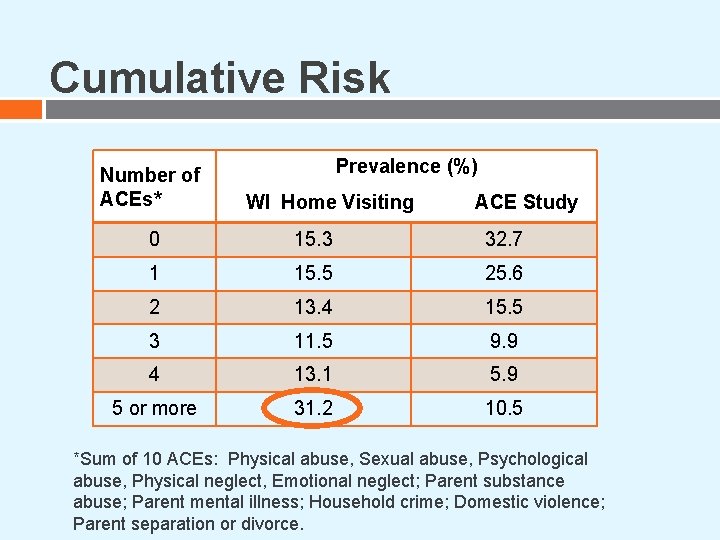
Cumulative Risk Prevalence (%) Number of ACEs* WI Home Visiting ACE Study 0 15. 3 32. 7 1 15. 5 25. 6 2 13. 4 15. 5 3 11. 5 9. 9 4 13. 1 5. 9 5 or more 31. 2 10. 5 *Sum of 10 ACEs: Physical abuse, Sexual abuse, Psychological abuse, Physical neglect, Emotional neglect; Parent substance abuse; Parent mental illness; Household crime; Domestic violence; Parent separation or divorce.
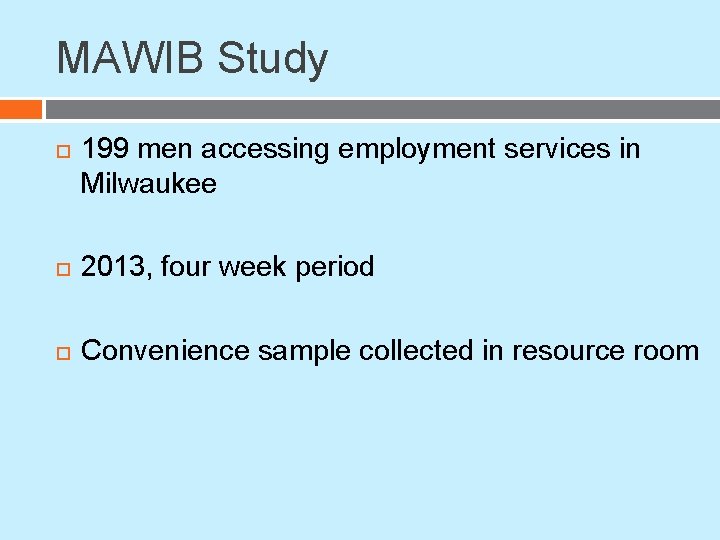
MAWIB Study 199 men accessing employment services in Milwaukee 2013, four week period Convenience sample collected in resource room
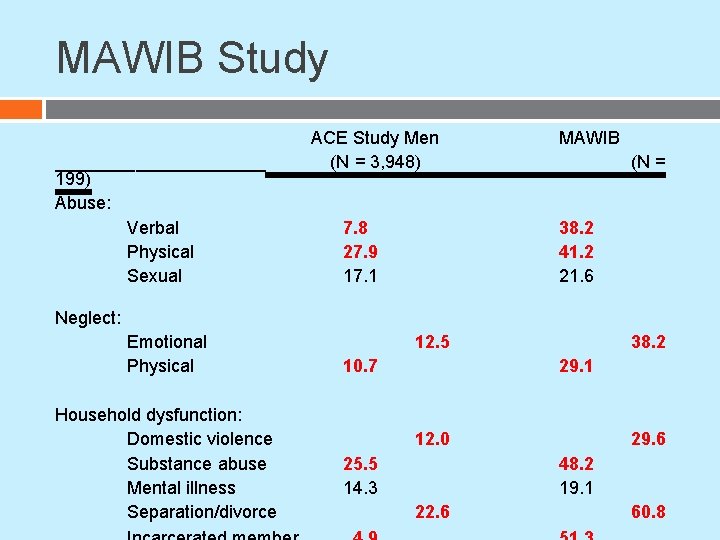
MAWIB Study ACE Study Men ___________ (N = 3, 948) 199) Abuse: Verbal 7. 8 Physical 27. 9 Sexual 17. 1 Neglect: Emotional 12. 5 Physical 10. 7 Household dysfunction: Domestic violence 12. 0 Substance abuse 25. 5 Mental illness 14. 3 Separation/divorce 22. 6 MAWIB (N = 38. 2 41. 2 21. 6 38. 2 29. 1 29. 6 48. 2 19. 1 60. 8
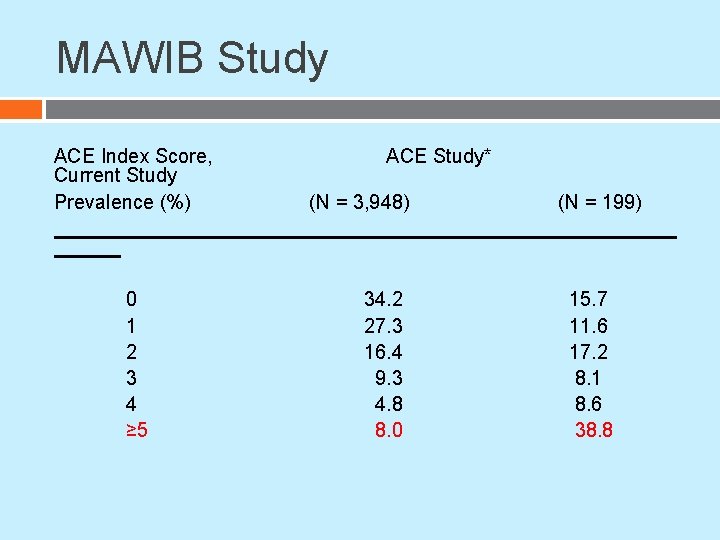
MAWIB Study ACE Index Score, ACE Study* Current Study Prevalence (%) (N = 3, 948) (N = 199) ____________________________ 0 34. 2 15. 7 1 27. 3 11. 6 2 16. 4 17. 2 3 9. 3 8. 1 4 4. 8 8. 6 ≥ 5 8. 0 38. 8
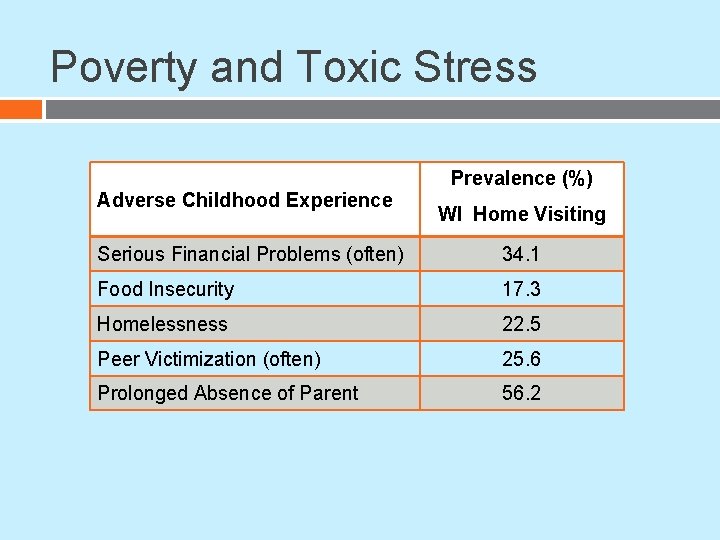
Poverty and Toxic Stress Adverse Childhood Experience Prevalence (%) WI Home Visiting Serious Financial Problems (often) 34. 1 Food Insecurity 17. 3 Homelessness 22. 5 Peer Victimization (often) 25. 6 Prolonged Absence of Parent 56. 2
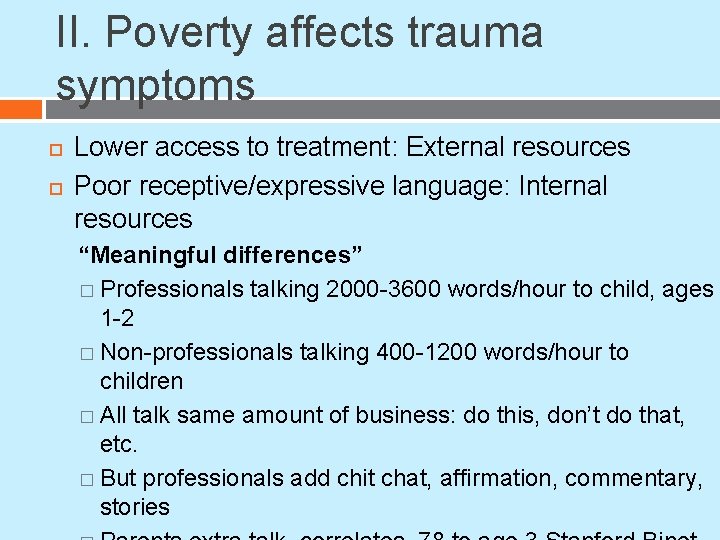
II. Poverty affects trauma symptoms Lower access to treatment: External resources Poor receptive/expressive language: Internal resources “Meaningful differences” � Professionals talking 2000 -3600 words/hour to child, ages 1 -2 � Non-professionals talking 400 -1200 words/hour to children � All talk same amount of business: do this, don’t do that, etc. � But professionals add chit chat, affirmation, commentary, stories
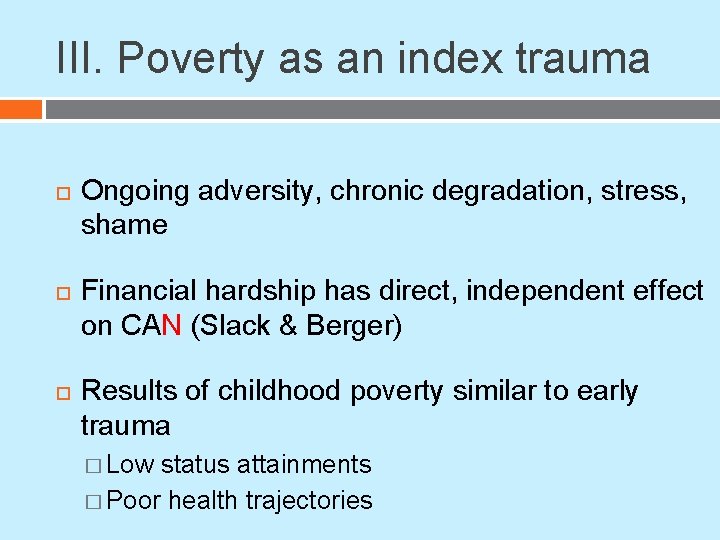
III. Poverty as an index trauma Ongoing adversity, chronic degradation, stress, shame Financial hardship has direct, independent effect on CAN (Slack & Berger) Results of childhood poverty similar to early trauma � Low status attainments � Poor health trajectories
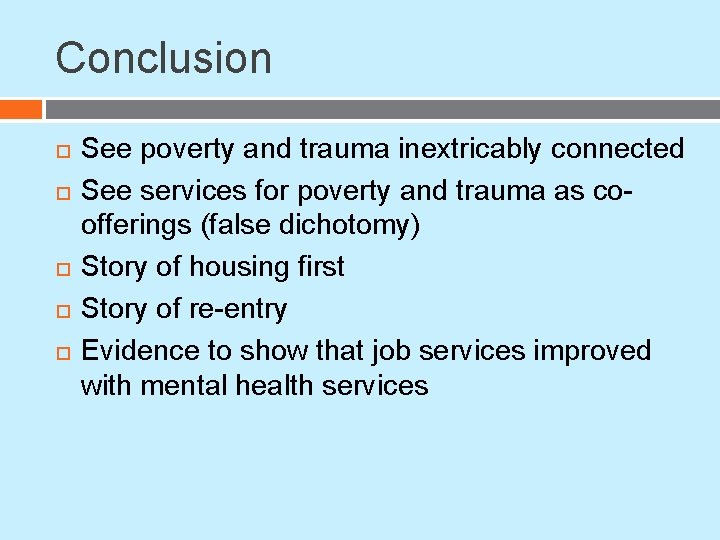
Conclusion See poverty and trauma inextricably connected See services for poverty and trauma as coofferings (false dichotomy) Story of housing first Story of re-entry Evidence to show that job services improved with mental health services
IMPLICATIONS
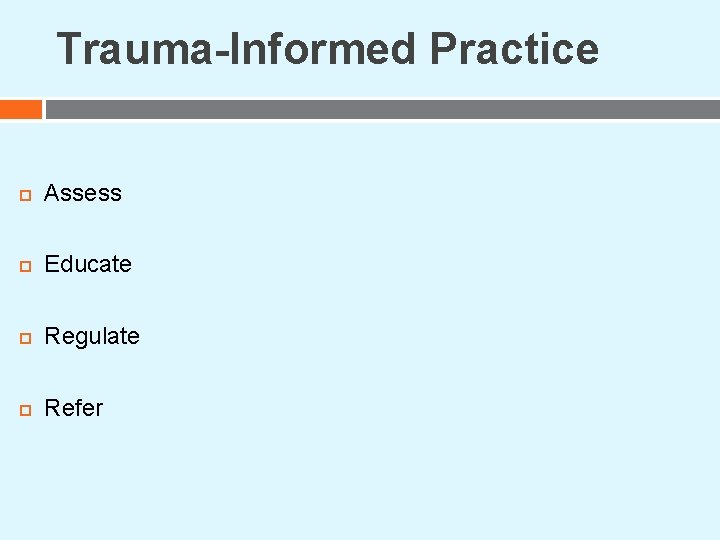
Trauma-Informed Practice Assess Educate Regulate Refer
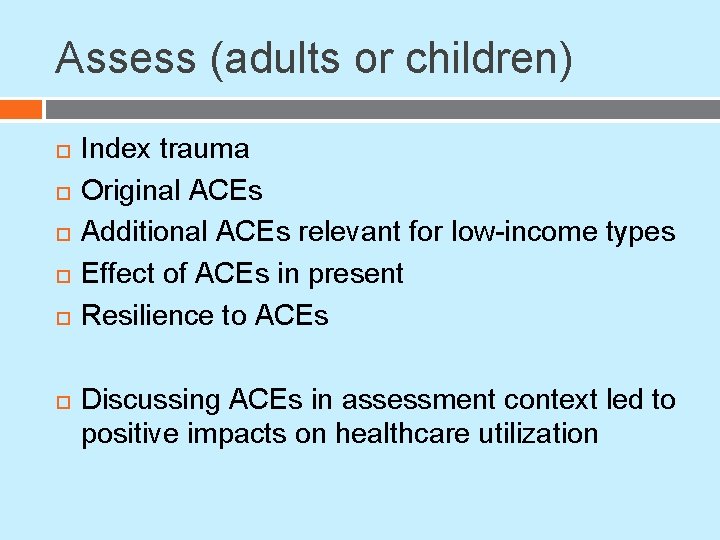
Assess (adults or children) Index trauma Original ACEs Additional ACEs relevant for low-income types Effect of ACEs in present Resilience to ACEs Discussing ACEs in assessment context led to positive impacts on healthcare utilization
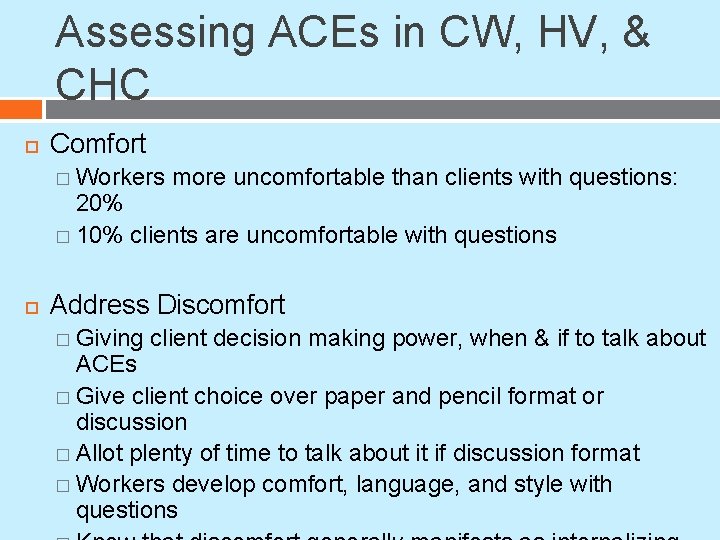
Assessing ACEs in CW, HV, & CHC Comfort � Workers more uncomfortable than clients with questions: 20% � 10% clients are uncomfortable with questions Address Discomfort � Giving client decision making power, when & if to talk about ACEs � Give client choice over paper and pencil format or discussion � Allot plenty of time to talk about it if discussion format � Workers develop comfort, language, and style with questions
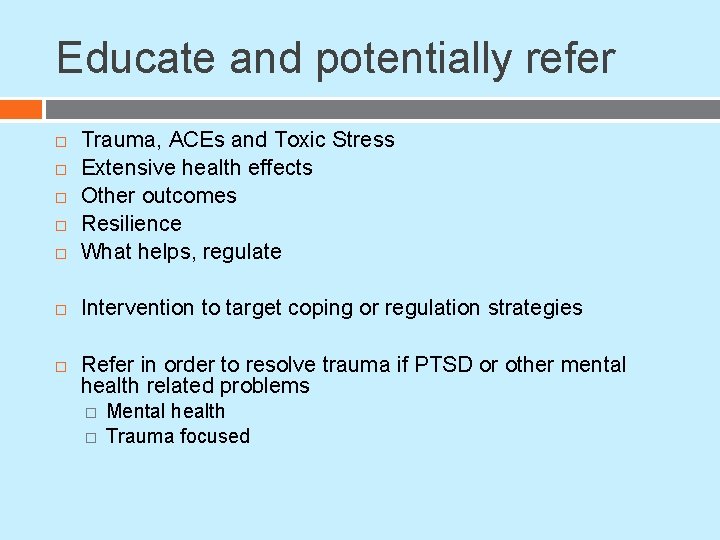
Educate and potentially refer Trauma, ACEs and Toxic Stress Extensive health effects Other outcomes Resilience What helps, regulate Intervention to target coping or regulation strategies Refer in order to resolve trauma if PTSD or other mental health related problems � � Mental health Trauma focused
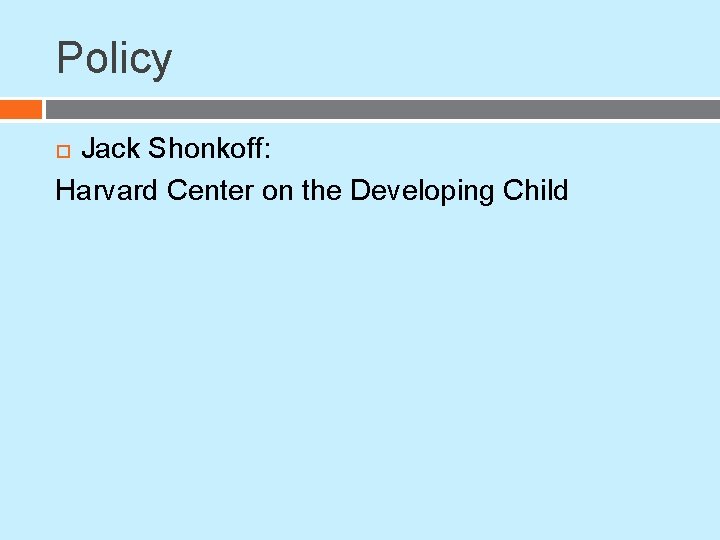
Policy Jack Shonkoff: Harvard Center on the Developing Child