
Trauma Addiction Impact on Individuals and Families By
Trauma & Addiction: Impact on Individuals and Families By Jill Perry, MS, NCC, LPC, CAADC, SAP November 9, 2017
What is Trauma? An experience, or collection of experiences, that are out of the ordinary and cause a person to struggle to accept it and move on. Extraordinary events happening to ordinary people and causing them to get stuck.

What is Trauma? Greek translation = WOUND
What is Trauma? Wounds Body come in all shapes and sizes has natural resources for healing wounds IF surrounded by right circumstances

What is Trauma? Different wounds effect people in different ways Wound healed healing area may look different when

What is Trauma? Wounds are usually obtained quickly but take time to heal thoroughly If wounds are left untreated, they can impact others around them too
What is Trauma? Post-traumatic Stress Disorder (PTSD) in a nutshell Exposure to actual or threatened death, serious injury or sexual violation; direct experiencing, witnessing Intrusion symptoms (flashbacks, panic, freeze response) Avoidance of the stimuli associated with the trauma (isolation, freeze response, phobias, addiction) Cognitions and Mood: negative alterations (“the world is bad/dangerous”)
What is Trauma? Post-traumatic Stress Disorder (PTSD) in a nutshell Arousal and reactivity symptoms (hypervigilance, increased startle response, irritability , anger, wrecklessness, selfdestructiveness, sleep and concentration problems Duration of symptoms longer than 1 month Functional impairment due to disturbances
What is Trauma? Trauma & Stress Related Disorders Reactive Attachment Disorder Disinhibited Acute Social Engagement Disorder Stress Disorder Adjustment Disorders
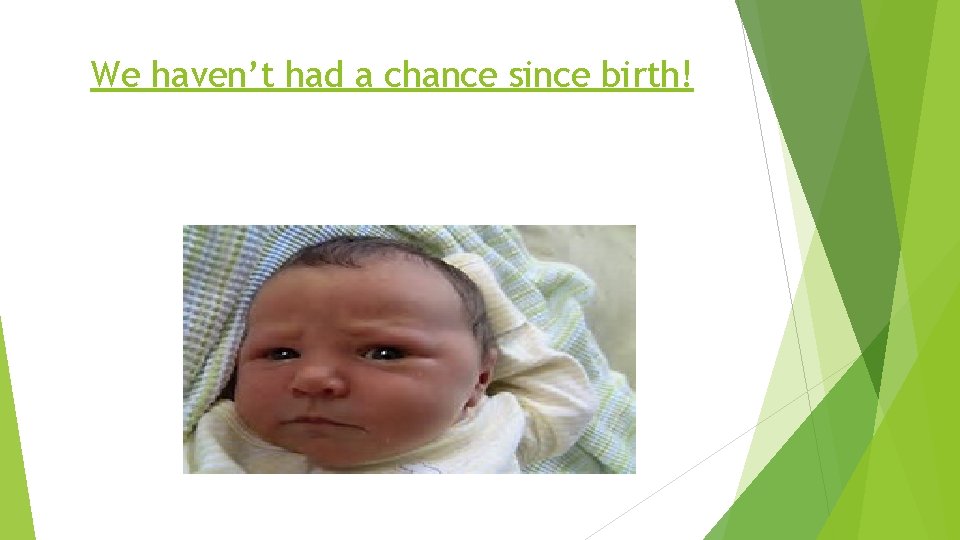
We haven’t had a chance since birth!
How We Process Information The neurobiological processing system is intrinsic, physical and adaptive (we are hard-wired to process) Geared to integrate internal and external experiences Memories are stored in associative memory networks and are the basis of perception, attitude and behavior (what’s passed is present) Experiences are translated into physically stored memories Stored memory experiences are contributors to pathology and to health
How We Process Information Trauma causes a disruption which results in unprocessed information being dysfunctionally held in memory networks (gets in the way of the natural flow) New experiences link into previously stored memories which are the basis of interpretations, feelings and behaviors (file folders) If too difficult, they may be stored in the implicit/non-declarative memory system (subconscious, emotional “downstairs” brain) These memory networks are stored in a way that does not allow them to connect with routine processing system

Trauma & Addiction: Which Comes First? Behaviors to help a trauma feel “better” or “numb” may be maladaptive (drugs, video games, sex, etc)
Trauma & Addiction: Which Comes First? The Culture of addiction includes ongoing trauma for individuals and their families
Trauma & Addiction Military veterans with PTSD reported using alcohol to specifically cope with re -experiencing and hyperarousal symptoms which result in the development of an alcohol use disorder Alcohol abuse impedes recovery and even worsens symptoms of posttraumatic healing Substance-dependent individuals with co-occurring PTSD relapsed more quickly than those without PTSD
Trauma & Addiction Between 55 and 99 percent of women in substance abuse treatment have had traumatic experiences, typically childhood physical or sexual abuse, domestic violence, or rape Of these, between 33 and 59 percent have been found to be experiencing current PTSD
Trauma & Addiction Greater violence leads to more serious substance abuse and other addictions along with higher rates of depression, self mutilation, and suicidal impulses among women Addiction places women at higher risk of future trauma, through their associations with dangerous people and lowered self-protection when using substances
Trauma & Addiction Pre-existing alcohol misuse contributes to posttraumatic psychiatric maladjustment in Veterans Problematic drinking prior to the traumatic combat experience may be a risk factor for some soldiers to exhibit PTSD symptoms following combat exposure. PTSD symptoms, but not combat exposure, significantly predicted problematic drinking outcomes
Trauma & Addiction Teens who use marijuana have 8 times higher rate of suicidal ideation than non -marijuana users and a 16% times higher rate of suicide attempts.
Trauma & Addiction People who inject drugs have a 14 X greater risk for suicide JP Counseling Healing for Adults, Youth and Families
Trauma & Addiction Abuse of alcohol and/or drugs is a major risk factor in suicide Alcohol is associated with 25 -50% of all suicides Between 5 -27% of all deaths of people who abuse alcohol are caused by suicide Lifetime risk for suicide among people who abuse alcohol is 15%
Trauma & Addiction The relationship between alcohol misuse and (traumatic brain injury) TBI often is complex because heavy drinking may predate and predispose individuals to experiencing a TBI (i. e. , TBI can result from accidents that occur when people are under the influence of alcohol) Alcohol misuse can exacerbate the complications of TBI by worsening TBI symptom severity (e. g. , persistent memory problems) and by further increasing an individual’s risk for experiencing additional alcohol-related TBI events
Trauma & Addiction Of Veterans in VA health care with co-occurring PTSD and substance use disorders (SUD), cannabis use disorder has been the most diagnosed SUD since 2009. The percentage of Veterans in VA with PTSD and SUD who were diagnosed with cannabis use disorder increased from 13. 0% in 2002 to 22. 7% 2014. As of 2014, there are more than 40, 000 Veterans with PTSD and SUD seen in VA diagnosed with cannabis use disorder
Family Dynamics
Three Approaches of Family Therapy The old-style paradigm believes that something wrong in the family produced the substance use disorder. In other words, the family caused it. The second paradigm focuses on risk and protective factors by working with families to reduce the risk factors and increase the protective factors.
Three Approaches of Family Therapy The third paradigm of family therapy takes a multisystemic or multidimensional perspective in therapeutic process. Therapy includes all family members and possibly peers or other significant loved ones. In effect, the family or the group is the patient.

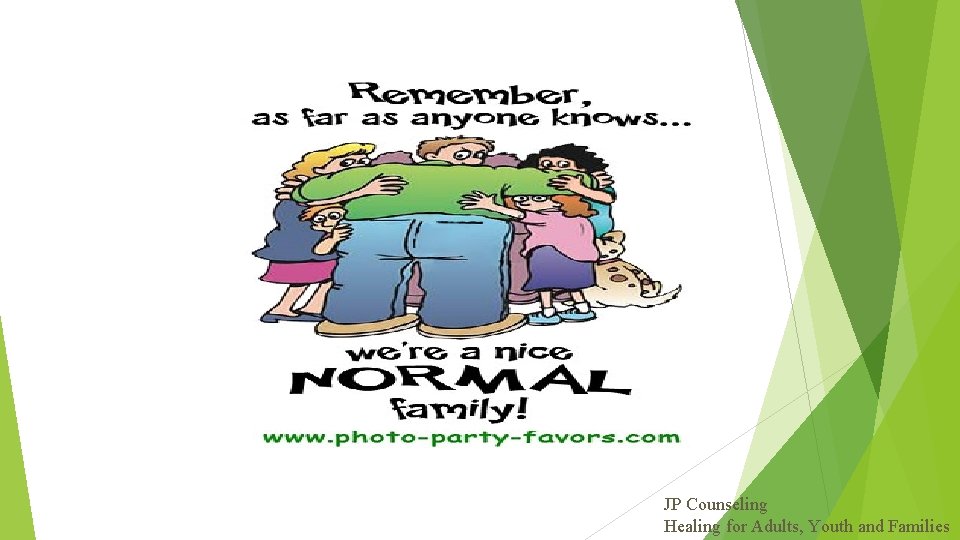
Family Systems Theory When there is a change in any individual member of the family, others in the family system are impacted. Families are seen as organisms that continuously change and reconstitute themselves. JP Counseling Healing for Adults, Youth and Families
JP Counseling Healing for Adults, Youth and Families
Addiction is a Family Disease Denial Justification Co-dependence Secrets
How Families Get Stuck Denying there is a problem Minimizing the problem Avoiding discussions about the problem Blaming others or lashing out with anger Joining in the rationalizations/justifications of the problem
How Families Get Stuck Taking over responsibilities Continuing to provide financial support Helping to resolve legal problems Promising unrealistic rewards for abstinence
How Families Get Stuck Threatening to kick them out and not following through with the boundaries set Provoking arguments/nagging Avoiding getting help for themselves JP Counseling Healing for Adults, Youth and Families
Engage the Family Motivation and Involvement in Treatment Regardless of internal or external motivation Improve Interactions Among Family Members All family relationships change with addiction Help family members appreciate how the values and perspectives of each family member may differ from their own, but that differences do not have to be a source of conflict Improve Outcomes Bolster the family members' self-confidence and at the same time help them improve their boundaries Allow Healing for All JP Counseling Healing for Adults, Youth and Families
Engage the Family Primary relationships in the client’s life can have the most benefit for them before and during the recovery period. Working together with loved ones to rebuild relationships damaged during active addiction can play a significant role in recovery, especially if the client will be returning home to live with family members after treatment. Empowering family members to connect with treatment can allow them to heal in their own ways. JP Counseling Healing for Adults, Youth and Families
Engage the Family members often can quickly cut through to the reality of a situation. Open and improved communications can often eliminate the family secrets that have enabled the client to continue keep from making positive changes. JP Counseling Healing for Adults, Youth and Families

Working with People with Trauma In screening for a history of trauma or in obtaining a preliminary symptoms of posttraumatic stress, it can be damaging to ask the client to describe traumatic events in detail. This is true for individuals and family members.
To screen, it is important to limit questioning to very brief and general questions: • “Have you ever experienced childhood physical abuse? • Have you ever experienced sexual abuse? • Have you ever experienced a serious accident? JP Counseling Healing for Adults, Youth and Families
To screen, it is important to limit questioning to very brief and general questions: Have you ever experienced violence or the threat of it? Have there been experiences in your life that were so traumatic they left you unable to cope with day -to-day life? Is there anything else significant in your life that you think I should know?
After an Overdose Family members may feel: Guilt over things that they could have or should have done to prevent the loss Guilt that the person suffered and caused others to suffer Guilt over relief that the addiction is over Obsession over what the person could have done differently to support the person
After an Overdose Family members may feel: Shame their loved one suffered from addiction Shame for enabling them Shame for not doing enough to help Shame for the person who died
After an Overdose Family members may feel: Blame against those who used with the person who died Self-blame for the person being addicted Self-blame for the death Blame toward the person who died for their death Blame toward family members for not preventing the death Obsession over actions done/not done to support the person
After an Overdose Family members may feel: Fear that others will start using Fear that others who are using will overdose Fear that those in recovery will relapse
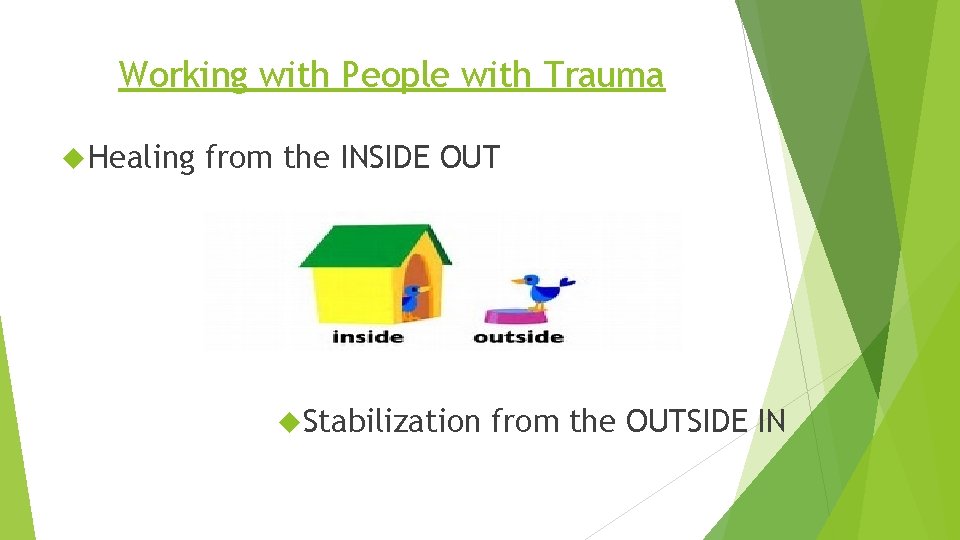
Working with People with Trauma Healing from the INSIDE OUT Stabilization from the OUTSIDE IN
Working with People with Trauma 6 Key Principles: Safety Trustworthiness Peer and Transparency support Collaboration and mutuality Empowerment, Cultural, voice and choice Historical, and Gender Issues
Working with People with Trauma Recognize the individual’s or family’s need to be respected, informed, connected, and hopeful regarding their own recovery Recognize the interrelation between trauma and symptoms of trauma such as substance abuse, eating disorders, depression, and anxiety Recognize the need to work in a collaborative way with individuals, family and friends of the survivor, and other human services agencies in a manner that will empower people
Working with People with Trauma We need to explain in detail over and over again the following foundation concepts: WHY sobriety is a prerequisite for safety and self-care HOW substances which were once life-saving have become so dangerous WHY having an addiction recovery program is essential in the battle against impulsivity and the “quick fix” HOW the mind-altering properties of drugs now impair the ability to recover from the trauma HOW the trauma symptoms equally impair the ability to stay clean and sober
Working with People with Trauma • Knowledge is Power: use psychoeducation to facilitate mindful, nonjudgmental attention to symptoms and behavior • Boring them into health: with mindful attention to any breaks in safety and self-care • Re-framing symptoms and behavior, no matter how impulsive and self-destructive, in such a way that they can be “owned” and thus integrated with constructive, wise and thoughtful states of mind • Remembering is Not Recovering”: keeping that the goal of “trauma work” is not to remember what happened but to be able to live today and to tolerate the ups and downs of a normal life in spite of what has happened
MYTH: Since most adolescents who use drugs and/or alcohol have experienced some kind of trauma, there is no need to treat trauma as a unique clinical entity. FACT: Although not all youth who experience traumatic events develop PTSD, it is important to be prepared to address the multiple ways youth respond to trauma. Traumatic stress and PTSD are associated with unique (and challenging) symptoms that require targeted, trauma-informed treatment to optimize recovery. Effective treatment approaches and interventions have already been developed for patients suffering from traumatic stress and PTSD. Making use of these techniques as part of a comprehensive treatment plan offers the greatest hope of treatment success for adolescents dealing with the effects of substance abuse and traumatic stress. MYTH: When dealing with an adolescent who has a history of trauma and substance abuse, you need to treat one set of problems at a time. FACT: Because the symptoms associated with traumatic stress and substance abuse are so strongly linked, the ideal treatment approach is to address both conditions. Unfortunately it is not uncommon for substance abuse programs to deny admission to patients with PTSD, and for trauma treatment programs to deny admission to patients who have not achieved sobriety. The decision about which symptoms and behaviors to address first therefore requires a careful assessment of the relative threat that each condition poses to a youth’s safety, health, and immediate well-being
Working with People with Trauma TRUE or FALSE: Since most people who use drugs and/or alcohol have experienced some kind of trauma, there is no need to treat trauma as a unique clinical entity.
Working with People with Trauma TRUE or FALSE: When dealing with an individual or family with a history of trauma and substance abuse, you need to treat one set of problems at a time.
Occupational Risks
Where Do the Stories Go at the End of the Day?

Occupational Risks Charles Figley (1995) suggests that work with clients who have suffered traumatic experience has specific occupational health risks: ‘…there is a cost to caring…the most effective therapists are most vulnerable to this contagion effect…those who have enormous capacity for feeling and expressing empathy tend to be more at risk of compassion stress…’ Are our inner reserve infinite?
Occupational Risks Empirical research attests to the negative toll exacted by being a caregiver. The literature points to Depression Mild anxiety Emotional exhaustion Disrupted relationships
The ABC’s of Prevention of Compassion Fatique A = Awareness B = Balance C = Connections
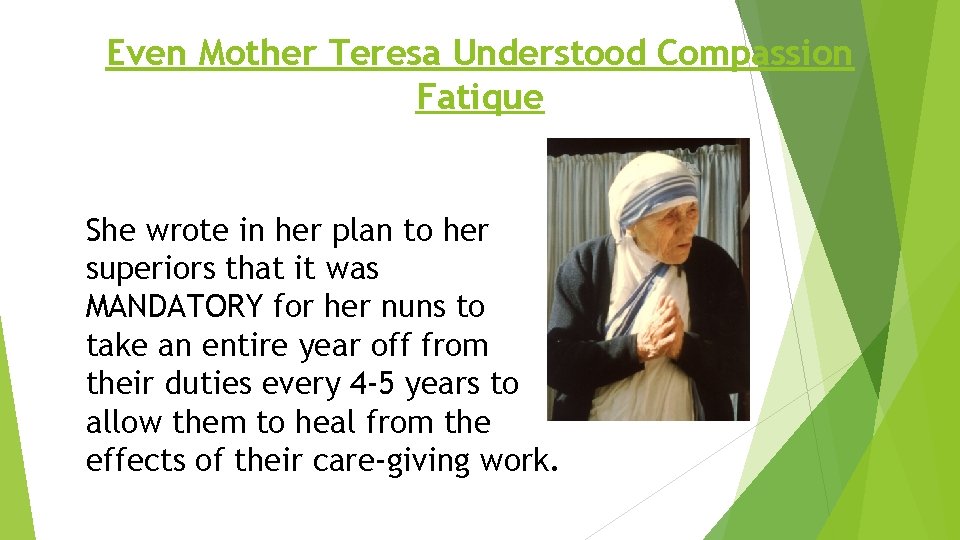
Even Mother Teresa Understood Compassion Fatique She wrote in her plan to her superiors that it was MANDATORY for her nuns to take an entire year off from their duties every 4 -5 years to allow them to heal from the effects of their care-giving work.
B = Balance In Your Life Emotions are a signal that tell us when something is wrong or we are out of balance We all need meaning and purpose in our life We all need autonomy and freedom to make choices that bring us balance and happiness We all have hidden sources of energy and healing power.
C = Connections Talk out your stress- process your thoughts and reactions with someone else (coworker, therapist, clergy, friend, family, supervisor) Build a positive support system that supports you, not fuels your stress
Self-Compassion Quiz
“Hope does not take away your problems. It can lift you above them. ” --Maya Angelou
- Slides: 63