
Transposon and Mechanisms of Transposition Transposon DNA sequence
- Slides: 22
Transposon and Mechanisms of Transposition
Transposon DNA sequence that can move in the genome Also called mobile DNA element or transposable element “selfish DNA”--exist only to maintain themselves ? Transposition: The process by which these sequences are copied and inserted into a new site in the genome q Probably had a significant influence on evolution q q
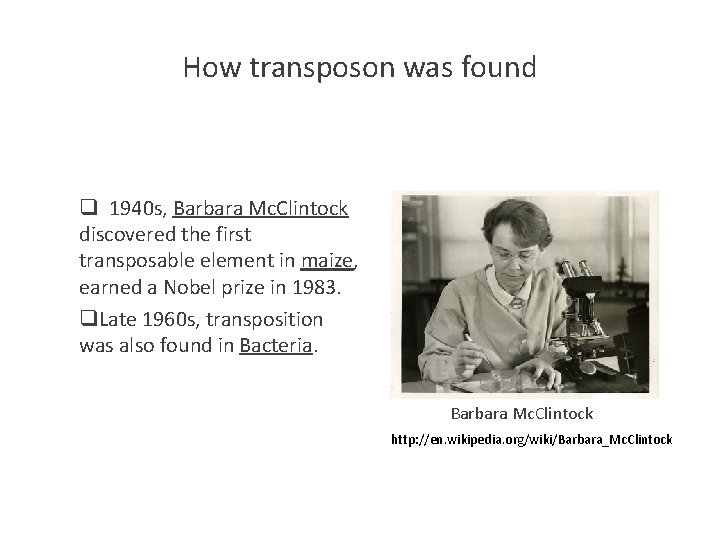
How transposon was found q 1940 s, Barbara Mc. Clintock discovered the first transposable element in maize, earned a Nobel prize in 1983. q. Late 1960 s, transposition was also found in Bacteria. Barbara Mc. Clintock http: //en. wikipedia. org/wiki/Barbara_Mc. Clintock
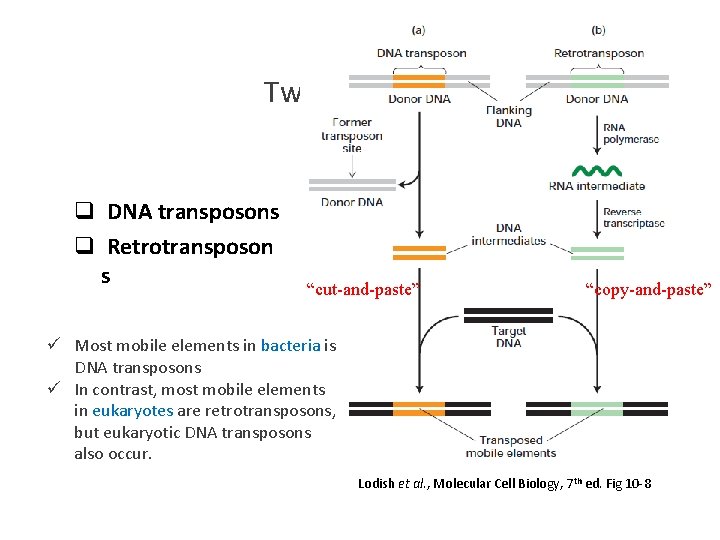
Two Categories q DNA transposons q Retrotransposon s “cut-and-paste” “copy-and-paste” ü Most mobile elements in bacteria is DNA transposons ü In contrast, most mobile elements in eukaryotes are retrotransposons, but eukaryotic DNA transposons also occur. Lodish et al. , Molecular Cell Biology, 7 th ed. Fig 10 -8
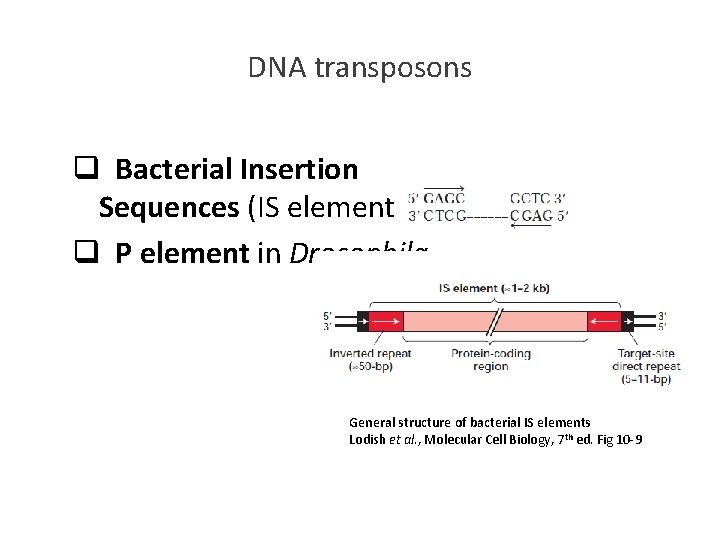
DNA transposons q Bacterial Insertion Sequences (IS element) q P element in Drosophila General structure of bacterial IS elements Lodish et al. , Molecular Cell Biology, 7 th ed. Fig 10 -9
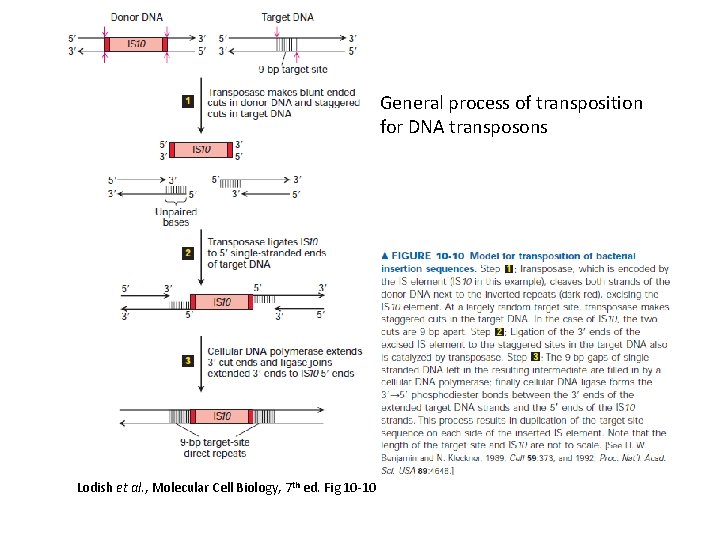
General process of transposition for DNA transposons Lodish et al. , Molecular Cell Biology, 7 th ed. Fig 10 -10
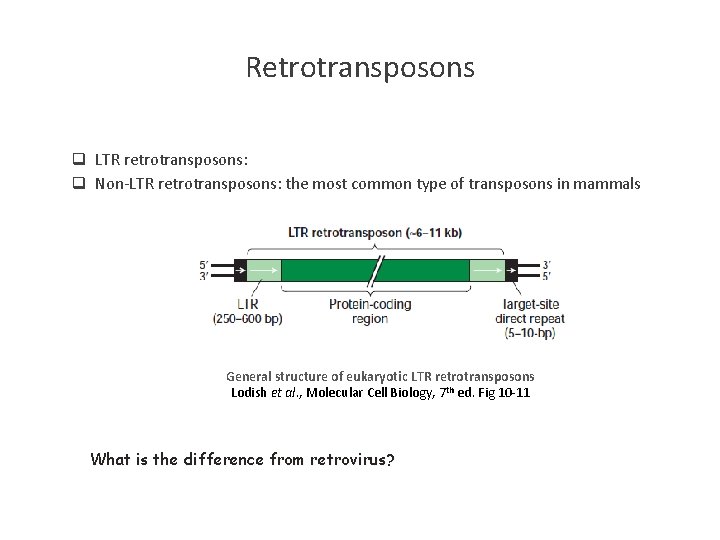
Retrotransposons q LTR retrotransposons: q Non-LTR retrotransposons: the most common type of transposons in mammals General structure of eukaryotic LTR retrotransposons Lodish et al. , Molecular Cell Biology, 7 th ed. Fig 10 -11 What is the difference from retrovirus?
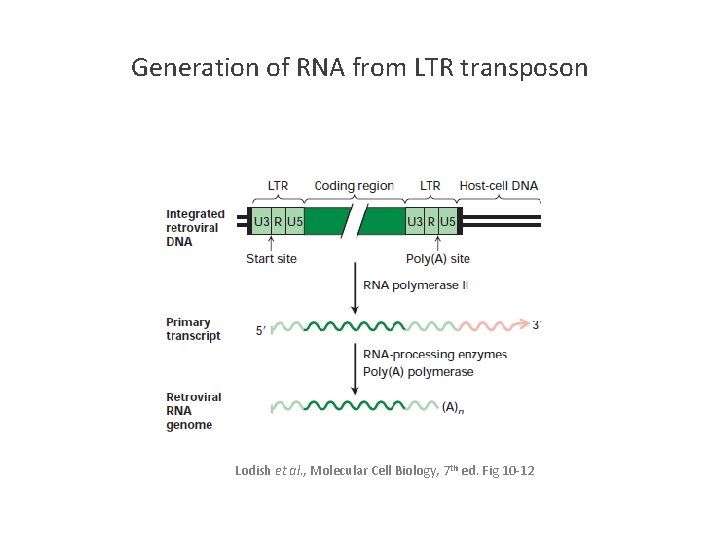
Generation of RNA from LTR transposon Lodish et al. , Molecular Cell Biology, 7 th ed. Fig 10 -12
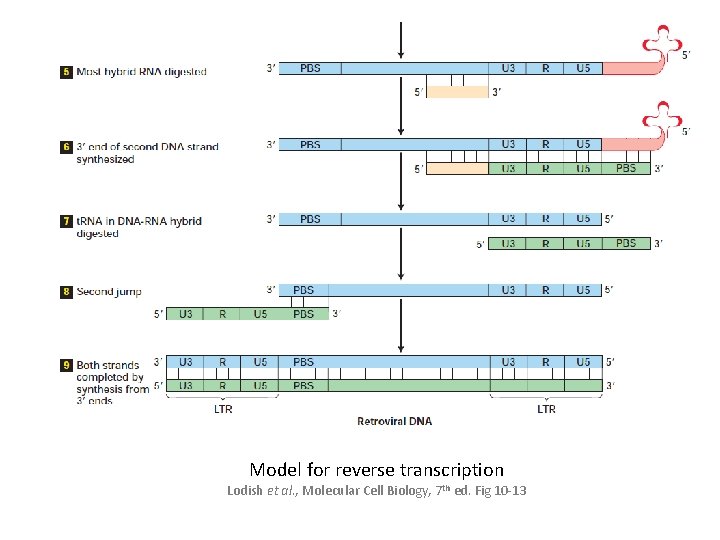
Model for reverse transcription Lodish et al. , Molecular Cell Biology, 7 th ed. Fig 10 -13
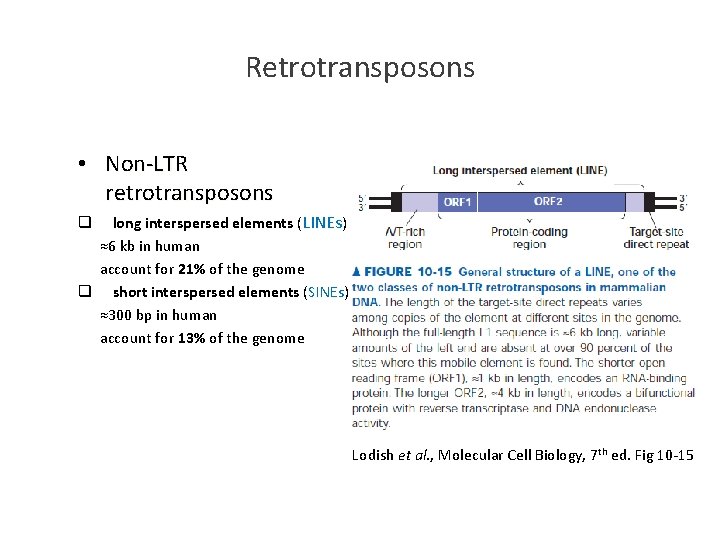
Retrotransposons • Non-LTR retrotransposons long interspersed elements (LINEs) ≈6 kb in human account for 21% of the genome q short interspersed elements (SINEs) SINEs ≈300 bp in human account for 13% of the genome q Lodish et al. , Molecular Cell Biology, 7 th ed. Fig 10 -15
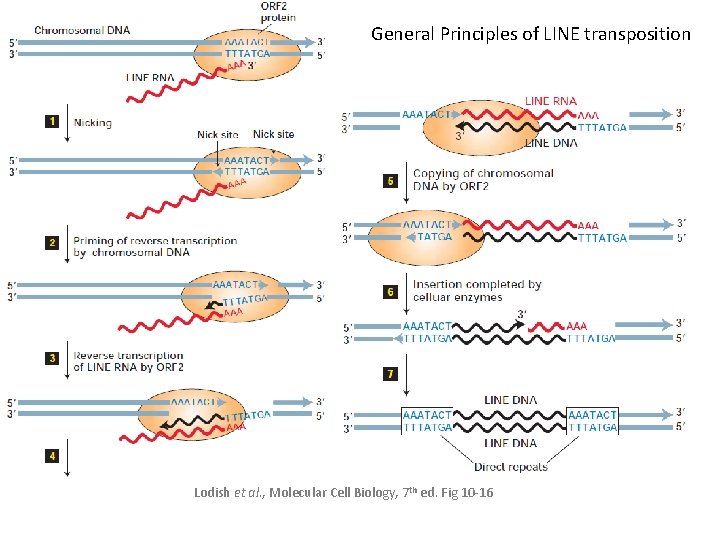
General Principles of LINE transposition Lodish et al. , Molecular Cell Biology, 7 th ed. Fig 10 -16
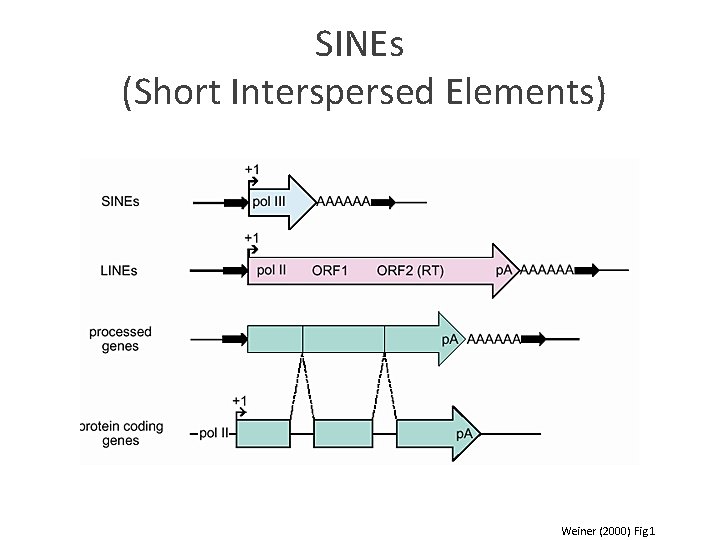
SINEs (Short Interspersed Elements) Weiner (2000) Fig 1
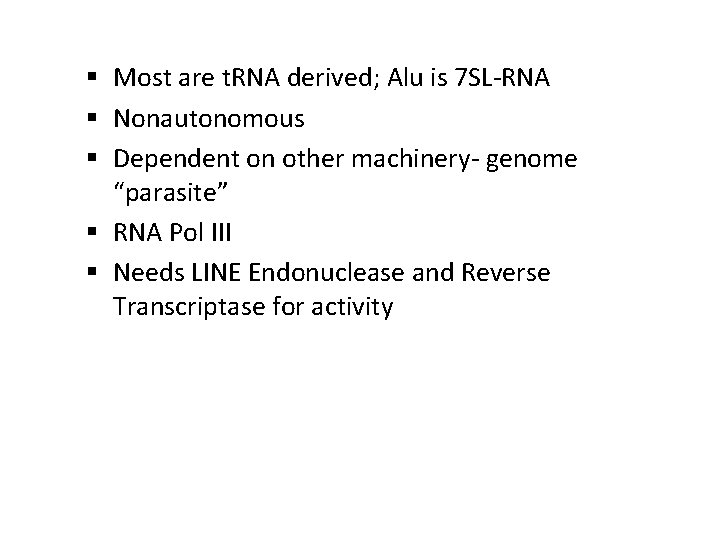
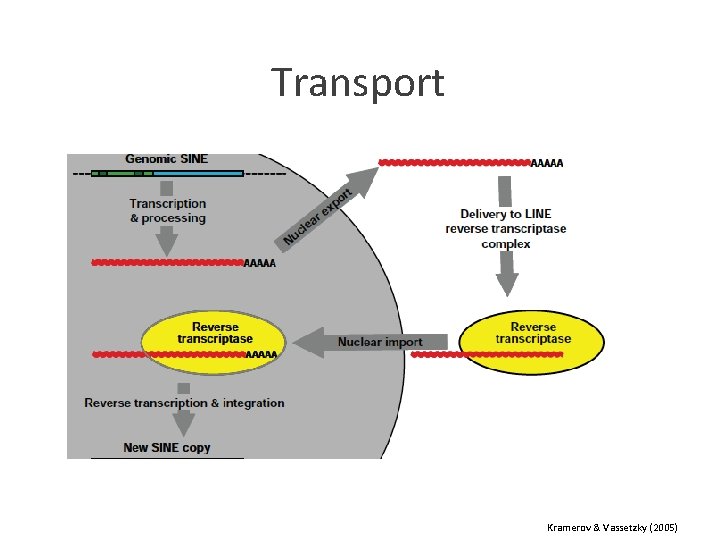
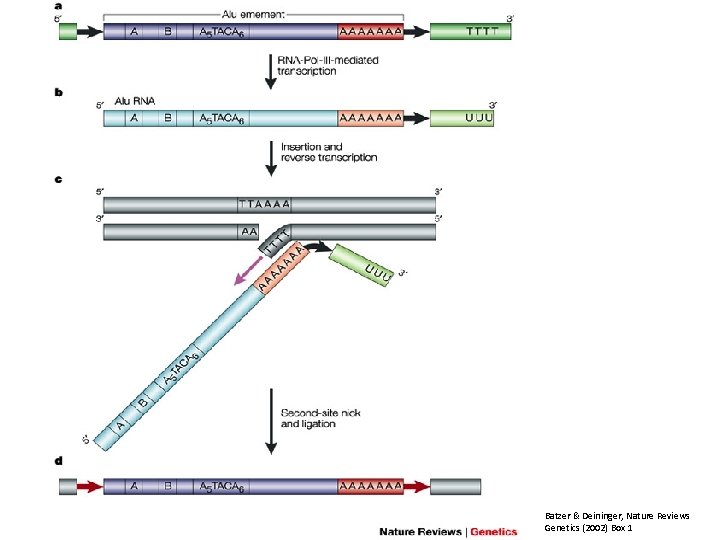
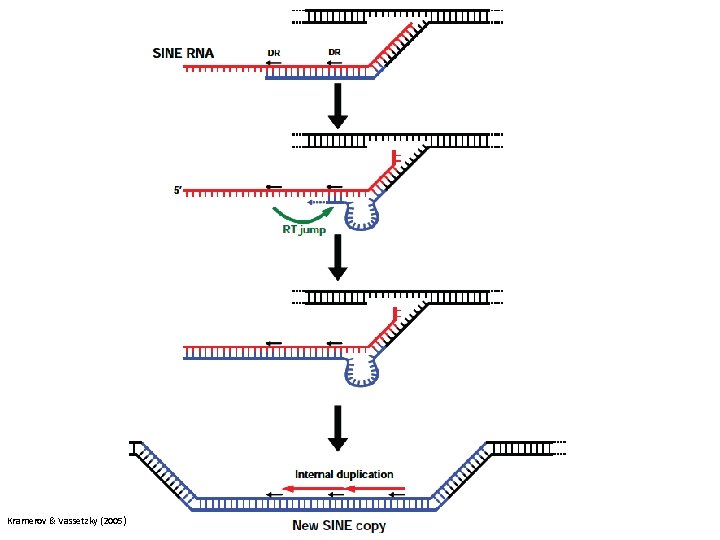
§ Most are t. RNA derived; Alu is 7 SL-RNA § Nonautonomous § Dependent on other machinery- genome “parasite” § RNA Pol III § Needs LINE Endonuclease and Reverse Transcriptase for activity
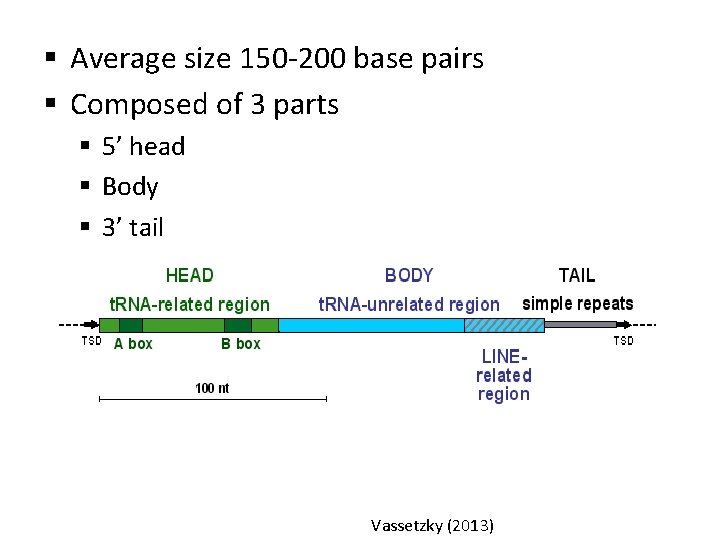
§ Average size 150 -200 base pairs § Composed of 3 parts § 5’ head § Body § 3’ tail Vassetzky (2013)
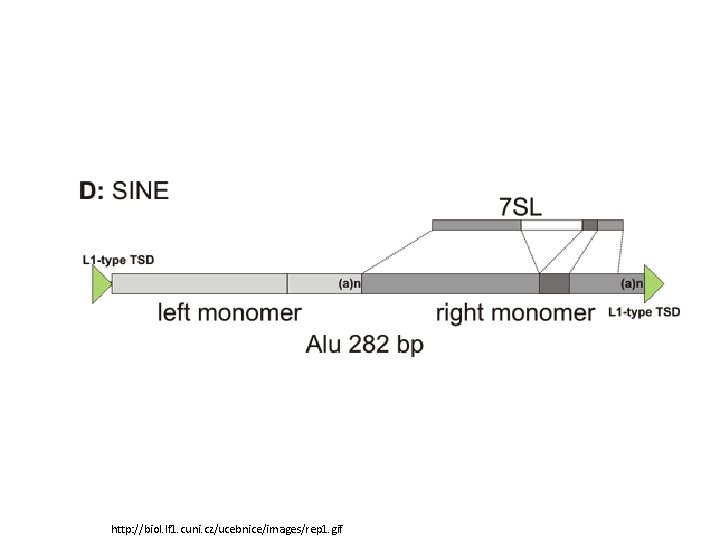
http: //biol. lf 1. cuni. cz/ucebnice/images/rep 1. gif
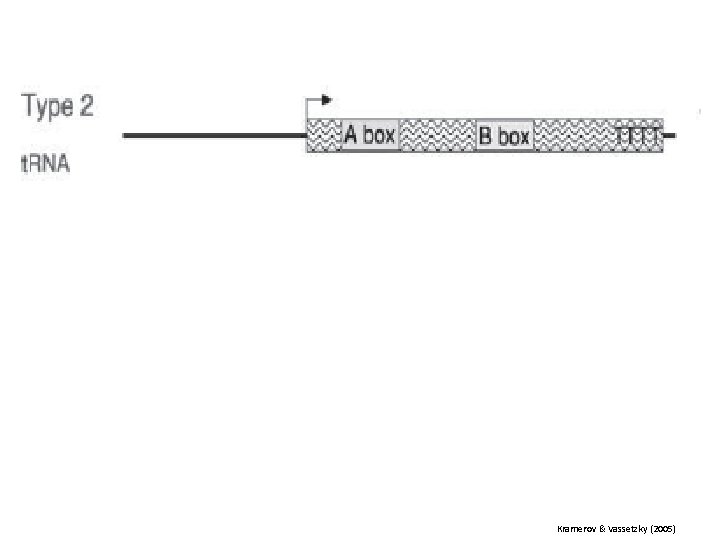
Kramerov & Vassetzky (2005)
Transport Kramerov & Vassetzky (2005)
Batzer & Deininger, Nature Reviews Genetics (2002) Box 1
Kramerov & Vassetzky (2005)
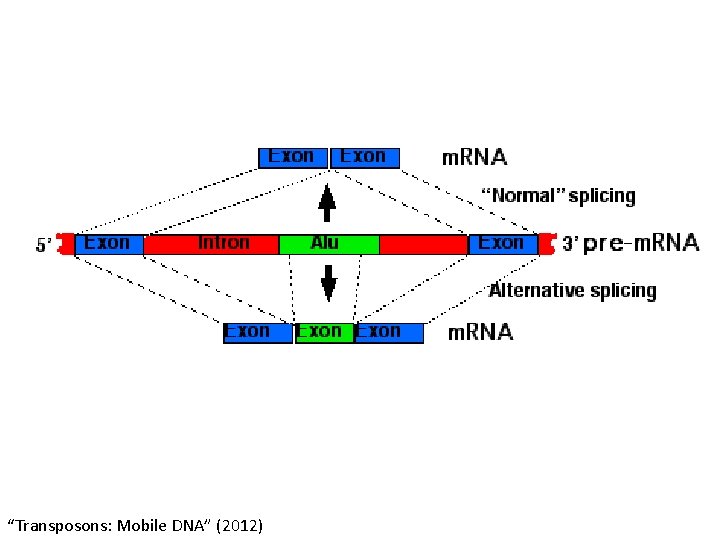
“Transposons: Mobile DNA” (2012)
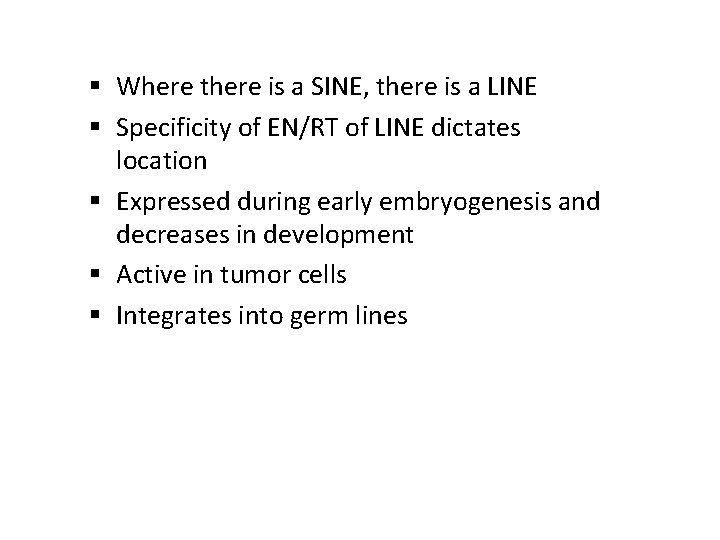
§ Where there is a SINE, there is a LINE § Specificity of EN/RT of LINE dictates location § Expressed during early embryogenesis and decreases in development § Active in tumor cells § Integrates into germ lines
References • • • Batzer, M. A. & Deininger, P. L. Alu repeats and Human genomic diversity. Nature Reviews Genetics 3, 370379 (2002). Doi: 10. 1038/nrg 798 http: //www. nature. com/nrg/journal/v 3/n 5/box/nrg 798_BX 1. html Kramerov, D. A. & Vassetzky, N. S. Short Retroposons in Eukaryotic Genomes. International Review of Cytology, vol 247 (2005) doi: 10. 1016/S 0074 -7696/05 Lodish et al. , Molecular Cell Biology, 7 th ed. “Transposons: Mobile DNA”. (2012) http: //users. rcn. com/jkimball. ma. ultranet/Biology. Pages/T/Transposons. html Vassetzky. SINEBase (2013) http: //sines. eimb. ru Weiner, A. Do all SINEs lead to LINEs? Nature Genetics 24, 332 -333 (2000) doi: 10. 1038/74135 http: //www. nature. com/ng/journal/v 24/n 4/full/ng 0400_332. html