
Transportcell membrane Do Now Brainstorm What is homeostasis
Transport-cell membrane • Do Now: • Brainstorm: • What is homeostasis? • Can you brainstorm one way that transport helps to maintain homeostasis in your body? (explain) • What is transport?

Definitions…. . • TRANSPORT • -absorption, distribution, circulation, cyclosis, osmosis, diffusion • HOMEOSTASIS • -maintaining a stable internal environment
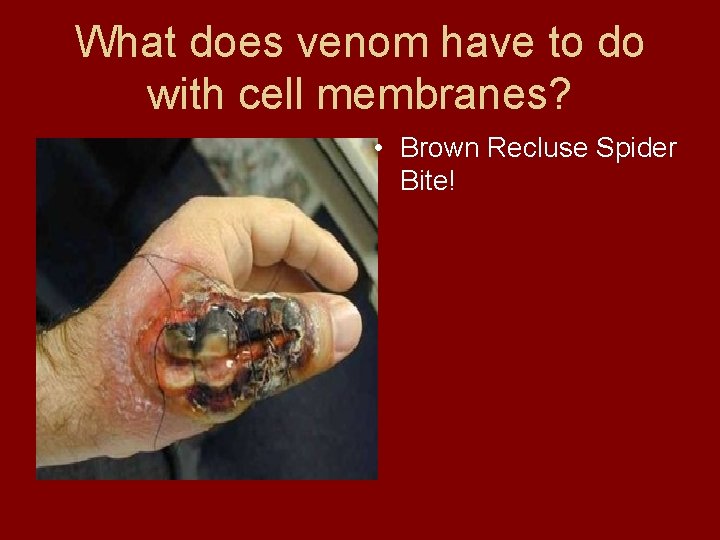
What does venom have to do with cell membranes? • Brown Recluse Spider Bite!
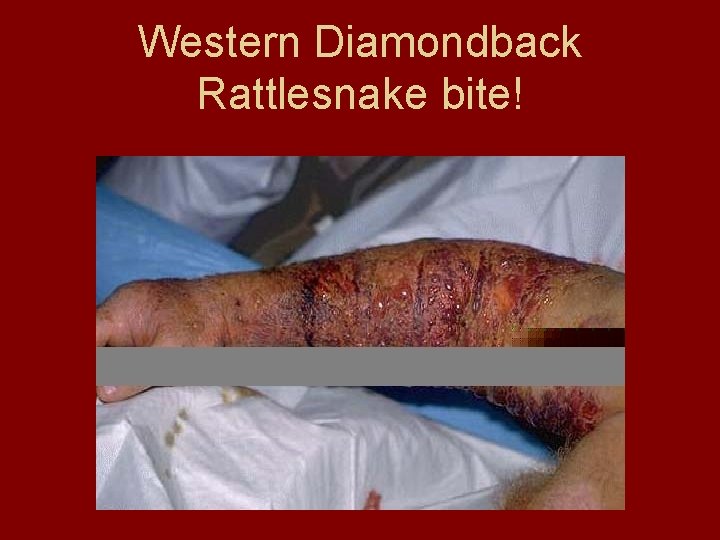
Western Diamondback Rattlesnake bite!
Vocabulary • Solution- mixture in which one or more substances are UNIFORMLY distributed in another. “homogenous solution” • Solute- what gets dissolved. • Solvent- what does the dissolving. • Ex- salt water- salt is solute, water is solvent. Ice tea- mix=solute, water=solvent
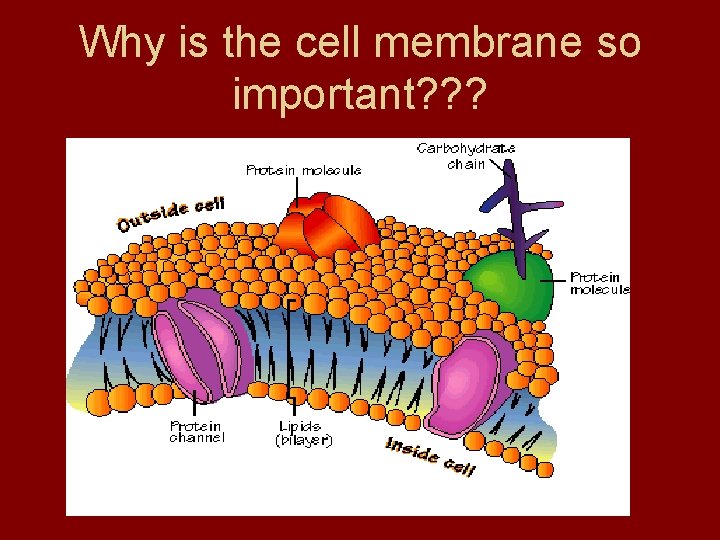
Why is the cell membrane so important? ? ?
Names! • Cell membrane • Plasma membrane • Selectively permeable membrane • Semi permeable membrane
Honors Know diagram on pg 82! • Variety of Proteins: • I. Glycoproteins a) b) c) d) e) Receptor protein Recognition proteins Enzymatic proteins Attachment proteins Transport proteins
Functions of the Cell Membrane • • • Protects the cell Regulates what goes in and out of cell Helps to communicate with other cells Creates attachments between cells Dynamic!
Fluid Mosaic Model dev. By Singer & Nicolson 1972 • Proteins move within layers of lipids w/I viscous fluid • Hydrogen bonds can form between water and phospholipid heads inside and outside of cell • The more double bonds there are in the tails the more fluid the membrane • Incr. in temp. causes membr. To be more fluid (because mol. Move faster) • Decr. Temp. (mol. Move slower -> less fluid)
Active & Passive Transport Illustrations Chapter 5 Lab Biology Chapter 5 Honors Biology
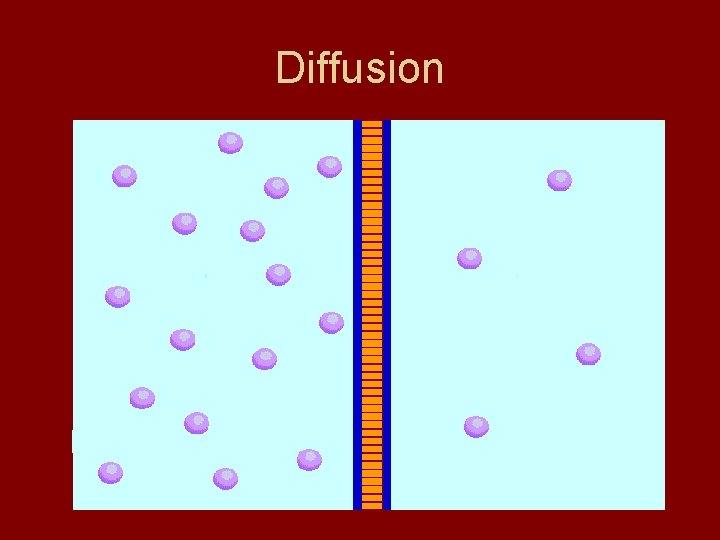
Passive Transport • Requires NO energy!! • Movement from a high concentration to a low concentration!
Passive Transport • 1. diffusion • 2. osmosis • 3. facilitated diffusion • 4. diffusion through ion channels
Diffusion
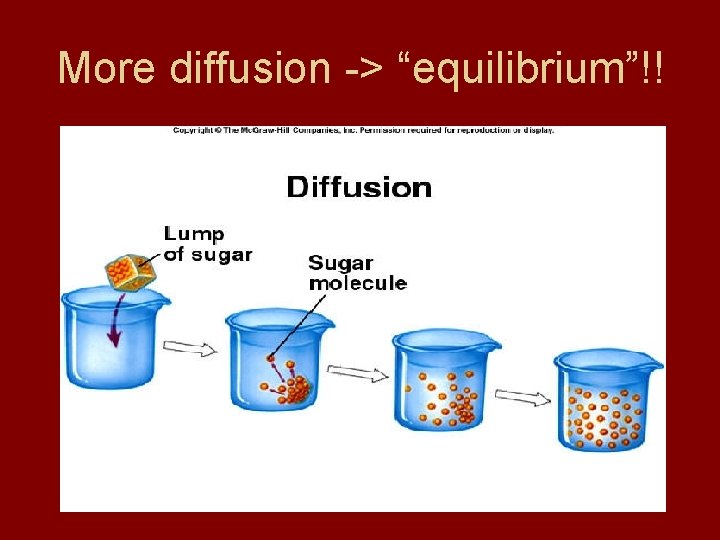
Diffusion • Molecules moving from a greater concentration to a lower concentration • Ex: perfume • Simple diffusion: Oxygen, Carbon Dioxide, water and lipid soluble molecules
Vocabulary • Concentration gradient: difference in concentrations (amount of solute) • Equilibrium: particles/molecules are equal on both sides of membrane
More diffusion -> “equilibrium”!!
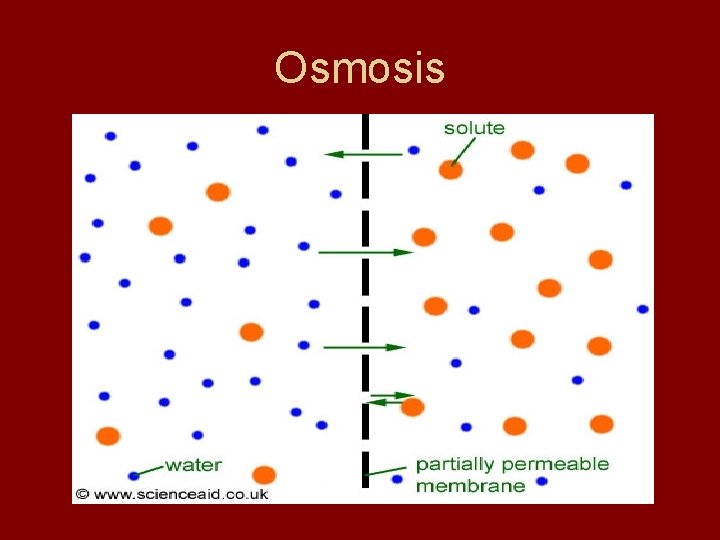
Osmosis
Osmosis • Movement of WATER from a high concentration to a low concentration across the cell membrane
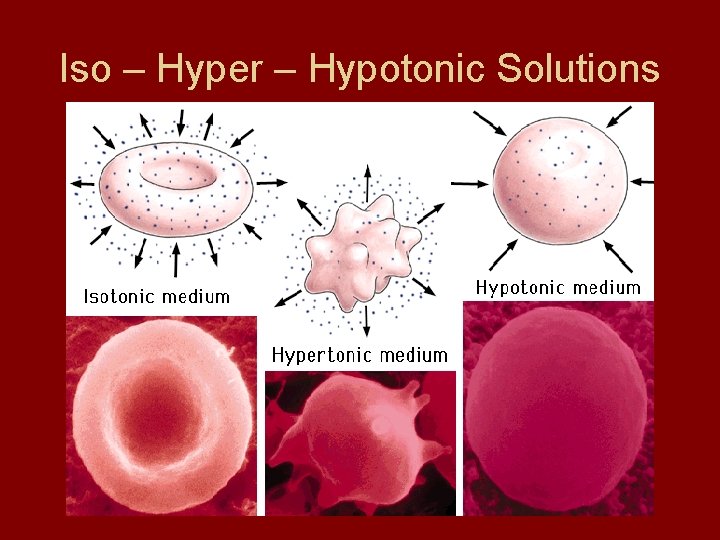
Iso – Hyper – Hypotonic Solutions
Vocabulary • Isotonic: concentration inside and outside of cell are the same no diffusion • Hypertonic: when concentration of solute outside of cell is greater, water moves out of cell (shrink) • Hypotonic: concentration of solute inside of cell is greater, water moves into cell (burst)
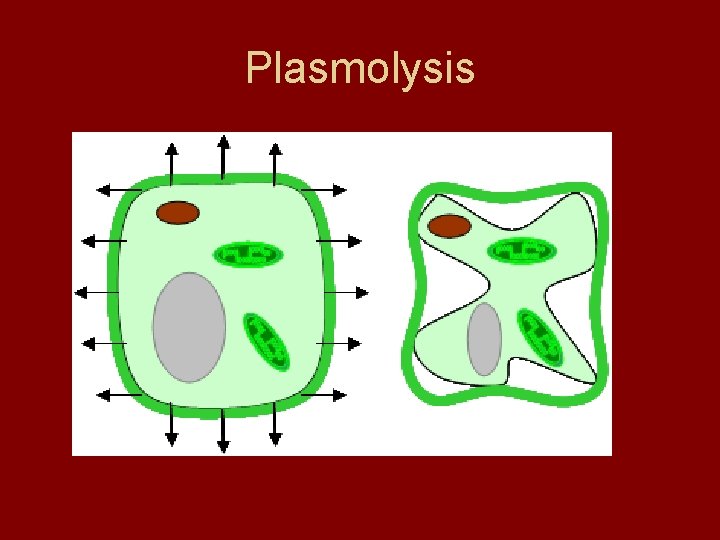
Plasmolysis
Plants! • Plasmolysis = cell shrinks away from cell wall due to water loss ex: drought (low rain fall) causing plants to wilt • Turgor Pressure = cell wall sustains shape, otherwise would explode
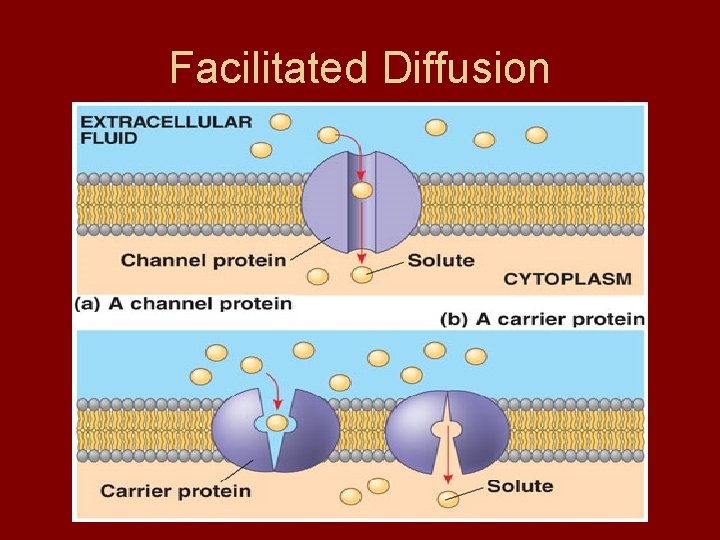
Facilitated Diffusion
Facilitated Diffusion • Carrier Protein – -protein recognizes substance->changes shape->delivers substance to inside of the cell • Facilitated Diffusion: water soluble molecules (hydrophillic). Ex: ions, amino acids (small proteins), and sugars
Ion Channels
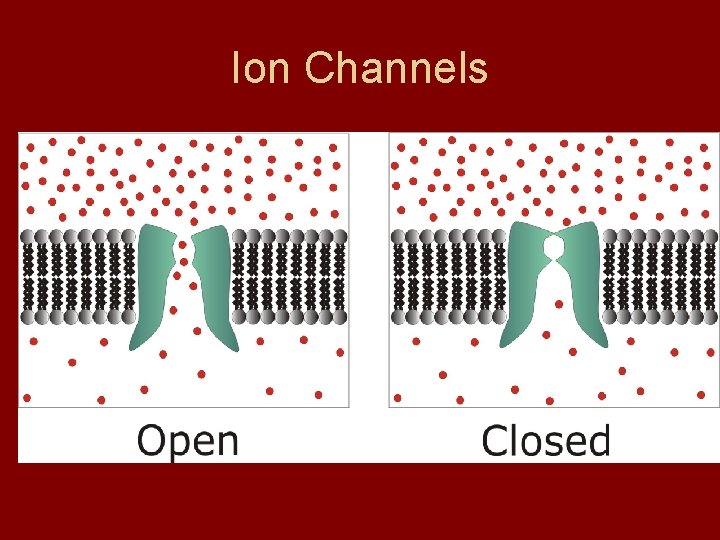
Ion channels • -allows ions Ca 2+ and Cl- to enter cell • Some are open all the time • Others are gated and will open when – Cell membrane stretches – Electrical signals – Chemical signals
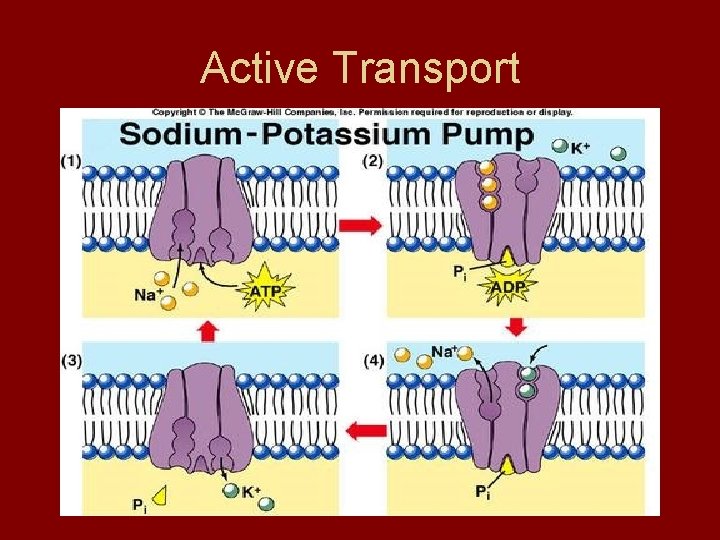
Active Transport • REQUIRES ENERGY! • Movement from a LOW concentration to a HIGH concentation!
Active Transport • 1. Sodium Potassium Pump • 2. Endocytosis • 3. Exocytosis
Active Transport
Sodium Potassium Pump • -pumps like to keep ions in balance • 3 Na+ out for every 2 K+ in • This creates a build up of Na+ outside cell and K+ inside cell forming a net electrical charge across the membrane • Allows for nerve impulses • Contraction of muscles • 1/3 of all energy in animal cells goes to running this pump even as we sleep!
Endocytosis
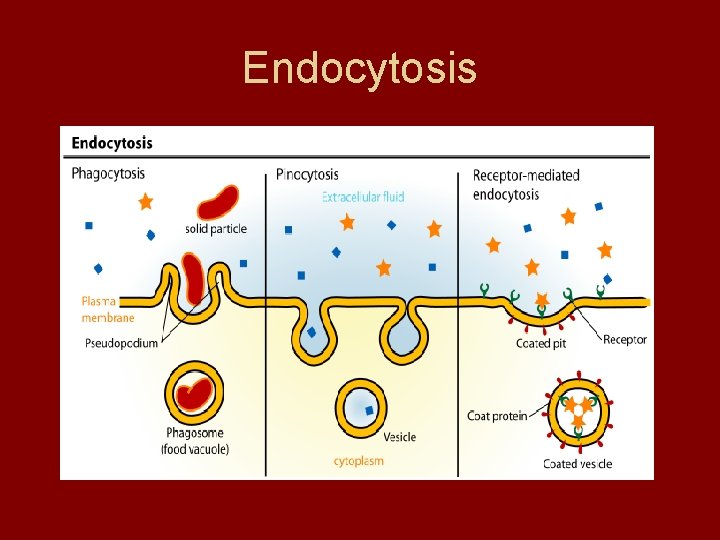
Endocytosis • Take in external fluid, macromolecules and other large particles. • Forms “vesicle” some fuse with lysosomes (digestion) others fuse with membrane of other organelles. • 2 Types: a) pinocytosis – cell drinking fluid • b) phagocytosis – cell eats
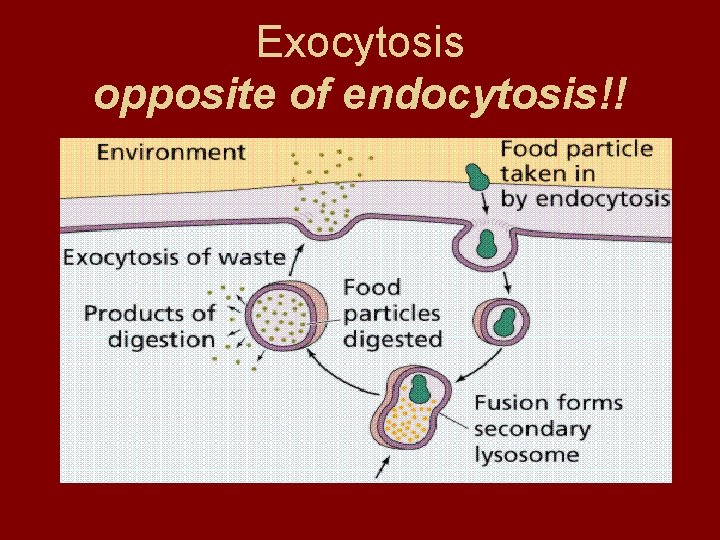
Exocytosis opposite of endocytosis!!
- Slides: 34