
Transportation and Industry Revolution Factories Roads Railroads Canals
- Slides: 12
Transportation and Industry Revolution Factories Roads Railroads Canals Steamboats
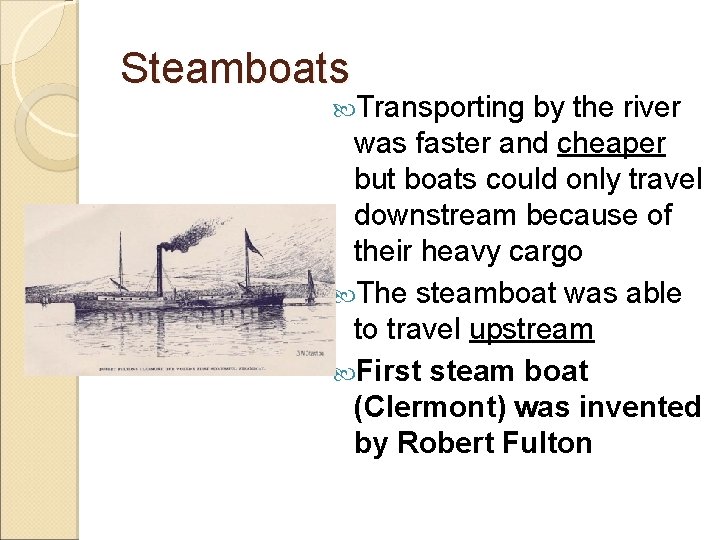
Steamboats Transporting by the river was faster and cheaper but boats could only travel downstream because of their heavy cargo The steamboat was able to travel upstream First steam boat (Clermont) was invented by Robert Fulton
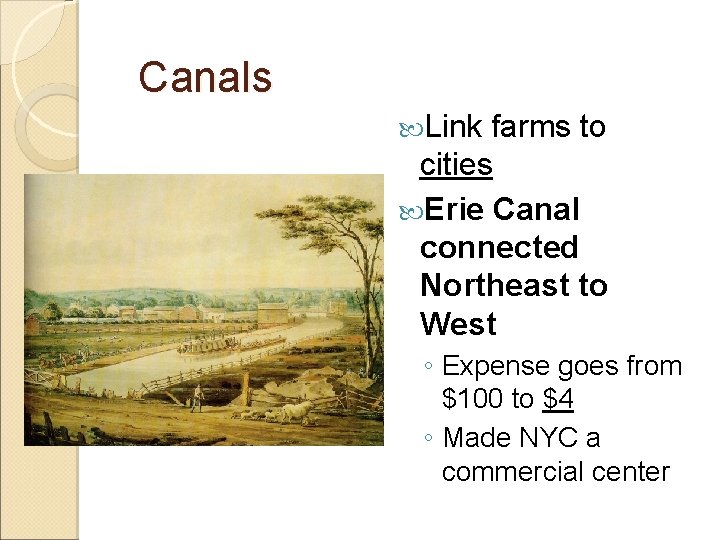
Canals Link farms to cities Erie Canal connected Northeast to West ◦ Expense goes from $100 to $4 ◦ Made NYC a commercial center
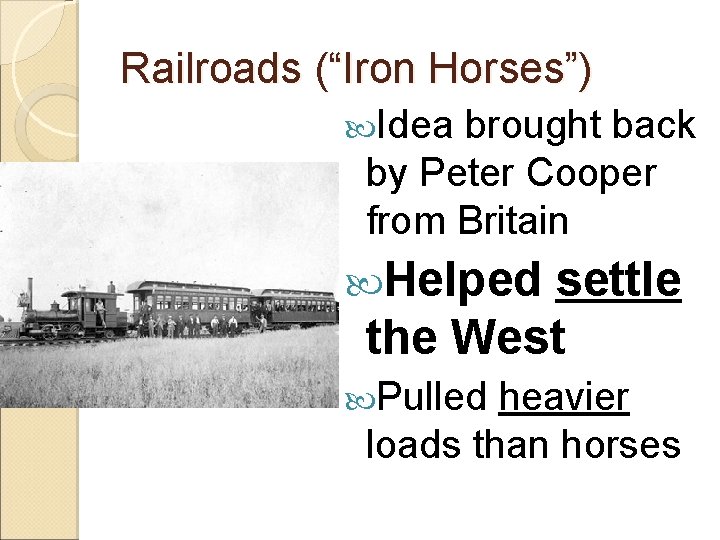
Railroads (“Iron Horses”) Idea brought back by Peter Cooper from Britain Helped settle the West Pulled heavier loads than horses
1 st Industrial Revolution Technological developments changed manufacturing , culture, social life and politics Manufacturing shifted from hand tools to complex machines, unskilled labor Work is done in factories not the home Created a middle class…this is
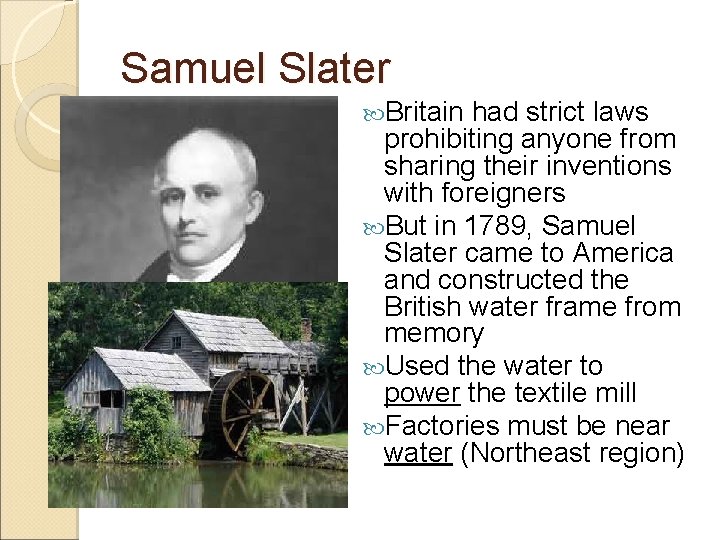
Samuel Slater Britain had strict laws prohibiting anyone from sharing their inventions with foreigners But in 1789, Samuel Slater came to America and constructed the British water frame from memory Used the water to power the textile mill Factories must be near water (Northeast region)
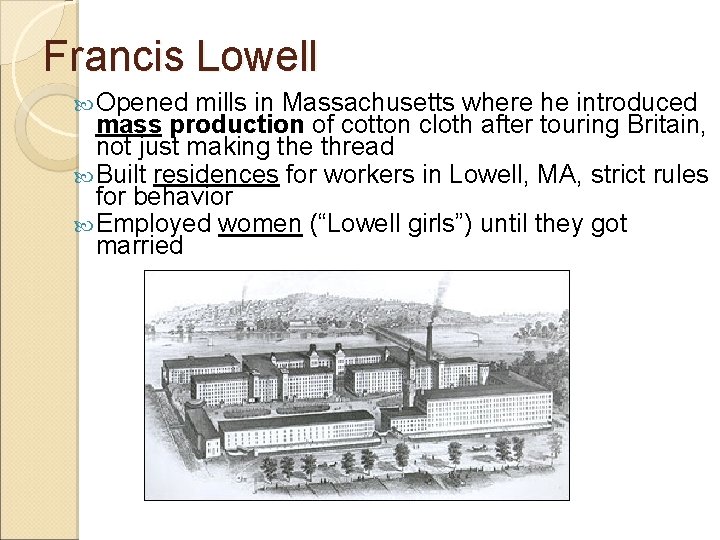
Francis Lowell Opened mills in Massachusetts where he introduced mass production of cotton cloth after touring Britain, not just making the thread Built residences for workers in Lowell, MA, strict rules for behavior Employed women (“Lowell girls”) until they got married
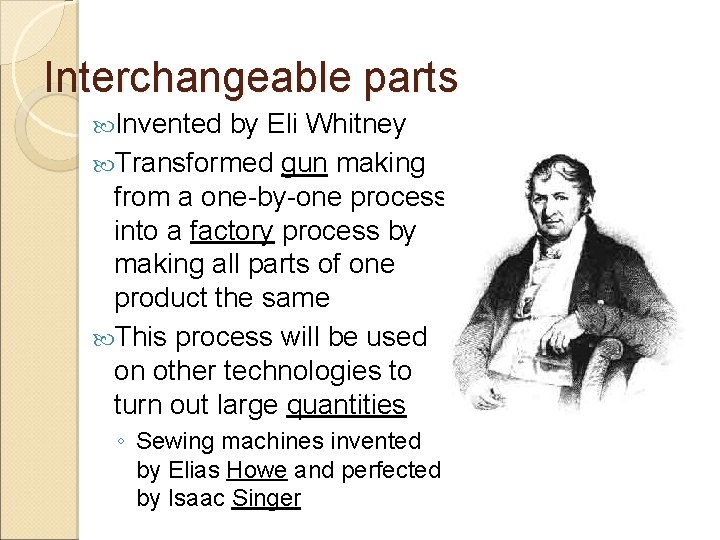
Interchangeable parts Invented by Eli Whitney Transformed gun making from a one-by-one process into a factory process by making all parts of one product the same This process will be used on other technologies to turn out large quantities ◦ Sewing machines invented by Elias Howe and perfected by Isaac Singer
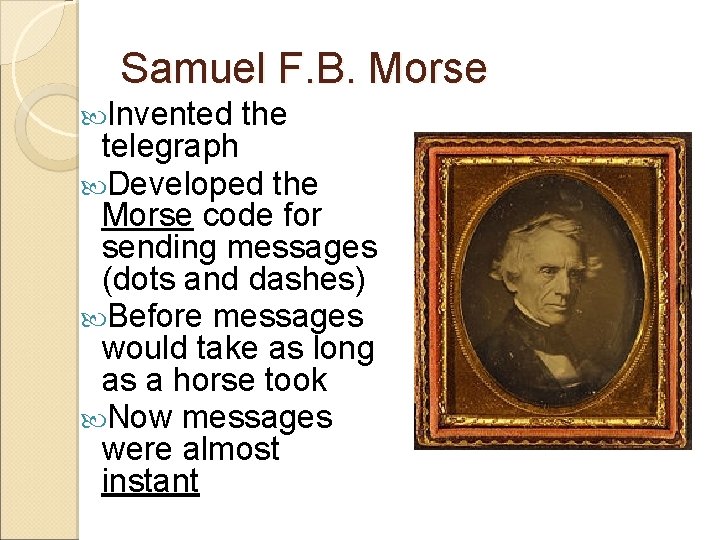
Samuel F. B. Morse Invented the telegraph Developed the Morse code for sending messages (dots and dashes) Before messages would take as long as a horse took Now messages were almost instant
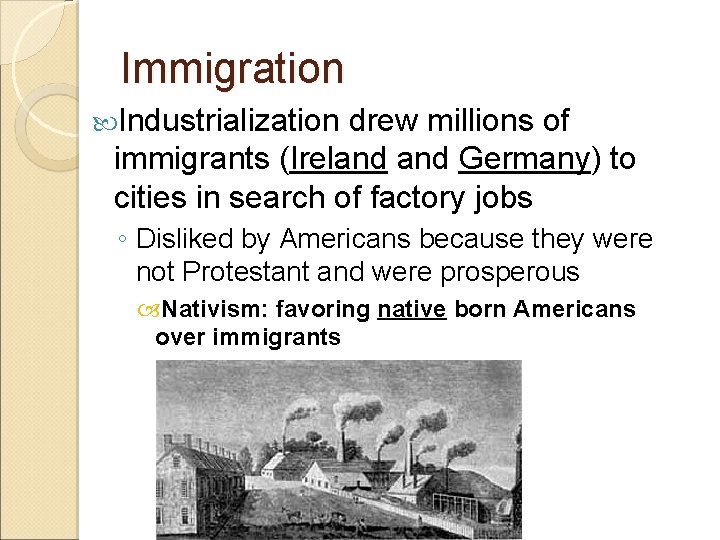
Immigration Industrialization drew millions of immigrants (Ireland Germany) to cities in search of factory jobs ◦ Disliked by Americans because they were not Protestant and were prosperous Nativism: favoring native born Americans over immigrants
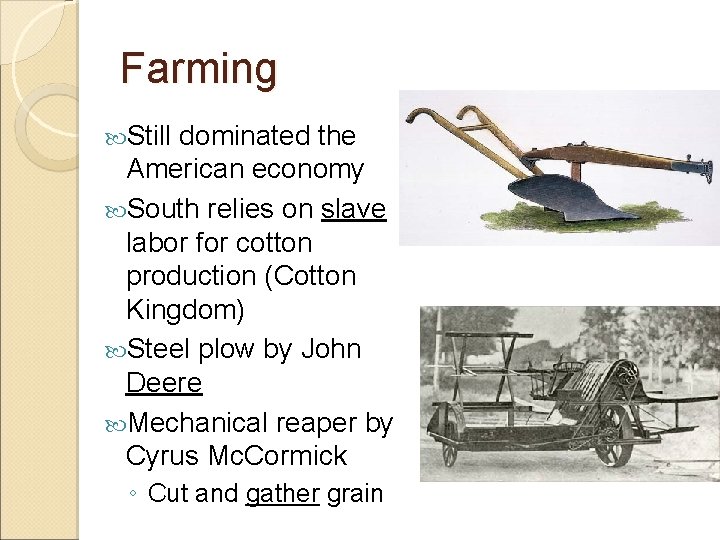
Farming Still dominated the American economy South relies on slave labor for cotton production (Cotton Kingdom) Steel plow by John Deere Mechanical reaper by Cyrus Mc. Cormick ◦ Cut and gather grain
LET’S REVIEW! Which of the following is NOT true about the Industrial Revolution? 1. Why did towns and cities grow larger? 3. A. People went to cities to watch movies A. machines replaced hand tools B. employed highly skilled workers B. All airports were located in cities C. work was done in factories not homes C. Most factories were located in cities How did transportation improvements contribute to the growth of American cities? 2. Why do factory owners hire immigrants? 4. A. They were bilingual A. Workers could travel easily from rural homes to urban jobs B. They were willing to work long hours for low wages B. New inventions aided industrialization C. They were especially skilled in making textiles C. Cities along canals and railroads became business and shipping centers