
Transportation and Communication 1820 1860 Expansion of Business
Transportation and Communication 1820 -1860
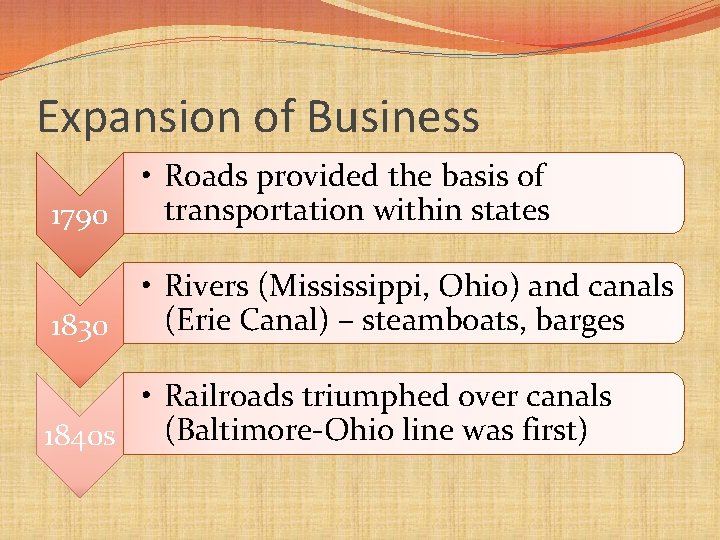
Expansion of Business 1790 • Roads provided the basis of transportation within states 1830 • Rivers (Mississippi, Ohio) and canals (Erie Canal) – steamboats, barges • Railroads triumphed over canals (Baltimore-Ohio line was first) 1840 s
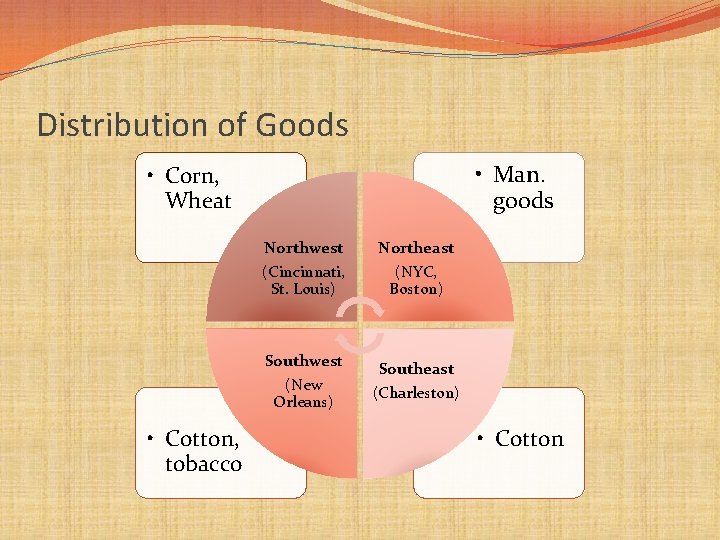
Distribution of Goods • Man. goods • Corn, Wheat • Cotton, tobacco Northwest (Cincinnati, St. Louis) Northeast (NYC, Boston) Southwest (New Orleans) Southeast (Charleston) • Cotton

Communication and Journalism Rotary Printer Associated Press Samuel F. B. Morse (Western Union) Developed in 1846 Multiple newspaper publishers formed AP Seemed an ideal solution to long distance communication Allowed newspapers to be printed quickly and cheaply Promoted cooperative news gathering by wire Telegraph Journalism became an important unifying factor in American life. In the 1840 -1850 s it reflected the sectional conflict in US, mostly reflected Northern views (most papers in northeast)
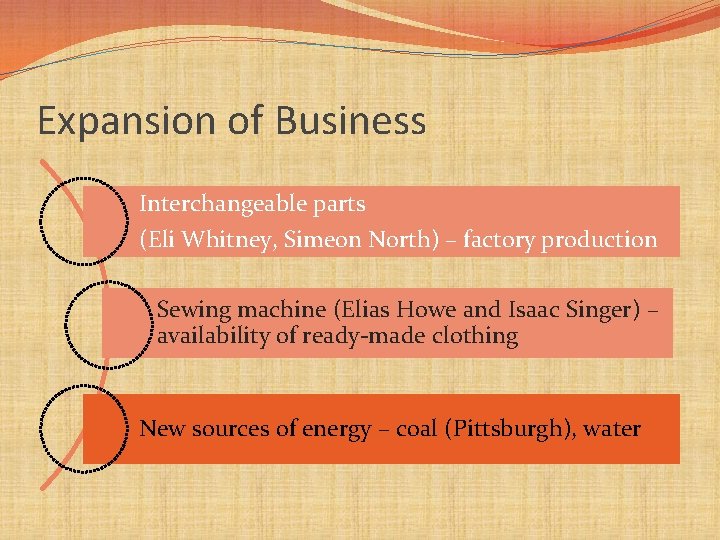
Expansion of Business Interchangeable parts (Eli Whitney, Simeon North) – factory production Sewing machine (Elias Howe and Isaac Singer) – availability of ready-made clothing New sources of energy – coal (Pittsburgh), water
Labor Systems 1820 s – 90% of Americans lived or worked on farms �Movement west �Development of new farm machinery �Crops were less labor intensive People didn’t have to grow their own food There were 2 systems of labor: 1. Whole families moved from farm to mill (NYC, Philadelphia) 2. Young women moved to mill (Lowell, Mass. )
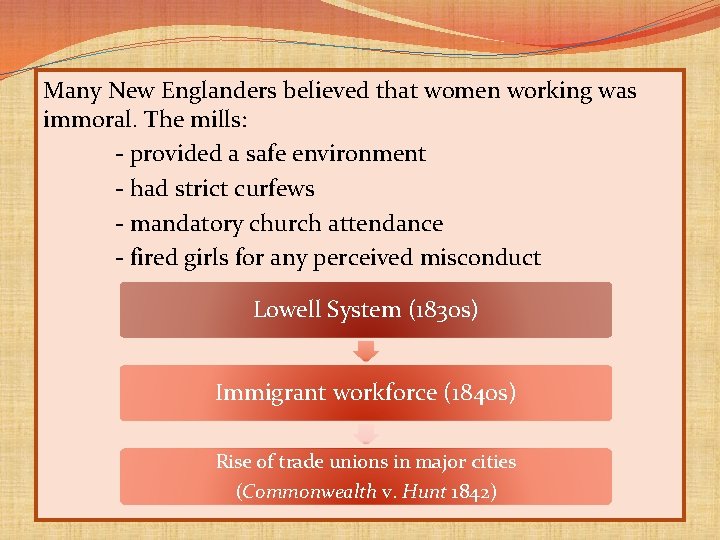
Many New Englanders believed that women working was immoral. The mills: - provided a safe environment - had strict curfews - mandatory church attendance - fired girls for any perceived misconduct Lowell System (1830 s) Immigrant workforce (1840 s) Rise of trade unions in major cities (Commonwealth v. Hunt 1842)
- Slides: 7