
Transport Topic 8 Transport Absorption Circulation of materials

Transport Topic 8
Transport: • • Absorption & Circulation of materials End products of digestion enter body cells
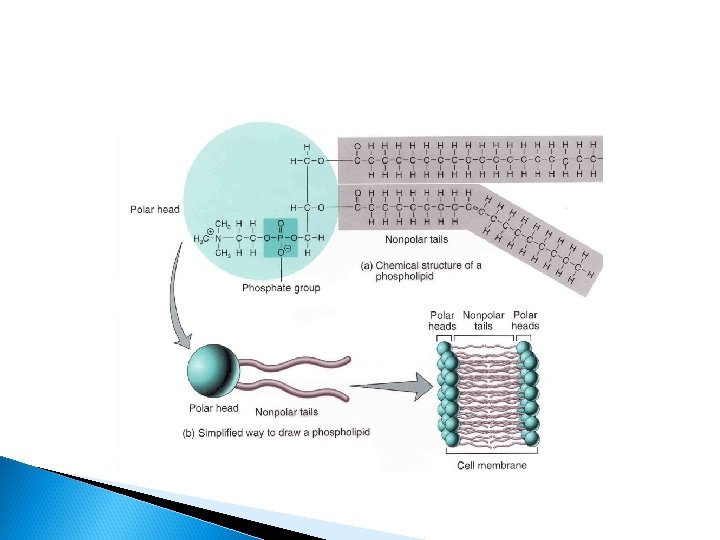
Structure of the Cell Membrane: • • Cell membrane is the “security guard” of the cell Semi/Selectively permeable Regulates movement of materials into & out of the cell Phospholipid bi-layer
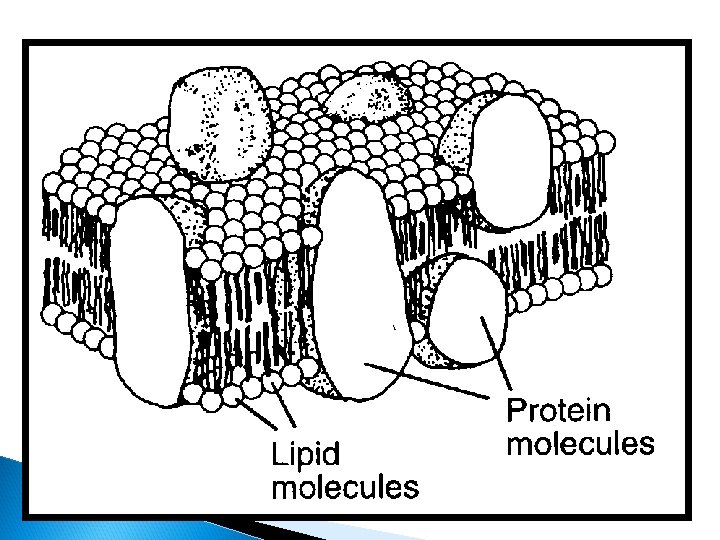
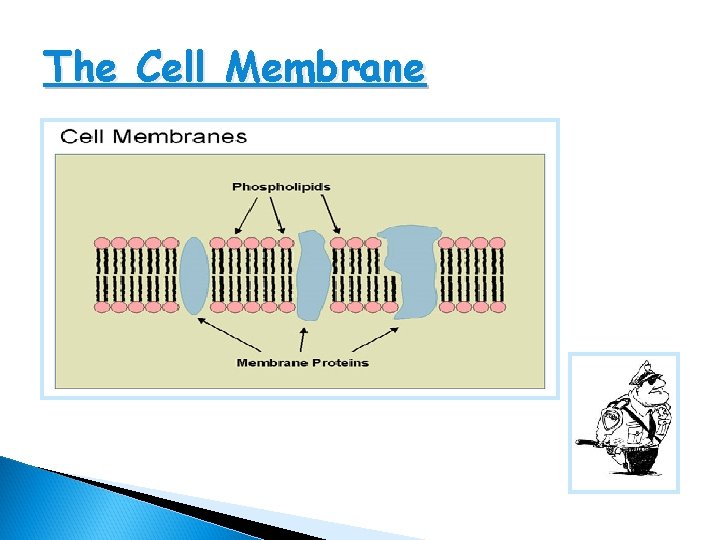
The Cell Membrane
Phospholipids form 2 layers Phosphate “heads” are hydrophilic ◦ They can touch water outside and inside (cytoplasm) the cell Lipid “tails” are hydrophobic ◦ They face inward to avoid touching water
Fluid Mosaic Model: • • • Model of the cell membrane Small molecules pass through easily • Ex: amino acids, monosaccharides, glycerol, fatty acids, water & gases Large molecules don’t pass through easily, they must be broken down • Ex: carbs. , lipids & proteins
Cell Membrane • http: //www. susanahalpine. com/anim/Life/memb. htm
Methods of Transport: Two Types of Transport 1. Passive Transport 2. Active Transport
1. Passive Transport: No energy needed A. Diffusion B. Osmosis
A. Diffusion: Materials move from High Low Concentration • • Continues until equilibrium is reached Video: http: //www. stolaf. edu/people/giannini/flashanimat/transport/diffusion. swf
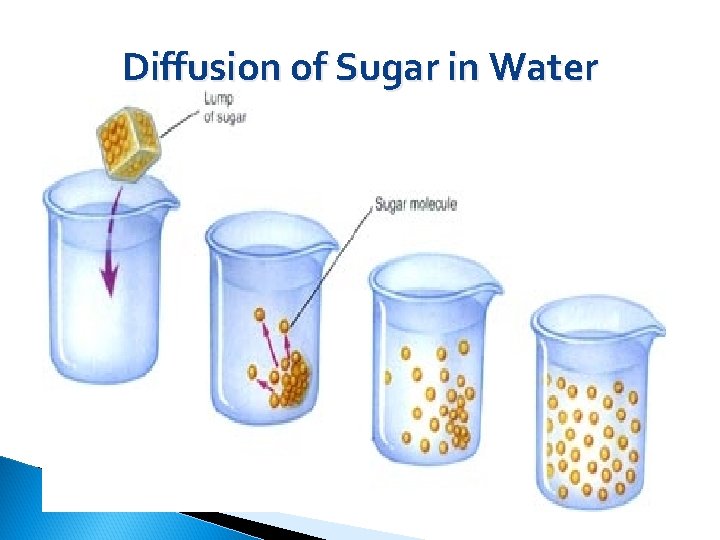
Diffusion of Sugar in Water
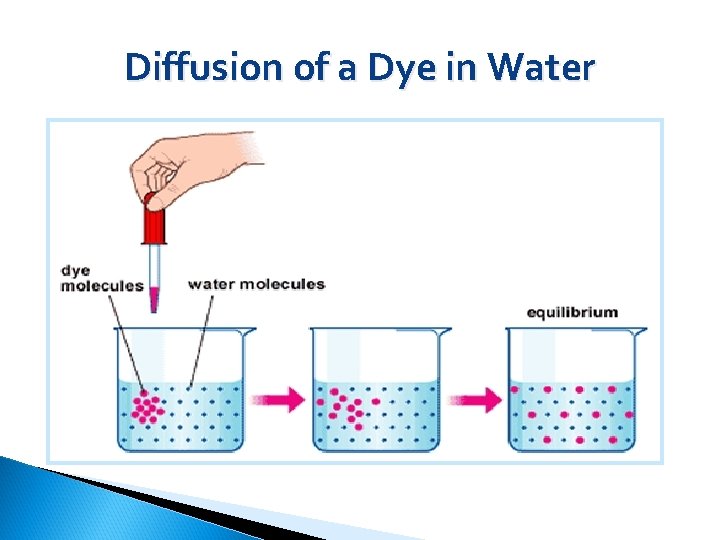
Diffusion of a Dye in Water
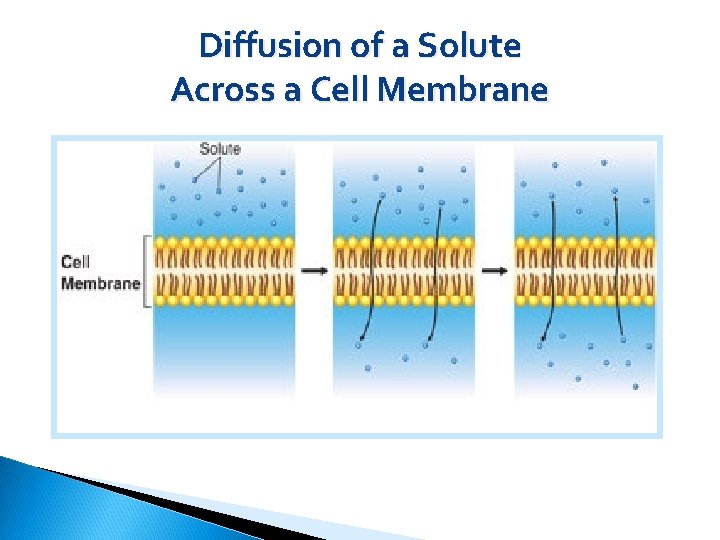
Diffusion of a Solute Across a Cell Membrane
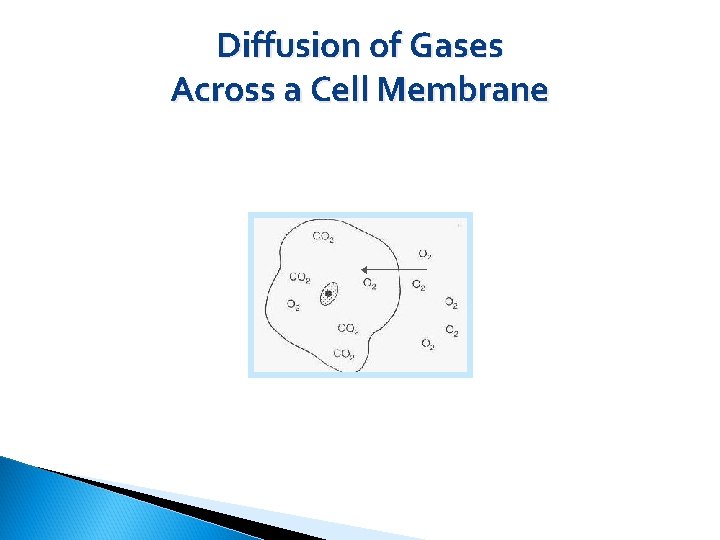
Diffusion of Gases Across a Cell Membrane
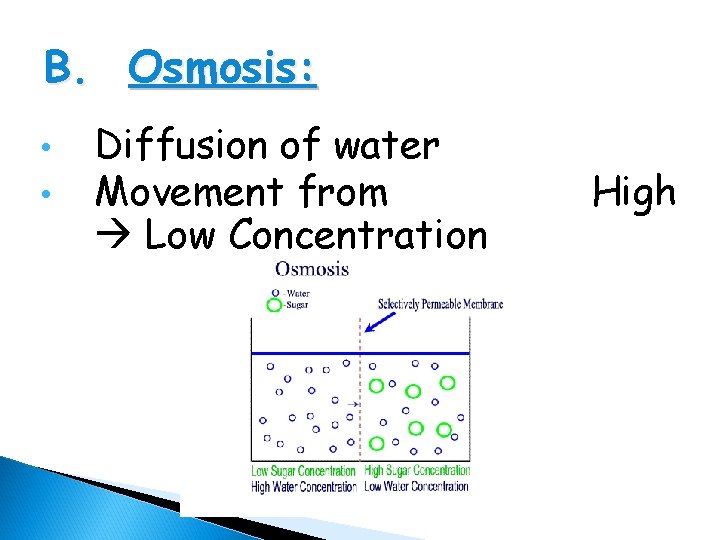
B. Osmosis: • • Diffusion of water Movement from Low Concentration High
2. ACTIVE TRANSPORT • • Energy is required Materials move from Low High Concentration
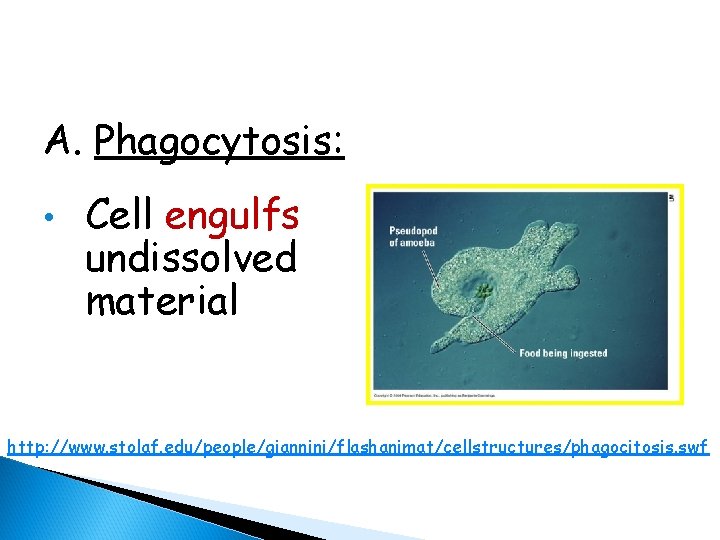
A. Phagocytosis: • Cell engulfs undissolved material http: //www. stolaf. edu/people/giannini/flashanimat/cellstructures/phagocitosis. swf
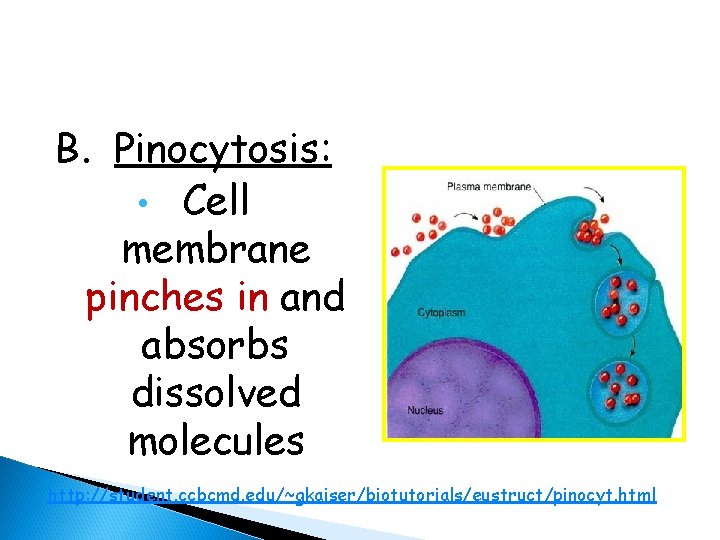
B. Pinocytosis: • Cell membrane pinches in and absorbs dissolved molecules http: //student. ccbcmd. edu/~gkaiser/biotutorials/eustruct/pinocyt. html
Endocytosis Materials move into the cell Exocytosis Materials move out of the cell
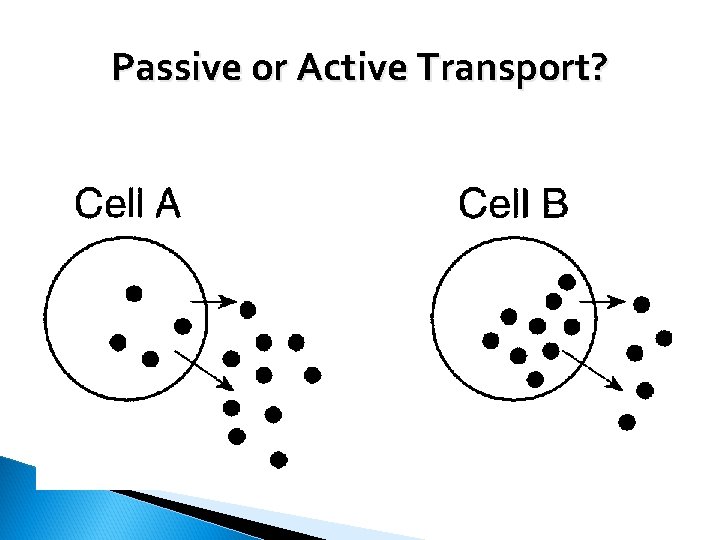
Passive or Active Transport? Active Passive
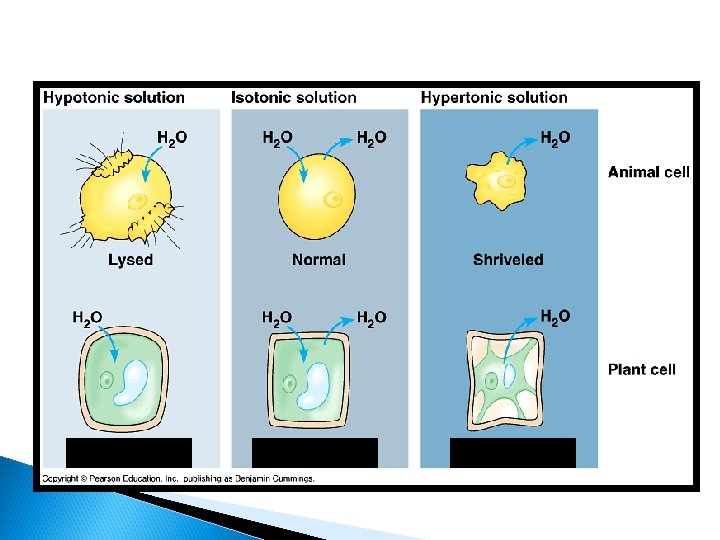
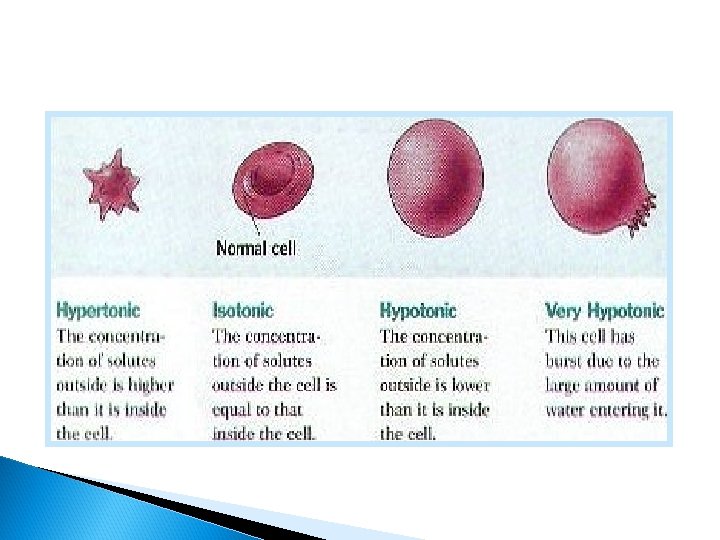
Effects of Osmosis on a Cell Isotonic Solution: Solution has same concentration of dissolved substances as cell Hypotonic Solution: Solution has a lower concentration of dissolved substances than cell Hypertonic Solution: Solution has a higher concentration of dissolved substances than cell
How does a change in salt concentration affect a cell?
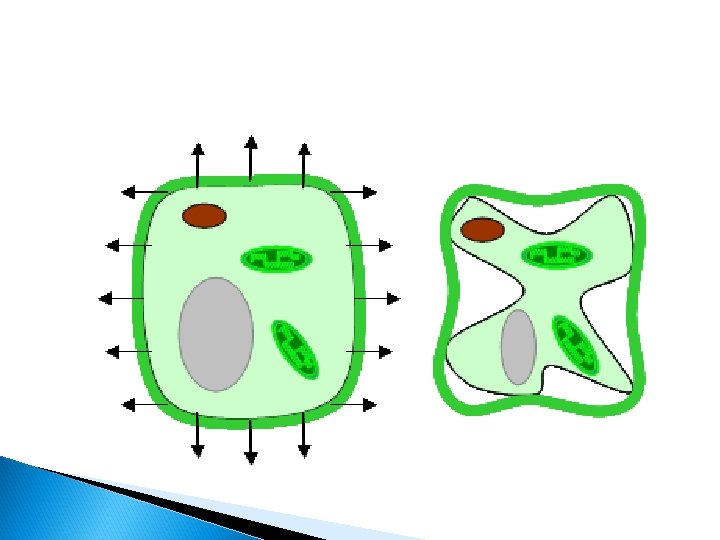
Adding a Salt Solution to a Cell • • • Concentration of water is higher inside cell Water flows out of cell High –> Low Concentration Cell’s cytoplasm shrinks!!!
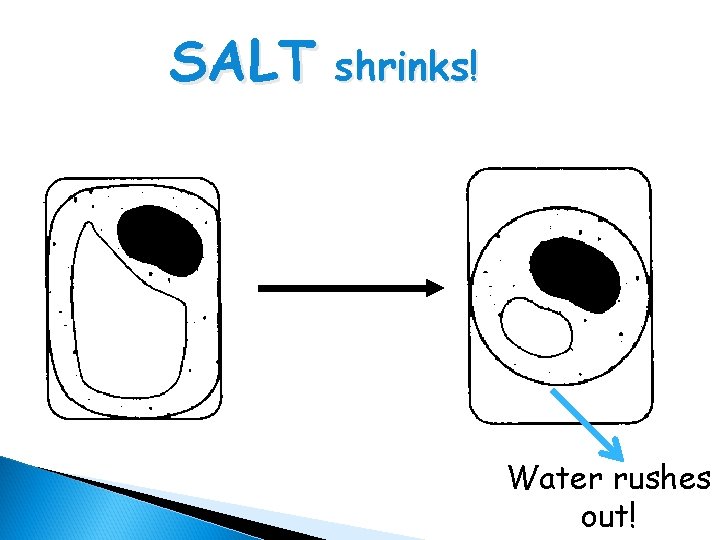
SALT shrinks! Water rushes out!
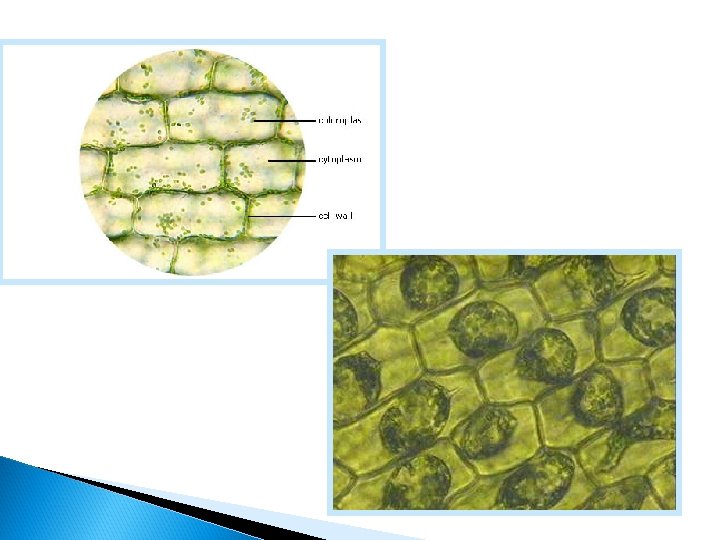
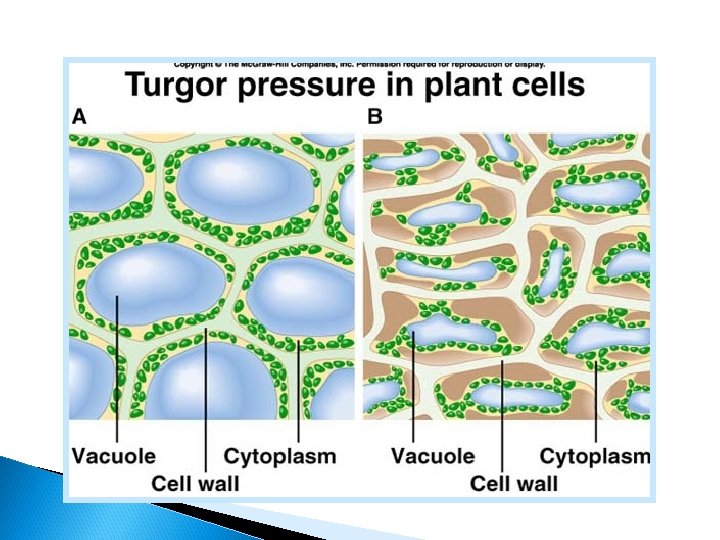
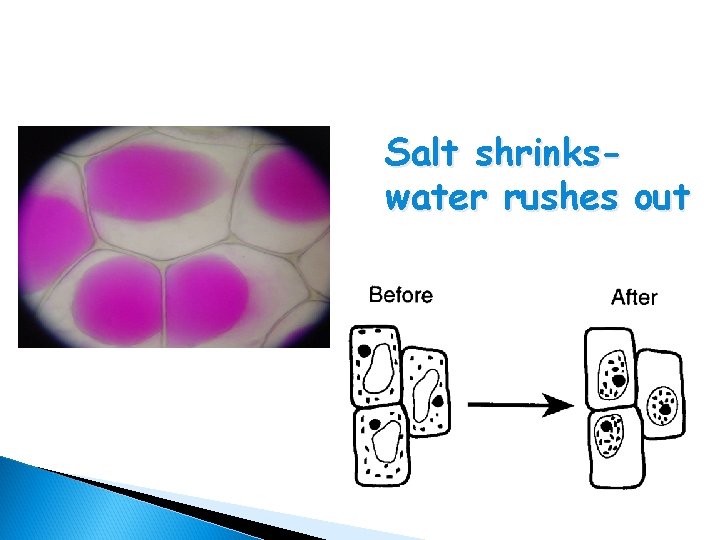
Salt shrinkswater rushes out
Adding Distilled (Pure) Water to a Cell • Concentration of water is higher outside the cell • Water flows in the cell • Cell bursts/ruptures
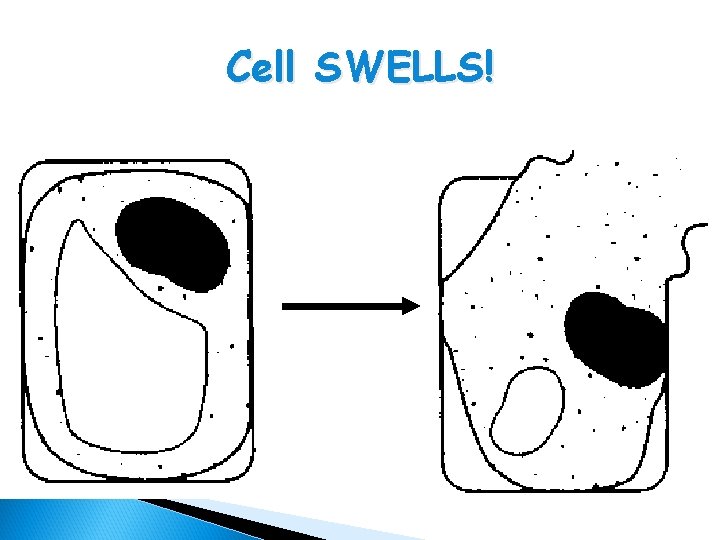
Cell SWELLS!
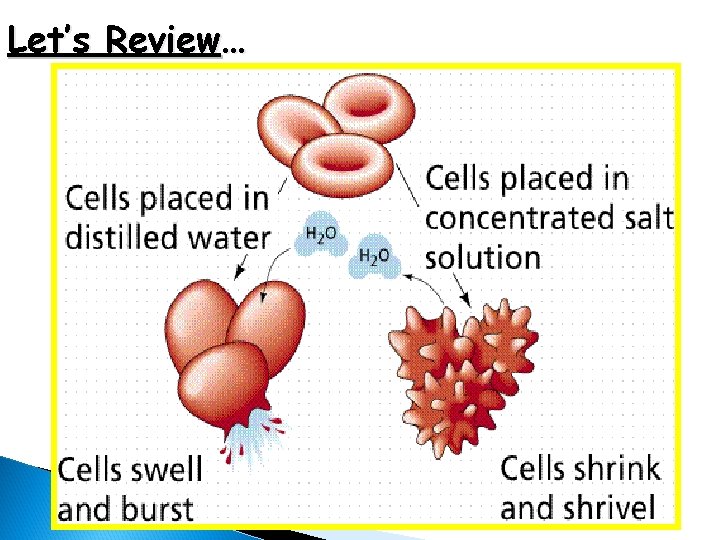
Let’s Review…
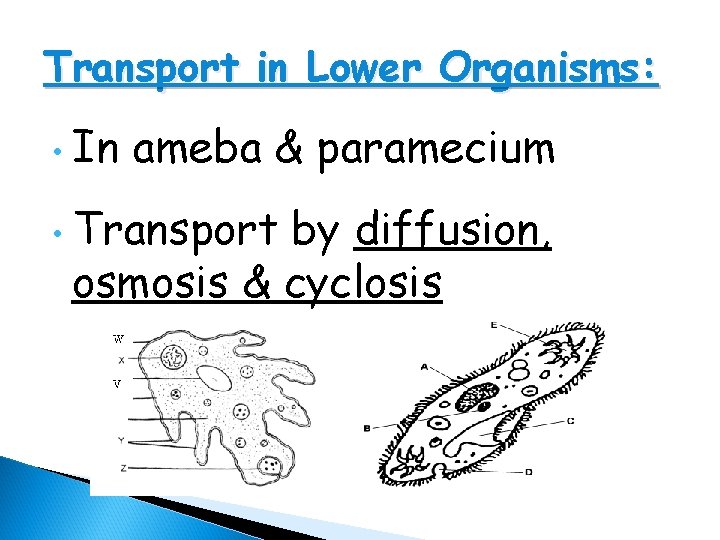
Transport in Lower Organisms: • • In ameba & paramecium Transport by diffusion, osmosis & cyclosis
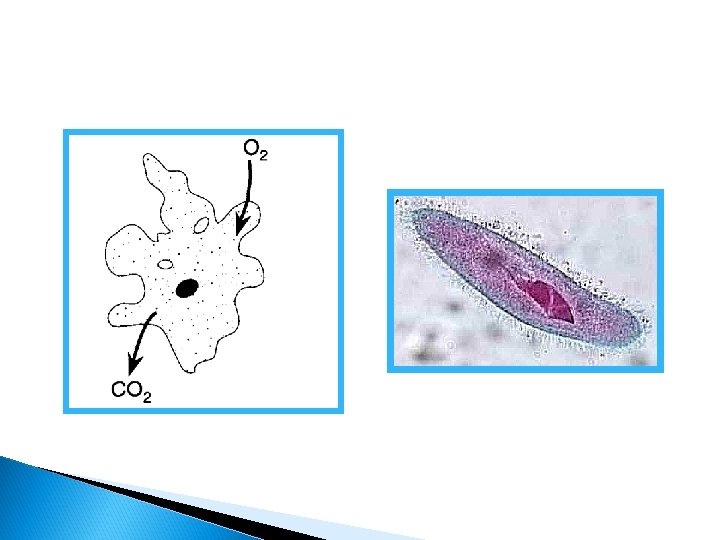
Intracellular Transport: • • Transport inside the cell Cyclosis- circular motion of the cytoplasm Endoplasmic Reticulum Diffusion, Osmosis, Phagocytosis & Pinocytosis
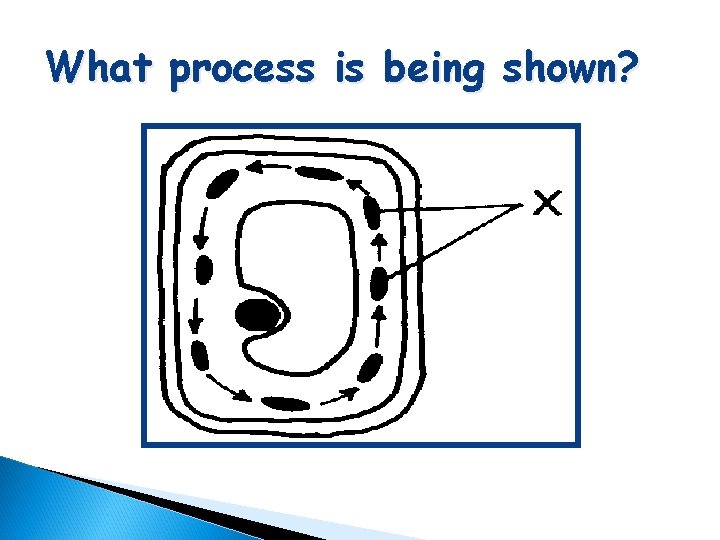
What process is being shown?
Transport in Plants: • Vascular tissue- • Xylem-transports water • Phloem- transports food • Roots- • Provide anchorage into soil • Absorb water
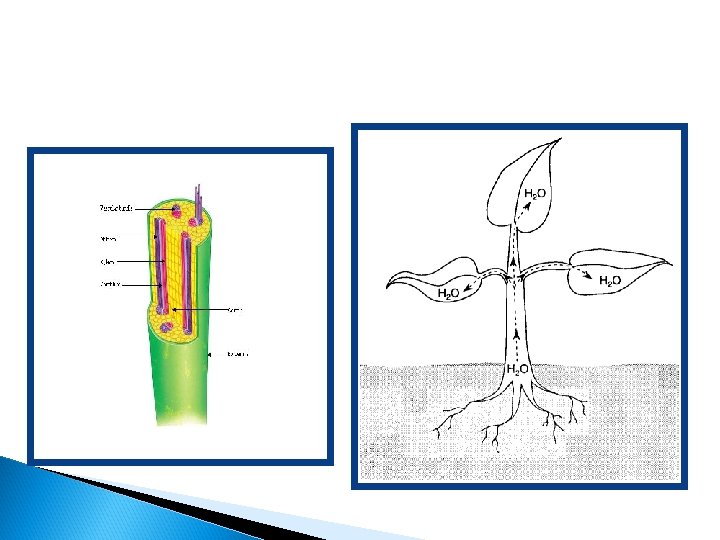
Capillary Action: • • • Pulls water up into the xylem tubes Adhesion- attraction between water molecules and the xylem tube Cohesion- attraction between water molecules
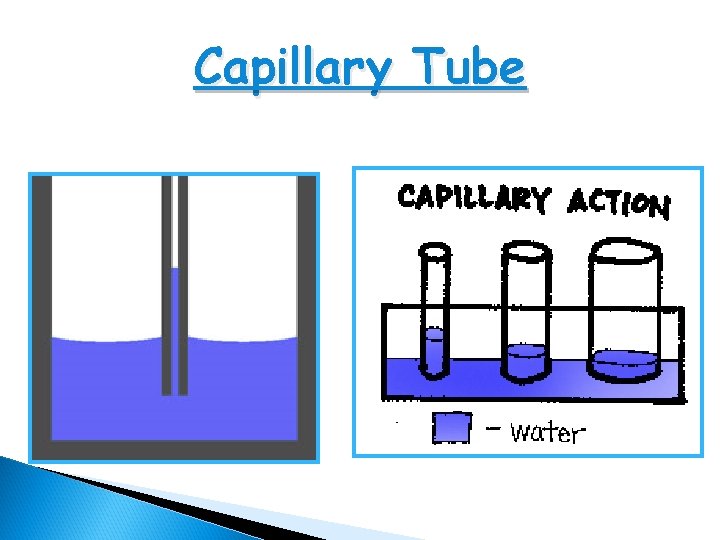
Capillary Tube
- Slides: 43