
Transport Processes in the Tropical Tropopause Region Observations
Transport Processes in the Tropical Tropopause Region – Observations C. Michael Volk + the HAGAR Team With contributions by S. Viciani, A. Ulanovsky, F. Ravegnani, P. Konopka G-SPARC Workshop, Berlin, 4 December 2006
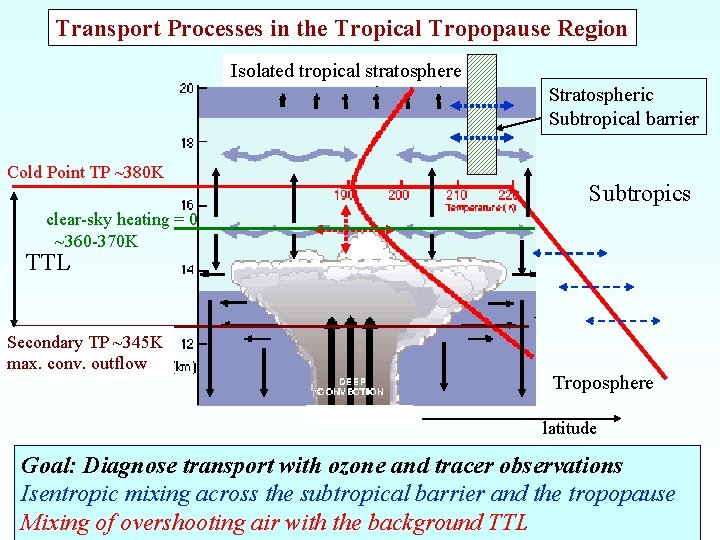
Transport Processes in the Tropical Tropopause Region Isolated tropical stratosphere Stratospheric Subtropical barrier Cold Point TP ~380 K Subtropics clear-sky heating = 0 ~360 -370 K TTL Secondary TP ~345 K max. conv. outflow Troposphere latitude Goal: Diagnose transport with ozone and tracer observations Isentropic mixing across the subtropical barrier and the tropopause Mixing of overshooting air with the background TTL
Basic Open Question: Quantitative understanding of the balance between the dominant transport processes in the TTL as function of time and space SPARC Relevance: Key role of TTL in Climate-Chemistry Interaction (Theme 1) • H 2 O: TTL transport details intimately linked to dehydration mechanisms • Chemistry: TTL transport time scales determine abundances of shortlived and/or water soluble substances entering the stratosphere => influences stratospheric Cl, Br, I, and S budgets e. g. recent SPARC TTL sessions and workshops: Modelling of Deep Convection and of Chemistry and their Roles in the Tropical Tropopause Layer, Victoria, June 12 -15, 2006 TTL session at General SPARC 3 d General Assembly 2004
Use of Tracers for tropical UTLS Transport • Horizontal mixing from extratropical stratosphere (above or below tropopause): identified by stratospheric tracers: N 2 O, CH 4, CFCs (& correlations w/ O 3) • Large-scale diabatic ascent: estimate using CO 2, CO or O 3 „clock“ (if other processes are weak) • Convective uplift: boundary layer tracers: O 3 (marine), CO 2 (continental) • Vertical mixing of overshooting air: Mixing lines in CO 2, CO, O 3 vs q and their correlations • Interhemispheric mixing in TTL (need measurements on both sides of ITCZ) tracers with large interhemispheric gradients (CO, CO 2, SF 6, H-1211)
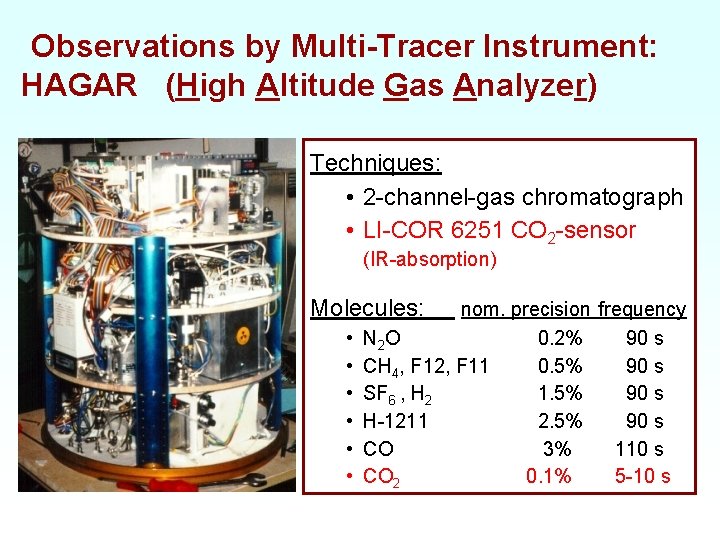
Observations by Multi-Tracer Instrument: HAGAR (High Altitude Gas Analyzer) Techniques: • 2 -channel-gas chromatograph • LI-COR 6251 CO 2 -sensor (IR-absorption) Molecules: • • • nom. precision frequency N 2 O 0. 2% 90 s CH 4, F 12, F 11 0. 5% 90 s SF 6 , H 2 1. 5% 90 s H-1211 2. 5% 90 s CO 3% 110 s CO 2 0. 1% 5 -10 s
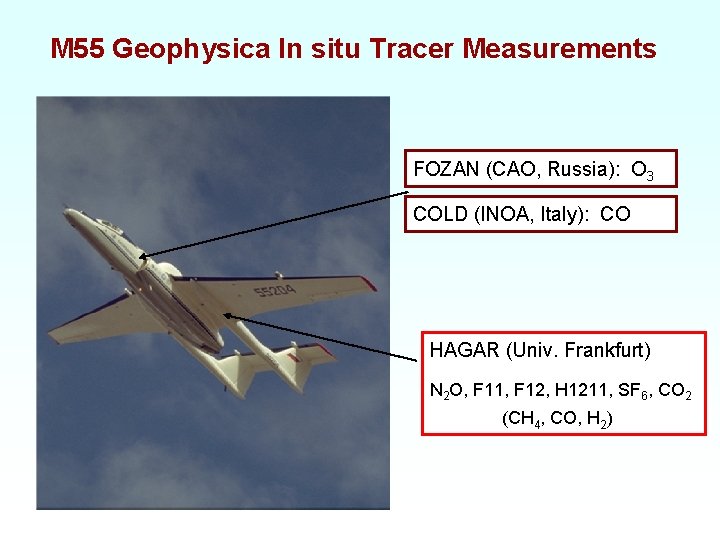
M 55 Geophysica In situ Tracer Measurements FOZAN (CAO, Russia): O 3 COLD (INOA, Italy): CO HAGAR (Univ. Frankfurt) N 2 O, F 11, F 12, H 1211, SF 6, CO 2 (CH 4, CO, H 2)
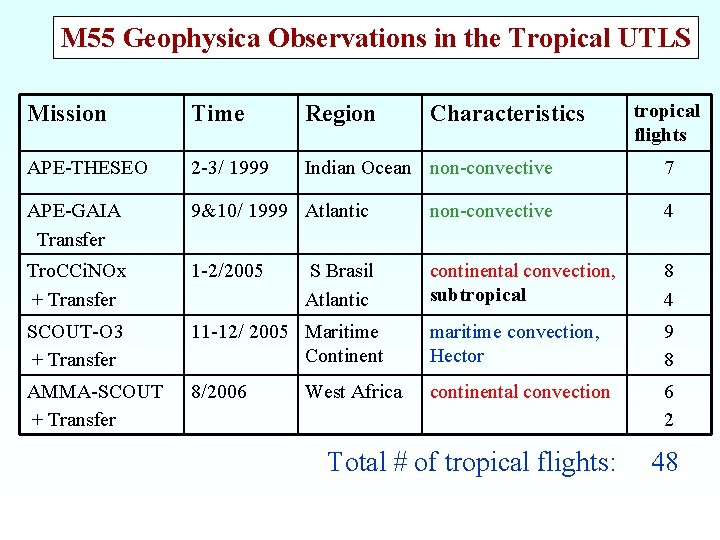
M 55 Geophysica Observations in the Tropical UTLS Time Region APE-THESEO 2 -3/ 1999 Indian Ocean non-convective APE-GAIA Transfer 9&10/ 1999 Atlantic non-convective 4 Tro. CCi. NOx + Transfer 1 -2/2005 continental convection, subtropical 8 4 SCOUT-O 3 + Transfer 11 -12/ 2005 Maritime Continent maritime convection, Hector 9 8 AMMA-SCOUT + Transfer 8/2006 continental convection 6 2 Total # of tropical flights: 48 S Brasil Atlantic West Africa Characteristics tropical flights Mission 7
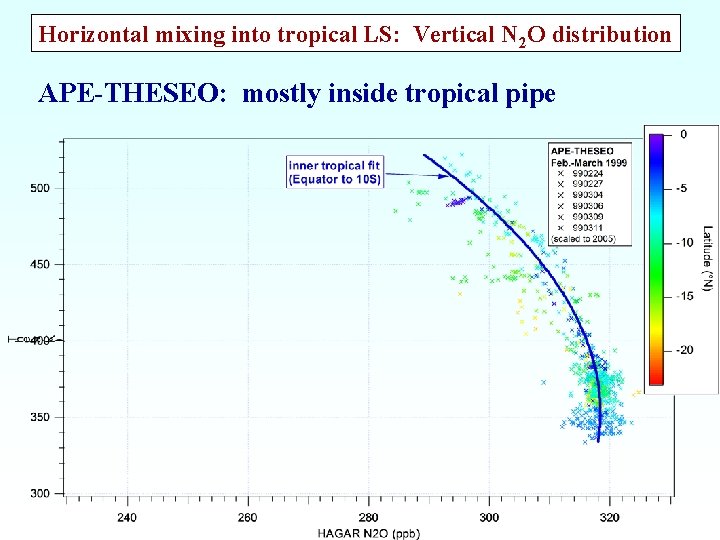
Horizontal mixing into tropical LS: Vertical N 2 O distribution APE-THESEO: mostly inside tropical pipe
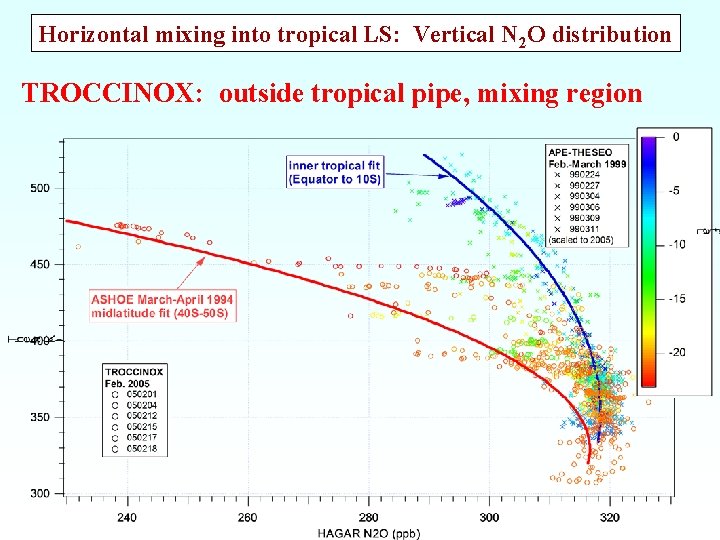
Horizontal mixing into tropical LS: Vertical N 2 O distribution TROCCINOX: outside tropical pipe, mixing region
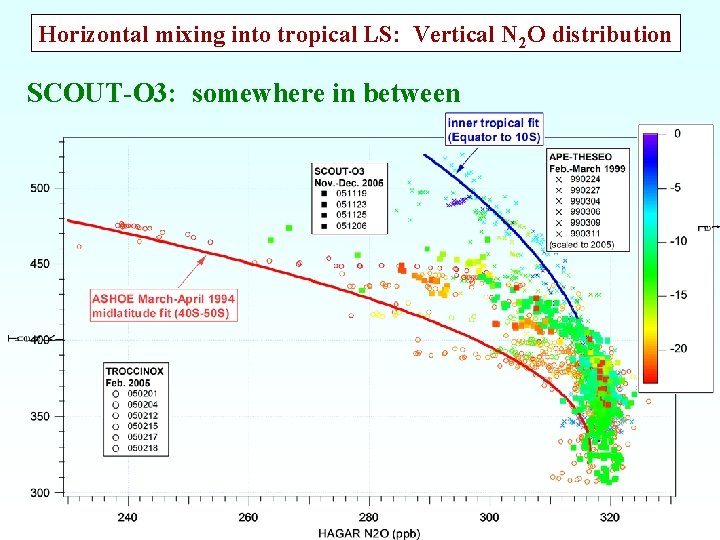
Horizontal mixing into tropical LS: Vertical N 2 O distribution SCOUT-O 3: somewhere in between
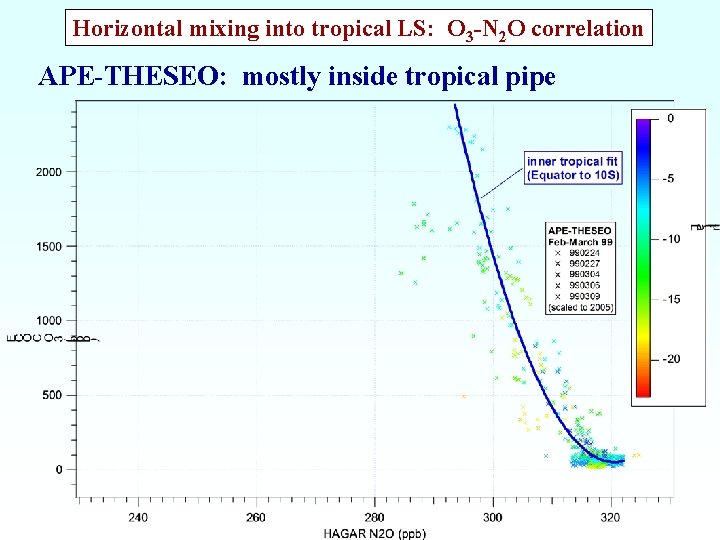
Horizontal mixing into tropical LS: O 3 -N 2 O correlation APE-THESEO: mostly inside tropical pipe
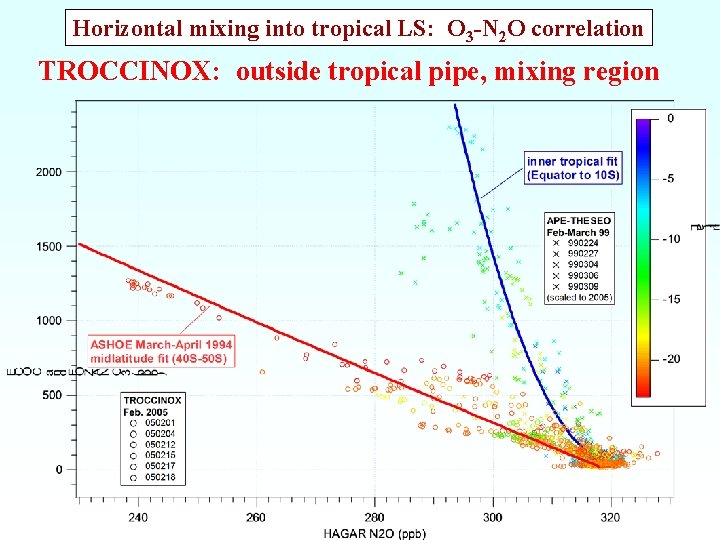
Horizontal mixing into tropical LS: O 3 -N 2 O correlation TROCCINOX: outside tropical pipe, mixing region
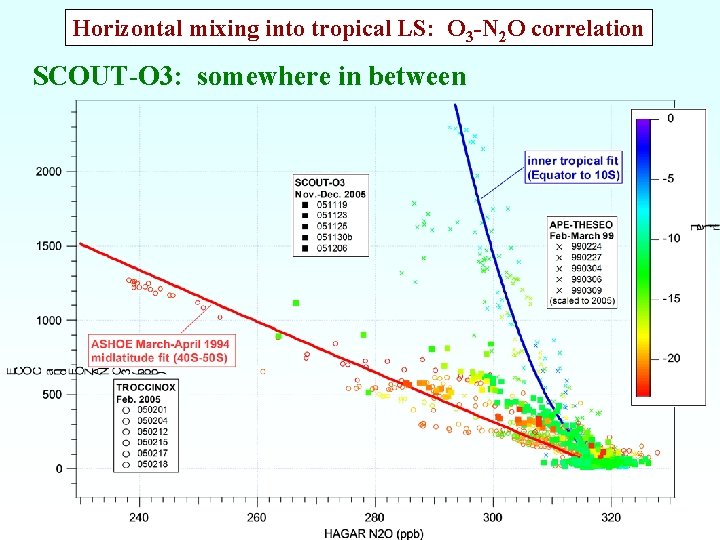
Horizontal mixing into tropical LS: O 3 -N 2 O correlation SCOUT-O 3: somewhere in between
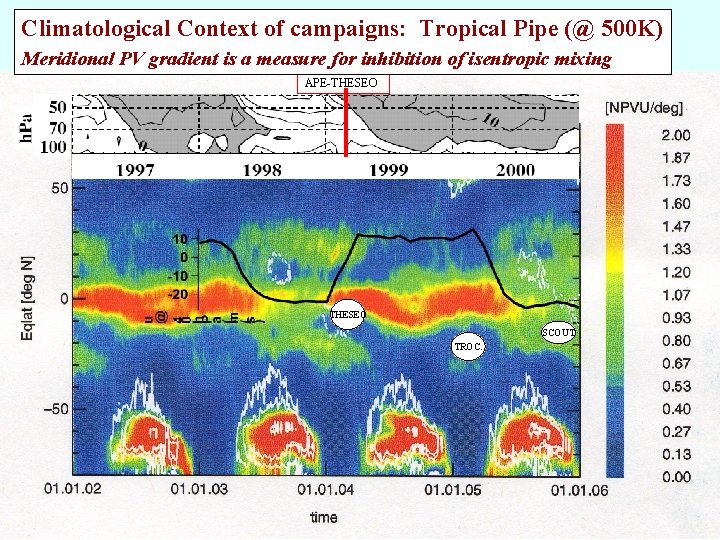
Climatological Context of campaigns: Tropical Pipe (@ 500 K) Meridional PV gradient is a measure for inhibition of isentropic mixing APE-THESEO SCOUT TROC.
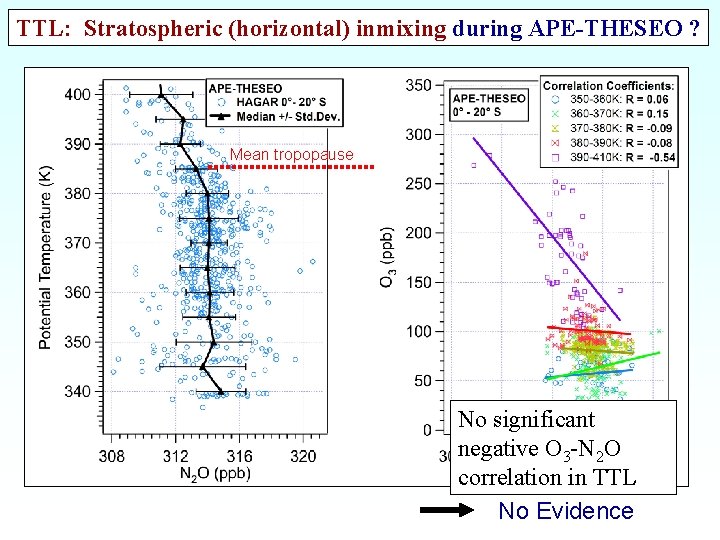
TTL: Stratospheric (horizontal) inmixing during APE-THESEO ? Mean tropopause No significant negative O 3 -N 2 O correlation in TTL No Evidence
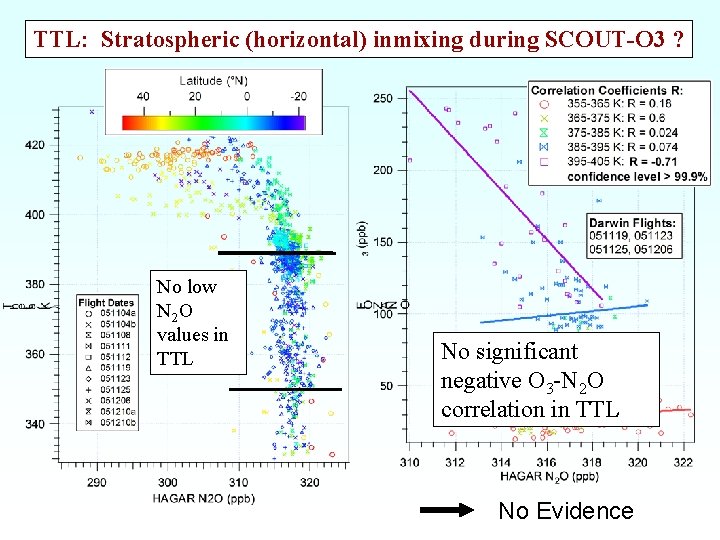
TTL: Stratospheric (horizontal) inmixing during SCOUT-O 3 ? No low N 2 O values in TTL No significant negative O 3 -N 2 O correlation in TTL No Evidence
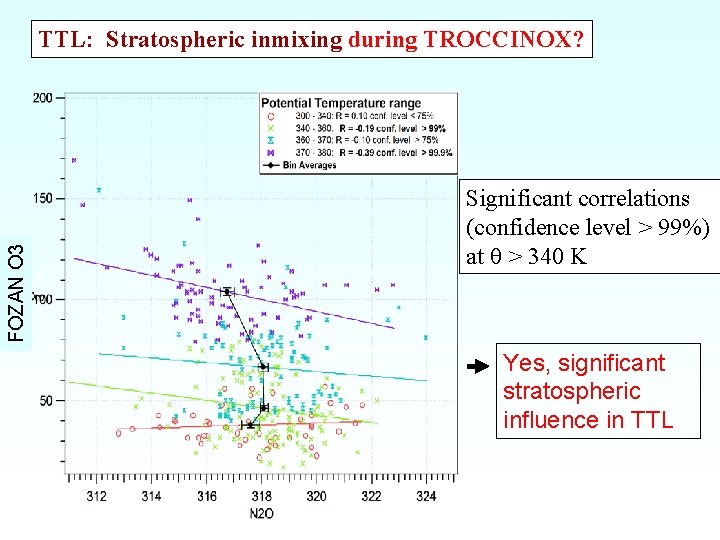
FOZAN O 3 TTL: Stratospheric inmixing during TROCCINOX? Significant correlations (confidence level > 99%) at q > 340 K Yes, significant stratospheric influence in TTL
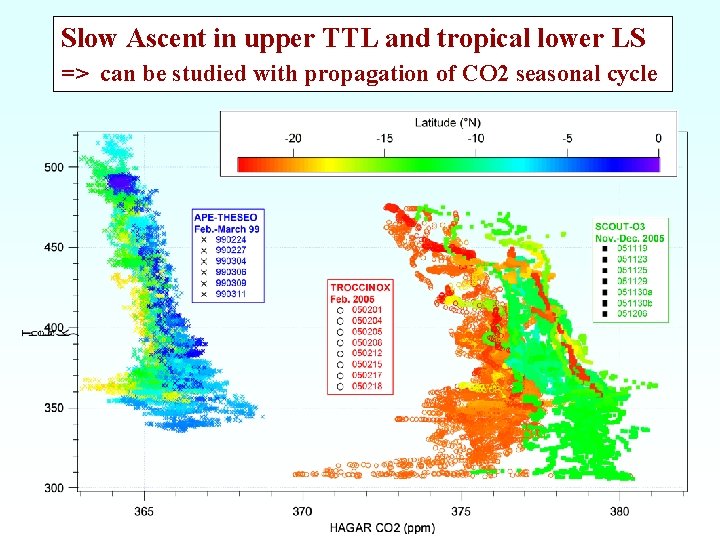
Slow Ascent in upper TTL and tropical lower LS => can be studied with propagation of CO 2 seasonal cycle

Slow ascent versus convection: CO and CO 2 (AMMA 2006) ~18 km ~15 km Highest level of convective outflow ~ 18 km
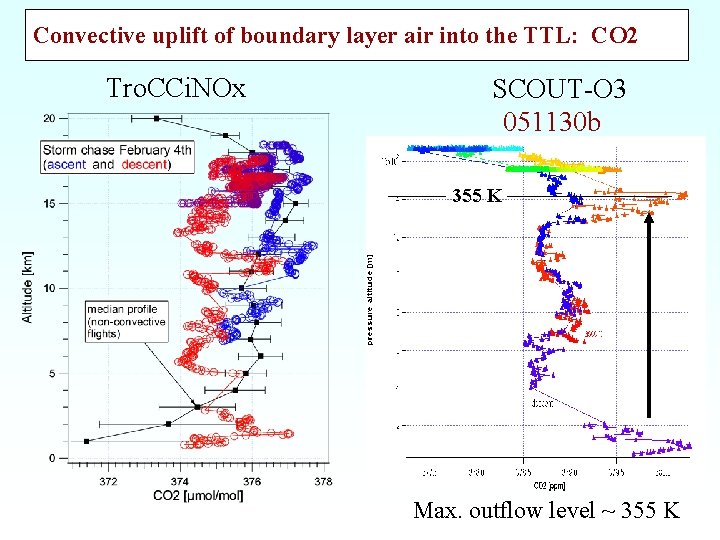
Convective uplift of boundary layer air into the TTL: CO 2 Tro. CCi. NOx SCOUT-O 3 051130 b 355 K Max. outflow level ~ 355 K
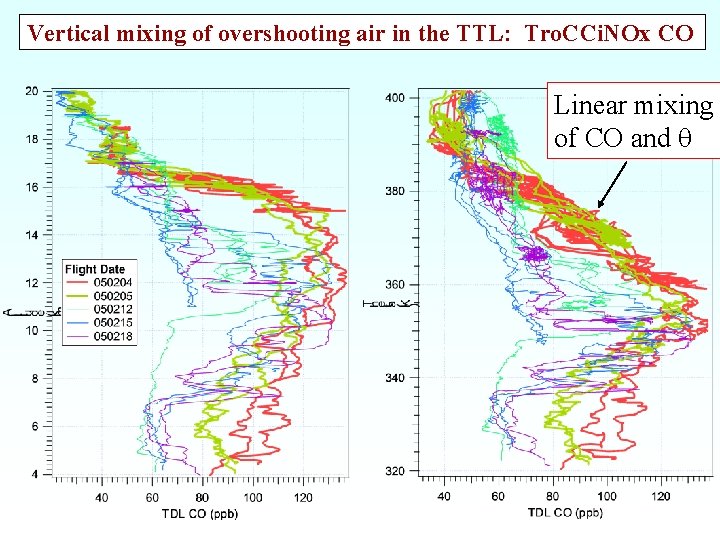
Vertical. Mixing mixing ofof overshooting air in air: the TTL: overshooting CO Tro. CCi. NOx profiles CO Linear mixing of CO and q
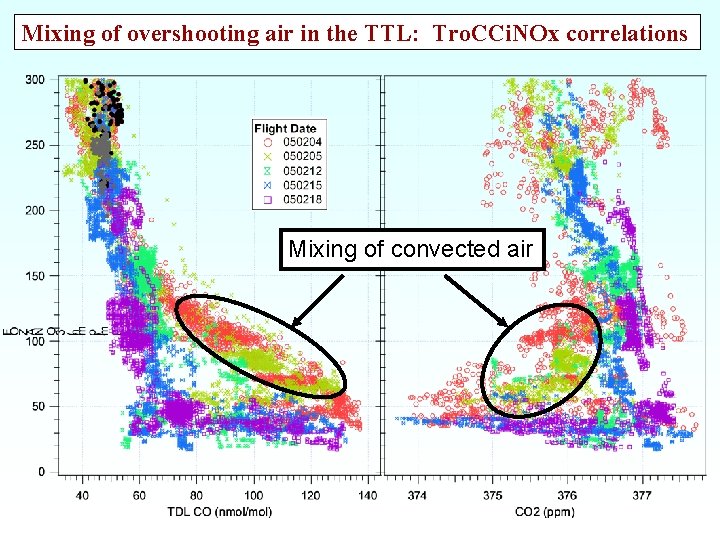
Mixing of overshooting air in the TTL: Tro. CCi. NOx correlations Mixing of convected air
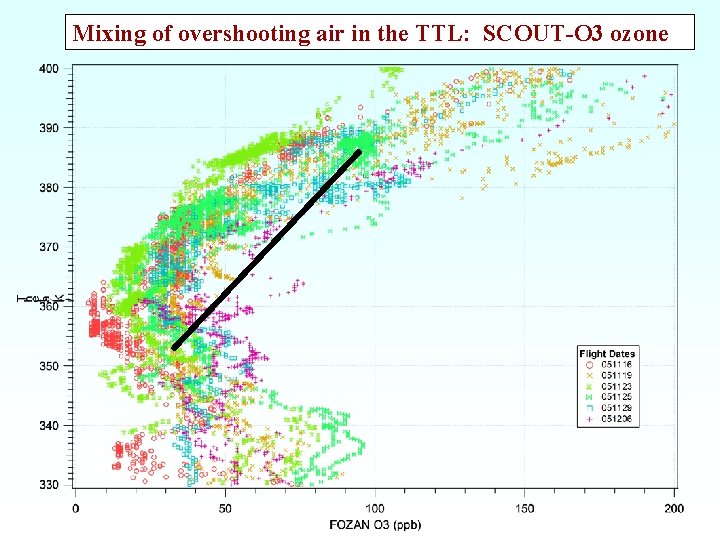
Mixing of overshooting air in the TTL: SCOUT-O 3 ozone
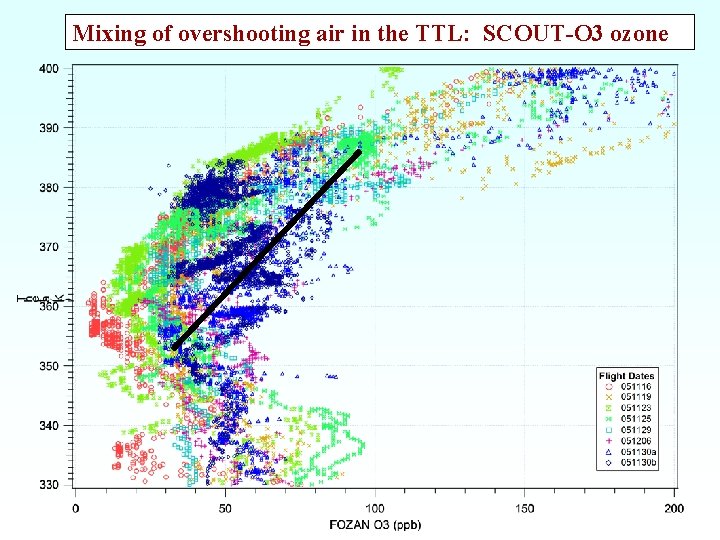
Mixing of overshooting air in the TTL: SCOUT-O 3 ozone
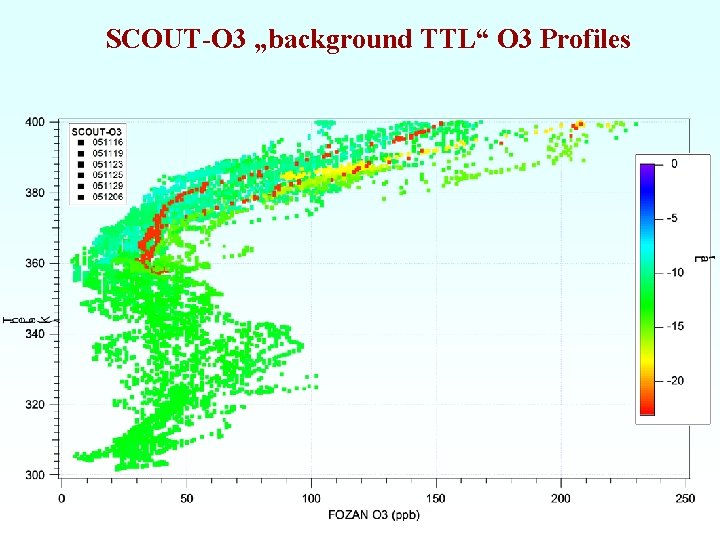
SCOUT-O 3 „background TTL“ O 3 Profiles
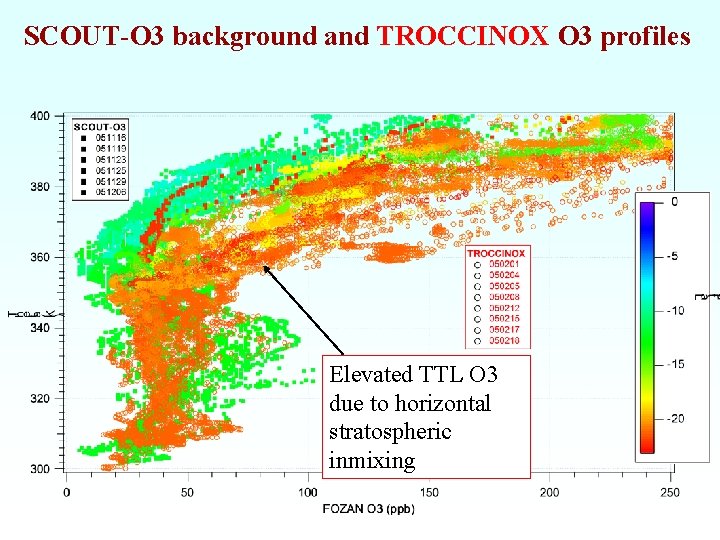
SCOUT-O 3 background and TROCCINOX O 3 profiles Elevated TTL O 3 due to horizontal stratospheric inmixing
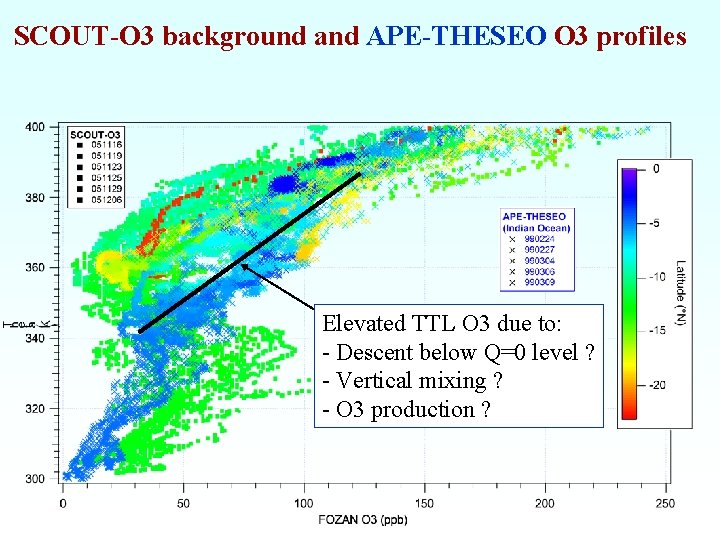
SCOUT-O 3 background and APE-THESEO O 3 profiles Elevated TTL O 3 due to: - Descent below Q=0 level ? - Vertical mixing ? - O 3 production ?
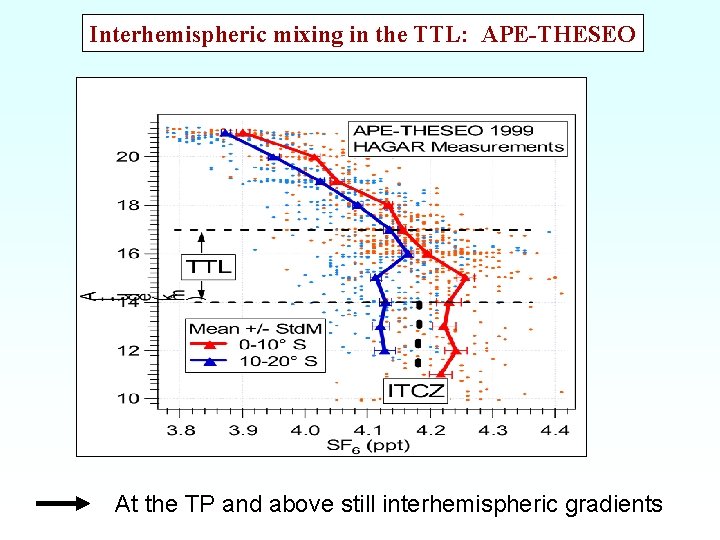
Interhemispheric mixing in the TTL: APE-THESEO At the TP and above still interhemispheric gradients
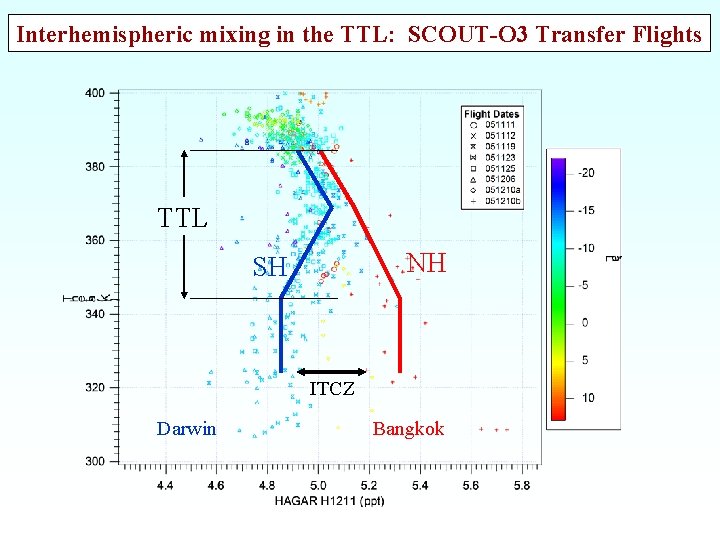
Interhemispheric mixing in the TTL: SCOUT-O 3 Transfer Flights TTL NH SH ITCZ Darwin Bangkok
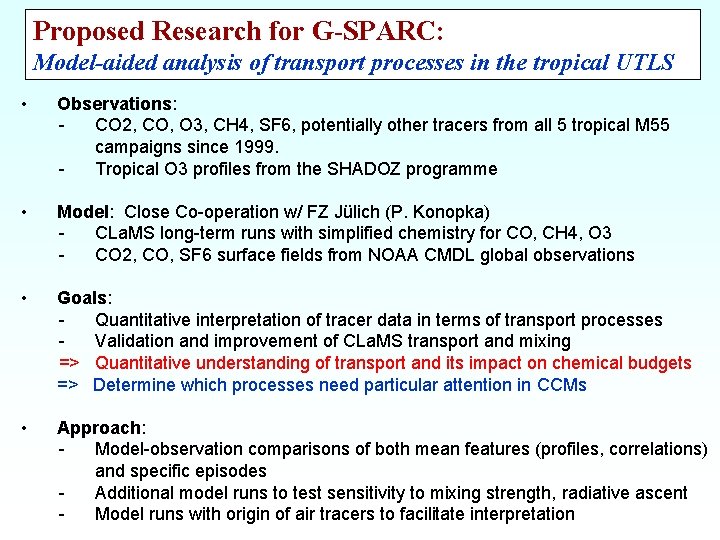
Proposed Research for G-SPARC: Model-aided analysis of transport processes in the tropical UTLS • Observations: CO 2, CO, O 3, CH 4, SF 6, potentially other tracers from all 5 tropical M 55 campaigns since 1999. Tropical O 3 profiles from the SHADOZ programme • Model: Close Co-operation w/ FZ Jülich (P. Konopka) CLa. MS long-term runs with simplified chemistry for CO, CH 4, O 3 CO 2, CO, SF 6 surface fields from NOAA CMDL global observations • Goals: Quantitative interpretation of tracer data in terms of transport processes Validation and improvement of CLa. MS transport and mixing => Quantitative understanding of transport and its impact on chemical budgets => Determine which processes need particular attention in CCMs • Approach: Model-observation comparisons of both mean features (profiles, correlations) and specific episodes Additional model runs to test sensitivity to mixing strength, radiative ascent Model runs with origin of air tracers to facilitate interpretation
- Slides: 30