
TRANSPORT PHENOMENA I FLUID FLOW Introduction Definition of
- Slides: 30
TRANSPORT PHENOMENA I: FLUID FLOW
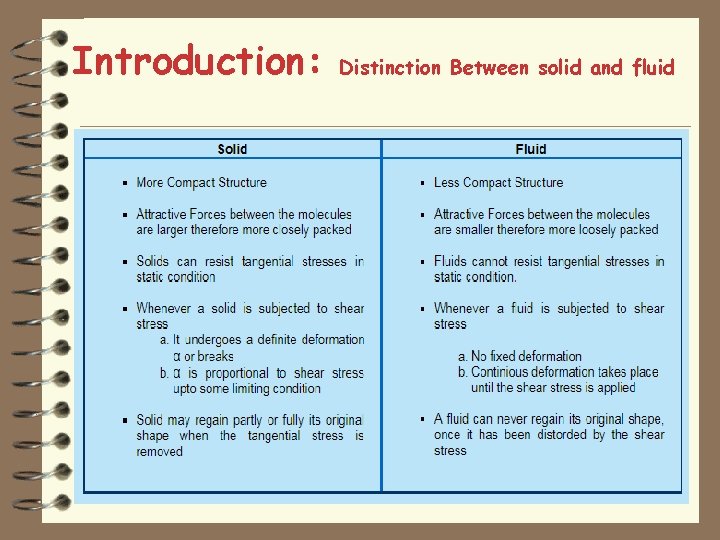
Introduction: Definition of fluid 4 The term fluid applies to any material that has the ability to move of its own. 4 A fluid is a substance that deforms continuously under the application of a shear (tangential) stress no matter how small the shear stress may be. 4 Thus, fluids comprise the liquid and gas (or vapor) phases of the physical forms in which matter exists 4 The characteristic that distinguishes a fluid from a solid is its inability to resist deformation under an applied shear stress (a tangential force per unit area).
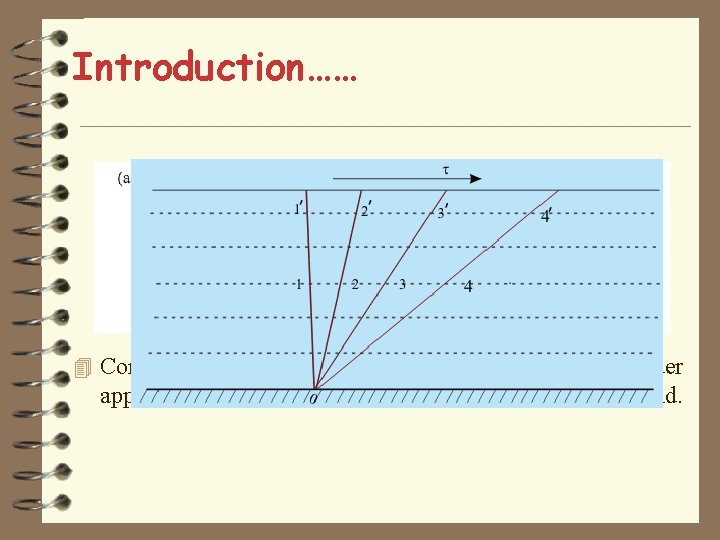
Introduction…… 4 Comparison of deformation of solids and liquids under application of a shear stress; (a) solid, and (b) liquid.
Introduction: Distinction Between solid and fluid
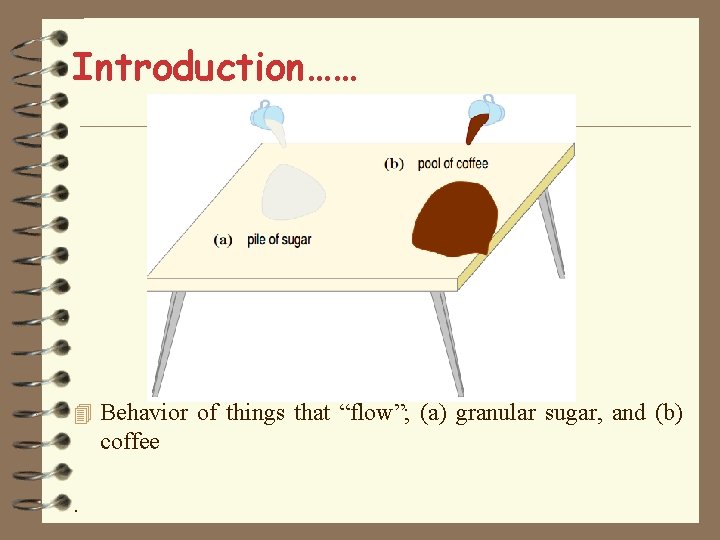
Introduction…… 4 Behavior of things that “flow”; (a) granular sugar, and (b) coffee .
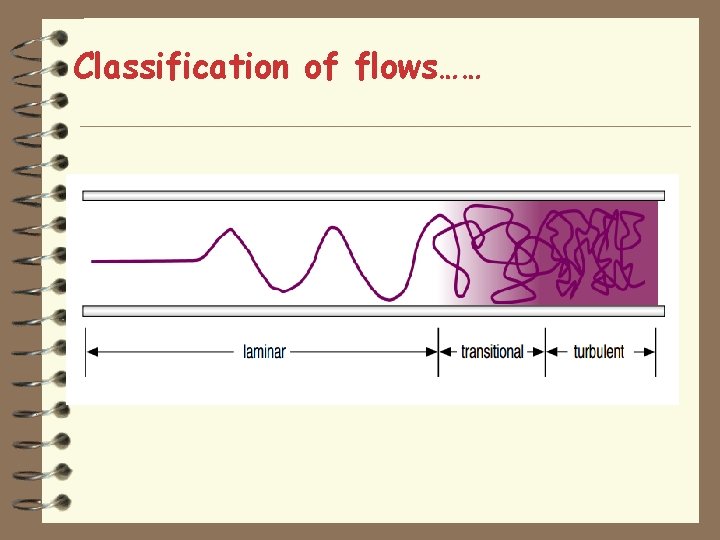
Flow-Definition and Types 4 What is flow? Flow (F) = Quantity (Q) Time (t) 4 Types of flow -Laminar -Turbulent flow
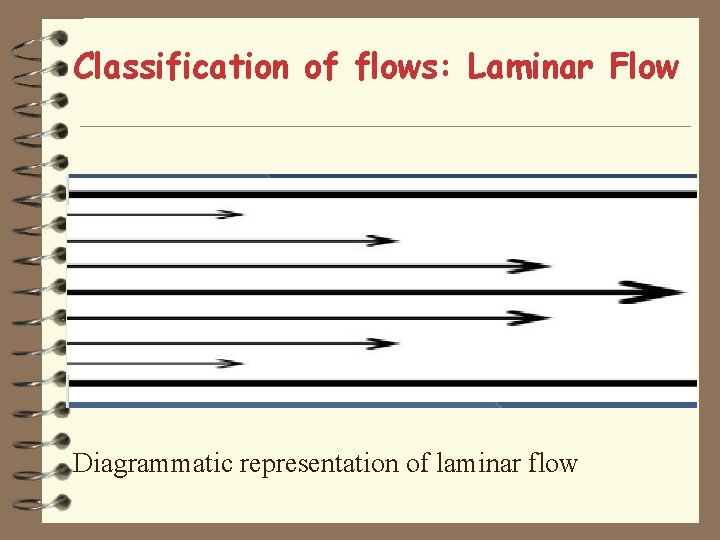
Classification of flows: Laminar Flow Diagrammatic representation of laminar flow
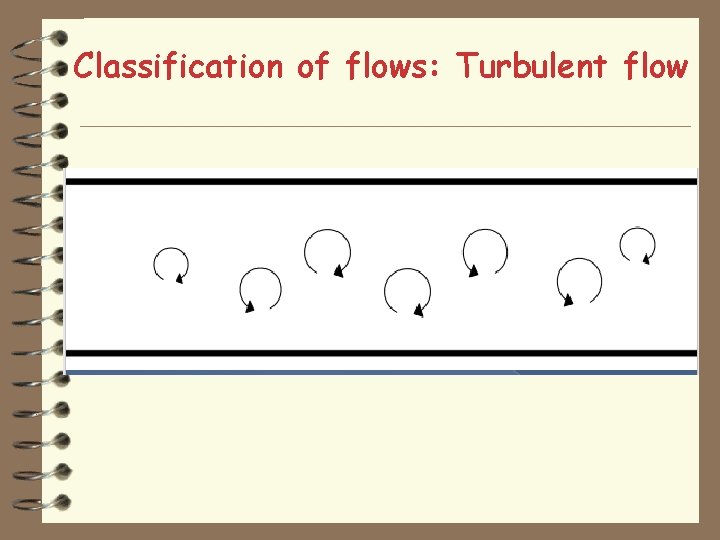
Classification of flows: Turbulent flow .
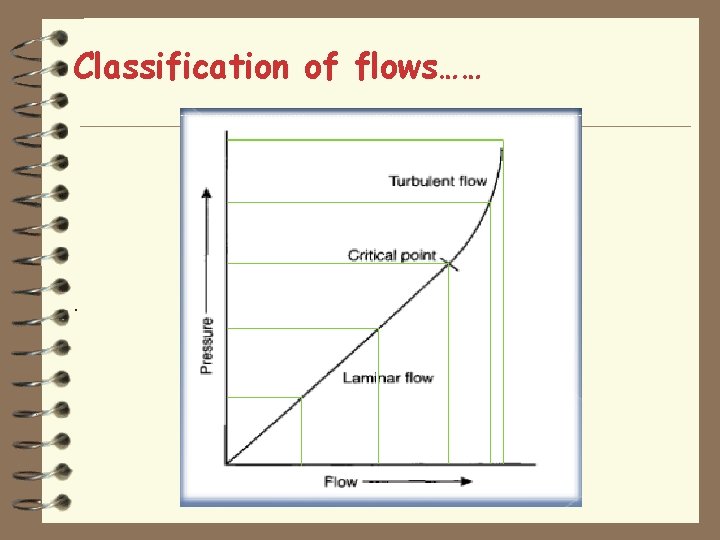
Classification of flows…… .
Classification of flows…… .
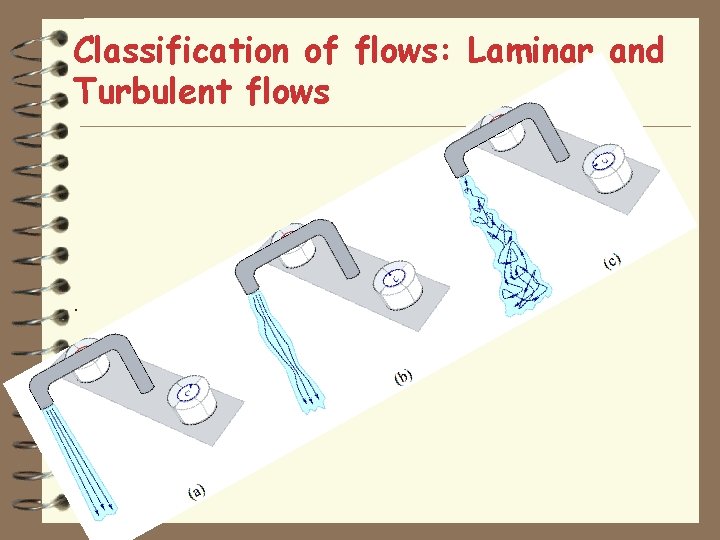
Classification of flows: Laminar and Turbulent flows .
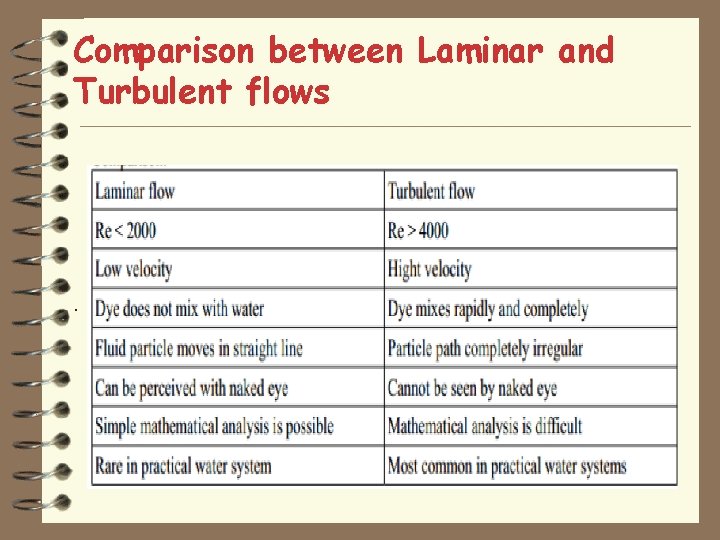
Comparison between Laminar and Turbulent flows .
Other classification of flows 4 Steady and unsteady 4 Compressible and incompressible 4 uniform, non-uniform; 4 Rotational and irrotational 4 Viscous and inviscid flows 4 Separated and unseparated flows
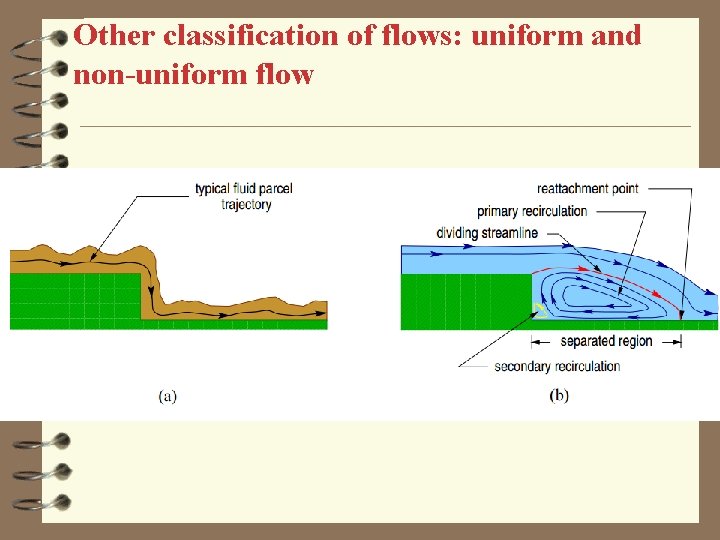
Other classification of flows: uniform and non-uniform flow .
Other classification of flows 4 One-dimensional flow neglects variations of changes in velocity, pressure, etc. , transverse to the main flow direction – Conditions at a cross section are expressed in terms of average values of velocity, density, and other properties 4 Two-dimensional flow: all particles are assumed to flow in parallel planes along identical paths in each of these planes no changes in flow normal to these planes 4 Three-dimensional flow is the most general flow in which the velocity components u, v, w in mutually perpendicular directions are functions of space coordinates and time x, y, z, and t Methods of analysis are generally complex mathematically, and only simple geometrical flow boundaries can be handled
Other classification of flows 4 Examples of steady and unsteady flow and of uniform and non-uniform flow are: – liquid flow through a long pipe at a constant rate is steady uniform flow; – liquid flow through a long pipe at a decreasing rate is unsteady uniform flow; – flow through an expanding tube at a constant rate is steady nonuniform flow; – flow through an expanding tube at an increasing rate is unsteady nonuniform flow
Factors (Variables) affecting fluid flow 4 Diameter of the pipe 4 Velocity of the liquid 4 Length of the pipe 4 Viscosity of the liquid 4 Pressure .
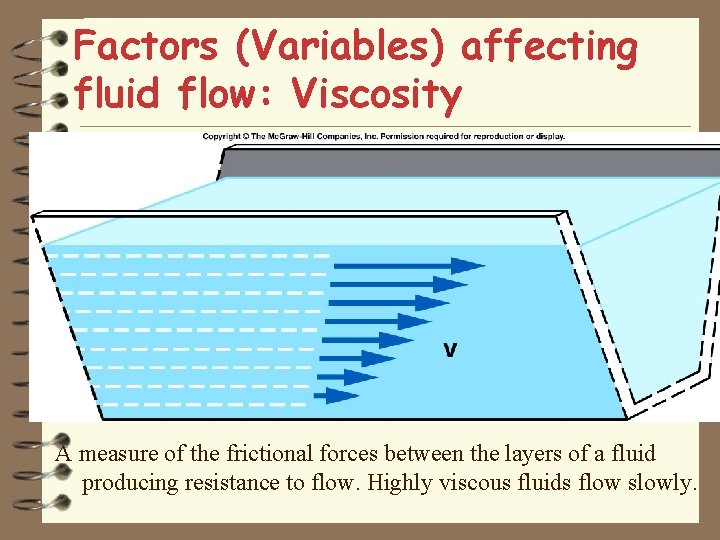
Factors (Variables) affecting fluid flow: Viscosity A measure of the frictional forces between the layers of a fluid producing resistance to flow. Highly viscous fluids flow slowly.
Other Properties of Fluid 4 Pressure 4 Density 4 Temperature 4 Viscosity(µ) 4 Thermal Conductivity(k) 4 Coefficient of compressibility/Bulk modulus(Ev ) 4
Properties of Fluid 4 Coefficient of volume expansion(β ) 4 Specific heats 4 Speed of sound (c) 4 Vapor pressure ( Pv ) 4 Surface Tension (σ ) 4 Specific Weight 4 Specific Volume 4 Specific Gravity (s)
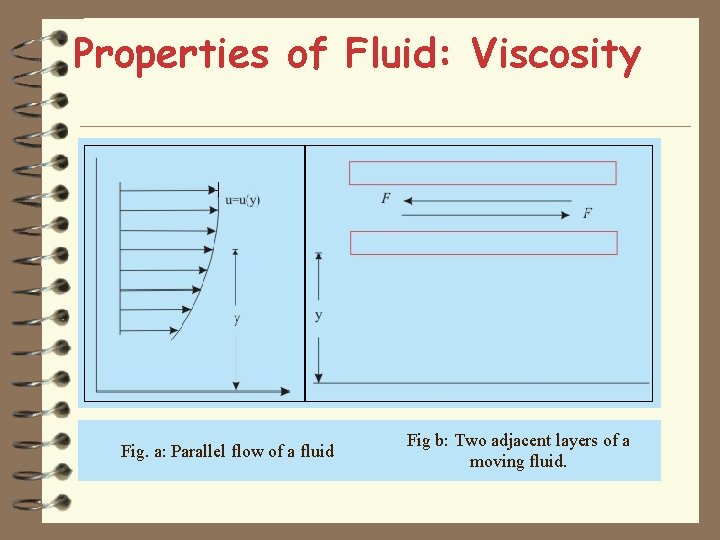
Properties of Fluid: Viscosity 4 Viscosity is a fluid property whose effect is understood when the fluid is in motion. 4 In a flow of fluid, when the fluid elements move with different velocities, each element will feel some resistance due to fluid friction within the elements. 4 Therefore, shear stresses can be identified between the fluid elements with different velocities. 4 The relationship between the shear stress and the velocity field was given by Sir Isaac Newton.
Properties of Fluid: Viscosity Fig. a: Parallel flow of a fluid Fig b: Two adjacent layers of a moving fluid.
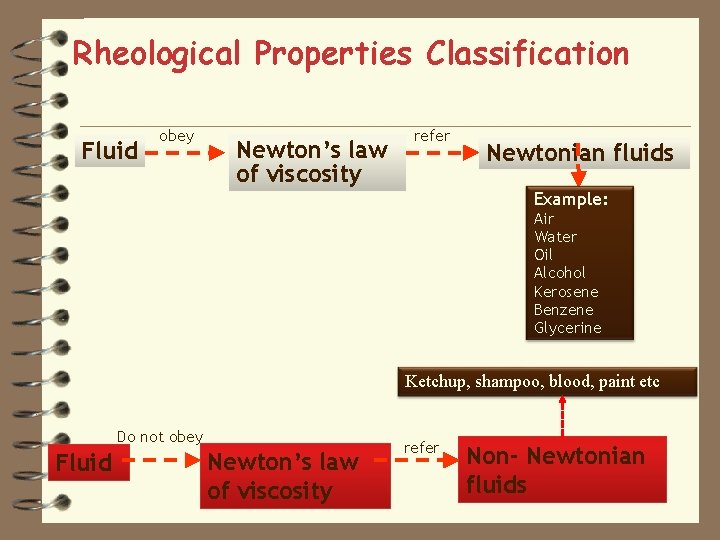
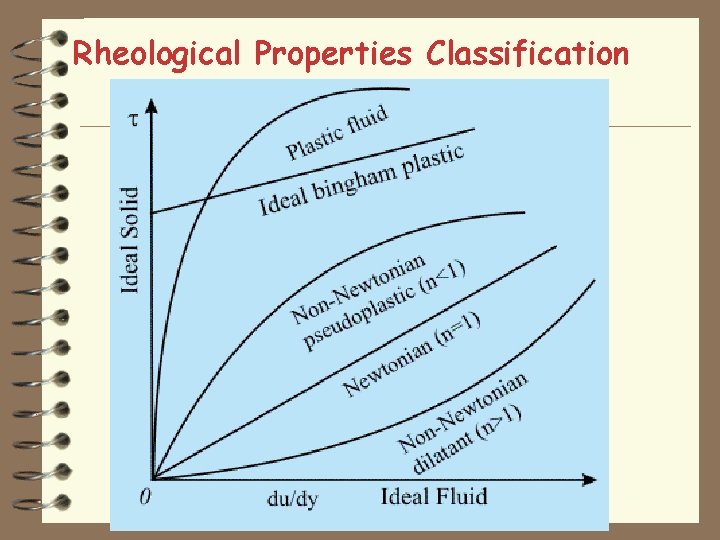
Rheological Properties Classification Fluid obey Newton’s law of viscosity refer Newtonian fluids Example: Air Water Oil Alcohol Kerosene Benzene Glycerine Ketchup, shampoo, blood, paint etc Do not obey Fluid Newton’s law of viscosity refer Non- Newtonian fluids
Rheological Properties Classification
Classification of Fluids 4 Ideal Fluid 4 Real fluids 4 Newtonian fluids 4 Non-Newtonian fluids 4 Ideal plastic fluids
Fluid statics 4 Hydrostatics or Fluid Statics is the study of fluids at rest. 4 It's practical applications are numerous. Some of which are Fluid Manometers, buoyancy measurements, density calculations.
Fluid Elements - Definition: 4 Fluid element 4 - Body Force: 4 Surface Force 4
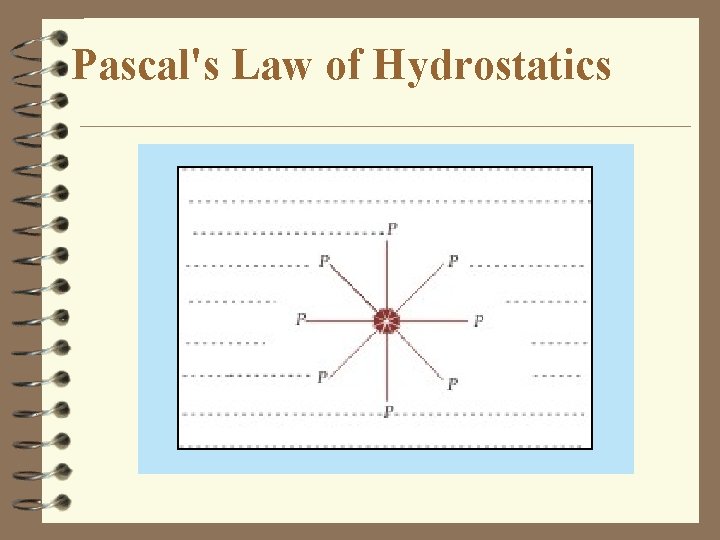
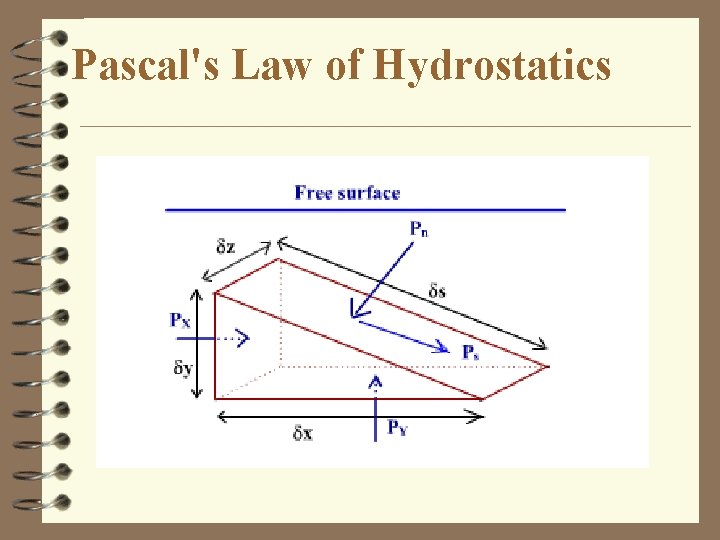
Pascal's Law of Hydrostatics The states that the normal stresses at any point in a fluid element at rest are directed towards the point from all directions and they are of the equal magnitude.
Pascal's Law of Hydrostatics Let us prove this law by considering the equilibrium of a small fluid element shown in Figure below.
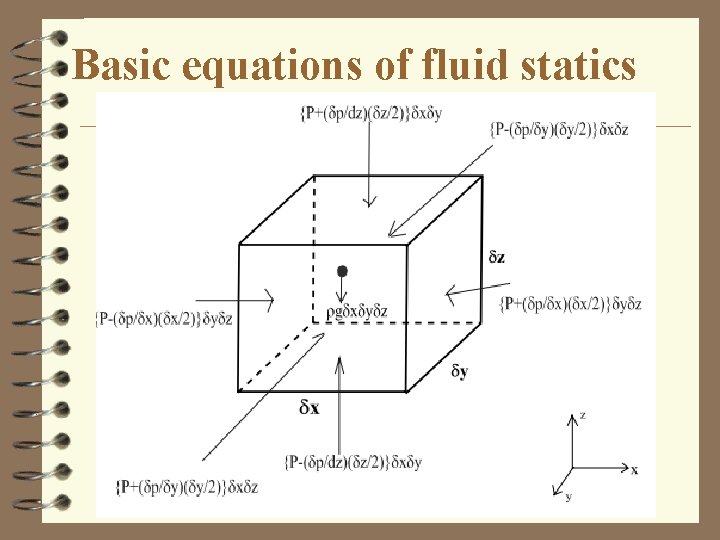
Basic equations of fluid statics