
Transport of Oxygen in Blood and tissue fluids
Transport of Oxygen in Blood and tissue fluids DR AMNA TAHIR
DIFFUSION OF OXYGEN FROM THE ALVEOLI TO THE PULMONARY CAPILLARY BLOOD • PO 2 Of gaseous oxygen in the alveoli = 104 mm Hg • PO 2 Of venous blood entering the pulmonary capillary at its arterial end = 40 mm Hg • Initial pressure difference= 104 -40= 64 mm Hg • PO 2 Of the blood rises to that of alveolar air by the time the blood has moved a third of the distance through the capillary • Uptake of oxygen by the pulmonary blood during exercise • Greater safety factor
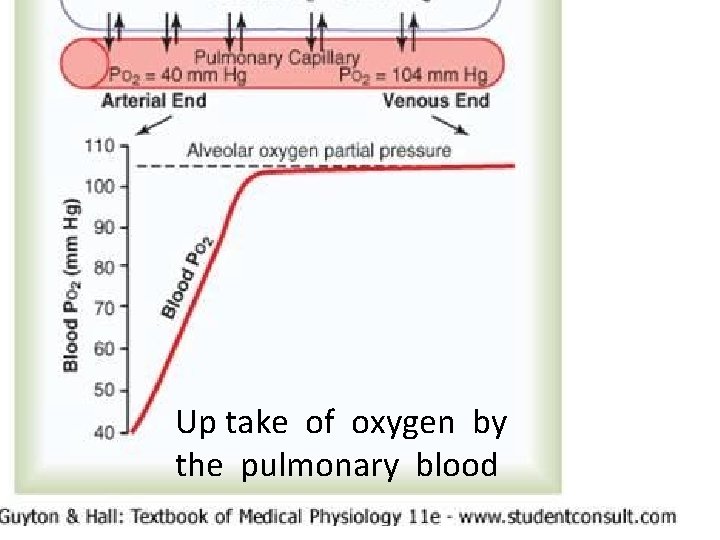
Up take of oxygen by the pulmonary blood

TRANSPORT OF OXYGEN IN THE ARTERIAL BLOOD • 98 % OF the blood that enters the left atrium with PO 2 = 104 mm. Hg • 2% OF the blood has passed the bronchial circulation ( SHUNTED BLOOD) with PO 2 =40 mm. Hg • Venous admixture of blood • PO 2 of the blood pumped by aorta = 95 mm. Hg

DIFFUSION OF OXYGEN FROM THE PERIPHERAL CAPILLARIES INTO THE TISSUE FLUID • PO 2 at the arterial end= 95 mm. Hg • PO 2 in the interstitial fluid that surround the tissue cells= 40 mm. Hg • Tissue PO 2 is determined by 2 factors 1. Rate of oxygen transport to tissues in the blood 2. The rate at which the oxygen is used by the tissues

• • DIFFUSION OF OXYGEN FROM THE PERIPHERAL CAPILLARIES TO THE TISSUE CELLS Intracellular PO 2 ranges 5 -40 mm. Hg Average 23 mm. Hg 1 -3 mm. Hg is required Larger safety factor

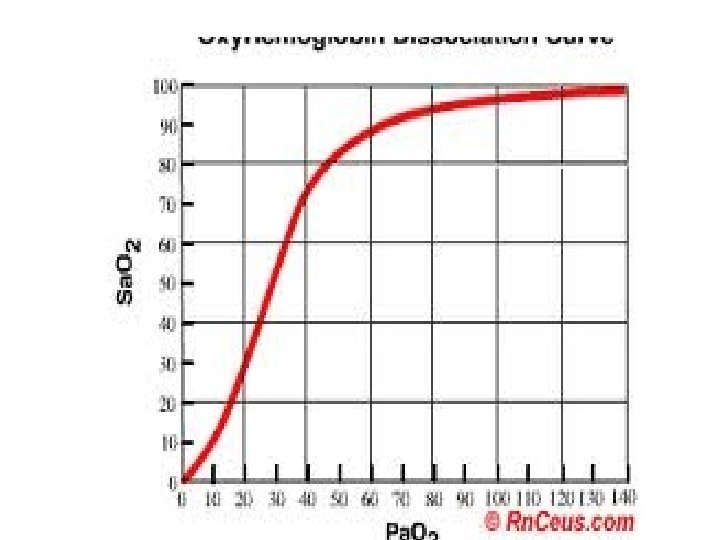
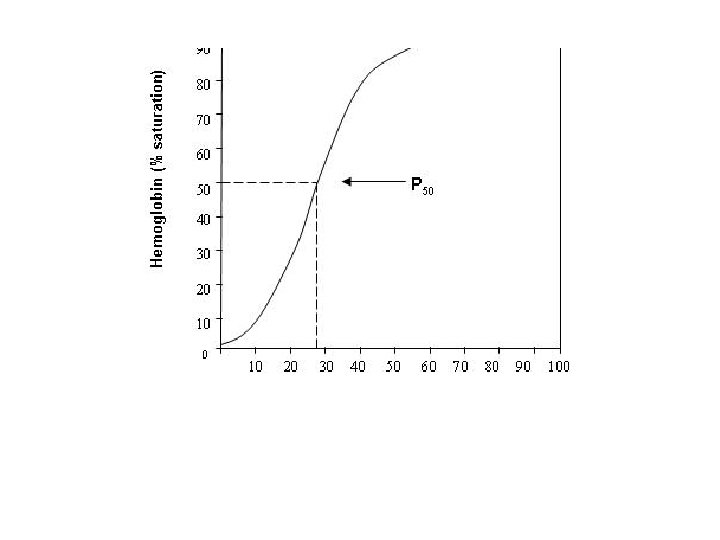
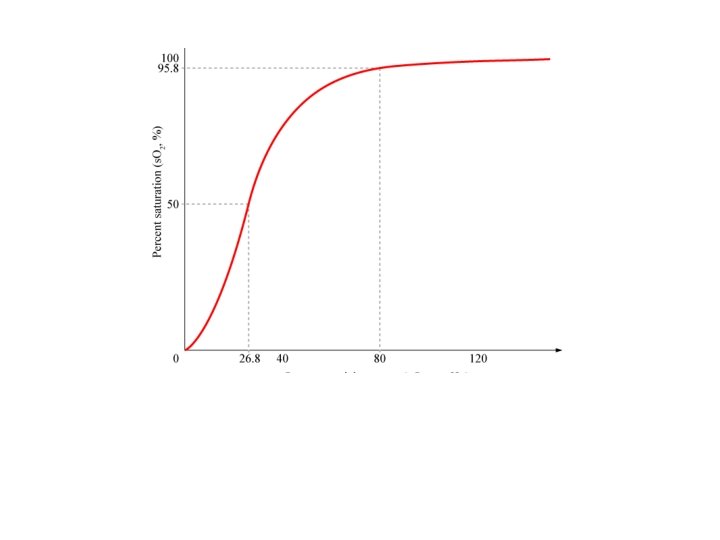
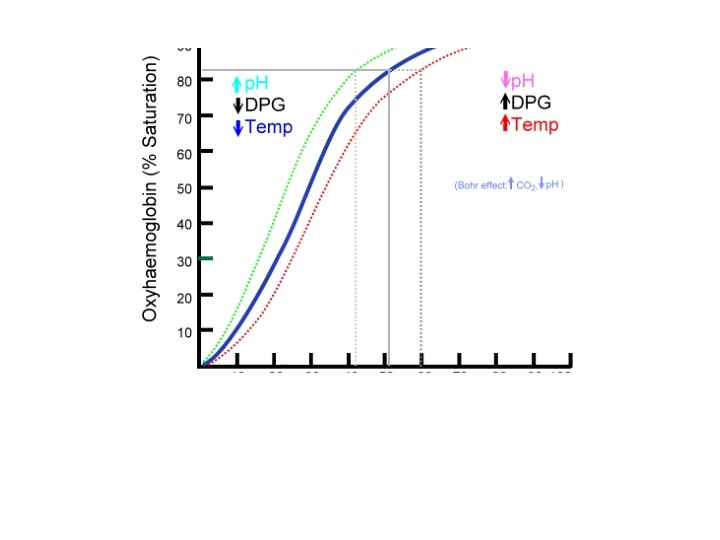
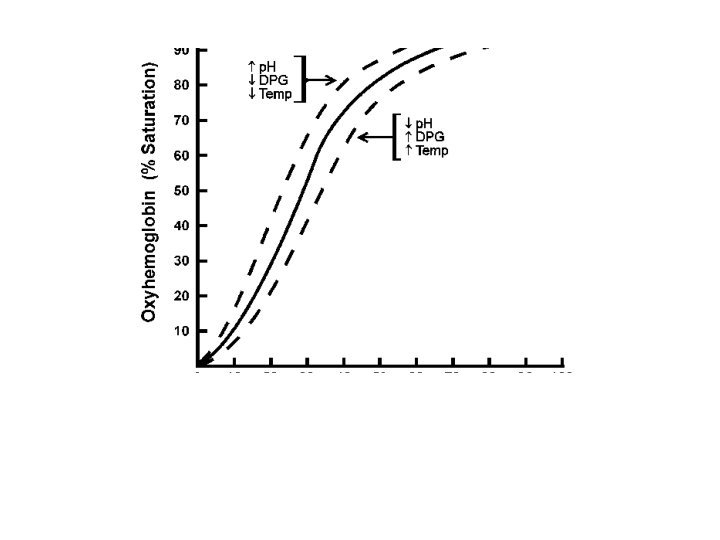
ROLE OF HEMOGLOBIN IN OXYGEN TRANSPORT • 97% is carried in chemical combination with Hb • 3% is transported in dissolved state • Reversible combination of oxygen with Hb • Oxygen-Hemoglobin Dissociation curve
- Slides: 13