
Transport Layer Transportlayer services Multiplexing and demultiplexing Connectionless
- Slides: 19
Transport Layer § § § Transport-layer services Multiplexing and demultiplexing Connectionless transport: UDP Principles of reliable data transfer Connection-oriented transport: TCP § Principles of congestion control § TCP congestion control § Evolution of transport-layer functionality COMPSCI 453 Computer Networks Professor Jim Kurose College of Information and Computer Sciences University of Massachusetts Class textbook: Computer Networking: A Top. Down Approach (8 th ed. ) J. F. Kurose, K. W. Ross Pearson, 2020 http: //gaia. cs. umass. edu/kurose_ross
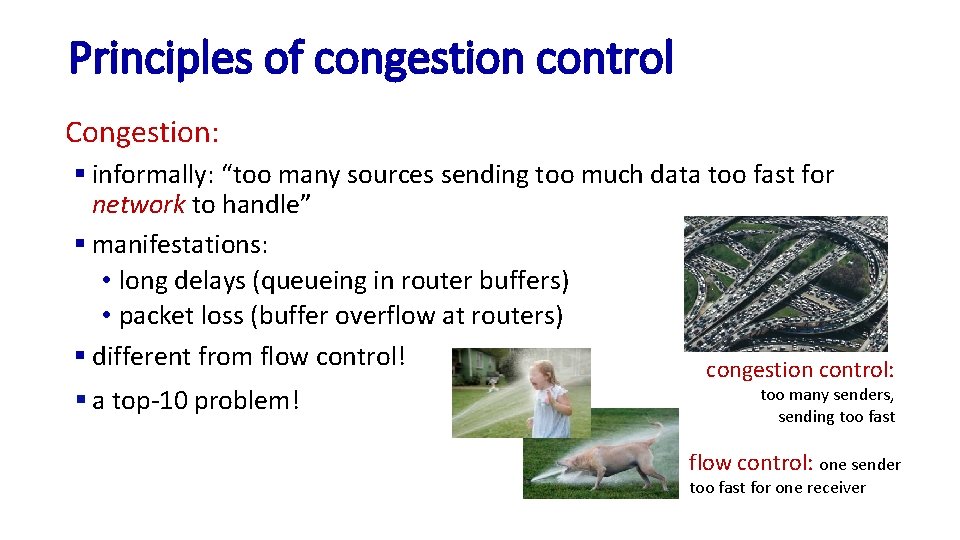
Principles of congestion control Congestion: § informally: “too many sources sending too much data too fast for network to handle” § manifestations: • long delays (queueing in router buffers) • packet loss (buffer overflow at routers) § different from flow control! congestion control: § a top-10 problem! too many senders, sending too fast flow control: one sender too fast for one receiver
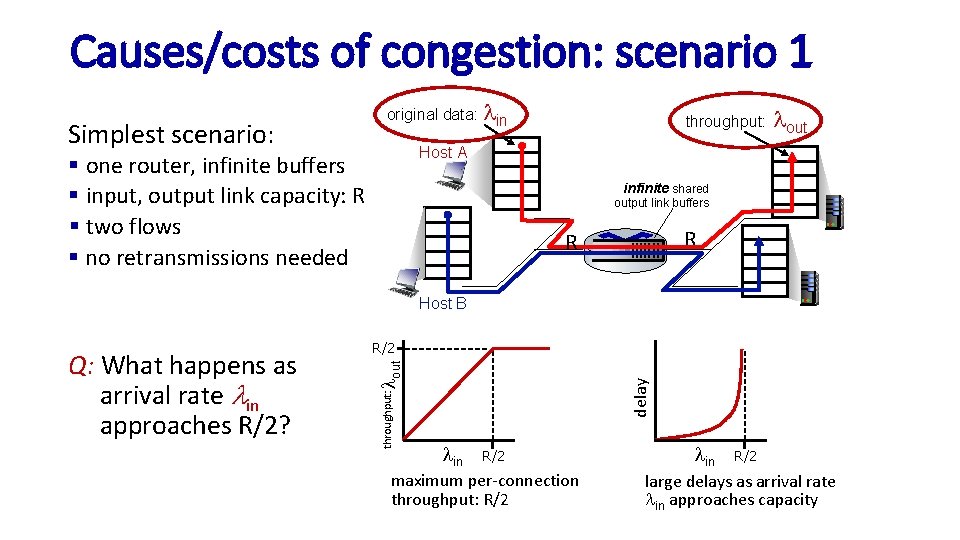
Causes/costs of congestion: scenario 1 Simplest scenario: original data: lin throughput: lout Host A § one router, infinite buffers § input, output link capacity: R § two flows § no retransmissions needed infinite shared output link buffers R R Host B delay lout throughput: Q: What happens as arrival rate lin approaches R/2? R/2 lin R/2 maximum per-connection throughput: R/2 lin R/2 large delays as arrival rate lin approaches capacity
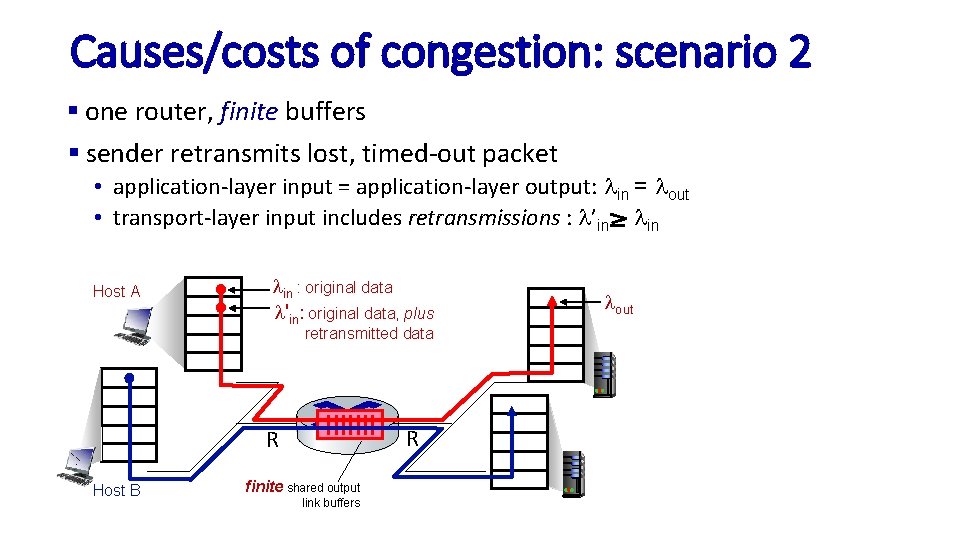
Causes/costs of congestion: scenario 2 § one router, finite buffers § sender retransmits lost, timed-out packet • application-layer input = application-layer output: lin = lout • transport-layer input includes retransmissions : l’in lin Host A lin : original data l'in: original data, plus retransmitted data R R Host B finite shared output link buffers lout
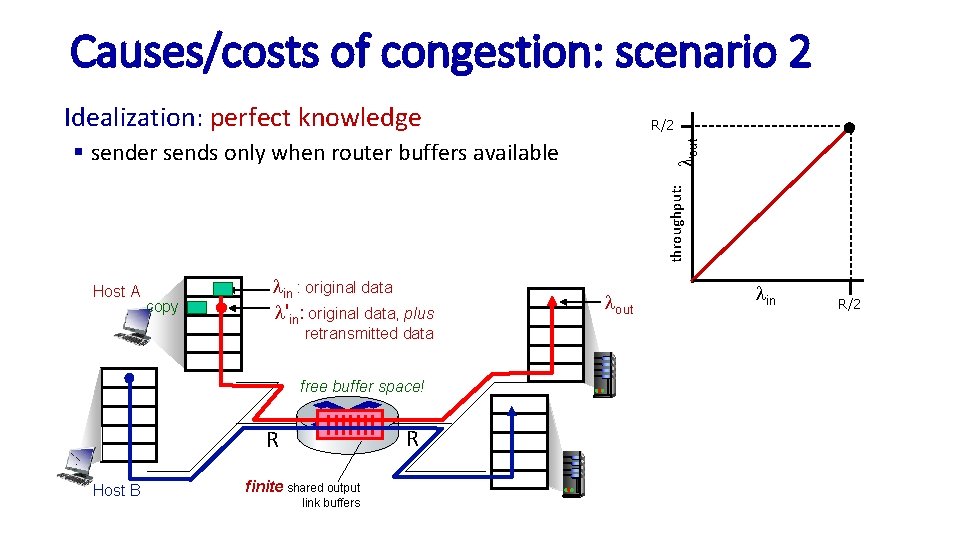
Causes/costs of congestion: scenario 2 Idealization: perfect knowledge R/2 throughput: lout § sender sends only when router buffers available Host A copy lin : original data l'in: original data, plus retransmitted data free buffer space! R R Host B finite shared output link buffers lout lin R/2
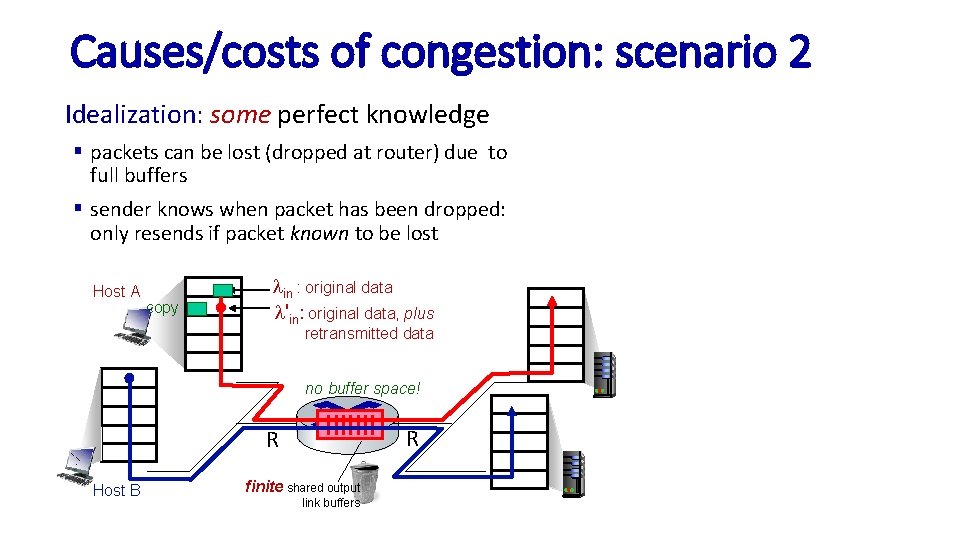
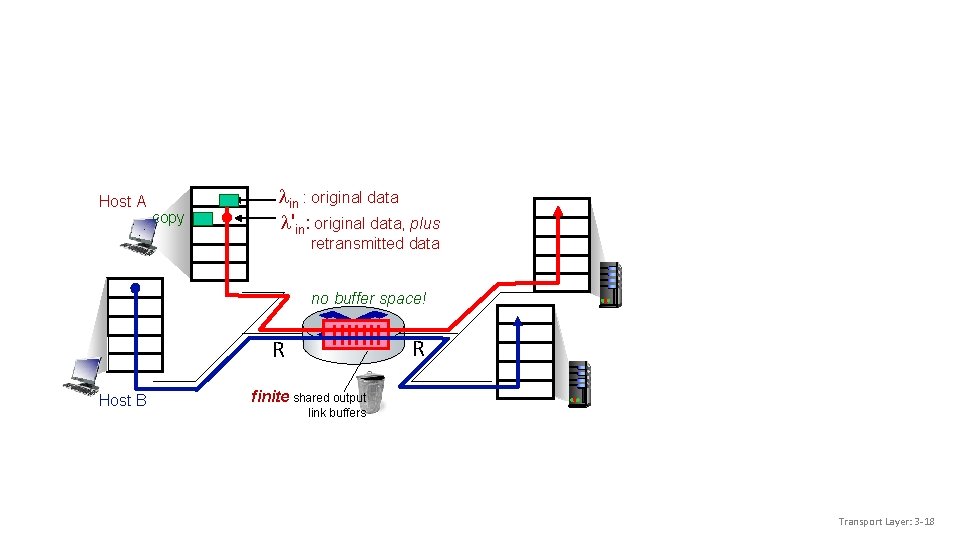
Causes/costs of congestion: scenario 2 Idealization: some perfect knowledge § packets can be lost (dropped at router) due to full buffers § sender knows when packet has been dropped: only resends if packet known to be lost Host A copy lin : original data l'in: original data, plus retransmitted data no buffer space! R R Host B finite shared output link buffers
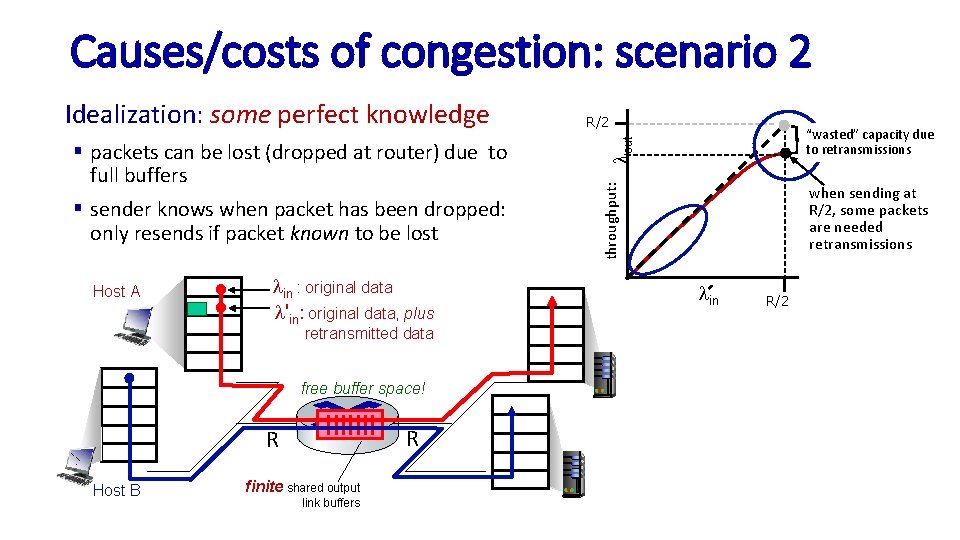
Causes/costs of congestion: scenario 2 § sender knows when packet has been dropped: only resends if packet known to be lost Host A lin : original data l'in: original data, plus retransmitted data free buffer space! R R Host B finite shared output link buffers “wasted” capacity due to retransmissions lout § packets can be lost (dropped at router) due to full buffers R/2 throughput: Idealization: some perfect knowledge when sending at R/2, some packets are needed retransmissions lin R/2
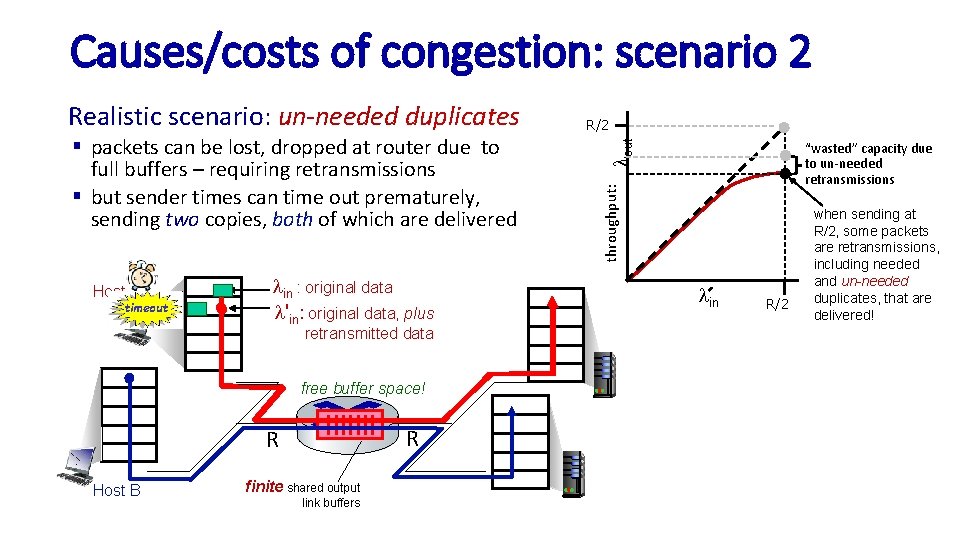
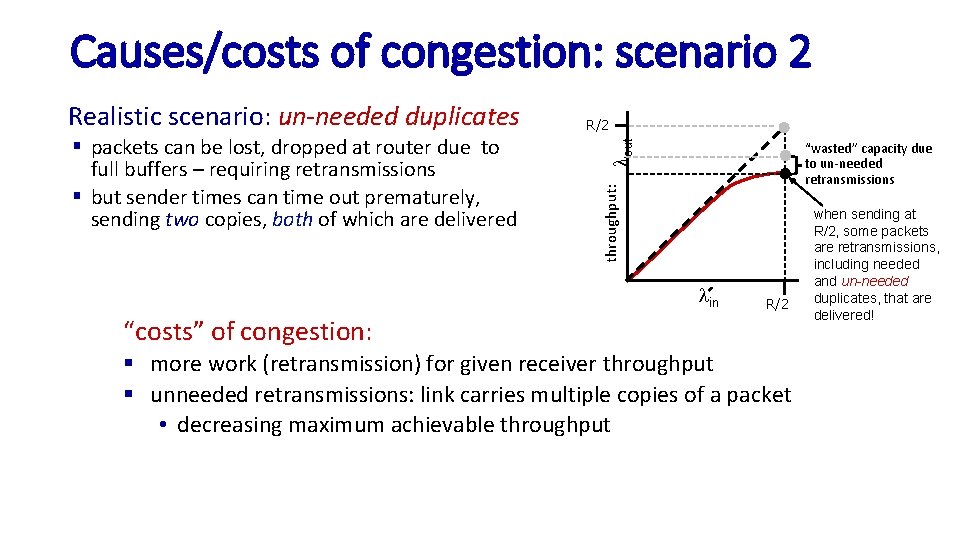
Causes/costs of congestion: scenario 2 Host A timeout copy lin : original data l'in: original data, plus retransmitted data free buffer space! R R Host B finite shared output link buffers lout § packets can be lost, dropped at router due to full buffers – requiring retransmissions § but sender times can time out prematurely, sending two copies, both of which are delivered R/2 “wasted” capacity due to un-needed retransmissions throughput: Realistic scenario: un-needed duplicates lin R/2 when sending at R/2, some packets are retransmissions, including needed and un-needed duplicates, that are delivered!
Causes/costs of congestion: scenario 2 lout § packets can be lost, dropped at router due to full buffers – requiring retransmissions § but sender times can time out prematurely, sending two copies, both of which are delivered R/2 “wasted” capacity due to un-needed retransmissions throughput: Realistic scenario: un-needed duplicates lin R/2 “costs” of congestion: § more work (retransmission) for given receiver throughput § unneeded retransmissions: link carries multiple copies of a packet • decreasing maximum achievable throughput when sending at R/2, some packets are retransmissions, including needed and un-needed duplicates, that are delivered!
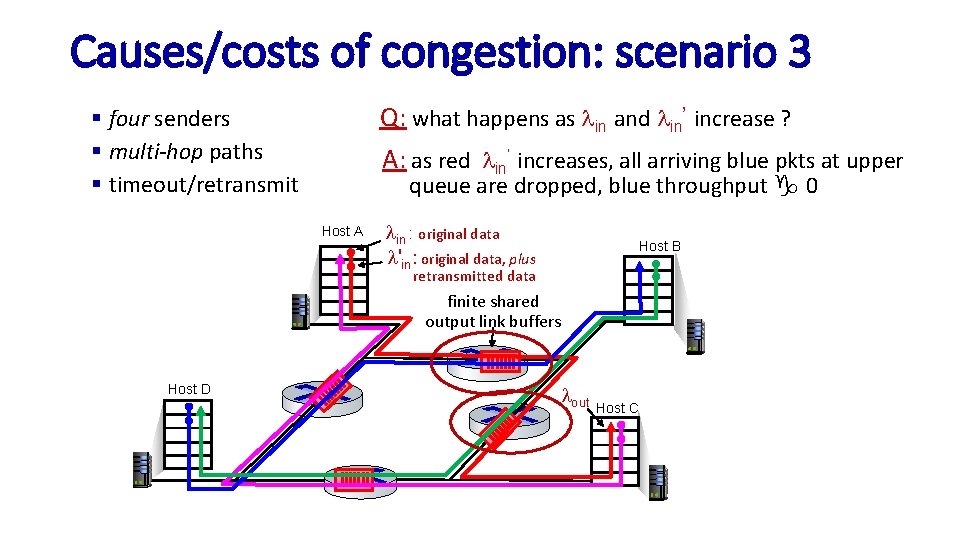
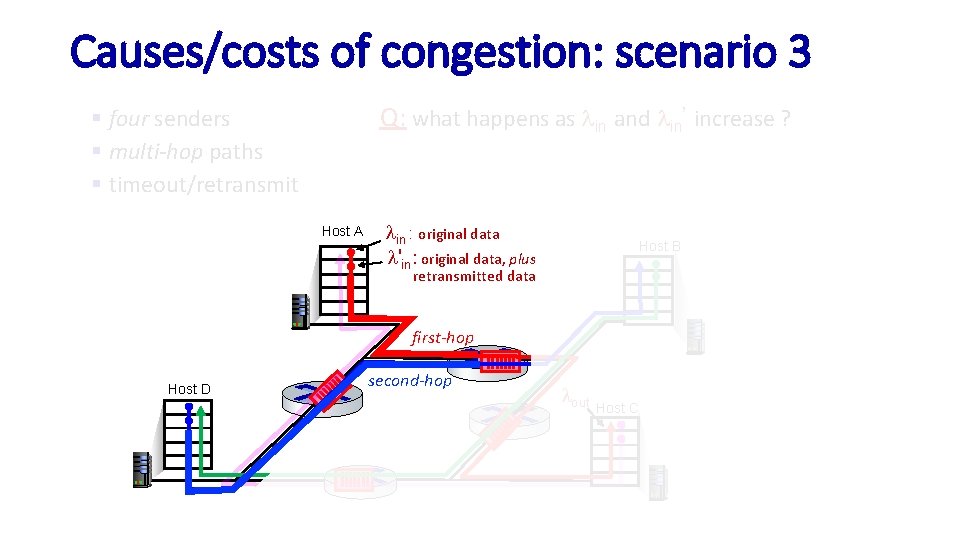
Causes/costs of congestion: scenario 3 Q: what happens as lin and lin’ increase ? A: as red lin’ increases, all arriving blue pkts at upper § four senders § multi-hop paths § timeout/retransmit queue are dropped, blue throughput g 0 Host A lin : original data l'in: original data, plus Host B retransmitted data finite shared output link buffers Host D lout Host C
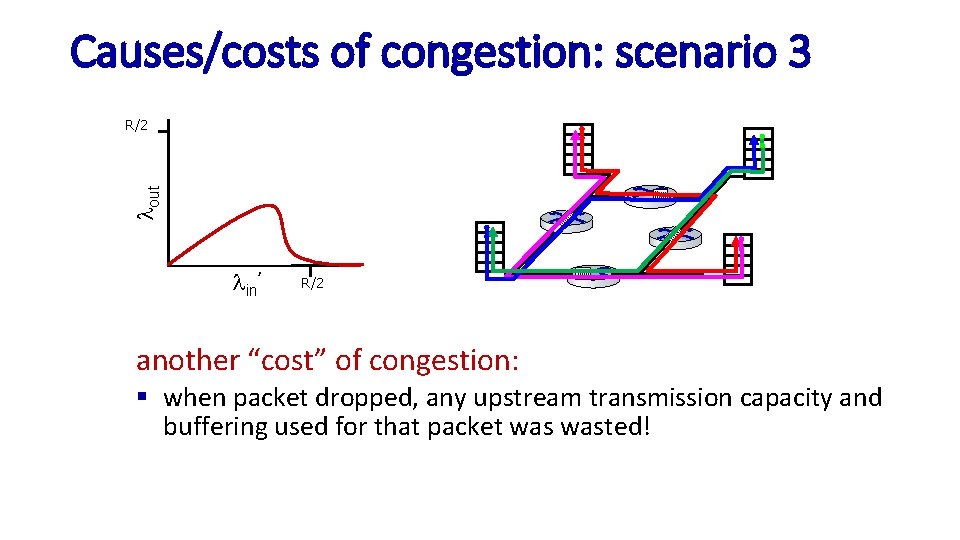
Causes/costs of congestion: scenario 3 lout R/2 lin’ R/2 another “cost” of congestion: § when packet dropped, any upstream transmission capacity and buffering used for that packet wasted!
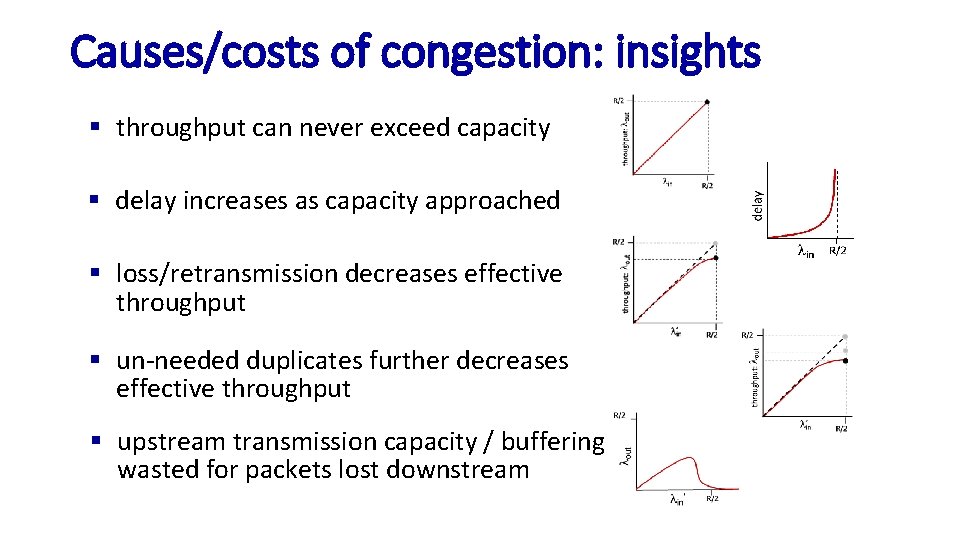
Causes/costs of congestion: insights § throughput can never exceed capacity § delay increases as capacity approached § loss/retransmission decreases effective throughput § un-needed duplicates further decreases effective throughput § upstream transmission capacity / buffering wasted for packets lost downstream
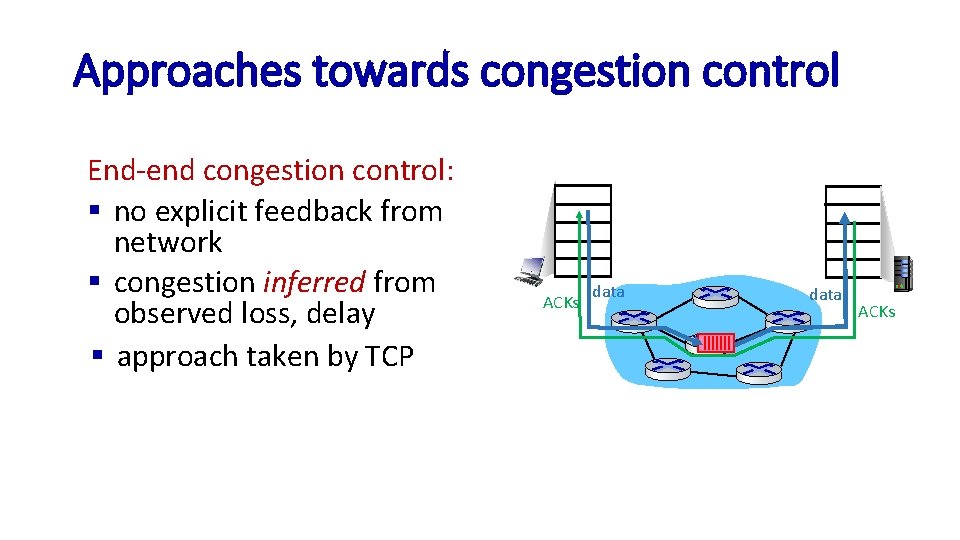
Approaches towards congestion control End-end congestion control: § no explicit feedback from network § congestion inferred from observed loss, delay § approach taken by TCP ACKs data ACKs
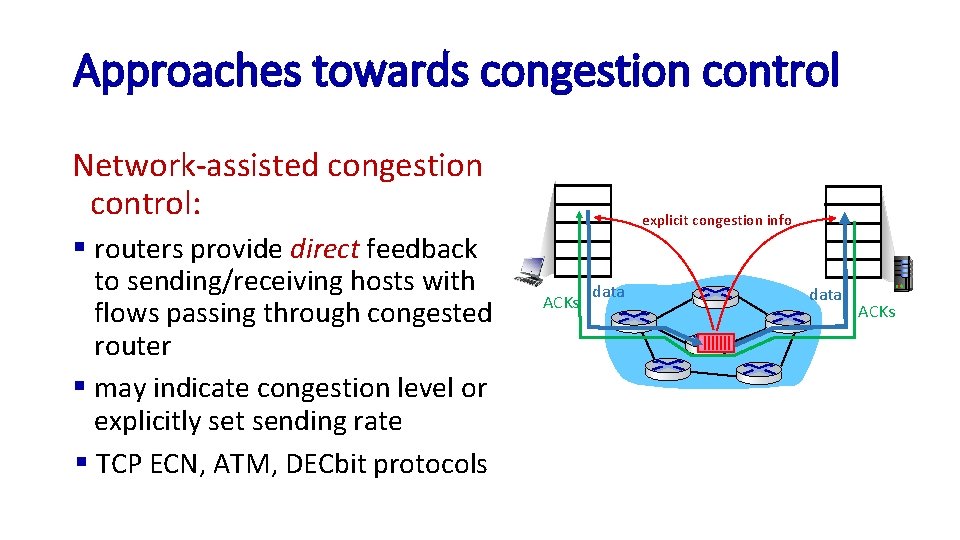
Approaches towards congestion control Network-assisted congestion control: § routers provide direct feedback to sending/receiving hosts with flows passing through congested router § may indicate congestion level or explicitly set sending rate § TCP ECN, ATM, DECbit protocols explicit congestion info ACKs data ACKs
Transport Layer § § § Transport-layer services Multiplexing and demultiplexing Connectionless transport: UDP Principles of reliable data transfer Connection-oriented transport: TCP § Principles of congestion control § TCP congestion control § Evolution of transport-layer functionality Video: 2020, J. F. Kurose, All Rights Reserved Powerpoint: 1996 -2020, J. F. Kurose, K. W. Ross, All Rights Reserved COMPSCI 453 Computer Networks Professor Jim Kurose College of Information and Computer Sciences University of Massachusetts Class textbook: Computer Networking: A Top. Down Approach (8 th ed. ) J. F. Kurose, K. W. Ross Pearson, 2020 http: //gaia. cs. umass. edu/kurose_ross
Backup
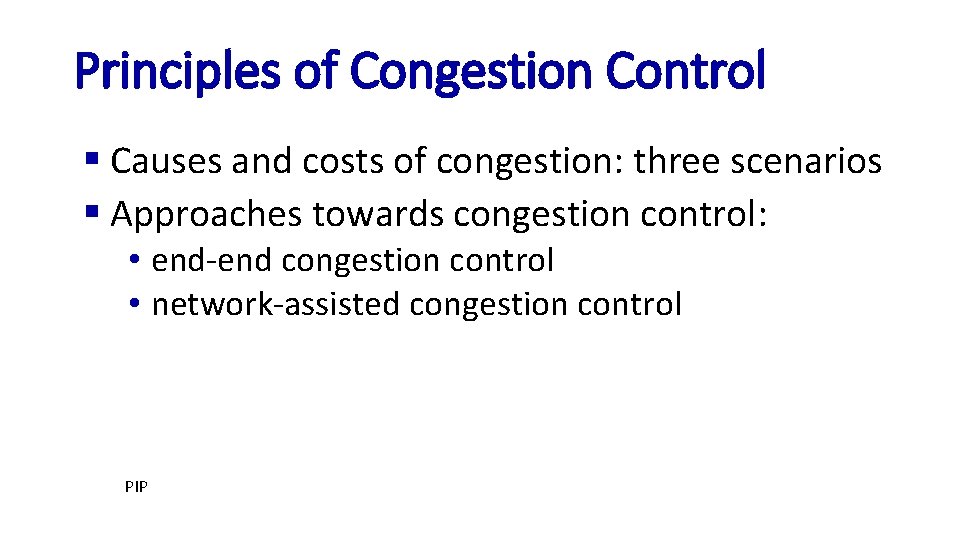
Principles of Congestion Control § Causes and costs of congestion: three scenarios § Approaches towards congestion control: • end-end congestion control • network-assisted congestion control PIP
Host A copy lin : original data l'in: original data, plus retransmitted data no buffer space! R R Host B finite shared output link buffers Transport Layer: 3 -18
Causes/costs of congestion: scenario 3 Q: what happens as lin and lin’ increase ? § four senders § multi-hop paths § timeout/retransmit Host A lin : original data l'in: original data, plus Host B retransmitted data first-hop Host D second-hop lout Host C