
Transport into and out of cells Structure of
- Slides: 21
Transport into and out of cells
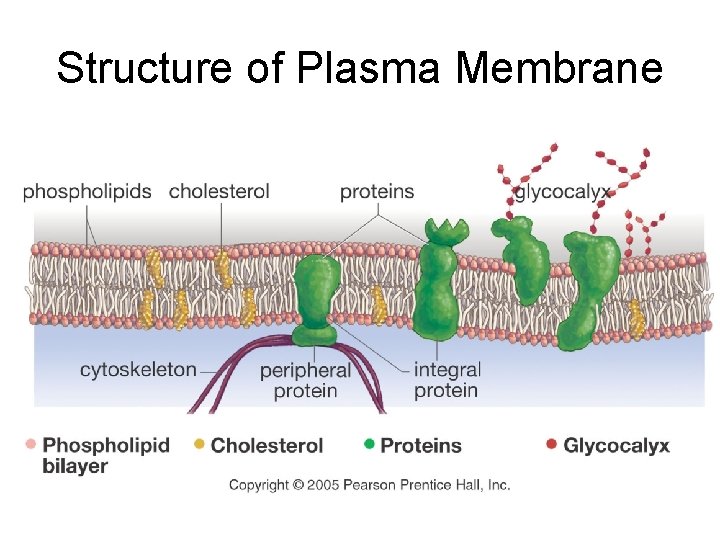
Structure of Plasma Membrane
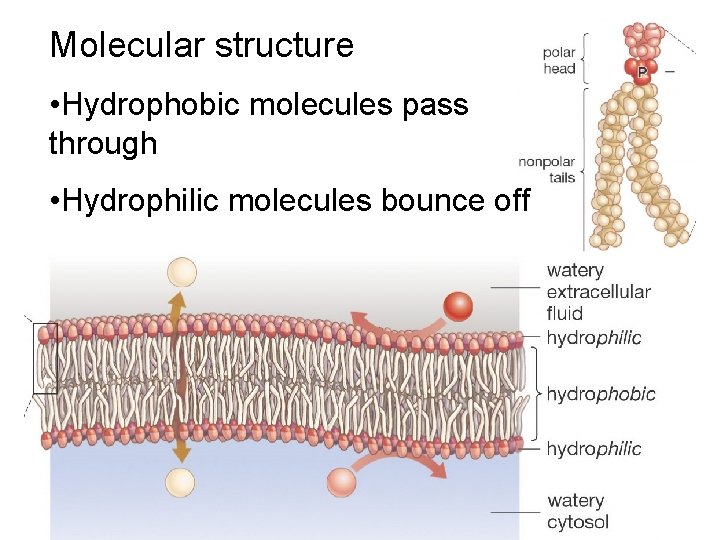
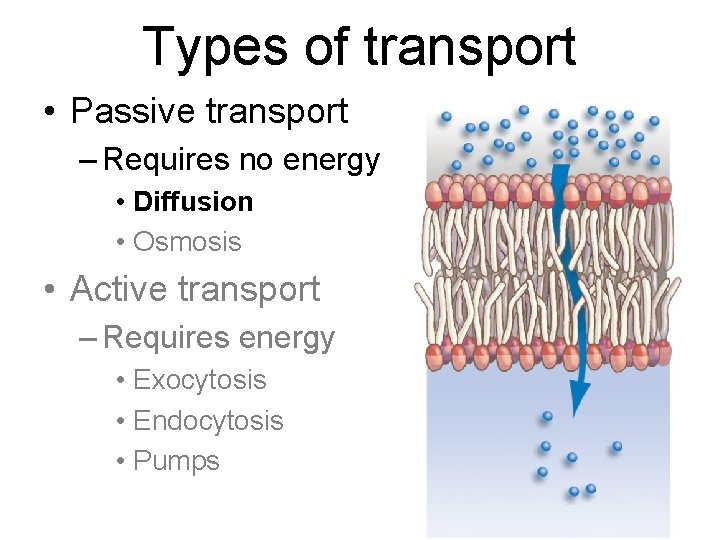
Molecular structure • Hydrophobic molecules pass through • Hydrophilic molecules bounce off
Types of transport • Passive transport – Requires no energy • Diffusion • Facilitated Diffusion • Osmosis • Active transport – Requires energy • Exocytosis • Endocytosis • Pumps
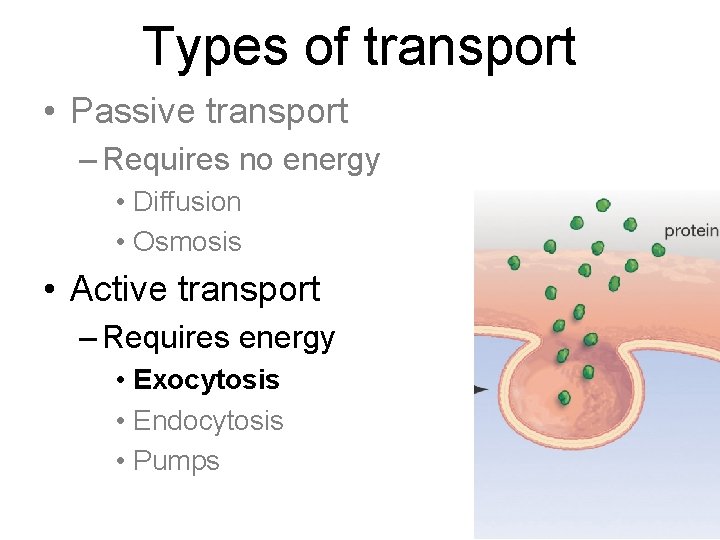
Types of transport • Passive transport – Requires no energy • Diffusion • Osmosis • Active transport – Requires energy • Exocytosis • Endocytosis • Pumps
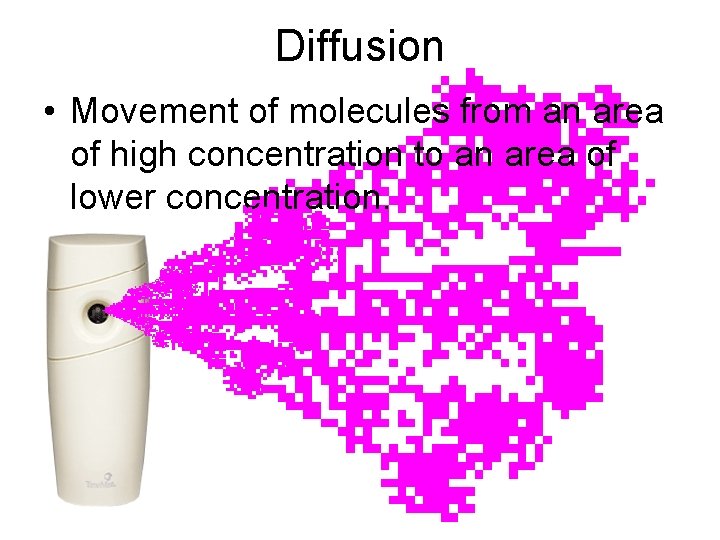
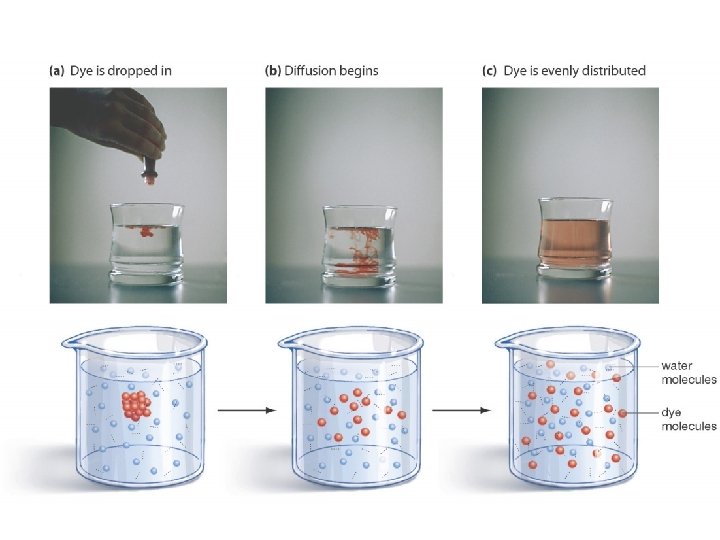
Diffusion • Movement of molecules from an area of high concentration to an area of lower concentration.
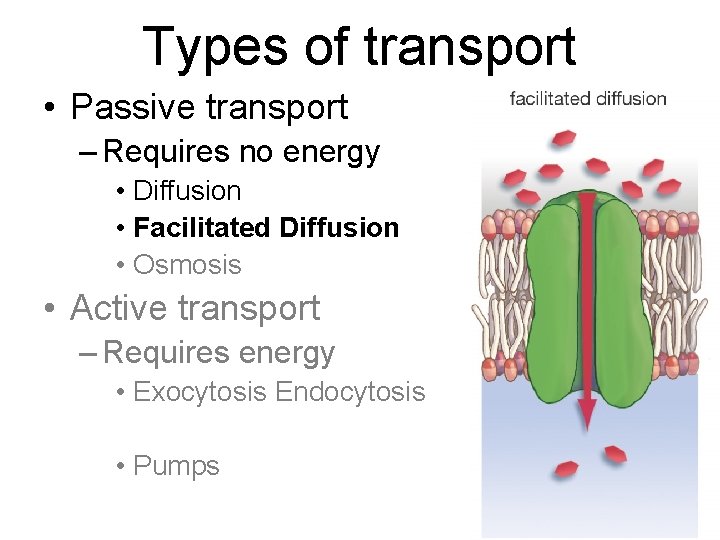
Types of transport • Passive transport – Requires no energy • Diffusion • Facilitated Diffusion • Osmosis • Active transport – Requires energy • Exocytosis Endocytosis • Pumps
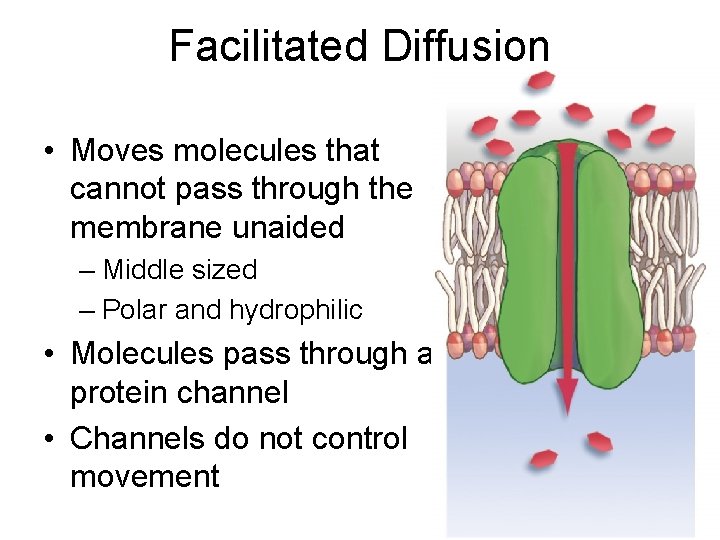
Facilitated Diffusion • Moves molecules that cannot pass through the membrane unaided – Middle sized – Polar and hydrophilic • Molecules pass through a protein channel • Channels do not control movement
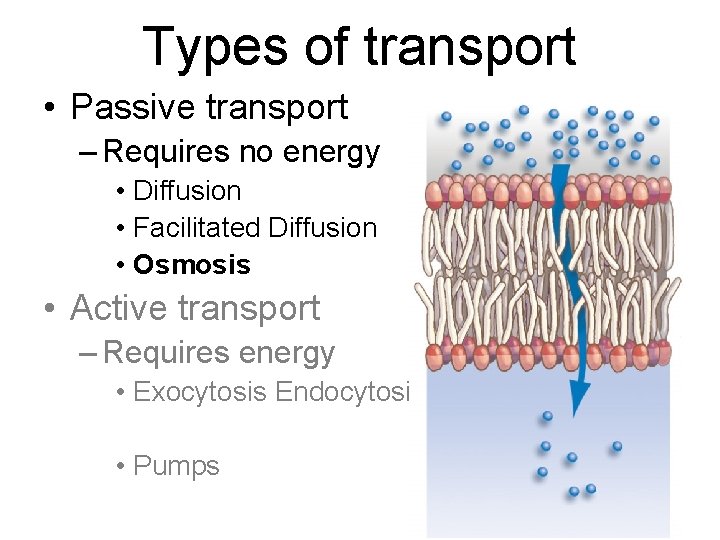
Types of transport • Passive transport – Requires no energy • Diffusion • Facilitated Diffusion • Osmosis • Active transport – Requires energy • Exocytosis Endocytosis • Pumps
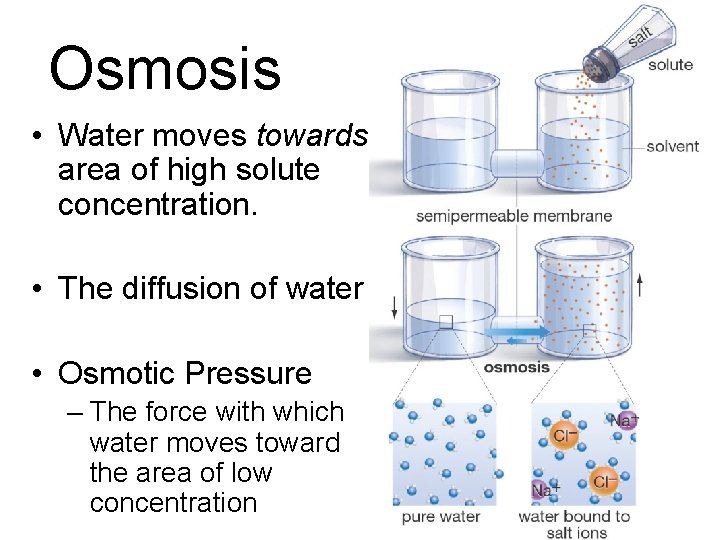
Osmosis • Water moves towards area of high solute concentration. • The diffusion of water • Osmotic Pressure – The force with which water moves toward the area of low concentration
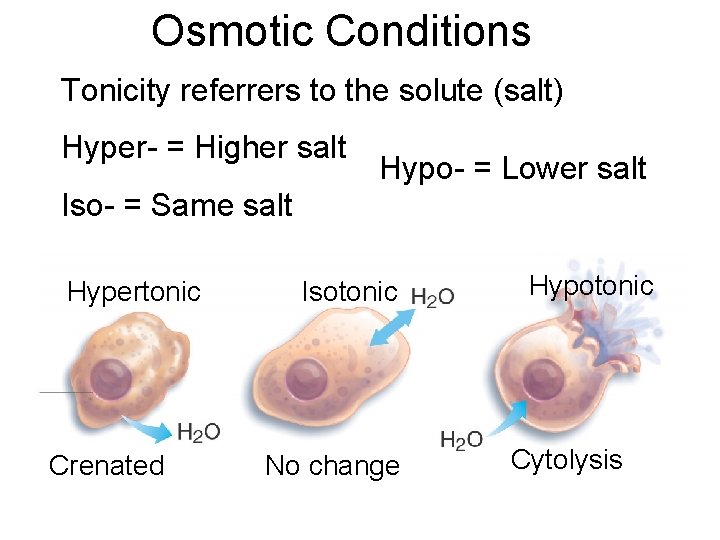
Osmotic Conditions Tonicity referrers to the solute (salt) Hyper- = Higher salt Hypo- = Lower salt Iso- = Same salt Hypertonic Crenated Isotonic No change Hypotonic Cytolysis
Types of transport • Passive transport – Requires no energy • Diffusion • Osmosis • Active transport – Requires energy • Exocytosis • Endocytosis • Pumps
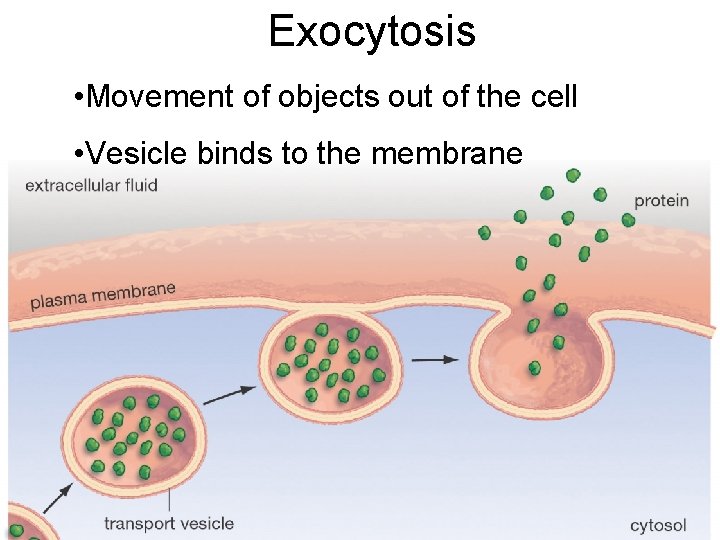
Exocytosis • Movement of objects out of the cell • Vesicle binds to the membrane
Types of transport • Passive transport – Requires no energy • Diffusion • Osmosis • Active transport – Requires energy • Exocytosis • Endocytosis • Pumps
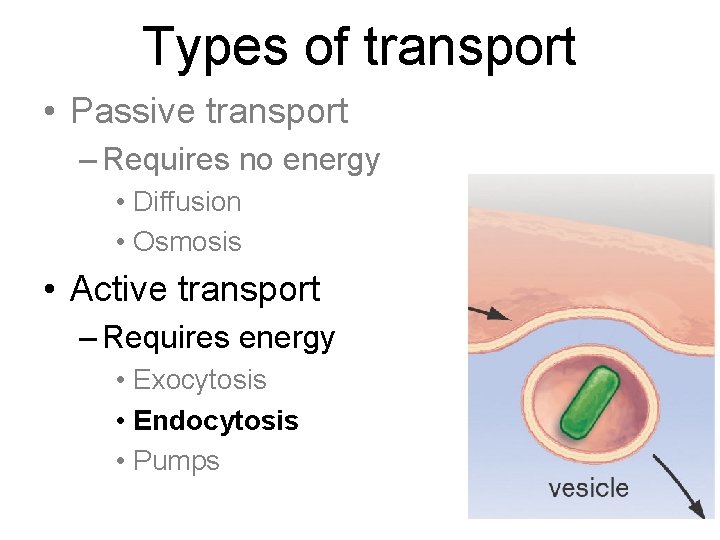
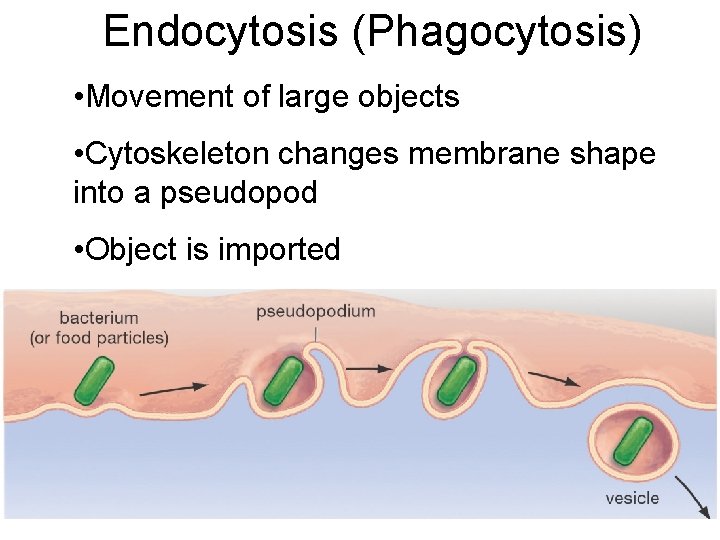
Endocytosis (Phagocytosis) • Movement of large objects • Cytoskeleton changes membrane shape into a pseudopod • Object is imported
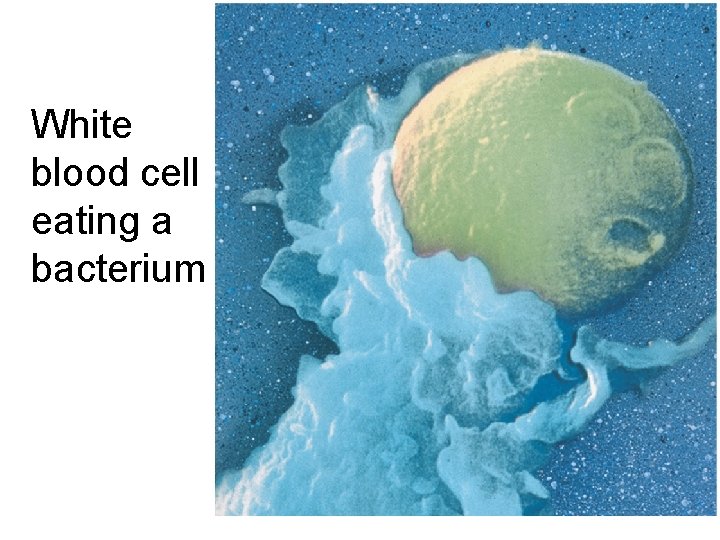
White blood cell eating a bacterium
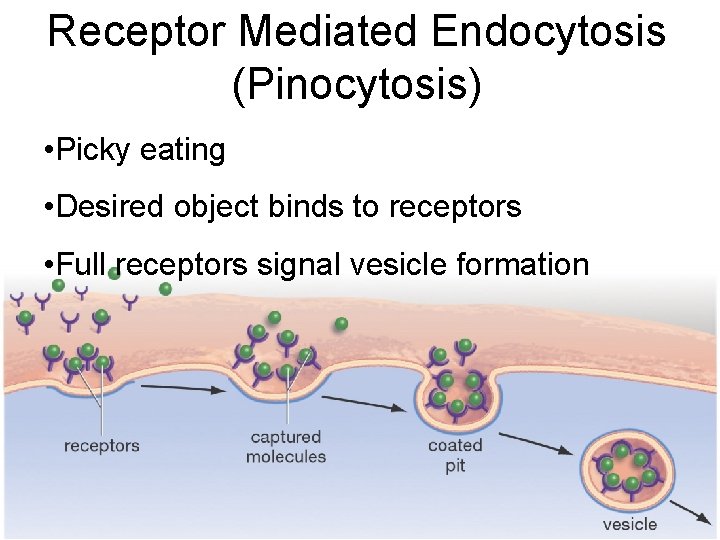
Receptor Mediated Endocytosis (Pinocytosis) • Picky eating • Desired object binds to receptors • Full receptors signal vesicle formation
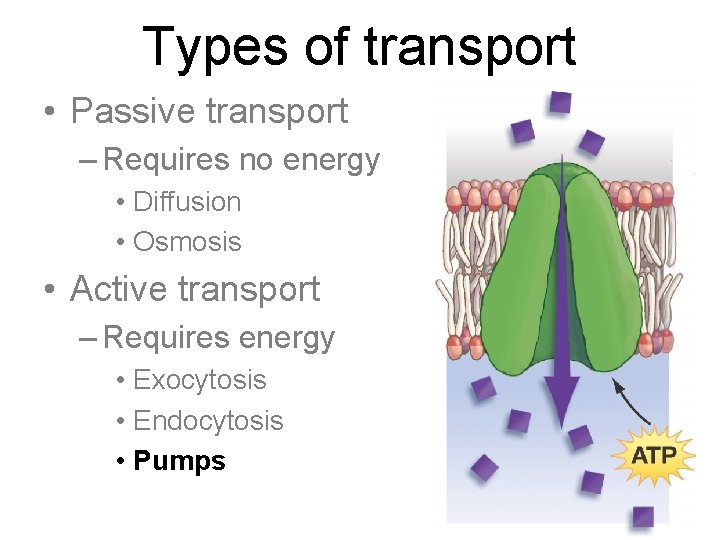
Types of transport • Passive transport – Requires no energy • Diffusion • Osmosis • Active transport – Requires energy • Exocytosis • Endocytosis • Pumps
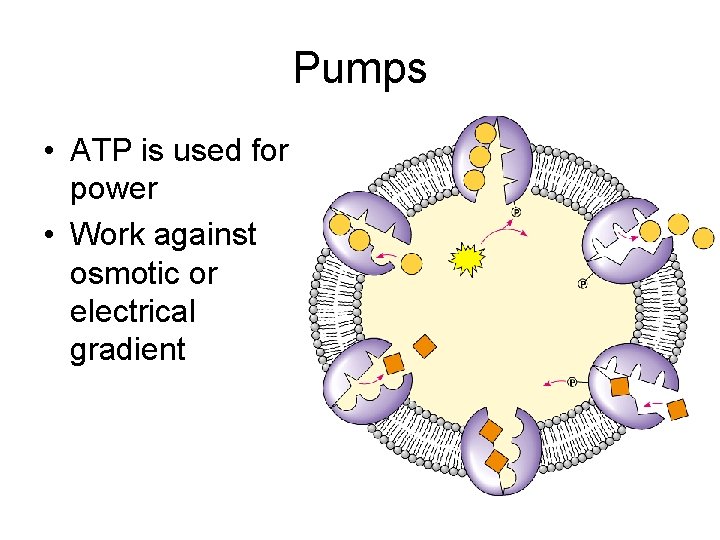
Pumps • ATP is used for power • Work against osmotic or electrical gradient