
Transport in Living Organisms Importance of a transport

- Slides: 23
Transport in Living Organisms
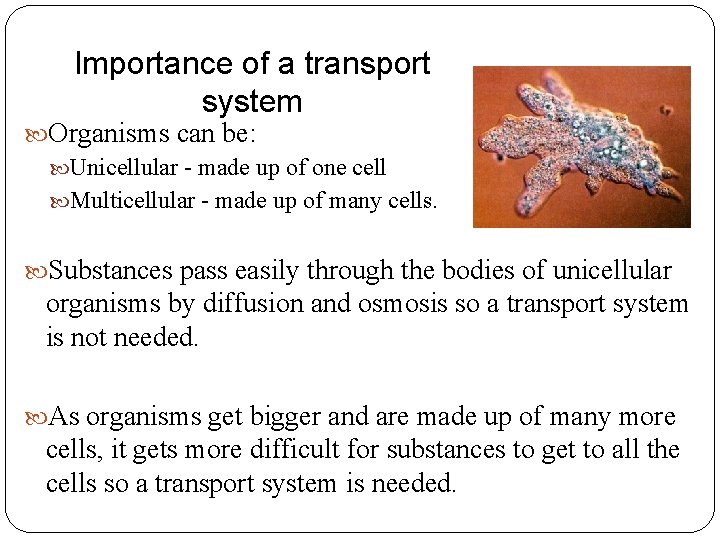
Importance of a transport system Organisms can be: Unicellular - made up of one cell Multicellular - made up of many cells. Substances pass easily through the bodies of unicellular organisms by diffusion and osmosis so a transport system is not needed. As organisms get bigger and are made up of many more cells, it gets more difficult for substances to get to all the cells so a transport system is needed.
The ratio of SUPPLY (of substances) compared to the DEMAND (amount of substance needed by the organism) is called the SURFACE AREA: VOLUME ratio. Unicellular organisms have a high SA: V ratio Multicellular organisms have a low SA: V ratio
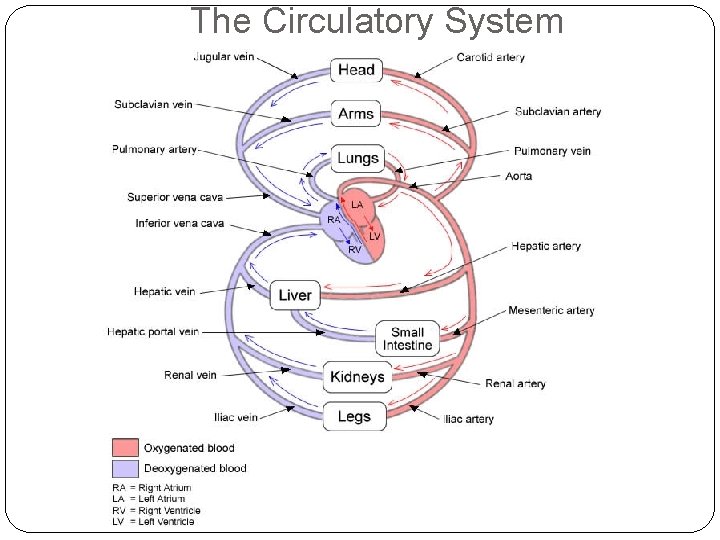
The Circulatory System
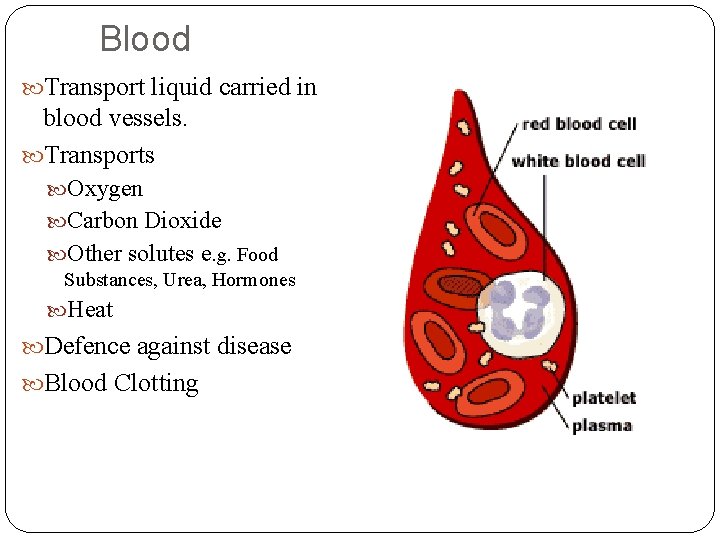
Blood Transport liquid carried in blood vessels. Transports Oxygen Carbon Dioxide Other solutes e. g. Food Substances, Urea, Hormones Heat Defence against disease Blood Clotting
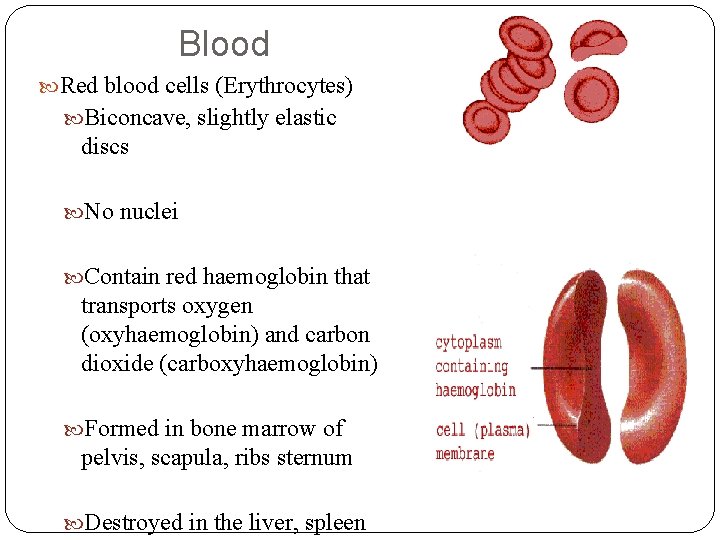
Blood Red blood cells (Erythrocytes) Biconcave, slightly elastic discs No nuclei Contain red haemoglobin that transports oxygen (oxyhaemoglobin) and carbon dioxide (carboxyhaemoglobin) Formed in bone marrow of pelvis, scapula, ribs sternum Destroyed in the liver, spleen
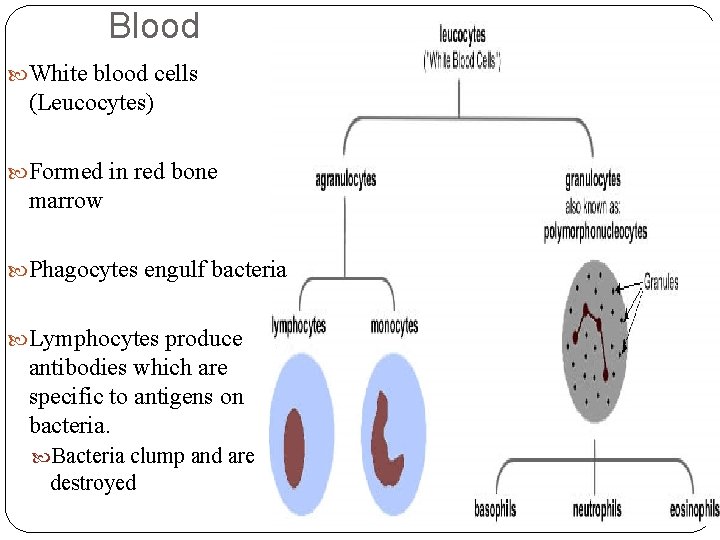
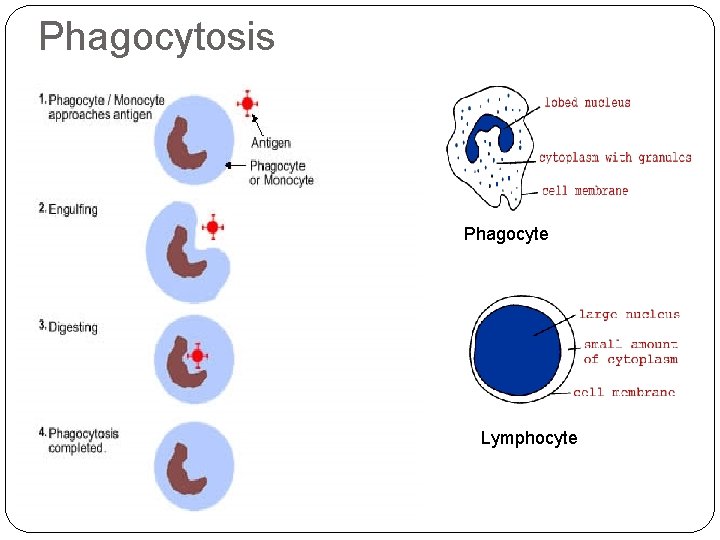
Blood White blood cells (Leucocytes) Formed in red bone marrow Phagocytes engulf bacteria Lymphocytes produce antibodies which are specific to antigens on bacteria. Bacteria clump and are destroyed
Phagocytosis Phagocyte Lymphocyte
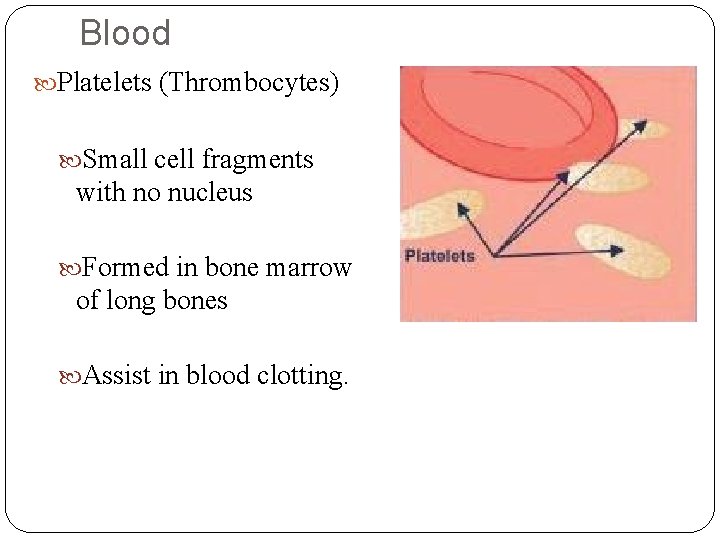
Blood Platelets (Thrombocytes) Small cell fragments with no nucleus Formed in bone marrow of long bones Assist in blood clotting.
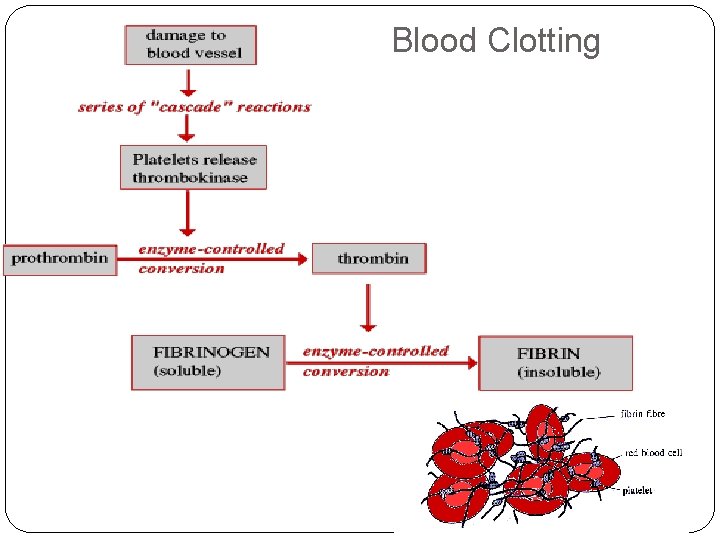
Blood Clotting
Blood Plasma a watery liquid Contains : o Water o Nutrients o Proteins (albumin and globulin) o Gases (Carbon dioxide) o Hormones o Waste o Heat o Blood cells Transports substance from where they are made or enter the body to their destination.
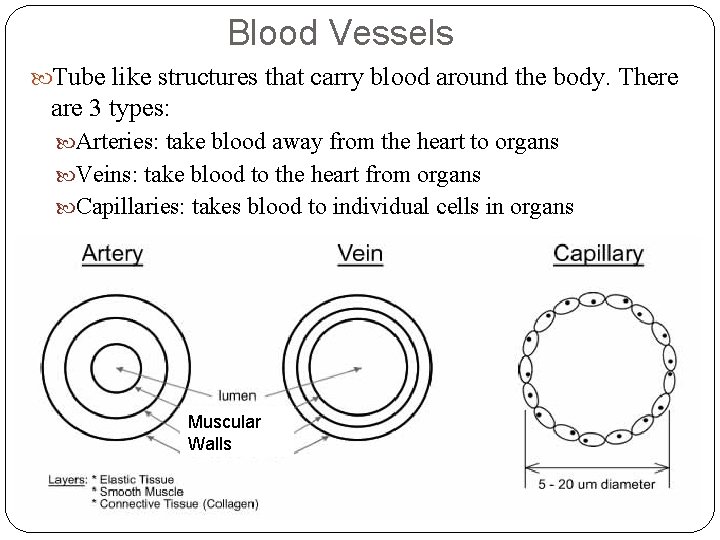
Blood Vessels Tube like structures that carry blood around the body. There are 3 types: Arteries: take blood away from the heart to organs Veins: take blood to the heart from organs Capillaries: takes blood to individual cells in organs Muscular Walls
Arteries Receive blood at high pressure from the heart Thick muscular walls withstand pulsing blood at high pressure Maintain the blood pressure to all parts of the body Carry oxygenated blood (except pulmonary artery) Veins Return blood at low pressure to the heart from the tissues Wide lumens reduce resistance of blood flow Reduced pressure and smooth blood flow allow for thin walls One way flow is maintained by pocket valves Carry deoxygenated blood (except pulmonary vein)
Capillaries Smallest vessels Smooth blood flow Blood becomes deoxygenated along length of capillaries Exchange materials between the blood and the cells through their walls Walls are only one cell thick Permeable to small particles eg. Molecules of gas, nutrients and waste. Capillaries branch repeatedly to form a network within tissues
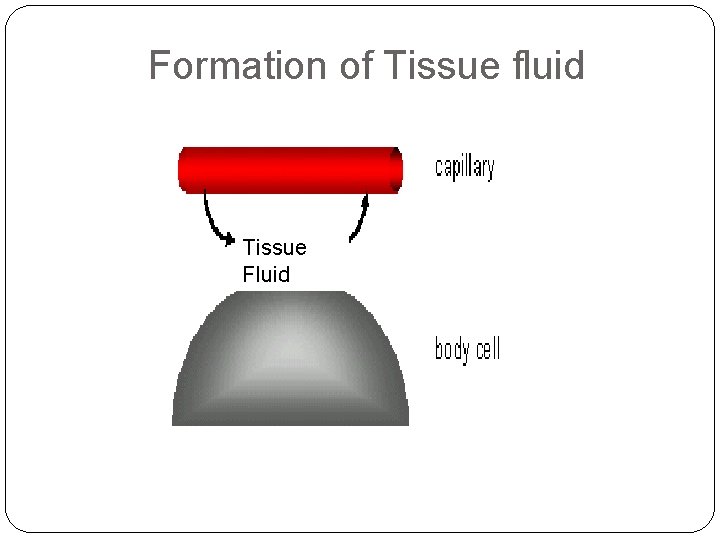
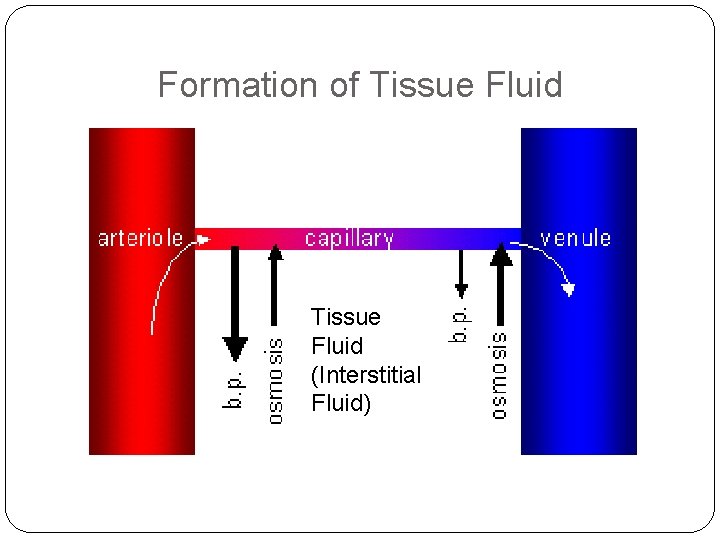
Lymphatic System �A system of thin tubes that run throughout the body �Carries a colourless liquid called ‘lymph’ �circulates around body tissues and contains a high number of lymphocytes (WBC) and plasma that leak out of the capillaries (Tissue fluid). �drains into the lymph vessels. �Lymphatic system eventually rejoins the circulatory system and its contents are returned
Formation of Tissue fluid Tissue Fluid
Formation of Tissue Fluid (Interstitial Fluid)
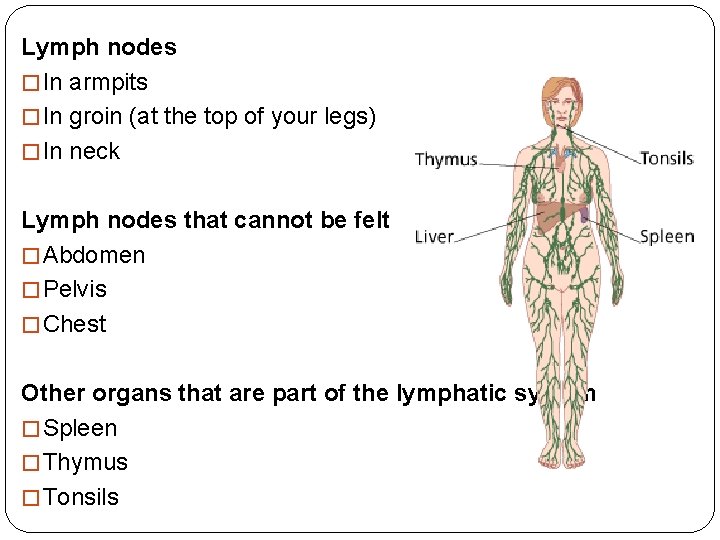
Lymph nodes �In armpits �In groin (at the top of your legs) �In neck Lymph nodes that cannot be felt �Abdomen �Pelvis �Chest Other organs that are part of the lymphatic system �Spleen �Thymus �Tonsils
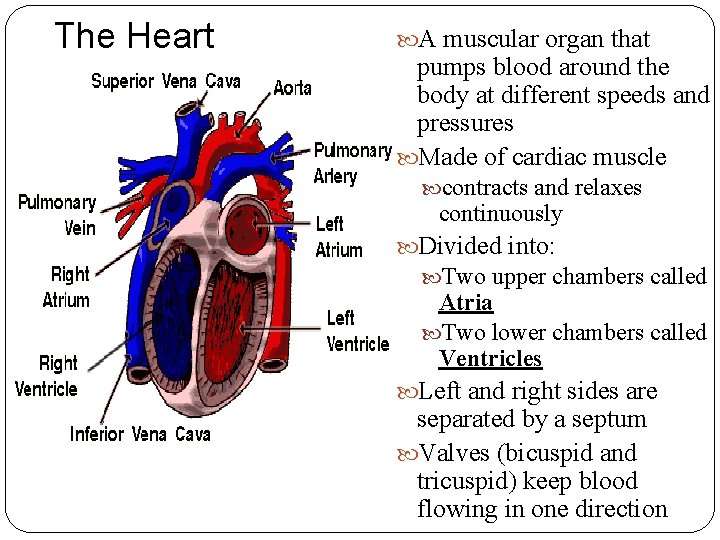
The Heart A muscular organ that pumps blood around the body at different speeds and pressures Made of cardiac muscle contracts and relaxes continuously Divided into: Two upper chambers called Atria Two lower chambers called Ventricles Left and right sides are separated by a septum Valves (bicuspid and tricuspid) keep blood flowing in one direction
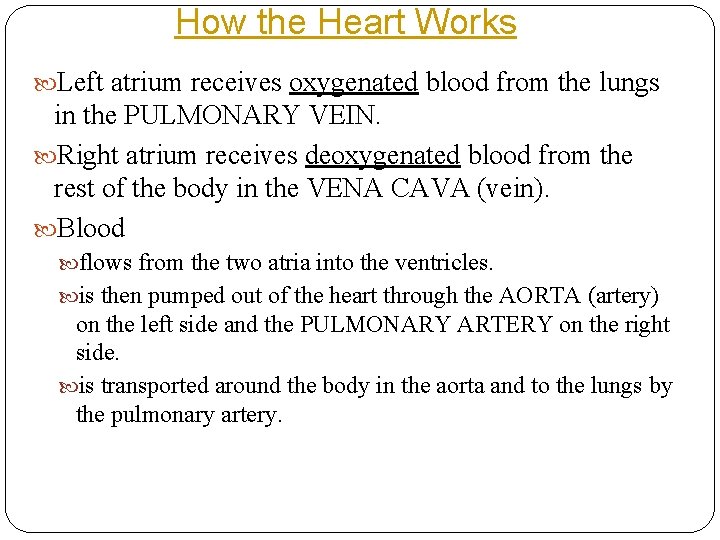
How the Heart Works Left atrium receives oxygenated blood from the lungs in the PULMONARY VEIN. Right atrium receives deoxygenated blood from the rest of the body in the VENA CAVA (vein). Blood flows from the two atria into the ventricles. is then pumped out of the heart through the AORTA (artery) on the left side and the PULMONARY ARTERY on the right side. is transported around the body in the aorta and to the lungs by the pulmonary artery.
The Heart Beat When the cardiac muscles contract and relax this causes a heart beat. As the muscle contracts to squeeze out the blood, it is called a SYSTOLE. When the muscle relaxes to receive blood this is called a DIASTOLE. Heart Problems
Circulatory System Summary
Thank you!!