
Transport across cell membranes Chapter 2 Type Diffusion
Transport across cell membranes Chapter 2

Type Diffusion Osmosis Facilitated diffusion – carrier proteins Facilitated diffusion – channel proteins Active transport Endo/Exocytosis Description Molecules
CELL STRUCTURE: MEETING THE NEEDS OF MOLECULES n Molecules need to: – move in and around cells at a certain rate to reach sites of specific activity (ie where they will react with other molecules) – be in adequate concentrations (ie there needs to be enough of them) for chemical reactions to occur at the right rate. n Cell structure therefore needs to facilitate the movement of molecules and maintain them in adequate concentrations to maintain cell function (ie so the cell doesn’t die)
The Surface area conundrum n Cells need to maximise their surface area to ensure the rapid movement of molecules n Problem: – As volume increases, surface area decreases! – How do cells deal with this?
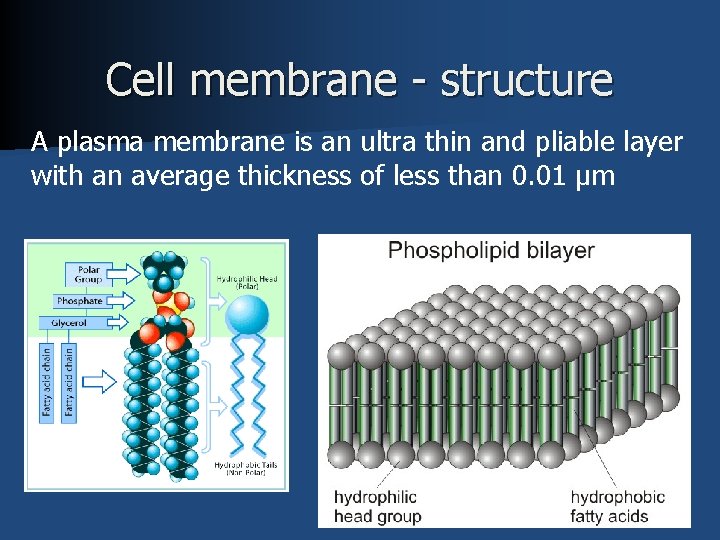
Cell membrane - structure A plasma membrane is an ultra thin and pliable layer with an average thickness of less than 0. 01 μm
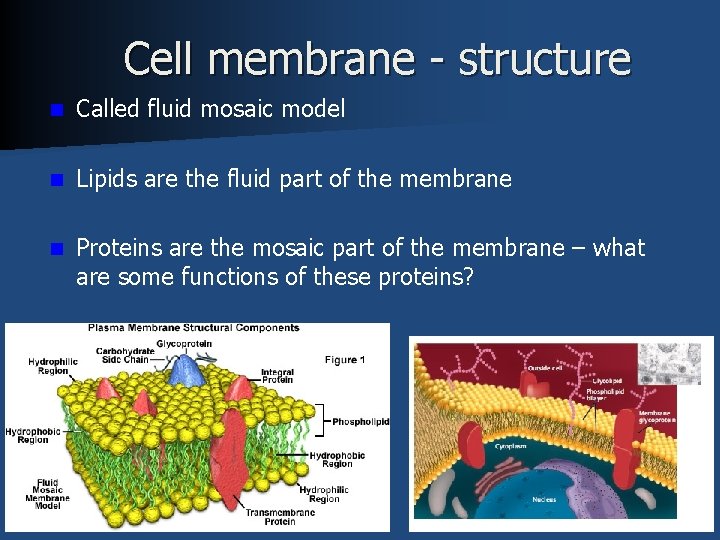
Cell membrane - structure n Called fluid mosaic model n Lipids are the fluid part of the membrane n Proteins are the mosaic part of the membrane – what are some functions of these proteins?
Cell membrane - functions n Define cell boundary n Provide permeability barrier (acts like a sieve) n Provide sites for specific functions n Regulate transport of solutes n Detect electrical and chemical signals n Assists in cell to cell communication
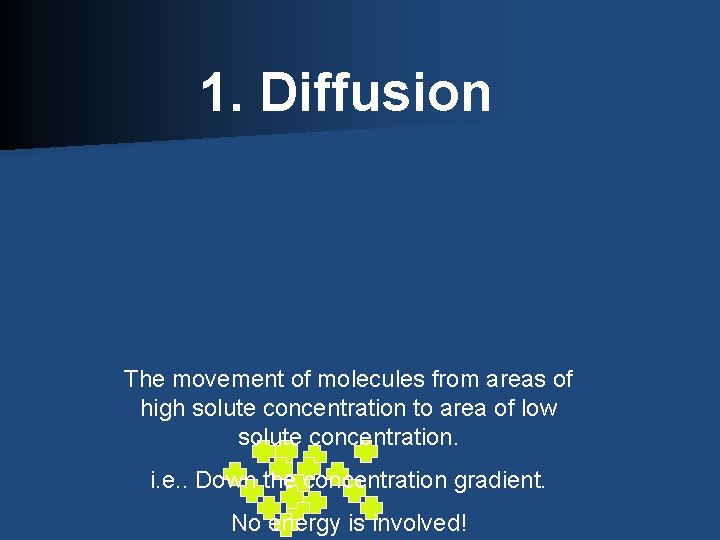
1. Diffusion The movement of molecules from areas of high solute concentration to area of low solute concentration. i. e. . Down the concentration gradient. No energy is involved!
Ways to increase diffusion ØIncreasing concentration ØIncreasing temperature ØIncreasing surface area
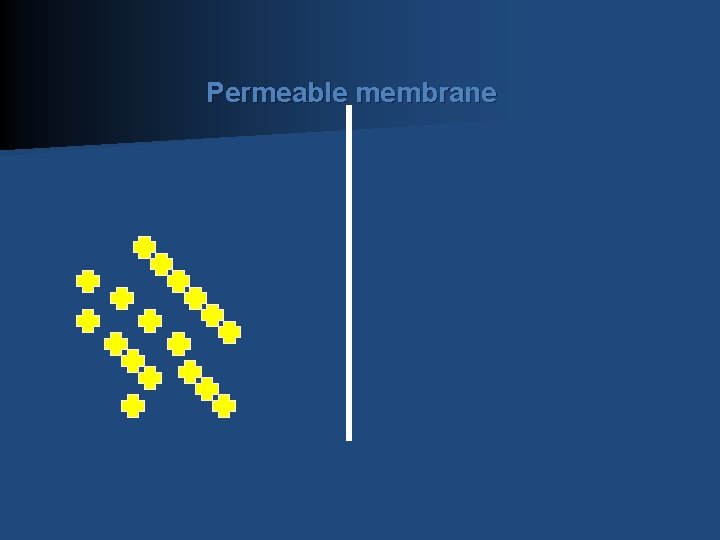
Permeable membrane
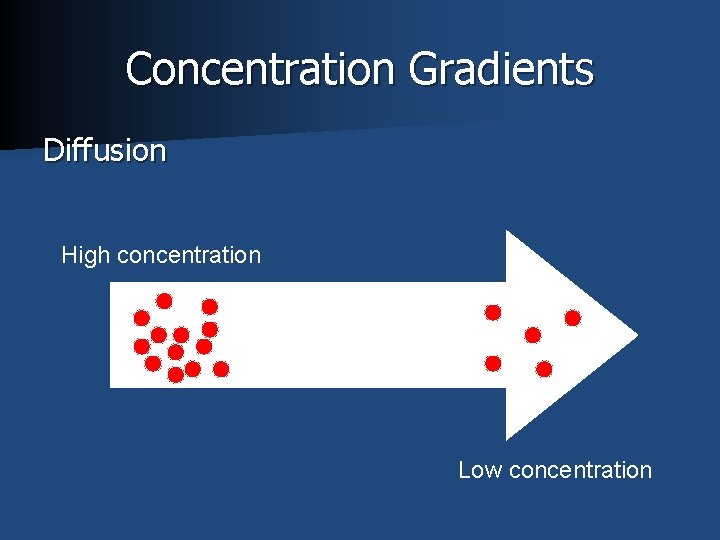
Concentration Gradients Diffusion High concentration Low concentration
Equilibrium Once diffusion is complete the molecules keep moving but the overall distribution remains constant
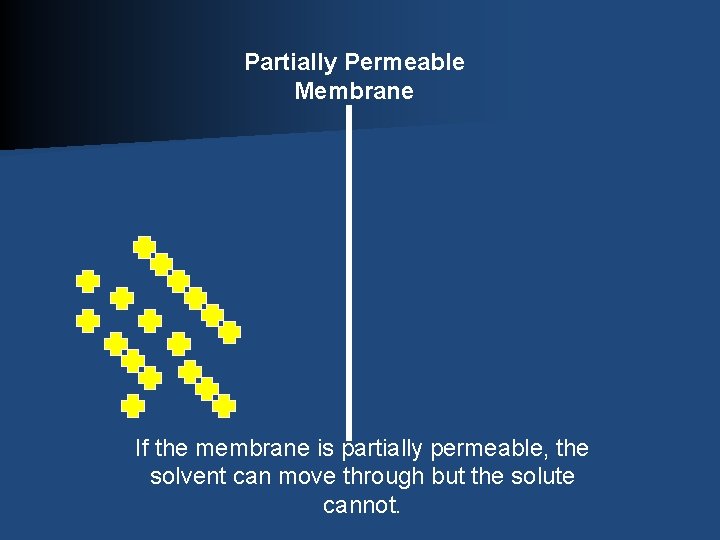
Partially Permeable Membrane If the membrane is partially permeable, the solvent can move through but the solute cannot.
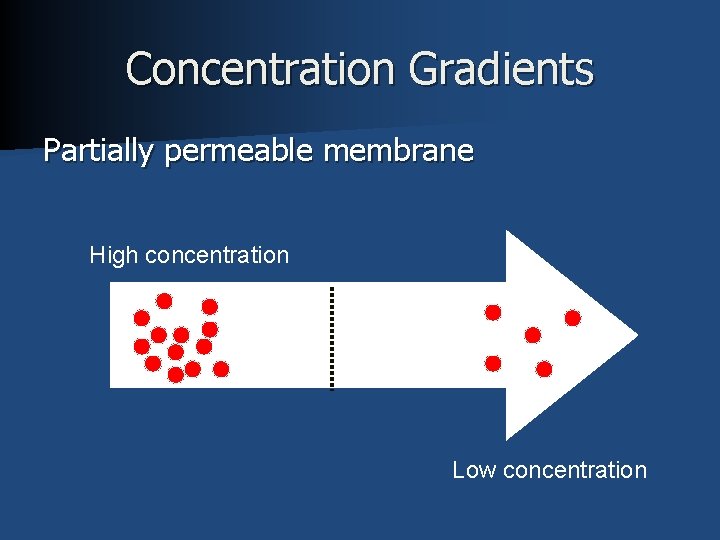
Concentration Gradients Partially permeable membrane High concentration Low concentration
2. Osmosis A special type of diffusion!
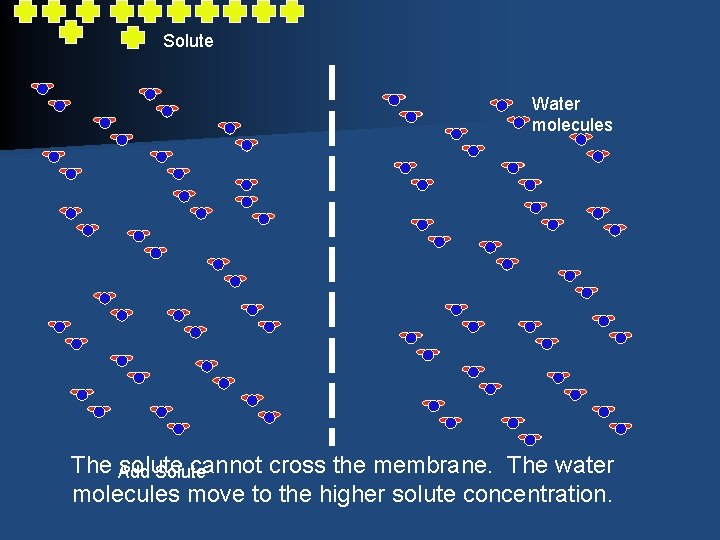
Solute Water molecules The Add solute cannot cross the membrane. The water Solute molecules move to the higher solute concentration.
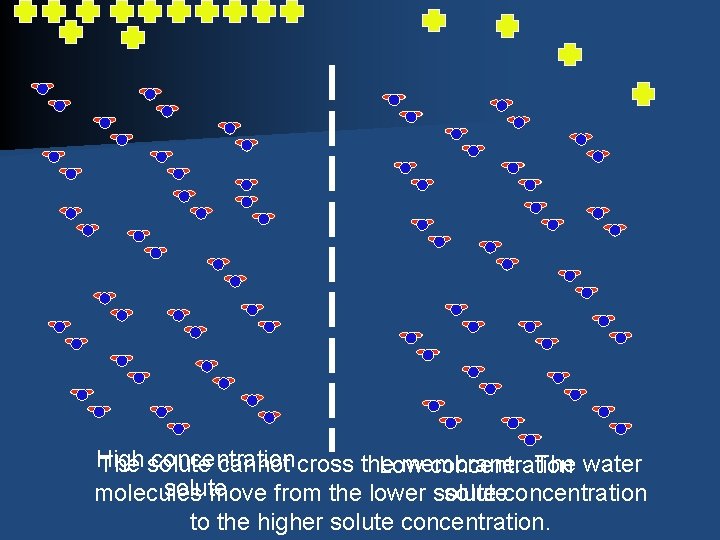
High concentration The solute cannot cross the membrane. The water Low concentration solute molecules move from the lower soluteconcentration to the higher solute concentration.
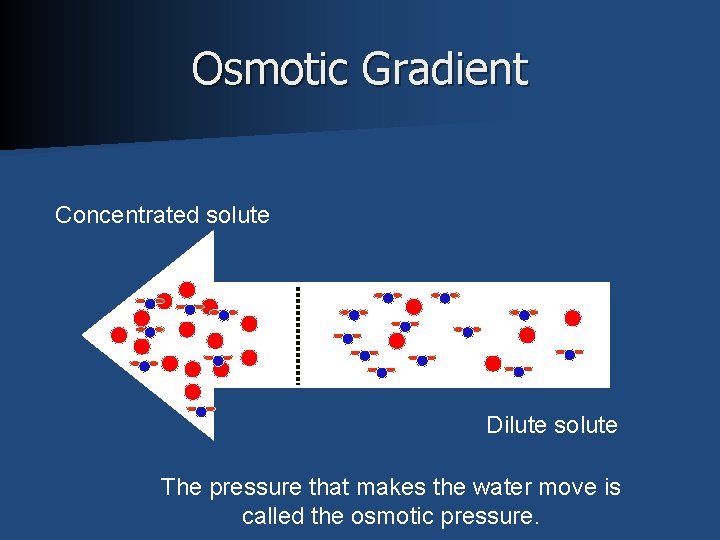
Osmotic Gradient Concentrated solute Dilute solute The pressure that makes the water move is called the osmotic pressure.
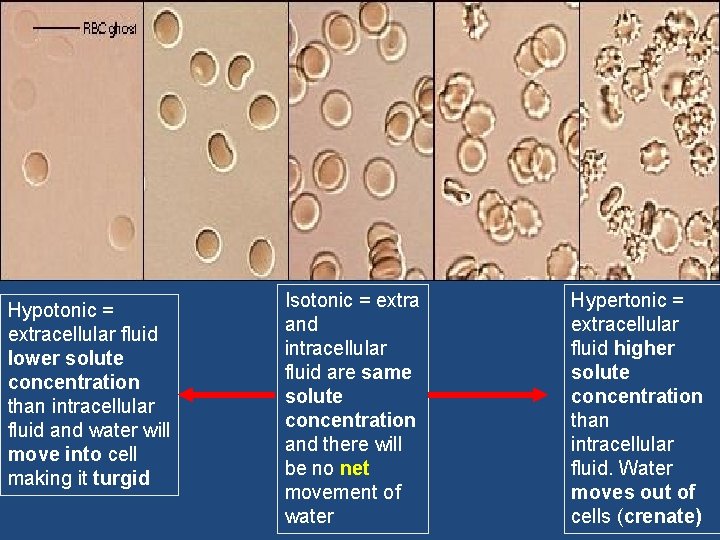
Hypotonic = extracellular fluid lower solute concentration than intracellular fluid and water will move into cell making it turgid Isotonic = extra and intracellular fluid are same solute concentration and there will be no net movement of water Hypertonic = extracellular fluid higher solute concentration than intracellular fluid. Water moves out of cells (crenate)
3. Facilitated Diffusion n Most molecules are too large or too polar to cross membrane by simple diffusion n Protein assisted movement down a concentration gradient – facilitated diffusion can occur in a few different ways HIGH CONCENTRATION GRADIENT LOW
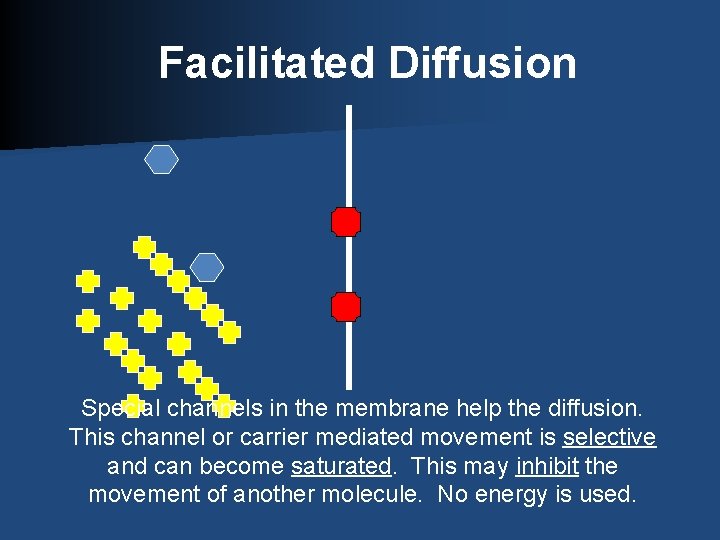
Facilitated Diffusion Special channels in the membrane help the diffusion. This channel or carrier mediated movement is selective and can become saturated. This may inhibit the movement of another molecule. No energy is used.
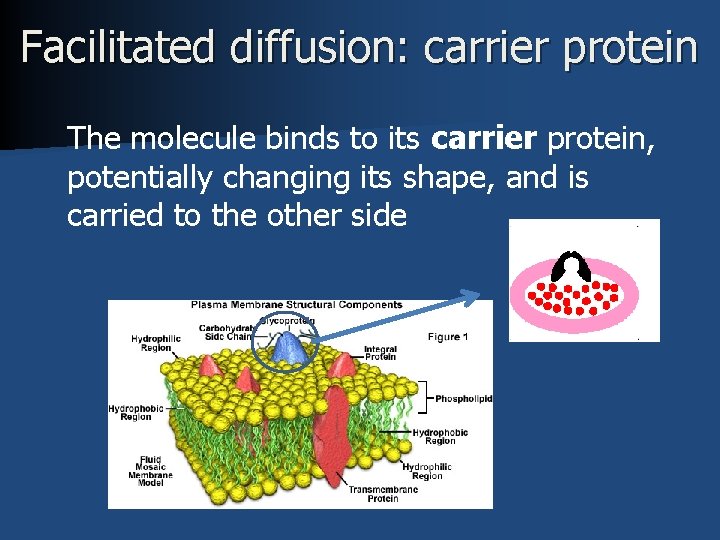
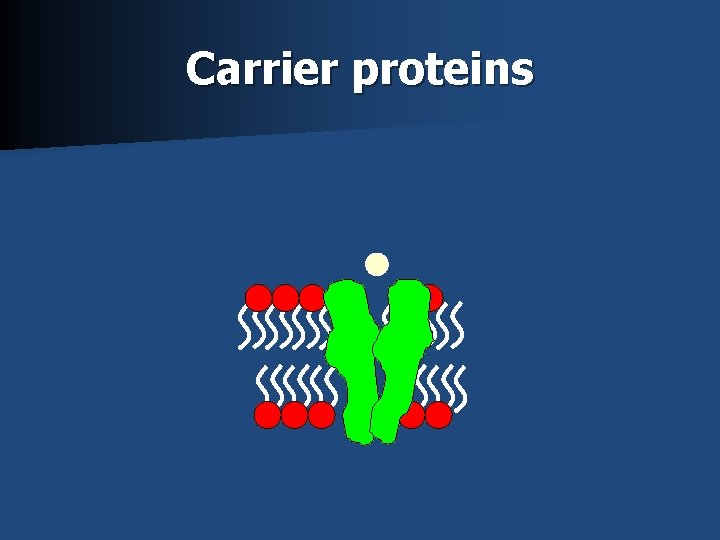
Facilitated diffusion: carrier protein The molecule binds to its carrier protein, potentially changing its shape, and is carried to the other side
Carrier proteins
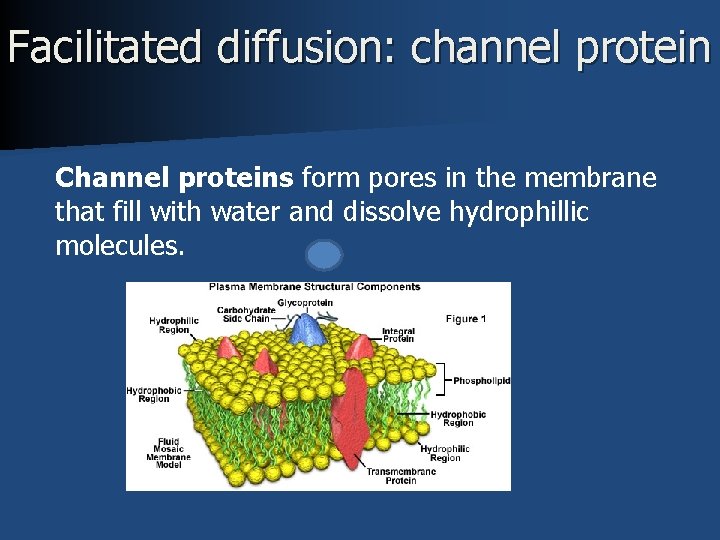
Facilitated diffusion: channel protein Channel proteins form pores in the membrane that fill with water and dissolve hydrophillic molecules.
4. Active transport When the cell spends energy to move molecules against the concentration gradient.
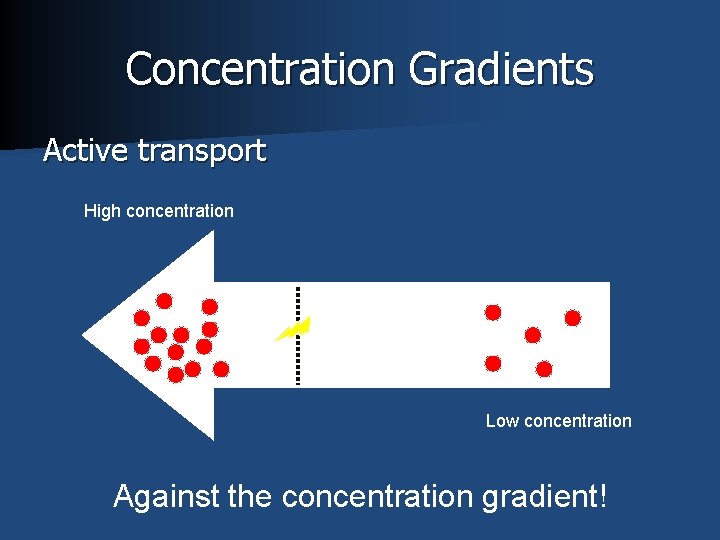
Concentration Gradients Active transport High concentration Low concentration Against the concentration gradient!
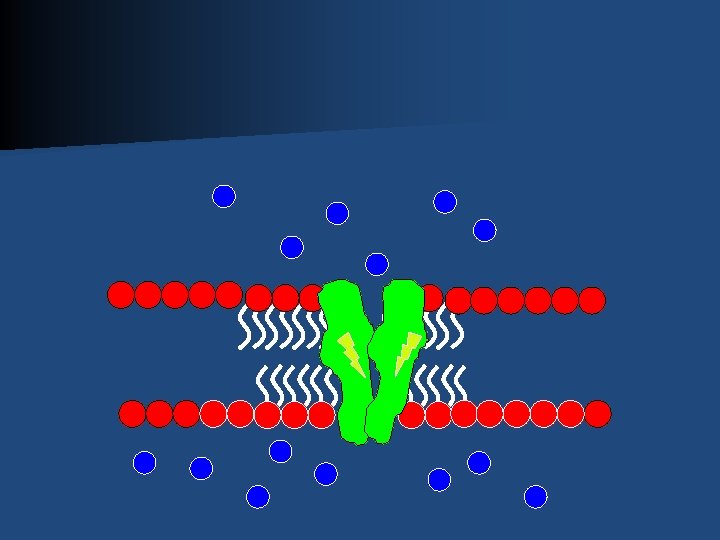
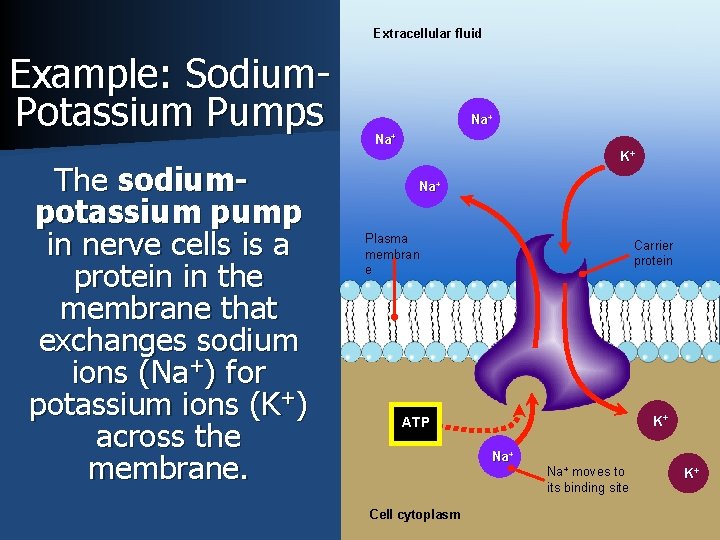
Extracellular fluid Example: Sodium. Potassium Pumps The sodiumpotassium pump in nerve cells is a protein in the membrane that exchanges sodium ions (Na+) for potassium ions (K+) across the membrane. Na+ K+ Na+ Plasma membran e Carrier protein K+ ATP Na+ Cell cytoplasm Na+ moves to its binding site K+
5. Cytosis When the cell spends energy to move LARGE molecules.
Moving large molecules n Sometimes, large molecules need to be moved around in the cell, stored within, or moved outside the cell n To do this, cells make very small containers or sacs called vesicles from the plasma membrane n Transporting out of the cell: exocytosis n Transporting into of the cell: endocytosis
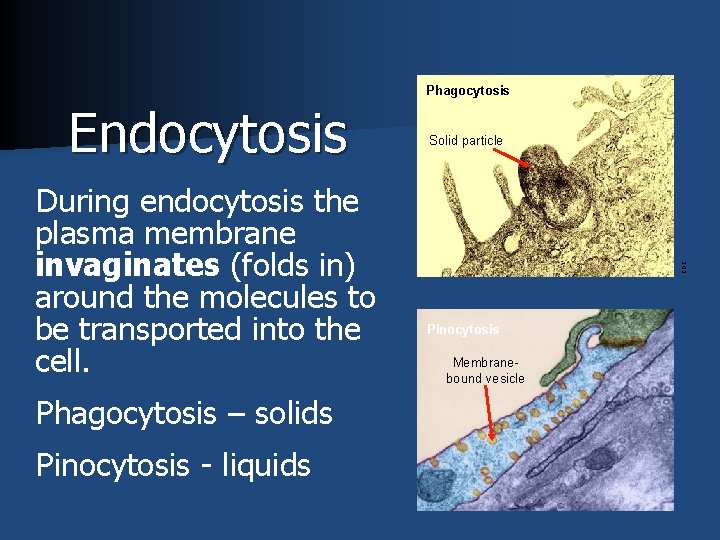
Phagocytosis During endocytosis the plasma membrane invaginates (folds in) around the molecules to be transported into the cell. Phagocytosis – solids Pinocytosis - liquids Solid particle CDC Endocytosis Pinocytosis Membranebound vesicle
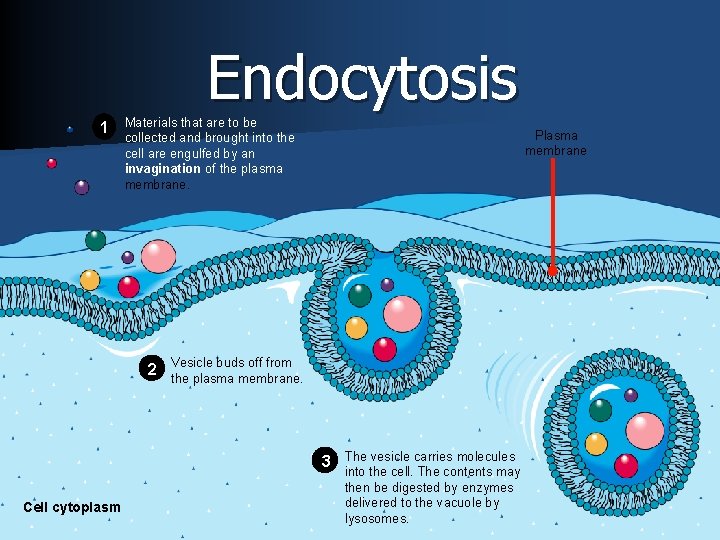
Endocytosis 1 Materials that are to be collected and brought into the cell are engulfed by an invagination of the plasma membrane. 2 Plasma membrane Vesicle buds off from the plasma membrane. 3 Cell cytoplasm The vesicle carries molecules into the cell. The contents may then be digested by enzymes delivered to the vacuole by lysosomes.
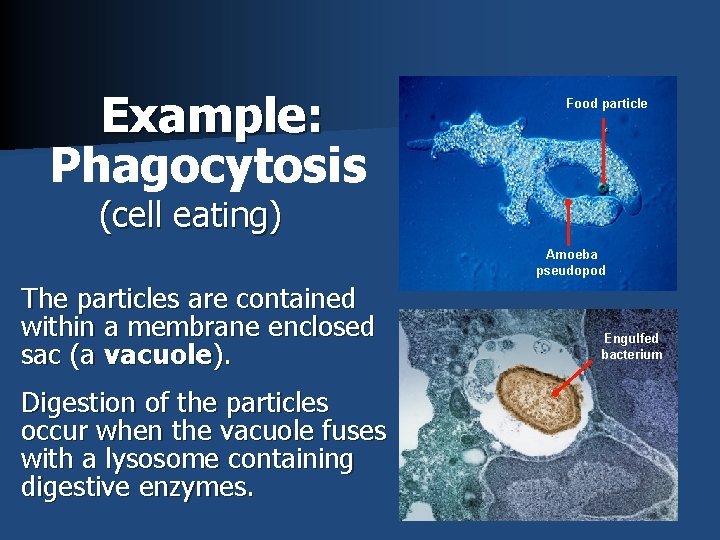
Example: Phagocytosis Food particle (cell eating) Amoeba pseudopod The particles are contained within a membrane enclosed sac (a vacuole). Digestion of the particles occur when the vacuole fuses with a lysosome containing digestive enzymes. Engulfed bacterium
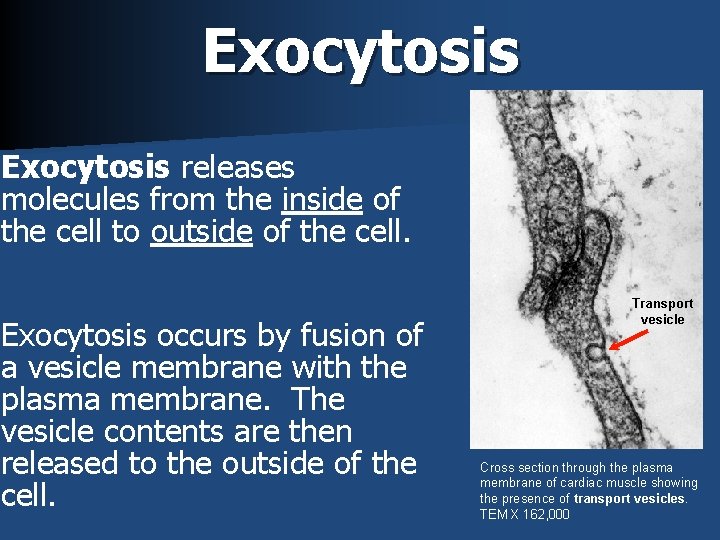
Exocytosis releases molecules from the inside of the cell to outside of the cell. Exocytosis occurs by fusion of a vesicle membrane with the plasma membrane. The vesicle contents are then released to the outside of the cell. Transport vesicle Cross section through the plasma membrane of cardiac muscle showing the presence of transport vesicles. TEM X 162, 000
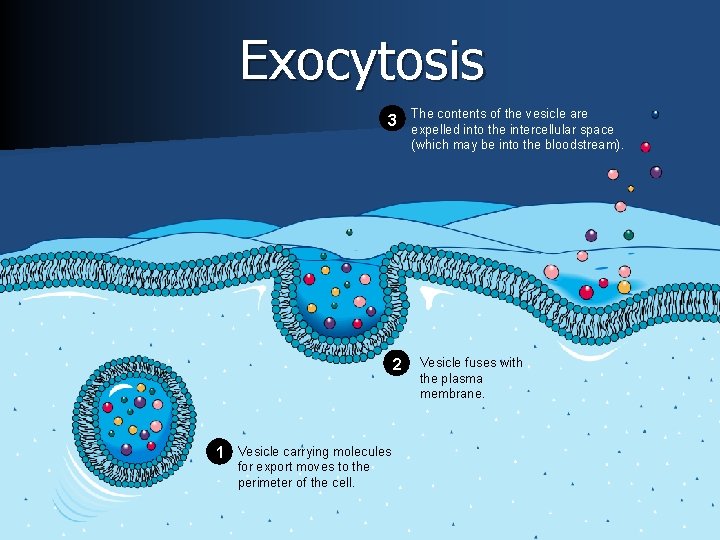
Exocytosis 3 2 1 Vesicle carrying molecules for export moves to the perimeter of the cell. The contents of the vesicle are expelled into the intercellular space (which may be into the bloodstream). Vesicle fuses with the plasma membrane.
Summary There are two types of transport in a cell. 1. Passive (not requiring energy) diffusion and facilitated diffusion Osmosis Facilitated diffusion 2. Active or energy requiring Active transport Cytosis (exocytosis, endocytosis etc)
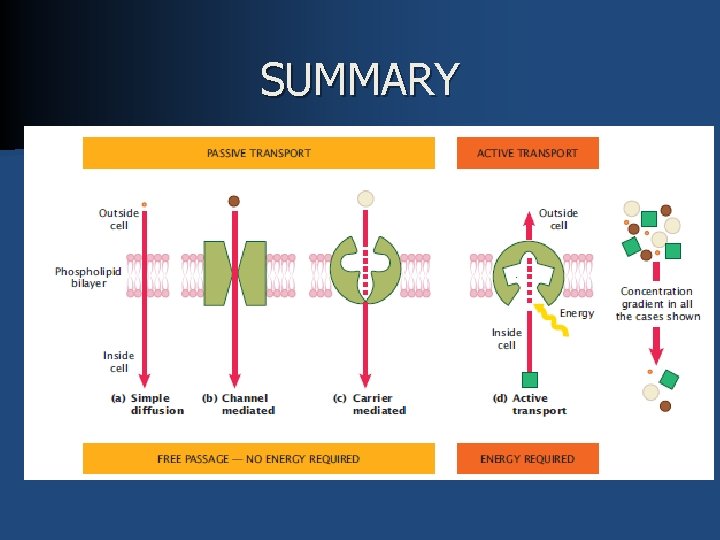
SUMMARY
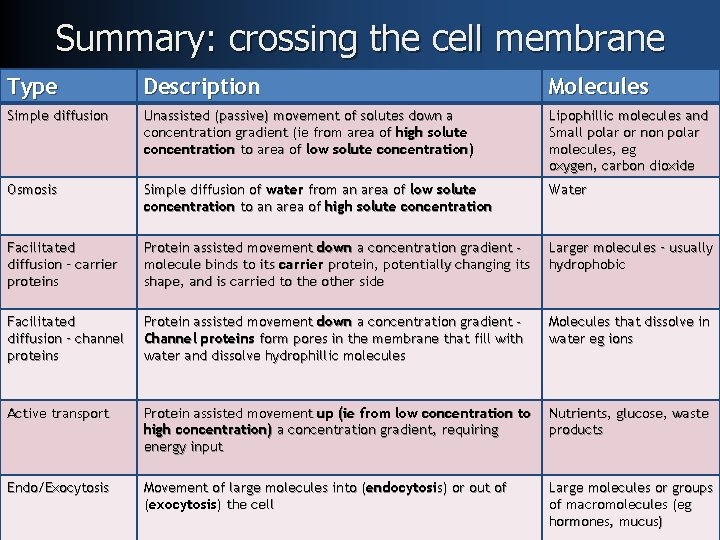
Summary: crossing the cell membrane Type Description Molecules Simple diffusion Unassisted (passive) movement of solutes down a concentration gradient (ie from area of high solute concentration to area of low solute concentration) Lipophillic molecules and Small polar or non polar molecules, eg oxygen, carbon dioxide Osmosis Simple diffusion of water from an area of low solute concentration to an area of high solute concentration Water Facilitated diffusion – carrier proteins Protein assisted movement down a concentration gradient molecule binds to its carrier protein, potentially changing its shape, and is carried to the other side Larger molecules – usually hydrophobic Facilitated diffusion – channel proteins Protein assisted movement down a concentration gradient Channel proteins form pores in the membrane that fill with water and dissolve hydrophillic molecules Molecules that dissolve in water eg ions Active transport Protein assisted movement up (ie from low concentration to high concentration) a concentration gradient, requiring energy input Nutrients, glucose, waste products Endo/Exocytosis Movement of large molecules into (endocytosis) or out of (exocytosis) the cell Large molecules or groups of macromolecules (eg hormones, mucus)
- Slides: 38