
Transport Across a Membrane Cells and Their Environment
Transport Across a Membrane
Cells and Their Environment Your body (and the bodies of all living things) has the ability to maintain itself in spite of changes in external conditions (homeostasis). n Part of this regulatory process involves controlling what goes into and out of cells. n If not, you would be the same as your environment. n
Examples of Diffusion n Draw a diagram of the tank of water and the food coloring when the drop just hit the tank and after a few minutes. Immediate After

Examples of Diffusion n Draw the perfume molecules when the bottle had just been sprayed and after a few minutes. Immediate After
Diffusion The movement of molecules from an area of high concentration to low concentration. No energy used!! n Concentration gradient – a change in concentration from one area to another. n n n Another definition of diffusion – movement of a substance down its concentration gradient. Equilibrium – equally distributed molecules n Does movement stop when equilibrium is reached?
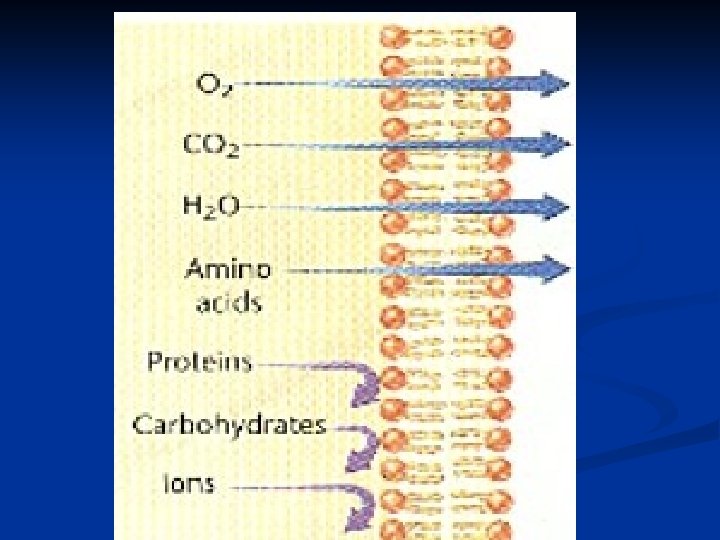
Passive Transport – simple diffusion across a membrane (does not require a transport protein) – No energy needed hence passive n Examples – diffusion & Osmosis n What substances can move across a membrane without a transport protein? n
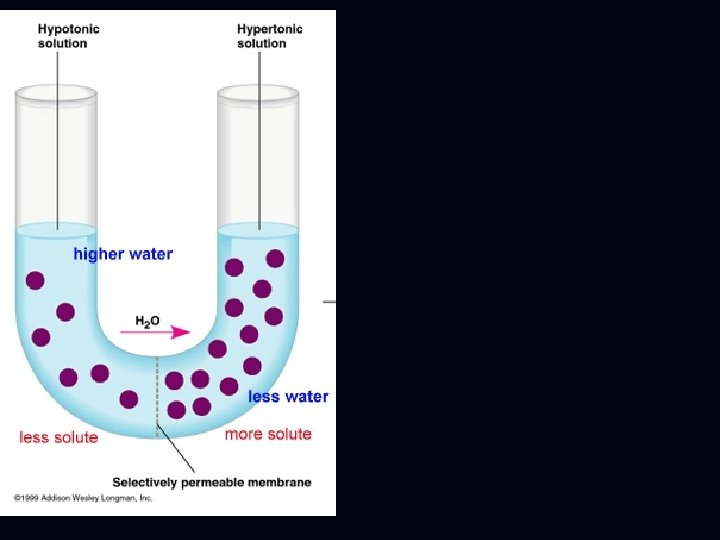
Osmosis n n The diffusion of water across a membrane - so important for living things – is given a special name … OSMOSIS Be careful… n Which way would water move? n n n Salt concentration inside cell = 0. 1 mg/L Salt concentration outside cell = 1. 0 mg/L The dissolved material is called a solute. In the question above the salt is the solute. Hint – the more solute molecules there are the less water molecules there are.
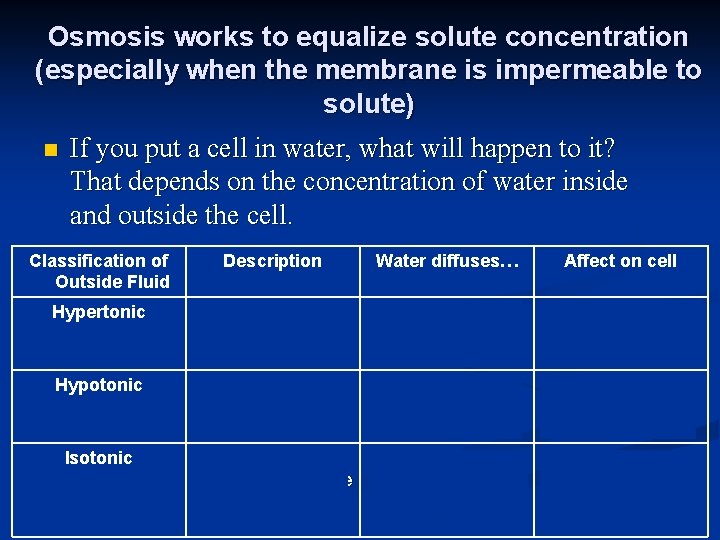
Osmosis works to equalize solute concentration (especially when the membrane is impermeable to solute) n If you put a cell in water, what will happen to it? That depends on the concentration of water inside and outside the cell. Classification of Outside Fluid Description Water diffuses… Affect on cell Hypertonic Higher solute concentration in fluid outside cell Out of the cell Shrinks (think raisin) Hypotonic Lower solute concentration in fluid outside cell Into the cell Swells and/or bursts Isotonic Same solute concentration inside and outside cell No net movement None
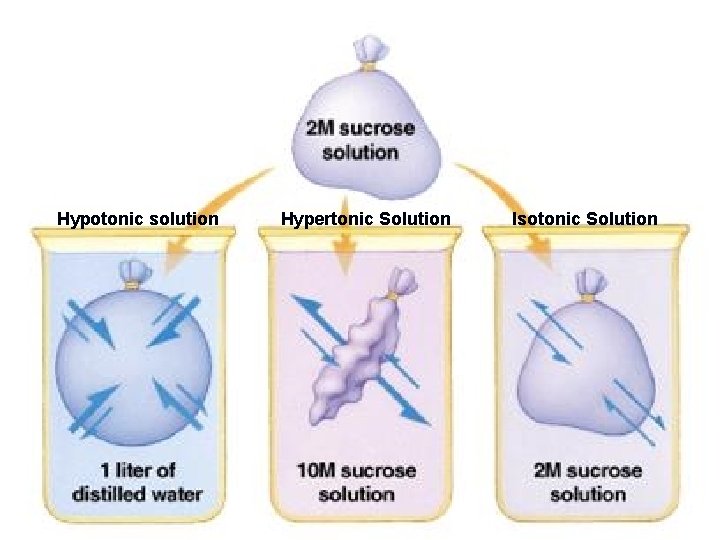
Hypotonic solution Hypertonic Solution Isotonic Solution
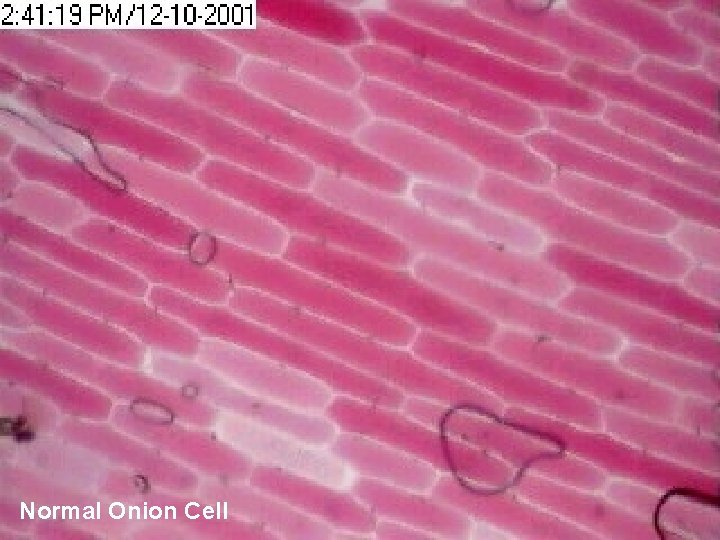
Normal Onion Cell
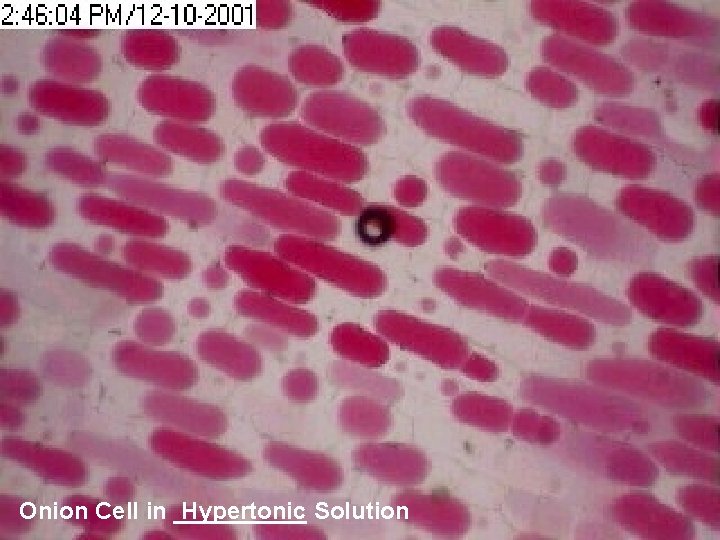
Onion Cell in _____ Hypertonic Solution
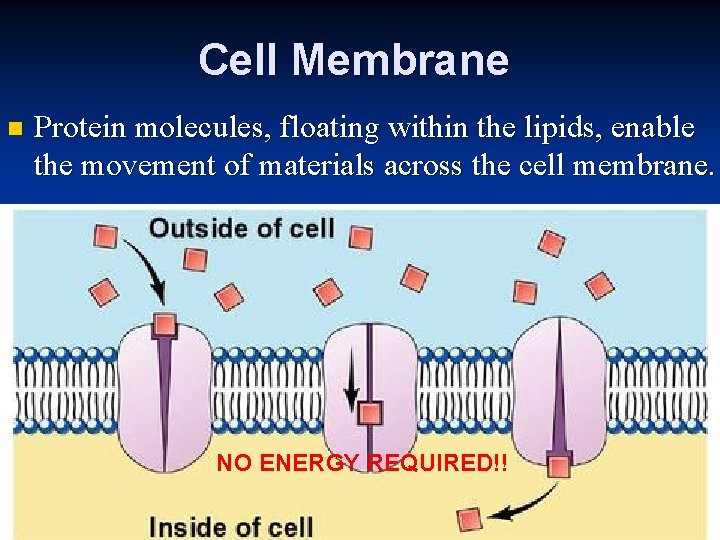
Cell Membrane n Protein molecules, floating within the lipids, enable the movement of materials across the cell membrane. NO ENERGY REQUIRED!!

Active Transport Any process in which materials move across the cell membrane WITH the use of energy by the cell. n Usually up the concentration gradient (low concentration high concentration) n like going up a hill n
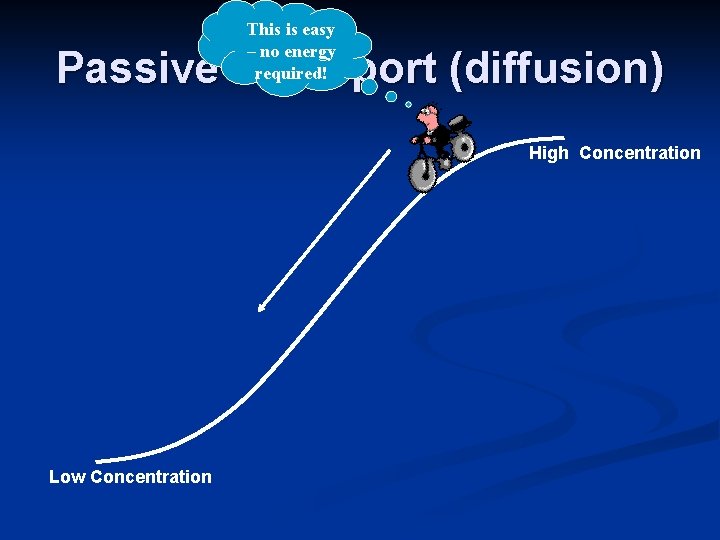
This is easy – no energy required! Passive Transport (diffusion) High Concentration Low Concentration
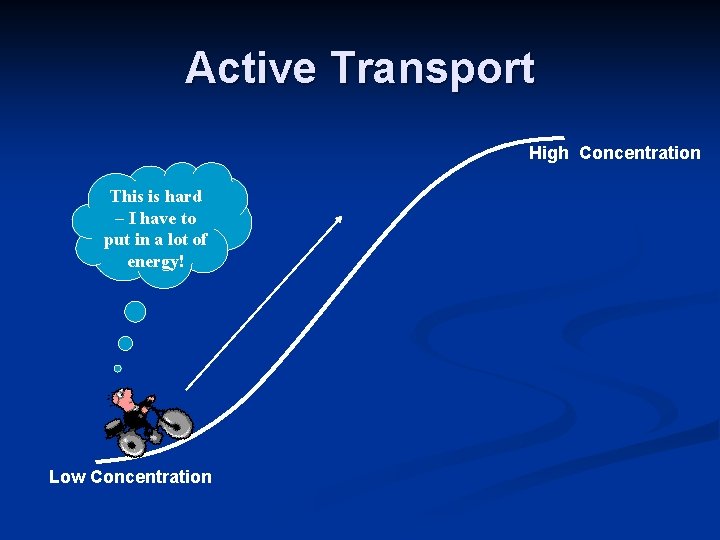
Active Transport High Concentration This is hard – I have to put in a lot of energy! Low Concentration
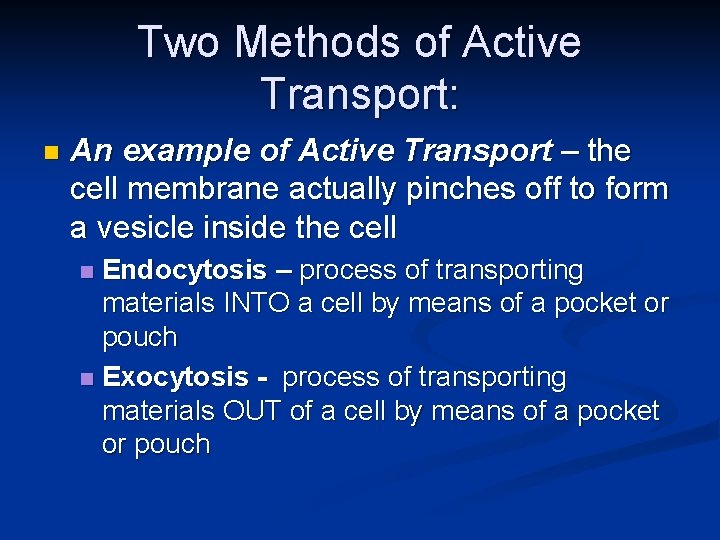
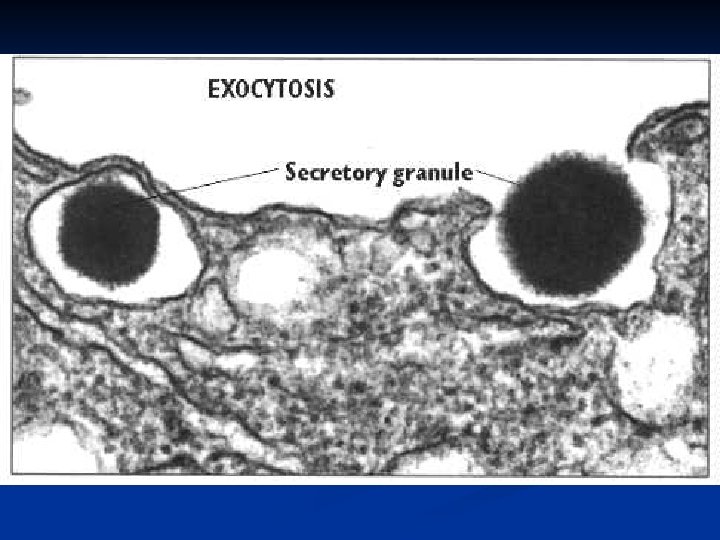
Two Methods of Active Transport: n An example of Active Transport – the cell membrane actually pinches off to form a vesicle inside the cell Endocytosis – process of transporting materials INTO a cell by means of a pocket or pouch n Exocytosis - process of transporting materials OUT of a cell by means of a pocket or pouch n
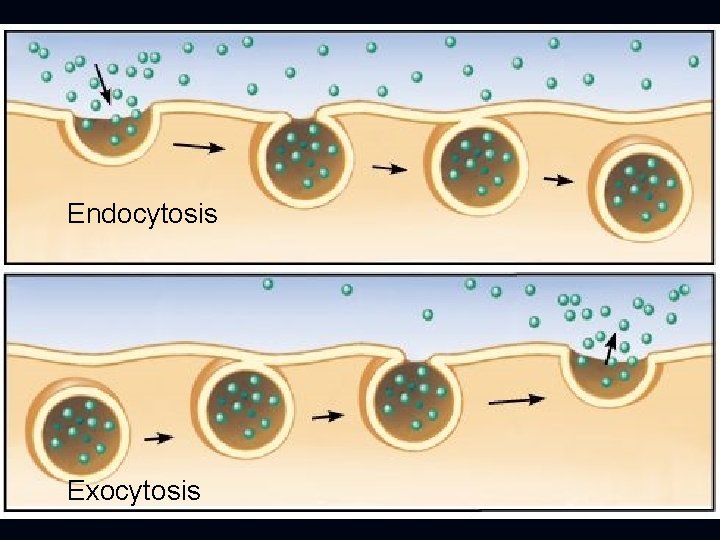
Endocytosis Exocytosis
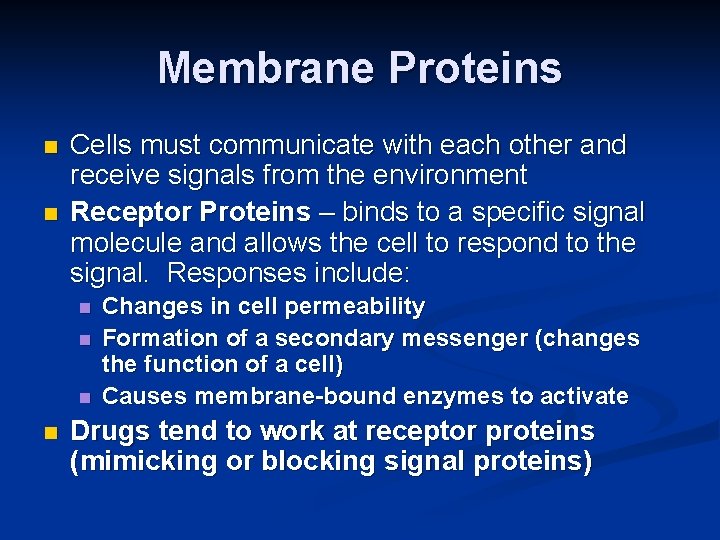
Membrane Proteins n n Cells must communicate with each other and receive signals from the environment Receptor Proteins – binds to a specific signal molecule and allows the cell to respond to the signal. Responses include: n n Changes in cell permeability Formation of a secondary messenger (changes the function of a cell) Causes membrane-bound enzymes to activate Drugs tend to work at receptor proteins (mimicking or blocking signal proteins)
- Slides: 21