
Transplacental infections Reproductive Block Microbiology 2019 By Dr
Transplacental infections ( Reproductive Block , Microbiology : 2019) By: Dr. Malak El-Hazmi
OBJECTIVES; Types of infant infections. Major transplacentaly transmitted pathogens causing congenital infections. Toxoplasma , Treponema pallidum , Parvovirus , Varicella Zoster Virus, Rubella virus , Cytomegalovirus. Their major features & epidemiology. Manifestations of congenital infection. Diagnosis of congenital infection. Their Treatment and Prevention.
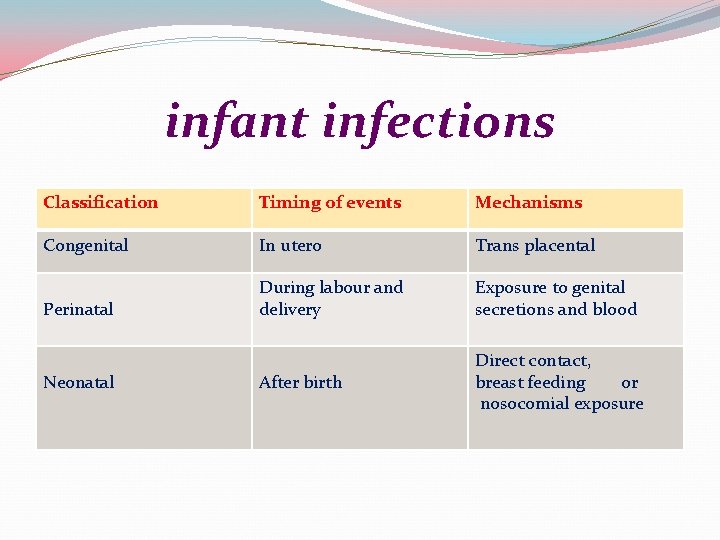
infant infections Classification Timing of events Mechanisms Congenital In utero Trans placental Perinatal During labour and delivery Exposure to genital secretions and blood After birth Direct contact, breast feeding or nosocomial exposure Neonatal
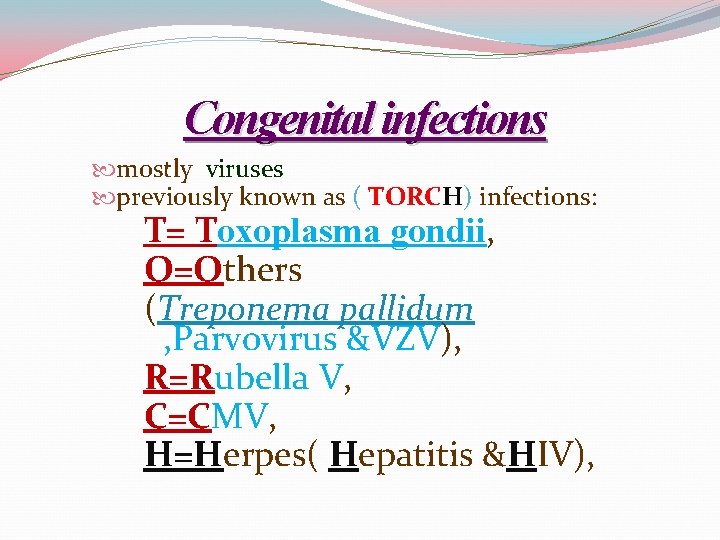
Congenital infections mostly viruses previously known as ( TORCH) infections: T= Toxoplasma gondii, O=Others (Treponema pallidum , Parvovirus &VZV), R=Rubella V, C=CMV, H=Herpes( Hepatitis &HIV),
Congenital infections Risk of IUI & fetal damage ; Ø Type of org. (teratogenic) Ø Type of maternal inf. (1 o, R) Ø Time of inf. (1 st , 2 nd or 3 rd) Ø 1 o Maternal infection in the first half of pregnancy poses the greatest risk to the fetus
Congenital infections Common Findings • • Intrauterine growth retardation(IUGR) Hepatosplenomegaly(HSM) Thrombocytopenia Microcephaly Majority of CI (“asymptomatic”) at birth Preventative and therapeutic measures ; possible for some of the agents
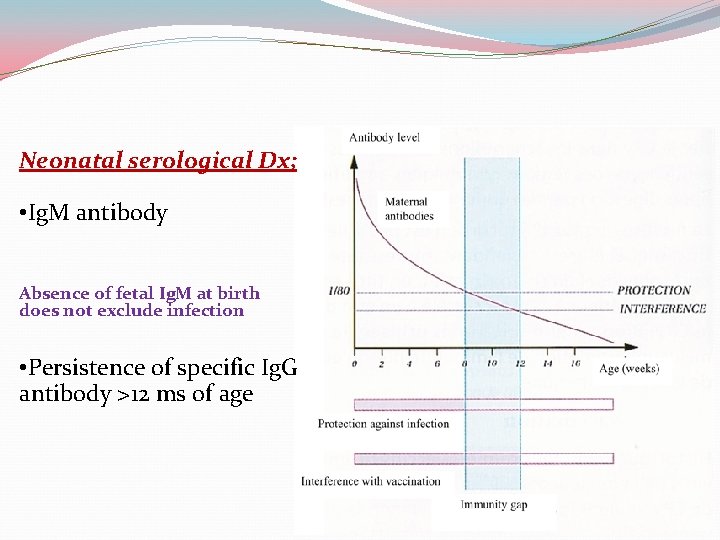
Neonatal serological Dx; • Ig. M antibody Absence of fetal Ig. M at birth does not exclude infection • Persistence of specific Ig. G antibody >12 ms of age 7
Transplacental infections ( TORCH) T= Toxoplasma gondii (Treponema pallidum , Parvovirus &VZV) R=Rubella V C=CMV
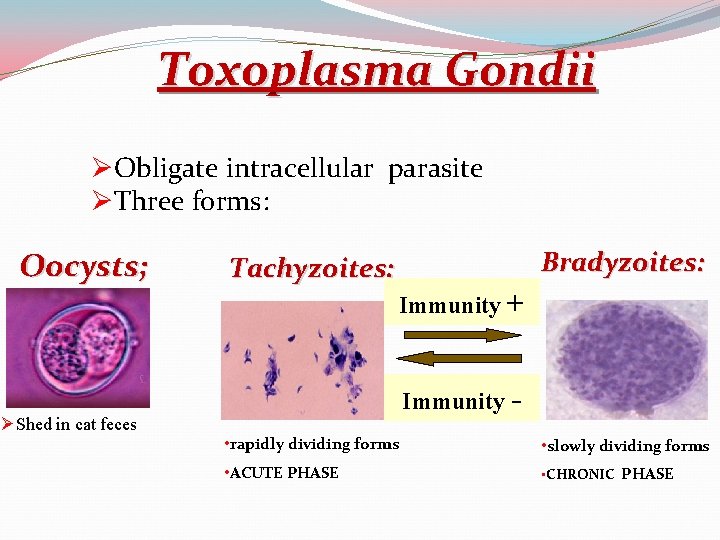
Toxoplasma Gondii ØObligate intracellular parasite ØThree forms: Oocysts; ØShed in cat feces Tachyzoites: Bradyzoites: Immunity + Immunity • rapidly dividing forms • slowly dividing forms • ACUTE PHASE • CHRONIC PHASE
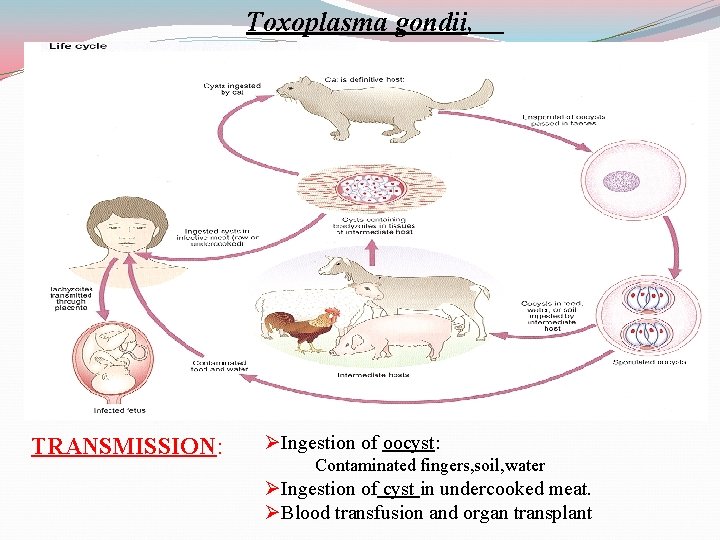
Toxoplasma gondii, TRANSMISSION: ØIngestion of oocyst: Contaminated fingers, soil, water ØIngestion of cyst in undercooked meat. ØBlood transfusion and organ transplant
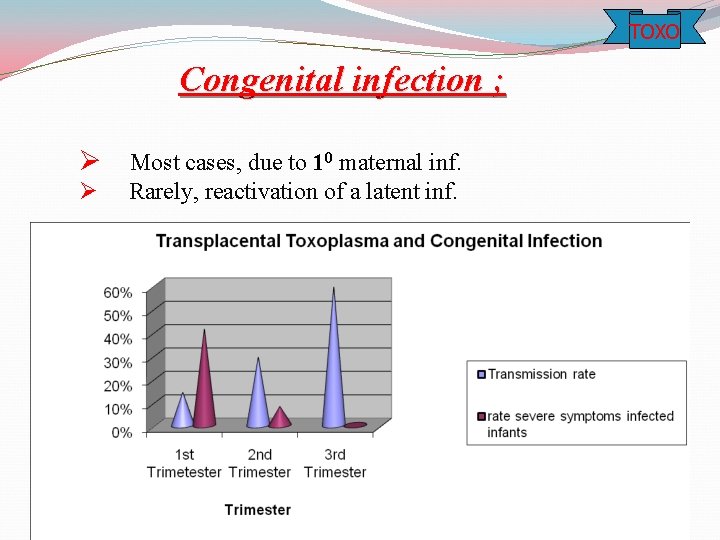
TOXO Congenital infection ; Ø Most cases, due to 10 maternal inf. Ø Rarely, reactivation of a latent inf.
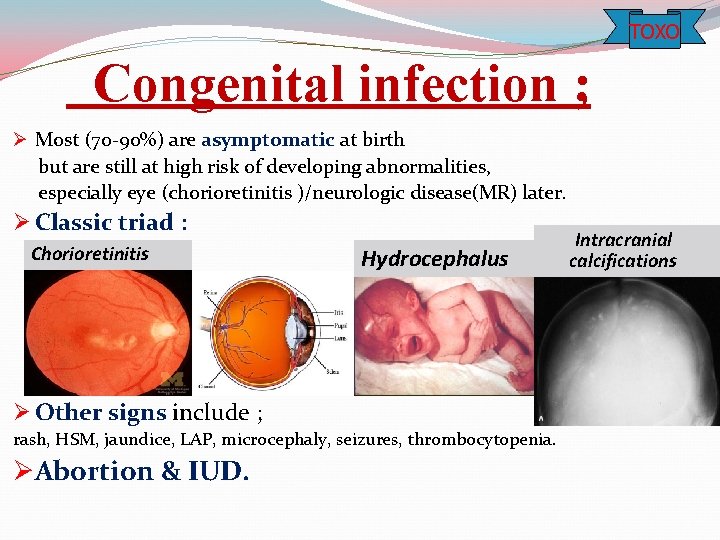
TOXO Congenital infection ; Ø Most (70 -90%) are asymptomatic at birth but are still at high risk of developing abnormalities, especially eye (chorioretinitis )/neurologic disease(MR) later. Ø Classic triad : Chorioretinitis Hydrocephalus Ø Other signs include ; rash, HSM, jaundice, LAP, microcephaly, seizures, thrombocytopenia. ØAbortion & IUD. Intracranial calcifications
TOXO Dx �Pregnant mother � Serology; Ø Ig. M, Ø Ig. G avidity Ø Ig. G seroconversion compared to booking blood. Infant *Prenatal Dx; Ø Serial U/S Ø PCR Ø Culture *Postnatal Dx; Ø Serology; Ø Ø Ig. M Ig. G or persistently +ve >12 ms Ø PCR Ø Culture Ø Evalution of infant (ex, neuroimaging) 13
TOXO Rx Spiramycin. pyrimethamine& sulfadiazine. Prevention Avoid exposure to cat feces; Wash ; - hands with soap and water - fruits/vegetables, - surfaces that touched fruits/vegetables/raw meat. Cook all meats thoroughly
Transplacental infections ( TORCH) T= Toxoplasma gondii, O=Other (Treponema pallidum , Parvovirus &VZV), R=Rubella V C=CMV
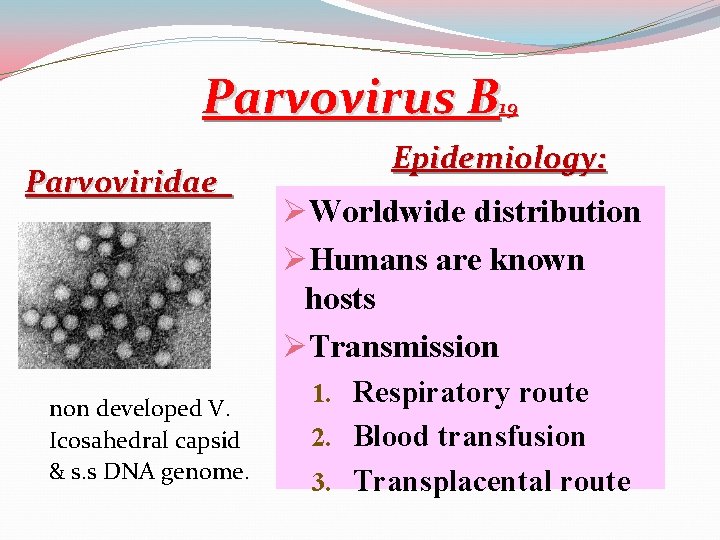
Parvovirus B 19 Parvoviridae non developed V. Icosahedral capsid & s. s DNA genome. Epidemiology: ØWorldwide distribution ØHumans are known hosts ØTransmission 1. Respiratory route 2. Blood transfusion 3. Transplacental route
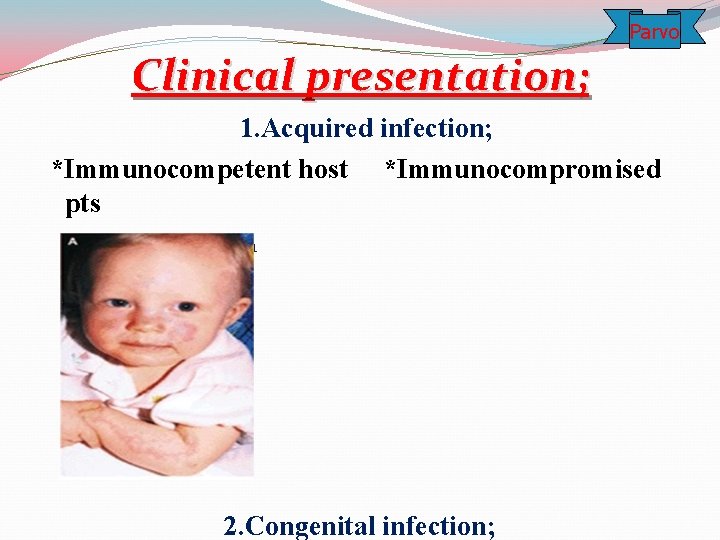
Parvo Clinical presentation; 1. Acquired infection; *Immunocompetent host *Immunocompromised pts Erythema infectiosum 2. Congenital infection;
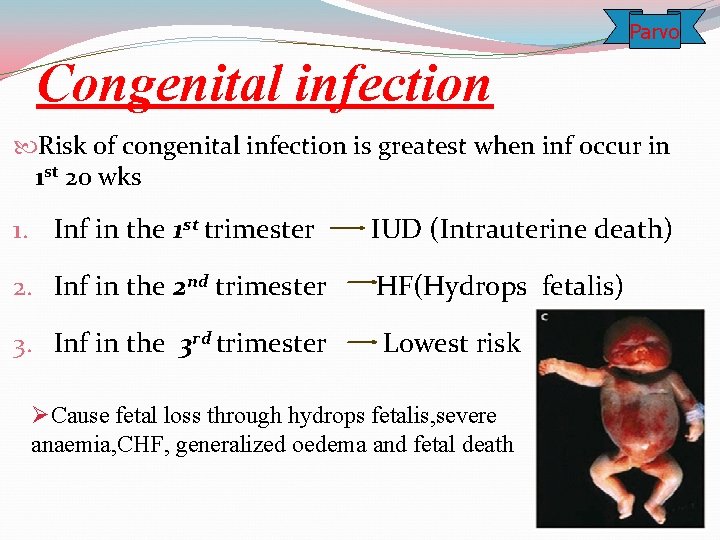
Parvo Congenital infection Risk of congenital infection is greatest when inf occur in 1 st 20 wks 1. Inf in the 1 st trimester IUD (Intrauterine death) 2. Inf in the 2 nd trimester HF(Hydrops fetalis) 3. Inf in the 3 rd trimester Lowest risk ØCause fetal loss through hydrops fetalis, severe anaemia, CHF, generalized oedema and fetal death
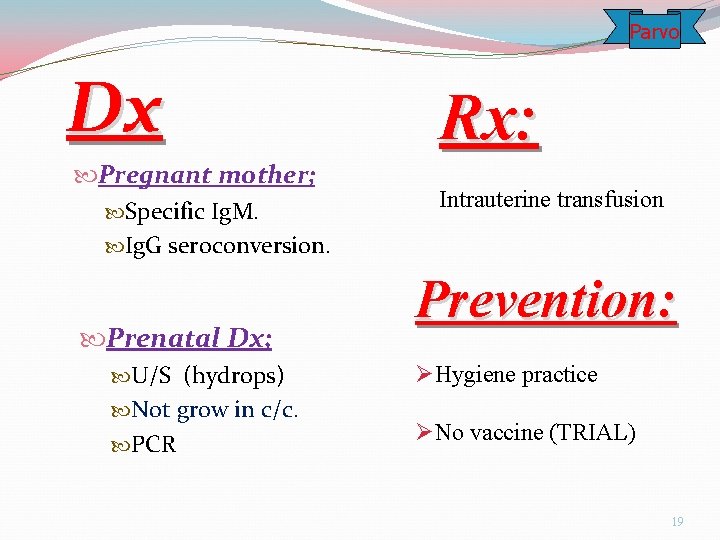
Parvo Dx Rx: Pregnant mother; Specific Ig. M. Ig. G seroconversion. Intrauterine transfusion Prenatal Dx; U/S (hydrops) Not grow in c/c. PCR Prevention: ØHygiene practice ØNo vaccine (TRIAL) 19
Transplacental infections ( TORCH) T= Toxoplasma gondii, O=Other (Treponema pallidum , Parvovirus &VZV), R=Rubella V C=CMV
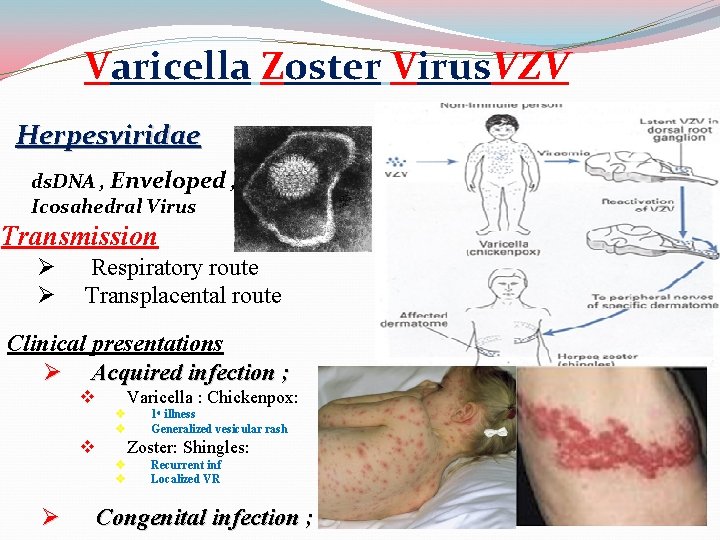
Varicella Zoster Virus. VZV Herpesviridae ds. DNA , Enveloped , Icosahedral Virus Transmission Ø Ø Respiratory route Transplacental route Clinical presentations Ø Acquired infection ; v Varicella : Chickenpox: v v v Zoster: Shingles: v v Ø 1 o illness Generalized vesicular rash Recurrent inf Localized VR Congenital infection ;
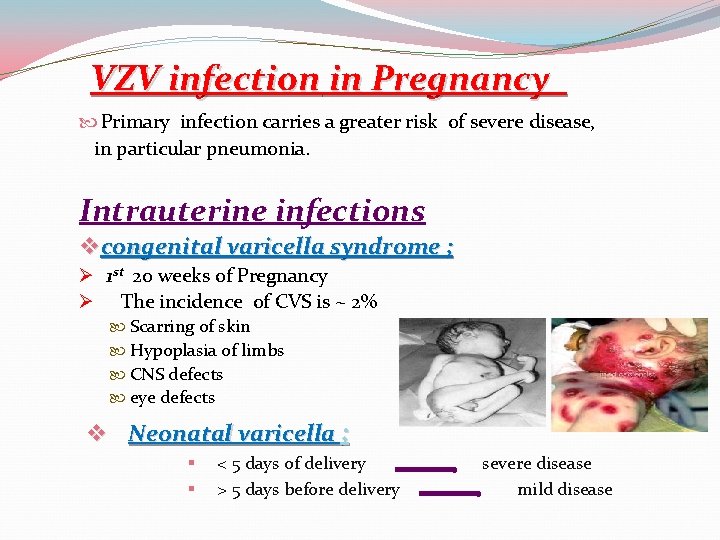
VZV infection in Pregnancy Primary infection carries a greater risk of severe disease, in particular pneumonia. Intrauterine infections v congenital varicella syndrome ; Ø 1 st 20 weeks of Pregnancy Ø The incidence of CVS is ~ 2% Scarring of skin Hypoplasia of limbs CNS defects eye defects v Neonatal varicella ; § § < 5 days of delivery severe disease > 5 days before delivery mild disease
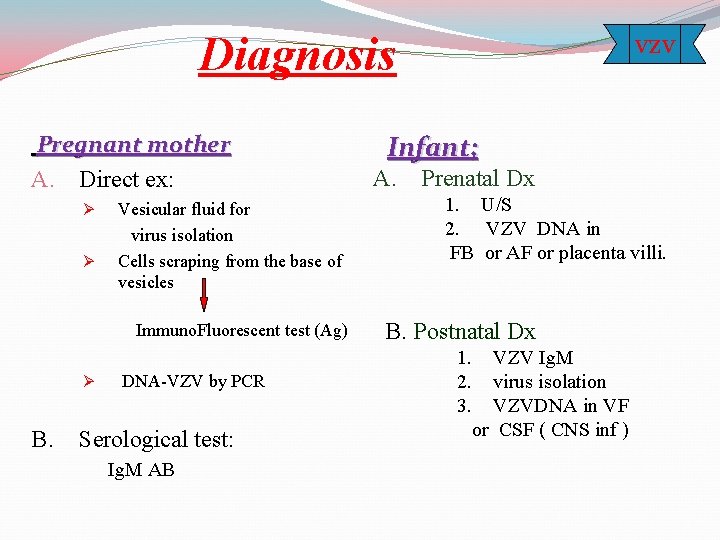
vzv Diagnosis Pregnant mother A. Direct ex: Ø Ø Vesicular fluid for virus isolation Cells scraping from the base of vesicles Immuno. Fluorescent test (Ag) Ø B. DNA-VZV by PCR Serological test: Ig. M AB Infant; A. Prenatal Dx 1. U/S 2. VZV DNA in FB or AF or placenta villi. B. Postnatal Dx 1. VZV Ig. M 2. virus isolation 3. VZVDNA in VF or CSF ( CNS inf )
Rx vzv Acyclovir Prevention; Pre exposure; Varicella vaccine (LAV) Post exposure; VZIG Øsusceptible pregnant women have been exposed to VZV. Øinfants whose mothers develop V < 5 to 2 days after delivery
Transplacental infections ( TORCH) T= Toxoplasma gondii, O=Other (Treponema pallidum, Parvovirus &VZV) R=Rubella V C=CMV
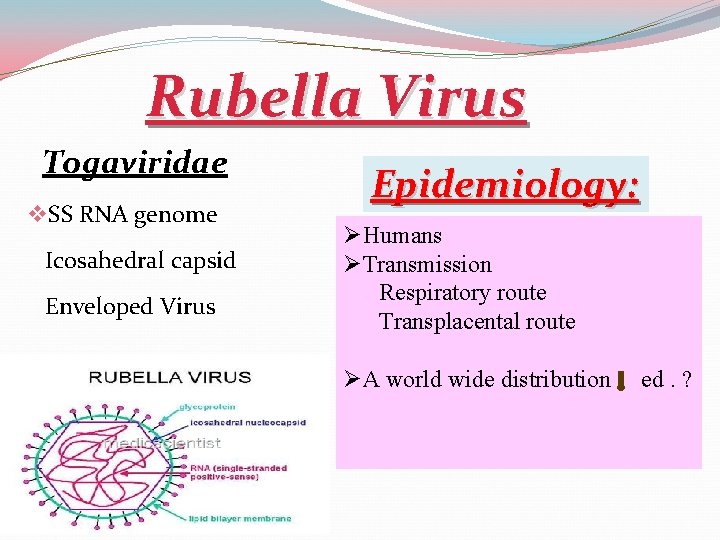
Rubella Virus Togaviridae v SS RNA genome Icosahedral capsid Enveloped Virus Epidemiology: ØHumans ØTransmission Respiratory route Transplacental route ØA world wide distribution ed. ?
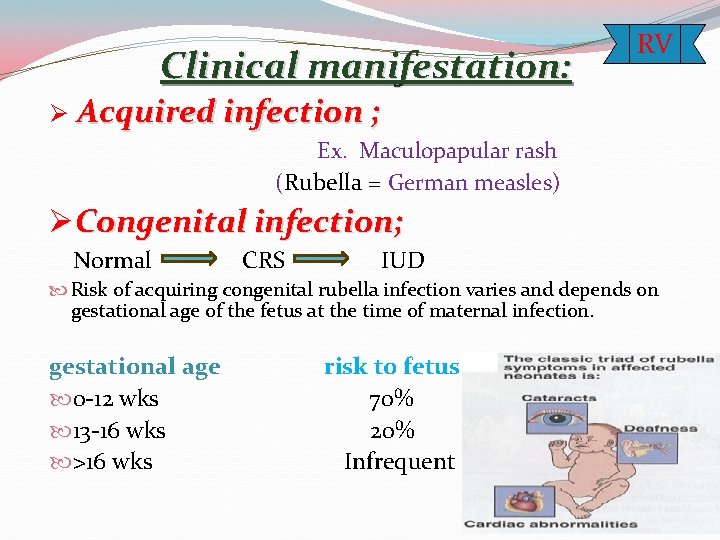
Clinical manifestation: Ø RV Acquired infection ; Ex. Maculopapular rash (Rubella = German measles) ØCongenital infection; Normal CRS IUD Risk of acquiring congenital rubella infection varies and depends on gestational age of the fetus at the time of maternal infection. gestational age risk to fetus 0 -12 wks 70% 13 -16 wks 20% >16 wks Infrequent
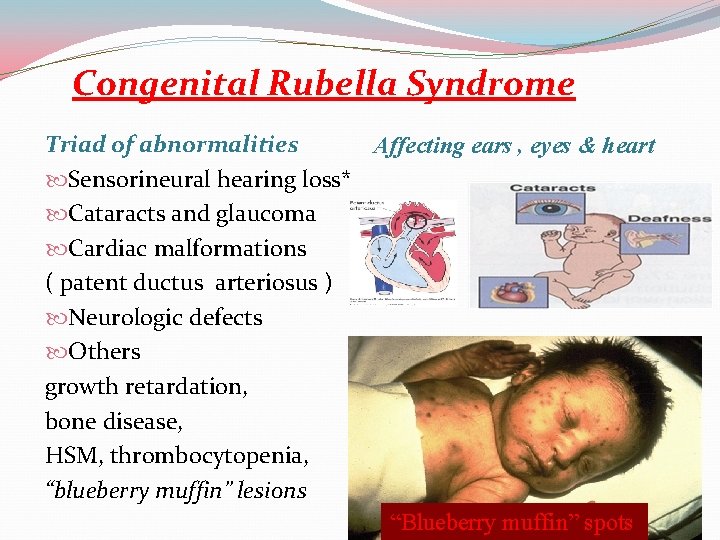
Congenital Rubella Syndrome Triad of abnormalities Affecting ears , eyes & heart Sensorineural hearing loss* Cataracts and glaucoma Cardiac malformations ( patent ductus arteriosus ) Neurologic defects Others growth retardation, bone disease, HSM, thrombocytopenia, “blueberry muffin” lesions “Blueberry muffin” spots 28
RV Dx; Pregnant mother Serological diagnosis 1. Rubella specific Ig. M 2. Ig. G seroconversion Infant *Prenatal Dx; Ø U/S Ø Culture Ø PCR *Postnatal Dx; Ø Serology; Ø Ø Ig. M Persistance of Ig. G >9 -12 ms Ø Culture Ø PCR
RV Prevention: Rubella vaccine ; (LAV) Routine antenatal screening: Rubella specific Ig. G Non-immune women vaccination ( avoid pregnancy for 3 months).
Transplacental infections ( TORCH) T= Toxoplasma gondii, O=Other (Treponema pallidum, Parvovirus &VZV), R=Rubella V C=CMV
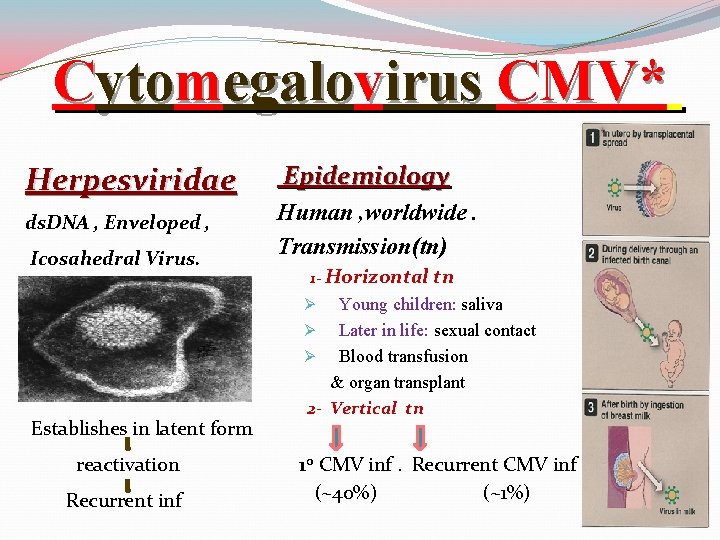
Cytomegalovirus CMV* Herpesviridae ds. DNA , Enveloped , Icosahedral Virus. Epidemiology Human , worldwide. Transmission(tn) 1 - Horizontal tn Young children: saliva Ø Later in life: sexual contact Ø Blood transfusion & organ transplant 2 - Vertical tn Ø Establishes in latent form reactivation Recurrent inf 10 CMV inf. Recurrent CMV inf (~40%) (~1%)
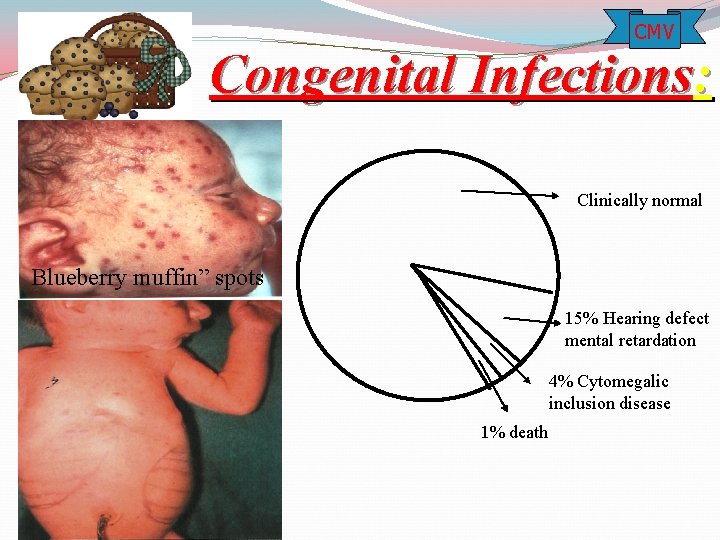
CMV Congenital Infections: Clinically normal Blueberry muffin” spots 15% Hearing defect mental retardation 4% Cytomegalic inclusion disease 1% death
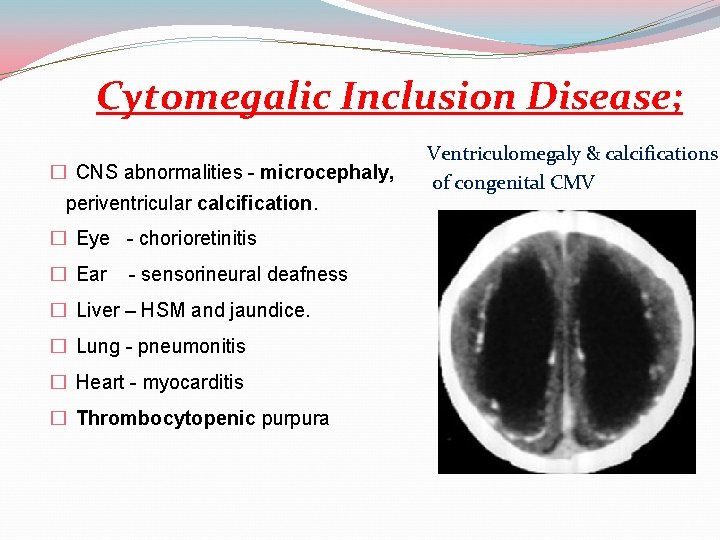
Cytomegalic Inclusion Disease; � CNS abnormalities - microcephaly, periventricular calcification. � Eye - chorioretinitis � Ear - sensorineural deafness � Liver – HSM and jaundice. � Lung - pneumonitis � Heart - myocarditis � Thrombocytopenic purpura Ventriculomegaly & calcifications of congenital CMV
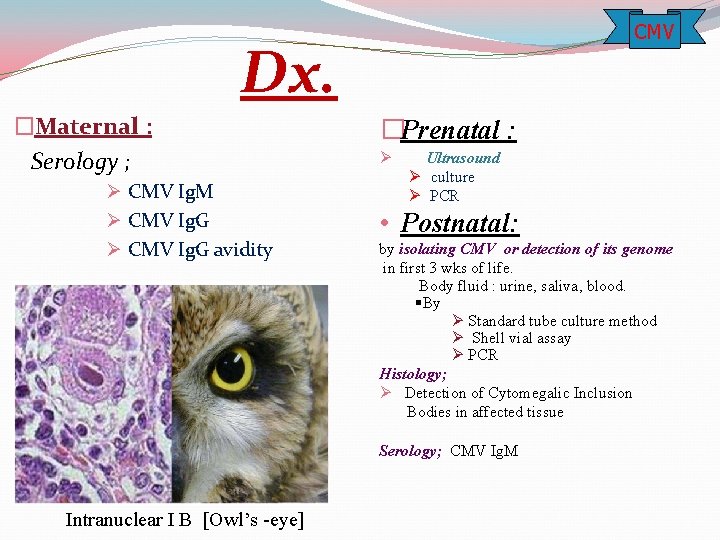
CMV Dx. �Maternal : Serology ; Ø CMV Ig. M Ø CMV Ig. G avidity �Prenatal : Ø Ultrasound Ø culture Ø PCR • Postnatal: by isolating CMV or detection of its genome in first 3 wks of life. Body fluid : urine, saliva, blood. §By Ø Standard tube culture method Ø Shell vial assay Ø PCR Histology; Ø Detection of Cytomegalic Inclusion Bodies in affected tissue Serology; CMV Ig. M Intranuclear I B [Owl’s -eye]
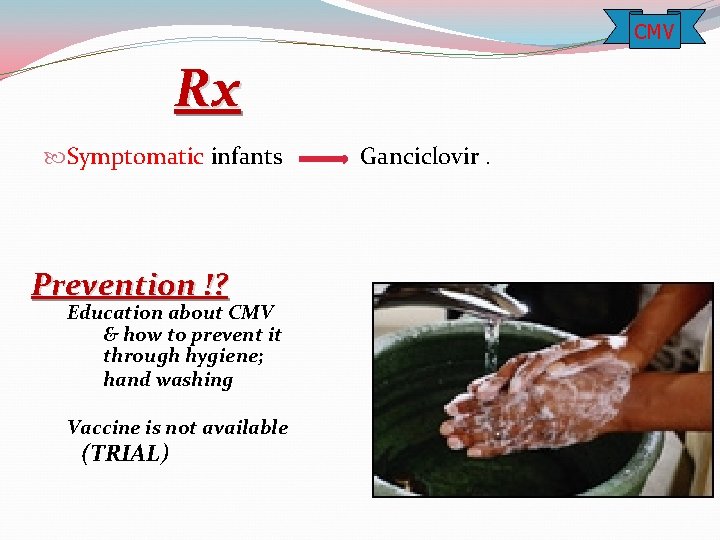
CMV Rx Symptomatic infants Ganciclovir. Prevention !? Education about CMV & how to prevent it through hygiene; hand washing Vaccine is not available (TRIAL)
OBJECTIVES; Upon completion of this lecture, the students should be able to To recognize the different types of infant infections. To know major transplacentaly transmitted pathogens causing congenital infections. (Toxoplasma , TP , Parvo. V , VZV, Rubella V & CMV. ) To describe their structures. To know their major epidemiology features. To describe clinical manifestations of their congenital infections To illustrate different laboratory diagnosis of maternal and congenital infections. To know their treatment and preventive measures.
Reference books

- Slides: 39