
Transpiration Objective 6 L 1 2 1 I
Transpiration
Objective 6. L. 1. 2: 1. I can explain the significance of transpiration to the survival of the plant. 2. I can explain the structures used in transpiration.
Definition • Transpiration is the evaporation of water from the aerial parts of plants. Of all the water plant absorbs, over 90% is transpired to the air as water vapor.

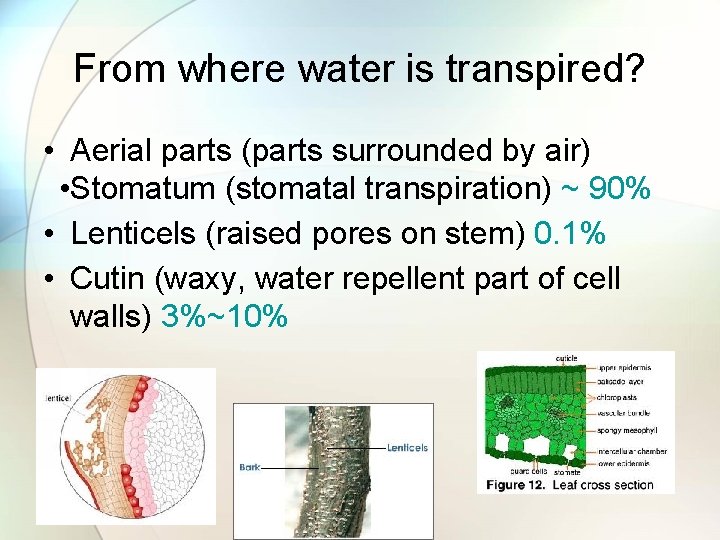
From where water is transpired? • Aerial parts (parts surrounded by air) • Stomatum (stomatal transpiration) ~ 90% • Lenticels (raised pores on stem) 0. 1% • Cutin (waxy, water repellent part of cell walls) 3%~10%
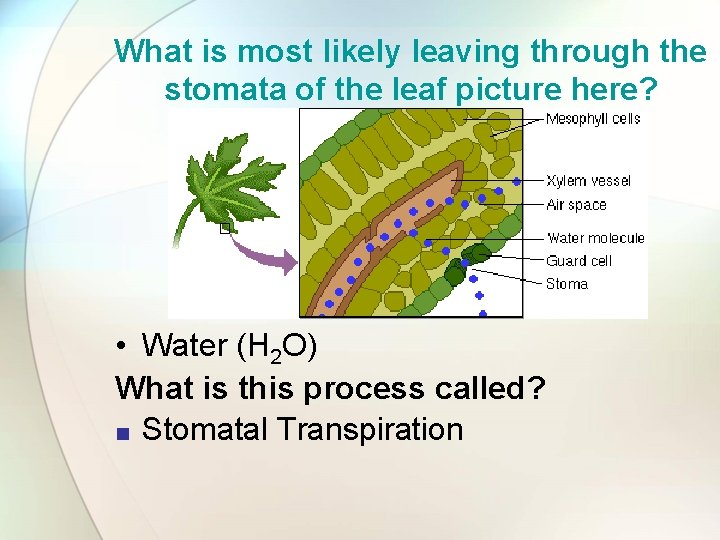
What is most likely leaving through the stomata of the leaf picture here? • Water (H 2 O) What is this process called? ■ Stomatal Transpiration
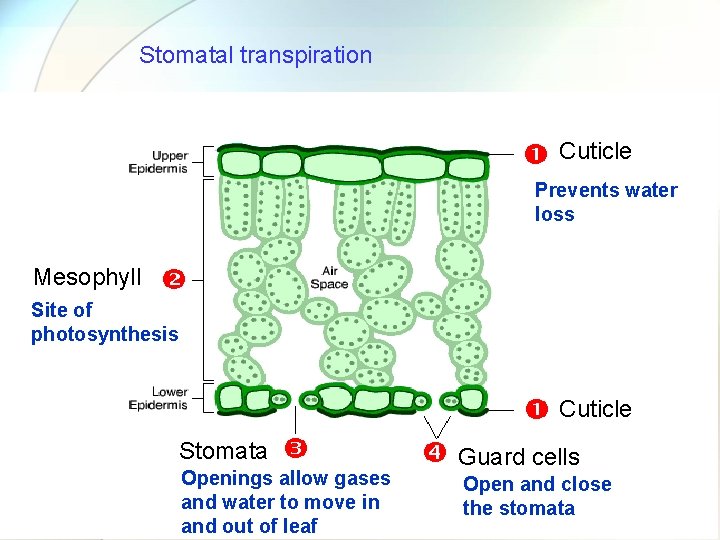
Stomatal transpiration Cuticle Prevents water loss Mesophyll Site of photosynthesis Cuticle Stomata Openings allow gases and water to move in and out of leaf Guard cells Open and close the stomata
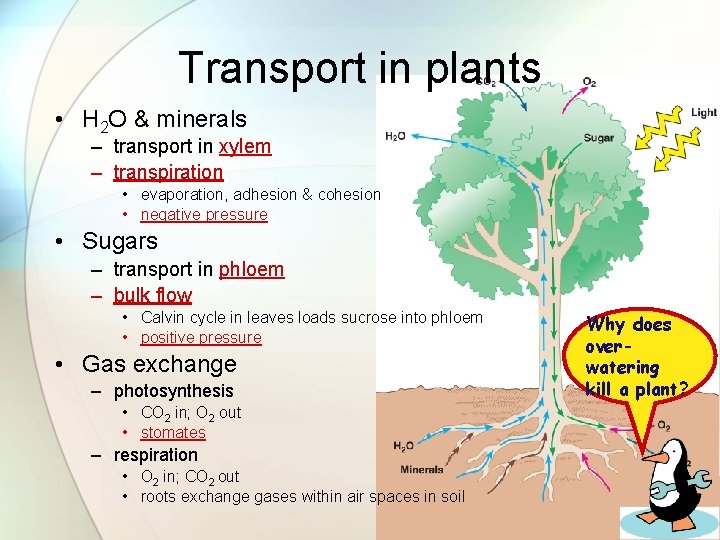
Transport in plants • H 2 O & minerals – transport in xylem – transpiration • evaporation, adhesion & cohesion • negative pressure • Sugars – transport in phloem – bulk flow • Calvin cycle in leaves loads sucrose into phloem • positive pressure • Gas exchange – photosynthesis • CO 2 in; O 2 out • stomates – respiration • O 2 in; CO 2 out • roots exchange gases within air spaces in soil Why does overwatering kill a plant?
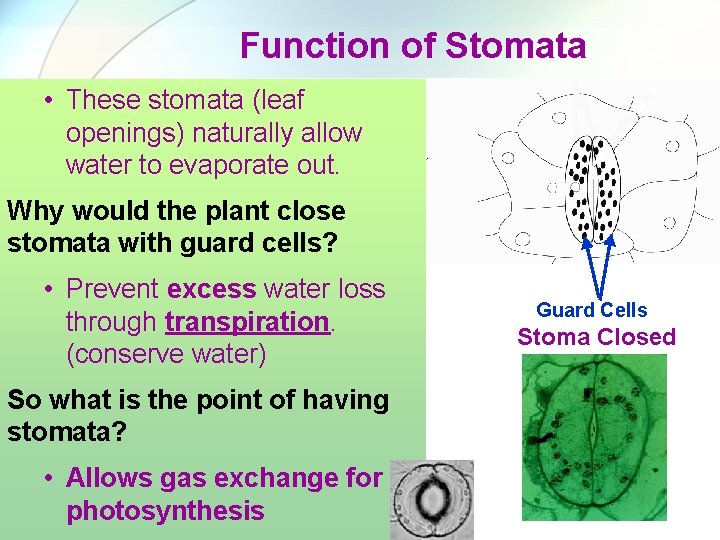
Function of Stomata • These stomata (leaf openings) naturally allow water to evaporate out. Why would the plant close stomata with guard cells? • Prevent excess water loss through. Stoma transpiration. Open (conserve water) So what is the point of having stomata? • Allows gas exchange for photosynthesis Guard Cells Stoma Closed
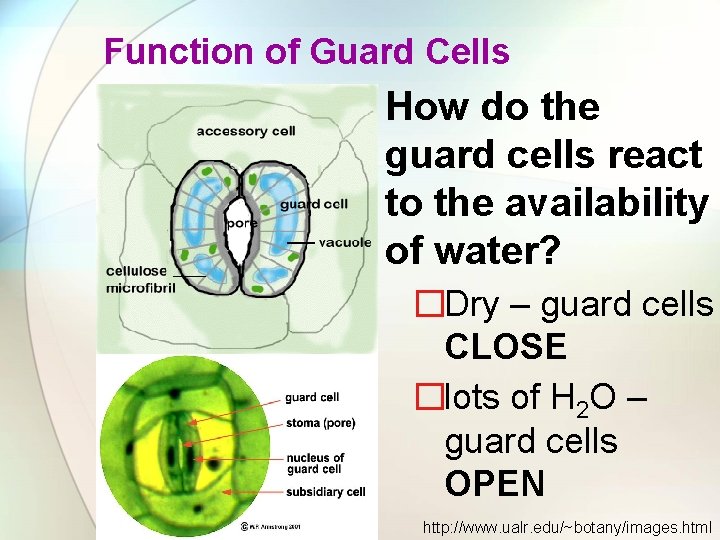
Function of Guard Cells How do the guard cells react to the availability of water? �Dry – guard cells CLOSE �lots of H 2 O – guard cells OPEN http: //www. ualr. edu/~botany/images. html
Factors influencing stomatal aperture • • • Light Temp. CO 2 Water content Plant hormone
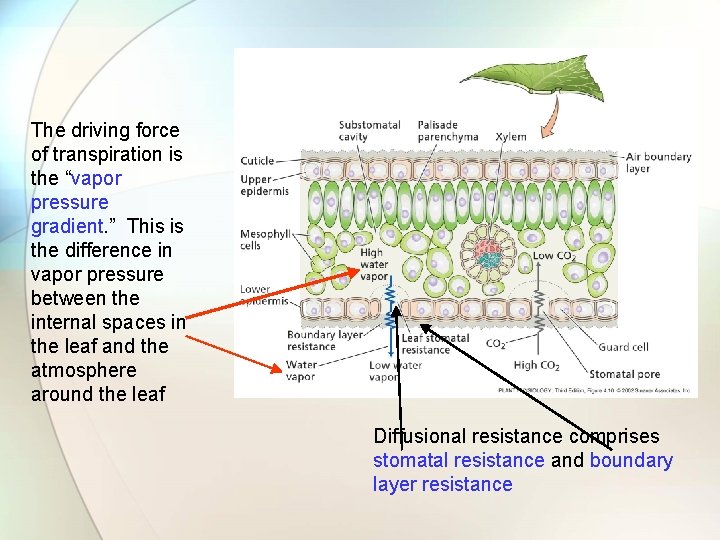
The driving force of transpiration is the “vapor pressure gradient. ” This is the difference in vapor pressure between the internal spaces in the leaf and the atmosphere around the leaf Diffusional resistance comprises stomatal resistance and boundary layer resistance
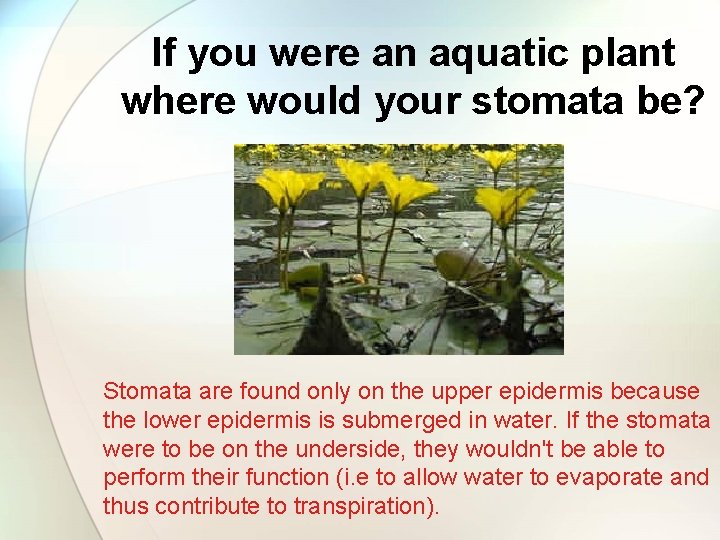
If you were an aquatic plant where would your stomata be? Fringed Water-lily Stomata are found only on the upper epidermis because the lower epidermis is submerged in water. If the stomata were to be on the underside, they wouldn't be able to perform their function (i. e to allow water to evaporate and thus contribute to transpiration).

Objective check in
Objective 6. L. 1. 2: I can explain transpiration. 1. Why do plants wilt? Objective 6. L. 1. 2 I can identify the structures used in transpiration. 1. What parts of the plant allow water to move in the plant? 2. What cell parts regulate water evaporation?
Lets see it in action transpiration lab. Observe Celery Stalk. Answer the Questions
- Slides: 17