
Transmission through blood bodily fluids What is a
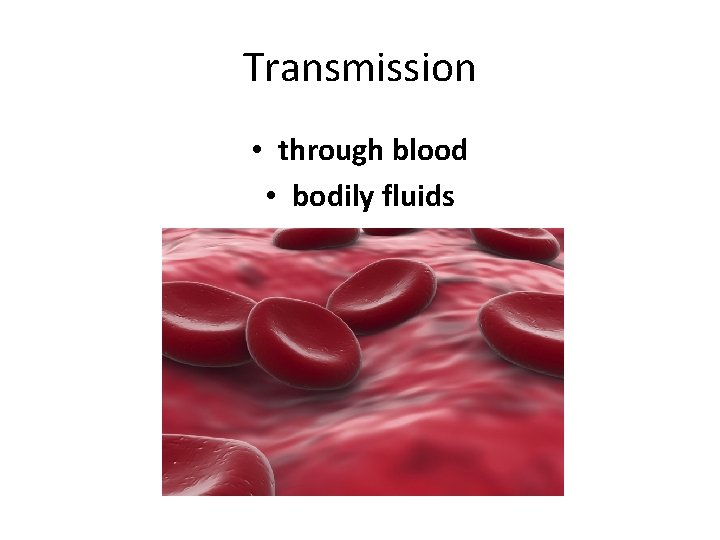
Transmission • through blood • bodily fluids
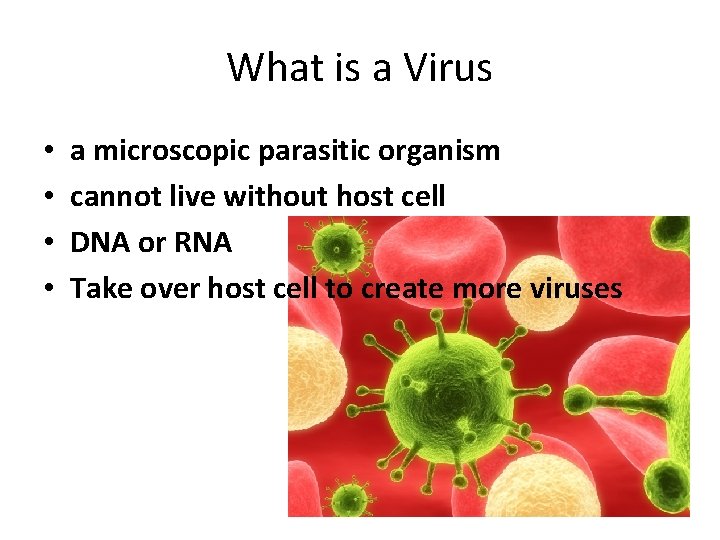
What is a Virus • • a microscopic parasitic organism cannot live without host cell DNA or RNA Take over host cell to create more viruses
Bloodborne Pathogens • OSHA: Occupational Safety and Health Administration – Established standards for handling bloodborne pathogens • Bloodborne Pathogen: organism that can cause disease that are present in body fluids. • 2 most significant pathogens: – HBV – HIV • HAV: spread through lack of personal hygiene, unprotected sex, contaminated shellfish • Which one has a higher incidence of spreading and why.
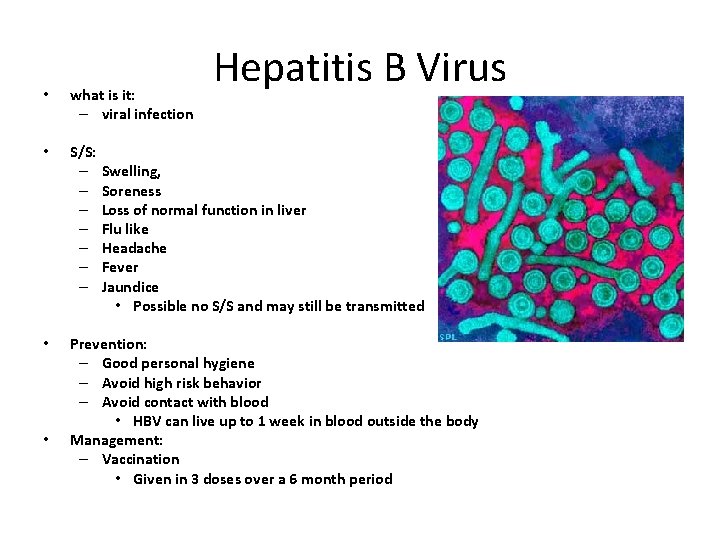
• what is it: – viral infection • S/S: – – – – • • Hepatitis B Virus Swelling, Soreness Loss of normal function in liver Flu like Headache Fever Jaundice • Possible no S/S and may still be transmitted Prevention: – Good personal hygiene – Avoid high risk behavior – Avoid contact with blood • HBV can live up to 1 week in blood outside the body Management: – Vaccination • Given in 3 doses over a 6 month period
Human Immunodeficiency virus • what is it: – retrovirus + a host cell – 1 in 250 people are infected w/ HIV • S/S: – – – Fatigue Weight loss Muscle or joint pain, painful or swollen glands night sweats fever • AIDS: – Collection of signs and symptoms – No protection against other viruses – Die after about 2 years • Management: – No vaccine, no cure • Prevention – Abstinence – Don’t share needles
Spreading in Sports • transmission between athletes is low • some sports have higher incidence of transmission – wrestling – boxing – martial arts
Participation in Sport • policy: formed to prevent transmission in sports, and to educate • no definite answer for HIV positive athlete – Americans with Disabilities Act of 1991 • Athletes who are infected cannot be discriminated against • Exclusion must be based on health risks only
- Slides: 8