
Transmission of Action Potential Across a Synapse Copyright
- Slides: 8
Transmission of Action Potential Across a Synapse
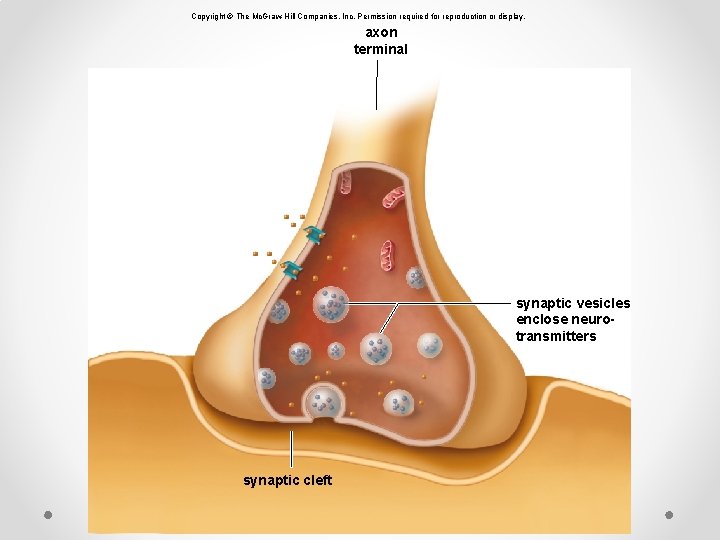
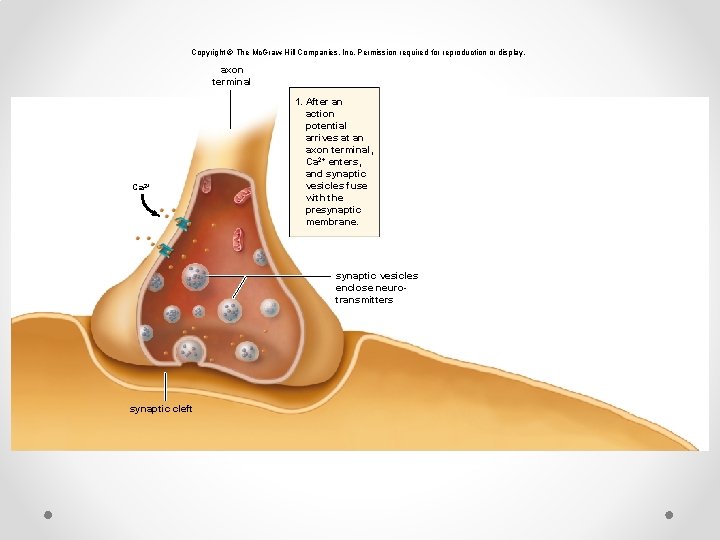
Copyright © The Mc. Graw-Hill Companies, Inc. Permission required for reproduction or display. axon terminal synaptic vesicles enclose neurotransmitters synaptic cleft
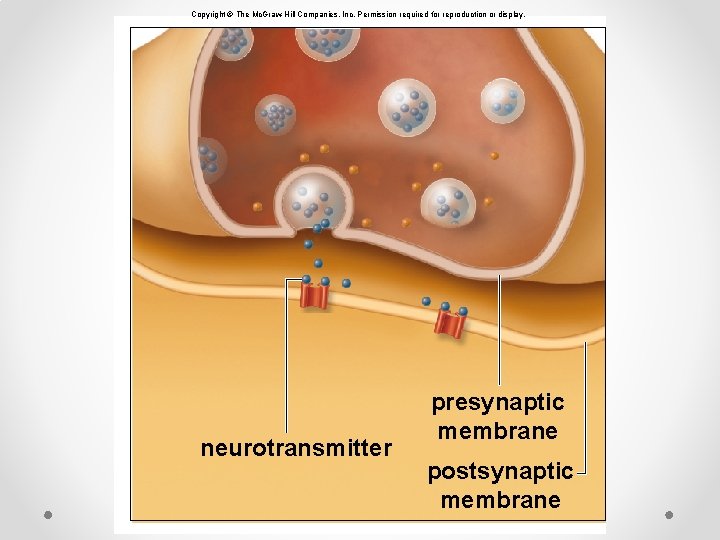
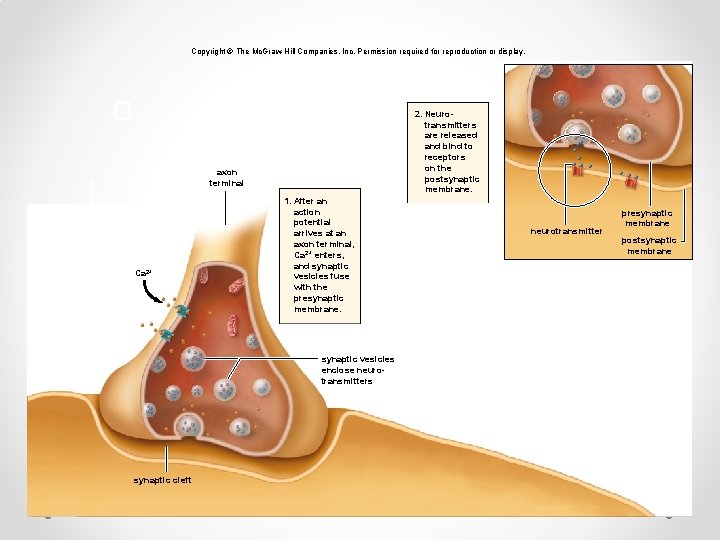
Copyright © The Mc. Graw-Hill Companies, Inc. Permission required for reproduction or display. neurotransmitter presynaptic membrane postsynaptic membrane
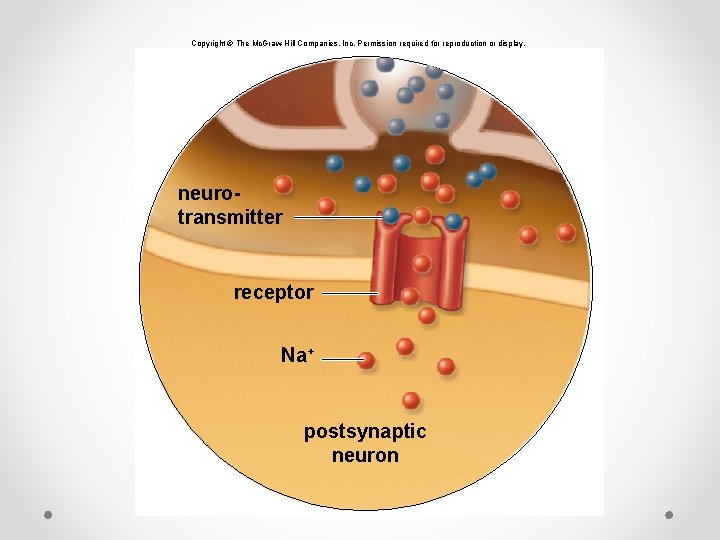
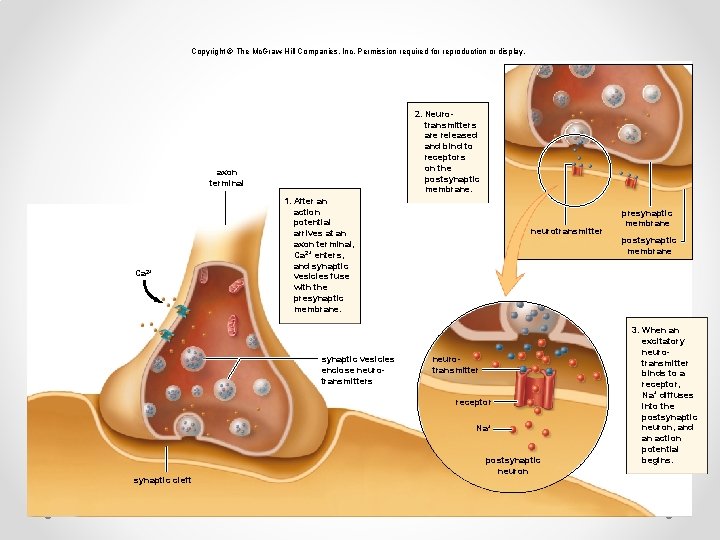
Fig. 17. 5 d Copyright © The Mc. Graw-Hill Companies, Inc. Permission required for reproduction or display. neurotransmitter receptor Na+ postsynaptic neuron
Copyright © The Mc. Graw-Hill Companies, Inc. Permission required for reproduction or display. axon terminal Ca 2+ 1. After an action potential arrives at an axon terminal, Ca 2+ enters, and synaptic vesicles fuse with the presynaptic membrane. synaptic vesicles enclose neurotransmitters synaptic cleft
Copyright © The Mc. Graw-Hill Companies, Inc. Permission required for reproduction or display. 2. Neurotransmitters are released and bind to receptors on the postsynaptic membrane. axon terminal Ca 2+ 1. After an action potential arrives at an axon terminal, Ca 2+ enters, and synaptic vesicles fuse with the presynaptic membrane. synaptic vesicles enclose neurotransmitters synaptic cleft neurotransmitter presynaptic membrane postsynaptic membrane
Copyright © The Mc. Graw-Hill Companies, Inc. Permission required for reproduction or display. 2. Neurotransmitters are released and bind to receptors on the postsynaptic membrane. axon terminal Ca 2+ 1. After an action potential arrives at an axon terminal, Ca 2+ enters, and synaptic vesicles fuse with the presynaptic membrane. synaptic vesicles enclose neurotransmitters neurotransmitter receptor Na+ synaptic cleft postsynaptic neuron presynaptic membrane postsynaptic membrane 3. When an excitatory neurotransmitter binds to a receptor, Na+ diffuses into the postsynaptic neuron, and an action potential begins.
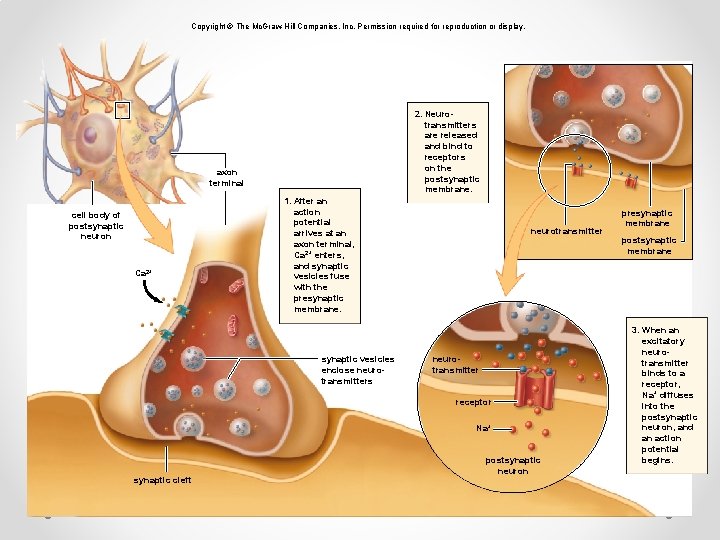
Copyright © The Mc. Graw-Hill Companies, Inc. Permission required for reproduction or display. 2. Neurotransmitters are released and bind to receptors on the postsynaptic membrane. axon terminal cell body of postsynaptic neuron Ca 2+ 1. After an action potential arrives at an axon terminal, Ca 2+ enters, and synaptic vesicles fuse with the presynaptic membrane. synaptic vesicles enclose neurotransmitters neurotransmitter receptor Na+ synaptic cleft postsynaptic neuron presynaptic membrane postsynaptic membrane 3. When an excitatory neurotransmitter binds to a receptor, Na+ diffuses into the postsynaptic neuron, and an action potential begins.