
Transmission Channels 1 Channels parameters n n n

![Linear channels [1] n n n Linear channels have the output that is input](https://slidetodoc.com/presentation_image_h2/4beaa260c1eccf352847355ca4db804e/image-6.jpg "Linear channels [1] n n n Linear channels have the output that is input")
![Nonlinear channels[1] n n System non-linearity means that its transfer characteristic is nonlinear For](https://slidetodoc.com/presentation_image_h2/4beaa260c1eccf352847355ca4db804e/image-7.jpg "Nonlinear channels[1] n n System non-linearity means that its transfer characteristic is nonlinear For")



- Slides: 47
Transmission Channels 1
Channels parameters n n n Characterized by – attenuation , transfer function – impedance , matching – bandwidth , data rate Transmission impairments change channel’s effective properties – system internal/external interference • cross-talk - leakage power from other users • channel may introduce inter-symbolic interference (ISI) • channel may absorb interference from other sources • wideband noise – distortion, linear (uncompensated transfer function)/nonlinear (non -linearity in circuit elements) Channel parameters are a function of frequency, transmission length, temperature. . . 2
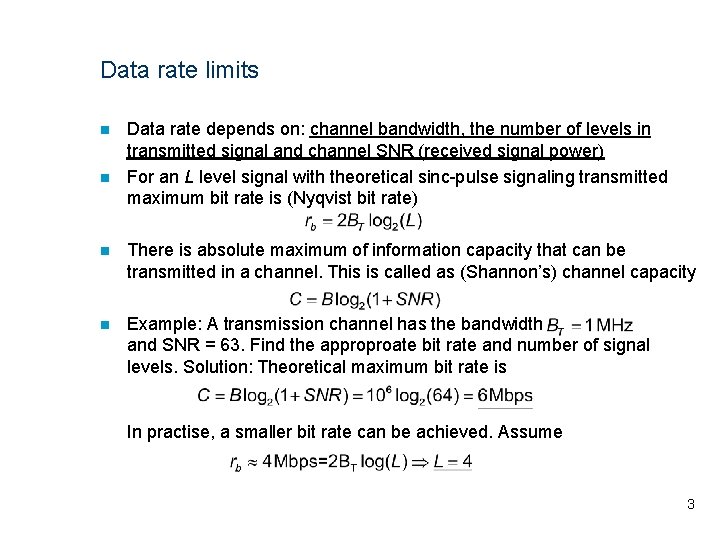
Data rate limits n n Data rate depends on: channel bandwidth, the number of levels in transmitted signal and channel SNR (received signal power) For an L level signal with theoretical sinc-pulse signaling transmitted maximum bit rate is (Nyqvist bit rate) n There is absolute maximum of information capacity that can be transmitted in a channel. This is called as (Shannon’s) channel capacity n Example: A transmission channel has the bandwidth and SNR = 63. Find the approproate bit rate and number of signal levels. Solution: Theoretical maximum bit rate is In practise, a smaller bit rate can be achieved. Assume 3
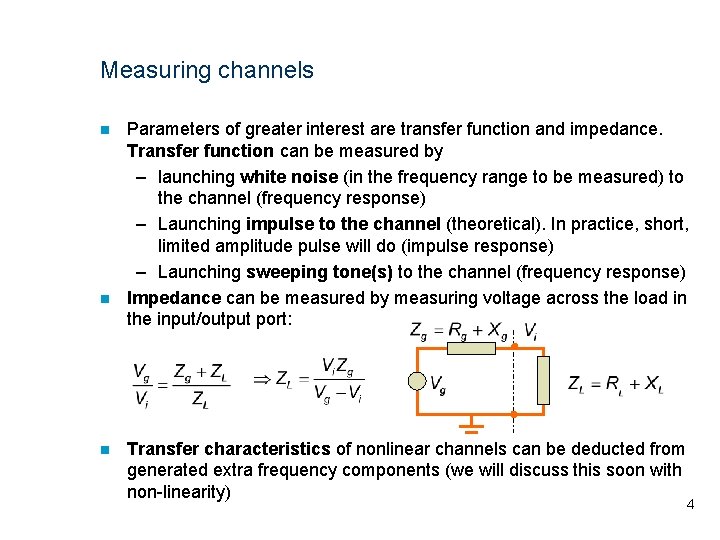
Measuring channels n n n Parameters of greater interest are transfer function and impedance. Transfer function can be measured by – launching white noise (in the frequency range to be measured) to the channel (frequency response) – Launching impulse to the channel (theoretical). In practice, short, limited amplitude pulse will do (impulse response) – Launching sweeping tone(s) to the channel (frequency response) Impedance can be measured by measuring voltage across the load in the input/output port: Transfer characteristics of nonlinear channels can be deducted from generated extra frequency components (we will discuss this soon with non-linearity) 4
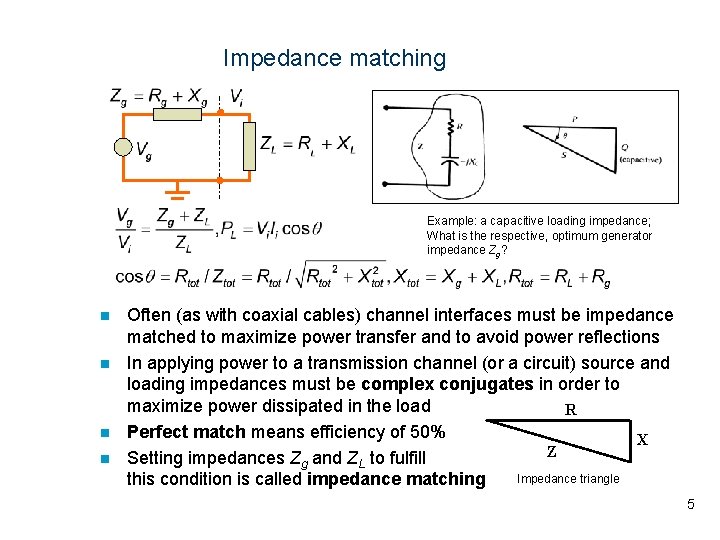
Impedance matching Example: a capacitive loading impedance; What is the respective, optimum generator impedance Zg? n n Often (as with coaxial cables) channel interfaces must be impedance matched to maximize power transfer and to avoid power reflections In applying power to a transmission channel (or a circuit) source and loading impedances must be complex conjugates in order to maximize power dissipated in the load R Perfect match means efficiency of 50% X Z Setting impedances Zg and ZL to fulfill Impedance triangle this condition is called impedance matching 5
Linear channels [1] n n n Linear channels have the output that is input signal multiplied by a constant and delayed by a finite delay: due to the fact that system output is also Therefore, for linear systems Linear distortion can be – amplitude distortion: – delay distortion: Solving above gives phase delay, defined by In distortionless channel all Fourier-components retain their relative phase positions while propagating in channel 6
Nonlinear channels[1] n n System non-linearity means that its transfer characteristic is nonlinear For non-linear channels output is Assume sinusoidal input , then where Dn: s are the distortion coefficients n: rth-order distortion [%] is determined with respect of the fundamental frequency: Assume that the input is 3 rd order intercept [1, p. 55] occurs* where n This is easy to measure and is used to characterize nonlinear systems 3: rd order intercept [1] *See the prove in supplementary material (A. Burr: Modulation and Coding) 7
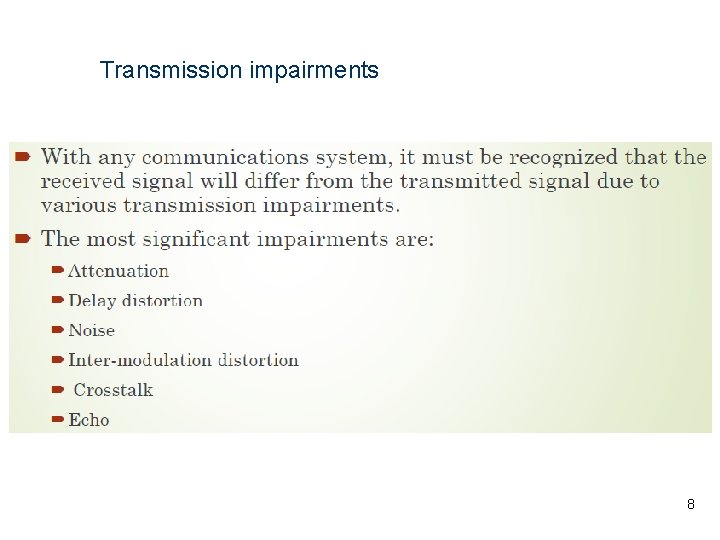
Transmission impairments 8
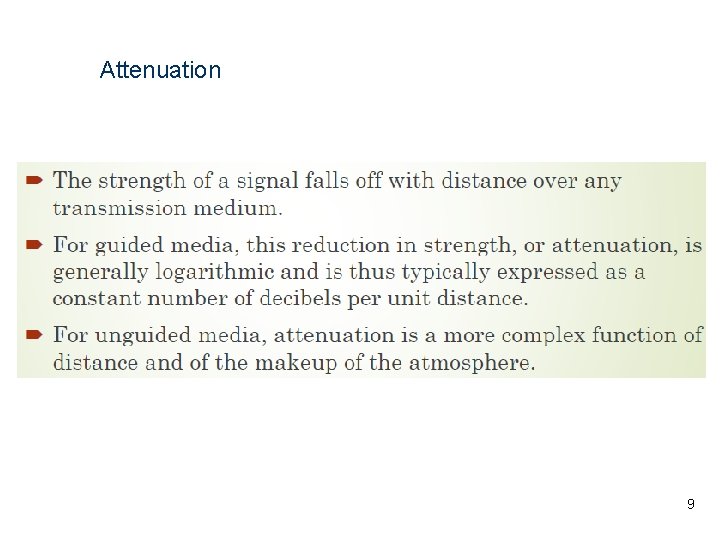
Attenuation 9
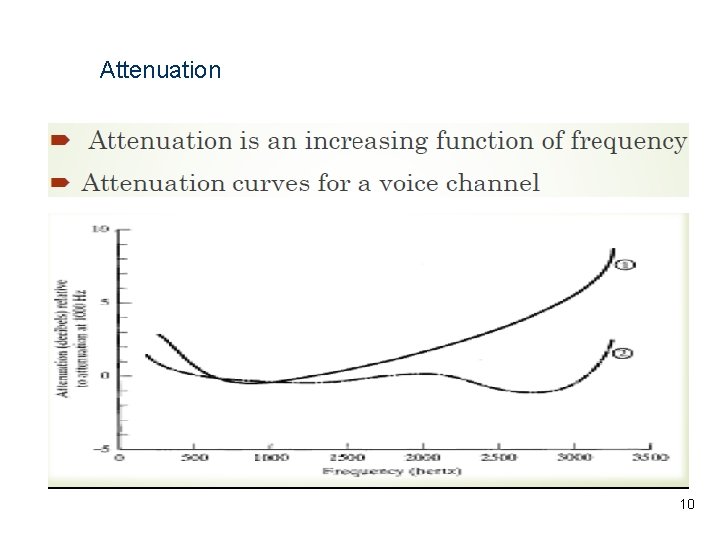
Attenuation 10
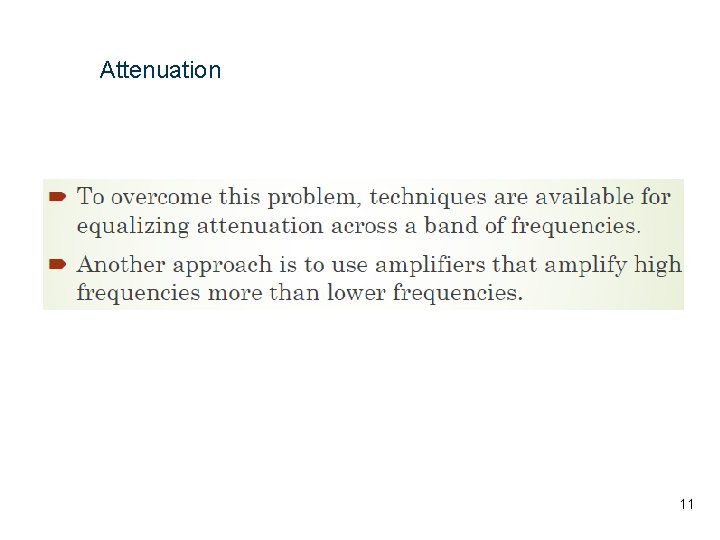
Attenuation 11
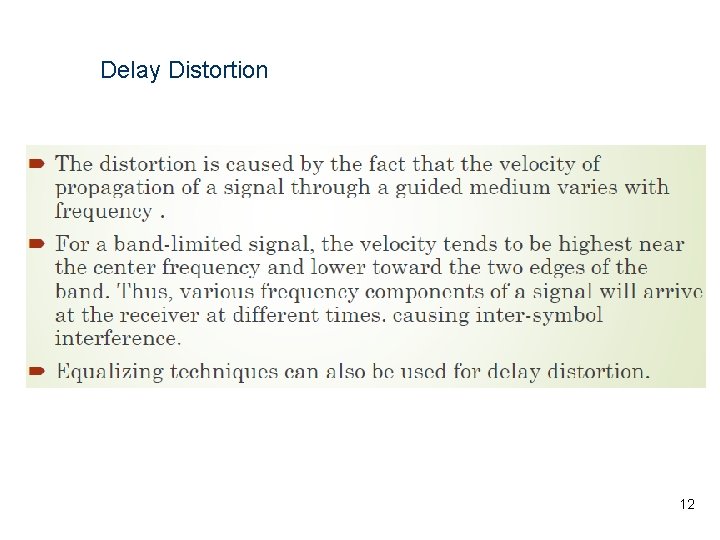
Delay Distortion 12
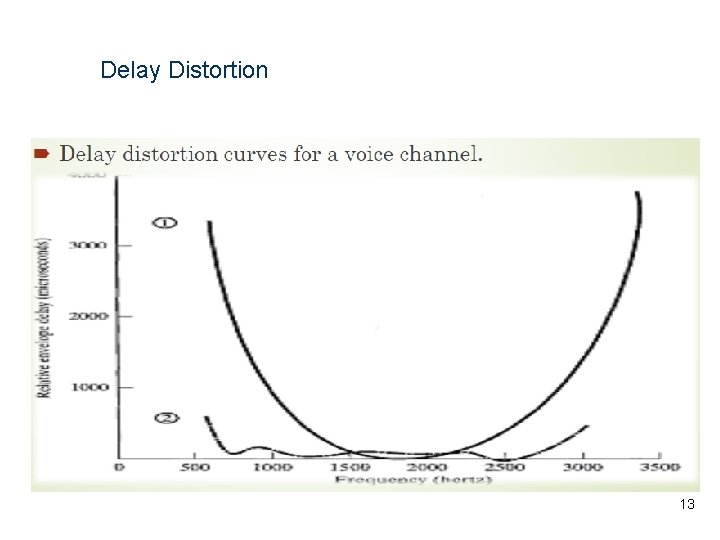
Delay Distortion 13
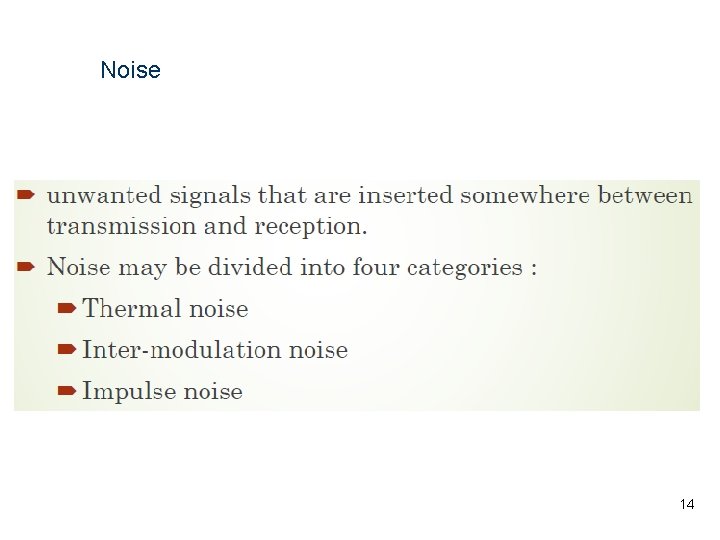
Noise 14
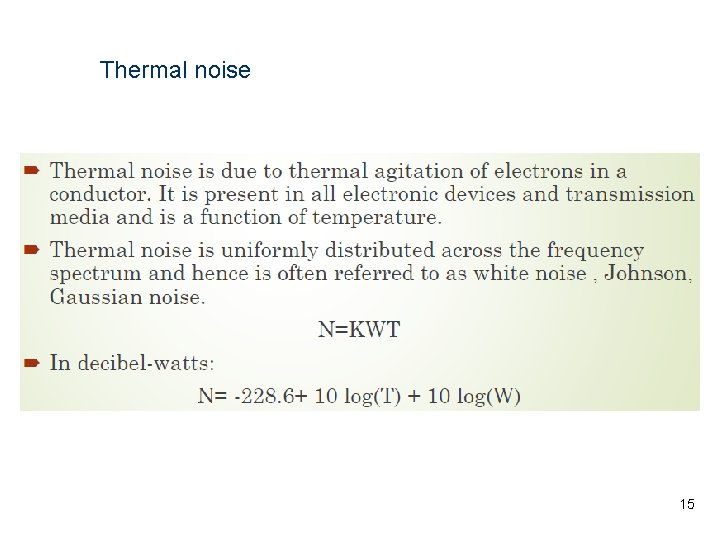
Thermal noise 15
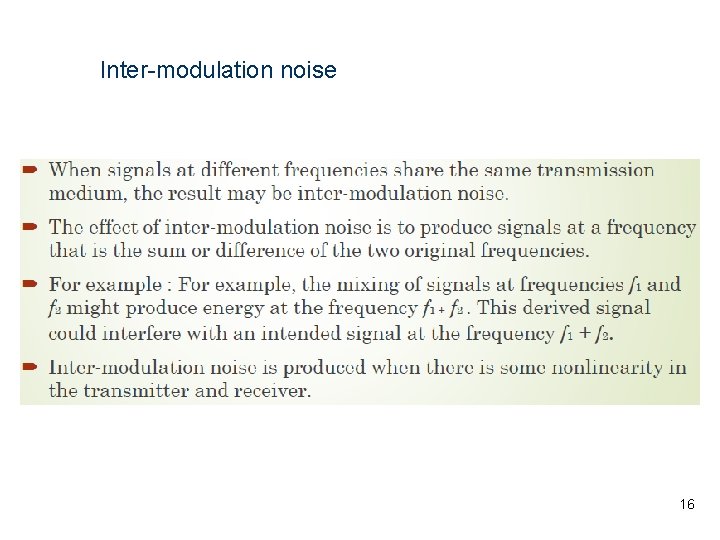
Inter-modulation noise 16
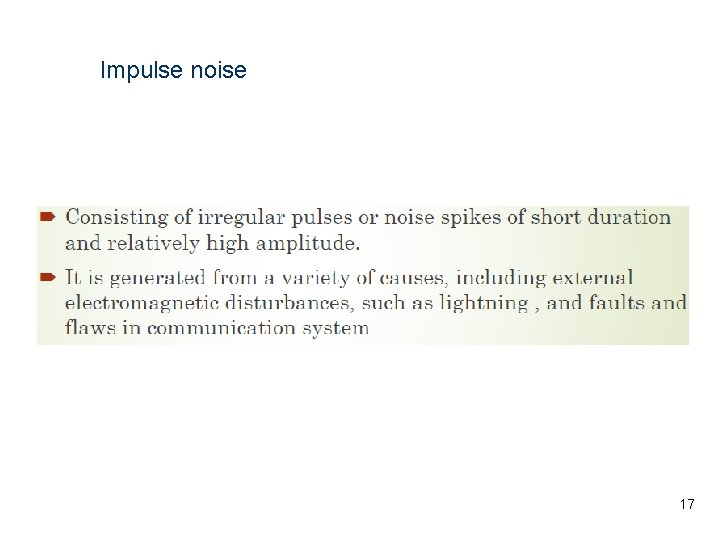
Impulse noise 17
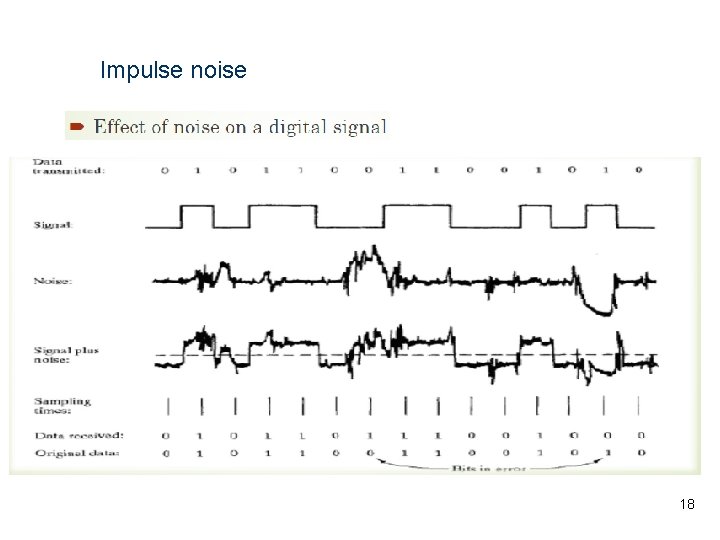
Impulse noise 18
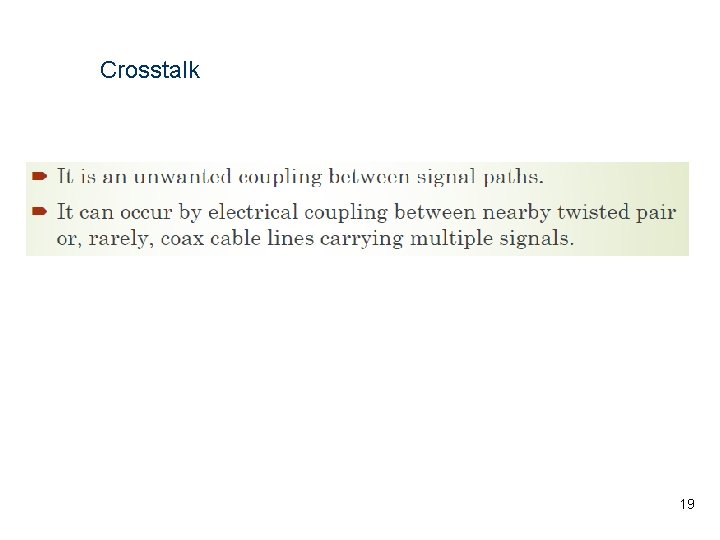
Crosstalk 19
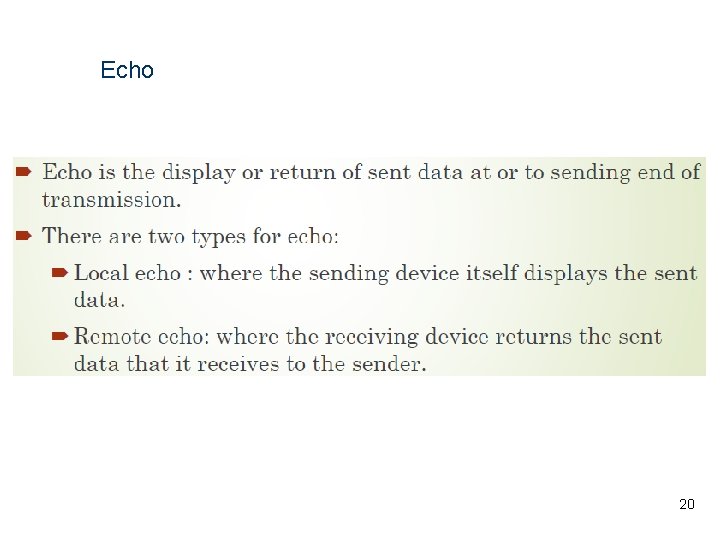
Echo 20
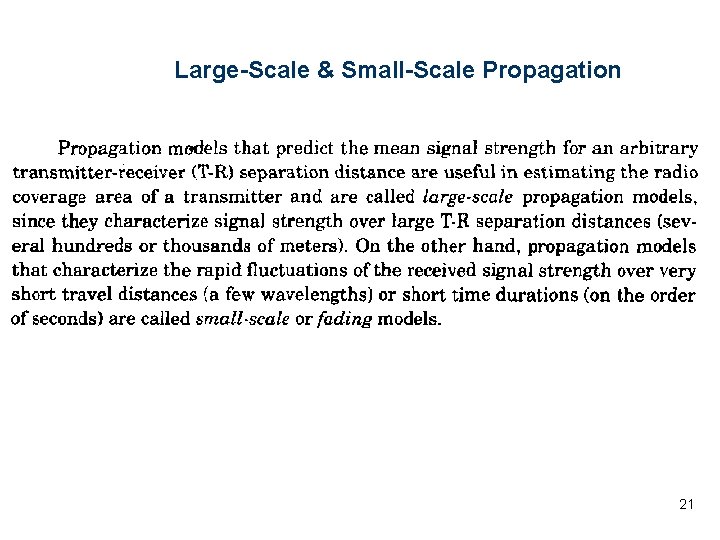
Large-Scale & Small-Scale Propagation 21
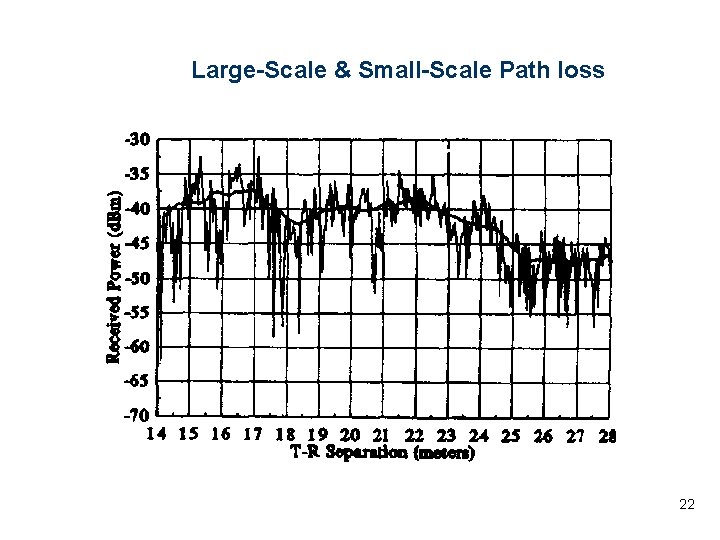
Large-Scale & Small-Scale Path loss 22
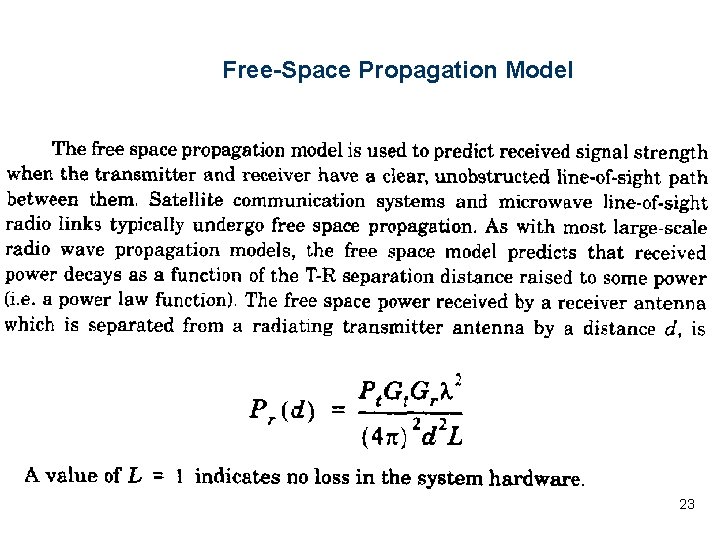
Free-Space Propagation Model 23
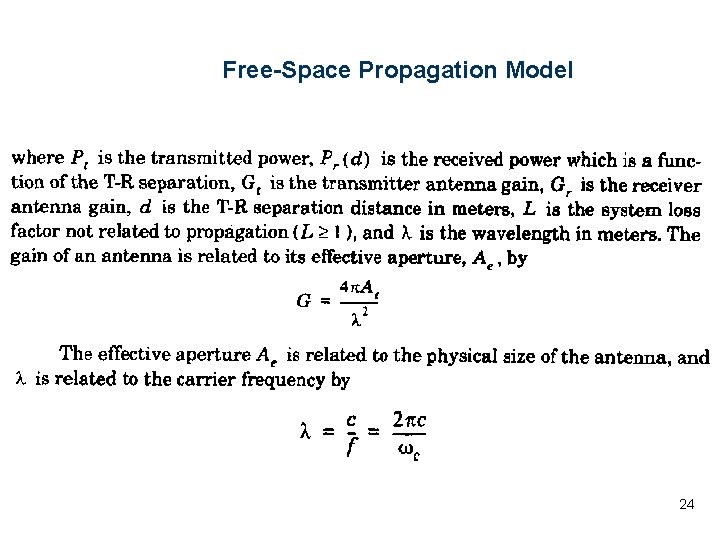
Free-Space Propagation Model 24
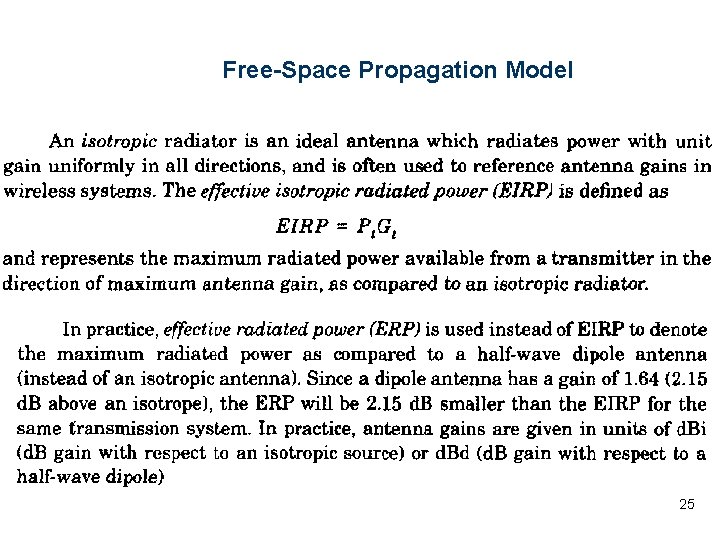
Free-Space Propagation Model 25
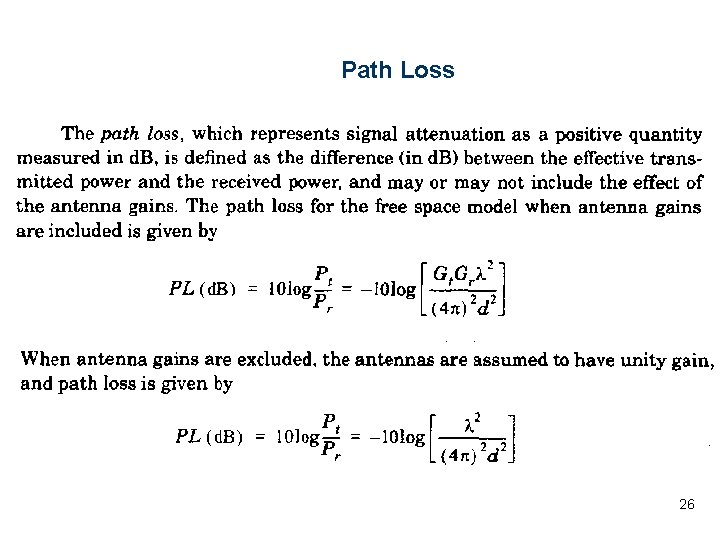
Path Loss 26
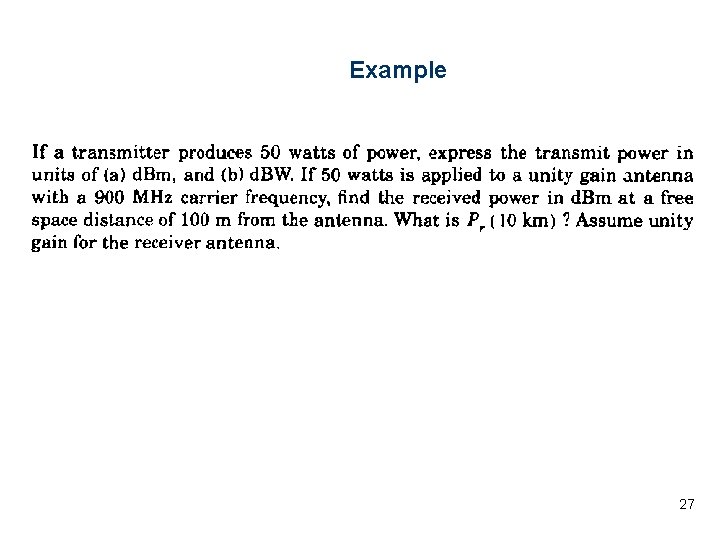
Example 27
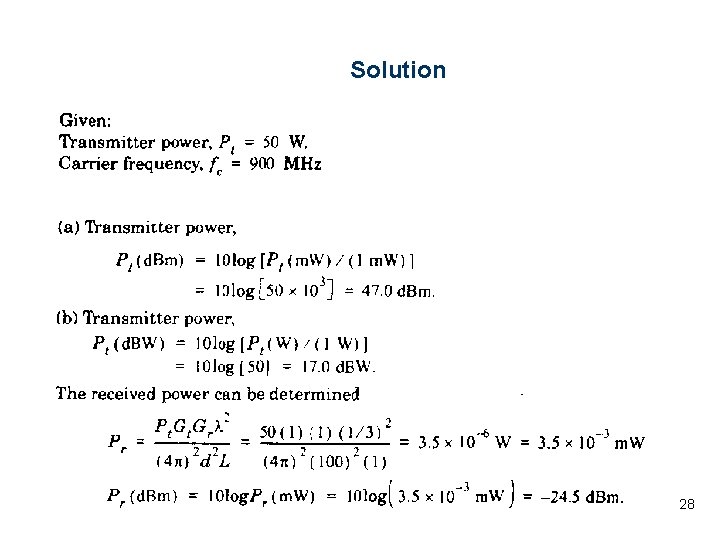
Solution 28
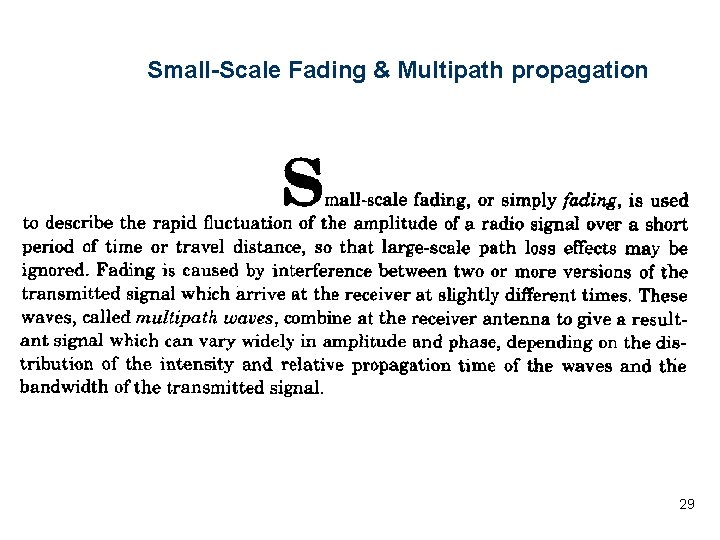
Small-Scale Fading & Multipath propagation 29
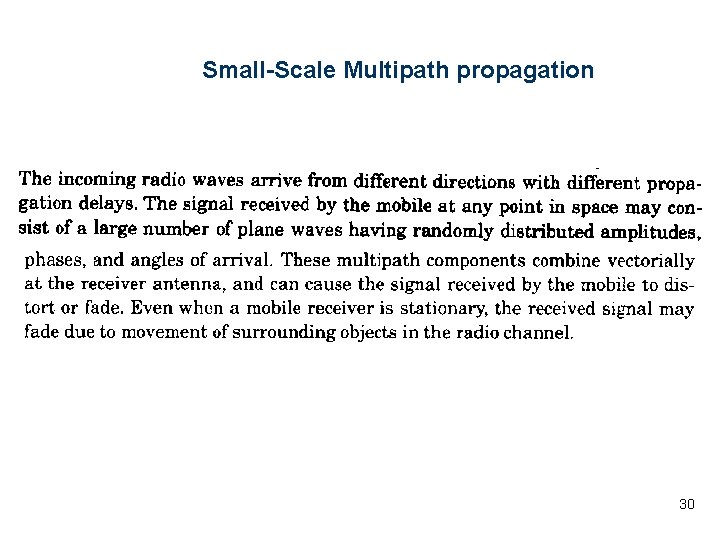
Small-Scale Multipath propagation 30
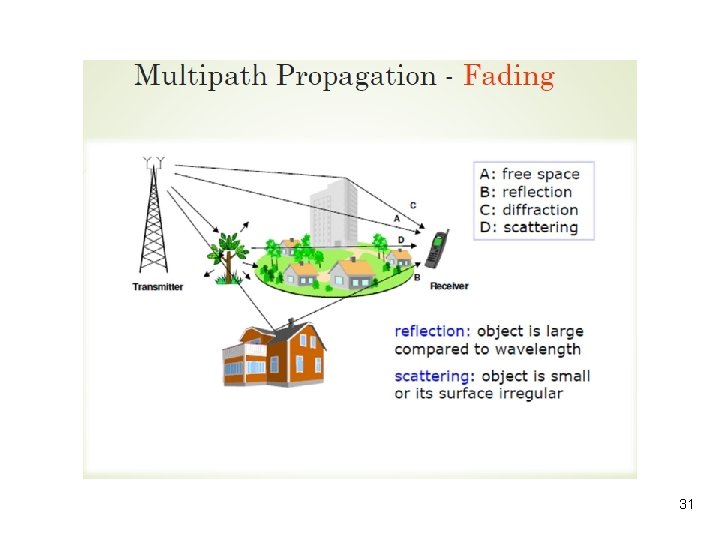
31
Small-Scale Multipath propagation 32
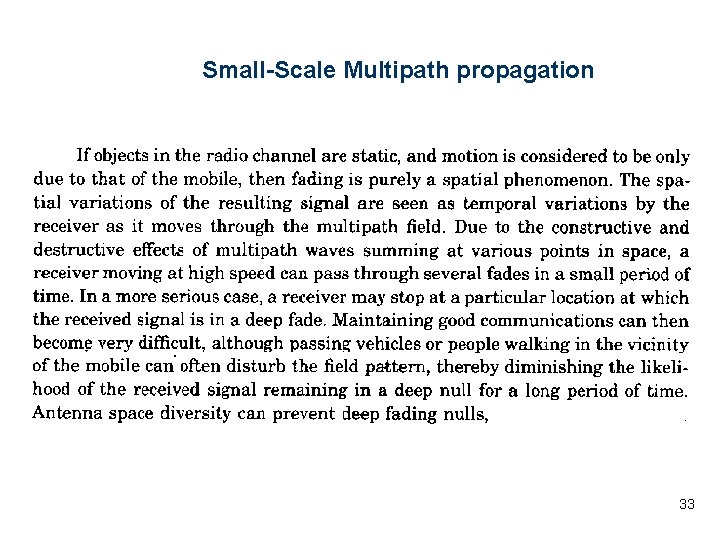
Small-Scale Multipath propagation 33
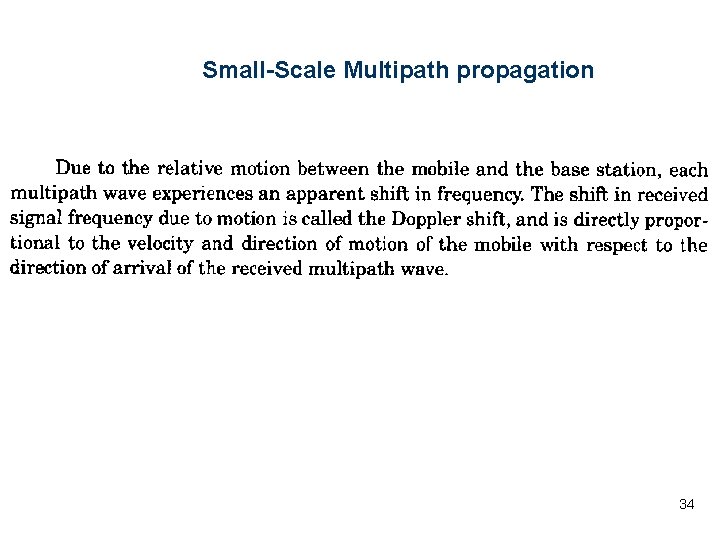
Small-Scale Multipath propagation 34
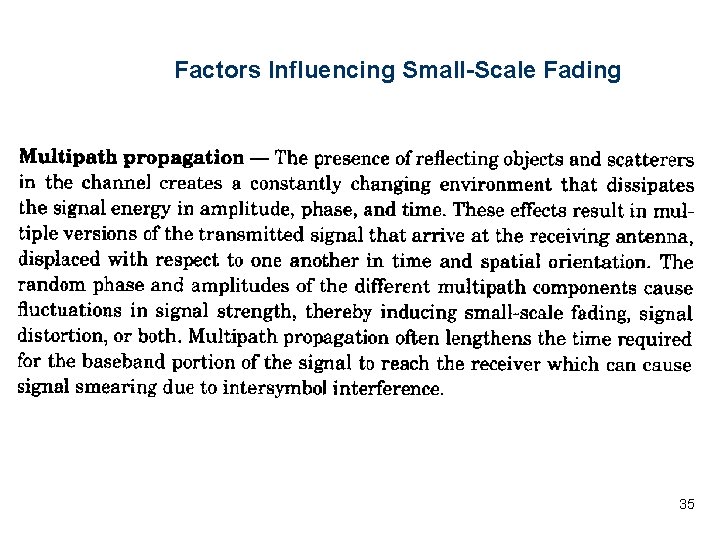
Factors Influencing Small-Scale Fading 35
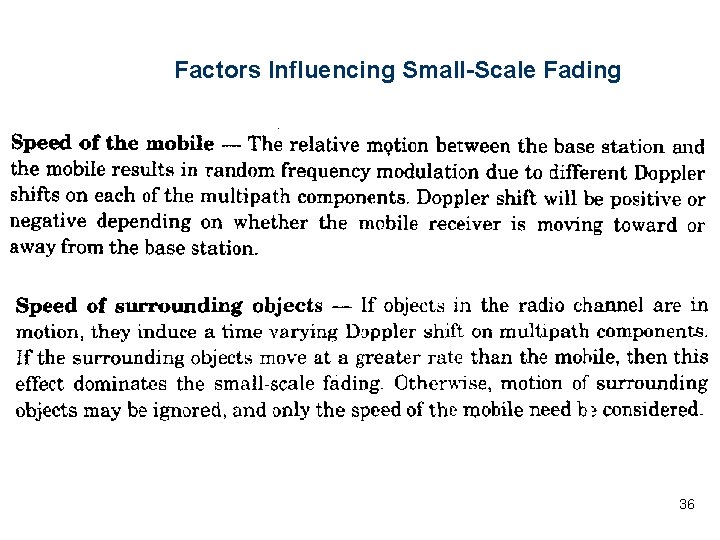
Factors Influencing Small-Scale Fading 36
Factors Influencing Small-Scale Fading 37
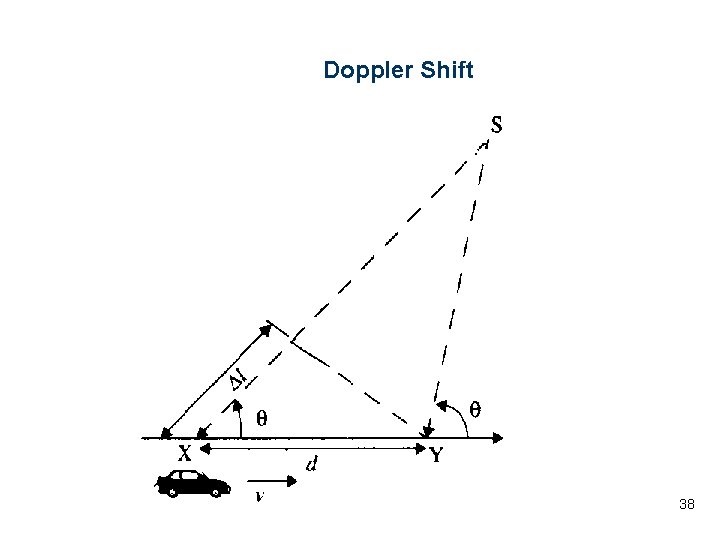
Doppler Shift 38
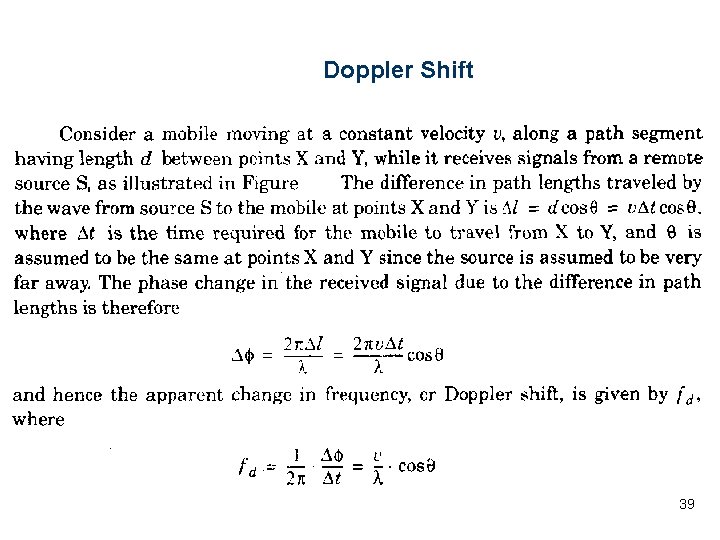
Doppler Shift 39
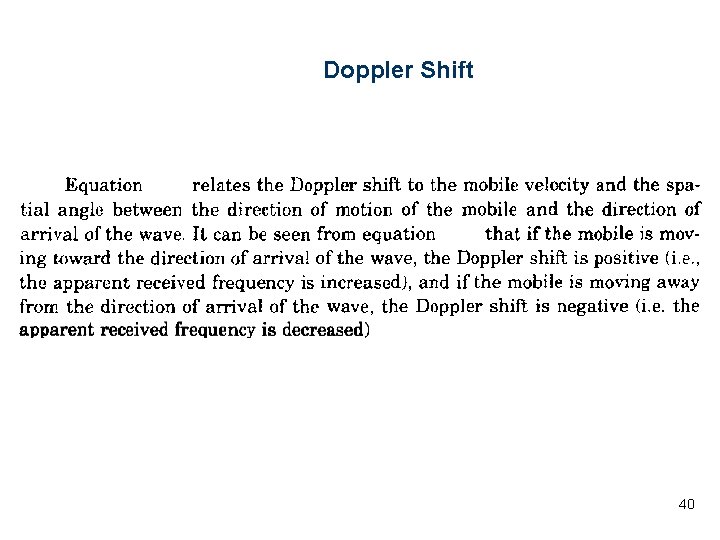
Doppler Shift 40
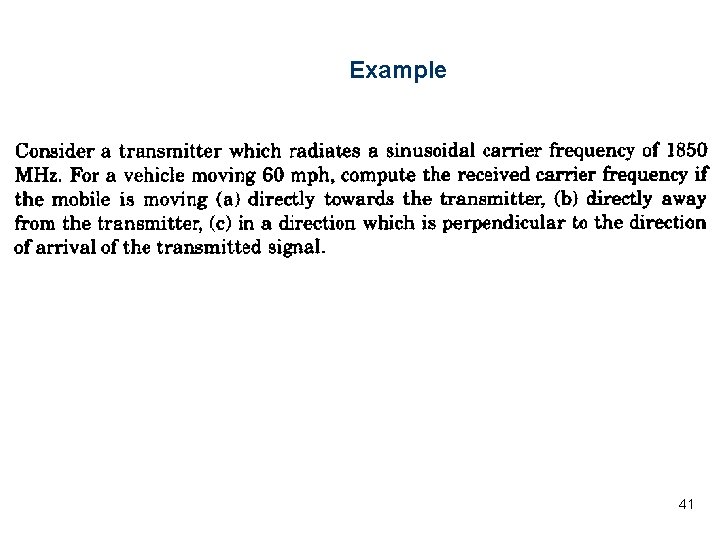
Example 41
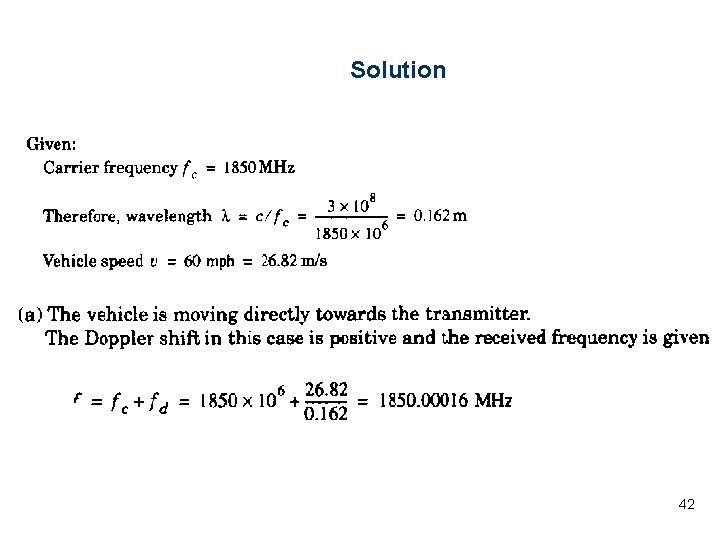
Solution 42
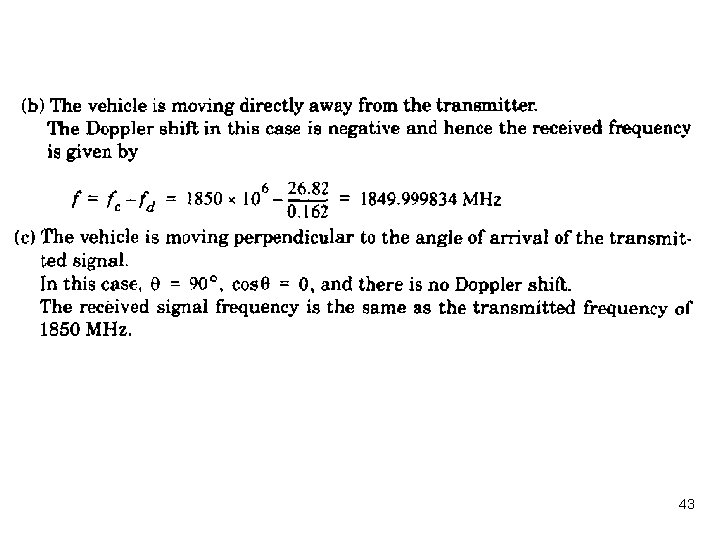
43
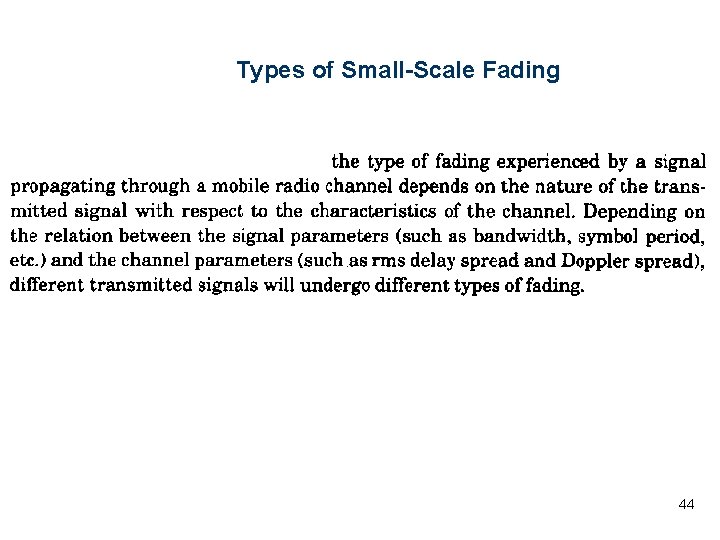
Types of Small-Scale Fading 44
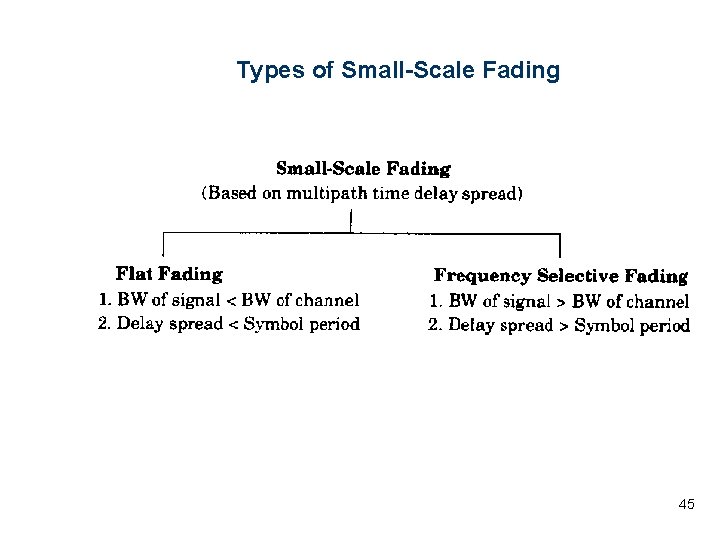
Types of Small-Scale Fading 45
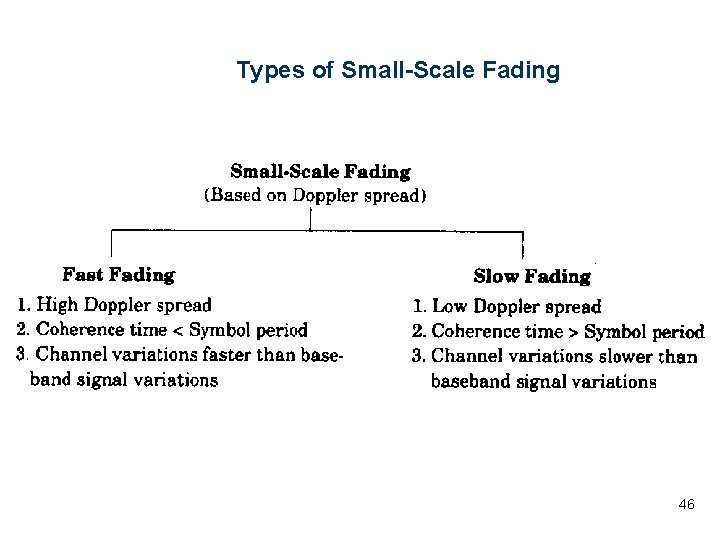
Types of Small-Scale Fading 46
Types of Small-Scale Fading 47