
Translation Reading the instructions and building a protein
Translation Reading the instructions and building a protein!
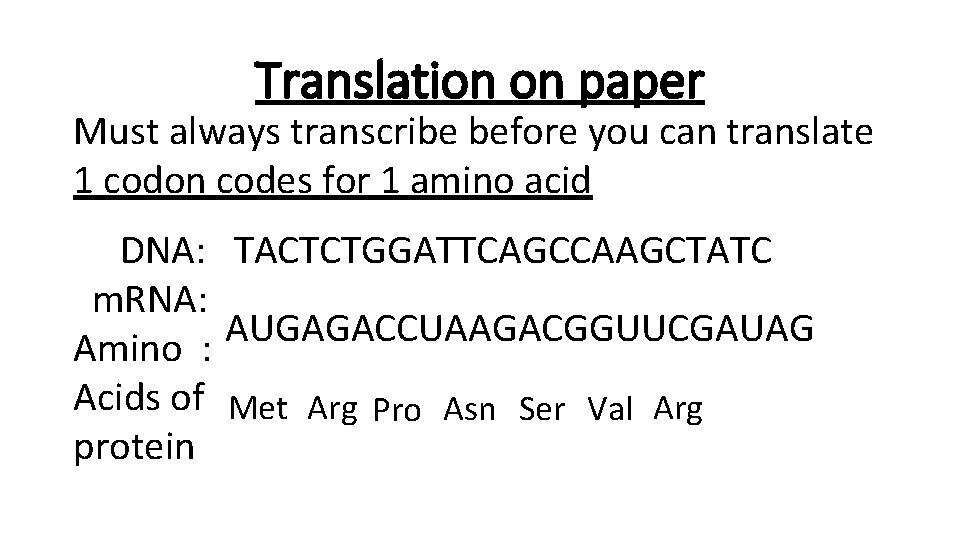
Translation on paper Must always transcribe before you can translate 1 codon codes for 1 amino acid DNA: TACTCTGGATTCAGCCAAGCTATC m. RNA: AUGAGACCUAAGACGGUUCGAUAG Amino : Acids of Met Arg Pro Asn Ser Val Arg protein
Significance of Translation? Builds protein to exact specifications of DNA instructions. *exact size and shape What determines size and shape? The number and sequence of amino acids
Where does it take place? On a ribosome in the cytoplasm Ribosomes provide a location for all necessary parts for building a protein to assemble
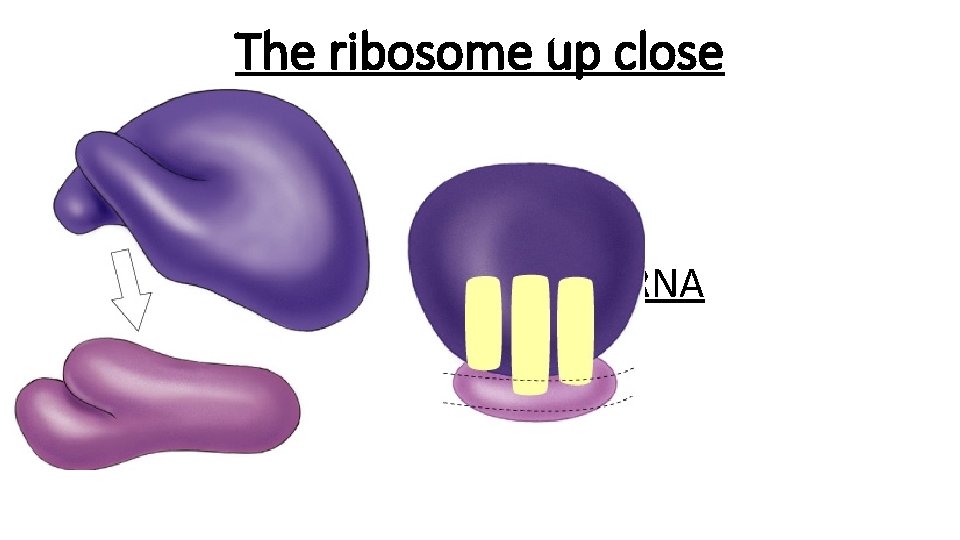
The ribosome up close Made of r. RNA and proteins Key features: - 2 subunits, large and small *small is first to bind to m. RNA

t-RNA up Close Made of RNA folded into a “clover leaf” shape ***t. RNA physically bring amino acids to the ribosome and drop them off Key features - Anticodon in the middle loop matches to codon to ensure correct amino acid is dropped off Each t. RNA only carries a specific amino acid

3 steps of Translation Initiation brings together m. RNA by binding to 5’ cap, ribosome subunits, initiator t. RNA Elongation adding amino acids based on codon sequence (GTP energy used) Termination Stop codon reached
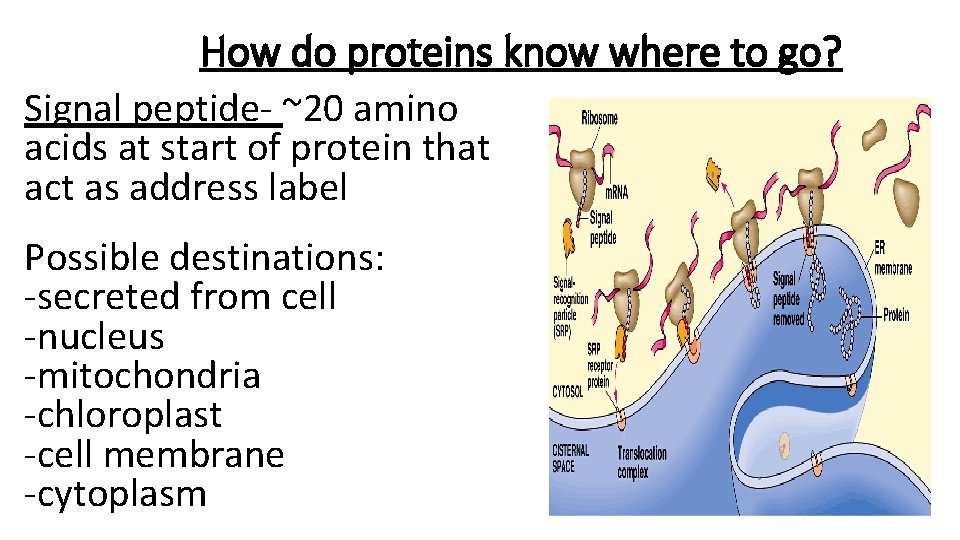
How do proteins know where to go? Signal peptide- ~20 amino acids at start of protein that act as address label Possible destinations: -secreted from cell -nucleus -mitochondria -chloroplast -cell membrane -cytoplasm
Translation in Prokaryotes Transcription & translation are simultaneous in bacteria *DNA is in cytoplasm *no m. RNA editing/processing *ribosomes read m. RNA as it is being transcribed
- Slides: 10