
Translation Protein Synthesis What is translation the process
- Slides: 12
Translation: Protein Synthesis
What is translation? • the process of converting the information in m. RNA into amino acids that makes up proteins. • Note: Before translation takes place, DNA Replication and transcription MUST occur
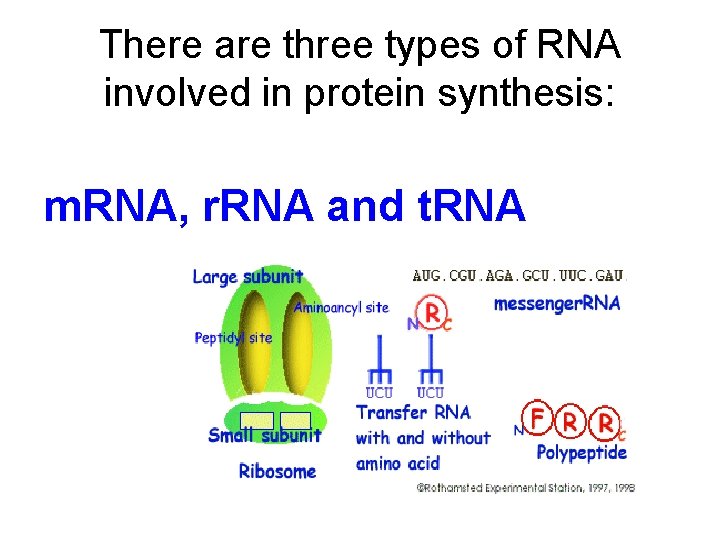
There are three types of RNA involved in protein synthesis: m. RNA, r. RNA and t. RNA
3 steps: 1. Initiation: m. RNA attaches to the ribosome (r. RNA). (The r. RNA slides along the m. RNA like a bead on a string. )
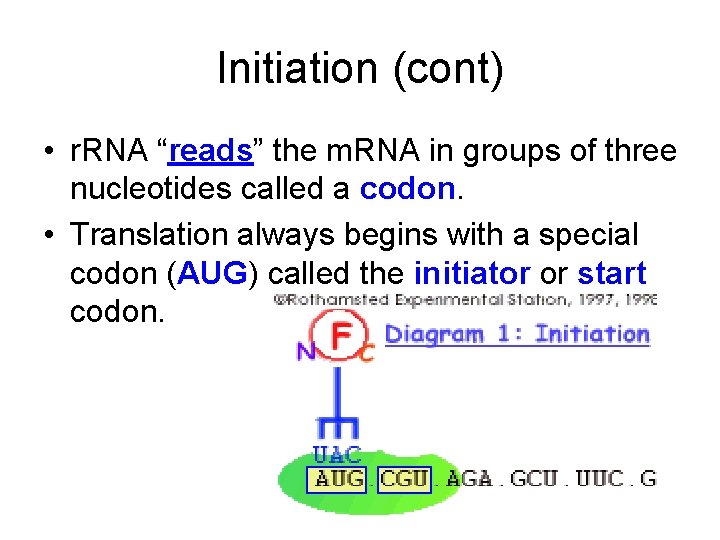
Initiation (cont) • r. RNA “reads” the m. RNA in groups of three nucleotides called a codon. • Translation always begins with a special codon (AUG) called the initiator or start codon.
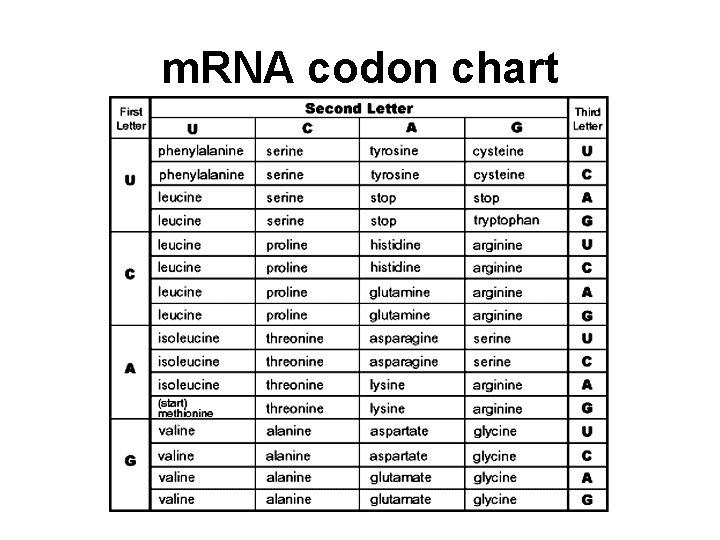
NOTE: • there are 20 different amino acids and 64 different codons. Each amino acid may have more than one codon but each codon specifies for only one amino acid.
m. RNA codon chart
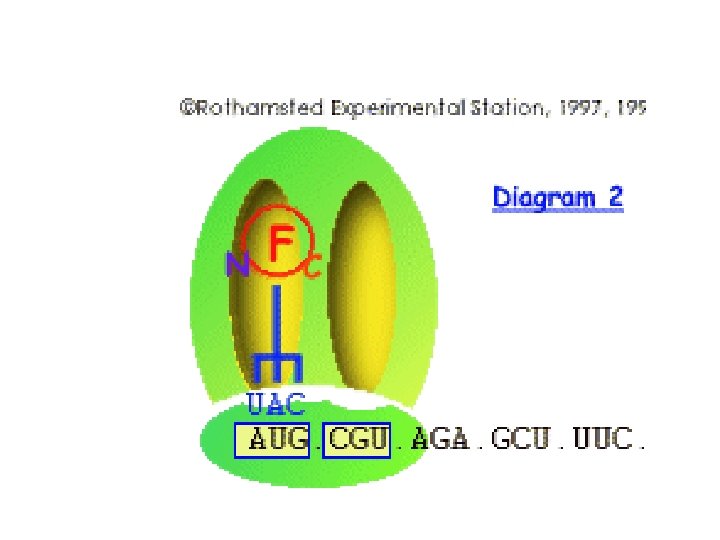
2. Elongation: • Transfer RNA (t. RNA) carries or “taxis”a specific amino acid determined by the anticodon to the ribosome. • The anticodon of t. RNA pairs with the complementary codon on m. RNA. (This only bonds with the m. RNA for a second, then it leaves) • The amino acids from the Genetic Code are based off the m. RNA base sequence.
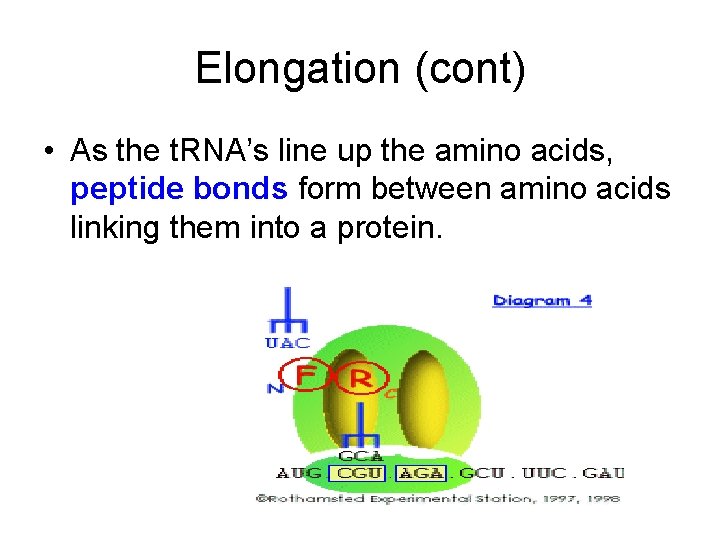
Elongation (cont) • As the t. RNA’s line up the amino acids, peptide bonds form between amino acids linking them into a protein.
Elongation (cont) • The t. RNA’s are recycled back to pick up more amino acids.
3. Termination: • the protein is released from the ribosome when a “stop” codon is reached. There are three special “stop” codons: UAA, UAG and UGA. • As soon as we reach a stop codon, the protein synthesis stops.