
Translation Interpreting genetic message Builds a protein Begins
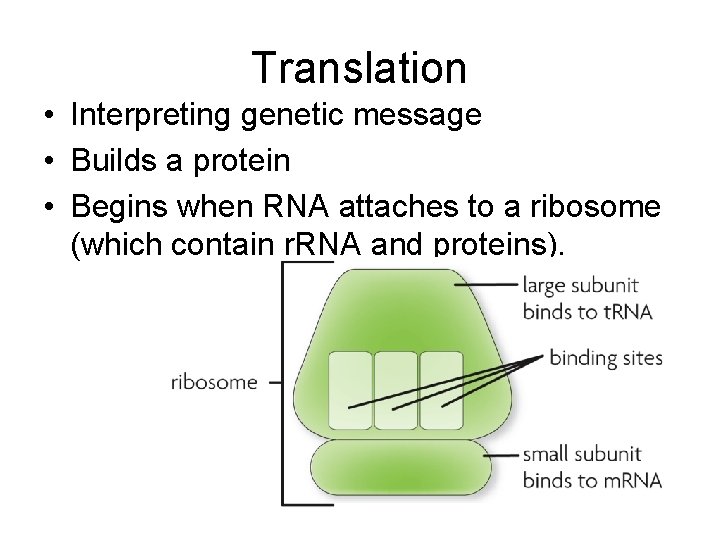
Translation • Interpreting genetic message • Builds a protein • Begins when RNA attaches to a ribosome (which contain r. RNA and proteins).
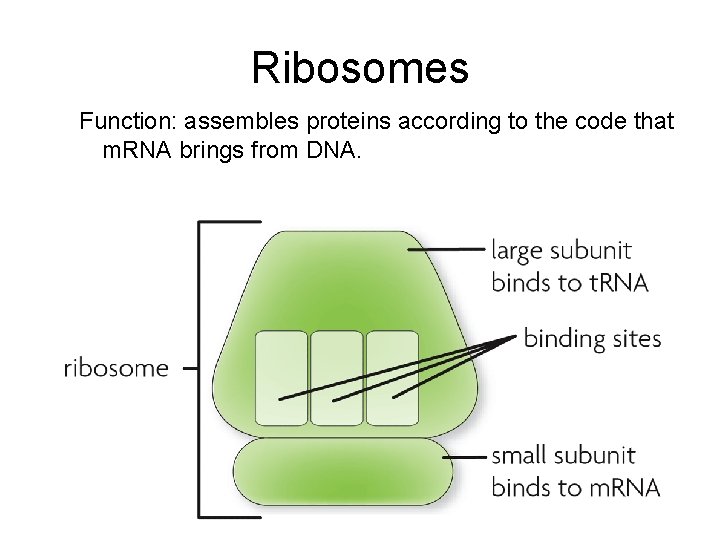
Ribosomes Function: assembles proteins according to the code that m. RNA brings from DNA.
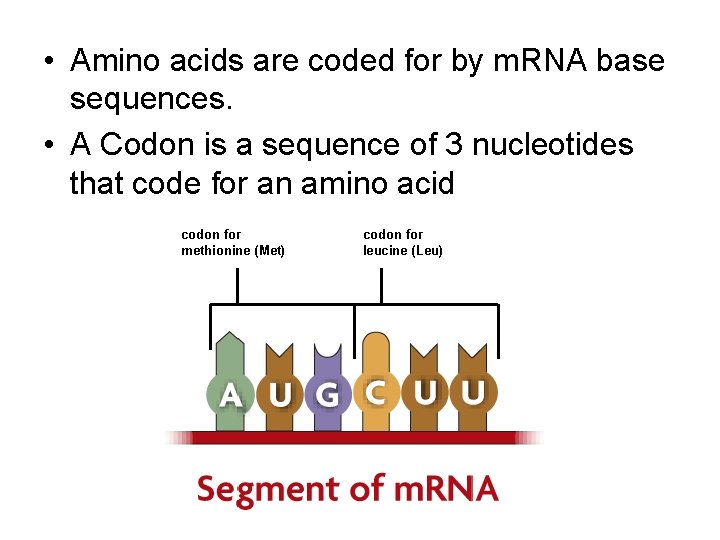
• Amino acids are coded for by m. RNA base sequences. • A Codon is a sequence of 3 nucleotides that code for an amino acid codon for methionine (Met) codon for leucine (Leu)

The genetic code matches each codon to its amino acid or function The genetic code matches each RNA codon with its amino acid or function.
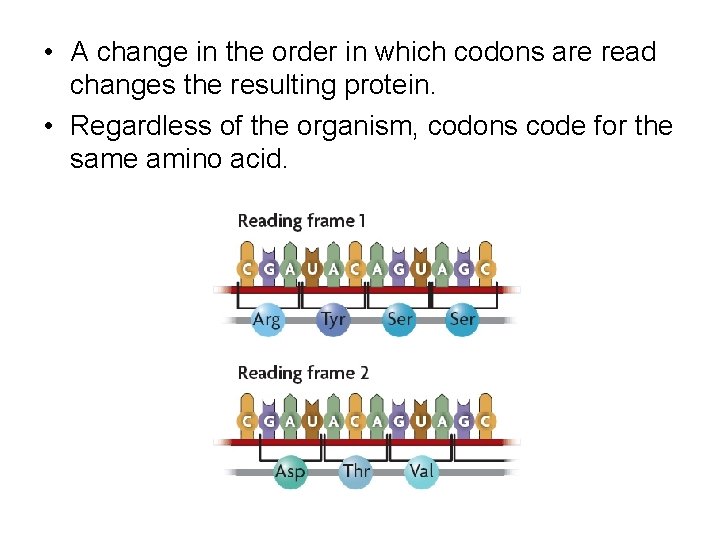
• A change in the order in which codons are read changes the resulting protein. • Regardless of the organism, codons code for the same amino acid.
Transfer RNA (t. RNA) • Important in assembling amino acids in the correct order. • Transfers amino acids to the ribosomes when needed.
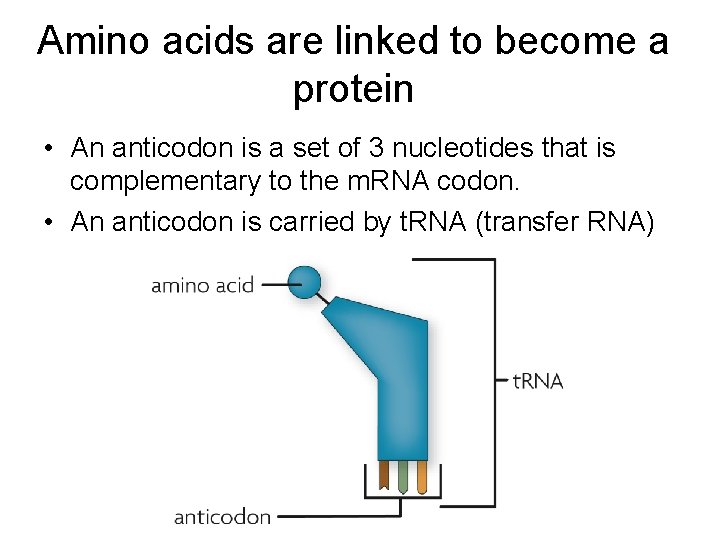
Amino acids are linked to become a protein • An anticodon is a set of 3 nucleotides that is complementary to the m. RNA codon. • An anticodon is carried by t. RNA (transfer RNA)
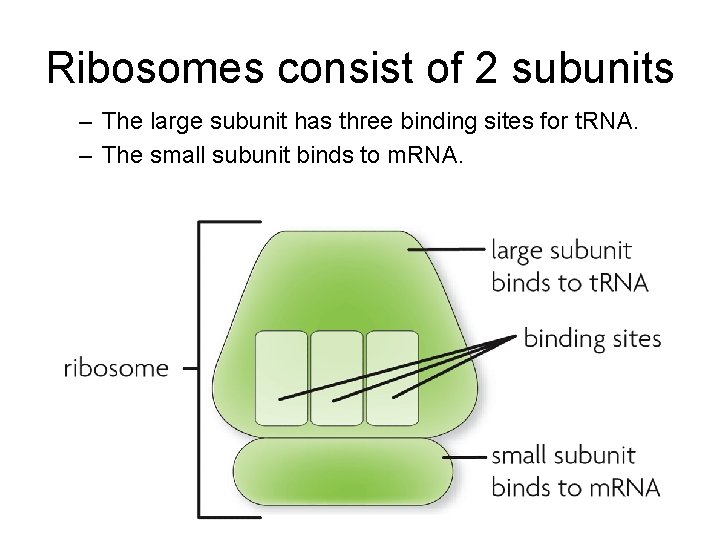
Ribosomes consist of 2 subunits – The large subunit has three binding sites for t. RNA. – The small subunit binds to m. RNA.
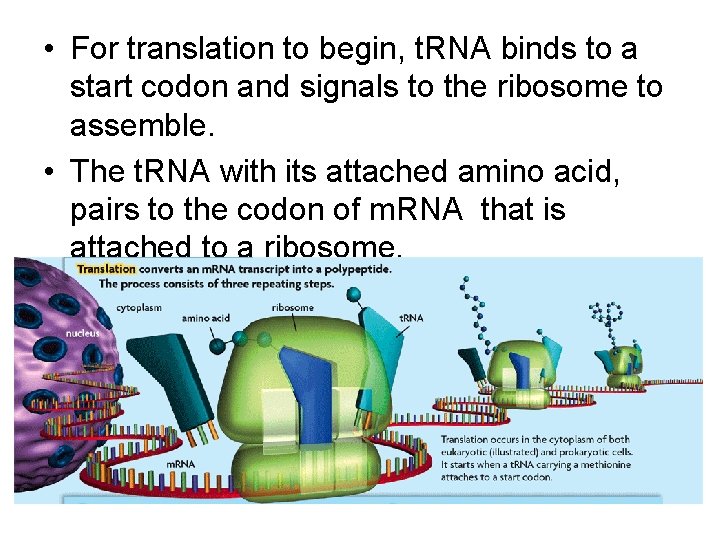
• For translation to begin, t. RNA binds to a start codon and signals to the ribosome to assemble. • The t. RNA with its attached amino acid, pairs to the codon of m. RNA that is attached to a ribosome.
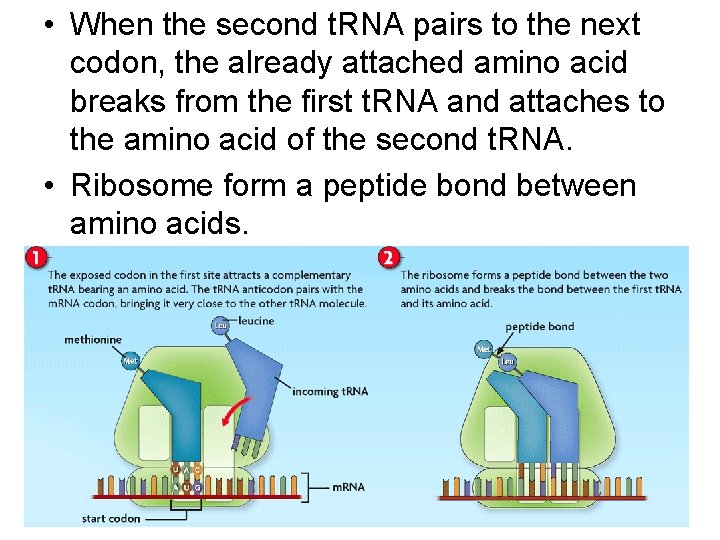
• When the second t. RNA pairs to the next codon, the already attached amino acid breaks from the first t. RNA and attaches to the amino acid of the second t. RNA. • Ribosome form a peptide bond between amino acids.
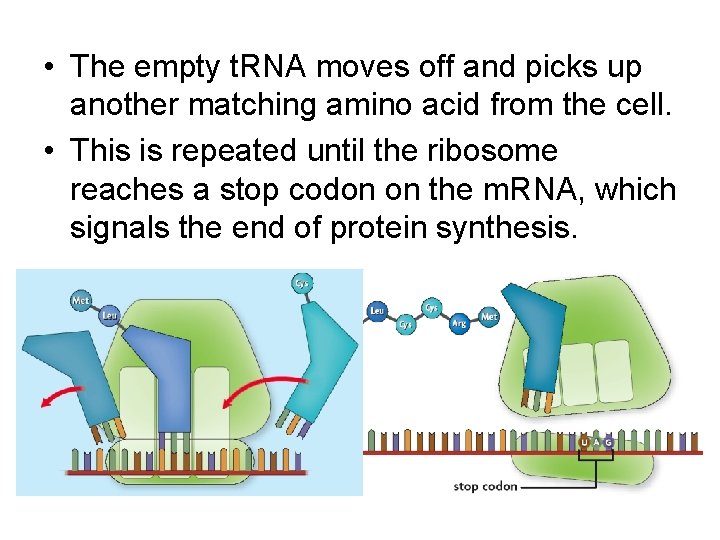
• The empty t. RNA moves off and picks up another matching amino acid from the cell. • This is repeated until the ribosome reaches a stop codon on the m. RNA, which signals the end of protein synthesis.
Confused? •
- Slides: 12