
Translating Quality Work Into Academic Productivity David Griffen





- Slides: 40
Translating Quality Work Into Academic Productivity David Griffen, MD, Ph. D, FACEP
Disclosures • No financial arrangements to disclose • I am not an expert academician. Audience participation welcome (collective knowledge).
Website for this presentation emquality. weebly. com
What do I mean by “Academic Productivity”? “My Chair can’t read but she/he can count. ”
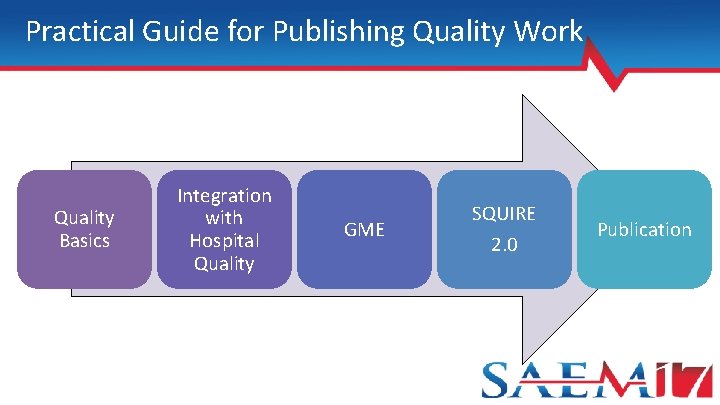
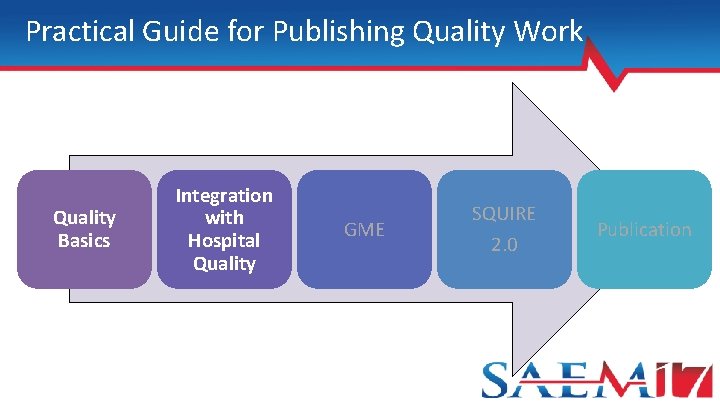
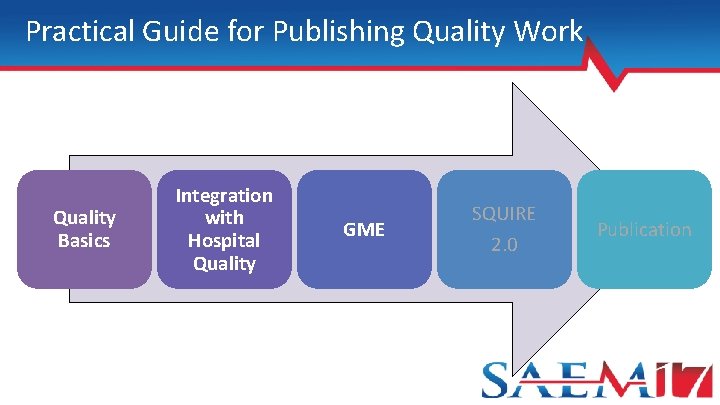
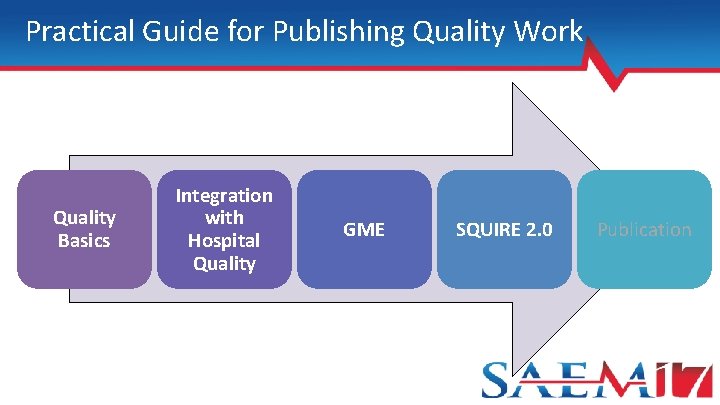
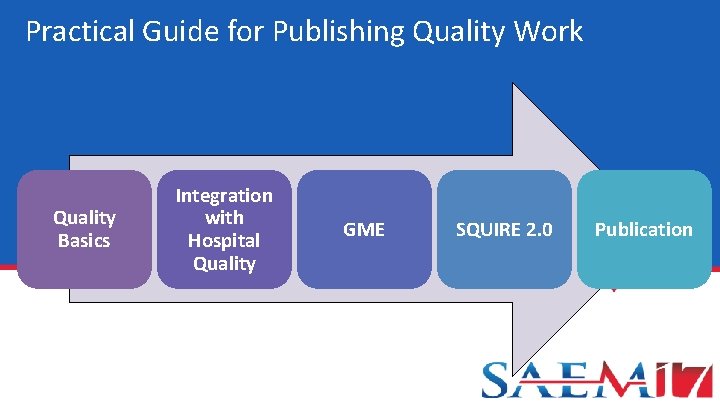
Practical Guide for Publishing Quality Work Quality Basics Integration with Hospital Quality GME SQUIRE 2. 0 Publication
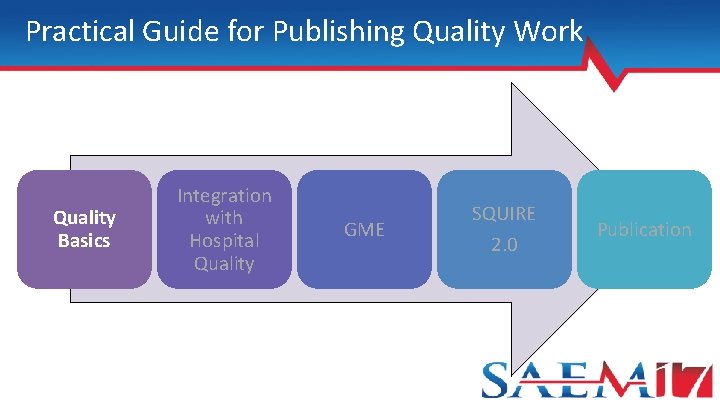
Practical Guide for Publishing Quality Work Quality Basics Integration with Hospital Quality GME SQUIRE 2. 0 Publication
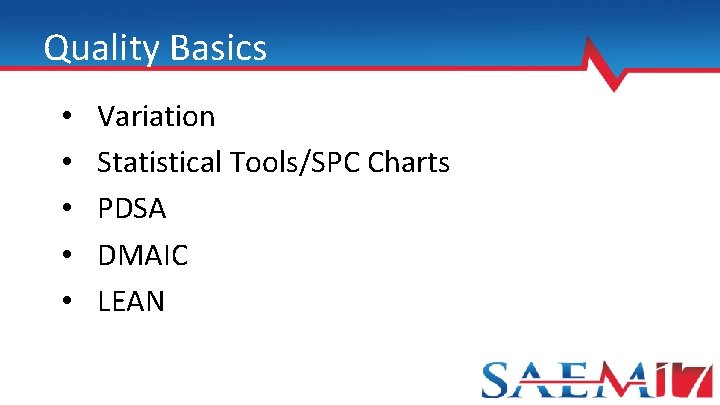
Quality Basics • • • Variation Statistical Tools/SPC Charts PDSA DMAIC LEAN
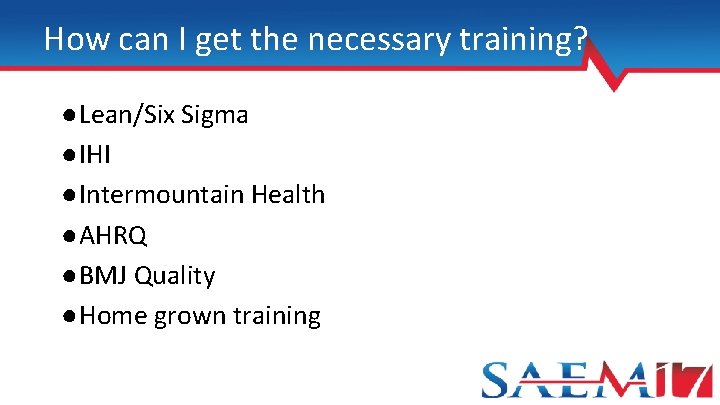
How can I get the necessary training? ●Lean/Six Sigma ●IHI ●Intermountain Health ●AHRQ ●BMJ Quality ●Home grown training
Practical Guide for Publishing Quality Work Quality Basics Integration with Hospital Quality GME SQUIRE 2. 0 Publication
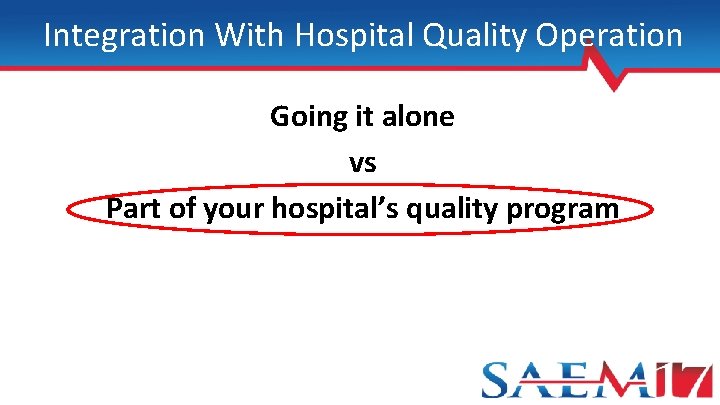
Integration With Hospital Quality Operation Going it alone vs Part of your hospital’s quality program
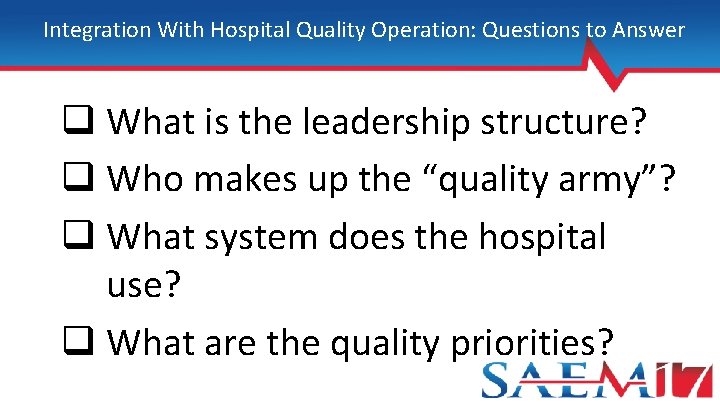
Integration With Hospital Quality Operation: Questions to Answer q What is the leadership structure? q Who makes up the “quality army”? q What system does the hospital use? q What are the quality priorities?
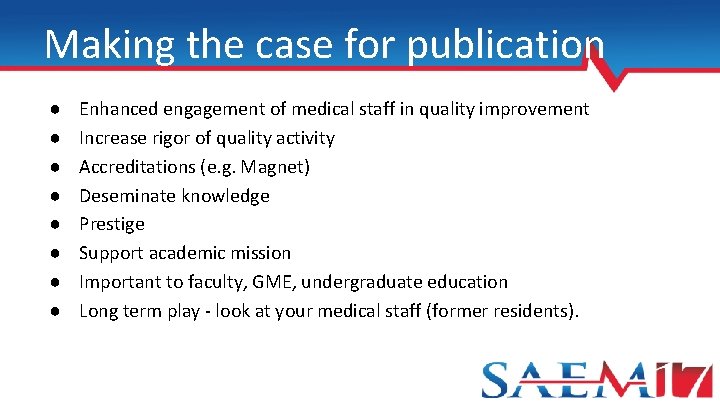
Making the case for publication ● ● ● ● Enhanced engagement of medical staff in quality improvement Increase rigor of quality activity Accreditations (e. g. Magnet) Deseminate knowledge Prestige Support academic mission Important to faculty, GME, undergraduate education Long term play - look at your medical staff (former residents).
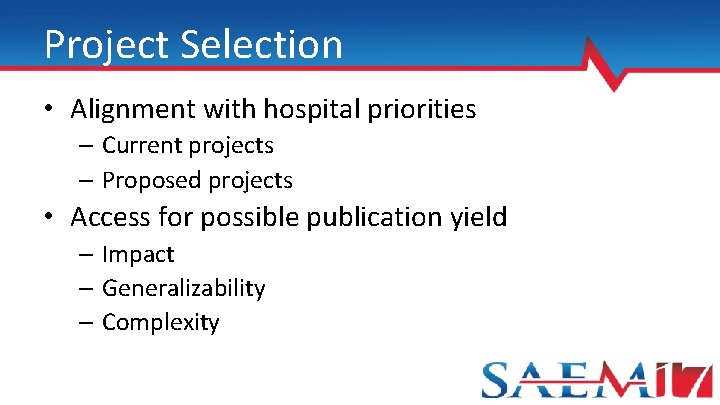
Project Selection • Alignment with hospital priorities – Current projects – Proposed projects • Access for possible publication yield – Impact – Generalizability – Complexity
Authorship • Decide early in the project • Don’t assume that if someone is “not academic” authorship won’t matter to them
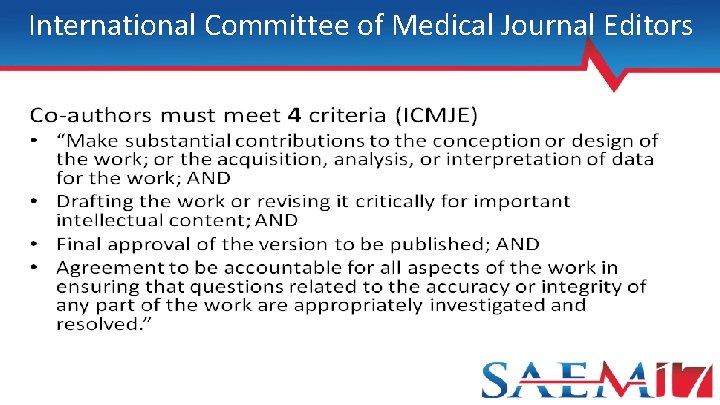
International Committee of Medical Journal Editors
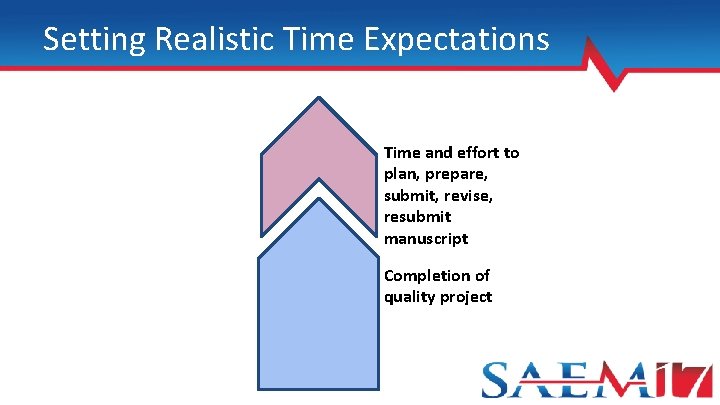
Setting Realistic Time Expectations Time and effort to plan, prepare, submit, revise, resubmit manuscript Completion of quality project
Practical Guide for Publishing Quality Work Quality Basics Integration with Hospital Quality GME SQUIRE 2. 0 Publication
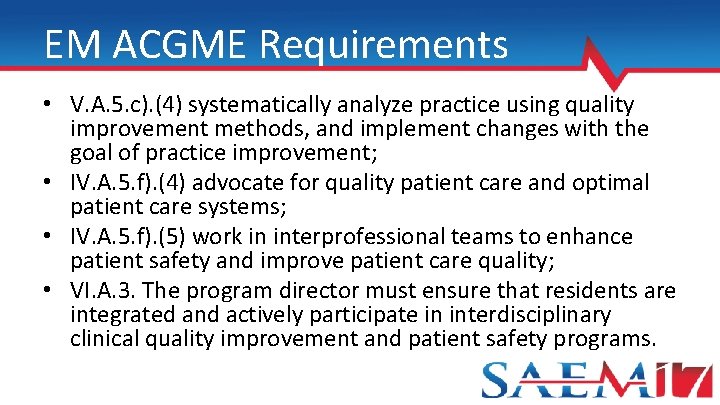
EM ACGME Requirements • V. A. 5. c). (4) systematically analyze practice using quality improvement methods, and implement changes with the goal of practice improvement; • IV. A. 5. f). (4) advocate for quality patient care and optimal patient care systems; • IV. A. 5. f). (5) work in interprofessional teams to enhance patient safety and improve patient care quality; • VI. A. 3. The program director must ensure that residents are integrated and actively participate in interdisciplinary clinical quality improvement and patient safety programs.
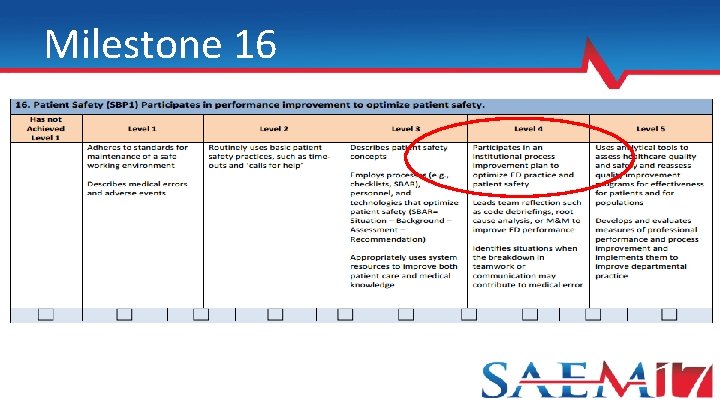
Milestone 16
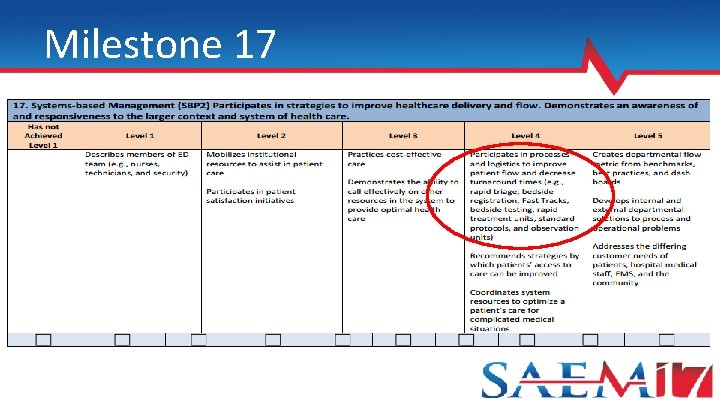
Milestone 17
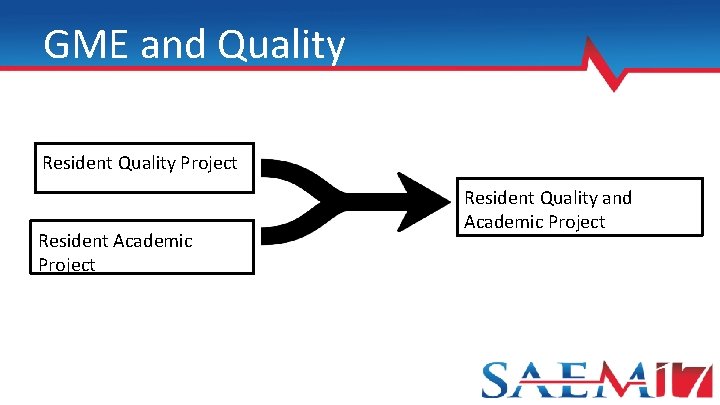
GME and Quality Resident Quality Project Resident Academic Project Resident Quality and Academic Project
Resident involvement • • Resident orientation to quality Set expectations up front Active participation in project Decide on authorship early
Practical Guide for Publishing Quality Work Quality Basics Integration with Hospital Quality GME SQUIRE 2. 0 Publication
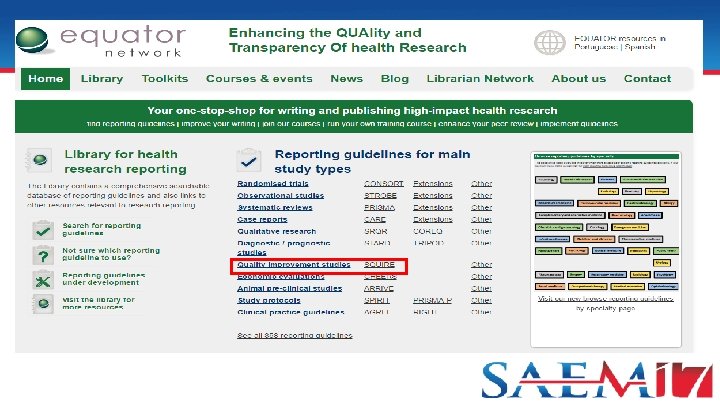
SQUIRE 2. 0 • Standards for Quality Improvement Reporting Excellence
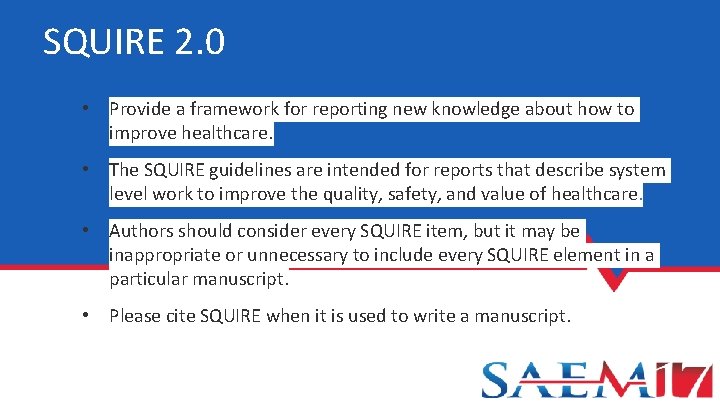
SQUIRE 2. 0 • Provide a framework for reporting new knowledge about how to improve healthcare. • The SQUIRE guidelines are intended for reports that describe system level work to improve the quality, safety, and value of healthcare. • Authors should consider every SQUIRE item, but it may be inappropriate or unnecessary to include every SQUIRE element in a particular manuscript. • Please cite SQUIRE when it is used to write a manuscript.
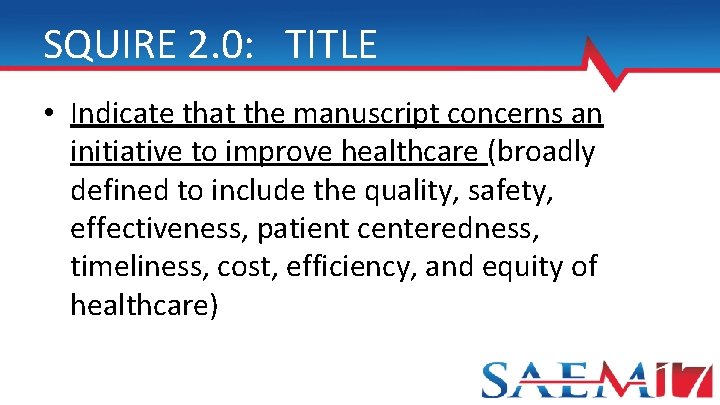
SQUIRE 2. 0: TITLE • Indicate that the manuscript concerns an initiative to improve healthcare (broadly defined to include the quality, safety, effectiveness, patient centeredness, timeliness, cost, efficiency, and equity of healthcare)
SQUIRE 2. 0 RATIONALE • Informal or formal frameworks, models, concepts, and/or theories used to explain the problem, any reasons or assumptions that were used to develop the intervention(s), and reasons why the intervention(s) was expected to work
SQUIRE 2. 0: INTERVENTIONS a. Description of the intervention(s) in sufficient detail that others could reproduce it b. Specifics of the team involved in the work
SQUIRE 2. 0: STUDY OF THE INTERVENTION(S) a. Approach chosen for assessing the impact of the intervention(s) b. Approach used to establish whether the observed outcomes were due to the intervention(s)
SQUIRE 2. 0: STUDY OF THE INTERVENTION(S) a. Measures chosen for studying processes and outcomes of the intervention(s), including rationale for choosing them, their operational definitions, and their validity and reliability b. Description of the approach to the ongoing assessment of contextual elements that contributed to the success, failure, efficiency, and cost c. Methods employed for assessing completeness and accuracy of data
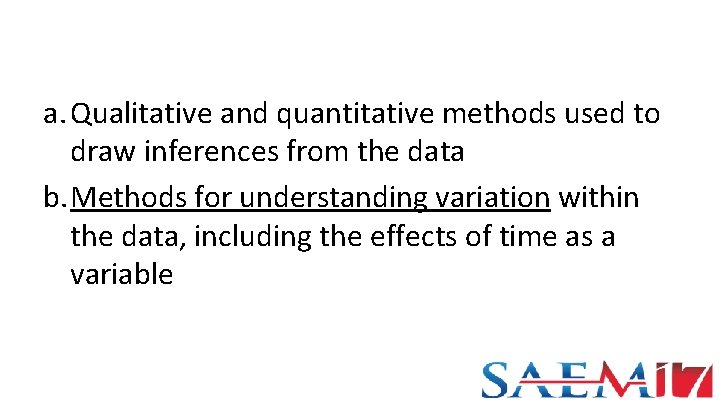
SQUIRE 2. 0: ANALYSIS a. Qualitative and quantitative methods used to draw inferences from the data b. Methods for understanding variation within the data, including the effects of time as a variable
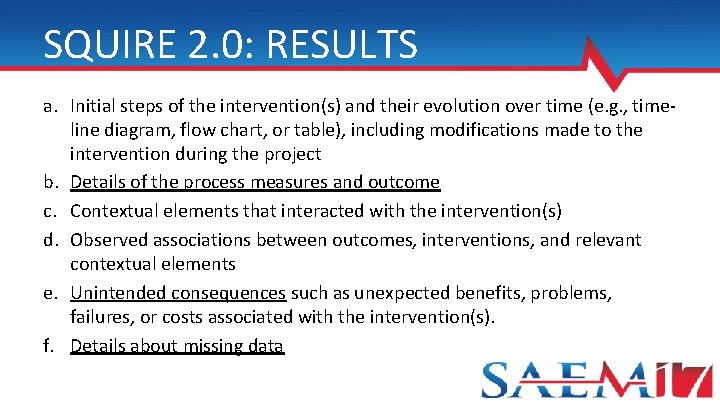
SQUIRE 2. 0: RESULTS a. Initial steps of the intervention(s) and their evolution over time (e. g. , timeline diagram, flow chart, or table), including modifications made to the intervention during the project b. Details of the process measures and outcome c. Contextual elements that interacted with the intervention(s) d. Observed associations between outcomes, interventions, and relevant contextual elements e. Unintended consequences such as unexpected benefits, problems, failures, or costs associated with the intervention(s). f. Details about missing data
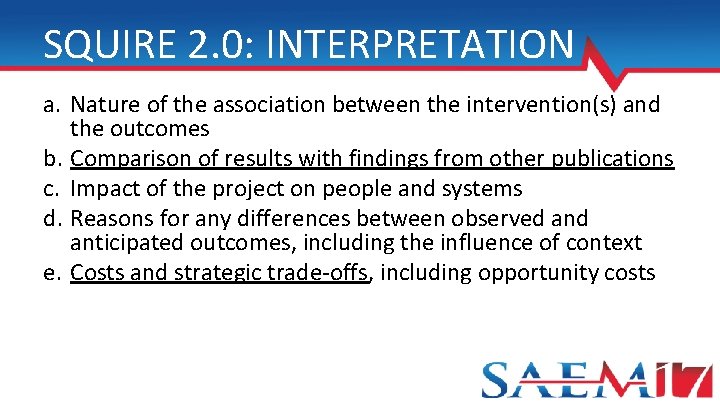
SQUIRE 2. 0: INTERPRETATION a. Nature of the association between the intervention(s) and the outcomes b. Comparison of results with findings from other publications c. Impact of the project on people and systems d. Reasons for any differences between observed anticipated outcomes, including the influence of context e. Costs and strategic trade-offs, including opportunity costs
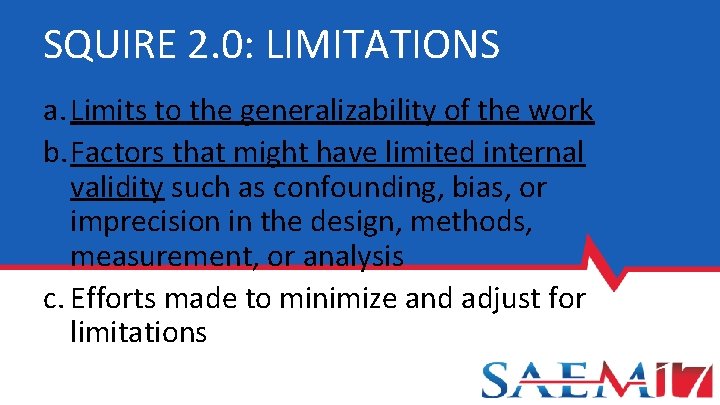
SQUIRE 2. 0: LIMITATIONS a. Limits to the generalizability of the work b. Factors that might have limited internal validity such as confounding, bias, or imprecision in the design, methods, measurement, or analysis c. Efforts made to minimize and adjust for limitations
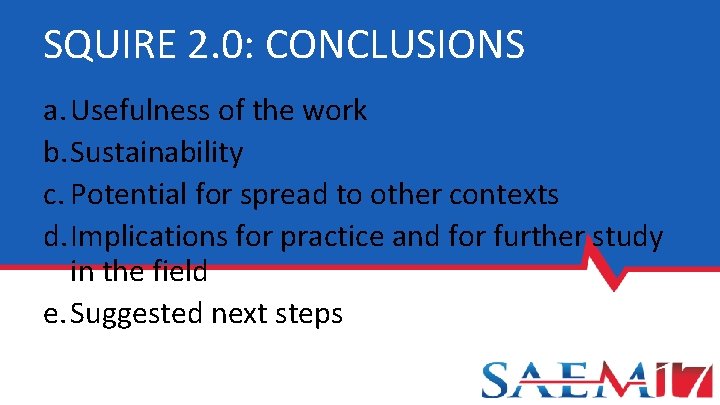
SQUIRE 2. 0: CONCLUSIONS a. Usefulness of the work b. Sustainability c. Potential for spread to other contexts d. Implications for practice and for further study in the field e. Suggested next steps
Practical Guide for Publishing Quality Work Quality Basics Integration with Hospital Quality GME SQUIRE 2. 0 Publication
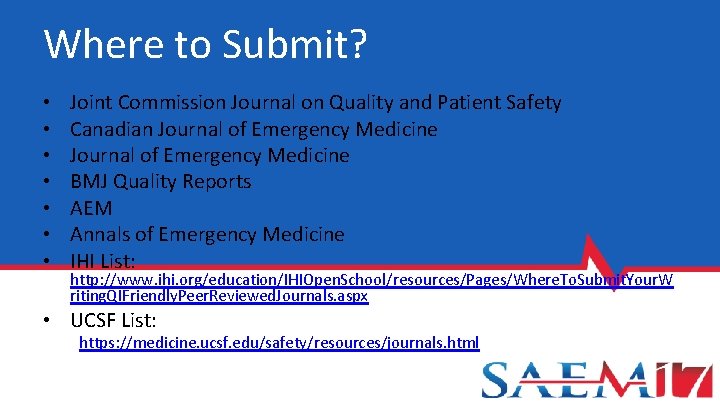
Where to Submit? • • Joint Commission Journal on Quality and Patient Safety Canadian Journal of Emergency Medicine BMJ Quality Reports AEM Annals of Emergency Medicine IHI List: http: //www. ihi. org/education/IHIOpen. School/resources/Pages/Where. To. Submit. Your. W riting. QIFriendly. Peer. Reviewed. Journals. aspx • UCSF List: https: //medicine. ucsf. edu/safety/resources/journals. html
Summary Quality Basics Integration with Hospital Quality GME SQUIRE 2. 0 Publication
Thank you emquality. weebly. com