
Translating Metacognition into Instruction How Students Fool Themselves
- Slides: 45
Translating Metacognition into Instruction: How Students Fool Themselves Stephen L. Chew, Ph. D Department of Psychology Samford University slchew@samford. edu Twitter: @SChew. Psych Spelman College November 2, 2019
Goals of this Presentation • Metacognition as one component of a cognitive framework for learning • Incorporating metacognition into instruction for the purpose of – Student Learning – Critical thinking and student success
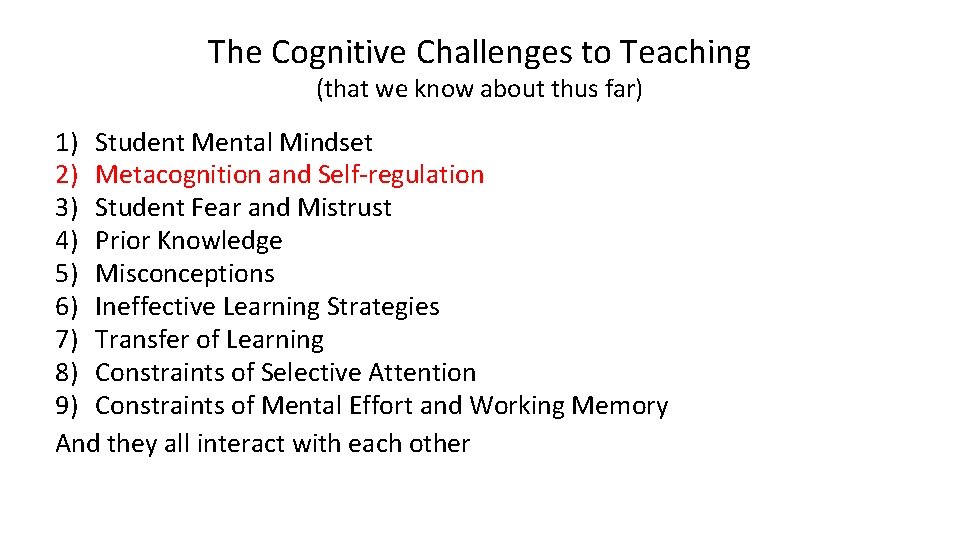
The Cognitive Challenges to Teaching (that we know about thus far) 1) Student Mental Mindset 2) Metacognition and Self-regulation 3) Student Fear and Mistrust 4) Prior Knowledge 5) Misconceptions 6) Ineffective Learning Strategies 7) Transfer of Learning 8) Constraints of Selective Attention 9) Constraints of Mental Effort and Working Memory And they all interact with each other
Metacognition plays a key role in… • Student learning • Development of critical thinking • Long-term student success
Metacognition in Student Learning: Self-regulated Learning • “Self-regulated learners are aware of when they know a fact or possess a skill and when they do not… They proactively seek out information when needed and take the necessary steps to master it. ” Zimmerman (1990) – Planning – Monitoring – Evaluation
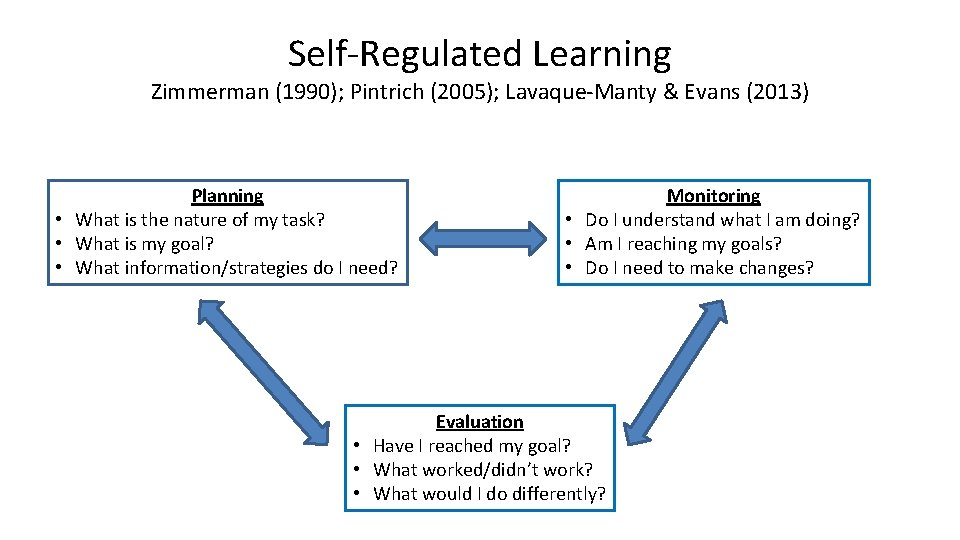
Self-Regulated Learning Zimmerman (1990); Pintrich (2005); Lavaque-Manty & Evans (2013) Planning • What is the nature of my task? • What is my goal? • What information/strategies do I need? Monitoring • Do I understand what I am doing? • Am I reaching my goals? • Do I need to make changes? Evaluation • Have I reached my goal? • What worked/didn’t work? • What would I do differently?
How Planning Can Go Wrong • Not understanding what it means to plan • Poor metacognition (overconfidence) leads to poor planning • Study Hacks – Why read the textbook when you can read a summary on Wikipedia or watch a short video on You. Tube? • Technology makes it easy to study badly – Why read the chapter when there is a quizlet of the key terms
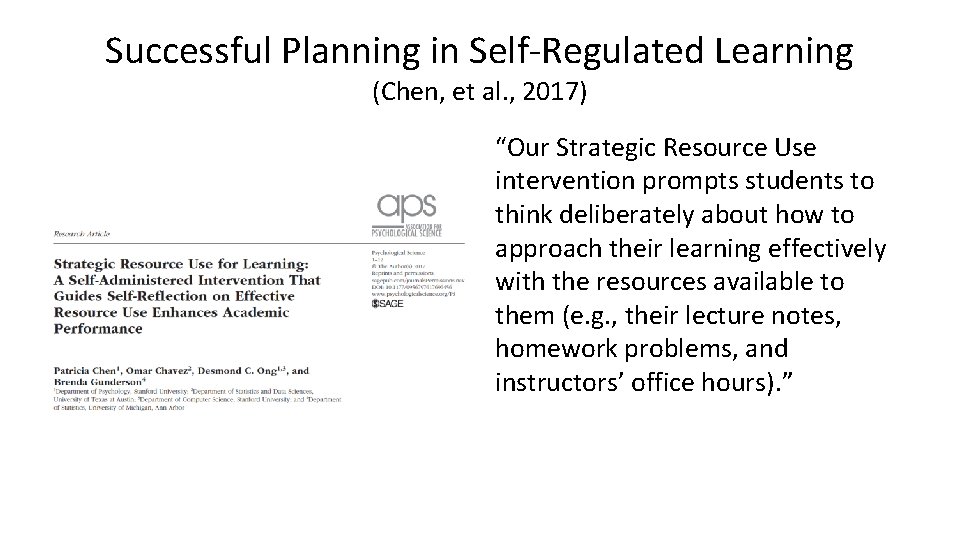
Successful Planning in Self-Regulated Learning (Chen, et al. , 2017) “Our Strategic Resource Use intervention prompts students to think deliberately about how to approach their learning effectively with the resources available to them (e. g. , their lecture notes, homework problems, and instructors’ office hours). ”
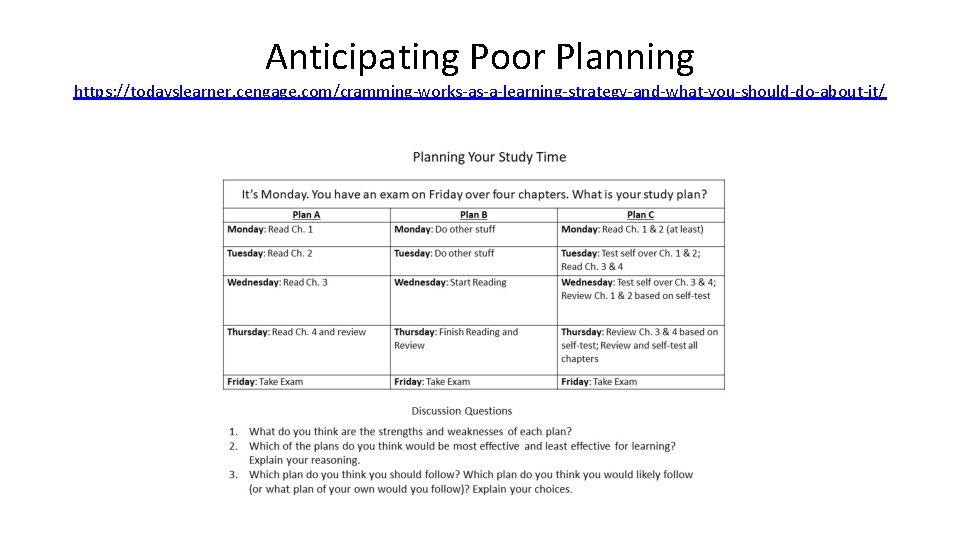
Anticipating Poor Planning https: //todayslearner. cengage. com/cramming-works-as-a-learning-strategy-and-what-you-should-do-about-it/
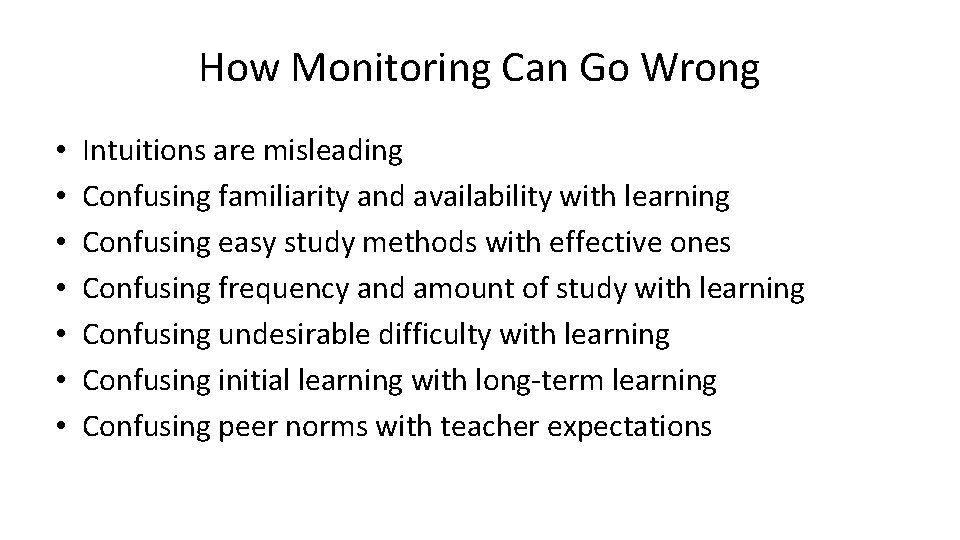
How Monitoring Can Go Wrong • • Intuitions are misleading Confusing familiarity and availability with learning Confusing easy study methods with effective ones Confusing frequency and amount of study with learning Confusing undesirable difficulty with learning Confusing initial learning with long-term learning Confusing peer norms with teacher expectations
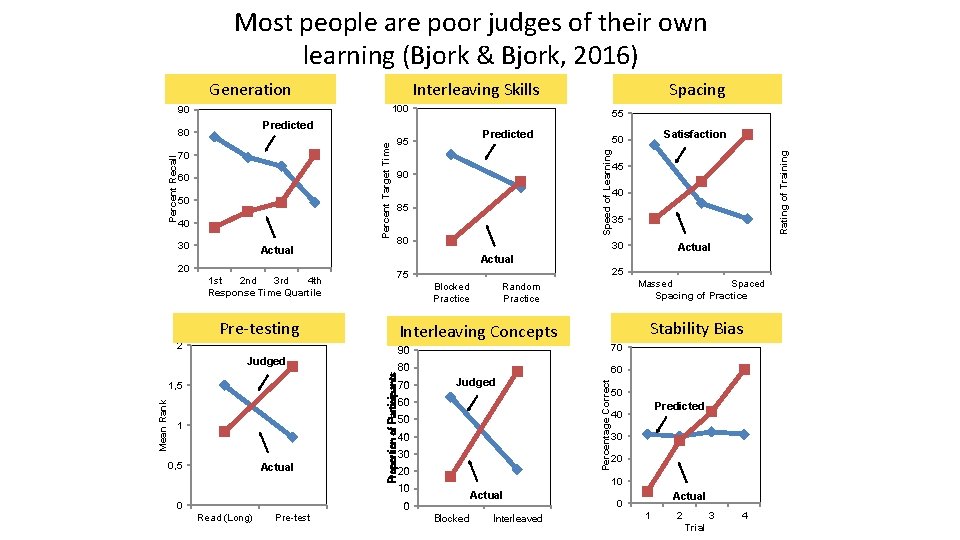
Most people are poor judges of their own learning (Bjork & Bjork, 2016) 100 90 50 40 Actual 20 1 st 2 nd 3 rd 4 th Response Time Quartile 90 85 80 0 Pre-test Stability Kornell & Bjork. Bias (2009) 70 90 80 70 60 Judged 60 50 40 30 20 50 Predicted 40 30 20 10 10 Actual 0 Read (Long) Actual Massed Spacing of Practice Random Practice Kornell & Bjork (2008) Interleaving Concepts Proportion of Participants Actual 35 25 Blocked Practice Judged 0, 5 40 30 75 2 1 45 Actual Huelser & Metcalfe (2012) Pre-testing 1, 5 Satisfaction 50 Percentage Correct 60 Predicted 95 Speed of Learning Percent Target Time Percent Recall 70 30 Mean Rank 55 Predicted 80 Baddeley & Longman Spacing (1978) Simon & Bjork (2001) Interleaving Skills Rating of Training Benjamin Bjork, & Generation Schwartz (1998) Blocked Interleaved Actual 0 1 2 3 Trial 4
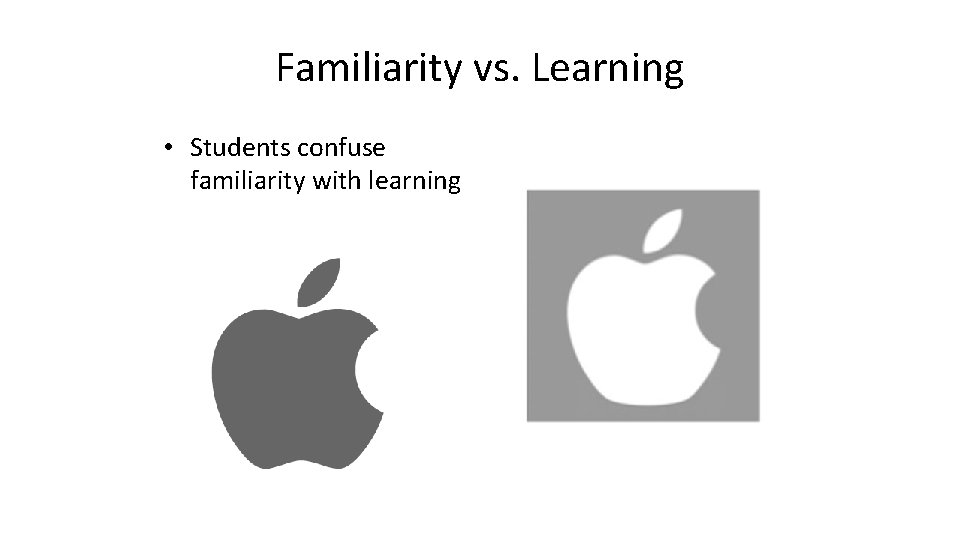
Familiarity vs. Learning Students confuse familiarity with learning
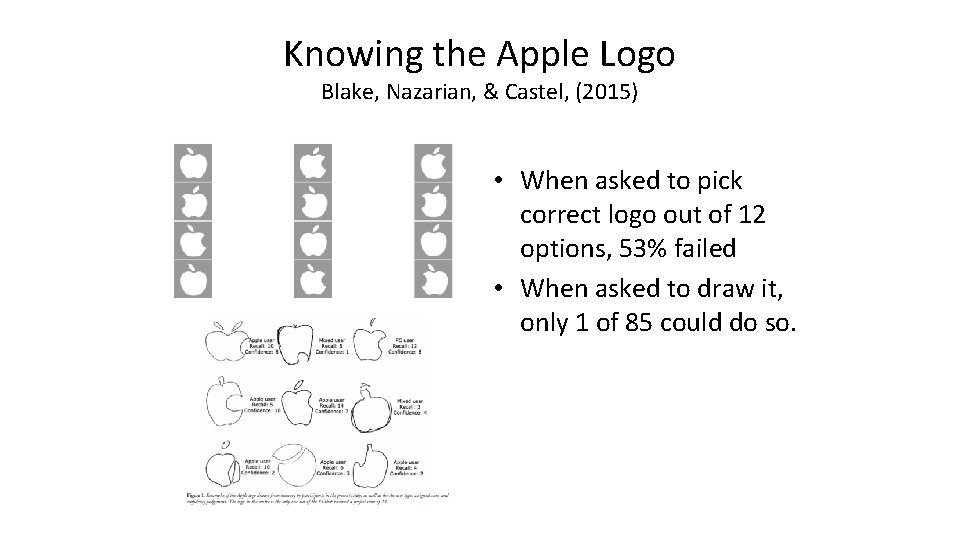
Knowing the Apple Logo Blake, Nazarian, & Castel, (2015) • When asked to pick correct logo out of 12 options, 53% failed • When asked to draw it, only 1 of 85 could do so.
Familiarity vs. Learning • Students confuse familiarity with learning
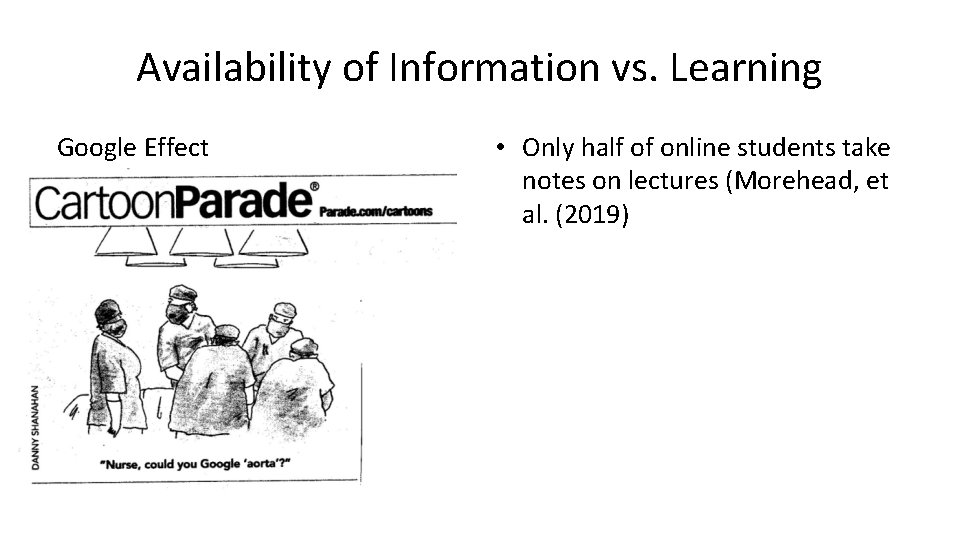
Availability of Information vs. Learning Google Effect • Only half of online students take notes on lectures (Morehead, et al. (2019)
How Monitoring Can Go Wrong • • Intuitions are misleading Confusing familiarity and availability with learning Confusing easy study methods with effective ones Confusing frequency and amount of study with learning Confusing undesirable difficulty with learning Confusing initial learning with long-term learning Confusing peer norms with teacher expectations
Successful Monitoring through Formative Assessments • Brief, low stakes assessments that give students (and teachers) feedback BEFORE exams/high stake grades Angelo, T. A. and K. P. Cross (1993). Classroom Assessment Techniques: A Handbook for College Teachers, Jossey-Bass. e. g. Muddiest point papers, “Clicker” questions, think-pair-share – Brief – Low stakes – Before summative assessments – Provide useful feedback to teacher and student that can be used to improve learning
Goals of Formative Assessments • Improve metacognition for students and teachers • Address tenacious student misconceptions • Illustrate desired level of understanding of knowledge for students • Promote student learning and understanding • Model thinking for understanding • Promote rapport and trust
How Evaluation Can Go Wrong • Students must know and be able to recognize the desired end state of learning • The Curse of Expertise
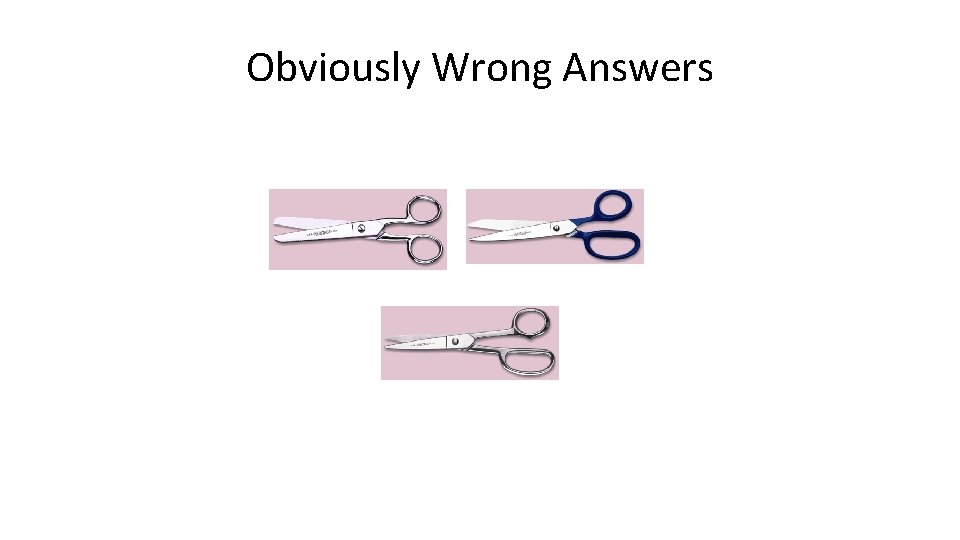
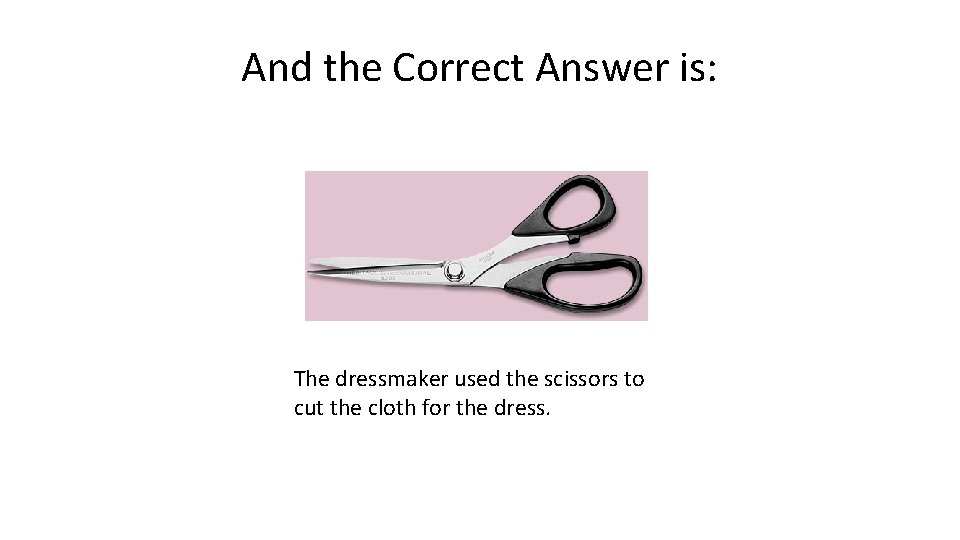
A Test of Critical Thinking Listen carefully to the sentence In the box, draw a picture of what the dressmaker used to cut the fabric
Obviously Wrong Answers
And the Correct Answer is: The dressmaker used the scissors to cut the cloth for the dress.
How did critical thinking fail? • Content was not enough • If students don’t know what critical thinking looks like, they can’t accomplish it, even if they are capable of it
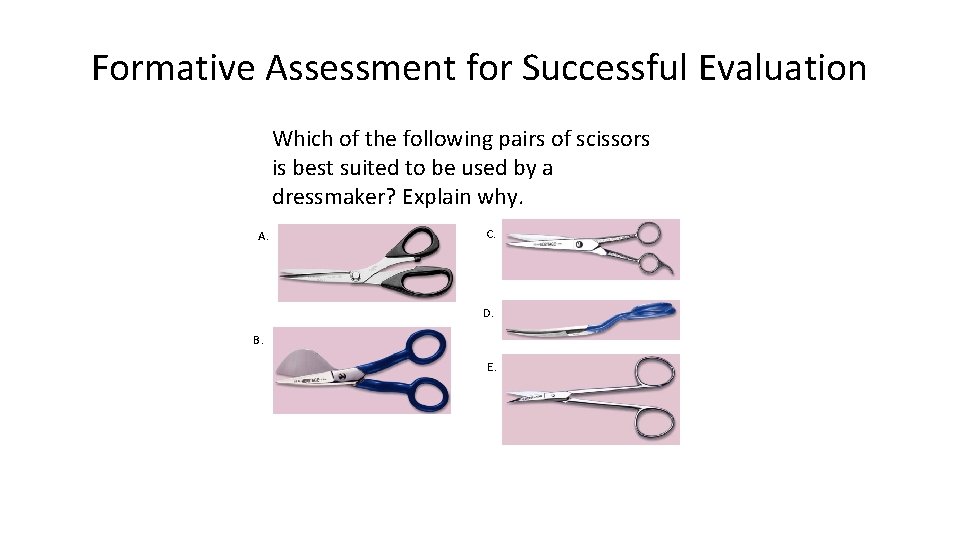
Formative Assessment for Successful Evaluation Which of the following pairs of scissors is best suited to be used by a dressmaker? Explain why. A. C. D. B. E.
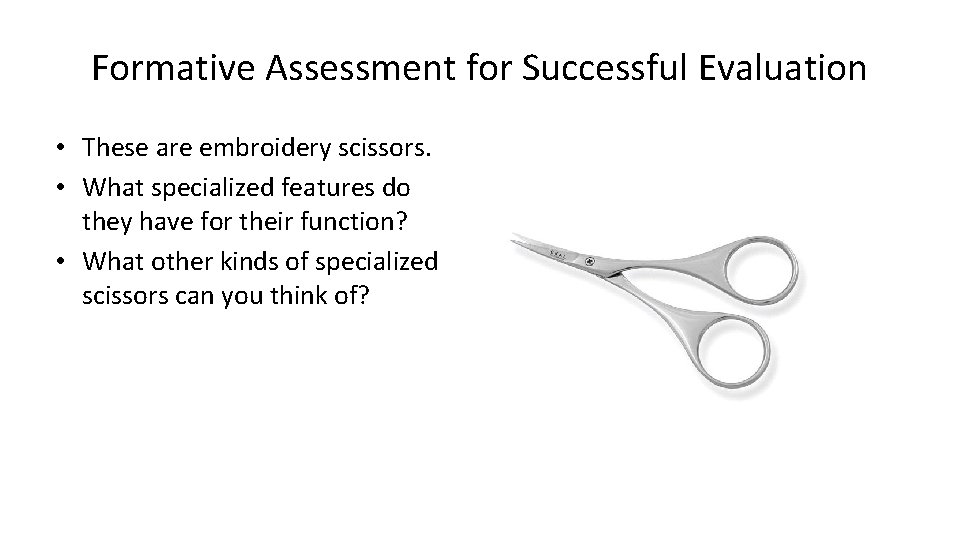
Formative Assessment for Successful Evaluation • These are embroidery scissors. • What specialized features do they have for their function? • What other kinds of specialized scissors can you think of?
Formative Assessments and Successful Evaluation Improves Evaluation through – Illustrating desired level of understanding of knowledge for students – Giving feedback about level of understanding – Modeling desired reasoning processes – Refuting common misconceptions – Reducing biased thinking
Student Self-Assessment Skill • Self-assessment occurs when students engage in an activity in order to gain insight into their level of understanding. – Identifies strengths and weaknesses – Guides strategies for improvement • Self-assessment answers the question, “What evidence do I have that I have a sufficient understanding of this material? ”
Non-Metacognitively Informed Teaching • • Feedback that does not promote learning Feedback that the student never has a chance to implement Assigning math homework problems but grading on effort only Giving an exam and then allowing an exam re-take without feedback on the first try
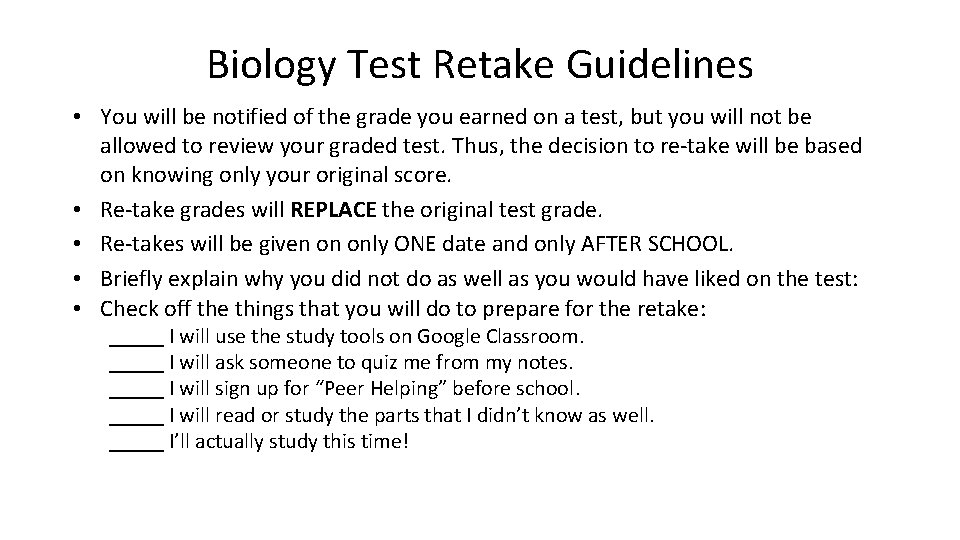
Biology Test Retake Guidelines • You will be notified of the grade you earned on a test, but you will not be allowed to review your graded test. Thus, the decision to re-take will be based on knowing only your original score. • Re-take grades will REPLACE the original test grade. • Re-takes will be given on only ONE date and only AFTER SCHOOL. • Briefly explain why you did not do as well as you would have liked on the test: • Check off the things that you will do to prepare for the retake: _____ I will use the study tools on Google Classroom. _____ I will ask someone to quiz me from my notes. _____ I will sign up for “Peer Helping” before school. _____ I will read or study the parts that I didn’t know as well. _____ I’ll actually study this time!
Metacognition, Critical Thinking, and Student Success Learning information is important; but for students to be successful, they need to develop critical thinking skills beyond the classroom
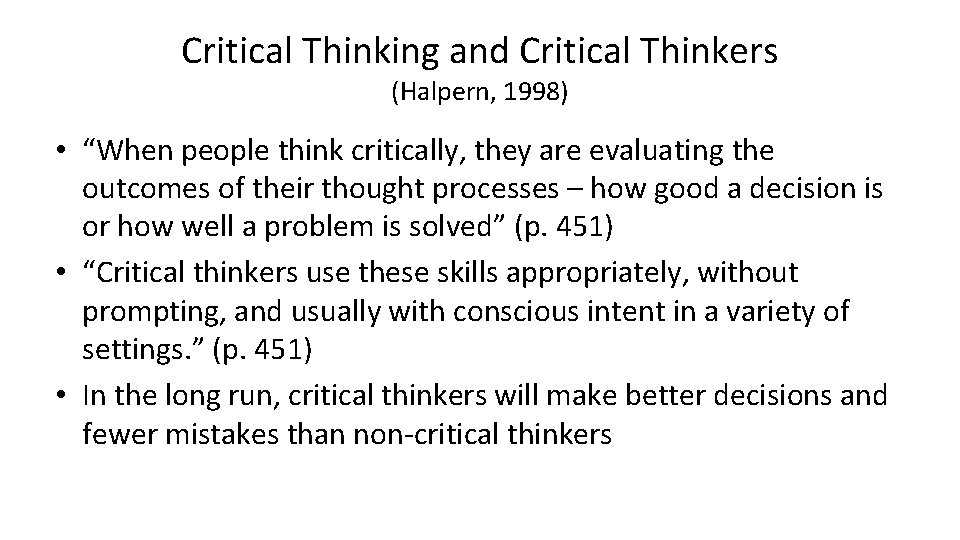
Critical Thinking and Critical Thinkers (Halpern, 1998) • “When people think critically, they are evaluating the outcomes of their thought processes – how good a decision is or how well a problem is solved” (p. 451) • “Critical thinkers use these skills appropriately, without prompting, and usually with conscious intent in a variety of settings. ” (p. 451) • In the long run, critical thinkers will make better decisions and fewer mistakes than non-critical thinkers
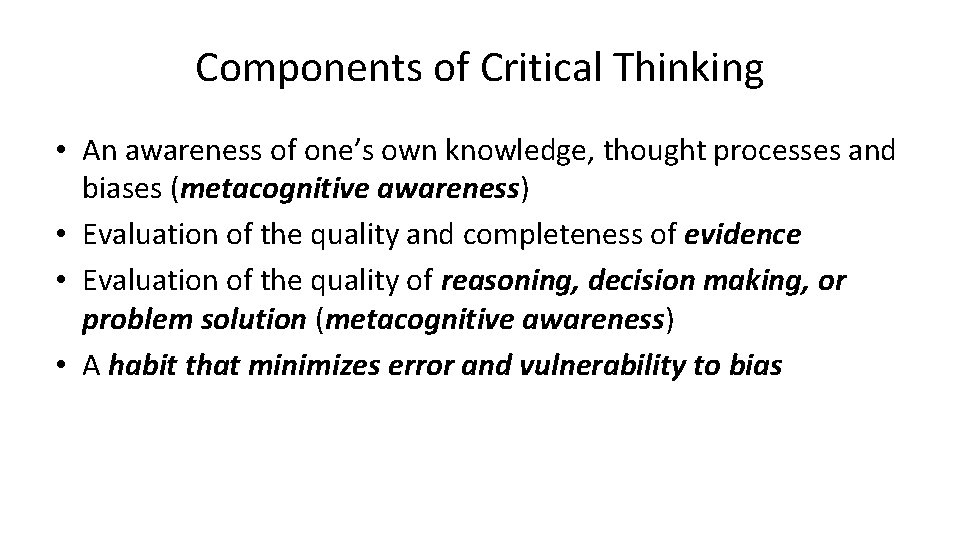
Components of Critical Thinking • An awareness of one’s own knowledge, thought processes and biases (metacognitive awareness) • Evaluation of the quality and completeness of evidence • Evaluation of the quality of reasoning, decision making, or problem solution (metacognitive awareness) • A habit that minimizes error and vulnerability to bias
Why is Critical Thinking More Important Than Ever? • Clear evidence of cognitive biases in thinking, e. g. confirmation bias and motivated reasoning • Clear evidence of a cognitive bias blind spots, e. g. Dunning-Kruger Effect and Third Person Effect • Emergence of controversial issues where science is ignored or distorted – Climate change, gun control, vaccines, GMO organisms, voter fraud, corporal punishment, … • Emergence of concern over “fake news” and “gaslighting”, and the inability of people to discern credibility
Critical Thinking as Seeking Key, Unknown Information (Burgess in Schwartz et al. , 2005) • Groups of 5 th graders, college students, and K-12 Principals asked to create a plan for Eagle population recovery • Then given opportunity to ask what questions they needed to develop a plan
Critical Thinking as Seeking Key, Unknown Information (Burgess in Schwartz et al. , 2005) • 5 th graders: – Focused on isolated eagle traits (What do they like to eat? ) • College students: – Asked more sophisticated questions (What ecosystems support eagles? ) – Better understood the kind of information they needed and were lacking • Principals: – Generated even more sophisticated questions (e. g. What kinds of experts would need to be involved? ) – Recognized that their prior knowledge was insufficient and speculated with caution – Motivated to learn more rather than come to easy, obvious but premature conclusion – Continued to question initial assumptions
Metacognition is Essential for Critical Thinking • Understanding that "doing research" on a topic isn't just finding facts that justifies your opinion (confirmation bias) • Knowing how to judge the quality of evidence and strength of argument • Being aware of one’s own biases • Saying to yourself "this explanation is probably simplistic, there must be more to it. "
Trying to Measure Critical Thinking • Such critical thinking skill is a product of infusing metacognition into a liberal arts education • It may not be easily measurable, especially in a short time frame, yet would make a difference across a lifetime
Take Home Message • Metacognition is essential for student learning – Discussed Self-regulated learning and how it can go right or wrong at each step • Metacognition is also essential for developing critical thinking skills, and thus, student success • The FITW program has inspired me to think beyond learning, to aspects of student success and transformation
Thank you! Questions? slchew@samford. edu
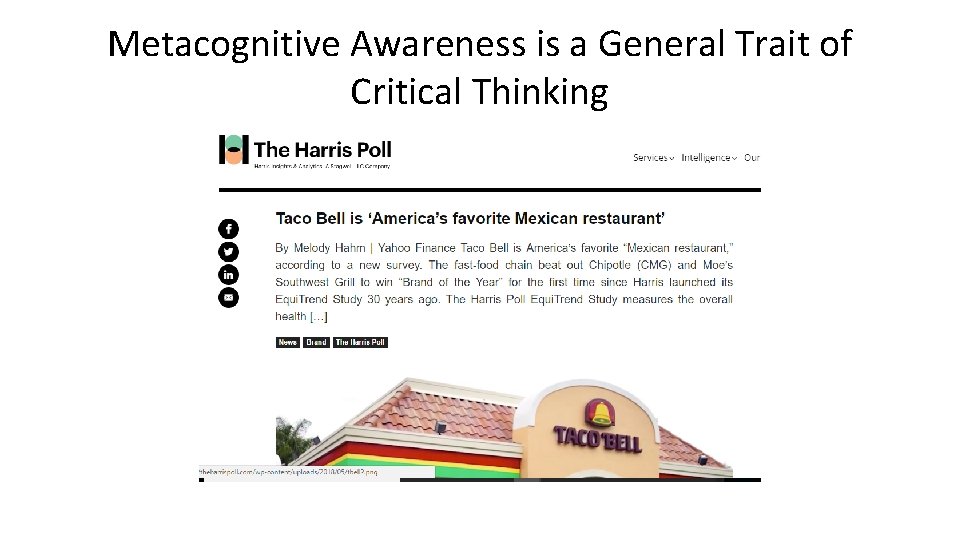
Metacognitive Awareness is a General Trait of Critical Thinking
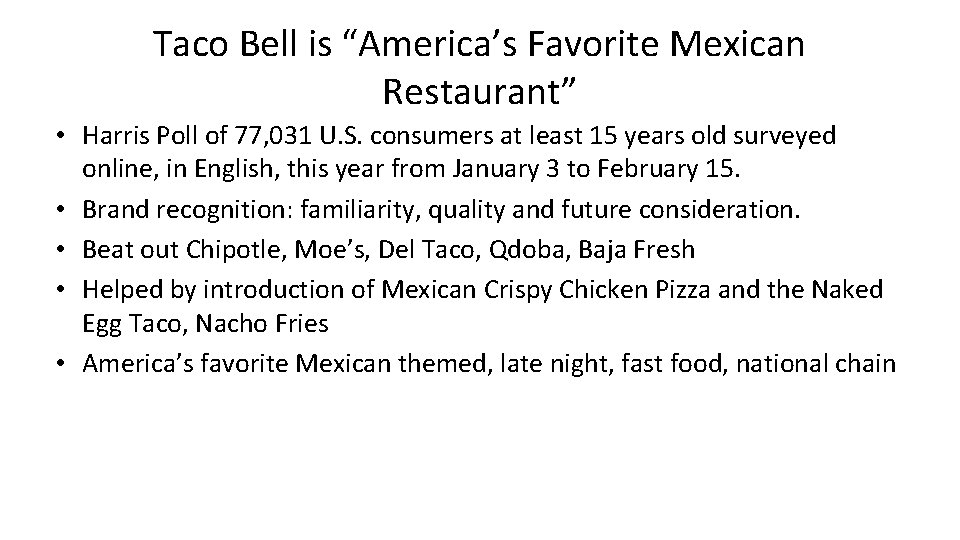
Taco Bell is “America’s Favorite Mexican Restaurant” • Harris Poll of 77, 031 U. S. consumers at least 15 years old surveyed online, in English, this year from January 3 to February 15. • Brand recognition: familiarity, quality and future consideration. • Beat out Chipotle, Moe’s, Del Taco, Qdoba, Baja Fresh • Helped by introduction of Mexican Crispy Chicken Pizza and the Naked Egg Taco, Nacho Fries • America’s favorite Mexican themed, late night, fast food, national chain
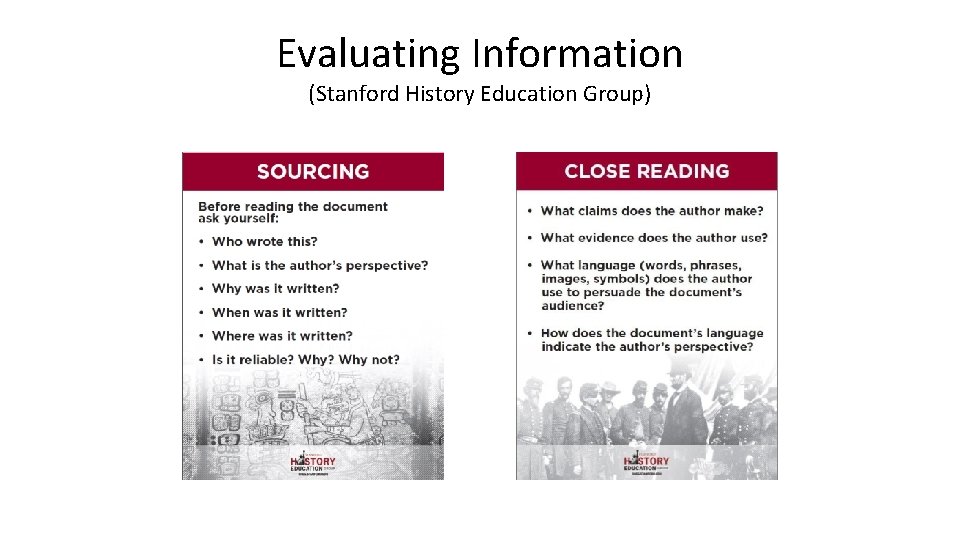
Evaluating Information (Stanford History Education Group)
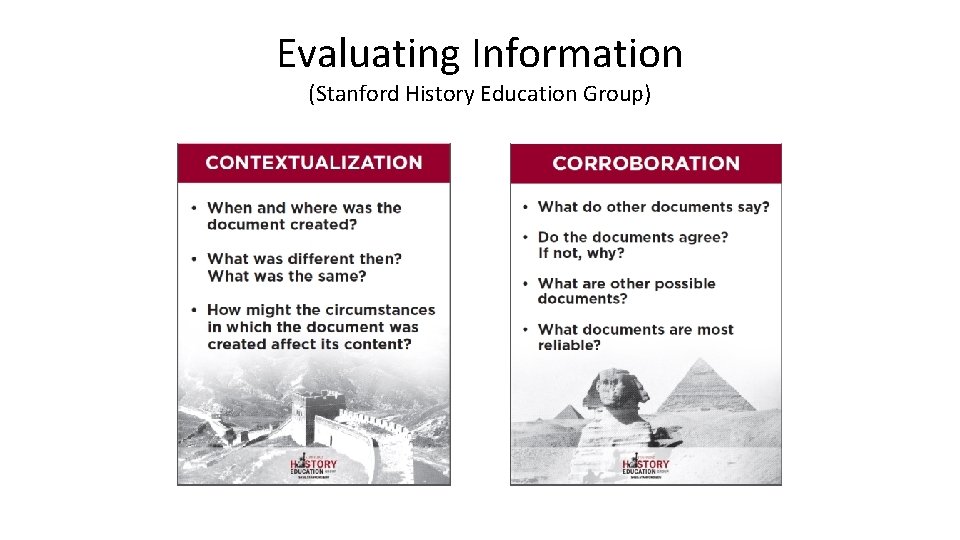
Evaluating Information (Stanford History Education Group)
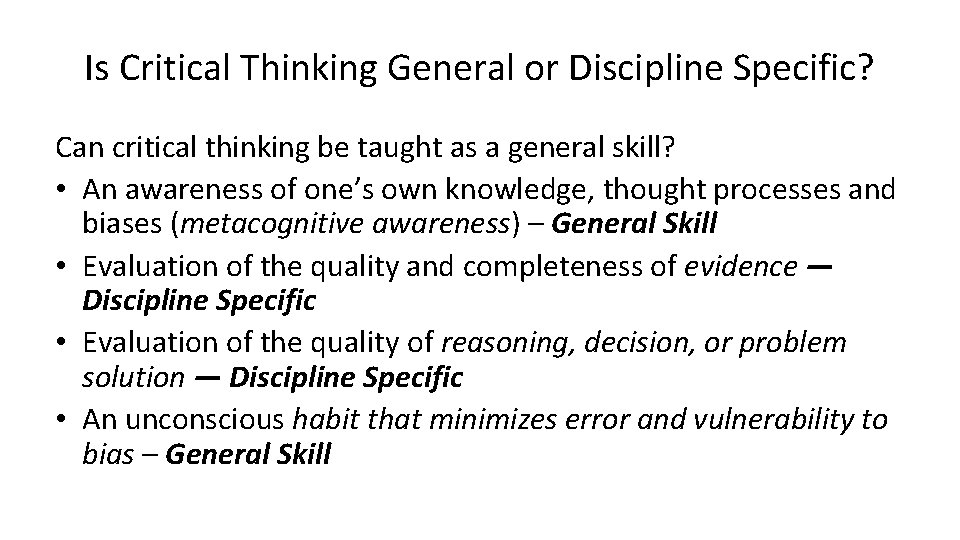
Is Critical Thinking General or Discipline Specific? Can critical thinking be taught as a general skill? • An awareness of one’s own knowledge, thought processes and biases (metacognitive awareness) – General Skill • Evaluation of the quality and completeness of evidence — Discipline Specific • Evaluation of the quality of reasoning, decision, or problem solution — Discipline Specific • An unconscious habit that minimizes error and vulnerability to bias – General Skill
Metacognitive Awareness is a general, trainable component of critical thinking