
TransitOriented Development TOD An Overview Definition of TOD

- Slides: 55
Transit-Oriented Development (TOD) An Overview
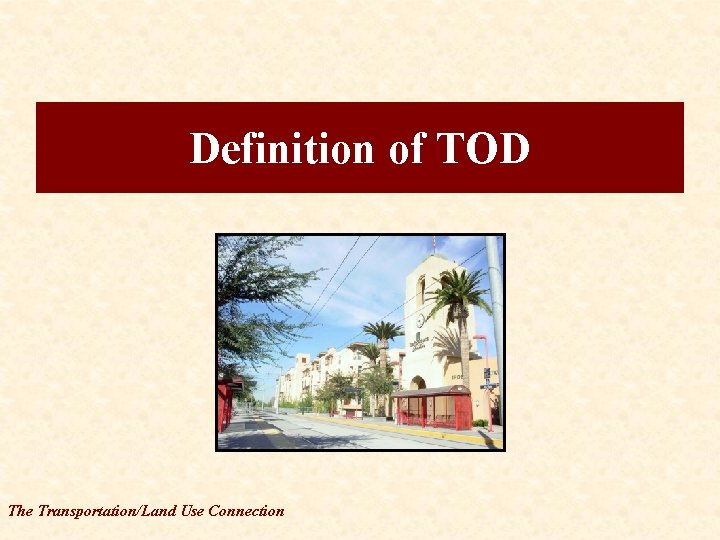
Definition of TOD The Transportation/Land Use Connection
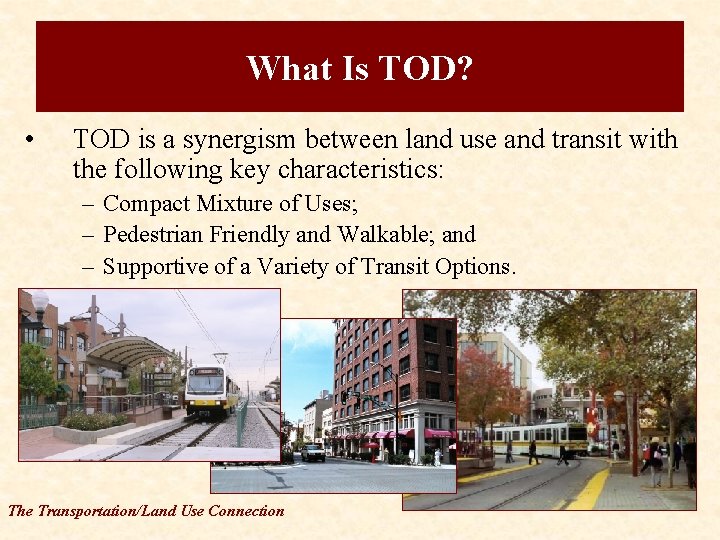
What Is TOD? • TOD is a synergism between land use and transit with the following key characteristics: – Compact Mixture of Uses; – Pedestrian Friendly and Walkable; and – Supportive of a Variety of Transit Options. The Transportation/Land Use Connection
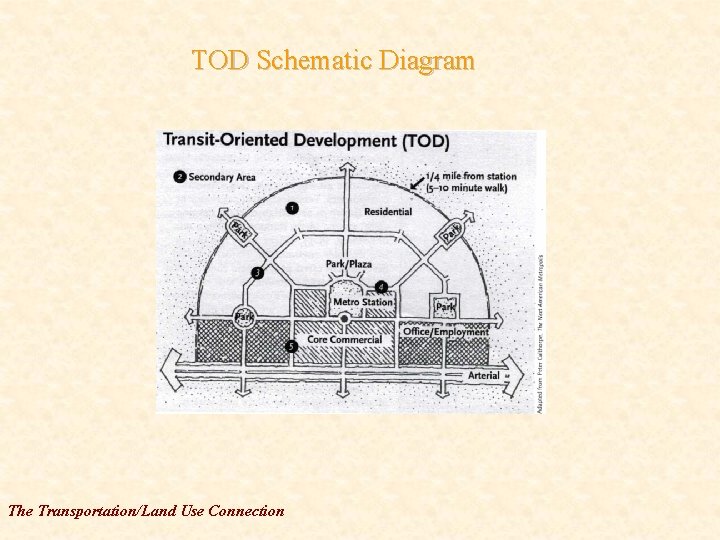
More About TOD • TOD provides access to a full range of transportation options: – – – • • Walking Bicycling Rail Transit Bus Transit Automobile Transit stations are at the center of TODs; The area within ¼ mile (or a five minute walk) of these stations forms the TOD core. The Transportation/Land Use Connection
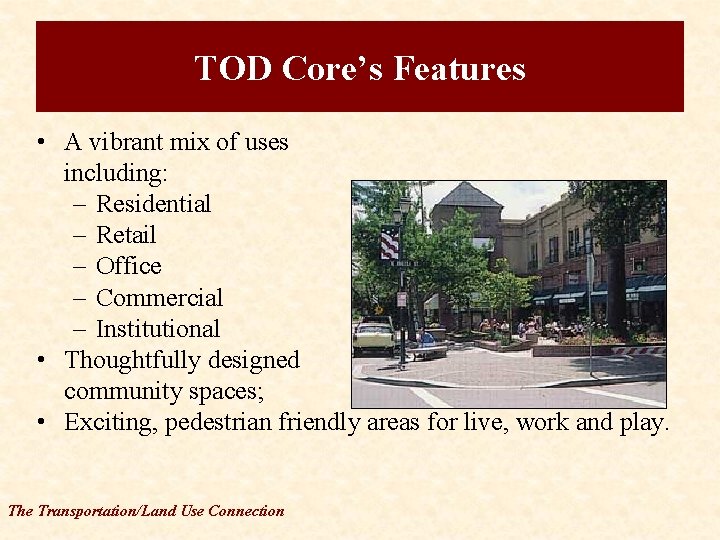
TOD Core’s Features • A vibrant mix of uses including: – Residential – Retail – Office – Commercial – Institutional • Thoughtfully designed community spaces; • Exciting, pedestrian friendly areas for live, work and play. The Transportation/Land Use Connection
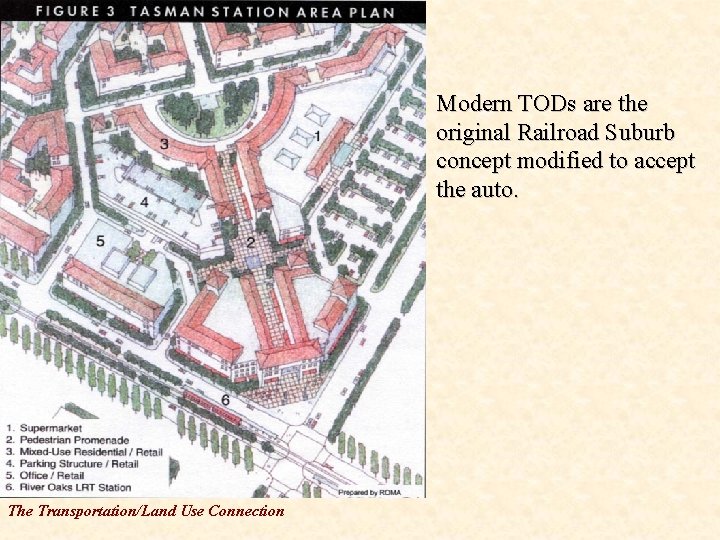
• Modern TODs are the original Railroad Suburb concept modified to accept the auto. The Transportation/Land Use Connection
TOD Schematic Diagram The Transportation/Land Use Connection
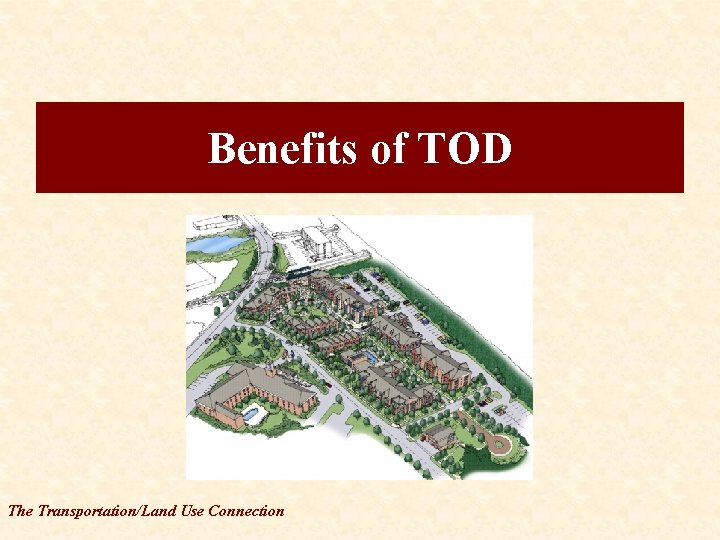
Benefits of TOD The Transportation/Land Use Connection
Benefits of TOD • Increase transit ridership and reduce number of automobile trips generated; • Improve air quality; • Provide opportunities for neighborhood connections; • Increase sense of community; and • Reduce household fuel costs associated with heavy auto use. The Transportation/Land Use Connection
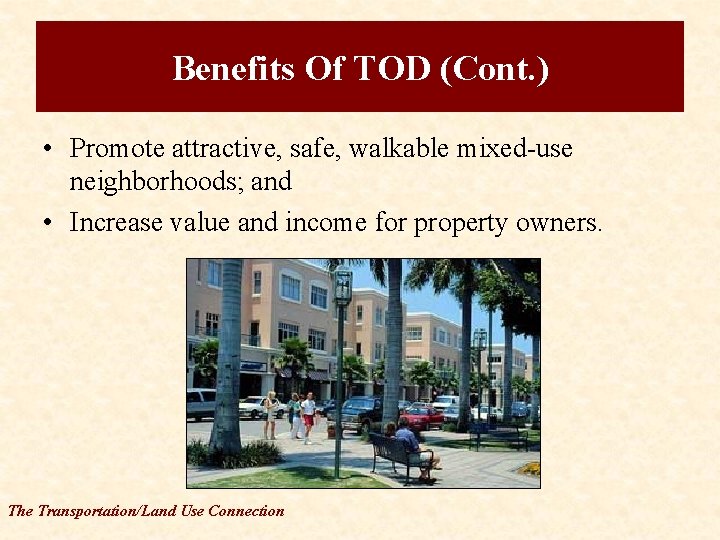
Benefits Of TOD (Cont. ) • Promote attractive, safe, walkable mixed-use neighborhoods; and • Increase value and income for property owners. The Transportation/Land Use Connection
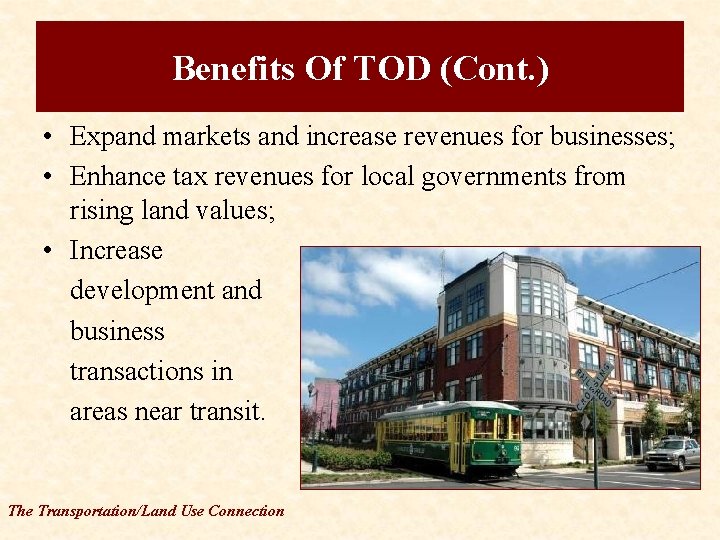
Benefits Of TOD (Cont. ) • Expand markets and increase revenues for businesses; • Enhance tax revenues for local governments from rising land values; • Increase development and business transactions in areas near transit. The Transportation/Land Use Connection
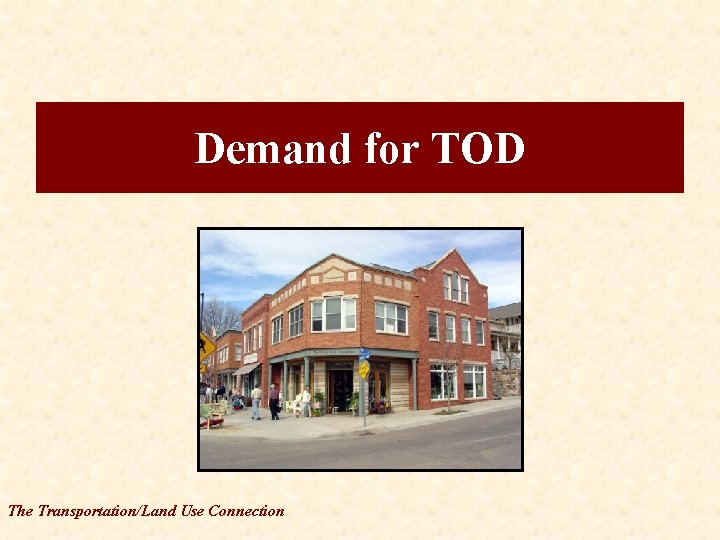
Demand for TOD The Transportation/Land Use Connection
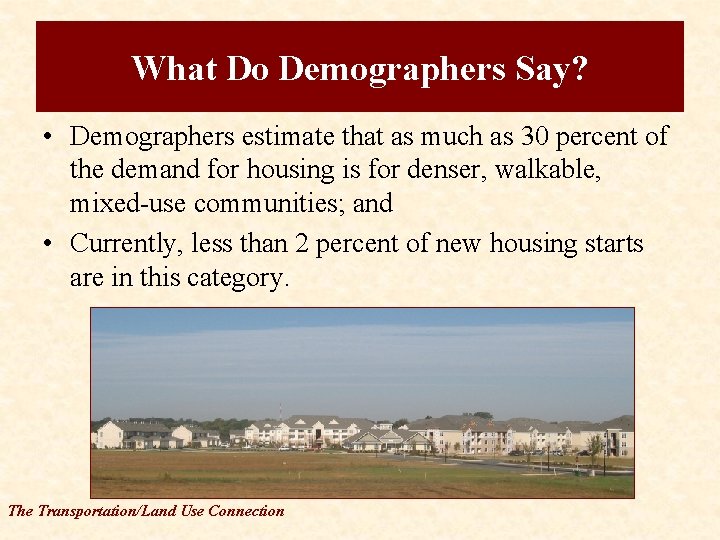
What Do Demographers Say? • Demographers estimate that as much as 30 percent of the demand for housing is for denser, walkable, mixed-use communities; and • Currently, less than 2 percent of new housing starts are in this category. The Transportation/Land Use Connection
Who Will Live Near Transit Stations? • Single householders and couples without children (regardless of age) will generate nearly two-thirds of the total demand for TOD, a disproportionate share given their percentage of total households; and • Households with children will account for only about 20 percent of the demand for TOD. The Transportation/Land Use Connection
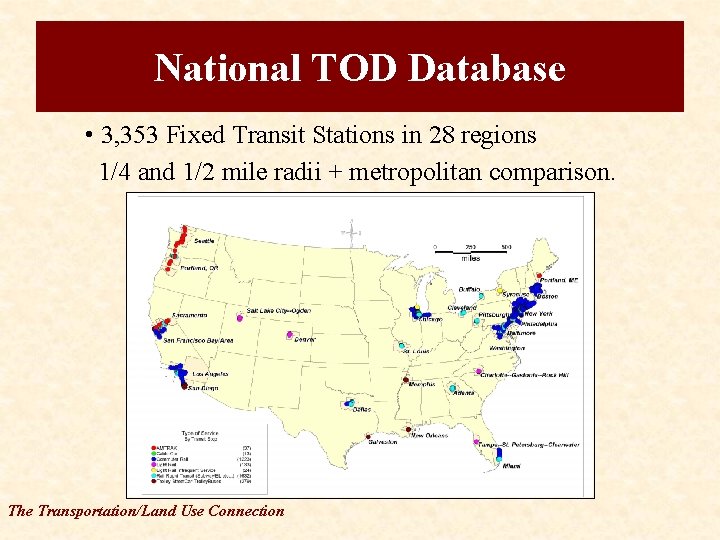
National TOD Database • 3, 353 Fixed Transit Stations in 28 regions 1/4 and 1/2 mile radii + metropolitan comparison. The Transportation/Land Use Connection
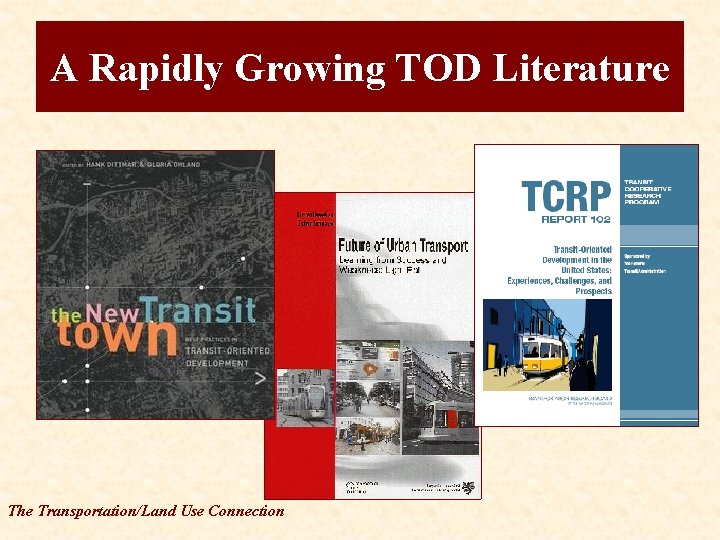
A Rapidly Growing TOD Literature The Transportation/Land Use Connection
Real Estate Investment Adjacent to Transit • • • Washington DC, $15 billion (since 1976); Portland, $3 billion (since the late 1970 s); Dallas, $1 billion (since 1996); St. Louis, $1 billion (since 1993); and Charlotte, $400 million (2000 -2003). The Transportation/Land Use Connection
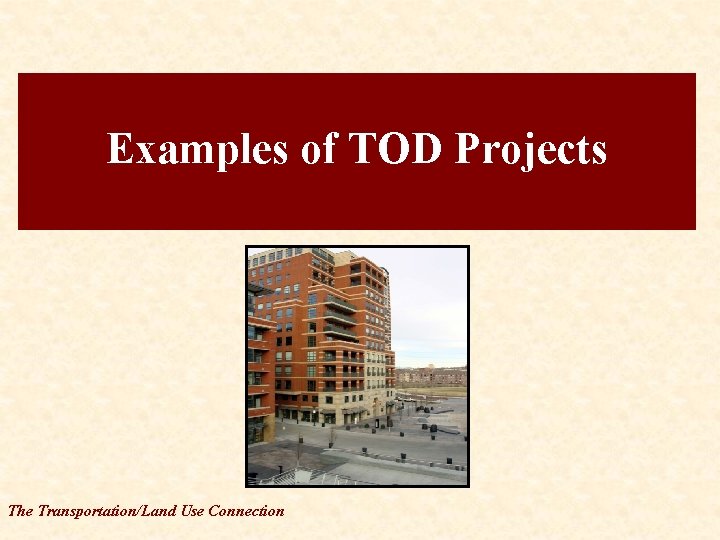
Examples of TOD Projects The Transportation/Land Use Connection
TOD Project #1: Rosslyn-Ballston Corridor The Transportation/Land Use Connection
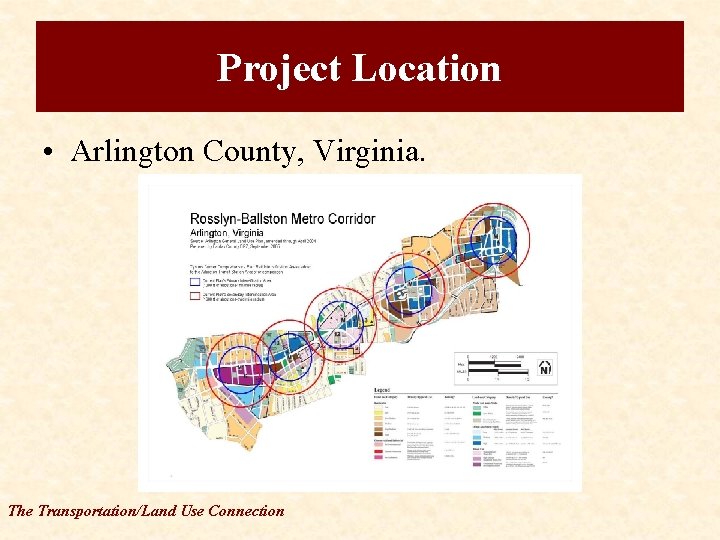
Project Location • Arlington County, Virginia. The Transportation/Land Use Connection
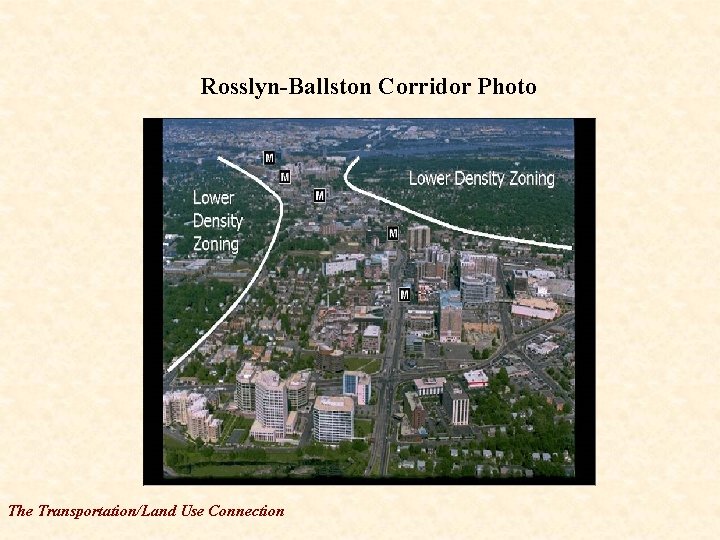
Transit Facilities and Services • Five Metro Rail stations in the corridors; and • Transit operator is the Washington Metropolitan Area Transportation Authority (WMATA). The Transportation/Land Use Connection
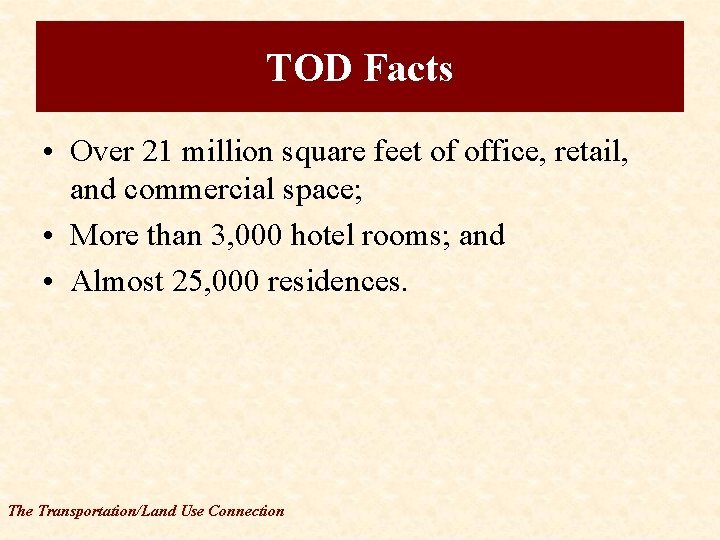
TOD Facts • Over 21 million square feet of office, retail, and commercial space; • More than 3, 000 hotel rooms; and • Almost 25, 000 residences. The Transportation/Land Use Connection
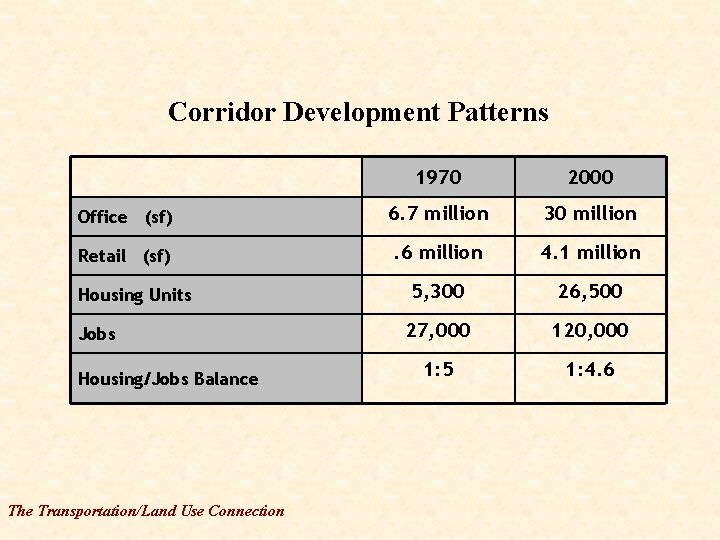
Corridor Development Patterns 1970 2000 Office (sf) 6. 7 million 30 million Retail (sf) . 6 million 4. 1 million 5, 300 26, 500 27, 000 120, 000 1: 5 1: 4. 6 Housing Units Jobs Housing/Jobs Balance The Transportation/Land Use Connection
Rosslyn-Ballston Corridor Photo The Transportation/Land Use Connection
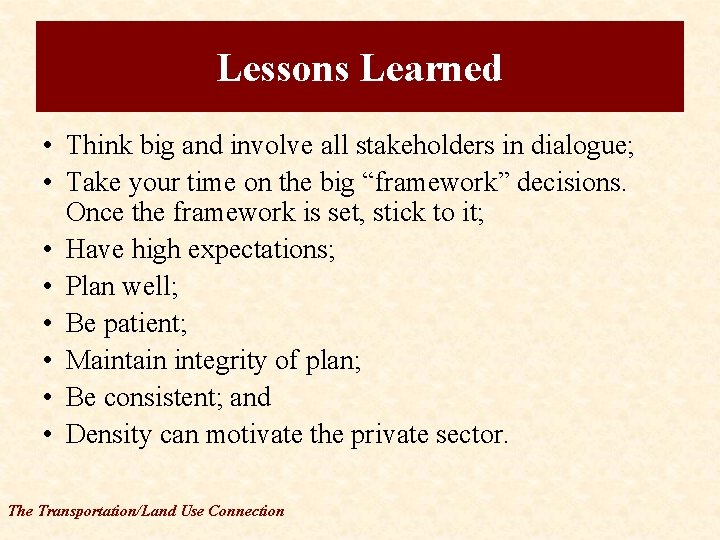
Lessons Learned • Think big and involve all stakeholders in dialogue; • Take your time on the big “framework” decisions. Once the framework is set, stick to it; • Have high expectations; • Plan well; • Be patient; • Maintain integrity of plan; • Be consistent; and • Density can motivate the private sector. The Transportation/Land Use Connection
TOD Project #2: Bethesda Metro Center The Transportation/Land Use Connection
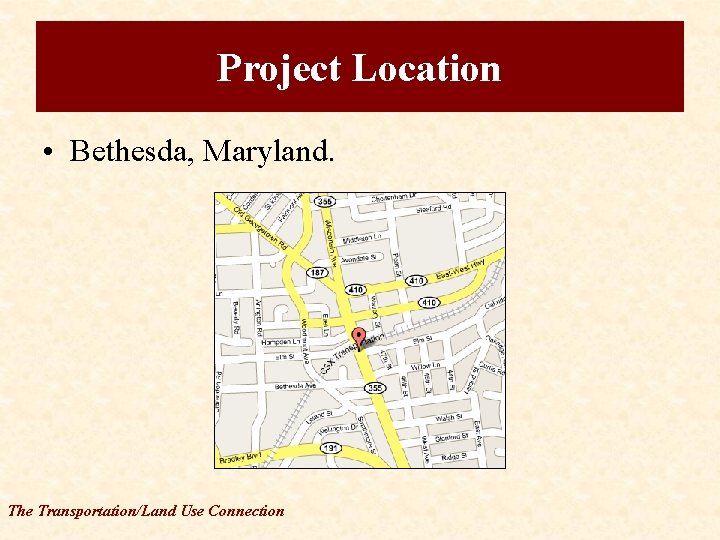
Project Location • Bethesda, Maryland. The Transportation/Land Use Connection
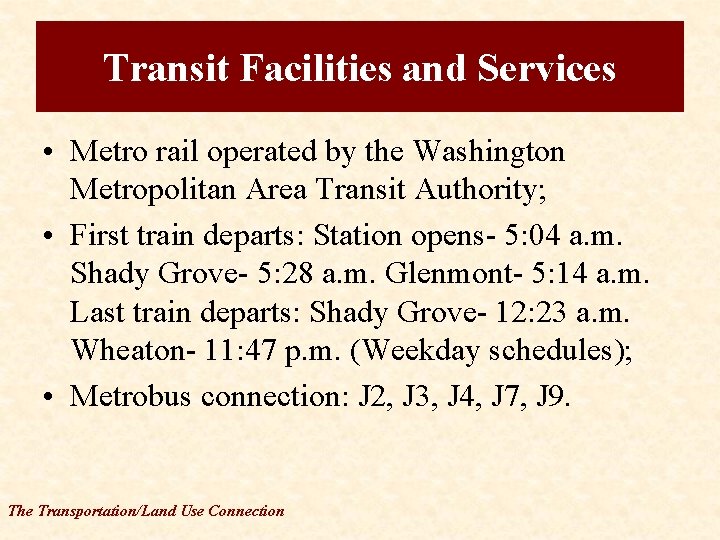
Transit Facilities and Services • Metro rail operated by the Washington Metropolitan Area Transit Authority; • First train departs: Station opens- 5: 04 a. m. Shady Grove- 5: 28 a. m. Glenmont- 5: 14 a. m. Last train departs: Shady Grove- 12: 23 a. m. Wheaton- 11: 47 p. m. (Weekday schedules); • Metrobus connection: J 2, J 3, J 4, J 7, J 9. The Transportation/Land Use Connection
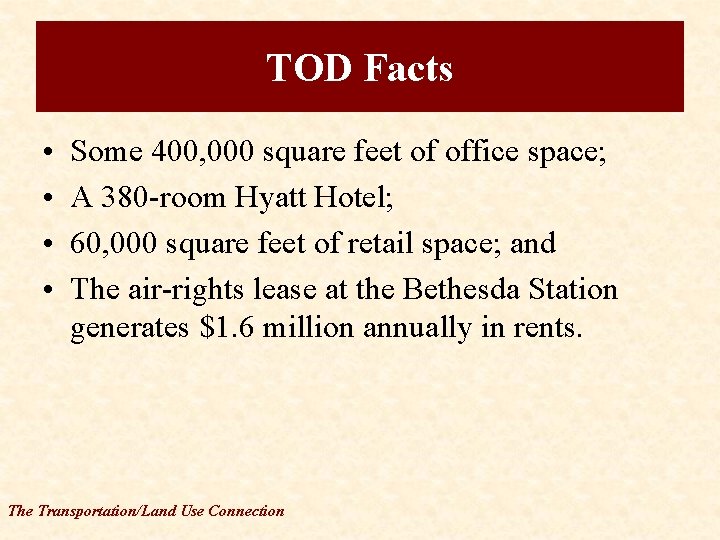
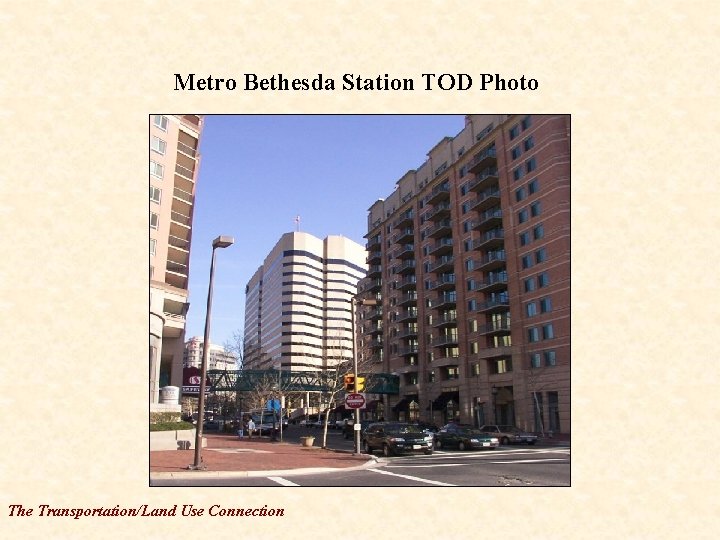
TOD Facts • • Some 400, 000 square feet of office space; A 380 -room Hyatt Hotel; 60, 000 square feet of retail space; and The air-rights lease at the Bethesda Station generates $1. 6 million annually in rents. The Transportation/Land Use Connection
Metro Bethesda Station TOD Photo The Transportation/Land Use Connection
TOD Project #3: Orenco Station Town Center The Transportation/Land Use Connection
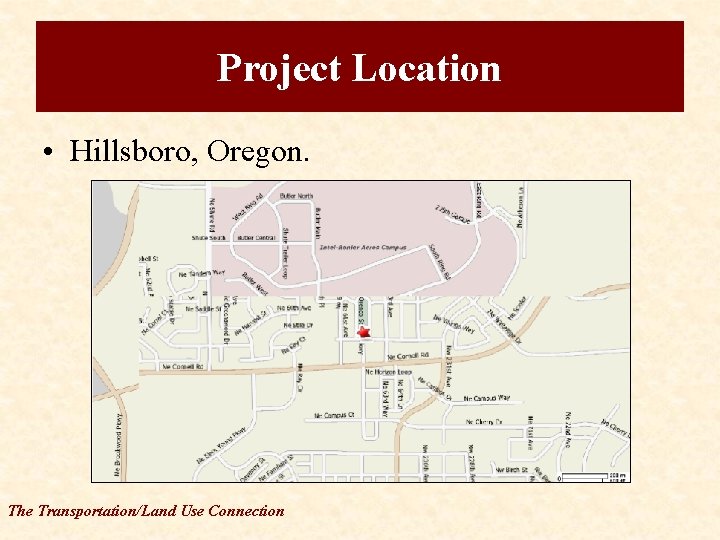
Project Location • Hillsboro, Oregon. The Transportation/Land Use Connection
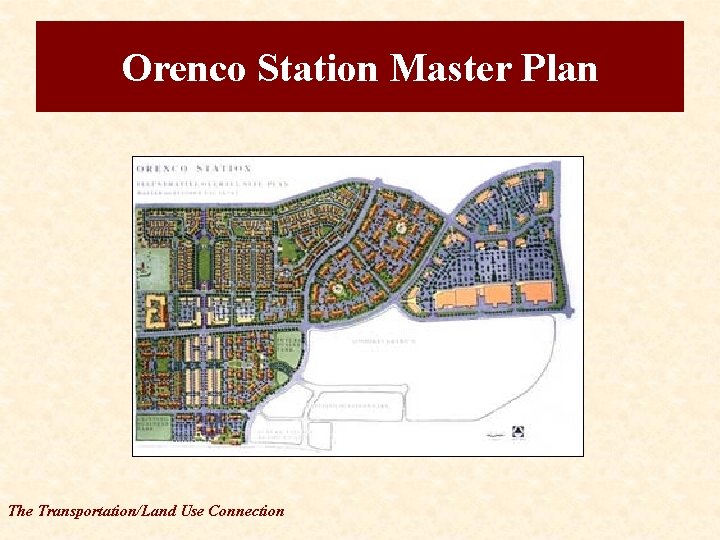
Transit Facilities and Services • Light Rail operated by Portland Tri-Met; and • Orenco Station is a neighborhood of the city of Hillsboro, Oregon, United States. The planned urban town center was designed as a pedestrian friendly, high density community built in conjunction with Tri. Met’s Westside light rail. The Transportation/Land Use Connection
TOD Facts • 450 to 500 attached town homes and detached homes; • 1, 400 luxury apartment units; • a town center that will initially feature 25, 000 square feet of retail space, with 22 apartments or lofts above retail establishments and 24 livework town homes; and • an additional 30, 000 square feet of retail space will be available for future development. The Transportation/Land Use Connection
Orenco Station Master Plan The Transportation/Land Use Connection
TOD Project #4: Martin Luther King Jr. East Busway The Transportation/Land Use Connection
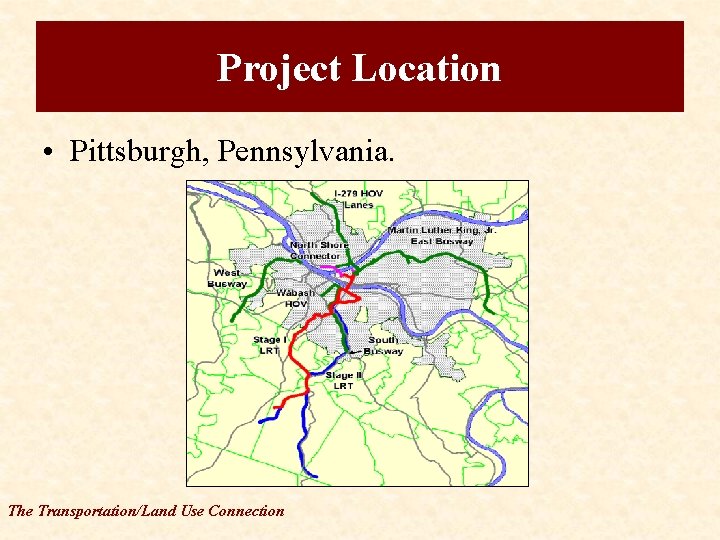
Project Location • Pittsburgh, Pennsylvania. The Transportation/Land Use Connection
Transit Facilities and Services • The Martin Luther King Jr. East Busway is a two-lane dedicated bus-only highway serving the City of Pittsburgh and many of its eastern neighborhoods and suburbs. Total length is 9. 1 miles; and • Three Port Authority routes and other express and suburban Flyer routes utilize the busway seven days a week. The Transportation/Land Use Connection
TOD Facts • 59 new developments within 1, 500 feet radius of station; • $302 million in land development benefits of which $275 million was construction. 80% clustered at station; • New construction and renovation of existing buildings; and • Retail, office and residential uses are most common. The Transportation/Land Use Connection
TOD Project #5: “No. Ho” Arts District The Transportation/Land Use Connection
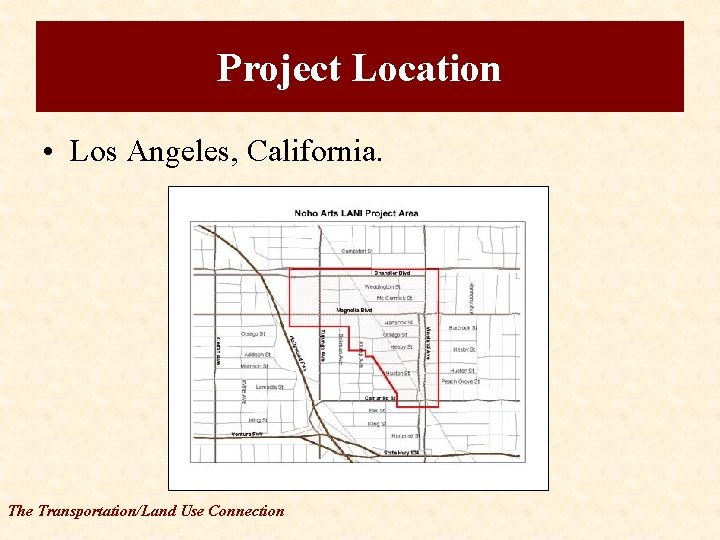
Project Location • Los Angeles, California. The Transportation/Land Use Connection
Transit Facilities and Services • Metro Red Line (Heavy Rail); and • Metro Orange Line (BRT). The Transportation/Land Use Connection
TOD Facts • Through the hard work of community stakeholders in partnership with Los Angeles Neighbourhood Initiative (LANI) and the Community Redevelopment Agency, No. Ho has transformed from a thoroughfare dotted with vacant lots to a burgeoning theater district with coffee shops, restaurants and eclectic retail. In June 2000, the terminal Metro Red Line subway station opened within walking distance of this blossoming neighbourhood main street; • Medium- and high-density developments are being built around the Metro Station; and • Condominium towers (including a 15 -story building on Lankershim Blvd) being built in the midst of older one-story bungalows and small apartment complexes. The Transportation/Land Use Connection
TOD Project #6: Columbia Pike Streetcar Project The Transportation/Land Use Connection
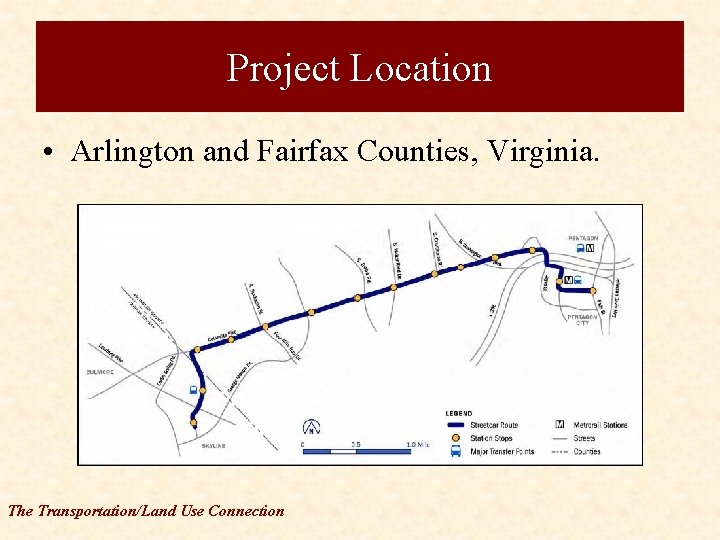
Project Location • Arlington and Fairfax Counties, Virginia. The Transportation/Land Use Connection
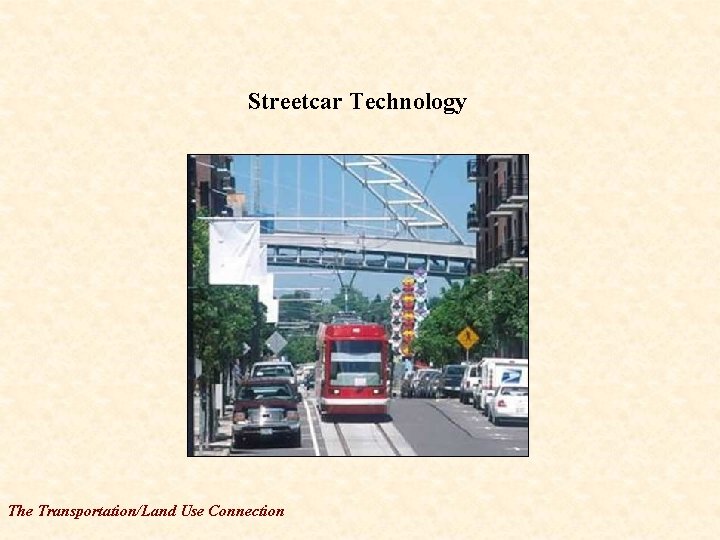
Transit Facilities and Services • Streetcar technology; • Five mile connection between Skyline and Pentagon City; • Six-minute service; • Service augmented with Metro buses during peak periods. The Transportation/Land Use Connection
Streetcar Technology The Transportation/Land Use Connection
TOD Facts • Include a mixture of community- and neighbourhood-serving retail, office, residential, and recreational/cultural uses developed with a pedestrian scale and character. New mixed-use projects would create a distinct new identity and provide future access to multi-modal transit options. The Transportation/Land Use Connection
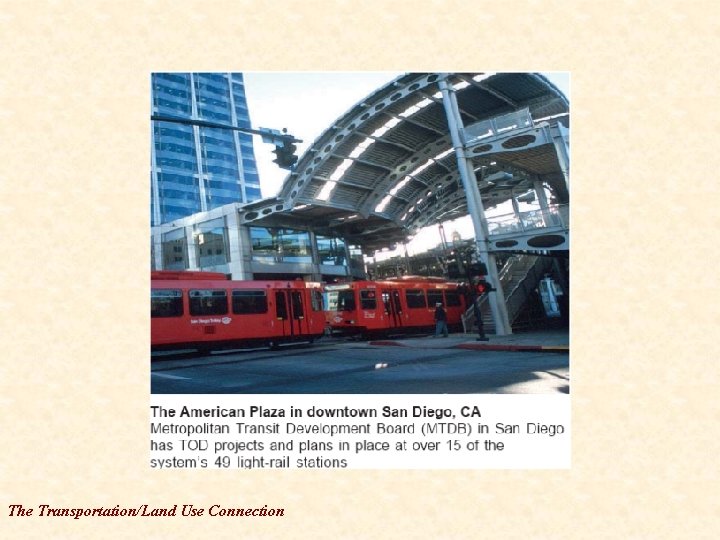
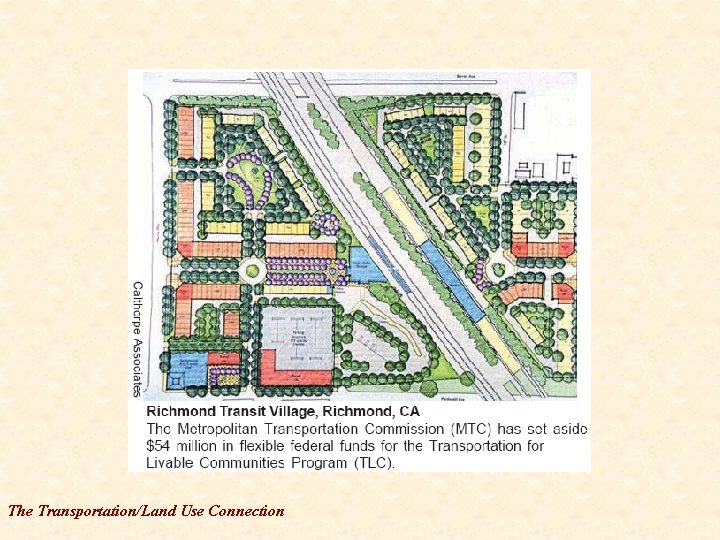
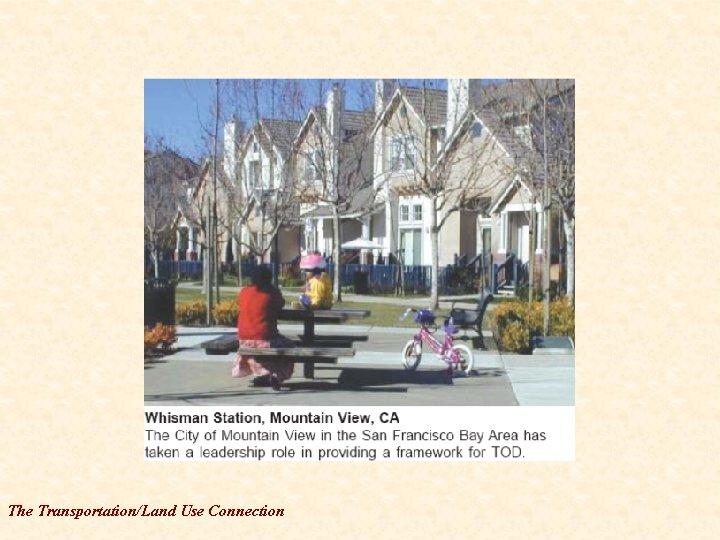
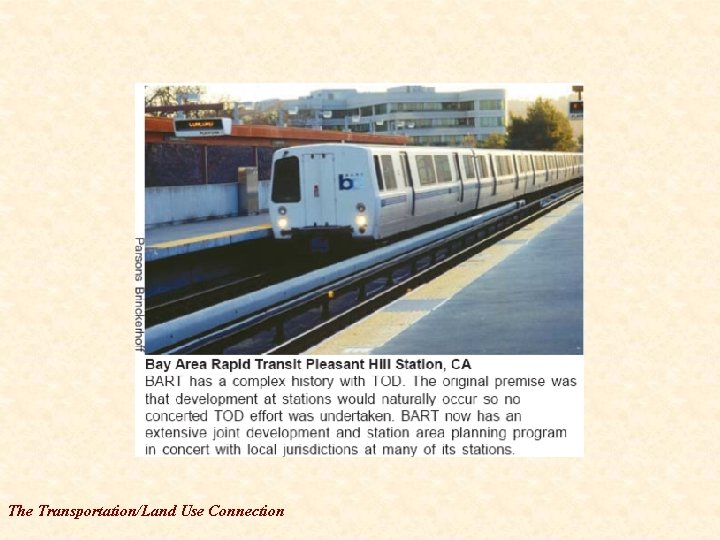
Other TOD-Related Photos The Transportation/Land Use Connection
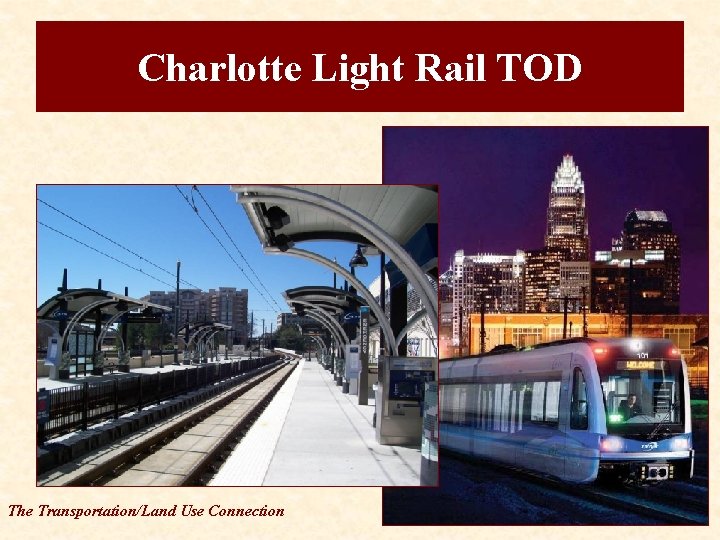
Charlotte Light Rail TOD The Transportation/Land Use Connection
The Transportation/Land Use Connection
The Transportation/Land Use Connection
The Transportation/Land Use Connection
The Transportation/Land Use Connection
For more information about TOD and transit-related information, please visit: http: //www. vatransit. com/ Virginia Transit Association 1108 E. Main Street, Suite 1108 Richmond, Virginia 23219 Phone: 804 -643 -1166 • FAX: 804 -643 -1155 The Transportation/Land Use Connection