
Transitions to Work Presented by Micah Fleisig TTW
Transitions to Work Presented by Micah Fleisig, TTW Program Manager JVS-Boston
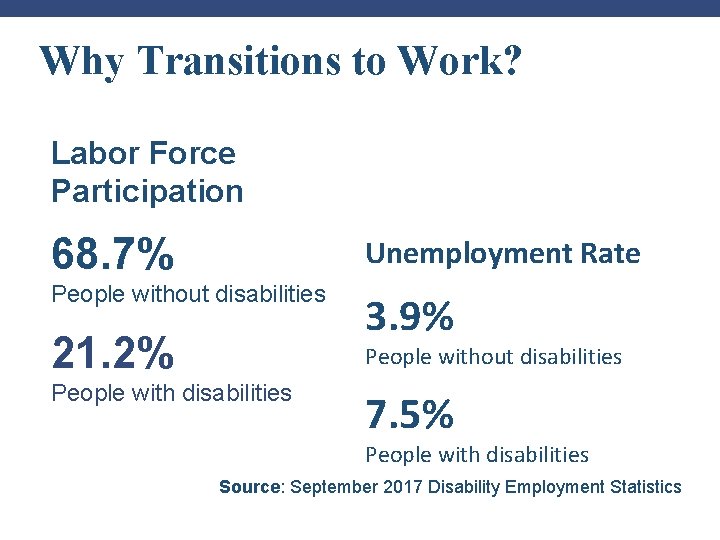
Why Transitions to Work? Labor Force Participation 68. 7% Unemployment Rate People without disabilities 3. 9% 21. 2% People without disabilities People with disabilities 7. 5% People with disabilities Source: September 2017 Disability Employment Statistics OCALI 2017| Finding Meaningful Employment: JVS| VCU| PCG
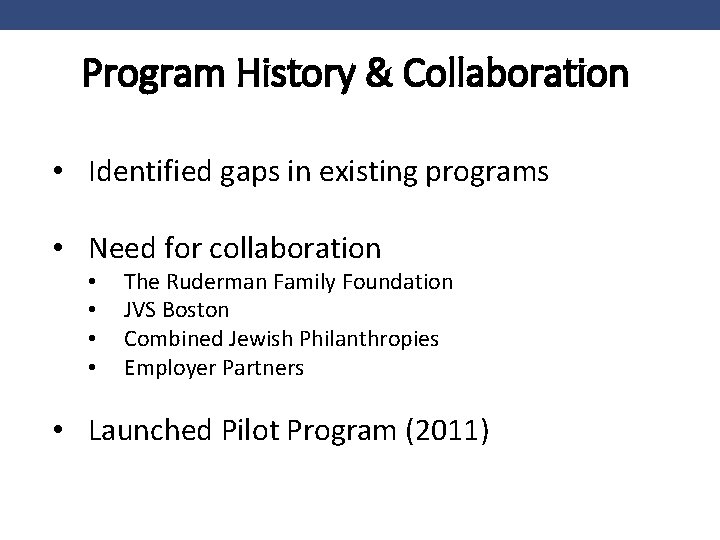
Program History & Collaboration • Identified gaps in existing programs • Need for collaboration • • The Ruderman Family Foundation JVS Boston Combined Jewish Philanthropies Employer Partners • Launched Pilot Program (2011)
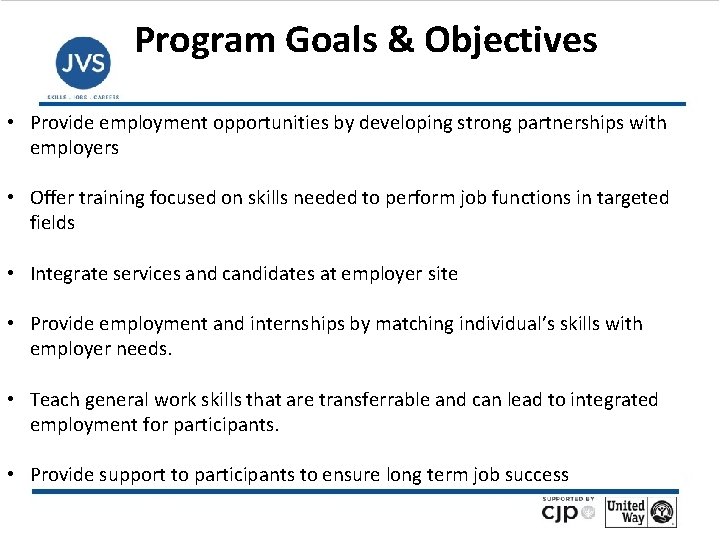
Program Goals & Objectives • Provide employment opportunities by developing strong partnerships with employers • Offer training focused on skills needed to perform job functions in targeted fields • Integrate services and candidates at employer site • Provide employment and internships by matching individual’s skills with employer needs. • Teach general work skills that are transferrable and can lead to integrated employment for participants. • Provide support to participants to ensure long term job success
Program Model Transitions to Work participants: • Graduate from intensive 10 week training • Compete for paid employment • Receive ongoing employee/employer support
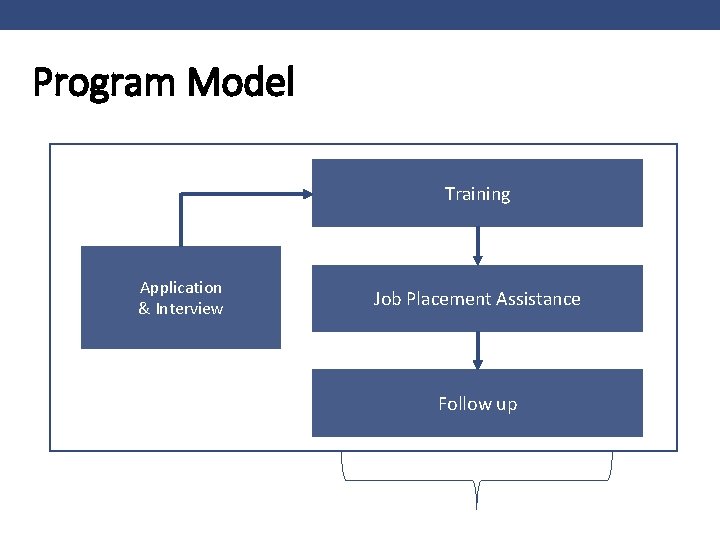
Program Model Training Application & Interview Job Placement Assistance Follow up
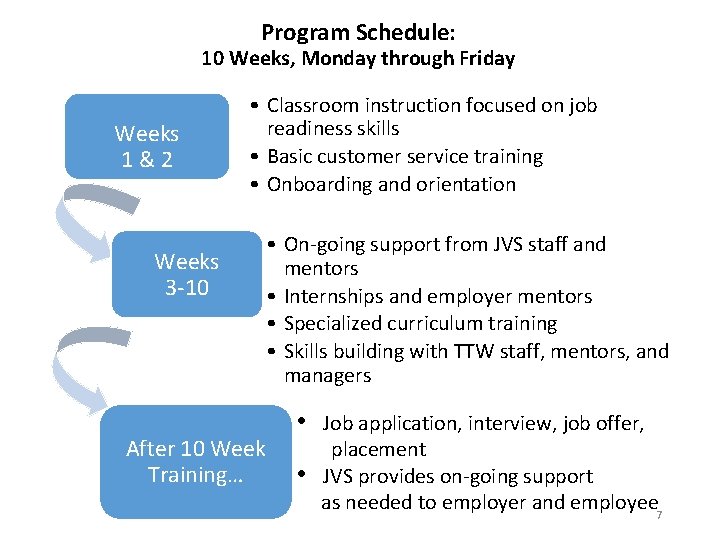
Program Schedule: 10 Weeks, Monday through Friday • Classroom instruction focused on job readiness skills Weeks • Basic customer service training 1 & 2 • Onboarding and orientation • On-going support from JVS staff and Weeks mentors 3 -10 • Internships and employer mentors • Specialized curriculum training • Skills building with TTW staff, mentors, and managers After 10 Week Training… • Job application, interview, job offer, placement • JVS provides on-going support as needed to employer and employee 7
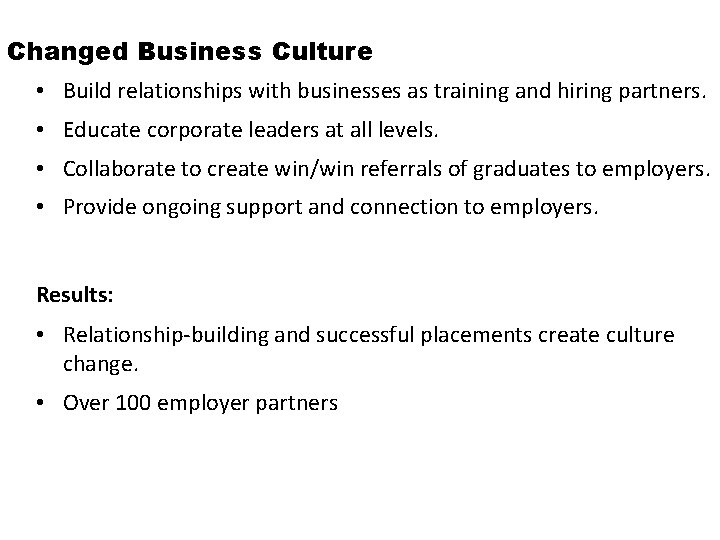
Changed Business Culture • Build relationships with businesses as training and hiring partners. • Educate corporate leaders at all levels. • Collaborate to create win/win referrals of graduates to employers. • Provide ongoing support and connection to employers. Results: • Relationship-building and successful placements create culture change. • Over 100 employer partners
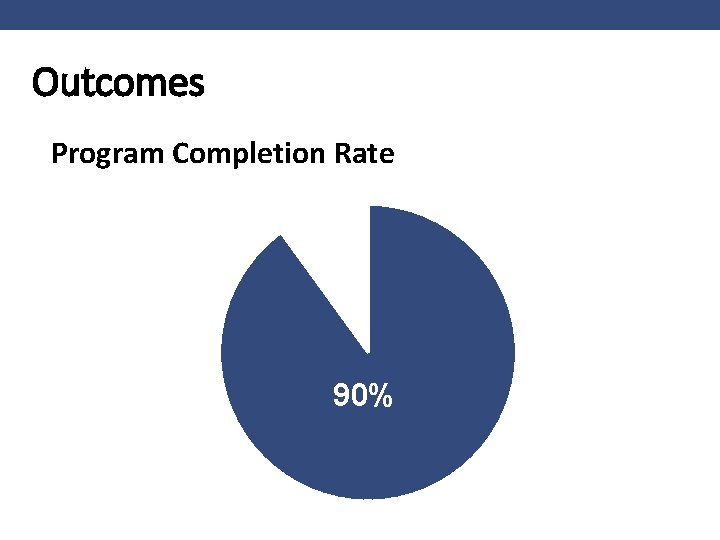
Outcomes Program Completion Rate 90%
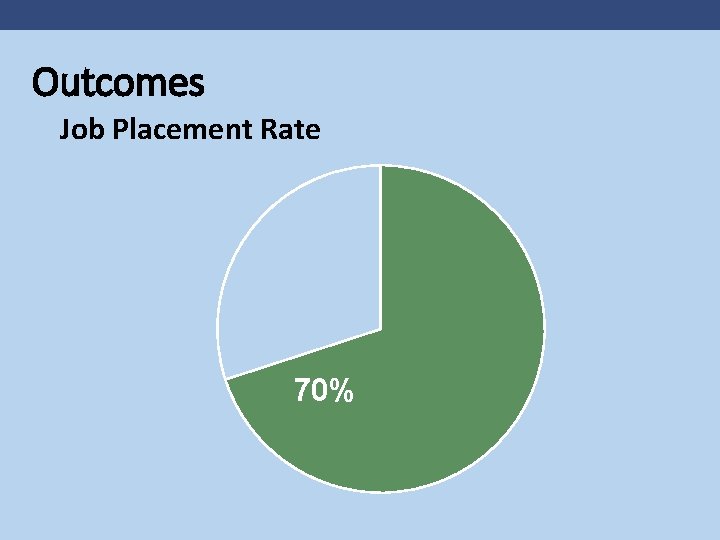
Outcomes Job Placement Rate 70%
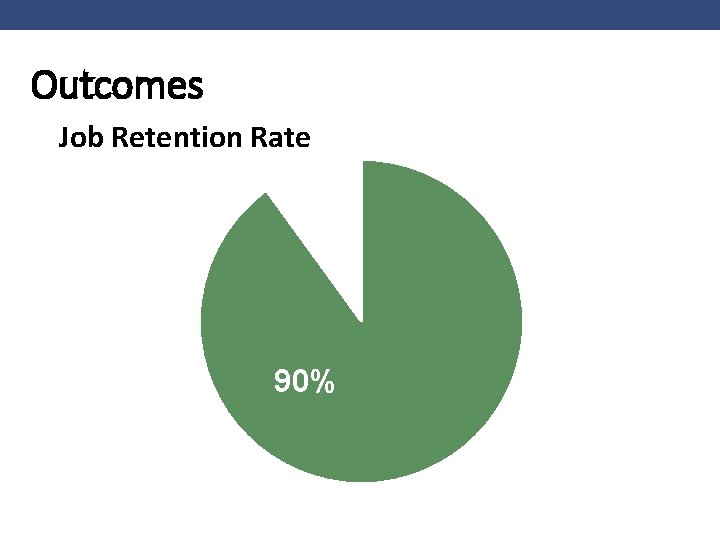
Outcomes Job Retention Rate 90%

Transitions to Work
- Slides: 12