
Transition to Saa S The Good the Bad
Transition to Saa. S The Good the Bad Almost Great and the Ugly Interesting Dani Shomron October 2010

Agenda • Saa. S and the Cloud Stack • Saa. S Adoption – or Why Bother? • Benefits – provider & consumer • Challenges • Impact on the Organization • A path to success
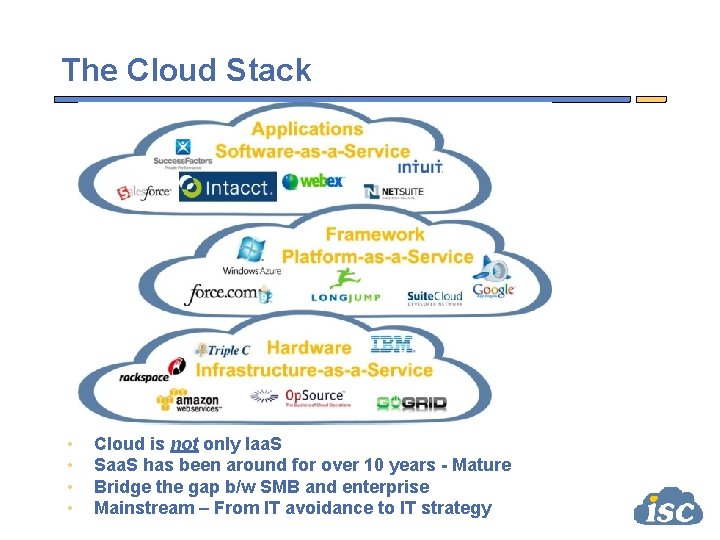
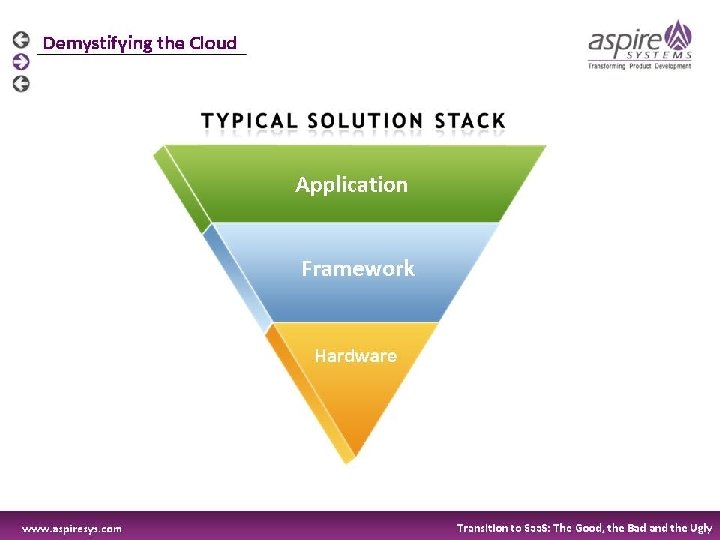
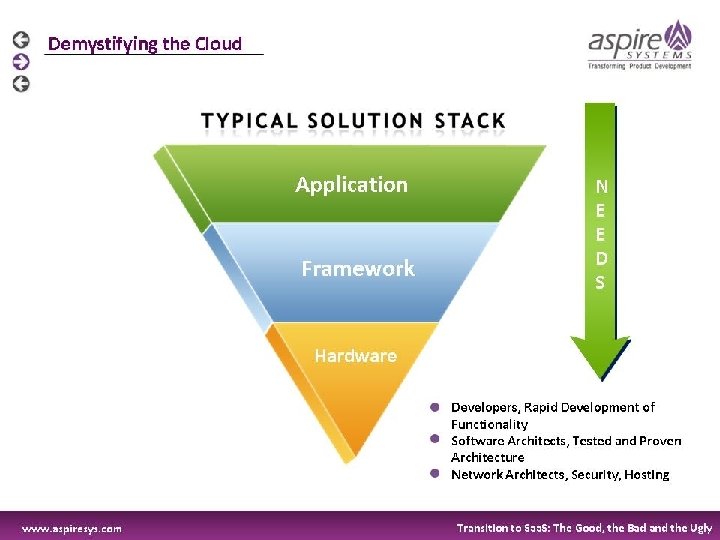
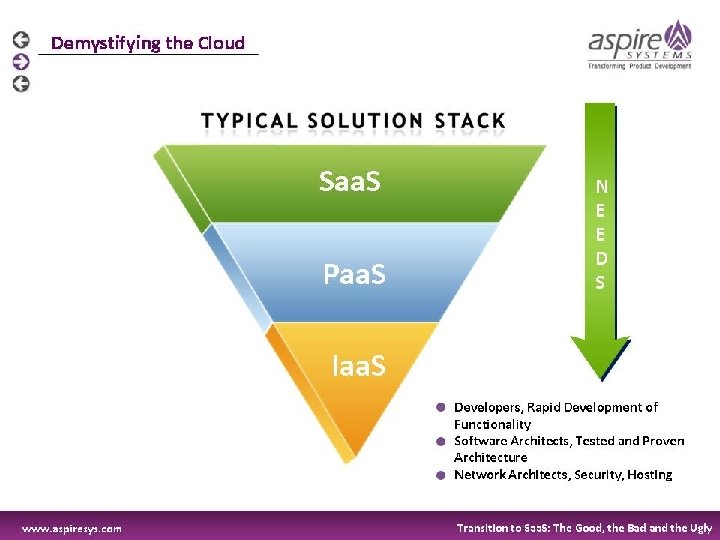
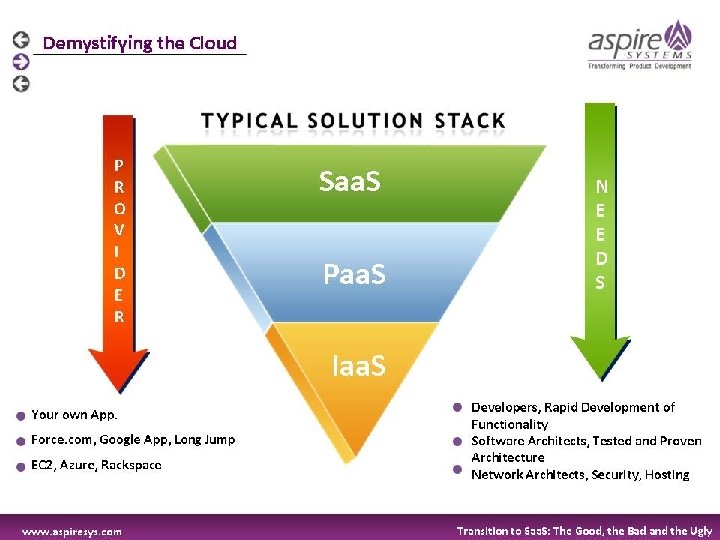
The Cloud Stack • • Cloud is not only Iaa. S Saa. S has been around for over 10 years - Mature Bridge the gap b/w SMB and enterprise Mainstream – From IT avoidance to IT strategy
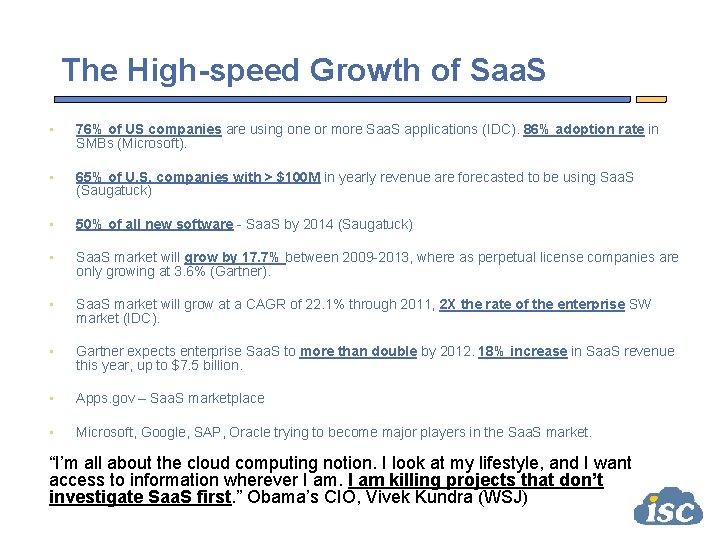
The High-speed Growth of Saa. S • 76% of US companies are using one or more Saa. S applications (IDC). 86% adoption rate in SMBs (Microsoft). • 65% of U. S. companies with > $100 M in yearly revenue are forecasted to be using Saa. S (Saugatuck) • 50% of all new software - Saa. S by 2014 (Saugatuck) • Saa. S market will grow by 17. 7% between 2009 -2013, where as perpetual license companies are only growing at 3. 6% (Gartner). • Saa. S market will grow at a CAGR of 22. 1% through 2011, 2 X the rate of the enterprise SW market (IDC). • Gartner expects enterprise Saa. S to more than double by 2012. 18% increase in Saa. S revenue this year, up to $7. 5 billion. • Apps. gov – Saa. S marketplace • Microsoft, Google, SAP, Oracle trying to become major players in the Saa. S market. “I’m all about the cloud computing notion. I look at my lifestyle, and I want access to information wherever I am killing projects that don’t investigate Saa. S first. ” Obama’s CIO, Vivek Kundra (WSJ)
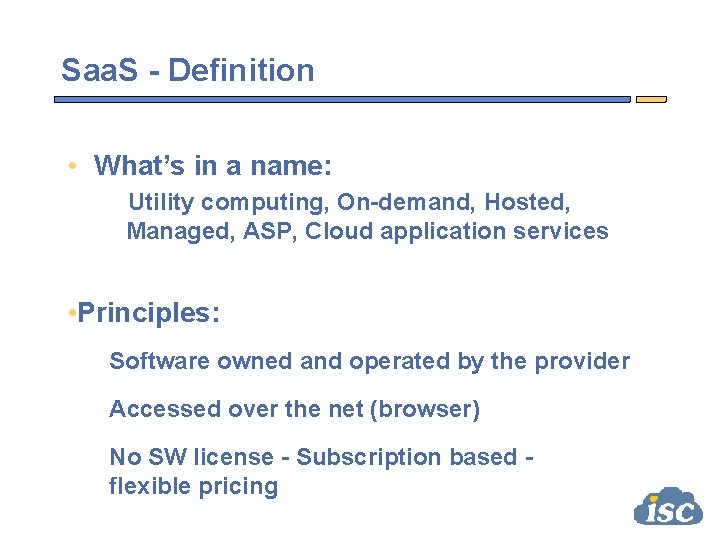
Saa. S - Definition • What’s in a name: Utility computing, On-demand, Hosted, Managed, ASP, Cloud application services • Principles: Software owned and operated by the provider Accessed over the net (browser) No SW license - Subscription based flexible pricing
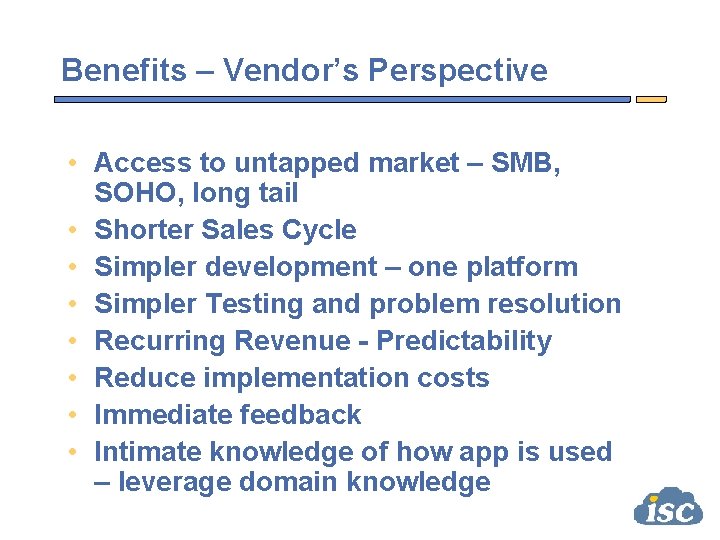
Benefits – Vendor’s Perspective • Access to untapped market – SMB, SOHO, long tail • Shorter Sales Cycle • Simpler development – one platform • Simpler Testing and problem resolution • Recurring Revenue - Predictability • Reduce implementation costs • Immediate feedback • Intimate knowledge of how app is used – leverage domain knowledge

Benefits – Consumer’s Perspective • • • Costs – TCO, Op. Ex vs. Cap. Ex Time to value Managed risk of SW deployment Small steps – little upfront commitment Anytime / Anywhere Continuous improvement Avoiding the upgrade nightmare Shifting from fire-fighting to strategy Focusing on the business, not on IT
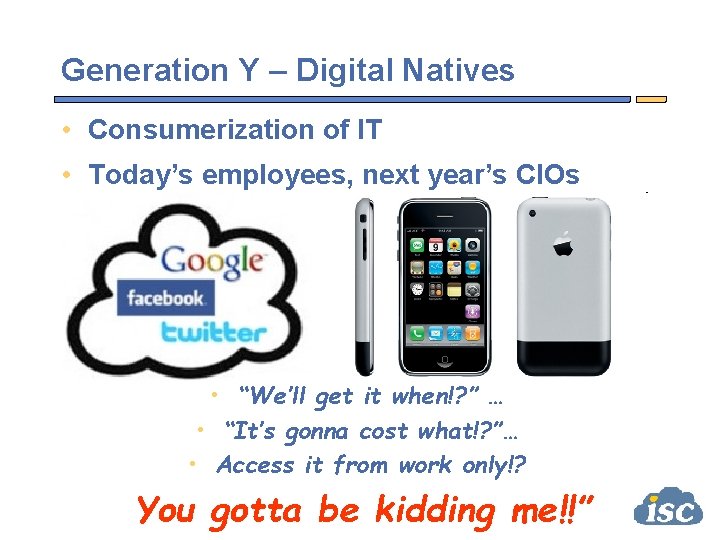
Generation Y – Digital Natives • Consumerization of IT • Today’s employees, next year’s CIOs • “We’ll get it when!? ” … • “It’s gonna cost what!? ”… • Access it from work only!? You gotta be kidding me!!”
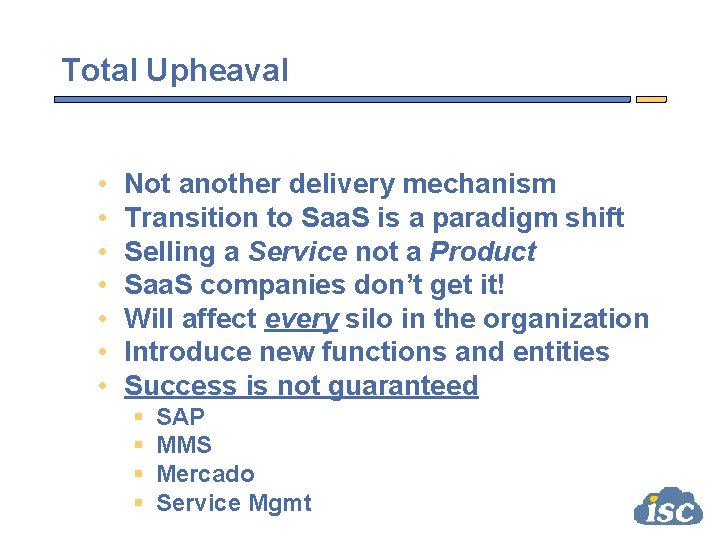
Total Upheaval • • Not another delivery mechanism Transition to Saa. S is a paradigm shift Selling a Service not a Product Saa. S companies don’t get it! Will affect every silo in the organization Introduce new functions and entities Success is not guaranteed § § SAP MMS Mercado Service Mgmt

The Saa. S Organization R&D Quality Ops Support Sales Marketing Finance PS Legal
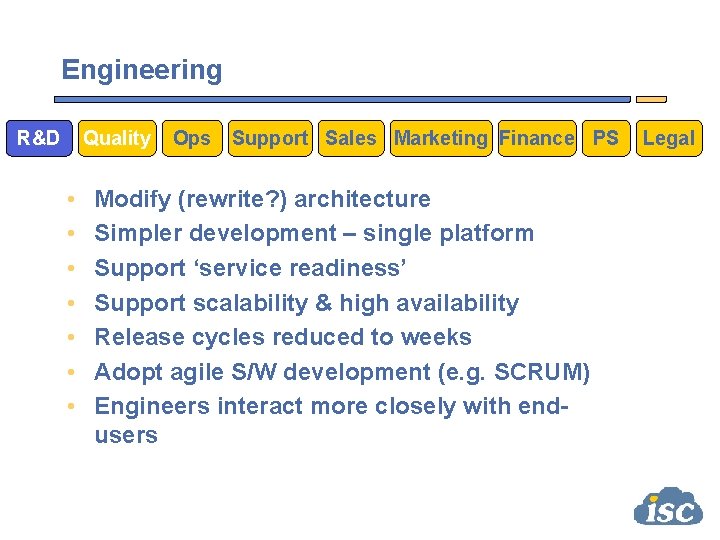
Engineering R&D Quality • • Ops Support Sales Marketing Finance PS Modify (rewrite? ) architecture Simpler development – single platform Support ‘service readiness’ Support scalability & high availability Release cycles reduced to weeks Adopt agile S/W development (e. g. SCRUM) Engineers interact more closely with endusers Legal
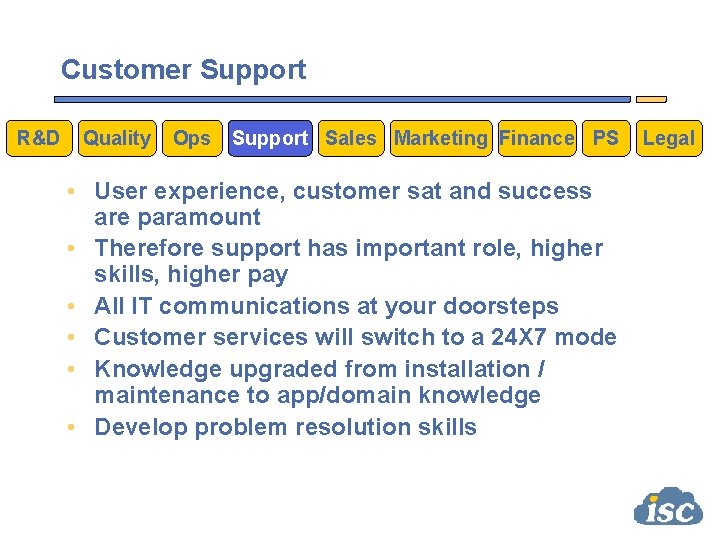
Customer Support R&D Quality Ops Support Sales Marketing Finance PS • User experience, customer sat and success are paramount • Therefore support has important role, higher skills, higher pay • All IT communications at your doorsteps • Customer services will switch to a 24 X 7 mode • Knowledge upgraded from installation / maintenance to app/domain knowledge • Develop problem resolution skills Legal
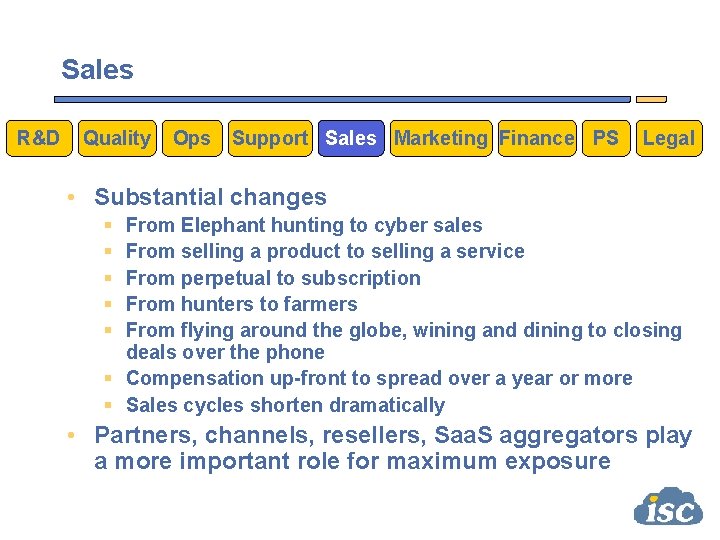
Sales R&D Quality Ops Support Sales Marketing Finance PS Legal • Substantial changes § § § From Elephant hunting to cyber sales From selling a product to selling a service From perpetual to subscription From hunters to farmers From flying around the globe, wining and dining to closing deals over the phone § Compensation up-front to spread over a year or more § Sales cycles shorten dramatically • Partners, channels, resellers, Saa. S aggregators play a more important role for maximum exposure
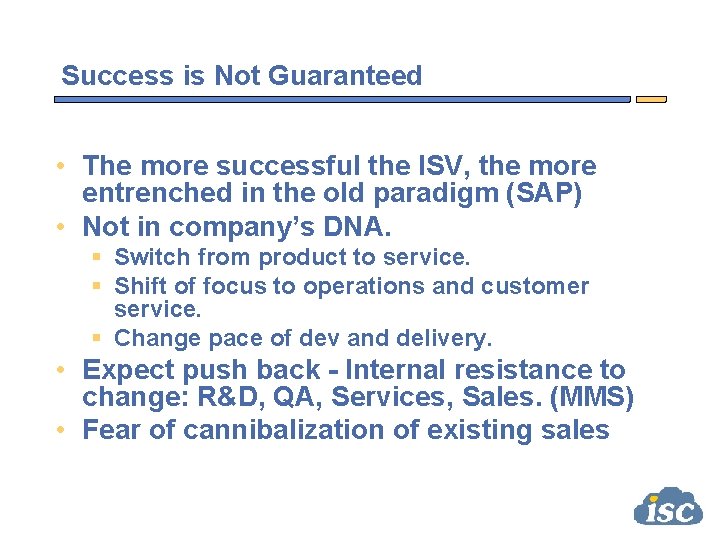
Success is Not Guaranteed • The more successful the ISV, the more entrenched in the old paradigm (SAP) • Not in company’s DNA. § Switch from product to service. § Shift of focus to operations and customer service. § Change pace of dev and delivery. • Expect push back - Internal resistance to change: R&D, QA, Services, Sales. (MMS) • Fear of cannibalization of existing sales
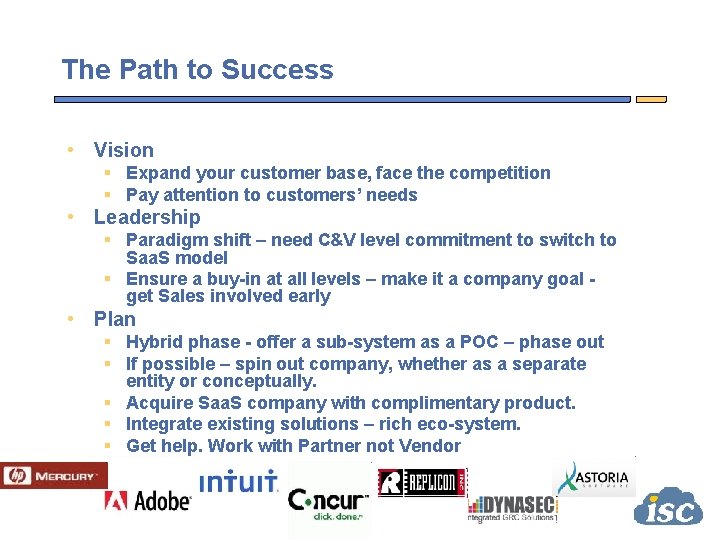
The Path to Success • Vision § Expand your customer base, face the competition § Pay attention to customers’ needs • Leadership § Paradigm shift – need C&V level commitment to switch to Saa. S model § Ensure a buy-in at all levels – make it a company goal get Sales involved early • Plan § Hybrid phase - offer a sub-system as a POC – phase out § If possible – spin out company, whether as a separate entity or conceptually. § Acquire Saa. S company with complimentary product. § Integrate existing solutions – rich eco-system. § Get help. Work with Partner not Vendor
Generation Y – Digital Natives
Success is Not Guaranteed
Success is Not Guaranteed
Success is Not Guaranteed
Success is Not Guaranteed
Success is Not Guaranteed
Success is Not Guaranteed
Success is Not Guaranteed
Success is Not Guaranteed
Success is Not Guaranteed
- Slides: 36