
Transition Into Your Future Partnering with Department of
- Slides: 43
Transition Into Your Future: Partnering with Department of Rehabilitation 1
Presenter Cathleen Coombs, M. S. , C. R. C Rehabilitation Counselor for Blind Department of Rehabilitation 464 West 4 th Street, Suite 152 San Bernardino, CA 92401 909 -383 -4355 ccoombss@dor. ca. gov 2
3
What is Transition • It is the process of going from one stage of life to another • It starts when we are born • We go through many transitions in life • It is not something we just do in the last year of school 4
Terminology - Student with a Disability: - 16 -21 years old - Still attending school - Special Education Services (IEP) OR receiving accommodations under a 504 plan - Youth with a Disability - 14 to 24 years old 5
Legislation - IDEA: Individuals with Disabilities Education Act - WIOA: Work Innovation and Opportunity Act - Rehabilitation Act - Lanterman Act 6
What’s New? - DOR must to provide a continuum of services for youth with disabilities (1424) and students with disabilities (1621) - Transition coordination between schools/DOR/RC mandated - 5 required Pre-Employment Transition Services (15% of DOR funding required) for students with disabilities 7
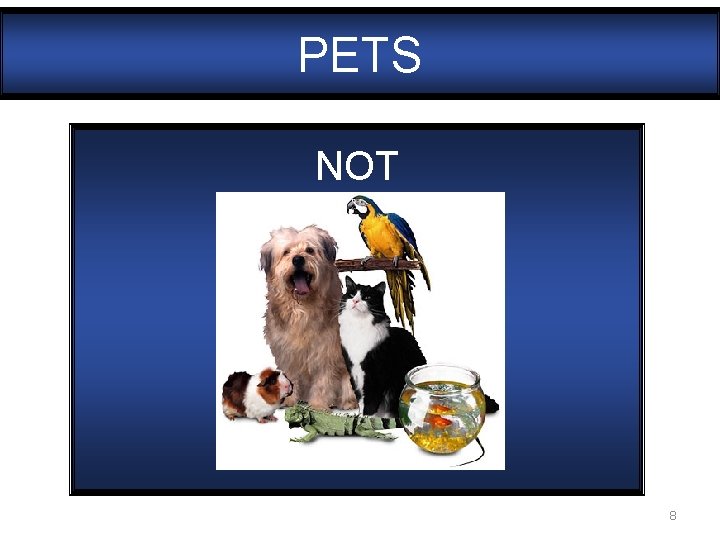
PETS NOT 8
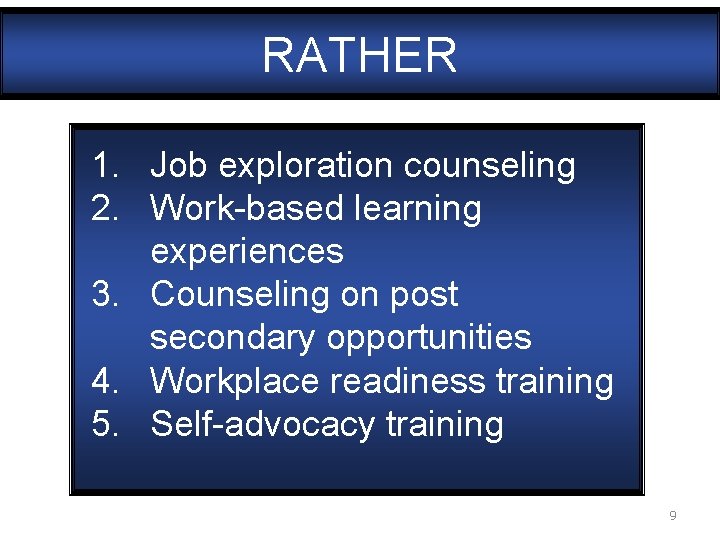
RATHER 1. Job exploration counseling 2. Work-based learning experiences 3. Counseling on post secondary opportunities 4. Workplace readiness training 5. Self-advocacy training 9
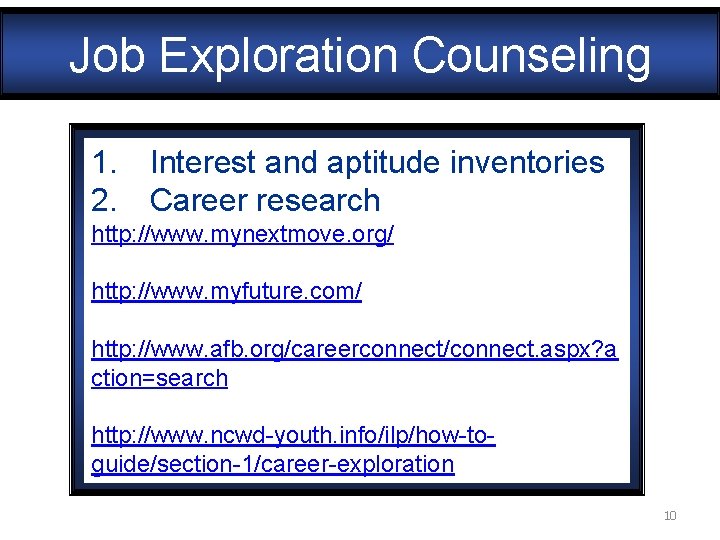
Job Exploration Counseling 1. Interest and aptitude inventories 2. Career research http: //www. mynextmove. org/ http: //www. myfuture. com/ http: //www. afb. org/careerconnect/connect. aspx? a ction=search http: //www. ncwd-youth. info/ilp/how-toguide/section-1/career-exploration 10
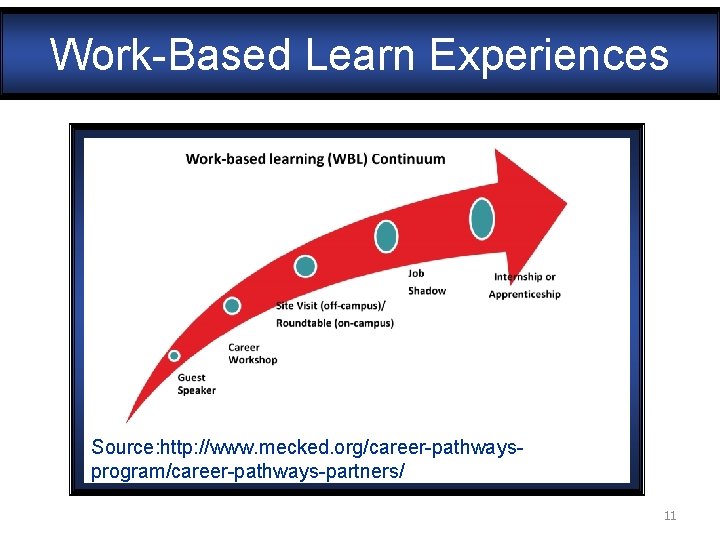
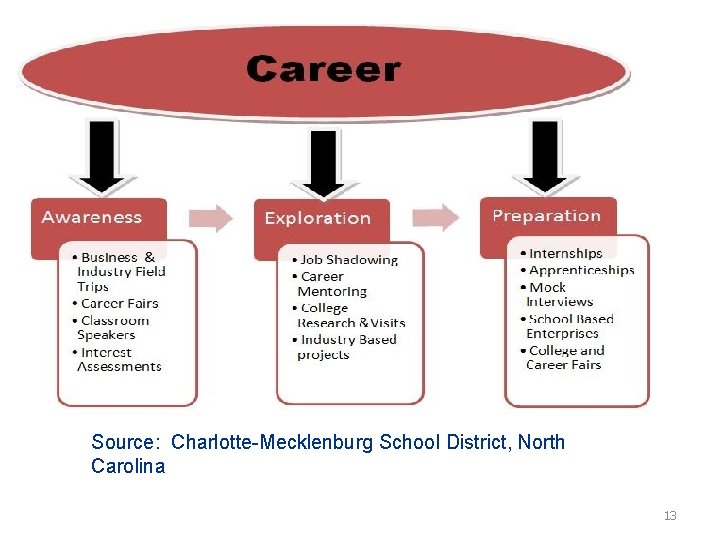
Work-Based Learn Experiences Source: http: //www. mecked. org/career-pathwaysprogram/career-pathways-partners/ 11
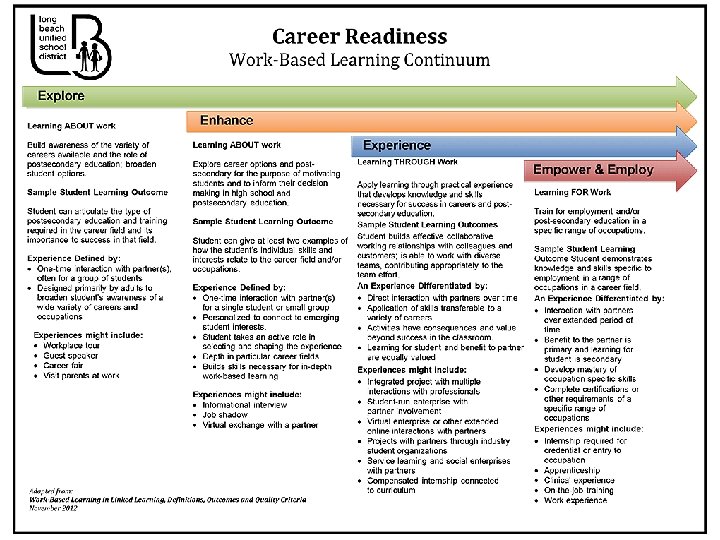
Work-Based Learn Experiences 12
Work-Based Learn Experiences Source: Charlotte-Mecklenburg School District, North Carolina 13
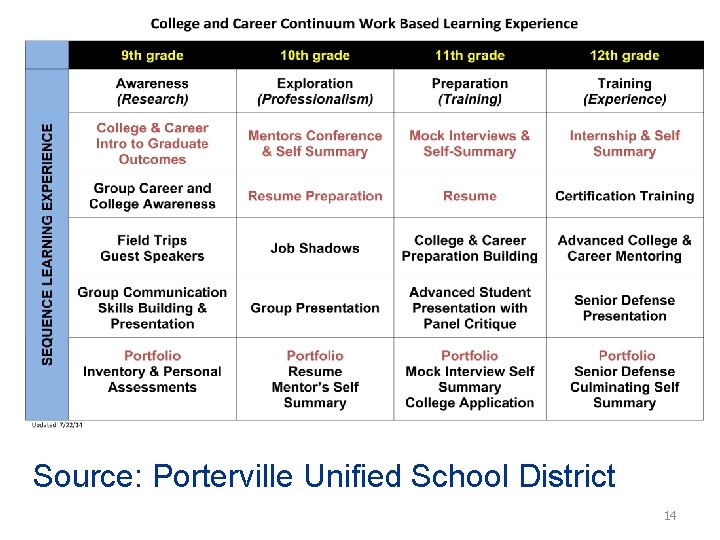
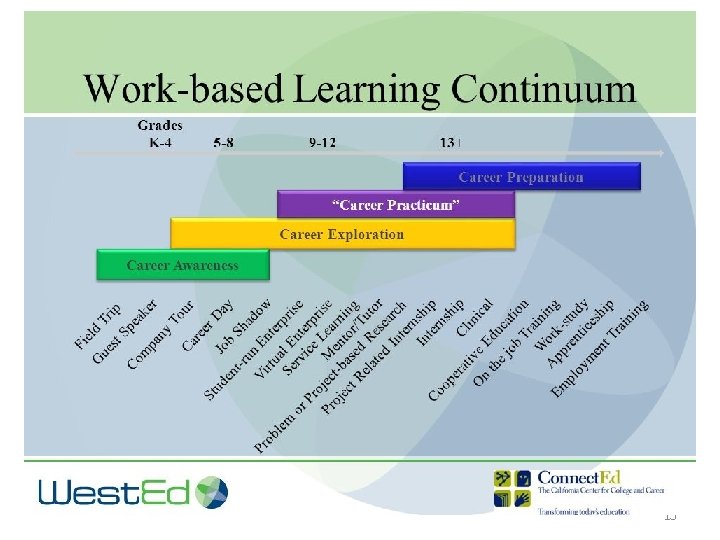
Work-Based Learn Experiences Source: Porterville Unified School District 14
Work-Based Learn Experiences Source: Porterville Unified School District 15
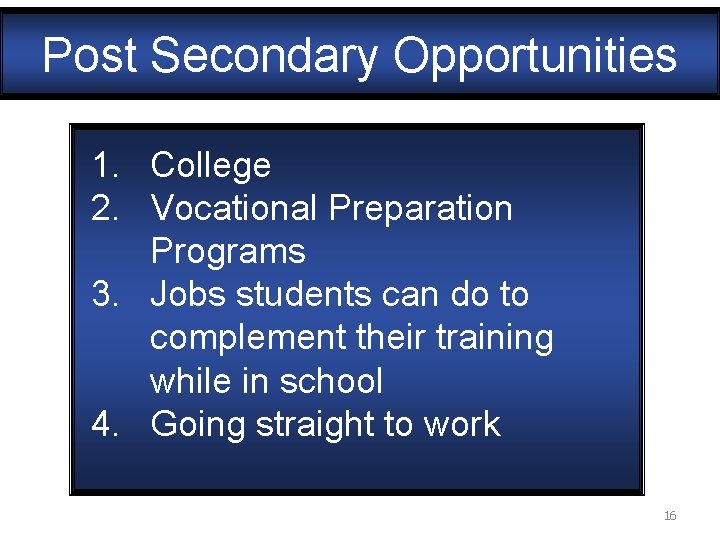
Post Secondary Opportunities 1. College 2. Vocational Preparation Programs 3. Jobs students can do to complement their training while in school 4. Going straight to work 16
Workplace Readiness Training 1. Vocational classes while still in school 2. Weekend workshops 3. Summer immersion programs 4. Summer boot camps 17
Self-Advocacy Training 1. Teaching students how to be self-determined and how to take charge of their future 2. How to problem solve 3. Learning how to be responsible 18
Employment First The idea that everyone can work • Expectations for students with disabilities should be as high as students without disabilities • Students need to leave school with paid work experience • Students need to be prepared for a life time of self-sufficiency 19
Considerations Thinking about the age of your child or student: • • • What were you doing at that age? What were your responsibilities? What were the expectations? What were your dreams? What made you successful? We must expect the same for our kids as was expected of us! 20
Case Examples • Juanita: full time college student. Working full time in the field serving people with disabilities. Aspires to be an attorney. Lives on Starbucks like everyone else. 21
Case Examples • Sarah: Lives with her family which has always been over protective. Developed the selfadvocacy skills to convince her family let her be independent. Meets with a support team monthly for vocational and personal skill planning 22
Case Examples • Zach: still in high school. Will start attending a program in school that teaches vocational skills. Active in Scottish community and plays bagpipes. Started his own business playing at weddings, funerals, and parties. 23
What is DOR? • State-Federal program authorized by the Rehabilitation Act • Serves people transition age and up with goal of obtaining and maintaining employment 24
Who Should Apply? Anyone that: • Wants to work • Has a disability • Believes that disability keeps him/her from working • Believes vocational rehabilitation Services will enable him/her to obtain/retain employment 25
How does DOR get involved? • Students and VI specialists can make connections with DOR • DOR can be invited to an IEP • Student and DOR can begin to work together 26
When to get DOR involved - Age 14 - Invite representative to IEP - Team will decide when to start services - DOR will serve as valuable member of team advising student through transition period 27
What will DOR do? • Attend IEP meetings as active member of educational team • Assess student needs • Offer appropriate services specific to student needs • Work directly with student and team to develop steps needed to prepare for training after graduation 28
Blind Field Services • Division dedicated to participants with vision impairments • Participants served by specialty counselors that are knowledgeable about blindness and the needs of those with vision loss 29
Ideal Service Flow/Time Frame • Apply for DOR services before age 16 • Invite DOR to all IEP meetings • Student choose a summer program to attend after Jr. year (STEP/STREET week) • IEP early Sr. year • Student attend STEP weekend workshops 30
Ideal Service Flow/Time Frame • Before second semester Sr. year, student decide plans post graduation • Communication with DOR about post graduation plans (college, blindness adjustment training, work) • Participation in technology evaluation to determine tech needs post grad • Final IEP before graduation 31
Preparing for College • Understand your options: Comm College, private/public university • How will it be funded? • What supports will DOR provide for college? • What are comparable benefits? • Campus services: DSPS/SSD/EOP • Self Advocacy 32
Preparing for Work • Learn about your career options www. cacareerzone. org https: //bigfuture. collegeboard. org/maj ors-careers Vocational Training Options: Statler Center, LWC, Cust Service JBA 33
Referral to Service Providers • Student advised of different services and options • Discussion of student needs (self assessment//input from IEP team) • Student perform research on options • Development of Ind. Plan for Empl. based on student/team input that details needed services/timelines 34
Types of Services • Summer Transition Programs • Work Experience/Internships • College Immersion Programs • Weekend Transition Workshops • Independent Living Skills • Recreation/Summer Camp • Mentoring 35
Service Providers • Junior Blind (No and So CA) • Braille Institute (4 locations) • REACH • San Francisco Lighthouse for the Blind • Camp Bloomfield • Enchanted Hills Camp • Local providers by geographic area 36
What Can the Ed Team Do? • Coordinate with the DOR RC to prepare for upcoming students • Work with DOR and local service providers to organize outreach and information events • Invite DOR and appropriate service providers to IEP meetings • Facilitate completion of DOR application 37
What Can Parents do? • Hold the same high expectations for your child with vision loss as you do for your other non-disabled children • Provide opportunities to be responsible and independent • Let your child take risk…even if it’s scary! • Have conversations about the future 38
What Can the Student Do? • Take your education seriously • Use all of the aids and services available to maximize your success • Do everything you can independently and responsibly • Get work experience…. ANY work experience • Do volunteer work 39
What Can the Student Do? • Take your education seriously • Use all of the aids and services available to maximize your success • Do everything you can independently and responsibly • Get work experience…. ANY work experience • Do volunteer work 40
Best Outcome with DOR • Keep an electronic and hard copy file of communications that you have with DOR. • Read your Plan for Employment prior to agreeing and signing. • Know your plan! • Be proactive with your needs/requests to your DOR Counselor 41
Best Outcome with DOR • Provide regular updates to your counselor: e-mail updates and phone calls. • Respond right away to requests from your counselor • Make appt with counselor to discuss changes in your plan • Thank your DOR Counselor for supporting your Transition and Employment needs. 42
Thank You! 43